Luxury Authentication Analyst
Authentication analyst covering the resale market, marketplace verification programs, and counterfeit trends.
Published November 2026 · Contact
The Short Answer: A Receipt Is Not Proof
No, a receipt on its own does not prove that the item in front of you is genuine. It is a piece of paper or a PDF about a purchase. It can be faked outright, it can be a real receipt that has been edited, and it can be a completely genuine receipt for a different bag, watch or pair of shoes than the one being sold with it.
That does not make receipts useless. A real receipt that matches the item line by line is good supporting evidence, and a receipt that contradicts the item is one of the clearest warning signs a listing can give you. The point is where it sits: a receipt is evidence about a sale, and authenticity is a question about the object. Only the object can answer that.
Why Fake Receipts Are Common Now
Fake receipts are no longer a matter of someone with photo-editing skills. In July 2025 the security firm Group-IB published research into subscription services that produce counterfeit receipts imitating more than 20 well-known brands. It described the receipts as "customizable and localized, with formats tailored for the US, UK, and EU," sent by email, and said: "Buyers often use fake receipts to resell counterfeit or stolen items, presenting them as authentic." Thailand's national computer emergency team (ThaiCERT) repeated the warning the same month, saying scammers use these receipts to sell counterfeit goods on second-hand marketplaces and to make buyers more confident that the products are legitimate.
So a seller attaching a receipt to a listing tells you very little by itself. A receipt is one of the cheapest things in the whole package to fake, far cheaper than the item. This is the same logic as serial numbers, which we cover in does a serial number prove a bag is authentic: anything whose format is public can be reproduced.
Worth knowing
This guide explains how to spot a fake receipt. We do not name or link receipt-making services, and we do not describe how they work beyond what is needed to recognise their output.
Three Ways a Receipt Can Mislead You
| Situation | What you see | Why it fails as proof |
|---|---|---|
| Generated receipt | A clean, convincing receipt in the brand's style | It was never issued by the store |
| Edited genuine receipt | A real receipt with a changed date, item line, price or name | The parts that matter to you are the parts that were changed |
| Genuine receipt, wrong item | A real receipt from a real boutique purchase | It belongs to a different item, often a genuine one that was sold or kept separately, and has been paired with a fake |
The third case is the one buyers find hardest to accept, because the receipt really is genuine and any check on the receipt itself will pass. A real receipt and a counterfeit item travel together easily. That is why every check below ends with the item, not the paper.
What a Genuine Boutique Receipt Usually Shows
Layouts differ by brand, country and year, and a brand can change its receipts at any time, so treat this as what a store receipt generally carries rather than a template for any one house:
- The store. The boutique or department-store name and its address.
- Date and time of the sale.
- A transaction or receipt number, and often a till or sales-associate reference.
- The item. A description, and on many luxury receipts a style, reference or product code, sometimes with colour, material and size.
- Price, tax and total, in the currency of the country where the store is.
- Payment details, such as the card type and the last digits of the card, or cash.
Some houses put more detail on the receipt than others. In our Hermès guides, a boutique receipt carries codes for colour, leather and hardware plus a reference number, and its date should agree with the bag's blind stamp. In our Louis Vuitton guides, the style code and description on a receipt should match the bag exactly.
Online purchases are different again: the proof is usually an order confirmation email or the order history in the buyer's account with the brand, not a printed till receipt.
Signs of a Generated or Edited Receipt
Group-IB's advice is to inspect a receipt for "formatting errors, grammatical mistakes, or inconsistent branding" and to check the store's contact details against official sources. In practice, these are the things to look for:
| Check | Consistent with a real receipt | Warning sign |
|---|---|---|
| Store | A boutique that exists at that address on the brand's own store locator | An address with no boutique, a closed store, or a "boutique" in a city where the brand has none |
| Printing and layout | Even alignment, one consistent typeface, clean spacing | Mixed fonts, letters that sit higher or lower than their neighbours, blurred areas around key fields |
| Language | Correct spelling of the brand, the store and the product | Misspellings, odd grammar, a product name the brand does not use |
| Item line | Description and style code that match the item in colour, material and size | A generic line ("handbag"), a style code for another model, or a colour that does not match |
| Money | Price plausible for that model at that date, tax that adds up for that country or state, the local currency | A price far below retail, tax that does not compute, a currency that does not match the store's country |
| Date | A date after the item could have been made | A purchase date before the item's date code, stamp or production period |
| Format offered | The original paper receipt, or the order email shown in the buyer's account | Only a cropped screenshot or a PDF, and a refusal to show anything else |
Red flag
A purchase date earlier than the item could have been made is a contradiction no explanation fixes. Either the receipt is not for this item, or the item is not what it claims to be.
Two more habits help. Run a reverse image search on a receipt photo, because the same receipt image sometimes appears on several listings. And notice which details are hidden: covering the buyer's name and card digits is normal privacy, but blurring the store, the date, the item line and the receipt number leaves nothing to check.
How to Check a Designer Receipt
Work through these in order. Each one can catch a problem the previous one missed.
- Match it line by line to the item. Model, colour, material, size and any style code on the receipt should describe exactly the piece you are looking at.
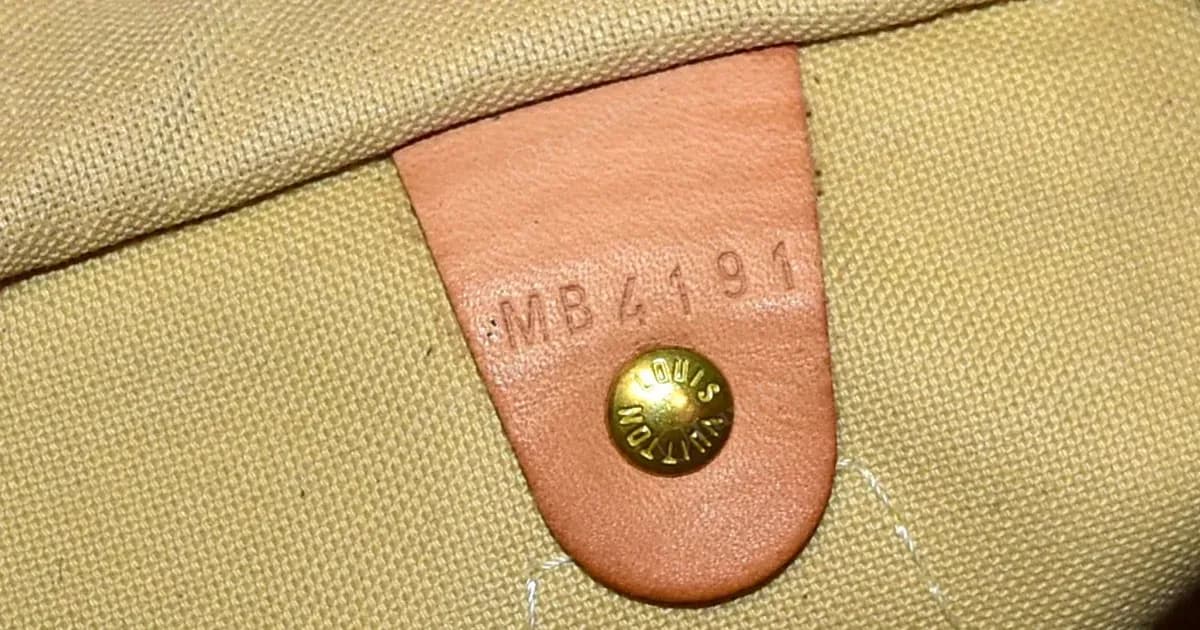
- Compare the dates. Read the item's own date mark and make sure the receipt date comes after it. Our free decoders help: the Louis Vuitton date code checker, the Hermès date stamp checker and the Chanel date code checker. For Louis Vuitton, read the date code guide first: from about 2021 the house moved from stamped codes to an internal chip, so a recent bag with no visible code is normal.
- Confirm the store exists. Look the boutique up on the brand's own website, not through a link the seller sends you.
- Contact the brand's client service with the receipt number. Ask whether they can confirm the transaction. Policies differ, and a brand may not discuss a purchase with anyone except the person who made it, so the useful version of this check is often asking the seller to make the request or to show the order in their own account with the brand. A seller with a genuine purchase can usually do that; a seller with a generated receipt cannot.
- Ask for the original. The paper receipt, or the order confirmation email opened on the seller's device. A screenshot is the easiest form to alter.
- Then check the item itself. Even a receipt that passes all of the above only proves that a sale took place.
Worth knowing
Louis Vuitton's own FAQ says a product bought on louisvuitton.com, by phone with its Client Services, or in its exclusive store network is guaranteed authentic. That guarantee is about where you buy. A receipt shown to you by a reseller does not transfer it to the item in their listing.
Why the Item Must Be Checked Anyway
Every route above ends at the same place. A genuine receipt for a genuine bag can be separated from that bag and handed over with a counterfeit, and a well-made fake receipt can describe a well-made fake bag perfectly. What settles authenticity is the item: its stamps, stitching, hardware, materials and construction, compared against verified examples of the same model. Good counterfeits copy the obvious marks, as our guide to superfake designer bags explains, so the comparison has to be detailed.
That is what a LuxeDetect authentication does. You upload photos of the item, an authenticator compares them against verified references for that model, and you get a verdict within 24 hours, with a Certificate of Authenticity for genuine items. Handbag authentication starts at $25. Include the receipt in your photos if you have one: we look at it as supporting context next to the item. You can submit an item for authentication at any time.
If you have already bought an item on the strength of a receipt and now think it is fake, our guide on how to get a refund for a fake designer item covers eBay, PayPal and card disputes, the deadlines, and the evidence that wins a claim. Keep the receipt the seller gave you: in a dispute, a receipt that contradicts the item is evidence on your side.
FAQ
Is a receipt proof of authenticity?
No. A receipt is evidence that a sale happened, not that the item you have is genuine. Receipts can be generated or edited, and a genuine receipt can be paired with a counterfeit. A receipt that matches the item helps; the item still has to be checked.
Can designer receipts be faked?
Yes. In July 2025 Group-IB reported subscription services producing counterfeit receipts that imitate more than 20 well-known brands, localized for the US, UK and EU, and said buyers use them to resell counterfeit or stolen items as authentic.
How can I tell if a receipt is fake?
Check that the store exists at that address on the brand's own site, that the printing, spelling and branding are consistent, that the item line and style code match the item, that the price and tax make sense for that country and date, and that the purchase date comes after the item's date code. Then ask the seller to confirm the purchase with the brand or show the order in their account.
How do I know if a Louis Vuitton receipt is real or fake?
Match the style code and description on the receipt to the bag, check the boutique on louisvuitton.com, and compare the receipt date with the bag's date code, remembering that bags from about 2021 carry a chip instead of a stamped code. A Louis Vuitton receipt that passes all of this still does not prove the bag sold with it is the one on the receipt, so have the bag itself checked.
Will a brand verify a receipt for me?
It depends on the brand and the country. Many brands will only discuss a purchase with the customer who made it, so the practical route is to ask the seller to request confirmation from client service or to show the order in their own brand account.
Does a missing receipt mean an item is fake?
No. Receipts get lost, gifts arrive without them, and most vintage pieces have none. A missing receipt only means you have one less piece of supporting evidence, which makes checking the item itself more important.
Can I authenticate an item from photos if it has no receipt?
Yes. What decides it is how the marks, materials and construction fit together against verified examples of the same model, and a receipt is not needed for that. On an expensive item, a professional review is the safer route.