Senior Authenticator
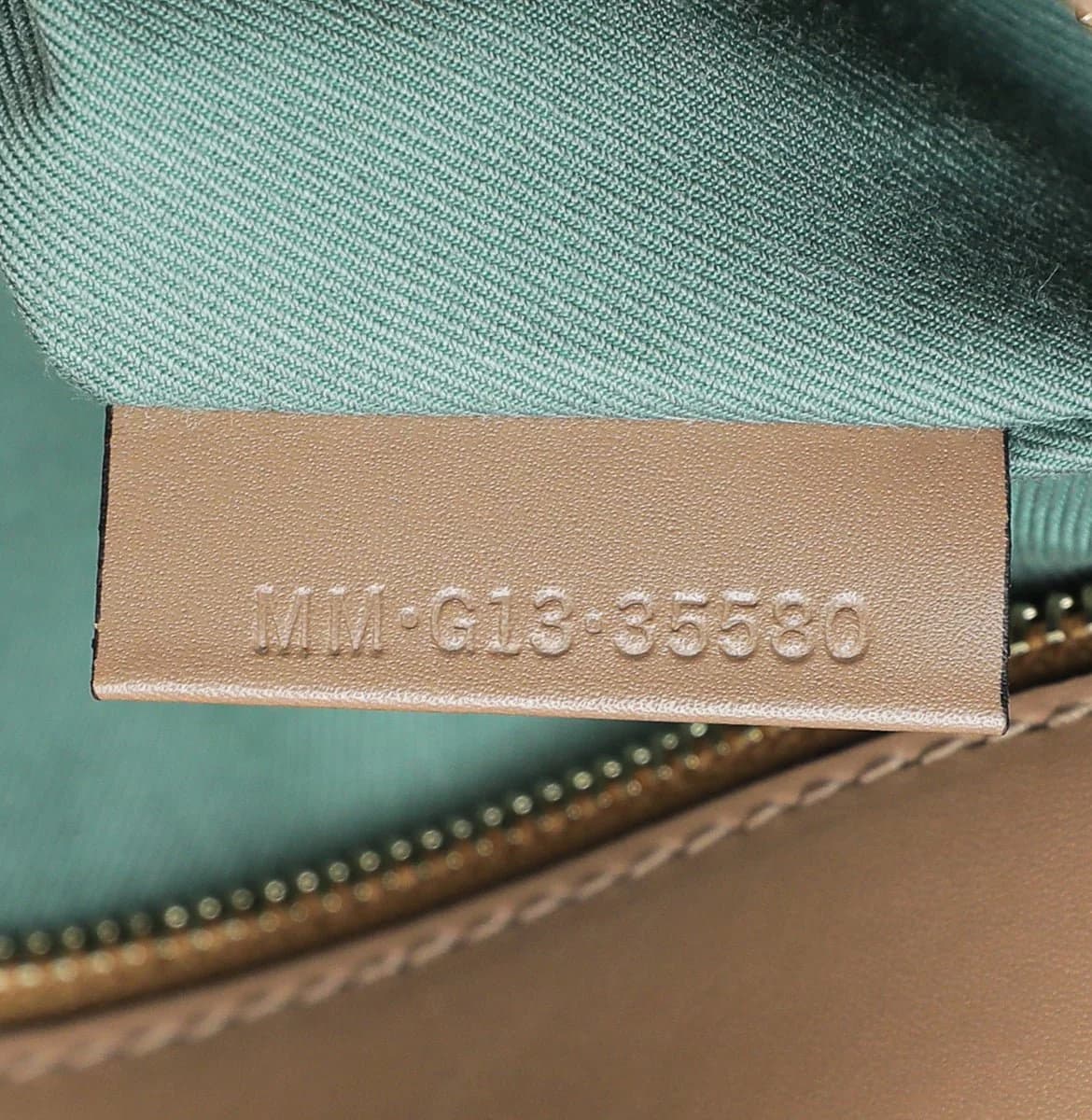
French luxury house specialist. Covers Chanel, Celine, and Saint Laurent construction and date coding.
Published September 2026 · Contact
The Short Answer
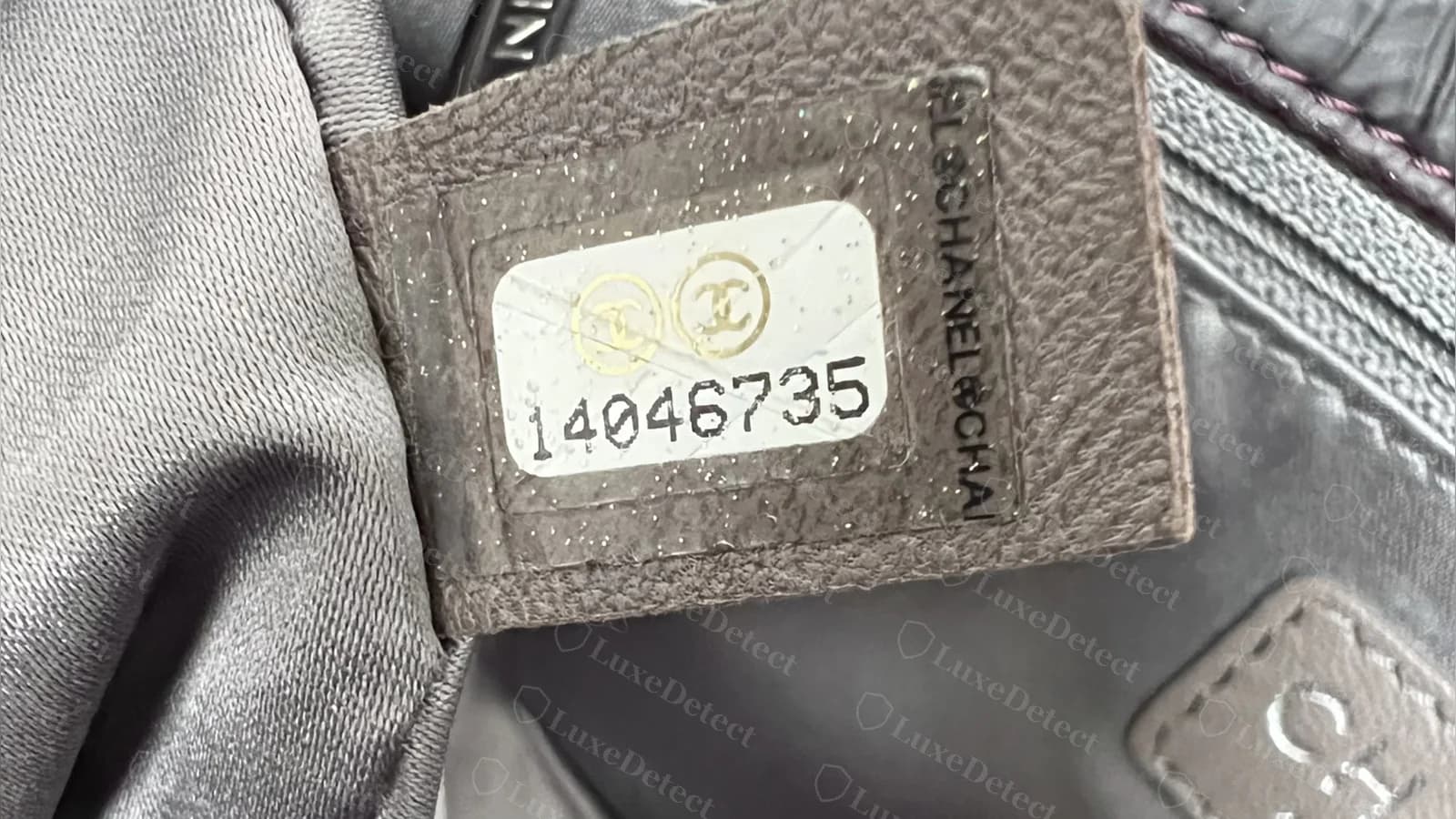
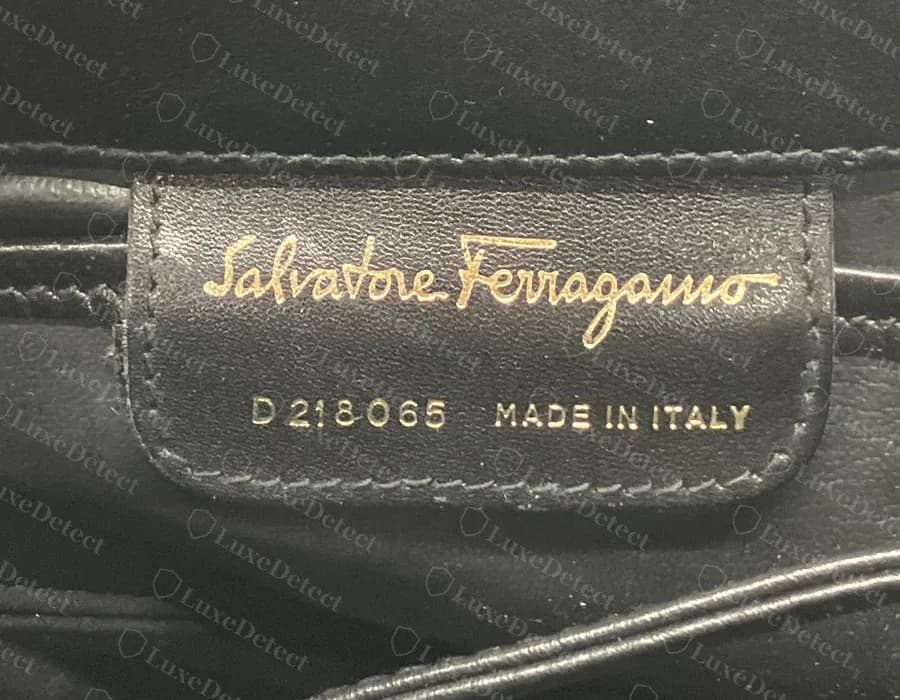
No. A serial number or date code does not prove a bag is authentic. It can place the bag in a production period and it can expose a contradiction, but a correct code appears in fakes as often as in genuine bags, because the format is public knowledge and reproducing it is the easy part of making a convincing counterfeit.
This is not a fringe view. It is what authentication services, resale platforms, and the brands' own (rare) public statements all say. If a seller's entire case for a bag is "the serial number checks out," they have told you almost nothing.
What a Code Actually Proves
A code is one signal, and it is strongest as a negative check — a way to catch something that cannot be true.
| A code can tell you | A code cannot tell you |
|---|---|
| The production era the format belongs to | Whether this specific bag is genuine |
| The factory or country, where the format encodes it | Whether the leather, hardware, and stitching are right |
| That a format never existed (a fake structure) | Whether the code was copied from a real bag |
| That the era contradicts the seller's claim | Whether the bag was assembled from genuine and fake parts |
| That the factory code contradicts the "Made in" label | Anything about condition, wear, or provenance |
The left column is real value. A bag whose date code decodes to 2011 but is listed as a 1990s piece has a problem. A factory letter that says Spain on a bag whose stamp says France has a problem. Those contradictions are worth walking away over.
The right column is where authenticity is decided, and a code touches none of it.
Why the Code Isn't Enough
The format is documented. Collectors, forums, and authentication blogs have published how each brand's codes work, era by era. Anyone can look up what a valid 2015 Louis Vuitton date code looks like and stamp one into a fake.
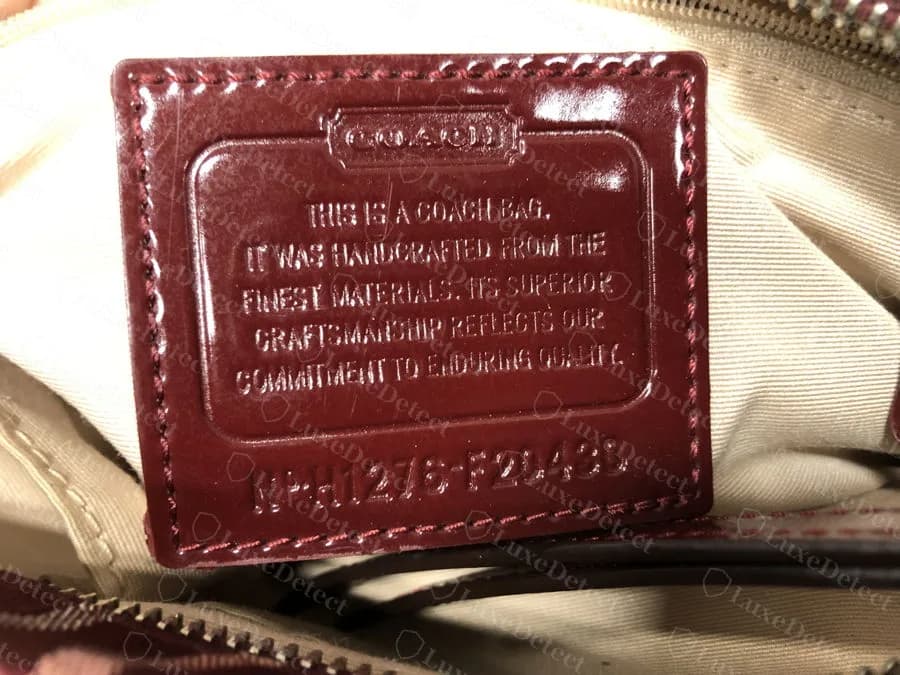
Codes get copied off real bags. A counterfeiter with access to one genuine bag can reproduce its exact code across a production run. The code decodes perfectly. The bag is still fake.
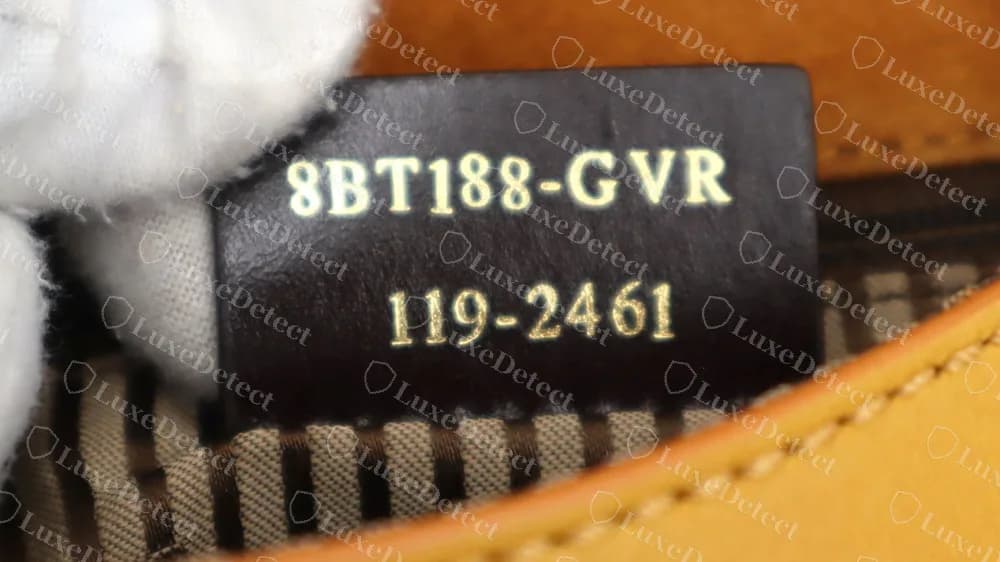
Some brands encode nothing useful. Prada has no unique serial, and the article code on its card is a style reference with no date. A "checker" that returns a production year for it is guessing. Fendi's format carries a style code, not a date, and no public database maps it to a bag.
Brands stopped using visible codes. Louis Vuitton replaced date codes with an embedded RFID chip in 2021. A new LV bag with no visible code is completely normal — and a fake with a "correct" old-style date code stamped in it is a red flag, not reassurance.
What Actually Proves Authenticity
Authentication looks at:
- Leather and material — grain, temper, smell, how an edge is finished, how vachetta patinas.
- Hardware — weight, plating, how engraving is struck, how a zip runs.
- Construction — stitch density and regularity, seam alignment, how the lining is set, how the piping is turned.
- Heat stamps and embossing — depth, letter shape, spacing, placement.
- The code, in context — as one line item among all of the above, checked for contradictions, not treated as a verdict.
A professional authentication weighs all of these and issues a conclusion. A serial number checker does one narrow part of it and is upfront that the rest is out of scope.
A code that checks out doesn't prove the item is real. Counterfeiters copy genuine codes.
Our authenticators check the stamps, hardware and construction against verified references. You get a verdict within 24 hours, and a Certificate of Authenticity if the item passes.
Authenticate My Item →FAQ
If the serial number is real, isn't the bag real?
Not necessarily. A "real" serial number only means the characters follow a valid format for the claimed era. Counterfeiters copy valid formats, and they copy actual codes off genuine bags. A valid code is consistent with the bag being real; it does not prove it.
What does a serial number checker actually do, then?
It decodes the format to tell you the production era and factory, and it flags contradictions — a format that never existed, a date that is too late for the model, a factory code that disagrees with the "Made in" label. It is a fast way to catch an inconsistency, not a way to confirm authenticity.
My bag has no serial number or date code. Is it fake?
Possibly not. Very old bags predate date codes entirely. Louis Vuitton removed visible date codes in 2021 in favour of an RFID chip, so a bag bought new after 2021 has no code by design. Absence of a code is only meaningful in context of the bag's claimed age.
How do I actually verify a bag is authentic?
Have it examined — the physical build is what settles it. Check the leather, hardware, stitching, heat stamp, and construction against known references for that exact model, and for anything valuable or borderline, use a professional authentication service that issues a verdict.