Luxury Handbag Authentication Specialist
Luxury leather goods specialist. Works on Italian house construction, hardware, and interior stamping.
Published October 2026 · Contact
Does Fendi Have Serial Numbers? Yes, but Five Different Things Get Called One
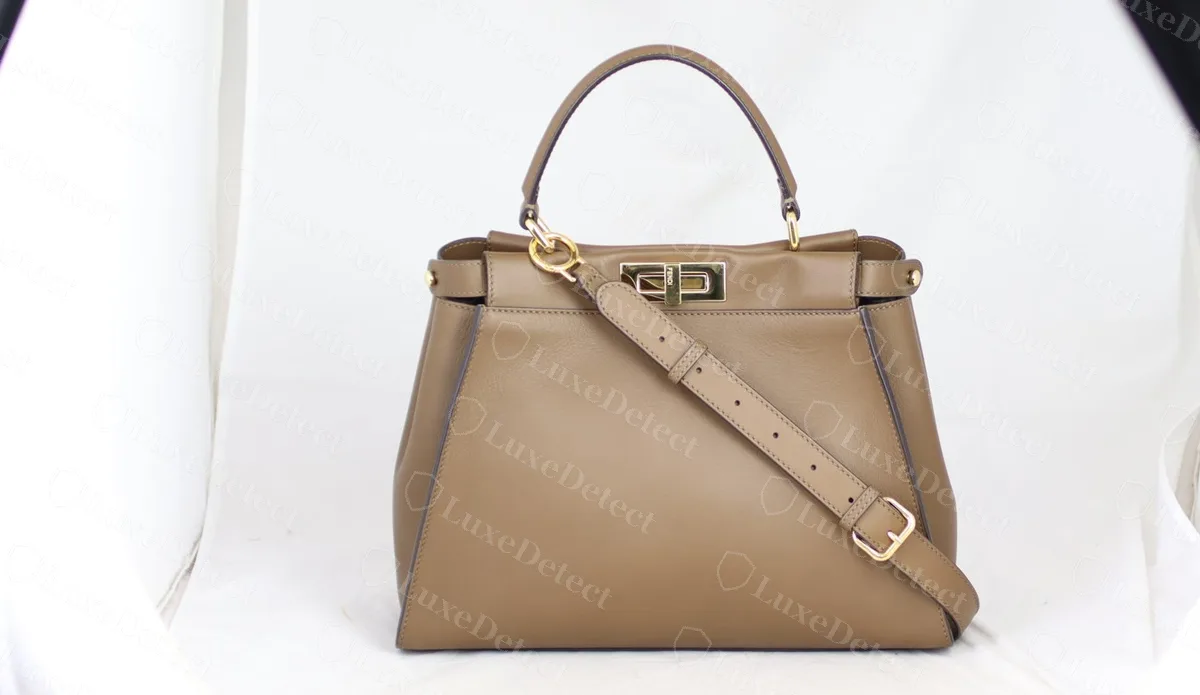
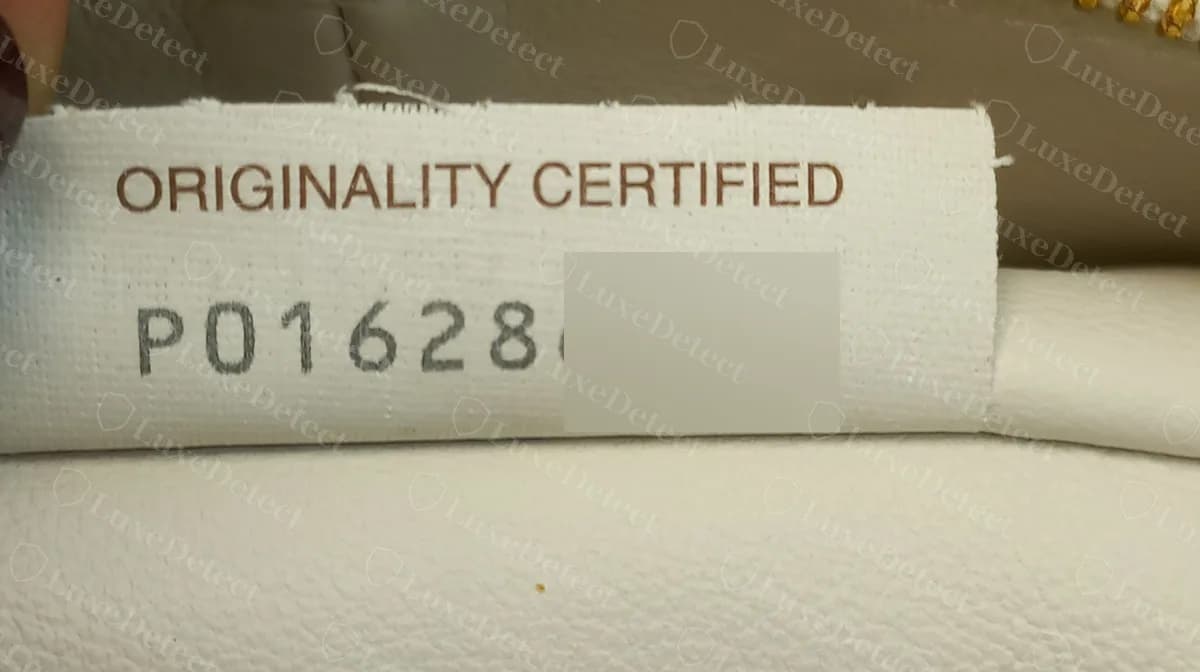
Ask where the serial number is on a Fendi bag and you will get several different answers, because Fendi bags carry several different numbers. There is a code pressed into a leather strip inside the lining. On many bags from roughly 2004 into the early 2010s there is a small woven tag with a hologram sticker and its own number. Newer bags carry a woven tag marked RFID LABEL REMOVABLE. Many come with an authenticity card that repeats a serial. And on older bags there is a short code printed or stamped in a zip pocket.
None of these is a date. Fendi has not published a scheme that turns a serial into a production year, and nothing we photographed on genuine bags decodes that way. The code starts with a model segment (our checker reads an 8BR segment as leather goods) followed by further blocks whose meaning Fendi does not publish. What the numbers can do is catch a contradiction: a card that does not match the bag, a hologram that does not look right, a code in a shape no genuine bag showed. What they cannot do is clear a bag, because counterfeiters copy all of them.
What to check, ranked by reliability
| Checkpoint | Reliability | What it tells you |
|---|---|---|
| 1. The Hologram Tag and Its Number | ★★★★★ | A dull or wrinkled sticker, or a number repeated on another piece, points to a copied tag; a good-looking one clears nothing. |
| 2. The Authenticity Card: Does Its Serial Match the Bag? | ★★★★★ | A mismatch is a stop; a match only shows the pair is consistent, since cards can be copied. |
| 3. The Leather Code Strip | ★★★★★ | Useful for comparing font and depth with a genuine bag of the same model, but the shape is easy to copy. |
| 4. The RFID Label | ★★★★★ | The wording appears on genuine and counterfeit bags, and a buyer cannot test the chip. |
| 5. Format and Length: What the Checker Can and Cannot Tell You | ★★★★★ | Catches an invented code or a wrong length, passes a copied one, and would flag a genuine short vintage code. |
Prefer the full-screen version? The Fendi serial number checker tests the shape of a code and compares it with the card.
A code that checks out doesn't prove the item is real. Counterfeiters copy genuine codes.
Our authenticators check the stamps, hardware and construction of your Fendi against verified references, from $25. You get a verdict within 24 hours, and a Certificate of Authenticity if the item passes.
Authenticate My Fendi →Where the Code Is, by Bag and Era
The position changes with the bag and with the period it was made, so "inside the zip pocket" is a starting point, not a rule. These are the four places we photographed on genuine bags.
| Where | What it looks like | Code we photographed |
|---|---|---|
| Leather strip in the lining | A narrow leather tab, code embossed in one line | 8BH185-68B-168-3355 |
| Black leather tag, two lines | A small dark tag stamped in gold, model block over a second block | 8BT188-GVR over 119-2461 |
| Edge of the lining | Code embossed into a leather band along the lining or flap | ending 8BR003RQ6-068 |
| Printed in a zip pocket | A short stamped code on the pocket lining of an older bag | 201-80821-028 |
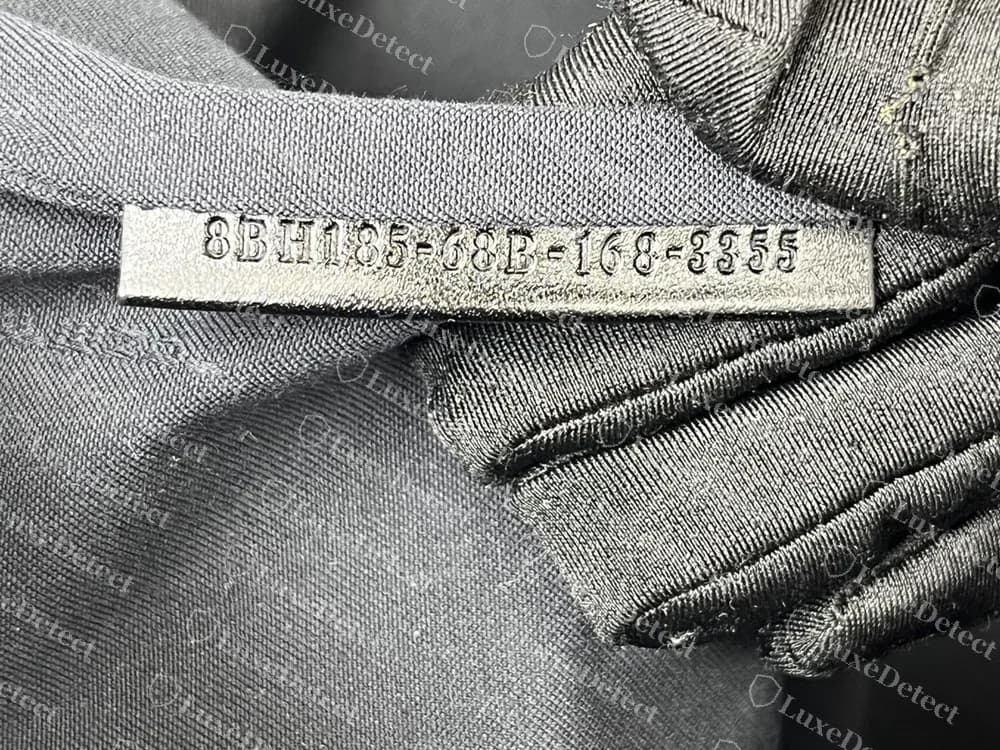
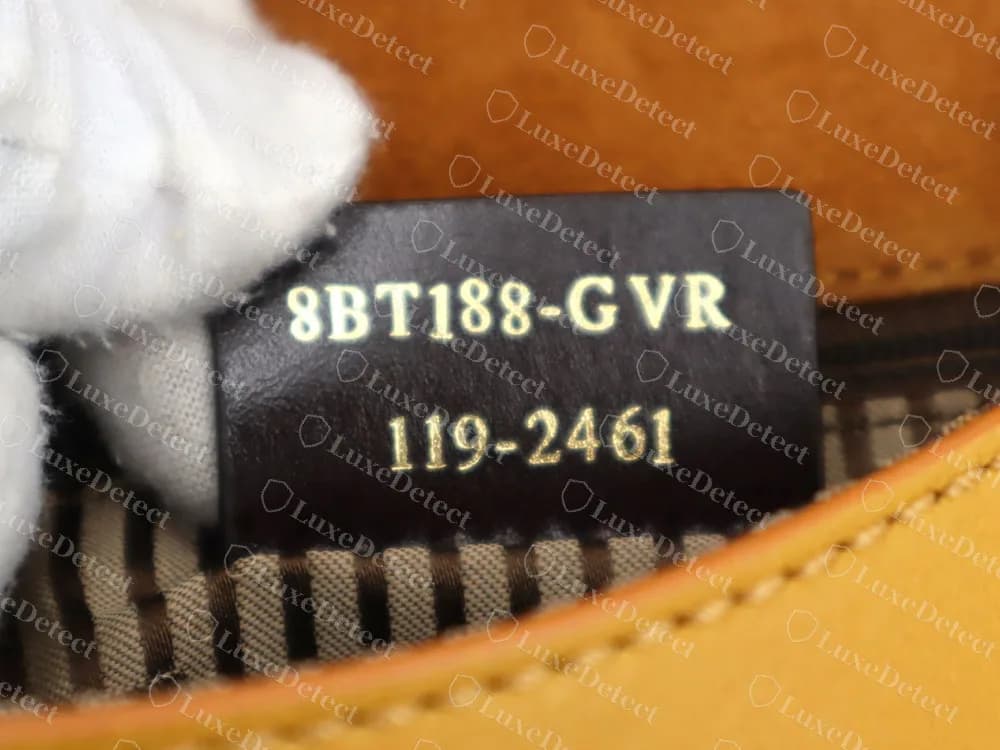
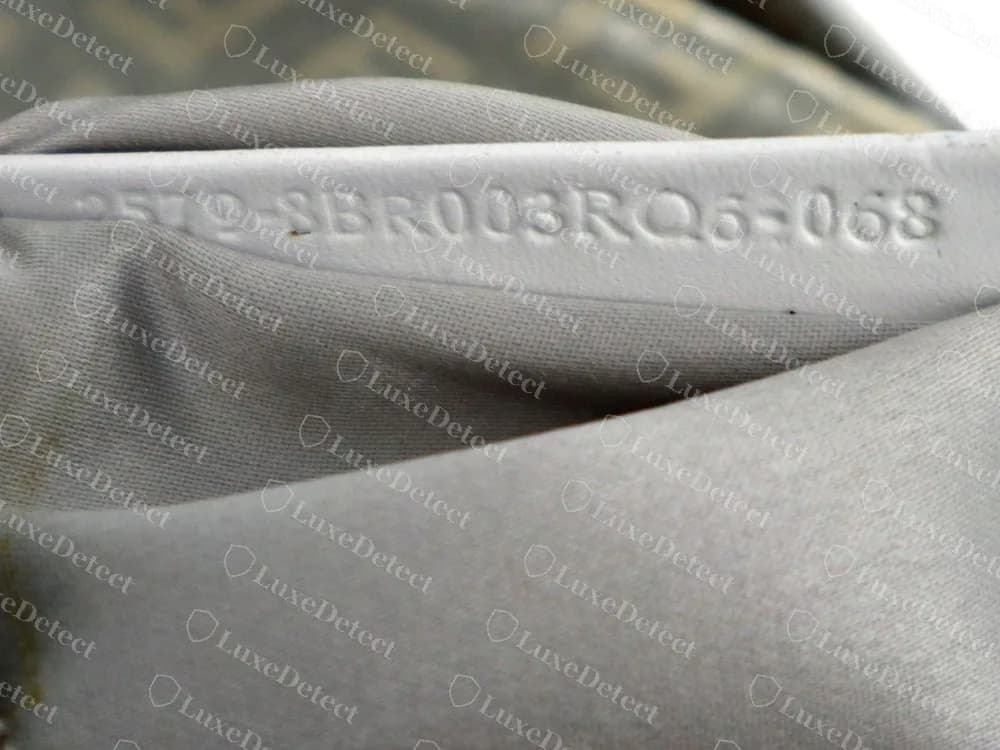
Three things stand out. The first segment varies: we saw 8BH, 8BT and 8BR, and our Peekaboo and Zucca guide describes a strip that begins 8BN. So a genuine bag does not have to contain 8BR, and a missing 8BR is not a red flag by itself. The second is the layout: the same sixteen characters are split into four blocks on one bag and two lines on another. The third is the era. Our checker documents serials of roughly 15 to 17 characters, and the three modern codes above all fit. The older bag below does not.
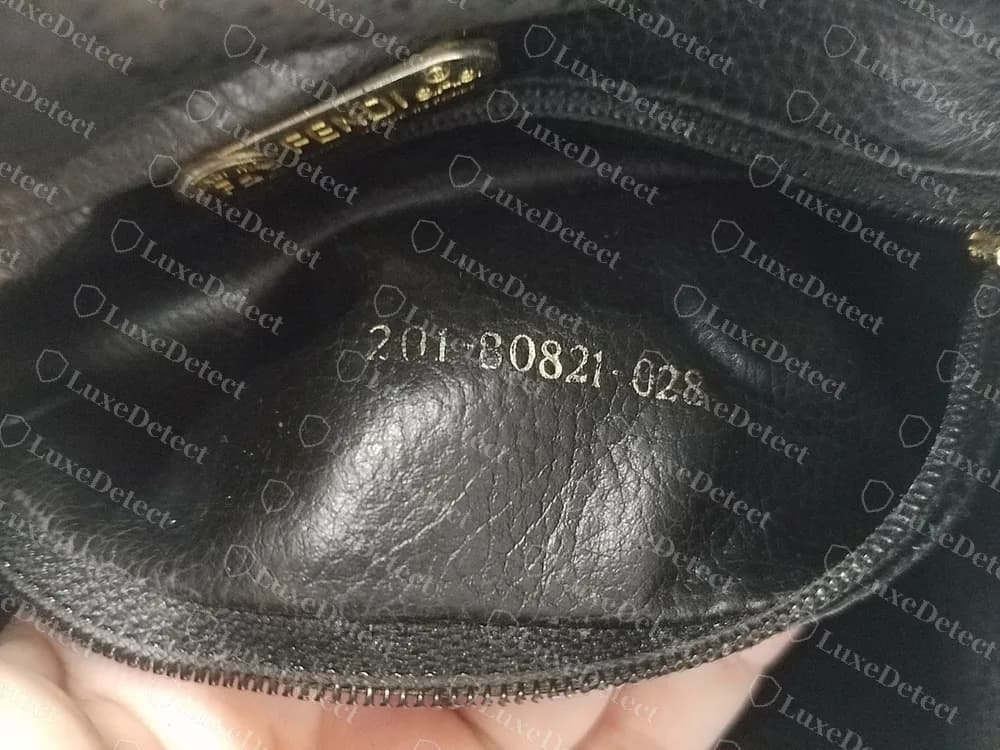
That vintage code has eleven characters once the dashes are ignored, outside the length range the checker documents. It came from a bag we examined and found genuine. So a short or oddly built code on an older bag is a reason to look at the era and the rest of the bag, not a verdict. Treat the length rule as a check for newer bags.
Worth knowing
Some sources say the leather-strip code is unique to one bag and others say it repeats across bags of a model and batch. We could not settle that from photographs, so we do not use uniqueness of the strip code as a test.
The Hologram Tag and Its Number
On many bags from about 2004 into the early 2010s, a small black woven tag is sewn into the lining. It carries a square hologram sticker showing the FF motif, with a number printed beneath it. On the genuine examples we photographed the number is a pair of letters and digits, such as AC85126 or CA2504813. On genuine Fendi clothing the same kind of tag carries a CA number, which our clothing guide covers.
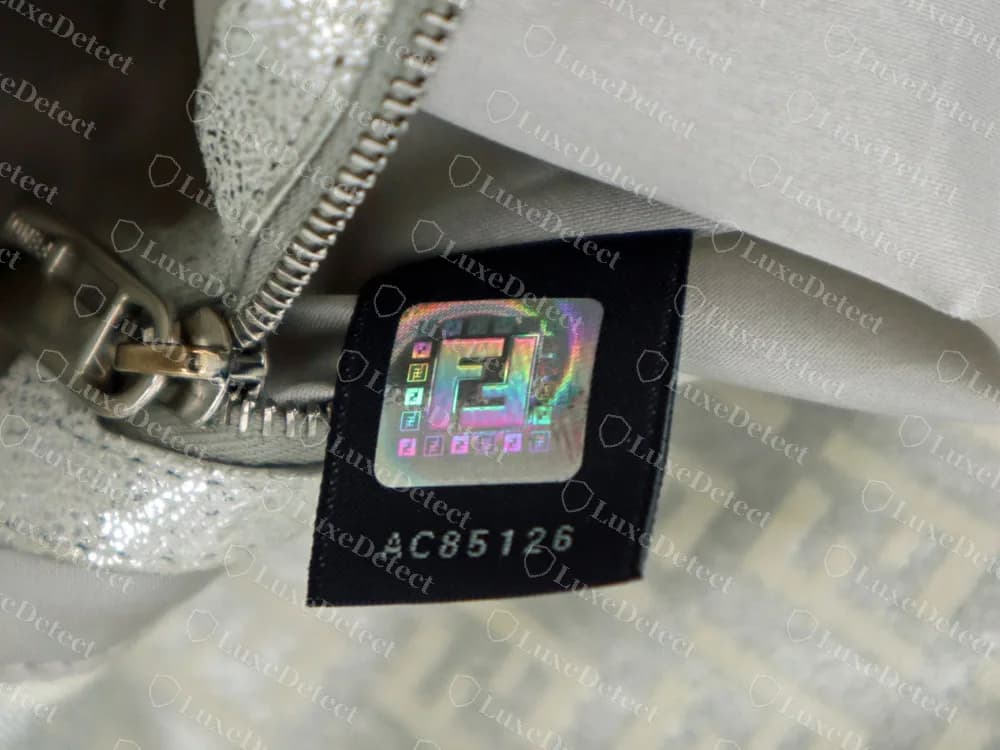
This is the number that is meant to belong to one piece, so it is the one worth reading carefully. Comparing the hologram and the printed number with a card and with other listings of the same model tells you more than the strip does.
| Detail | Authentic | Counterfeit |
|---|---|---|
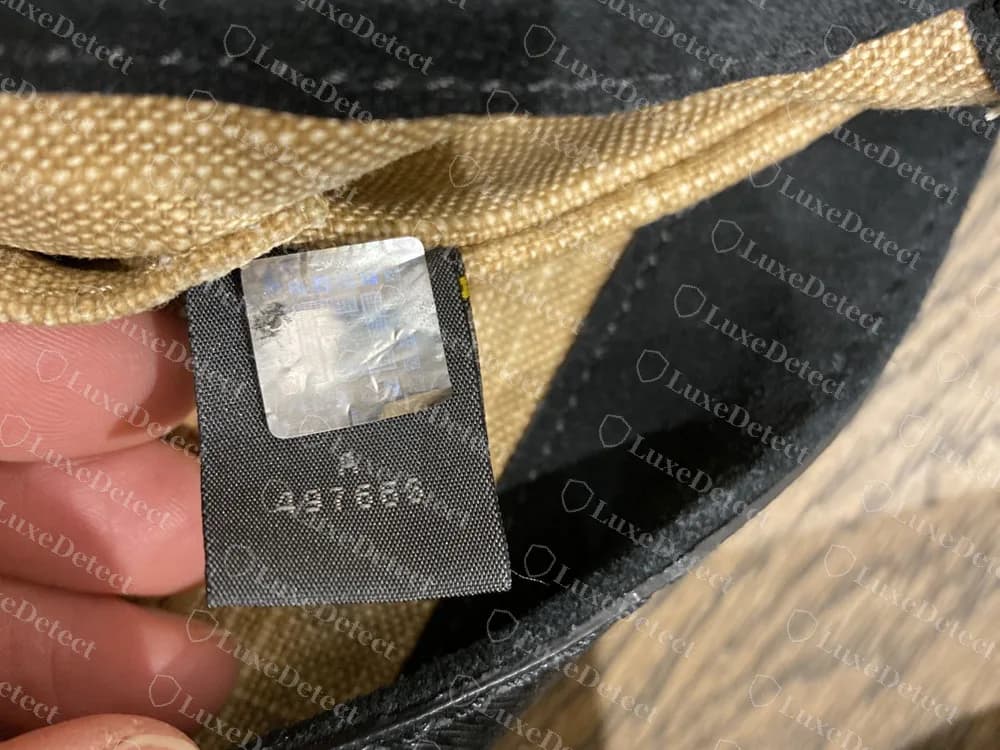
| Hologram | Bright, shifting colours with a clear FF motif in a patterned frame | Flat silver sticker, wrinkled or peeling, only a faint pattern |
| Number | Its own letters-and-digits number under the sticker | Printed number, sometimes with no sticker at all |
| Repeats | Belongs to one piece | The same number turns up on another counterfeit |
Red flag
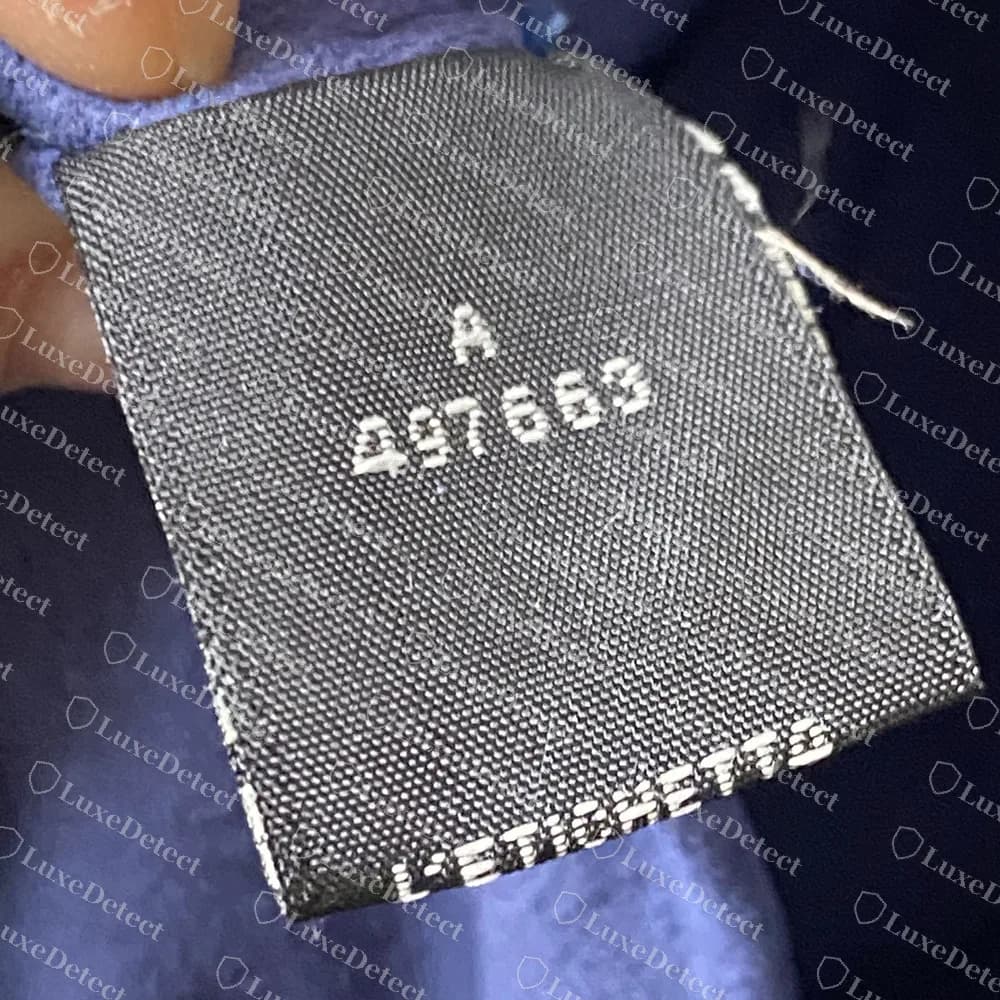
The same hologram-tag number on two different bags. The tag we photographed on a counterfeit reads A 497663, and another counterfeit carried what looks like the same number on a plain woven tag. A number meant to be unique should not repeat, so an identical number on another piece is a strong sign of a copied tag.
Do not treat the sticker as a pass either. Stickers rub off on worn bags, so a missing hologram on a heavily used bag of the right era is not conclusive. And good counterfeits print a convincing sticker, so the hologram is a consistency check, not a verdict.
The Authenticity Card: Does Its Serial Match the Bag?
Many bags come with a card that repeats a serial. This is the cheapest useful check in the whole guide, and the one the checker asks for: enter the serial from the bag and the one from the card, and they should be identical once dashes, spaces and case are ignored. A card that does not match its bag is a common resale scam, where a real card from one bag is packed with another.
The check only works in one direction. A mismatch is a stop. A match is a small positive at best, because cards are sold and copied, and a counterfeit can be packed with a card whose number was copied from the bag. A missing card on a secondhand bag is normal.
Worth knowing
A matching card tells you the seller is consistent, not that the bag is genuine. If the card and the bag agree but the hologram, the hardware or the stitching are wrong, believe the bag.
The Leather Code Strip
This is the code most people mean by "the serial". It is useful for two things: a quick shape check, and comparing the font and depth of the embossing against a bag of the same model.
On the genuine strips above the characters are cleanly formed with even depth, and the spacing between blocks is regular. Be careful with photos. Embossing on dark leather often looks shallow or uneven in a phone picture, so a blurry strip is a reason to take a better photo, not a reason to reject the bag.
Because we did not photograph a counterfeit strip with a visibly different code, we do not claim to know how fakes get it wrong. Our own reading, and the checker's, is that the shape is easy to copy. A correct-looking code adds a little confidence and nothing more.
The RFID Label
Newer Fendi bags carry a black woven tag reading RFID LABEL REMOVABLE over the Italian ETICHETTA RFID RIMOVIBILE, often with a printed number or barcode on it.
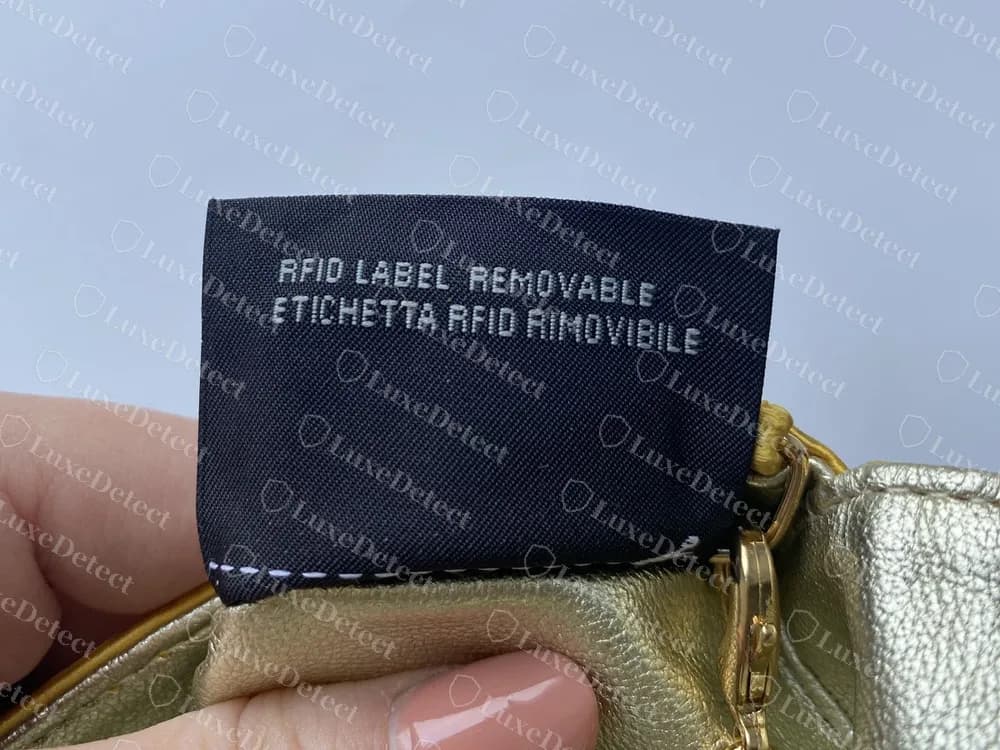
The wording is easy to reproduce. Our Peekaboo and Zucca guide found the same RFID tag on genuine and counterfeit bags, and we photographed one on another counterfeit for this guide. The chip inside is the real feature, and our checker page notes that it needs a dedicated reader rather than a phone, so a buyer cannot test it. One more detail: the genuine gold clutch in this photo also carried a hologram tag in the same lining, so seeing both tags on one bag is not by itself a red flag.
On a Baguette, the Baguette guide walks through the other checks that carry more weight than any tag.
Format and Length: What the Checker Can and Cannot Tell You
The checker's rules are simple. Serials run about 15 to 17 characters once dashes are ignored, and they should mix letters and digits. A string of digits alone fails, and so does one that is far too short or too long. It reports whether an 8BR segment is present and, if you add the card serial, whether the two match. It returns no year, because there is no published scheme to return one from.
That makes it a floor. It will catch a code someone made up, a card number copied wrongly, or a mismatched pair. It will pass a code copied from a genuine bag, and it would flag the genuine eleven-character vintage code above. Format checks fake easily, which is why this is the lowest-rated check in the table.
Hologram, RFID or Neither: What the Era Suggests
Reseller guides and our checker page describe three broad periods (clothing labels follow their own timeline): before about 2004, no hologram or chip; from about 2004 to around 2010, a hologram sticker on a fabric tag; from the early 2010s, an RFID chip in the tag. These dates are approximate and sources do not agree on the edges, and we have seen exceptions such as a genuine bag with both tags. Use them to ask whether the tags make sense for the style of the bag, not to date it. A bag whose design belongs to the 1990s but which carries a modern RFID tag is worth a closer look; a bag with no tags at all may simply be old, or may have had them removed.
What to Do With the Numbers
- Find every number on the bag: the strip, any hologram or RFID tag, the zip pocket, and the card.
- Compare the card with the bag. A mismatch ends the check.
- Read the hologram tag carefully if there is one: bright shifting hologram, its own number, no repeats.
- Run the code through the checker for shape and length, remembering that older bags can fall outside it.
- Then check what carries real weight: stitching, hardware, lining, the FF pattern alignment and the interior plate.
If any step shows a clear problem, stop. If everything agrees, the bag has passed the numbers, which on a Fendi is not the same as being genuine.
FAQ
Where is the serial number on a Fendi bag?
Usually on a narrow leather strip or small leather tag inside the lining, often near a zip pocket or along the lining edge. On older bags it can be printed on the pocket lining, and on bags from the hologram years there is also a small woven tag with its own number. The position varies by model and era.
How many characters is a Fendi serial number?
The checker documents about 15 to 17 characters once dashes are ignored, mixing letters and digits. The modern codes we photographed were sixteen characters, split into four blocks on one bag and two lines on another. A genuine older bag we examined had only eleven, so the range applies best to newer bags.
Does a Fendi serial number tell you the year?
No. Fendi has not published a way to read a date from the serial, and the codes we saw do not decode to one. The hologram tag and the RFID label give only a rough idea of the era.
What does 8BR mean on a Fendi serial?
Our checker treats an 8BR segment as the code for leather goods, consistent with a handbag. But genuine bags also carry other 8B segments, such as 8BH, 8BT and 8BN, so a code without 8BR is not automatically wrong.
Does the serial on the authenticity card have to match the bag?
Yes. The two should be identical once dashes, spaces and case are ignored. A card that does not match its bag is a common resale scam. A match, however, only tells you the pair is consistent, since cards can be copied.
Is my Fendi fake if it has no hologram or RFID tag?
Not necessarily. Bags from before the hologram years carry neither, hologram stickers rub off, and tags are sometimes removed. What matters is whether the tags that are present suit the bag's era and look right.
Can I check a Fendi serial number online?
Only for its shape. There is no public database that links a Fendi serial to a specific bag, so a site can say whether a code looks plausible and whether it matches the card, but not whether the bag is genuine. For a verdict, the bag has to be examined.
How much does Fendi authentication cost?
LuxeDetect's handbag authentication starts at $25 with a 24-hour turnaround, and the result comes with a Certificate of Authenticity. Start an authentication with clear photos of the strip, any tags, the card and the interior plate.