Luxury Authentication Analyst
Authentication analyst covering the resale market, marketplace verification programs, and counterfeit trends.
Published October 2026 · Contact
Nike Return Policy: Who Sold You the Pair Decides Your Options
The Nike return policy covers what you bought from Nike itself: nike.com, the Nike App and Nike stores. A pair bought anywhere else, from a sporting goods chain to a resale app or an online shop you found through an ad, goes back under that seller's rules, not Nike's. So when a Nike order arrives and something looks wrong, the first question is not "is it fake?" but "who actually sold it to me?"
This guide covers both halves. First, what Nike's own US return policy said when we checked its help pages in October 2026: the window, the exceptions and how refunds are paid. Then what to do if a pair from a third-party seller looks fake: how to document it, who to contact, when a payment dispute comes in, and how to get an independent opinion. Return policies change, and Nike's help pages differ by country, so confirm the current terms for your region before you rely on any deadline. Nothing here is legal advice.
| Where you bought the pair | Whose return policy applies | Your first step |
|---|---|---|
| nike.com, the Nike App or a Nike store | Nike's | Start a return in your Nike order history, or take it to a Nike store |
| A Nike Clearance store | Nike's, but Clearance purchases cannot be returned or exchanged | Check the pair before you leave the store |
| Another retailer | That retailer's | Nike says items bought at other retailers must be returned to that retailer |
| A marketplace, resale app or individual seller | The platform's buyer protection, if you paid through it | Message the seller through the platform and open a case there |
| A website you cannot identify | Possibly nobody's | Your card issuer or payment provider |
The Nike Return Policy in Detail (US, October 2026)
Nike's returns page opens with "We give you 60 days to try out your Nike purchase." What its US help pages said when we read them:
- 60 days. Most purchases can be returned or exchanged "for any reason within 60 days" of online order delivery or an in-store purchase. Defective items older than 60 days fall under Nike's warranty information instead.
- Proof of purchase is required. Nike accepts your order number, the order barcode from your order history, or the original store receipt.
- Free returns for Nike Members. Members start a return from their order history and get a UPS QR code for free shipping, and must drop the box at UPS within 21 days of starting the return. Guests print a label and pay their own return shipping.
- In store. Online orders can go back to most Nike stores (not Clearance stores), which inspect the items and process the return on the spot.
- Custom sneakers are included. Nike says Nike By You sneakers are part of the return policy. Custom Jersey By You soccer jerseys are not.
Nike's return exceptions page lists what falls outside the 60 days:
- Nike pre-orders and SNKRS Reserve orders cannot be returned.
- Gift cards, and any item noted as nonreturnable, cannot be returned.
- Purchases at Nike Clearance stores cannot be returned, exchanged or price-adjusted, and items bought elsewhere cannot be returned to a Clearance store.
- Nike jewelry must be unworn, in original condition and with all original packaging; Nike x LEGO sets must be sealed; Apple Watch accessories have 14 days.
- Shipping fees are not refunded unless you received an incorrect item.
How a Nike refund is paid
Nike's refund page says it issues the refund within six business days of receiving your return and emails you when it starts. Refunds to a credit or debit card, Apple Pay or PayPal can take up to 10 more days to appear; refunds to a Nike gift card usually arrive within 24 hours; Klarna refunds are handled by Klarna. Nike's Terms of Sale add that refunds go to the original form of payment. You can follow a return at nike.com/orders: Members sign in, and guests use their order number and email address.
If a Pair Bought From Nike Looks Wrong
A pair you bought from Nike is covered by the 60 days for any reason, so you do not need to settle whether it is genuine to send it back. If it looks damaged, mislabelled or not what you ordered, start a return or contact Nike. Its help pages list phone support on 1-800-806-6453 and chat, both from 4 a.m. to 11 p.m. Pacific time, seven days a week.
Before you do, check that the order really was a Nike order. A Nike order appears in your Nike account's order history, or at nike.com/orders with your order number and email. Look at the confirmation email too: which website took the payment, and what name shows on your card statement.
Worth knowing
If the order does not appear in Nike's order lookup, Nike did not sell it to you, and the Nike return policy will not cover it, whatever the website looked like. Treat it as a third-party purchase and follow the steps below.
Why Third-Party Sellers Are Where Fakes Turn Up
Nike's own pages say products bought from other retailers go back to that retailer, and its Terms of Sale say purchases from Nike are "intended solely for the benefit of end consumers" and that buying for resale "is strictly prohibited." Once a pair has been sold on, by a reseller, a marketplace seller or an independent sneaker shop, Nike's return policy is no longer the one that applies.
That is also where counterfeits are sold. In 2023 Nike filed a federal complaint in the Northern District of Illinois against unnamed online sellers using counterfeit Nike trademarks, which trade press reported as listing on marketplaces including Amazon, eBay, AliExpress, Walmart.com, Temu and DHgate. Those platforms also carry genuine pairs. The point is that a marketplace listing, however professional, tells you about the seller, not about the shoes.
If you bought through a sneaker marketplace that inspects pairs before shipping, its process comes first. Our StockX review and GOAT review explain how each platform's checks work.
What to Do If a Nike Order From a Third-Party Seller Looks Fake
Step 1: Stop wearing the pair and keep everything
Keep the box, the paper, any tags, the shipping label and the outer packaging. Platforms such as eBay ask for an item back in the condition you received it, and worn soles make that harder to argue.
Step 2: Document the pair and the sale
- Screenshot the listing or product page: title, photos, price, any words like "authentic" or "100% original", the seller's name and the website address. Listings get edited or deleted once a buyer complains.
- Save the order confirmation, payment receipt and every message with the seller.
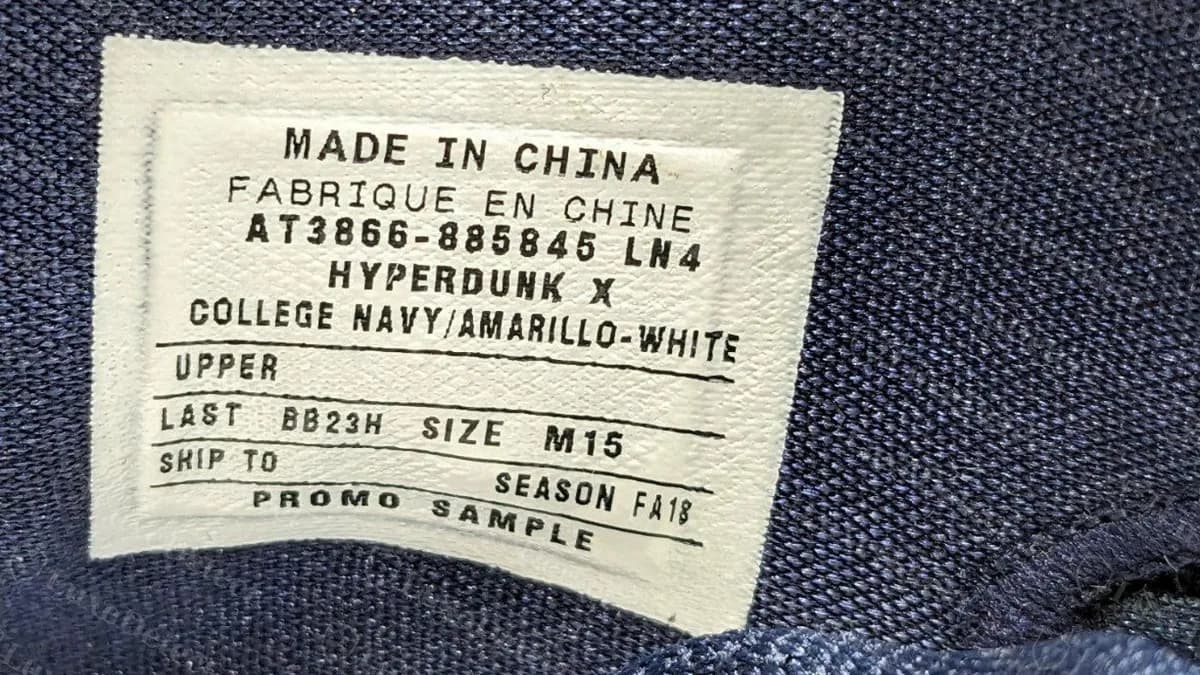
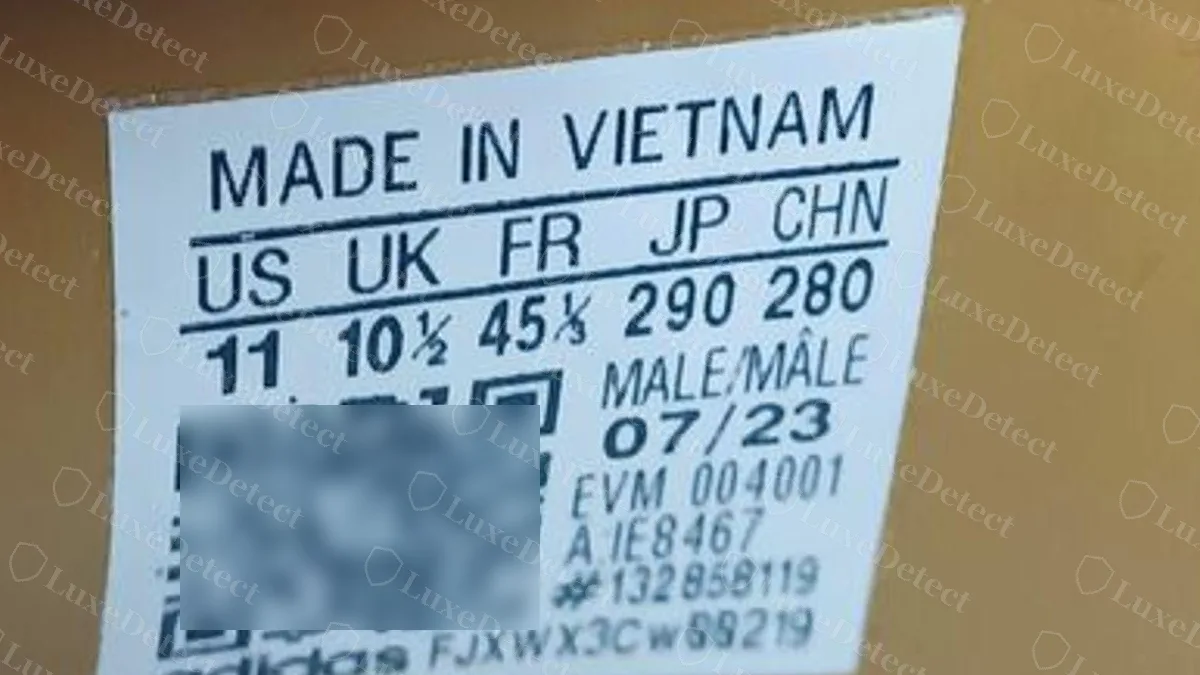
- Photograph the pair in daylight: both shoes from the side, the size label inside the tongue of each shoe, the box label, the insoles and the outsoles. Our guide to Nike sample tags and how to read a shoe tongue label explains each field; the style code and size should agree with the colourway you hold and with the box.
- Note the delivery date. Platform and payment deadlines usually run from delivery or from the charge, not from the day you noticed a problem.
For model-specific checks, compare what you have against our fake Jordans guide, which covers every Jordan model, and our Nike Dunk real vs fake guide. Be specific: "the size label style code does not match the box" gives a claims handler something to check, while "they feel cheap" does not.
Worth knowing
A detail that matches proves nothing on its own, because counterfeiters copy labels and boxes. A detail that does not match is worth raising.
Step 3: Contact the seller and the platform in writing
The FTC's advice is to try to resolve a problem with the seller or site owner first. Do it in writing, inside the platform's messaging if you bought on one, so the platform can see it. Do not agree a refund or a return by text or social media, and do not ship the pair back until the platform or seller has given you instructions in writing.
If you paid through a marketplace or resale app, open a case through its buyer protection. Windows are often short and run from delivery. We cover the details for eBay, Vinted, Depop, Poshmark, Mercari and Facebook Marketplace.
Step 4: Use your payment provider if the seller will not help
If the seller refuses, goes silent or cannot be identified, your card issuer or PayPal is the next route. The FTC says paying by credit card "best protects you and your money in case of a scam." PayPal and card disputes have their own deadlines and evidence rules, and you usually have to choose one route per transaction rather than running two at once. Our guide to getting a refund for a fake item sets out PayPal's terms, chargeback deadlines and what banks ask for.
Red flag
A PayPal "friends and family" payment is outside PayPal's Purchase Protection. If a seller asked you to pay that way or by bank transfer, contact your bank or payment provider straight away rather than waiting on the seller.
Step 5: Report the seller
Report the listing to the platform, which is separate from your refund case. In the US you can also report a fraudulent seller or website to the FTC at ReportFraud.ftc.gov. A report does not get your money back by itself, so file it alongside your claim, not instead of it.
Getting an Independent Opinion
Every route above comes down to one question: can you show the pair is not what the seller promised? A seller will say it is genuine, and your own photos show the shoes. An opinion from someone with no stake in the sale is harder to wave away.
LuxeDetect issues a signed written statement on our letterhead for marketplace, PayPal and card disputes: a Statement of Non-Authenticity, a Statement of Condition, or a Not As Described statement. It costs $40 and arrives as a PDF within 24 hours of payment. You upload clear photos and your receipt with the request; if the photos do not support the statement you asked for, we tell you and refund the $40. Platforms, PayPal and your bank make their own decisions, so no statement can guarantee a result.
If you want a verdict first, you can authenticate the pair with photos and receive a Certificate of Authenticity, usually within 24 hours.
FAQ
What is Nike's return policy?
When we checked Nike's US help pages in October 2026, most purchases from nike.com, the Nike App and Nike stores could be returned or exchanged for any reason within 60 days of delivery or purchase, with proof of purchase. Returns are free for Nike Members; guests pay their own return shipping. Exceptions include pre-orders, SNKRS Reserve orders, gift cards, items marked nonreturnable and Nike Clearance store purchases.
Can I return worn Nike shoes?
Nike's US policy says most purchases can be returned "for any reason within 60 days," and the only unworn requirement on its exceptions page when we read it was for Nike jewelry. Check the current page for your country before you rely on that, and remember it covers purchases from Nike only.
Can I return fake Nikes to Nike?
No. Nike's return policy covers what you bought from Nike, and its help pages say items bought at other retailers must be returned to the retailer where they were bought. A fake pair from a third-party seller is a claim against that seller, the platform you paid through, or your payment provider.
How long does a Nike refund take?
Nike says it issues refunds within six business days of receiving your return. Card, Apple Pay and PayPal refunds can take up to 10 more days to show; Nike gift card refunds usually arrive within 24 hours. Refunds go to the original form of payment.
Can I return a SNKRS order?
Nike lists pre-orders and SNKRS Reserve orders as non-returnable. For any other order, check the item's page and your order details for a nonreturnable note before assuming the 60 days apply.
How do I know if my Nike order was really from Nike?
Look it up. A Nike order appears in your Nike account's order history or at nike.com/orders with your order number and email address. If it does not, Nike did not sell it, whatever the website looked like, and you should treat it as a third-party purchase.
What proof do I need that a Nike pair is fake?
Specific, checkable details: the listing, your receipt, clear photos of the size labels, box label and the parts that do not match a genuine pair, and ideally an opinion from an independent authenticator. A general feeling that the pair is off gives a claims handler nothing to check.