Sneaker Authentication Expert
Sneaker and streetwear authenticator. Covers Nike, Jordan, Yeezy, and limited collaboration releases.
Last updated May 2026 · Published December 2025 · Contact
Why Sneaker Fakes Are Better Than Ever
The global sneaker resale market hit roughly $6 billion in 2024, and counterfeit production has scaled right alongside it. A Jordan 1 Retro High OG that resells for $400 costs a Guangzhou manufacturer about $18 to produce. At that margin, the investment in better tooling, better materials, and better quality control pays for itself quickly.
The result: "batch" or "1:1" fakes that pass casual inspection and sometimes fool buyers on authenticated platforms. The factories producing them have access to the same Nike-spec foam compounds, the same mesh suppliers, and in some cases stolen production molds. Authentication has become a skill worth developing before you spend serious money in the secondary market.
This guide covers the checks that actually work in 2026 — not vague advice about "feel the quality," but specific measurements, materials, and tells tied to specific models.
The Box — Authentication Starts Here
Genuine Nike, Adidas, and Jordan boxes have consistent typography and a specific construction. Before touching the shoe, check:
Box label: Nike labels use a specific font (similar to Helvetica Neue) with precise kerning. The UPC barcode should scan and return a result in any barcode app — if it doesn't, something is wrong. The label should show Style/Color code, size, country of manufacture, and a manufacture date.
Box construction: Genuine Nike Swoosh boxes use a cardboard with a specific weight and texture. The lid fits firmly — not too tight, not loose. Fakes often have a lid that slides easily or cardboard with a slightly different color (often too orange or too pale).
Tissue paper: Authentic pairs from Nike come with white tissue paper. Some limited releases have special tissue or no tissue. Never black or printed tissue on a standard Nike or Jordan pair.
Model-specific tips:
- Jordan 1: Box should have the correct orange shade. The Jumpman on the box lid should be embossed, not printed. Shoe size at the end of the box.
- Yeezy 350/700: Adidas uses a matte finish on the box label, not glossy. Font is Adidas's custom face. QR code on the label should be scannable.
- Nike Dunk: Box label references a specific color name matching the release (e.g., "Varsity Red/Varsity Royal/White" for the 1985 OG colorway).
Shape and Last
Every shoe is built on a "last" — the foot-shaped form that defines its silhouette. Genuine lasts are proprietary and expensive to recreate precisely.
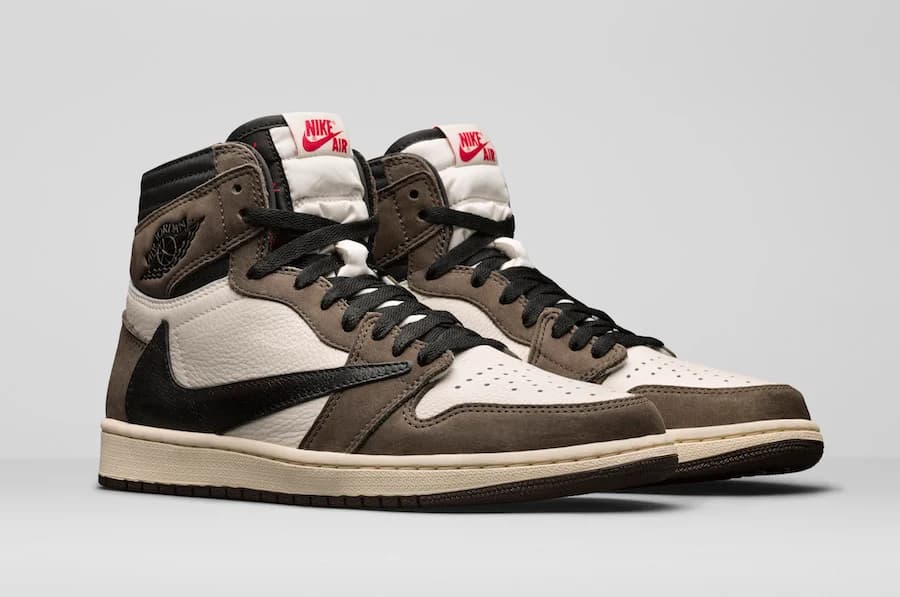
Jordan 1: The toe box should taper gently from ball-of-foot width to a slightly rounded point. Fakes often have a toe box that's too boxy (too wide at the tip) or too narrow. The heel counter should sit at roughly a 90° angle to the sole — fakes frequently have a heel that leans inward.
Yeezy 350 V2: The Boost sole profile is very specific — it curves upward at the toe and heel in a particular way. The midsole thickness at the heel should be approximately 30mm. Fakes often have a heel that's too flat or a toe that doesn't curl enough.
Nike Dunk SB: The silhouette is chunkier than the non-SB Dunk. The ankle padding is thicker. Fakes frequently under-pad the ankle or compress the collar.
The fastest way to check shape: look at the shoe in profile from 3 feet away against a white background. If something looks "off" before you can specify what, trust that instinct — your eye is detecting a proportion error.
Materials — What Actually Touches Your Hand
Leather: Genuine Nike Air Force 1s and Jordan 1s use full-grain leather that has a specific pebble texture and slight natural variation in grain density. It shouldn't be too glossy, too matte, or perfectly uniform. Fake leather on budget replicas feels smooth and plasticky. Higher-end fakes use split leather or PU that feels passable until you compare it directly to a genuine pair.
Pinch the leather panel. Genuine full-grain leather rebounds immediately without creasing. PU leather holds a pinch crease for a second or two.
Mesh: Nike Flyknit and Primeknit (Adidas) are woven fabrics with specific filament counts and pattern densities. The pattern should be consistent with no broken or uneven yarns. On genuine pairs, the weave is tight enough that you can't push an individual strand with a fingernail. Fake Primeknit typically has larger, looser loops.
Foam: Adidas Boost midsoles use thermoplastic polyurethane beads fused together. The bead pattern visible on the midsole edge should be irregular and organic — not arranged in rows. Nike Air bubbles (on Air Max models) should be a specific shape for each model; the 270 unit, the 95 unit, and the Max 1 unit all have distinct profiles.
Rubber outsole: Authentic Nike outsoles use a rubber compound that feels slightly tacky and firm. Fake outsoles feel harder and more rigid. On Jordan 1s, the outsole should be perforated — a specific circular perforation pattern in the toe and heel.
Stitching — Count, Angle, and Thread
Sneaker stitching on genuine pairs is machine-applied on an industrial grade sewing machine, which produces very consistent results. This actually makes fakes easier to spot when they get stitching wrong.
Jordan 1: The perforations on the toe box are punched in a specific 4-row pattern with equal spacing between holes. The Nike Swoosh is stitched on with a lockstitch — if you look at the back of the Swoosh (inside the shoe), the stitching pattern mirrors the front. Fakes often use a simpler stitch that looks identical from the outside but different from the inside.
Stitch density: On the collar stitching of a Jordan 1, count the stitches per inch. Genuine: approximately 10–12 stitches per inch. Fakes often run at 7–9 (too loose) or 14–16 (too tight, trying to overcompensate).
Thread color: Nike uses threads that match the upper material — not just the same color, but the same shade family. The thread on a "Bred" Jordan 1's Swoosh is a specific red that matches the leather panels. Fakes frequently use a slightly different red (too bright, too orange, or too dark).
Logos and Branding
The Nike Swoosh: On genuine Air Force 1s and Dunks, the Swoosh is a specific length and curvature defined by Nike's brand guidelines. The tip of the Swoosh should point toward the lace eyelets. The thick end should sit at the midsole. Fakes are frequently off by 2–5mm on either end, which sounds small but is visible once you know what to look for.
The Jumpman: On Jordan 1s and most Jordan retros, the Jumpman on the tongue tag is embroidered — not printed, not heat-transferred. The silhouette should be clean with no thread bleeding. The feet should have a specific spread angle. Many fakes compress the Jumpman's silhouette or use a version with incorrect leg proportion.
Adidas Three Stripes: On genuine Adidas Originals, the three stripes are a specific width and angle for each model. On the Samba, they sit at approximately 45°. On the Gazelle, slightly different. Fakes frequently get the angle right but the width wrong.
Yeezy branding: The "YEEZY" text on Boost 350 insoles is printed in a specific Adidas internal font. The spacing between letters is exact. Fakes often have slightly tighter or looser letter spacing.
Insoles, Tags, and Interior
Interior tags: Nike's interior tags are heat-applied and should be flat with no lifting edges. The text is printed in a specific font with exact sizing. For most models, the tag shows Style code, color code, and size. The coloring on genuine tags is a specific shade of white with black printing — not cream, not grey-white.
Insole branding: Most Nike and Adidas insoles have printed branding that should be precisely positioned. Nike Air insoles typically have a Swoosh logo embossed into the foam at the heel. Adidas Boost insoles should have the three-stripe logo.
Smell: New genuine sneakers have a specific smell — foam off-gassing, rubber, and fabric adhesive. It's subtle and clean. Fakes often smell of stronger chemical adhesive (solvent or rubber cement type smells) or have an overwhelming "new car" chemical odor. This works better as a negative indicator than a positive one — a chemical smell is a red flag; no unusual smell doesn't confirm authenticity.
QR Codes and Digital Verification
Nike and Adidas have both implemented digital authentication features that fakes cannot yet replicate:
Nike's NFC tag: Present in select Air Max and Jordan models since 2020. A small NFC tag in the tongue or insole. Tap with an iPhone or Android NFC-enabled phone — it should redirect to the Nike website and confirm the specific product. Fakes may have a chip, but it won't link to Nike's servers.
Adidas digital authentication: The Adidas CONFIRMED app and in-shoe chips on select releases. The YZY QNTM and some Yeezy releases have chips that verify against Adidas's database.
Box QR codes: Newer Nike boxes have a QR code on the label. Scan it — it should open a Nike product page matching the exact colorway and style. If it fails or opens a generic page, investigate further.
Side-by-Side Reference Comparison
The single most reliable authentication tool is a reference image from a trusted source — a Nike.com product page, a StockX verified listing, or a Sneaker News review — compared side-by-side to the pair you're examining.
Focus on:
- Exact positioning of logos relative to stitching lines
- Color matching (screen-accurate photos let you compare)
- Sole pattern — print a reference photo at scale and hold it against the sole
- Hardware (eyelets, hooks) — the correct shape and finish
Before spending significant money on any secondary market pair, spend 20 minutes looking at authentic reference photos. The fakes that fool buyers are usually fakes the buyer didn't research.
FAQ
What is the most faked sneaker in 2026?
Jordan 1 Retro High OG colorways and Yeezy 350 V2 remain the most heavily counterfeited sneakers due to high resale prices and consistent demand. Nike Dunk SB collaborations are increasingly targeted as prices have climbed. Air Force 1s are heavily faked at the lower end of the market.
Can StockX fakes get through authentication?
Occasionally. StockX's authentication process catches the vast majority of fakes, but it is not infallible — particularly for high-quality "batch" replicas. Reports of authenticated fakes slipping through appear periodically. StockX offers a $10 million Buyer Promise, but the dispute process requires evidence and isn't instant.
Is it possible to authenticate sneakers from photos alone?
For most fakes, yes — photo-based authentication catches around 90–95% of counterfeits. But the highest-quality 1:1 replicas require physical examination for conclusive results, particularly for material feel, foam density, and NFC chip verification. Photo authentication should be considered a strong indicator, not a guarantee.
What do the letters in a Nike style code mean?
Nike style codes follow the format XXXXXXX-XXX. The first group is the model number; the last three digits are the colorway code. You can search any style code on Nike.com or an authenticated database like Sneaker News to verify it corresponds to the model and colorway being sold.
At what price point should I get professional authentication?
$300 is a reasonable threshold for most buyers. Below $150, the effort usually exceeds the risk. Above $300 — and particularly above $500 — professional authentication starts at $9 and protects against a risk that's real and documented. For grails over $1,000, there's no argument: get them authenticated before purchase.
Do new sneakers need authentication?
Usually not if purchased from an authorized retailer. If bought from a third-party reseller even for a brand-new pair (from GOAT, StockX, or similar platforms), the platform's authentication should cover you — but you can still run basic checks on delivery, particularly the box label QR code and interior tags.