Sneaker Authentication Expert
Sneaker and streetwear authenticator. Covers Nike, Jordan, Yeezy, and limited collaboration releases.
Published October 2026 · Contact
How to Tell If Jordans Are Fake: Read the Label Inside the Shoe First
To tell if Jordans are fake, read the white size label sewn inside the shoe and check that every number on it belongs to the release you think you hold. The style code, the two production dates, the label layout and the UPC must all agree with that colorway and year.
A label that does not fit the release is the clearest sign of a fake. A label that fits proves nothing, because the better fakes copy a whole genuine label. Then compare the shoe against a verified pair of the same release, and use the model guide below for the details.
This guide covers the checks that apply across Air Jordan models. It does not replace the model guides, which hold the release-by-release tables. Every point here comes from our Air Jordan 1, Air Jordan 4 and Air Jordan 11 guides, where it is backed by the genuine and fake pairs we examined.
What to check, ranked by reliability
| Checkpoint | Reliability | What it tells you |
|---|---|---|
| 1. Style Code Against the Release | ★★★★★ | A code from another release or another shoe did not appear on the genuine labels we examined, but fakes also print genuine codes. |
| 3. The UPC Belongs to One Colorway | ★★★★★ | The same UPC on another colorway or size means a reused template; a UPC that fits the shoe clears nothing. |
| 2. Dates and Layout Against the Release | ★★★★★ | Dates years away from the release, or a layout from another era, do not fit; fakes that copy a whole label copy these too. |
| 5. Box Label and Inner Label Must Agree | ★★★★★ | A box that disagrees with the inner label is a mismatch, but a neat box proves little. |
| 6. Tongue Tag, Stitching and Shape | ★★★★★ | Fakes work hardest to copy these and vary by release, so use them to decide where to look harder. |
| 4. Country of Origin Is Not a Tell by Itself | ★★★★★ | Genuine Jordans are made in both China and Vietnam, and a fake can print either; the country is context, not a test. |
| 7. Details Fakes Also Copy | ★★★★★ | Sole yellowing, the heel 45, patent shape and a clean weave are shared by genuine and fake pairs. |
Pick Your Model
Find the model on your feet or in the listing, then open that guide. If the listing says Jordan 4 but the label inside carries a code from another shoe, trust the label.
| Model | What its guide checks | Guide |
|---|---|---|
| Air Jordan 1 (fake Jordan 1) | Inner label UPC and dates, style code, tongue tag wording, Swoosh stitching, toe box, sole | Air Jordan 1 real vs fake |
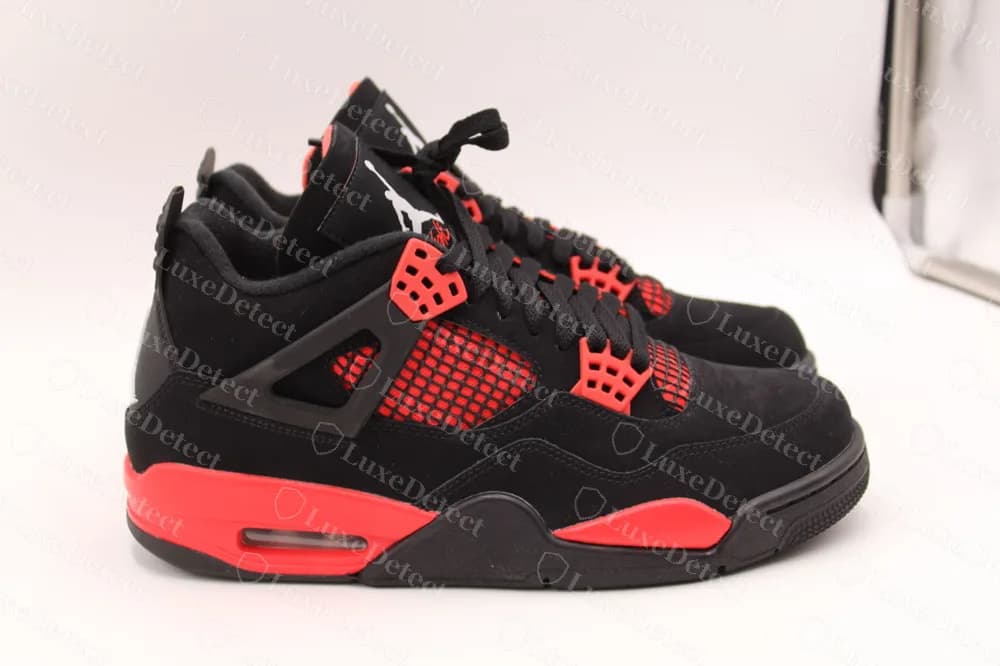
| Air Jordan 4 (fake Jordan 4) | Size tag read as a set: style code, layout, factory code, dates, UPC. Black Cat, Military Black, Red Thunder, Bred, White Cement | Air Jordan 4 real vs fake |
| Air Jordan 11 | Size label: style code, dates, country, layout, UPC. Concord, Bred, Space Jam | Air Jordan 11 real vs fake |
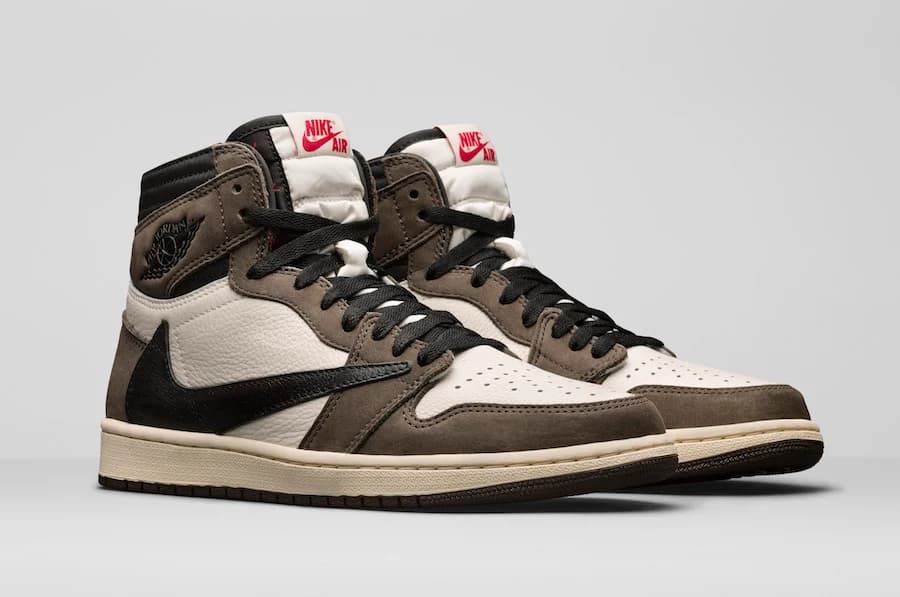
| Travis Scott and other collabs | Collab-specific details | Travis Scott sneakers guide |
We do not have a model guide for other Air Jordans yet. For those, use the shared checks below and compare against a verified pair of the exact release. The general sneaker authentication guide covers the rest of the shoe.
Style Code Against the Release
Every Jordan label carries a style code: six digits, a hyphen and three more digits (or a letter-and-digit format on newer releases). The code belongs to one colorway of one model. Look up the release the seller names and compare.
| Model | Example genuine style codes from our guides |
|---|---|
| Air Jordan 1 | 555088-101 Chicago (2015), 555088-001 Bred / Banned (2016), 555088-134 University Blue (2021) |
| Air Jordan 4 | CU1110-010 Black Cat (2020), DH6927-111 Military Black (2022), 308497-060 Bred (2019) |
| Air Jordan 11 | 378037-100 Concord (2018), 378037-061 Bred (2019), 378037-003 Space Jam (2016) |
What fakes get wrong: a code from another shoe, the code of an earlier release on a newer pair, a grade school code on an adult pair, or a code that does not match the colorway name on the box. Examples from our guides are a Jordan 11 Concord reading 378037-101, a Jordan 11 Bred carrying a 2012 code with 2019 dates, and a Jordan 4 Black Cat reading 405452-010.
Red flag
A style code that belongs to a different release or a different shoe. On the genuine labels we examined, this did not appear, so it is enough to walk away.
Worth knowing
The right code does not clear a pair. Fakes print genuine codes, and the Jordan 1 guide shows a plausible 555088-001 Banned label on a fake.
Dates and Layout Against the Release
The two dates on the label are production dates. They fall before the release, in the months the genuine pairs were made. A date after the release, or years away from it, does not fit. Examples from our guides: a Jordan 1 Chicago (a 2015 release) with a label dated 2020 and 2021, a Jordan 11 Bred 2019 with dates in 2022, and Jordan 11 Space Jam labels dated 2010, 2014 and 2015.
The layout (a linear barcode or a QR code) also depends on the release, and there is no rule that newer is better:
- Jordan 4: Black Cat 2020 and Military Black 2022 carry a QR code. Bred 2019 and White Cement 2016 carry the older barcode.
- Jordan 11: the 2019 Bred carries a QR code. The 2018 Concord and 2016 Space Jam carry a barcode.
- Jordan 1: the genuine labels we reviewed dated from late 2018 onward carry a QR code and extra BR and CN size lines. We found no Nike statement on this, so treat it as an observation that needs a second source.
So judge the layout against the release and the date, never against a general belief. Fakes that copy a full label copy its layout too, which is why dates and layout rate below the style code.
The UPC Belongs to One Colorway
A genuine UPC is tied to one style code, and on the Jordan 1 it is also tied to one size. The check works in two ways:
- Search the UPC with the style code and size. If it belongs to a different colorway or size, the label is wrong.
- Compare tags. Fakers reuse one label template across colorways. We saw the same UPC on fake Jordan 1 pairs of four different style codes, on fake Jordan 4 Red Thunder and Bred tags, and on fake Jordan 11 Bred and Space Jam labels.
Red flag
The same UPC on another colorway or size. A genuine UPC is specific to one shoe, so a repeat across listings means a template, not a Nike label. If you are buying from one seller, compare the labels of their pairs with each other.
Worth knowing
A UPC that belongs to the right shoe does not clear the pair. There is also no official lookup for it, so a wrong prefix is a prompt to look harder.
Country of Origin Is Not a Tell by Itself
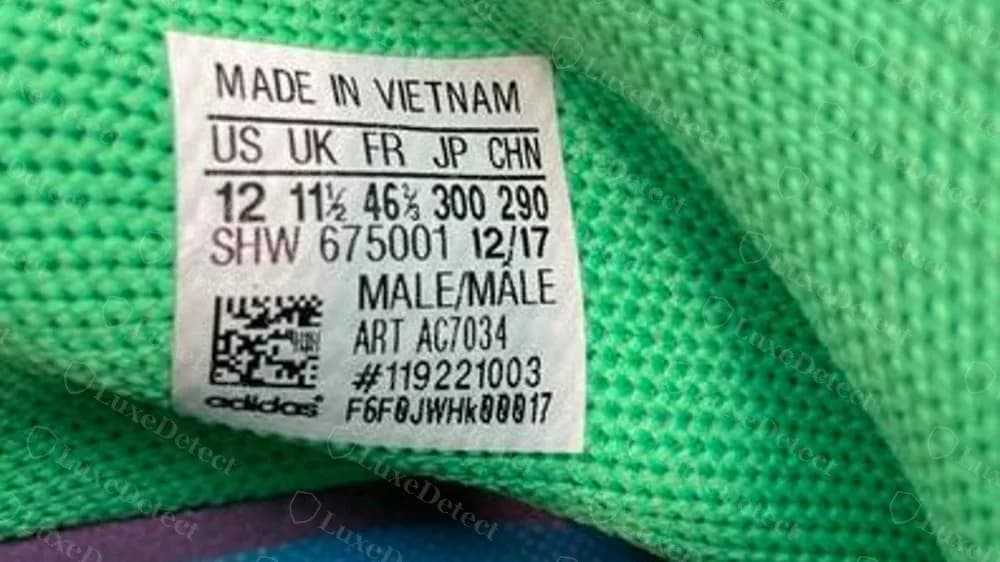
Do not reject a Jordan for "Made in Vietnam", and do not clear one for "Made in China". Genuine Jordan 4 Red Thunder pairs are made in Vietnam, and so are genuine grade school Jordan 4s. Genuine Jordan 1 labels we reviewed read China, and the fakes read both China and Vietnam.
The Jordan 11 guide records one observation. On the adult Concord 2018, Bred 2019 and Space Jam 2016 labels we examined, the genuine labels said China, and some fakes said Vietnam. That is a record of those releases, not a test: a fake can print any country, so treat the country as context and judge the label by its layout and style code.
Box Label and Inner Label Must Agree
The box label lists the style code, size and colorway, and the same code and layout are printed on the inner label. The two must agree with each other and with the shoe. A box that belongs to another colorway, or a code that disagrees with the inner label, is a mismatch worth walking away from.
A neat box proves very little. Fakes copy genuine codes and layouts, so a correct box label does not clear a pair. Treat it as supporting evidence next to the inner label, never as the deciding check.
Tongue Tag, Stitching and Shape
These are the checks most guides lead with, and fakes work hardest to copy them. From our Jordan 1 guide:
- The tongue label wording depends on the release. The genuine 2015 Chicago and Court Purple 2.0 pairs we reviewed carry a woven NIKE AIR label, while a genuine 2013 Chicago carries a Jumpman with AIR. Check the wording against your release. A good weave proves nothing.
- Swoosh stitching and toe box shape vary by colorway and era. Better fakes now sew the Swoosh cleanly, so a tidy stitch line does not clear a pair.
- Use shape to decide where to look harder, and compare with a verified pair of the same release.
On the Jordan 4, the Flight Jumpman on the tongue and the heel liner Jumpman got a low rating in our guide, because lighting changes how a logo looks and we saw the heel liner one on a single fake.
Details Fakes Also Copy
Do not buy or reject on these. Our guides found that genuine and fake pairs share them:
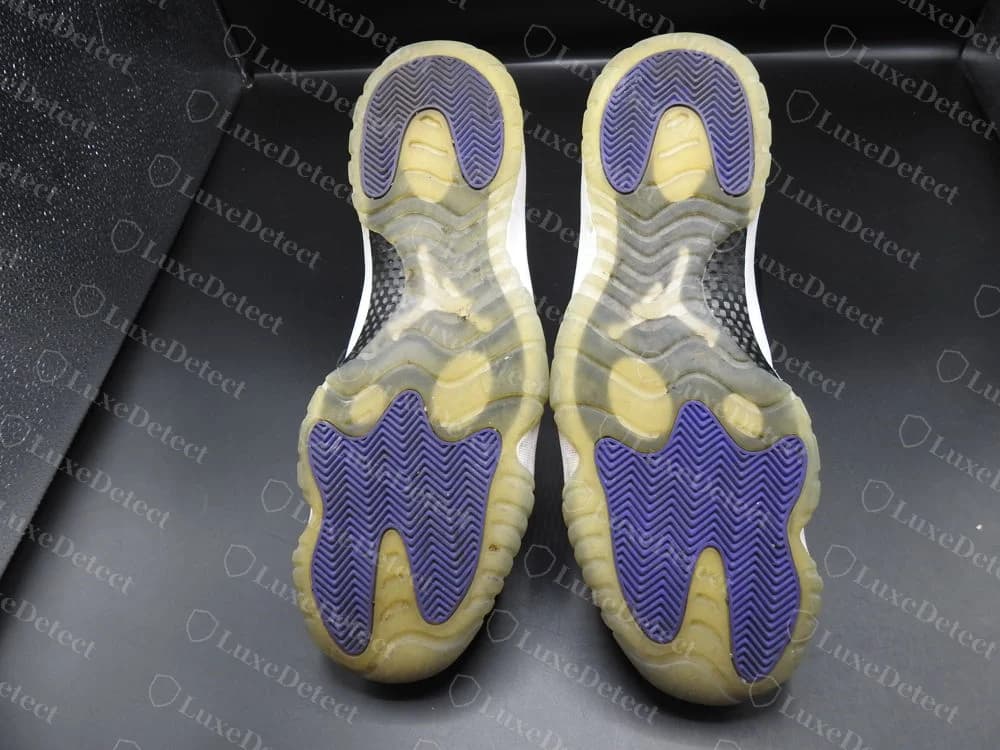
- The yellowed translucent sole and violet traction pods on a Jordan 11 Concord. Yellowing mostly means age.
- The 45 on the heel, the patent leather shape, the carbon fiber plate and the tongue patch wording on a Jordan 11.
- The dotted stitched border on the heel Jumpman of a Jordan 4 Black Cat, which some guides treat as a fake sign.
- A tidy Swoosh stitch line and a woven tongue tag on a Jordan 1.
What a Matching Label Does and Does Not Prove
Fakes in our guides included complete, correctly formatted labels for the right release: the right code, the right country, plausible dates and a plausible UPC. A Jordan 4 Black Cat fake reproduced the genuine tag so closely that we could not find a difference on the tag itself.
So use the label as a filter. If it fails, stop. If it passes, the pair is not a careless fake, and the decision moves to construction: shape, materials, stitching and sole against a verified pair of the same release.
Quick Checklist for Any Jordan
- Name the release and its style code from a retailer or resale listing, not from the seller.
- Photograph the inner label flat and read every line.
- Match the style code to the colorway and to the box label.
- Check both dates against the release, and the layout against that release.
- Search the UPC with the style code and size, and look for the same UPC on other colorways.
- Do not decide on the country of origin, the sole color or a clean weave.
- If the label passes, compare the shoe with a verified pair, then open the guide for your model.
One failed label check is enough to walk away. Passing all of them means only that the label is plausible.
When to Get a Professional Opinion
Label checks stop the careless fakes. For a pair with a clean label and a high price, a second look from someone who sees your model every day is cheap compared with the price of the shoe.
LuxeDetect sneaker authentication has a 24-hour option and returns a verdict with a Certificate of Authenticity. Submit your Jordans for authentication with clear photos of the inner label, the box label, the tongue, the heel and the sole.
A code that checks out doesn't prove the item is real. Counterfeiters copy genuine codes.
Our authenticators check the labels, stitching, sole and box of your Air Jordan against verified references, from $9. You get a verdict within 24 hours, and a Certificate of Authenticity if the item passes.
Authenticate My Air Jordan →FAQ
How to tell if Jordans are fake?
Read the white label inside the shoe. The style code, the two production dates, the layout and the UPC must all belong to the release you think you hold. A code from another shoe, dates years away from the release, or a UPC seen on another colorway marks a fake. A label that fits proves nothing, so then compare the shoe with a verified pair.
How to know if a Jordan is fake?
Start with the inner label, then the box label, which must agree with it. Do not decide on the country of origin, the sole color or a clean tongue tag, because genuine and fake pairs share them. If the label passes, check shape, stitching and materials against a verified pair of the same release, or have a professional look at it.
What do fake Jordans get wrong most often?
On the pairs we examined, the printed label: a style code from another release, dates that do not fit, a layout that belongs to a different year, or a UPC reused across colorways. The shape and the stitching are what fakes copy best, so they rate lower.
How can I tell if a Jordan 4 is fake?
Read the size tag as a set: style code, layout, factory code, dates and UPC must all belong to the colorway. For example, a genuine adult Black Cat 2020 tag carries CU1110-010. See the Air Jordan 4 guide for each colorway.
How can I tell if a Jordan 1 is fake?
Read the inner label first: a genuine UPC belongs to one style code and one size, and the dates must fit the release. Then compare the tongue tag wording, the Swoosh and the toe box with a verified pair of the same release. See the Air Jordan 1 guide.
Is Made in Vietnam on a Jordan a sign of a fake?
No. Genuine Jordan 4 Red Thunder pairs are made in Vietnam, and a fake can print any country. On the adult Jordan 11 Concord 2018, Bred 2019 and Space Jam 2016 labels we examined, the genuine labels said China; that is a record of those releases, not a test. Treat the country as context and judge the label by its layout and style code.
Can I tell if Jordans are fake from photos?
Yes. Clear photos of the inner label, the box label, the tongue, the heel and the sole show the marks that decide it: whether the label's code, dates, layout and UPC agree with the release, and how the materials and construction compare with verified pairs. For an expensive pair, a professional review is the safer route.
Is a correct style code proof that Jordans are real?
No. Fakes print genuine style codes, including on complete copies of genuine labels. A correct code only means the label is not careless.
Which Jordan models have a guide?
The Air Jordan 1, Air Jordan 4 and Air Jordan 11, plus the Travis Scott collabs. For another model, use the shared checks above and compare with a verified pair of the exact release.