Luxury Handbag Authentication Specialist
Luxury leather goods specialist. Works on Italian house construction, hardware, and interior stamping.
Published November 2026 · Contact
Vintage Gucci Bags: The Short Answer
How do you know if a vintage Gucci bag is real? Work out its era first, then check that the tag, the stamps, the hardware and the lining all belong to that era and to that model. Do not start with the serial number. Older Gucci bags use several different number formats, many have no number at all, and Gucci publishes no key that turns any of them into a date. A plausible number proves very little, because fakes carry plausible numbers.
What gave fakes away in our archive was more specific: tags that printed a counting run of digits or a misspelled word, numbers copied from real bags, and labels from the wrong period. About 30% of the Gucci handbags checked with us (2024 to 2026) came back fake, and vintage styles such as the Jackie and the Bamboo are among the shapes that get copied. This guide covers the eras, the models collectors look for, what the numbers and stamps look like in each period, and what is normal wear on a bag that is thirty or fifty years old.
Worth knowing
This guide is built from the vintage Gucci bags that came to us as authentication orders, genuine and fake, and from the Gucci guides we already publish. We list a detail as a tell only when it appeared on fakes and not on the genuine bags we checked. Where we found no such detail, such as the Bamboo handle, we say so and show what genuine looks like instead. Dates for the eras come from reseller and collector sources that disagree at the edges, so use them to ask whether a bag's tags fit its style, not to date it to the year.
What to check, ranked by reliability
| Checkpoint | Reliability | What it tells you |
|---|---|---|
| 1. The Interior Number: Format by Era, and the Fakes That Count Upward | ★★★★★ | A counting run of digits (45678) or a misspelled word on a tag rejects the bag; a plausible number clears nothing. |
| 2. Era Mismatches: Labels That Cannot Belong to the Bag | ★★★★★ | A black QR label on a bag sold as a pre-2000s original is a strong warning, but a reissue should carry one. |
| 3. Stamps and Plates: Script, BREV. and Metal Plates | ★★★★★ | Thick, puffy stamping or a style that does not fit the era counts against a bag; the made-in-Italy line never does. |
| 4. Hardware and Closures by Model | ★★★★★ | Compare the clasp and zip pull with the bag’s own era; a snap hook on a Jackie fails, a crest pull is wrong only on the current Jackie 1961. |
| Vintage Gucci Eras at a Glance | ★★★★★ | Catches labels from the wrong period; dates vary between sources and it will not catch a good fake. |
| 5. Canvas, Bamboo and Leather | ★★★★★ | Fakes in our sample had real bamboo handles, so the handle alone neither clears nor condemns a bag. |
| 6. Lining and Construction | ★★★★★ | Shows repair history and quality; no single lining tell held across the fakes we reviewed. |
| What the Controllato Card, Dust Bag and Box Do and Do Not Prove | ★★★★★ | Packaging is context only; a genuine vintage card can itself print a counting sample number. |
Vintage Gucci Eras at a Glance
Gucci began in Florence in 1921 as a luggage and leather goods house. Several details that people call "vintage Gucci" come from different decades, and the labels inside the bag changed with them. The table sets out what each period looks like, with the caveat that sources disagree on when each change began.
| Period | What you see on the bags | Numbers and labels inside |
|---|---|---|
| 1950s to 1970s | Bamboo-handle bags (the bamboo handle dates to 1947), Diamante and early GG canvas, leather trim, the green-red-green Web stripe, horsebit hardware | Often no number at all. Some vintage straps and linings carry a gold-foil MADE IN ITALY BY Gucci stamp with a script signature and a BREV. (patent) number |
| 1980s | Larger hardware, GG canvas with leather, doctor bags and duffles | Sources disagree on when numbers began; some say a leather tab inside a zip pocket, others later. A missing tab is not decisive |
| 1990s to early 2000s | The Tom Ford era: the Jackie in nylon, canvas and suede, the Bamboo and the Diana, Blondie flap bags, GG canvas bags, a bamboo chain bag from 1999 | A leather or metal tab with a number, often a short code with dots or a hyphen over a longer number; the older 10-digit single row on bags of this period |
| 2000s to about 2013 | Guccissima leather bags, Web-stripe totes and the continuing GG canvas ranges | Number layouts keep changing; the two-row leather patch that is standard today took over in this stretch |
| About 2014 onward | Reissues such as the Jackie 1961 and the Bamboo 1947 | The two-row six-digit leather patch plus a black fabric label with a QR block, which marks a bag as post-2014 |
Worth knowing
A reissue of a vintage design is not a vintage bag. The Jackie 1961, the Bamboo 1947 and the reissued Diana carry modern labels, and that is correct for them. A bag sold as a 1970s original that carries a black QR label has a mismatch to explain; a bag sold as a current reissue with one does not.
The Vintage Gucci Models Collectors Look For
The Bamboo and the Diana
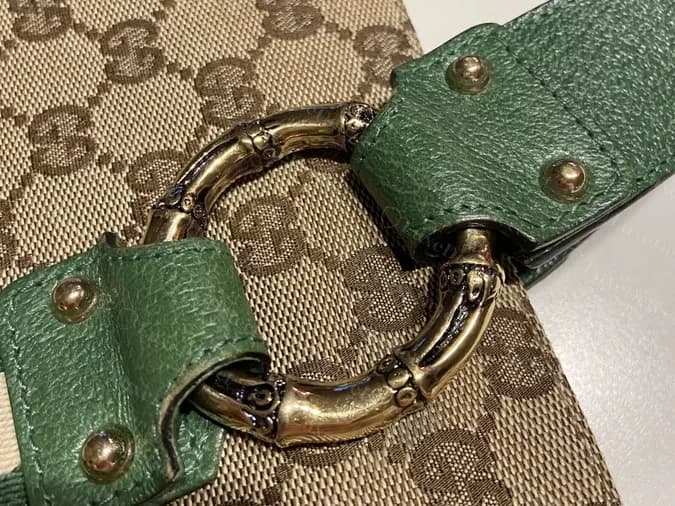
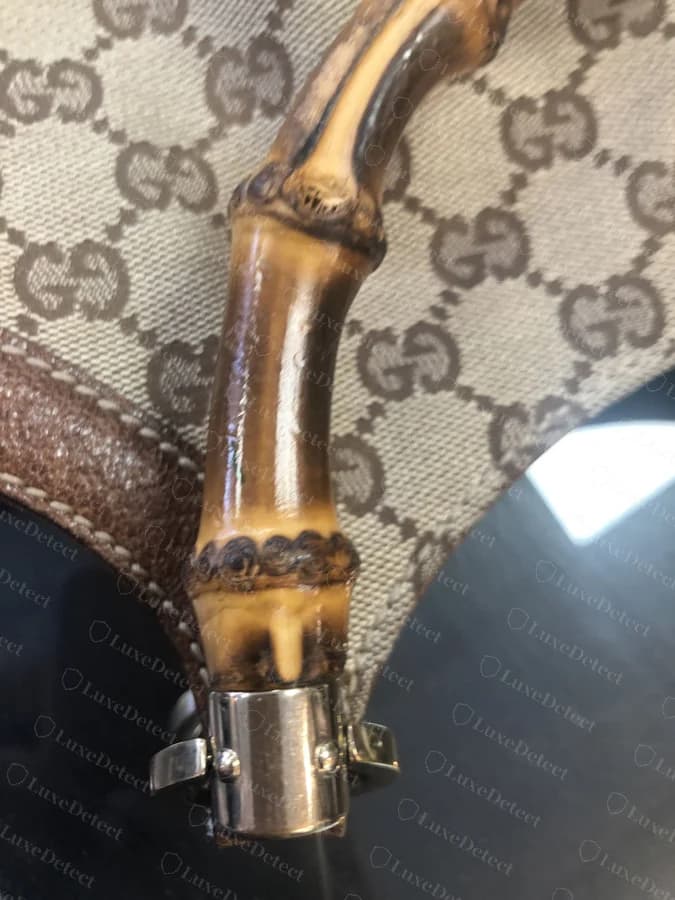
The bamboo handle began in 1947, when post-war leather shortages sent Gucci's Florentine craftsmen to bamboo. The handle is real bamboo that is heated, curved by hand and lacquered, so no two are identical: the nodes are unevenly spaced, the curve has a slight asymmetry and the lacquer darkens near the nodes. The Diana, the structured tote with two bamboo handles, is dated to the early 1990s by Fashionphile and ICON-ICON, and Tom Ford's bamboo chain bag to 1999. Our Gucci Bamboo guide shows a genuine handle, ferrule and interior stamp in detail.
The Jackie
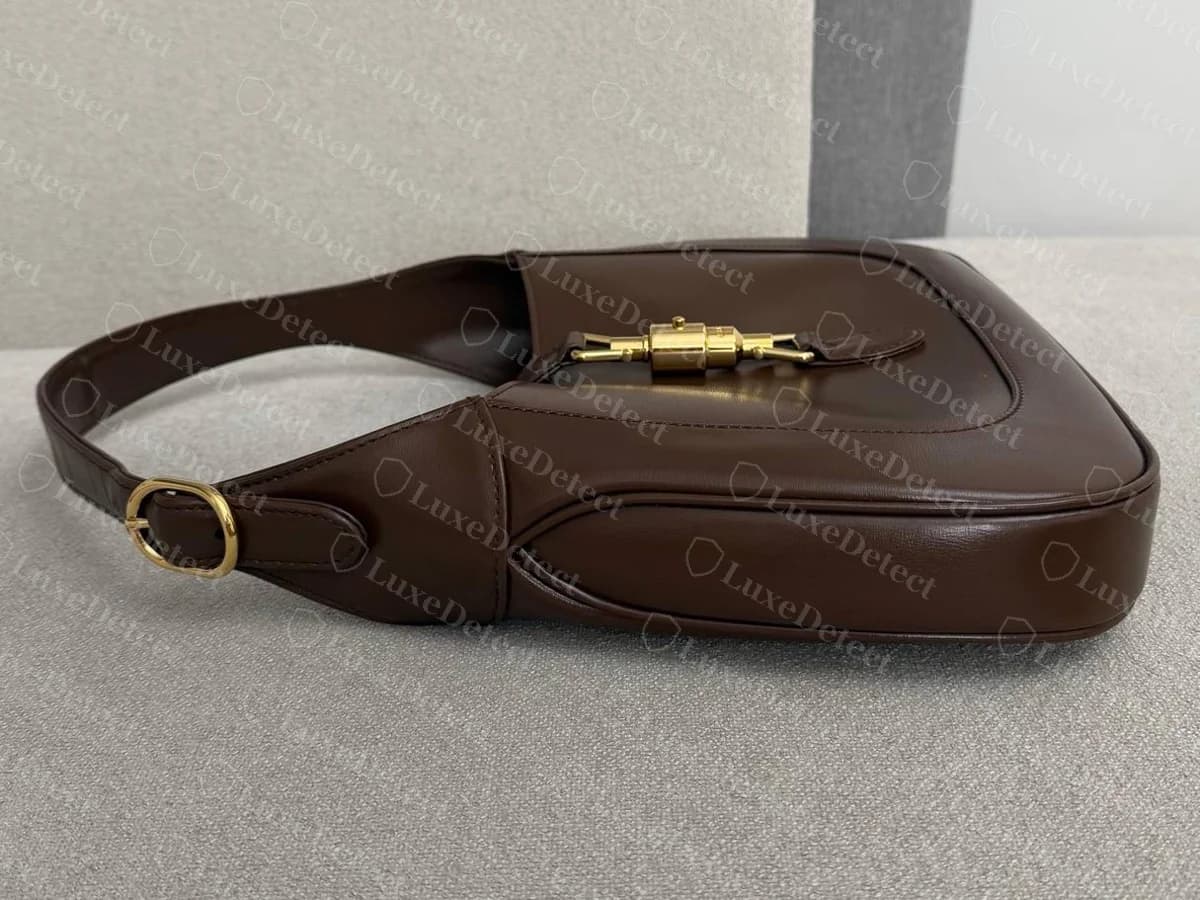
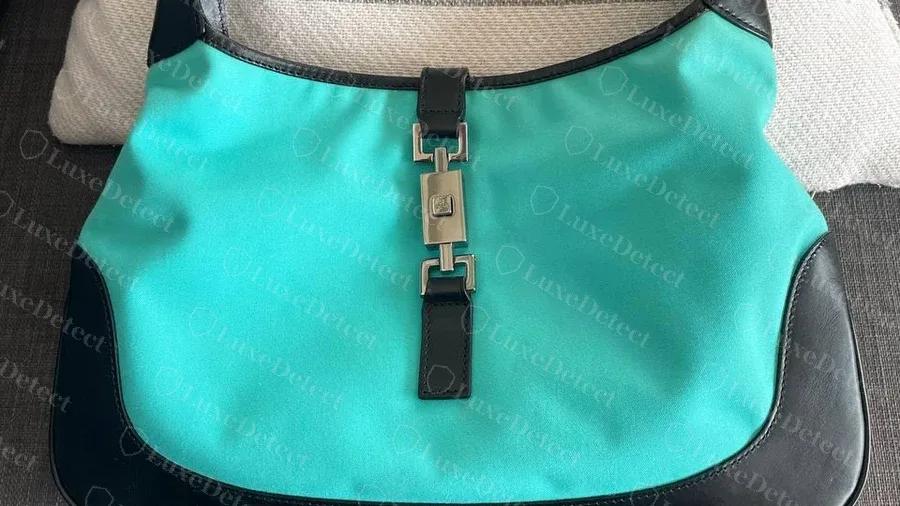
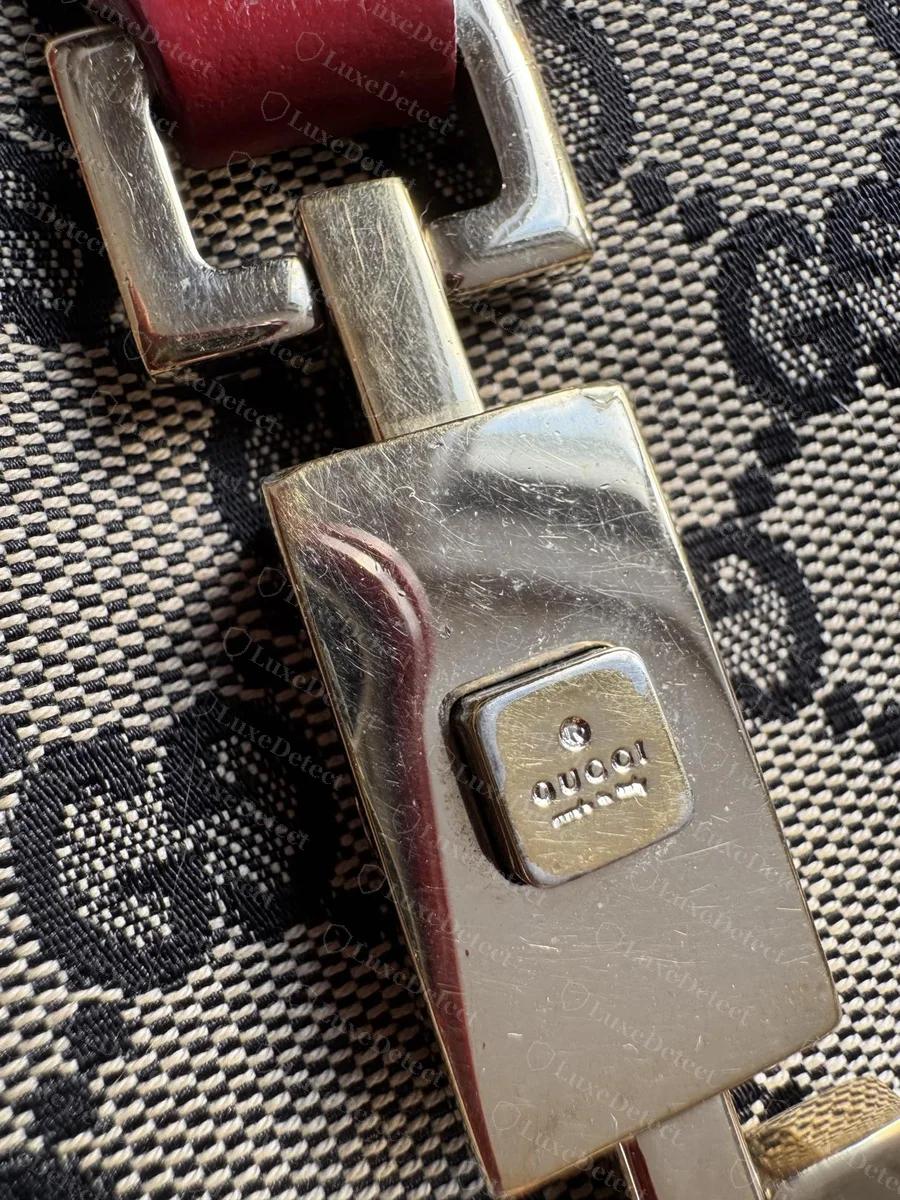
The Jackie started as a 1960s half-moon hobo, and the 1990s and 2000s version in nylon, GG canvas or suede with leather trim is what most people mean by a vintage Jackie. Its clasp is a rectangular chrome or gold-tone plate with a small square button, not the round piston barrel of the current Jackie 1961. Our Jackie guide covers both the current bag and the older one.
GG canvas, Diamante and the Web stripe
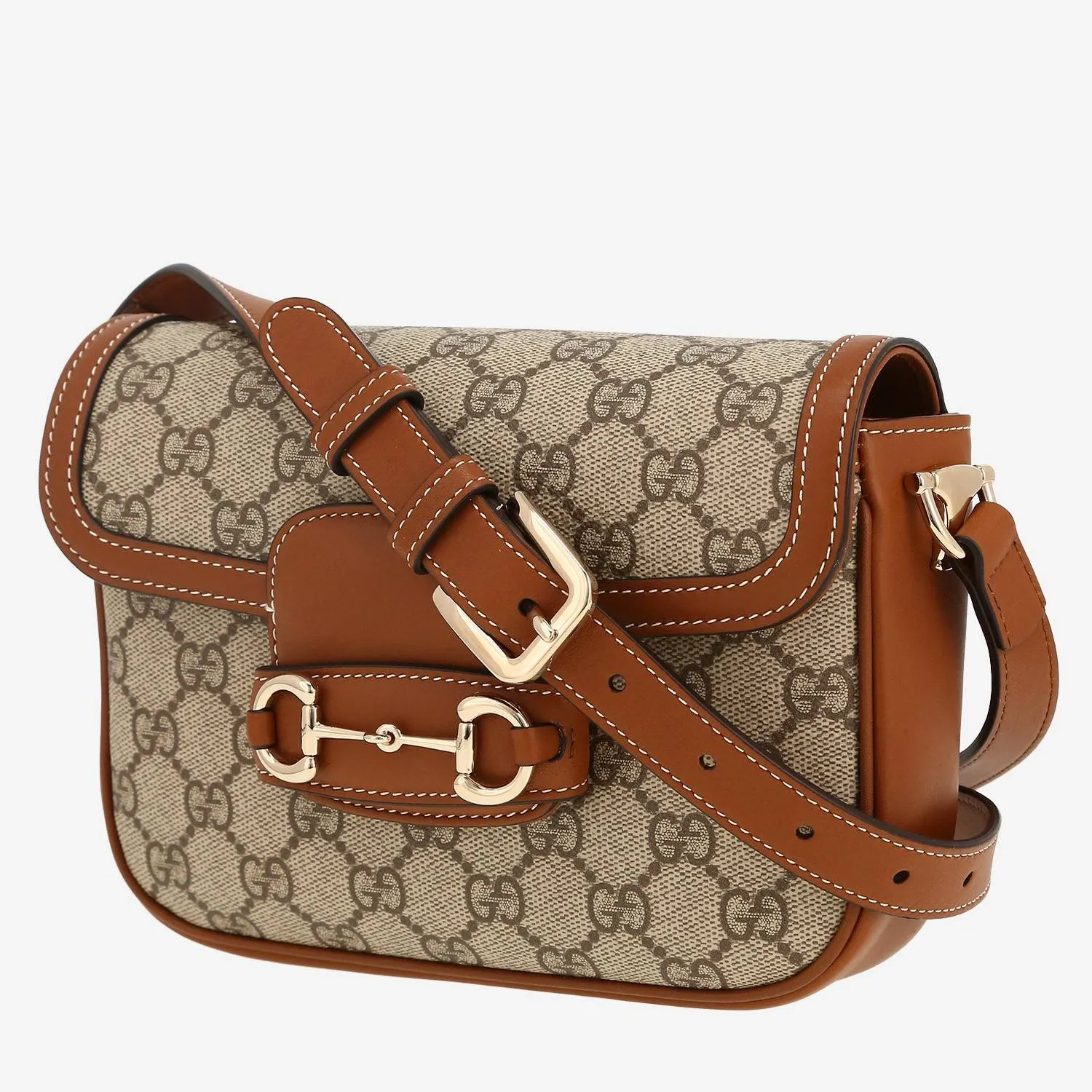
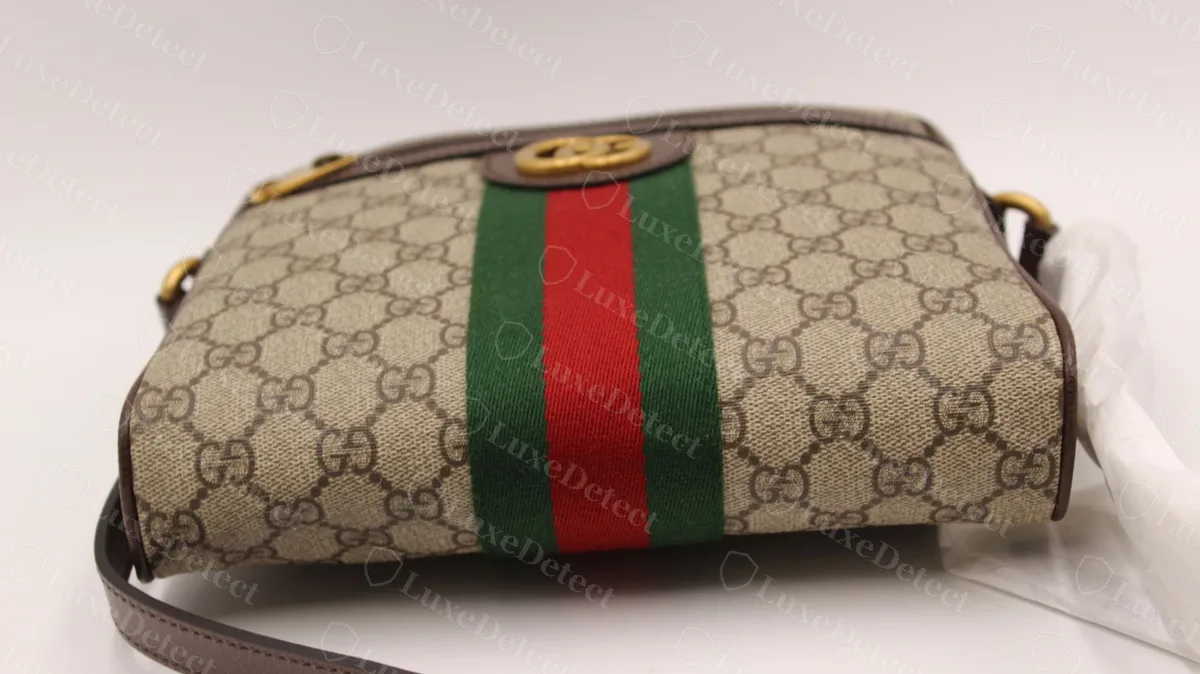
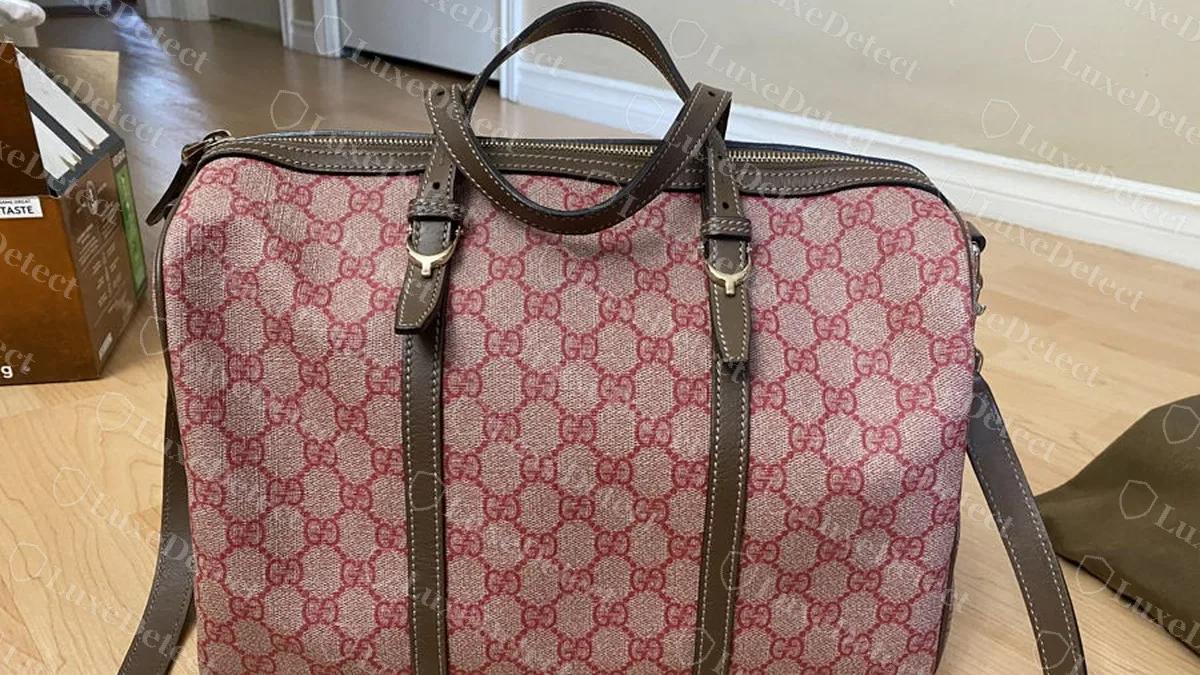
Reseller guides describe early GG canvas as a textured jacquard weave with the monogram woven into the fabric, not printed on top, and the Diamante lattice as the older pattern behind it. The green-red-green Web stripe comes from the saddle girths of the house's equestrian roots and runs across flaps and straps on many vintage bags. The dates given for each pattern vary between sources, so we do not use them as a test; compare the pattern against a verified bag of the same model.
Blondie, Boston, doctor bags and duffles
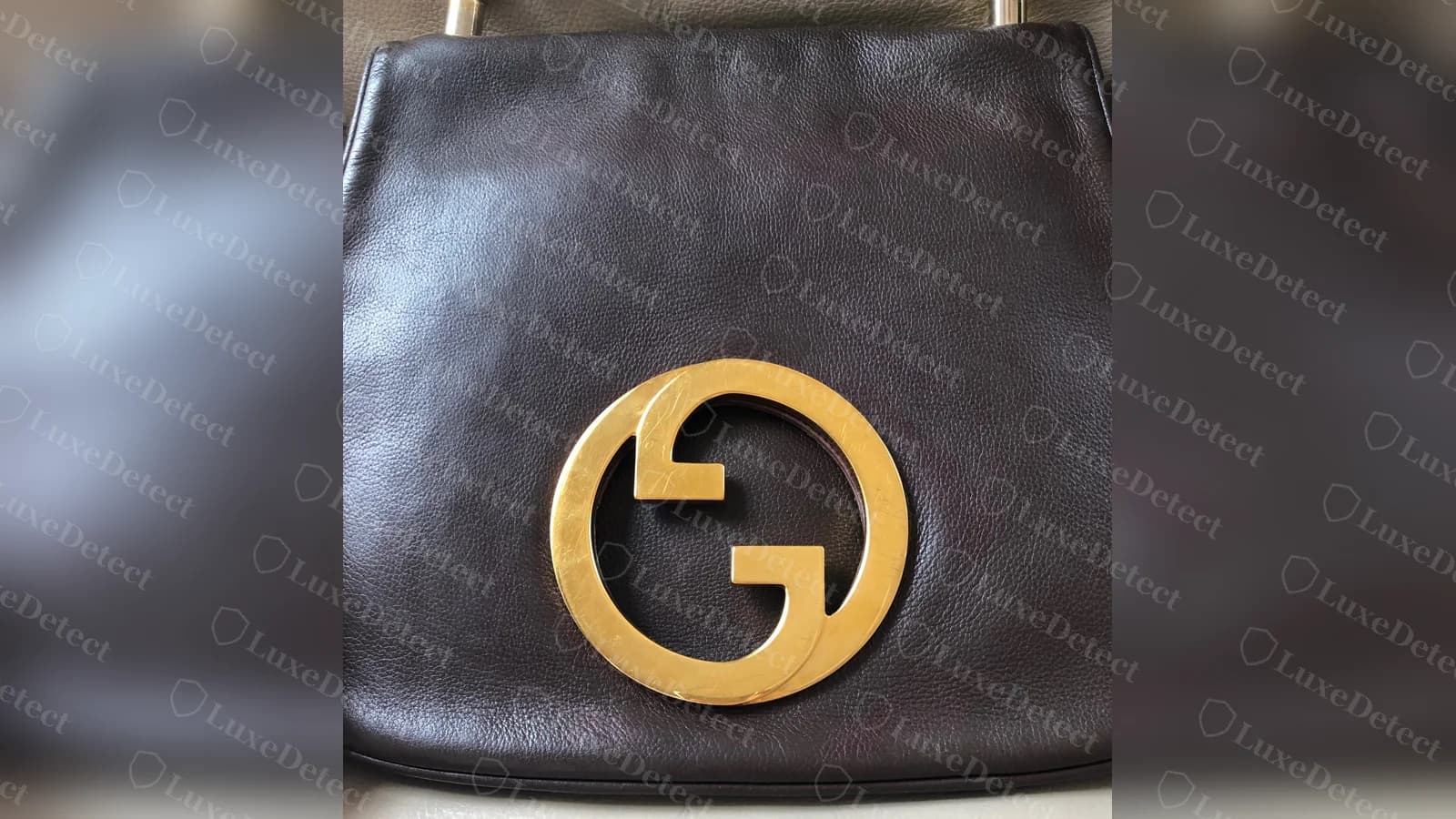
Other vintage shapes in our archive include the Blondie flap bag with its large interlocking GG disc, the Boston barrel bag and the doctor bag. We have guides for the Blondie and the Boston; their tags and plates follow the same period rules as below.
The Interior Number: Format by Era, and the Fakes That Count Upward
Sources disagree on when Gucci started putting numbers in bags: guides place it anywhere from the 1970s to the late 1990s. What is safe to say is that older bags often have none, that the formats vary a lot, and that none of them carries a production date. Our serial number guide and the checker below cover the modern layouts; the older ones follow no single rule.
The checker validates the 10 and 12-digit layouts. It does not fit the dotted codes that genuine older bags use.
| Detail | Authentic | Counterfeit |
|---|---|---|
| Older bag, no number | Normal on many pre-1990s bags, no tag at all | Not a tell either way; ask whether the lining was replaced |
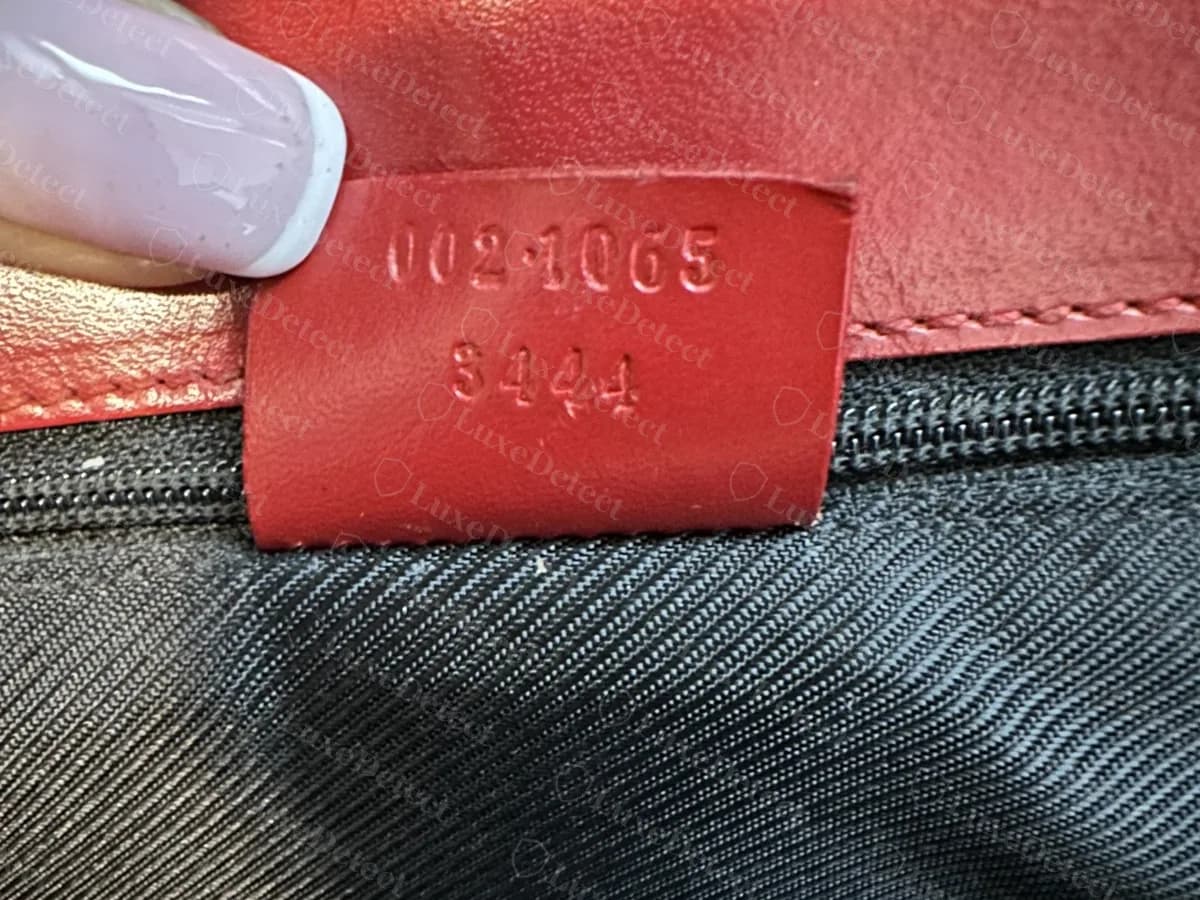
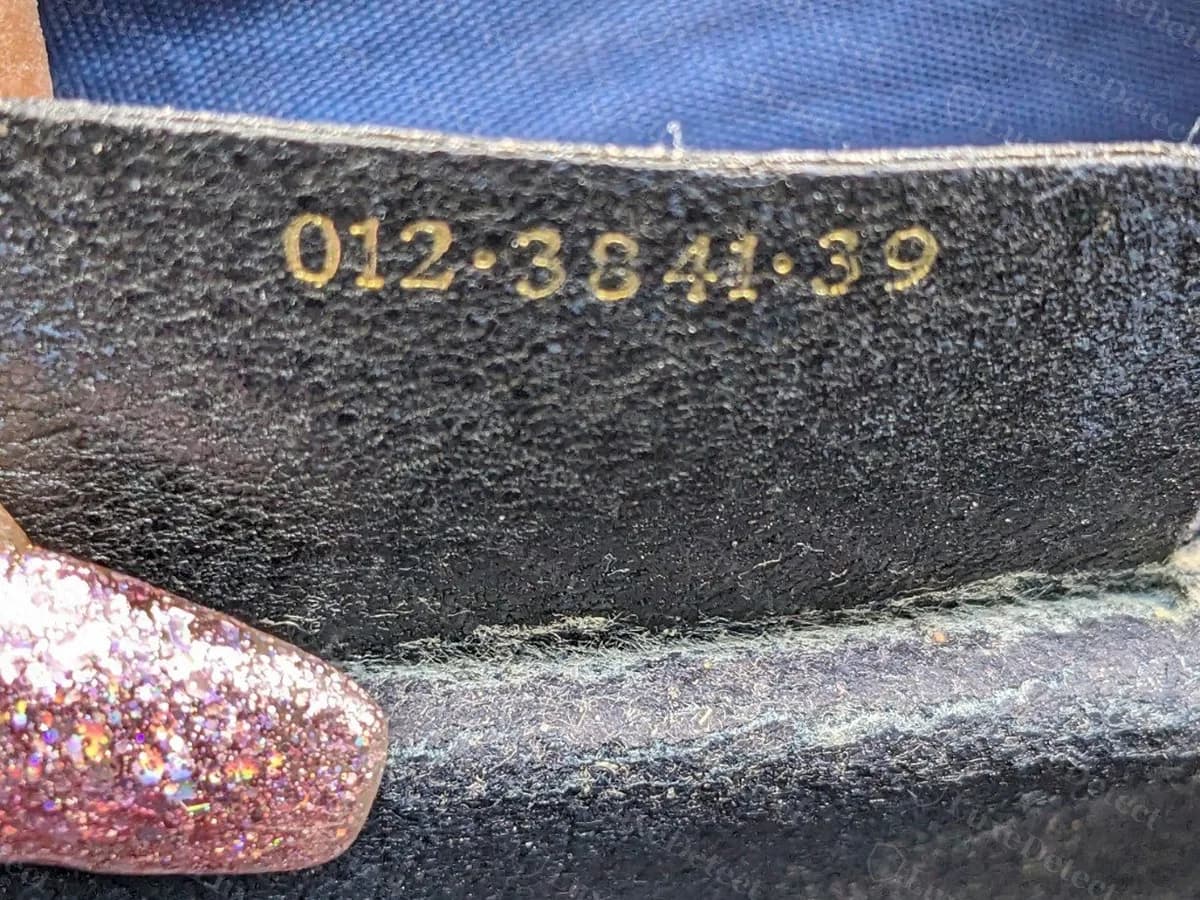
| Dotted or hyphenated code | Genuine older bags carry short groups of digits, sometimes with a short extra number underneath | A code that does not fit any of the layouts above and looks pasted on |
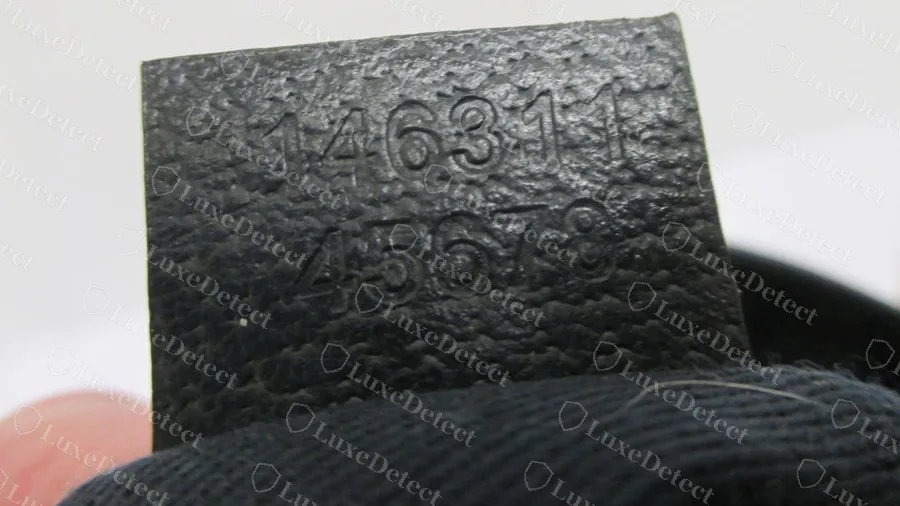
| Digits | Stamped evenly, same height and same depth, on a straight line | Placeholder runs such as 45678 or 2345678, or oversized, uneven digits |
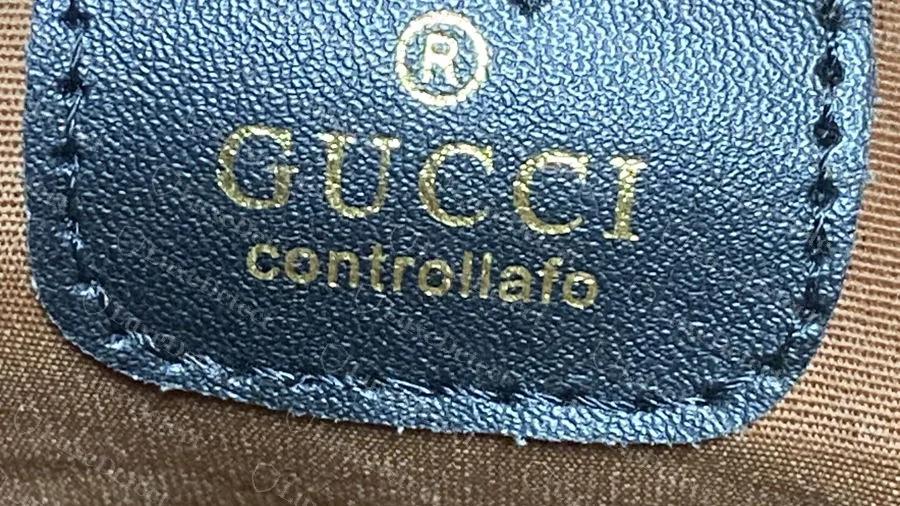
| Words on the tag | GUCCI and made in Italy spelled correctly | Misspellings such as "controllafo" |
Red flag
A number that counts upward (45678, 2345678) or a misspelled word on a tag that should carry a real stamp is decisive on its own. Genuine older tags can look odd, but they do not print placeholder digits.
Worth knowing
The reverse does not hold. A tidy number clears nothing: fakes in our archive copied numbers from genuine bags, and the same second-row number turned up on genuine items of different styles. Judge how the number is stamped, not whether it looks right.
Era Mismatches: Labels That Cannot Belong to the Bag
This is the most useful vintage check, and it needs no reference photos. Ask which period the bag's design belongs to, then ask whether every label inside could have been sewn into a bag of that period.
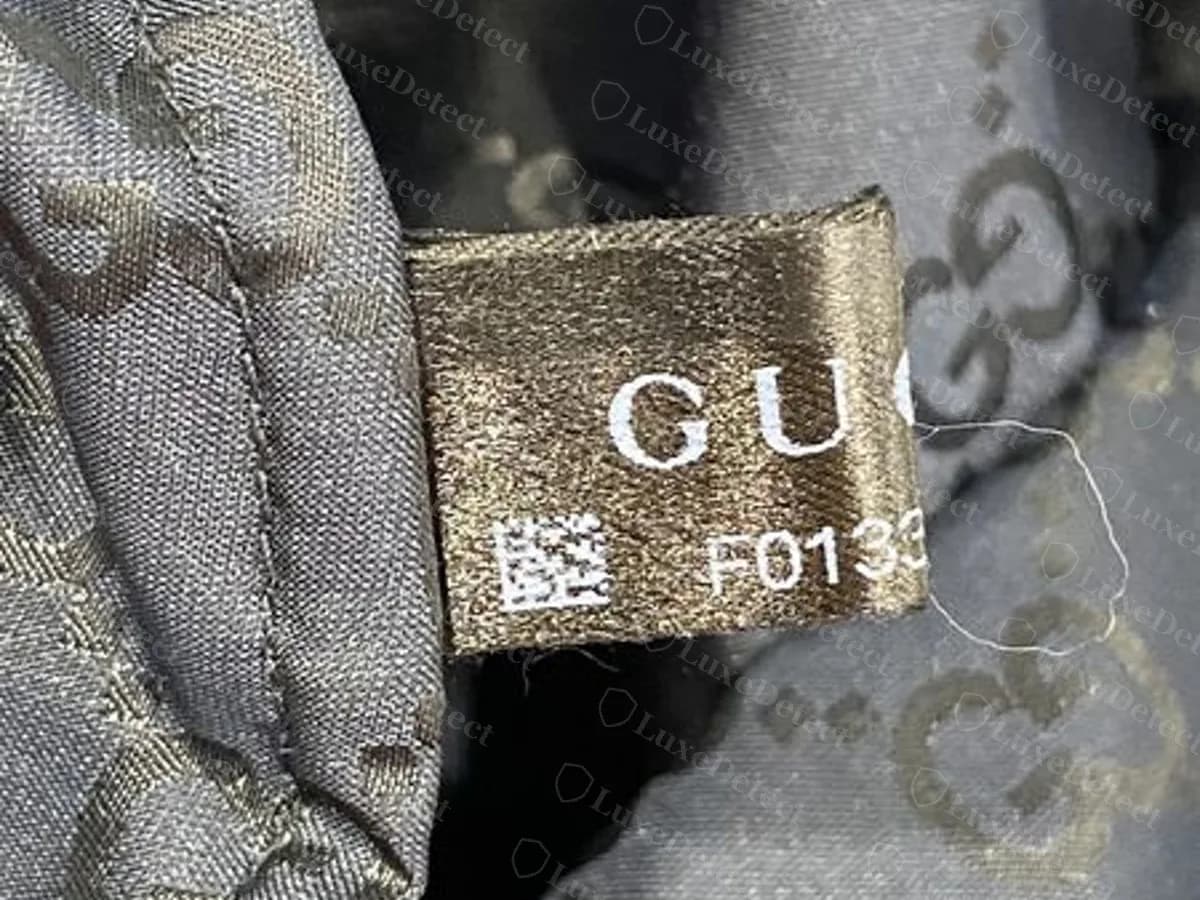
- The black fabric label with a QR block. Our year table starts in 2014. A bag listed as a 1970s or 1990s original that carries one needs an explanation. A reissue sold as a reissue should have one.
- A tag in a lining that does not match. A crisp, new-looking tag in an old, faded lining deserves a question about repairs.
Red flag
A black QR label on a bag presented as a pre-2000s original is a strong warning. Our [black label guide](/blog/gucci-black-label-qr-code-year-guide) explains how the label is used; the label itself is also copied, so its presence on a modern bag proves nothing.
Stamps and Plates: Script, BREV. and Metal Plates
Vintage Gucci bags carry stamps in more forms than modern ones, and several of these look unusual to someone used to the current leather patch.
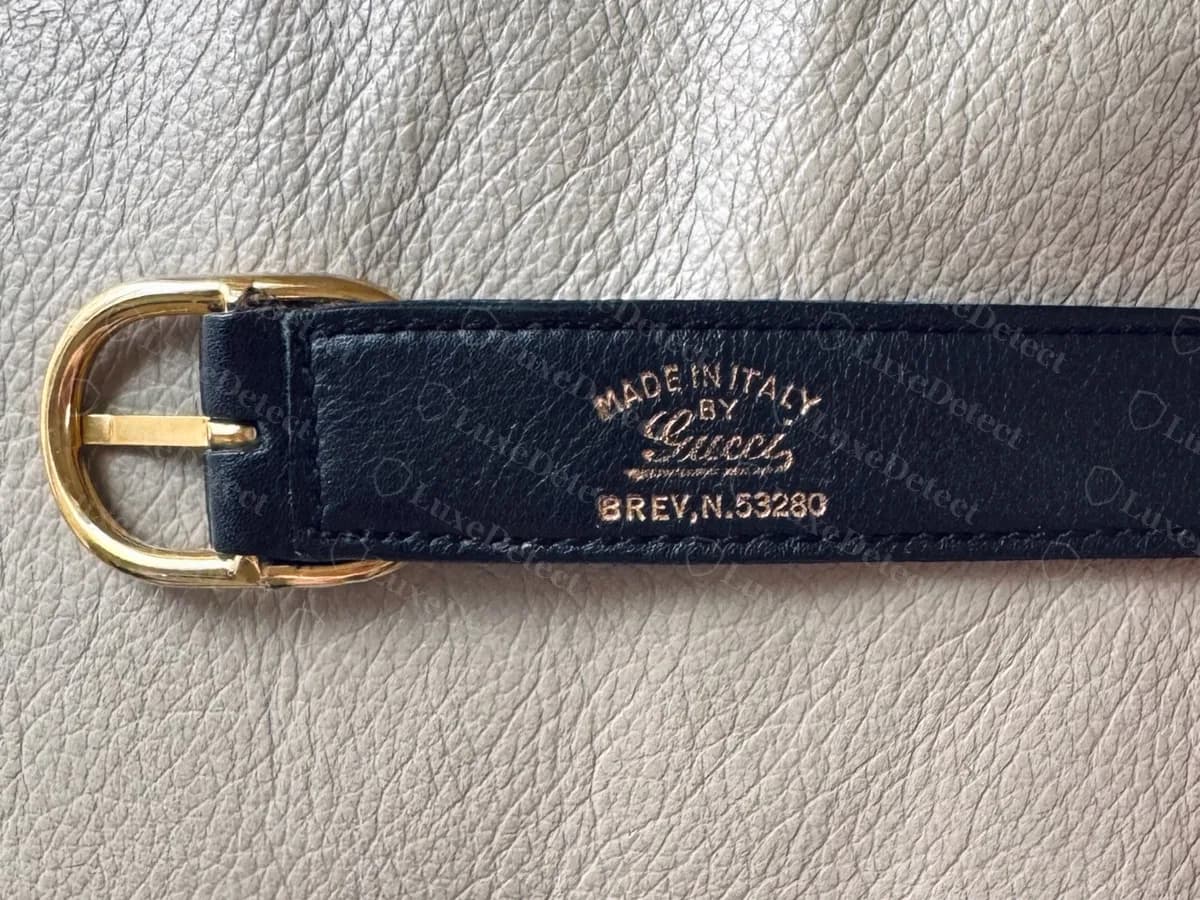
- Gold-foil strap stamp. On the older Blondie flap bags we photographed, the inside of the strap reads MADE IN ITALY, BY, a script Gucci and BREV. N. 53280 in gold foil. The same number appeared on genuine bags from separate orders. BREV. is an abbreviation of the Italian word for patent, and one collector guide describes it as a patent reference for the model; we cannot say what the number stands for.
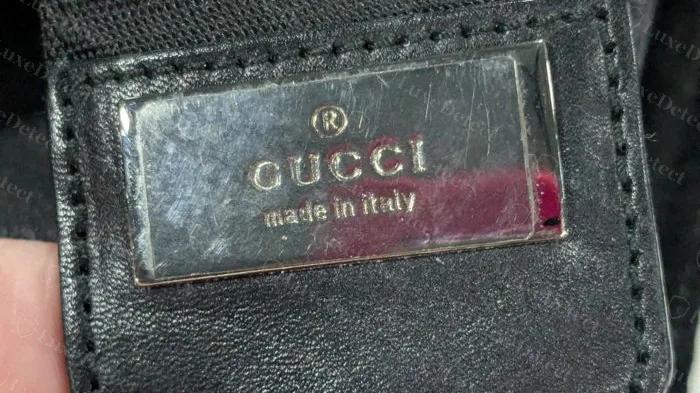
- Metal plate. A polished plate reading GUCCI made in italy, set on a leather tab, appeared inside an older black suede bag in our set.
- Leather patch. A heat-stamped registered mark over GUCCI and made in Italy, like the current patch, appears on the 1990s and 2000s Jackie.
| Detail | Authentic | Counterfeit |
|---|---|---|
| Heat stamp | Fine, evenly pressed letters with room around the stamp | Thick, puffy letters pressed deep, filling the tab |
| Style of stamp | Matches the era and model (foil strap stamp, metal plate or leather patch) | A modern patch on a design that never had one |
| Spelling and spacing | Correct, even | Misspelled or crowded |
Worth knowing
"Made in Italy" is never a tell. Genuine and fake Gucci bags both carry it, in every period. Judge the weight and depth of the stamp, its spelling and whether its style fits the bag's era.
Hardware and Closures by Model
Hardware changed with the model, so compare the bag against its own era.
| Element | Authentic | Counterfeit |
|---|---|---|
| Vintage Jackie clasp | Rectangular chrome or gold-tone plate with a small square button, GUCCI engraved | A spring snap hook, or a clasp that does not match the bag's era |
| Current Jackie 1961 clasp | Round piston barrel with side lugs | A snap hook |
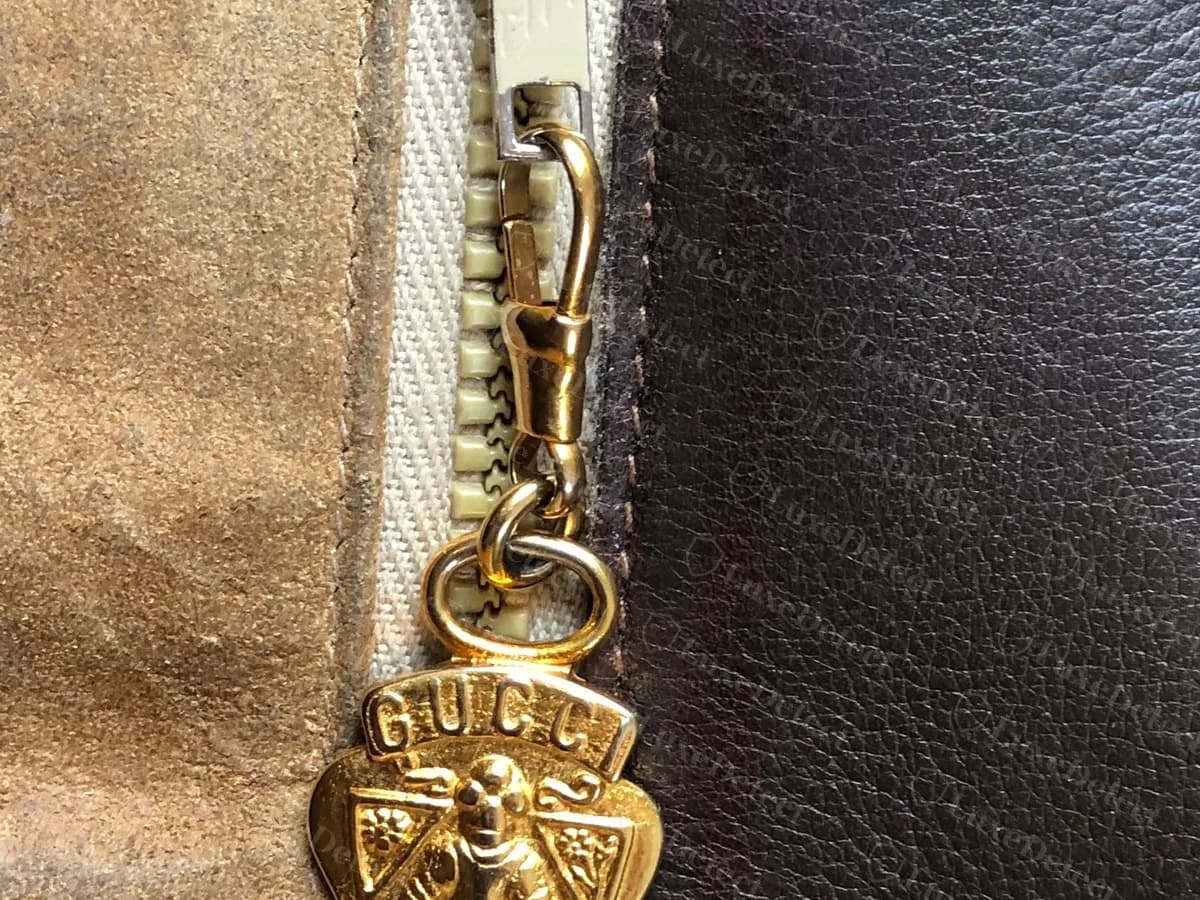
| Zip pull | A small engraved GUCCI pull, or the crest charm on older Blondie bags | A crest pull on a current Jackie 1961 |
| General finish | Heavy, even plating with crisp, shallow engraving | Light hardware, soft engraving, mixed metal tones |
Worth knowing
Gucci used the crest on genuine vintage bags, so a crest pull is not wrong for the brand as a whole. It is wrong for the current Jackie 1961. Reseller guides also say genuine hardware feels heavier and plated in a cooler, more muted tone than fake hardware; that is a hands-on check, not something to read from a listing.
Canvas, Bamboo and Leather
The Bamboo handle is the check buyers most often get told to trust, and we would not rely on it. In the counterfeit Bamboo bags we reviewed the handles were real bamboo with natural node irregularity, not the molded plastic that some guides describe. A convincing handle therefore does not clear a bag, and an irregular one is not a warning. A handle that is perfectly uniform and pale, with no grain at all, is still worth a closer look, and reseller guides report that fakes use uniformly colored resin.
On GG canvas the useful test is the pattern: the interlocking Gs should be aligned in their grid and continue cleanly across seams, and on vintage canvas the monogram is woven into the fabric rather than printed over it. A pattern that drifts or is cut mid-motif at a seam is a reason to look harder. Leather trim ages by darkening and creasing; cracking on a bag sold as pristine is a reason to ask about storage.
| Element | Authentic | Counterfeit |
|---|---|---|
| Bamboo handle | Real bamboo, uneven nodes, darkening near the nodes, warm lacquer | Perfectly uniform, pale, plastic-bright (reported by resellers; our sample's fakes had real bamboo) |
| GG canvas | Aligned grid that continues across seams, woven on vintage canvas | Pattern that drifts or is cut mid-motif at seams |
| Leather trim | Even edge paint, natural patina | Peeling or lumpy edges on a bag sold as lightly used |
Lining and Construction
Linings are where a vintage bag shows its history. Reseller guidance is that the lining should be secured at every seam with no visible glue, and that a lining from a later era than the bag is a warning. We would add one practical point: a relined bag has often lost its original tag, so ask whether the lining was replaced.
Stitching should be even and tight, with no skipped stitches or loose thread ends. These checks tell you about quality and repair history; our archive found no single lining tell that held across fakes, so treat this section as a cross-check, not a decider.
Wear, Repairs and What Is Not a Tell
A vintage Gucci bag has lived a life, and wear is evidence of age, not of fakery.
- Normal: rubbed corners, darkened or creased leather, a scratched or tarnished clasp or plate, faded foil stamps, a worn lining, a dotted code that the checker does not recognize, no serial at all on an older bag.
- Worth asking about: replaced straps or hardware, a relined interior, re-dyed or repainted leather. These are repairs, not proof of a fake, but a new lining can remove the tags you would check.
- A warning: wear that does not match, such as pristine plates and hardware on a heavily worn bag, or a vintage bag with labels from a later period.
- Not a tell: the "made in Italy" line, an older bag with no number, a controllato card that prints a sample number, and a dust bag.
What the Controllato Card, Dust Bag and Box Do and Do Not Prove
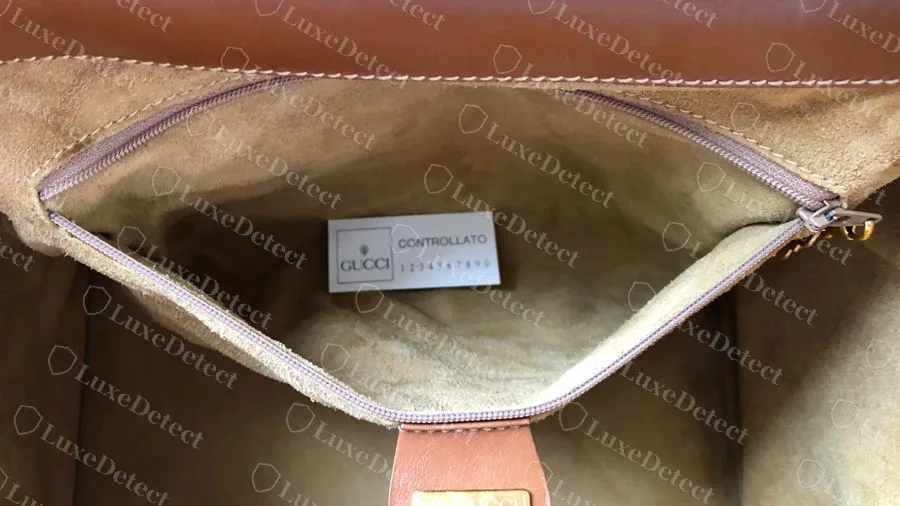
Packaging is context, not evidence. Older Gucci bags came with a small controllato card, and one genuine vintage doctor bag we checked had a card that itself printed 1234567890 as its sample line, so a counting number on a card is not a warning. A counting run or typo on a leather patch or tag that should carry a real stamp is, as in section 1. Cards, dust bags and boxes are sold loose and copied, so they cannot clear a bag.
Vintage Gucci Buying Checklist
- Identify the model and its period from the shape, hardware and canvas, not from the listing title.
- Read the interior: a tag, a foil stamp, a metal plate or nothing. Check it fits the period, and reject a counting run or a misspelled word.
- Look for labels that cannot belong, such as a black QR label on a bag sold as a pre-2000s original.
- Check the stamp for fine, even letters and a style that fits the model and era.
- Check the clasp, zip pull and plating against the bag's own era, not the current line.
- Check the canvas alignment at seams and the age of the leather trim.
- Ask whether the lining, strap or hardware was replaced.
- Treat the card, dust bag and box as context only.
A counting run or misspelled tag is enough to stop on its own. Two or more other failures means walk away. Passing every step means the bag is consistent with a genuine one, not that it is confirmed.
When to Get a Professional Opinion
Vintage Gucci fakes copy plausible tags and labels, and about 30% of the Gucci handbags checked with us (2024 to 2026) came back fake. If you are paying real money for a Bamboo, a Jackie or a canvas bag, a second pair of eyes is the reliable next step, especially for a private sale, a bag with no history or a listing you cannot inspect in person.
LuxeDetect's handbag authentication starts at $25 for a 24-hour turnaround and includes a Certificate of Authenticity. Start an order with Gucci selected and upload clear photos of the front and back, the clasp or handle, the interior tag, stamp or plate, the lining, the zip pulls and any card.
A code that checks out doesn't prove the item is real. Counterfeiters copy genuine codes.
Our authenticators check the stamps, hardware and construction of your Gucci against verified references, from $25. You get a verdict within 24 hours, and a Certificate of Authenticity if the item passes.
Authenticate My Gucci →FAQ
How do I know if my vintage Gucci bag is real?
Work out the model and era, then check that every label belongs to them. A counting run of digits or a misspelled word on a tag rejects a bag, and a black QR label on a bag sold as a pre-2000s original is a strong warning. A correct number, stamp or plate proves little on its own, because fakes copy them. Compare the whole bag with a verified example or have it authenticated.
Do vintage Gucci bags have serial numbers?
Some do, but not in one consistent form. Many older bags have no number at all, and sources disagree on when Gucci began adding them, from the 1970s to the late 1990s. Bags from the 1990s and 2000s often have a leather or metal tab with a number, in a layout that varies. None of the numbers gives a date, and Gucci has not published a way to read one.
How can I tell how old my Gucci bag is?
Use the design, not the number. Compare the shape, hardware, canvas and tag type with the eras above: a rectangular-plate Jackie belongs to the 1990s and 2000s, a rectangular clasp plate points away from the current Jackie 1961, a black QR label means a bag made after about 2014. Dates are approximate, and our year table for the black label comes from third-party sources, not from Gucci.
Is a dotted number on my vintage Gucci bag fake?
No. Genuine older bags carry short groups of digits separated by dots or hyphens, sometimes with a short extra number underneath, and our checker does not fit these formats. Look at how the number is stamped, not at whether a checker accepts it.
Is my vintage Gucci Bamboo bag real if the handle looks like real bamboo?
It may be, but the handle alone does not decide it. The counterfeit Bamboo bags we reviewed also had real bamboo handles. Check the ferrules, the interior stamp, the tag and the construction together with the handle.
Does "Made in Italy" mean a vintage Gucci is genuine?
No. Genuine and fake bags both carry the line, in every period. Judge the stamp's weight, depth and spelling and whether its style fits the bag's era.
Can I authenticate a vintage Gucci bag from photos?
Yes. What decides it is how the tag, the stamp, the hardware, the canvas and the construction fit together against verified bags of the same model and era, and clear photos show all of that. On an expensive bag a professional review is the safer route, because good fakes copy individual marks.
Is a vintage Gucci bag with no tag fake?
Not necessarily. Many older bags never had one, and a tag can be lost when a bag is relined. What matters is whether the labels that are there suit the bag's period and look right.