Luxury Handbag Authentication Specialist
Handbag authentication specialist. Has reviewed submissions across Hermès, Chanel, Louis Vuitton, and Dior since 2019.
Last updated September 2026 · Published July 2026 · Contact
Why the Jackie Is a Frequent Counterfeit Target
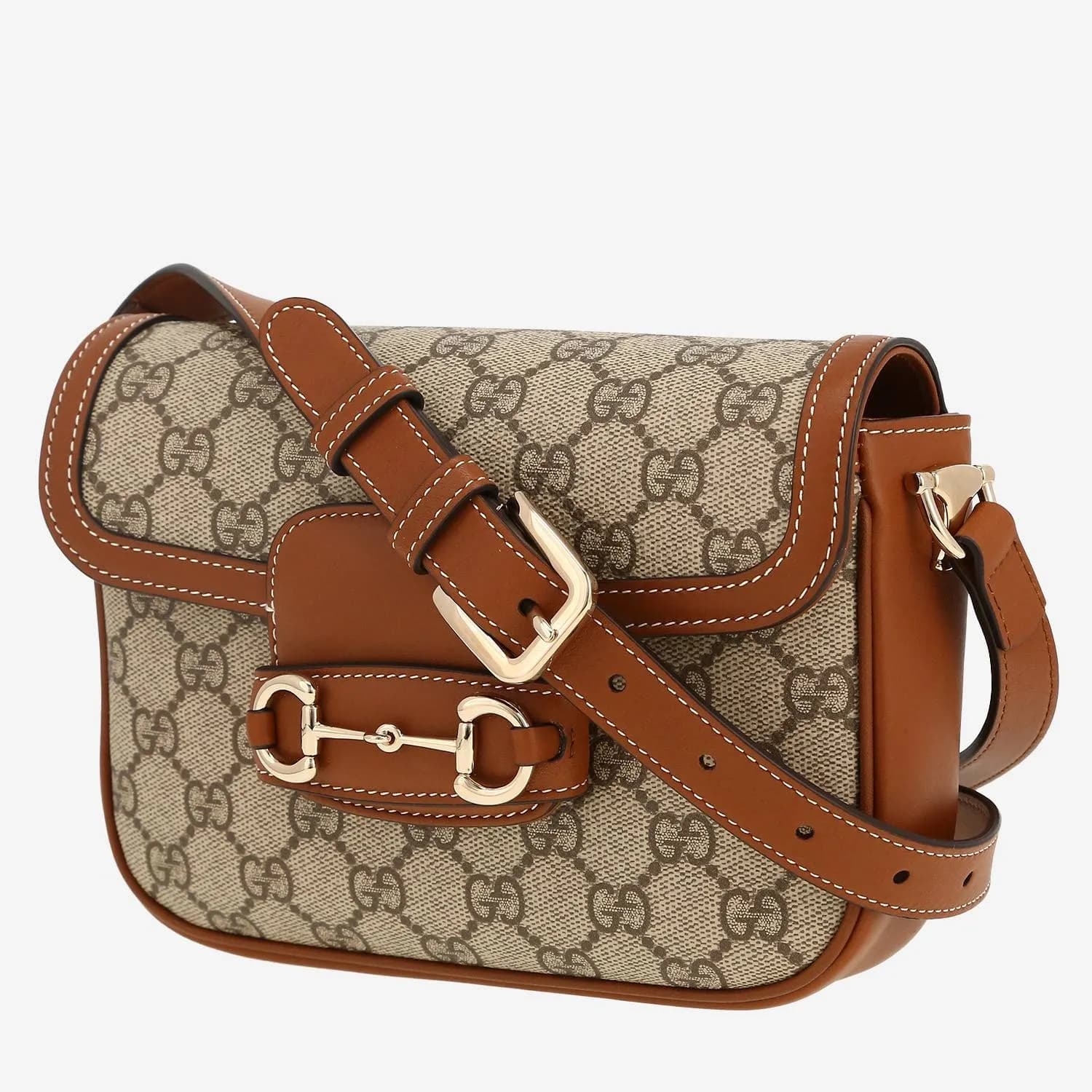
The Gucci Jackie 1961, named for Jacqueline Kennedy Onassis, who was photographed carrying the original 1960s hobo, has been reissued several times and is now part of Gucci's core collection. Its half-moon shape and piston clasp are instantly recognizable, which makes it a popular counterfeit target at every price tier of the replica market, alongside Gucci's other signature shoulder bag covered in our Gucci Marmont guide.
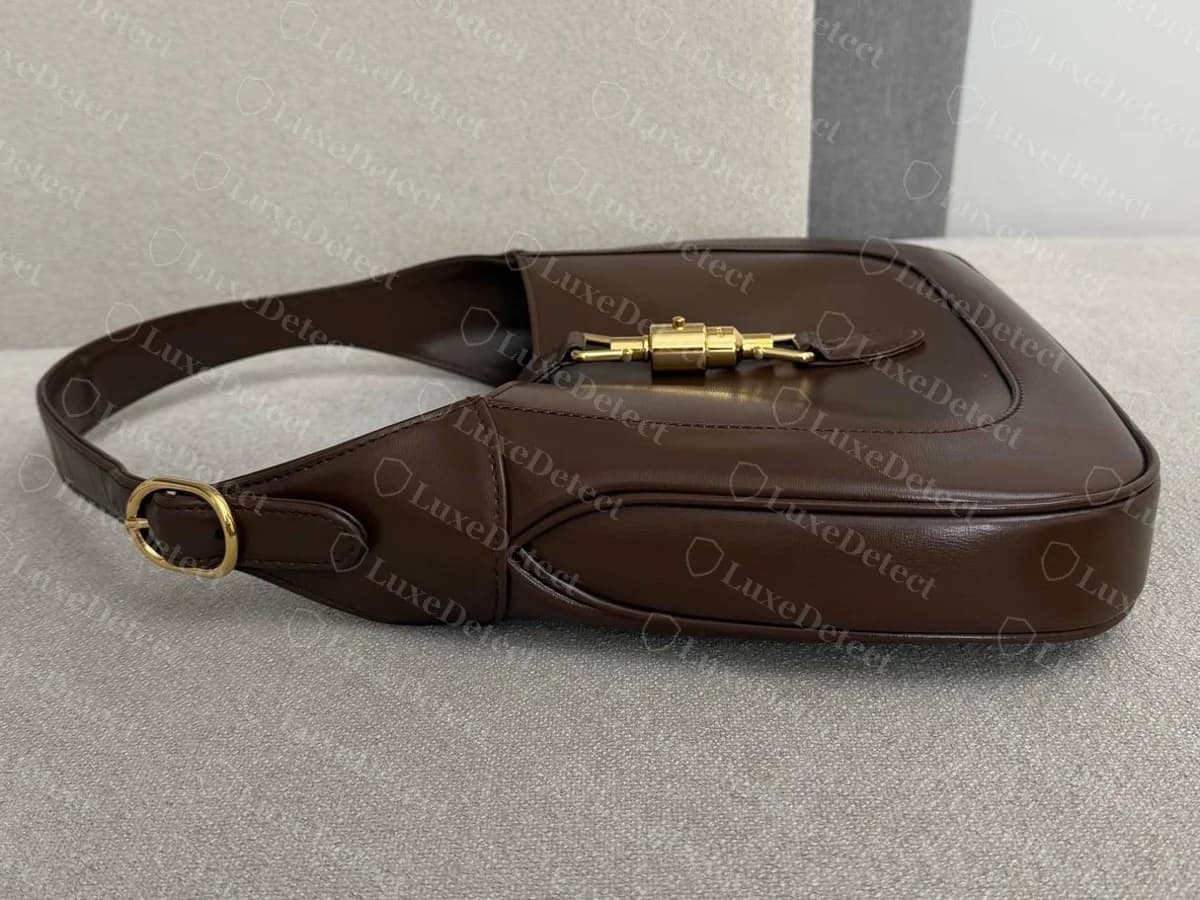
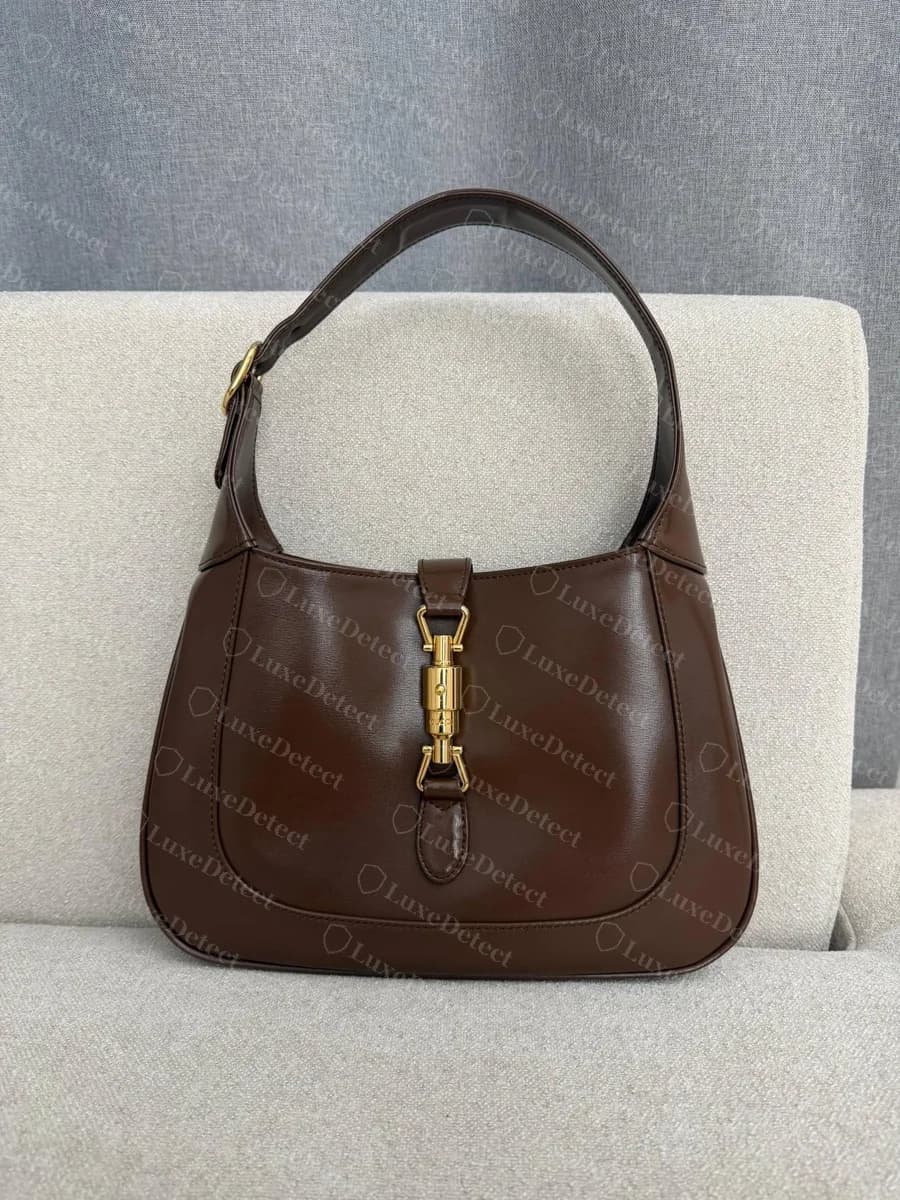
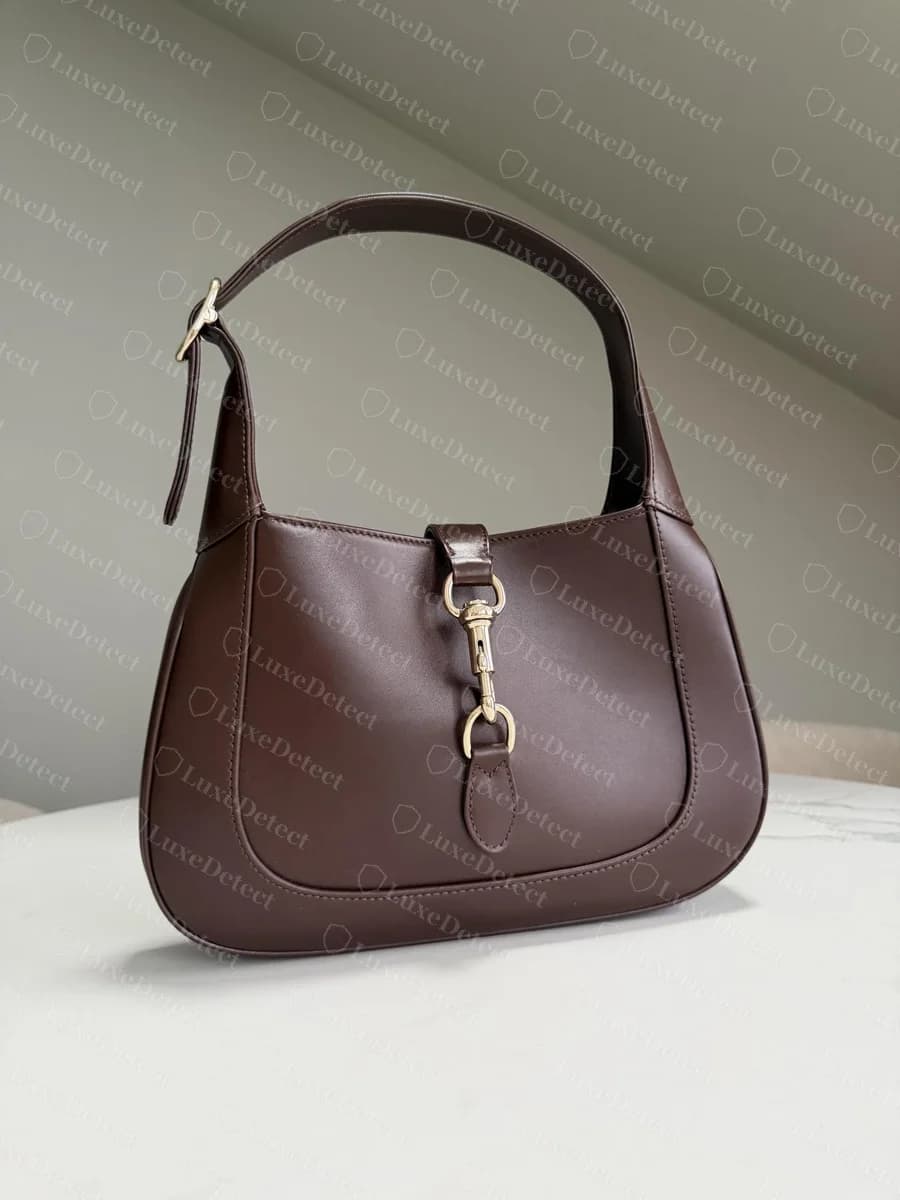
Every photo in this guide comes from two bags LuxeDetect authenticated: a genuine small Jackie 1961 and a counterfeit one in the same brown leather. Seen side by side from the front, the two are close enough to fool a quick look. The differences show up at the clasp, the stamps and the zipper pull.
What to check, ranked by reliability
| Checkpoint | Reliability | What it tells you |
|---|---|---|
| 1. The Piston Clasp | ★★★★★ | A snap hook or clip where the piston lock should be is decisive on its own. |
| 2. The Heat Stamp | ★★★★★ | Thick, puffy "GUCCI made in Italy" lettering is a strong sign of a fake; the genuine stamp is fine and shallow. |
| 3. The Serial Number Stamp | ★★★★★ | Large, deep, widely spaced digits point to a fake, but a correct-looking number proves nothing because serials are copied. |
| 4. The Zipper Pull | ★★★★★ | A crest-shaped pull is wrong for a current Jackie 1961 and quick to spot, but confirm it with the clasp and stamps. |
| 5. The Fabric QR Label | ★★★★★ | Present on current bags and copied on fakes, so it adds context rather than a verdict. |
| Model Reference Before You Start | ★★★★★ | Confirms which Jackie era you are looking at, but does not by itself rule a bag in or out. |
Use our free Gucci Serial Number Checker to decode the serial on your Gucci leather tag and check the format.
Check My Serial →Model Reference Before You Start
- The Jackie has been produced across several eras: the original 1960s-70s hobo (leather strap, script "Gucci" stamp), a 1990s-2000s reissue (canvas/leather horsebit-buckle hobo), and the current "Jackie 1961" line in several sizes and materials, including leather, GG canvas and GG denim.
- This guide is built on the current leather Jackie 1961. The clasp, stamp and zipper checks carry across its sizes, but older-era Jackies use different stamps and hardware, so compare a vintage bag against photos from its own era.
- Genuine Gucci bags are made in Italy; the interior heat stamp should read "GUCCI" over lower-case "made in Italy".
- Packaging (box, dust bag, care booklet) is never proof on its own. The counterfeit in this guide came with a convincing printed dust bag.
Worth knowing
This guide is based on one genuine and one counterfeit Jackie 1961 from LuxeDetect orders, both small and in brown leather. It shows the tells that separated those two bags; a different factory's fake may get some of these details right, so check every section rather than stopping at the first pass.
The Piston Clasp
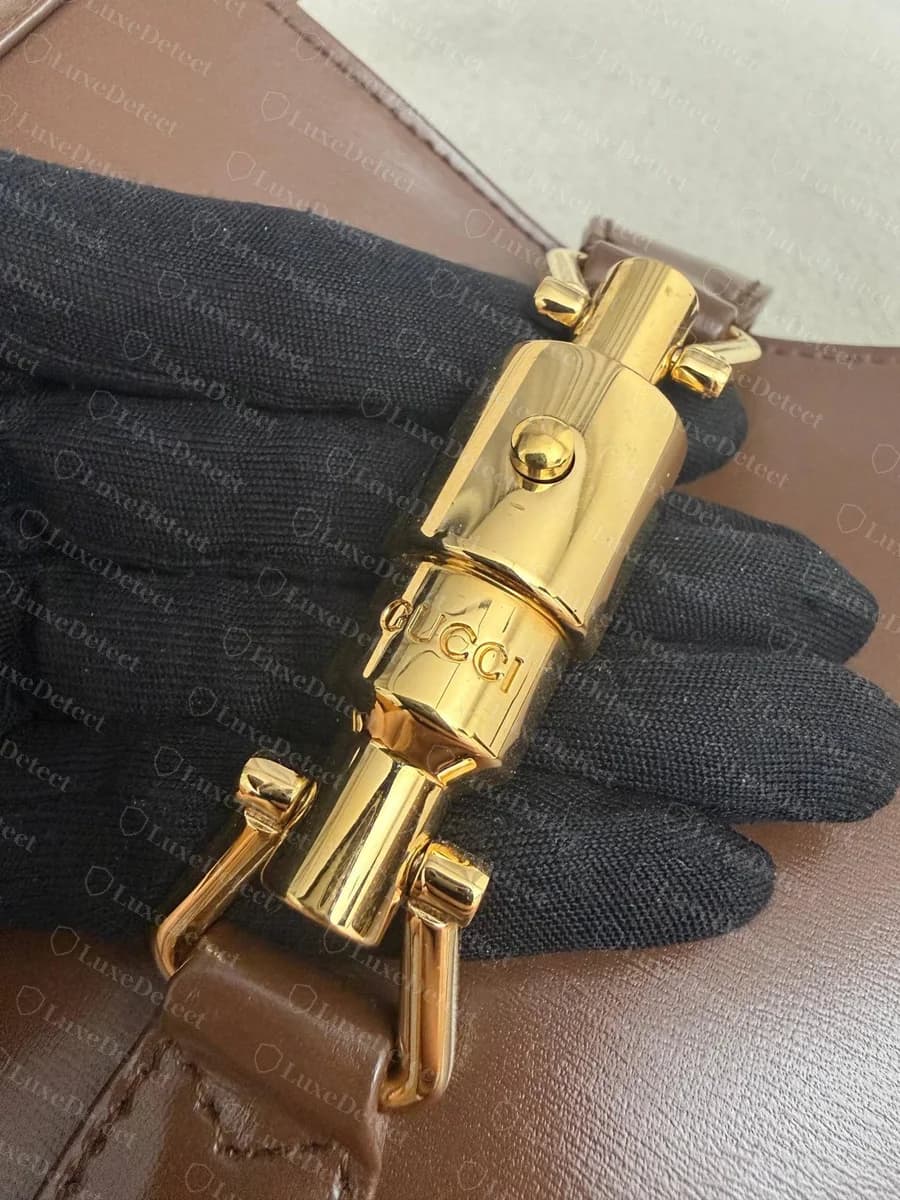
The Jackie 1961 closes with a piston lock: a cylindrical gold barrel with a small push-button on top and two side lugs, fixed to the flap tab. You press the button to release the lock. "GUCCI" is engraved around the barrel.
| Detail | Authentic | Counterfeit |
|---|---|---|
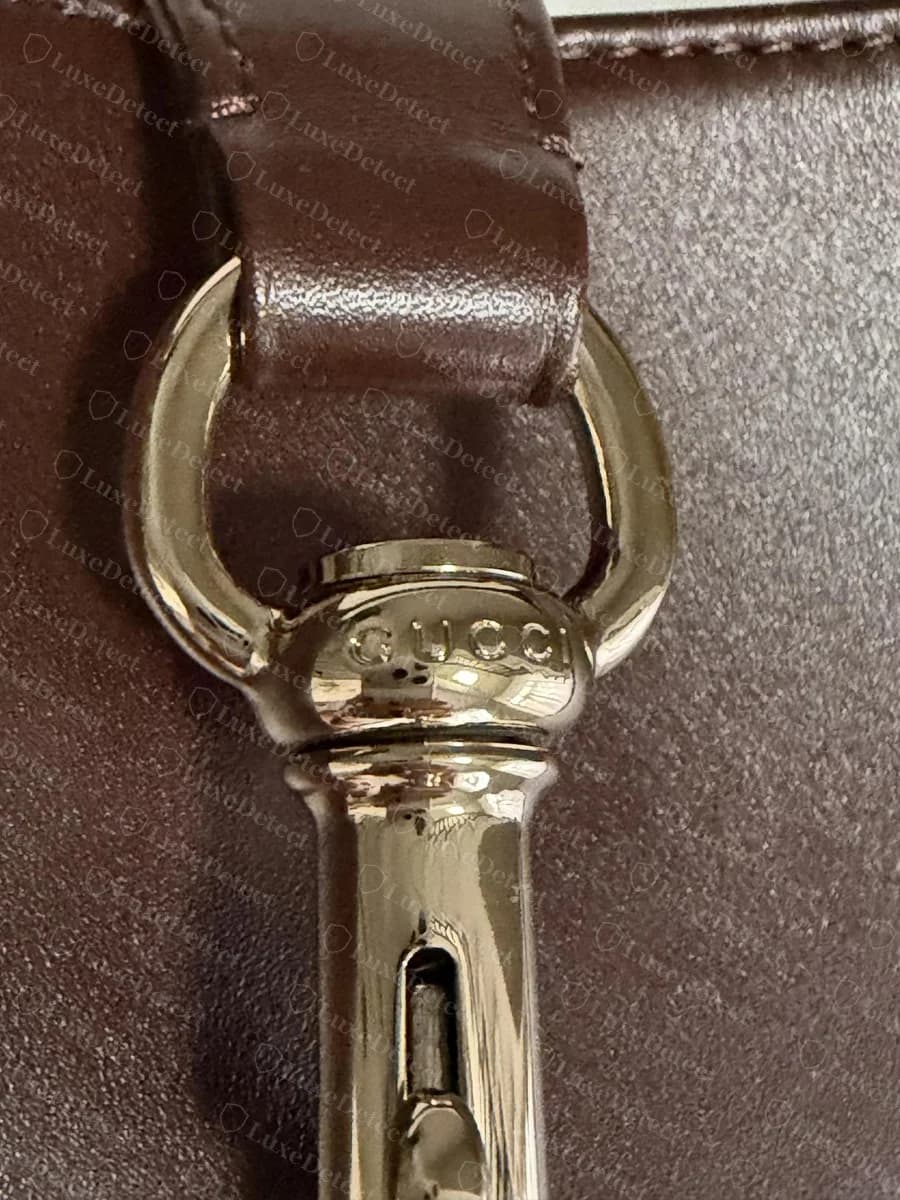
| Mechanism | Piston lock: a barrel with a push-button and side lugs | Spring snap hook, like a dog-lead clip, with a sliding gate |
| Colour | Warm, deep yellow gold | Pale champagne gold, close to silver in some light |
| Engraving | "GUCCI" cut cleanly into the barrel | "GUCCI" on the neck of the hook, soft-edged |
| Fixing | Barrel sits upright on the flap tab | Hook hangs from a loop through the leather tab |
Red flag
A spring snap hook in place of the piston lock is decisive on its own for a Jackie 1961. The piston clasp is what defines the model; no current genuine Jackie closes with a clip.
Worth knowing
Better replicas do copy the piston shape, so a piston clasp alone doesn't clear the bag. Check the colour of the gold and the engraving, then carry on with the stamps below.
The Heat Stamp
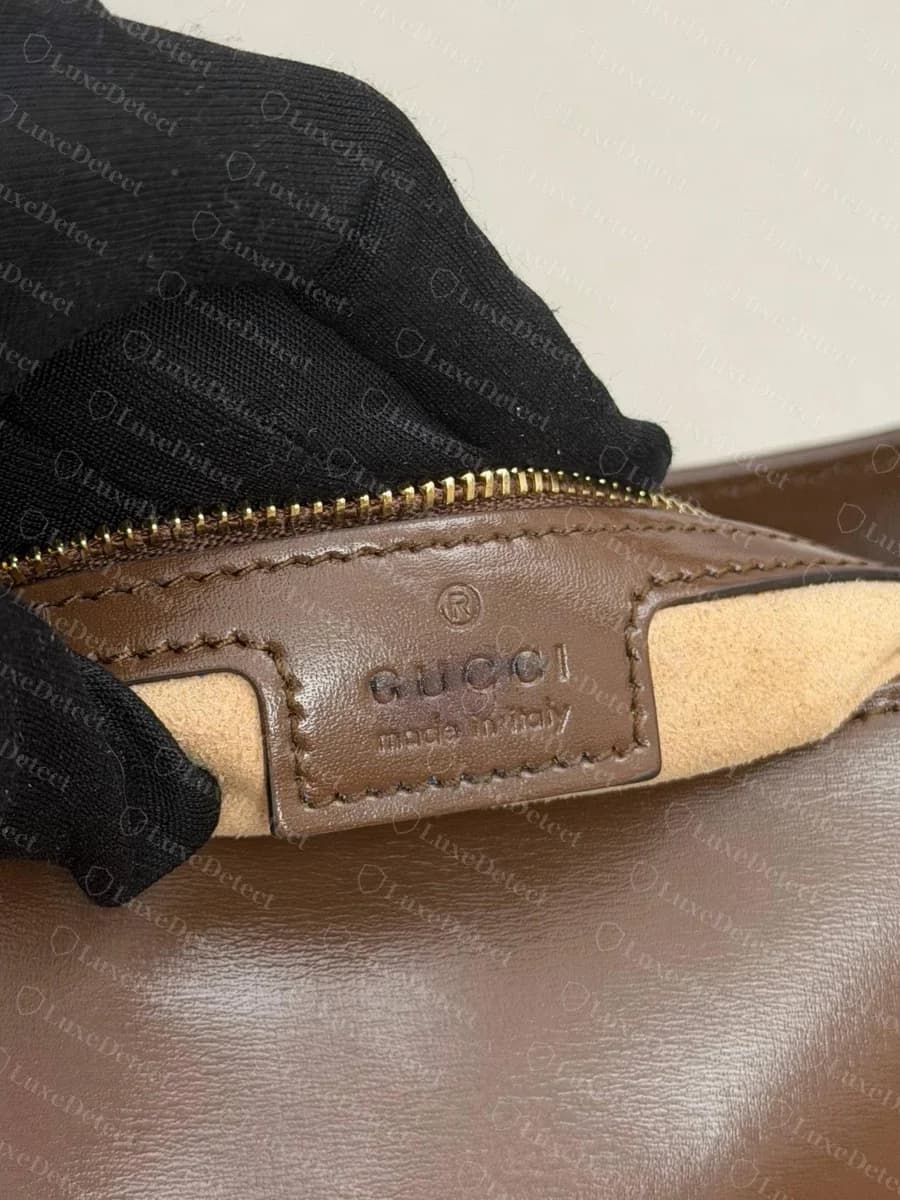
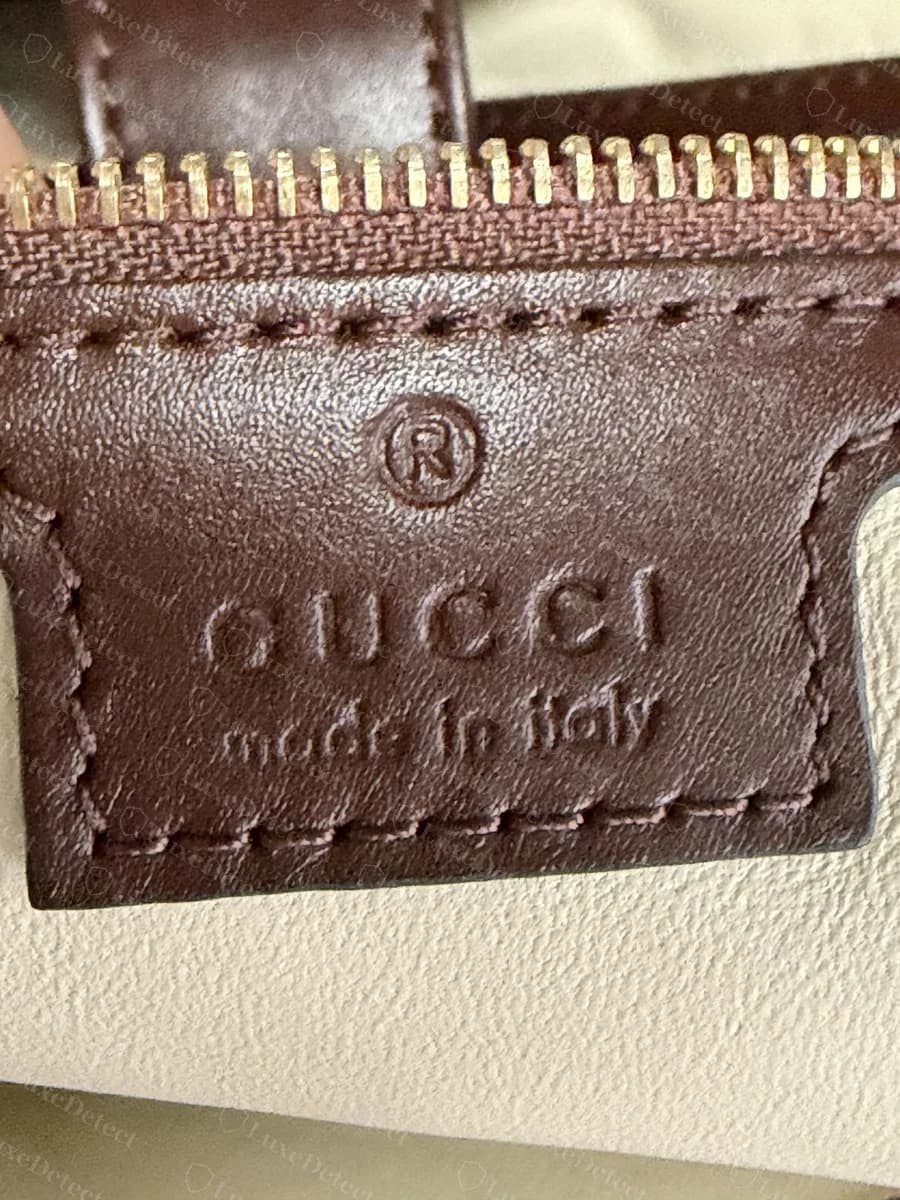
Inside the bag, a leather tab carries the heat stamp: a registered-trademark symbol, "GUCCI", and "made in Italy" in lower case.
| Detail | Authentic | Counterfeit |
|---|---|---|
| Letter weight | Fine, thin serif letters | Thick, rounded letters that look inflated |
| Depth | Shallow, even press | Deep press with puffy, blurred edges |
| "made in Italy" | Small, tidy, evenly spaced | Letters run together and look blobby |
| Proportion | Stamp sits small on the tab with space around it | Stamp fills most of the tab |
Red flag
Puffy, heavy letters in "GUCCI made in Italy" are a strong sign of a fake. Gucci's stamp is fine and restrained; a stamp that looks bold from arm's length is the counterfeit's.
The Serial Number Stamp
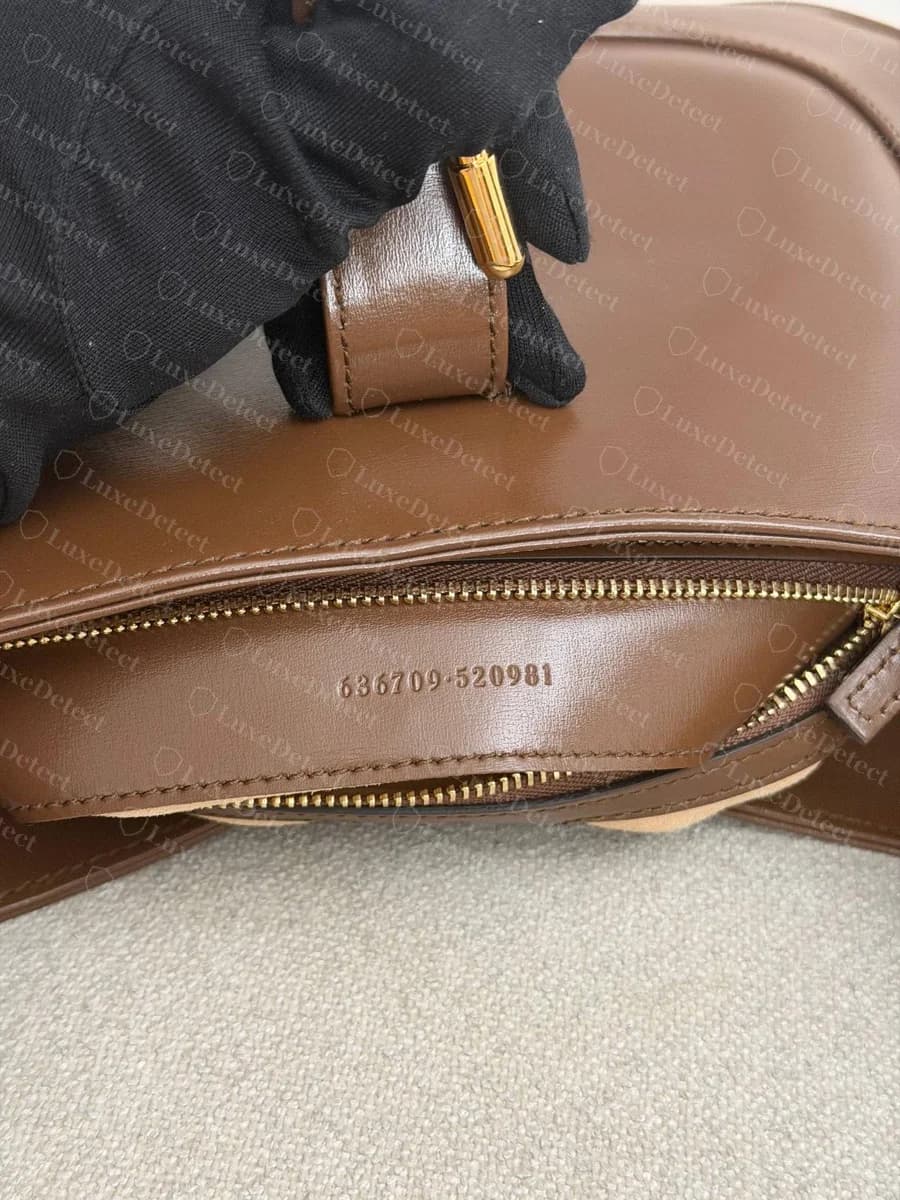
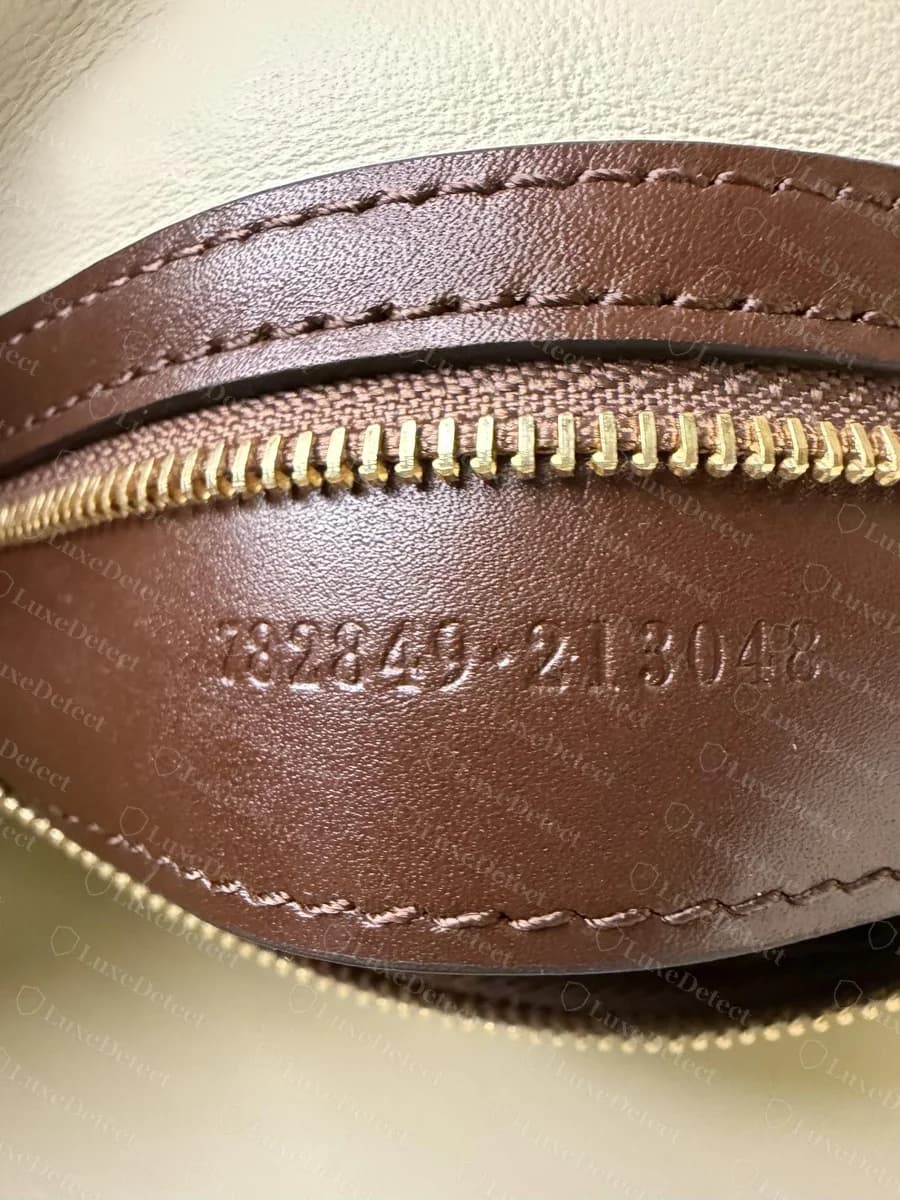
The Jackie 1961 has its serial number heat-stamped on a strip of leather inside the bag, next to the zip: a six-digit style number, a hyphen, and a six-digit supplier code.
| Detail | Authentic | Counterfeit |
|---|---|---|
| Size | Small digits, easy to miss | Large digits that dominate the strip |
| Press | Light and even | Deep and heavy |
| Spacing | Tight, even | Wide gaps between digits |
| Number on our examples | 636709-520981 (636709 is the small Jackie 1961) | 782849-213048 |
Worth knowing
Judge how the number is stamped, not just the number. Counterfeiters copy real serials from marketplace listings, so a style number that matches a Jackie proves nothing by itself. Our [Gucci serial number guide](/blog/gucci-serial-number-guide) explains how to read the two lines.
The Zipper Pull
Open the flap and check the metal pulls on the zips inside.
| Detail | Authentic | Counterfeit |
|---|---|---|
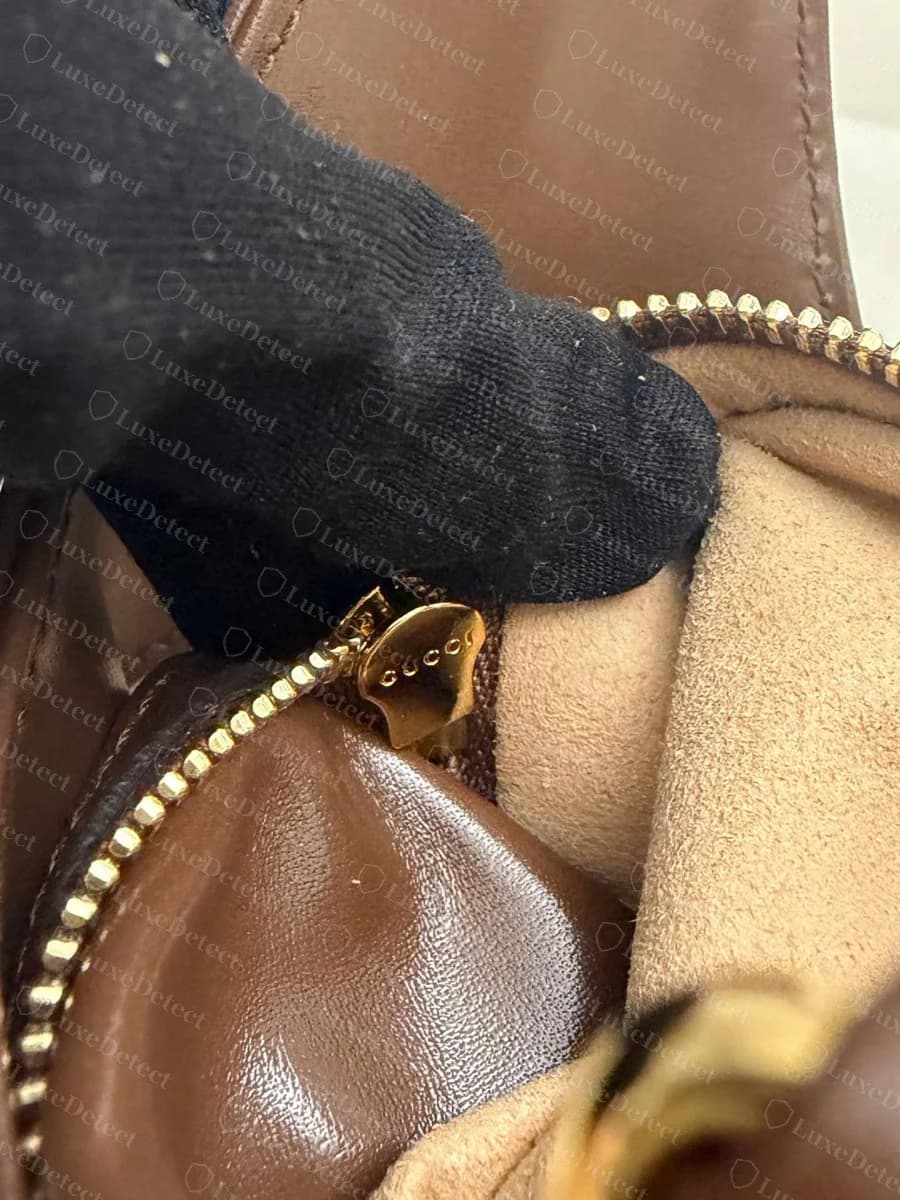
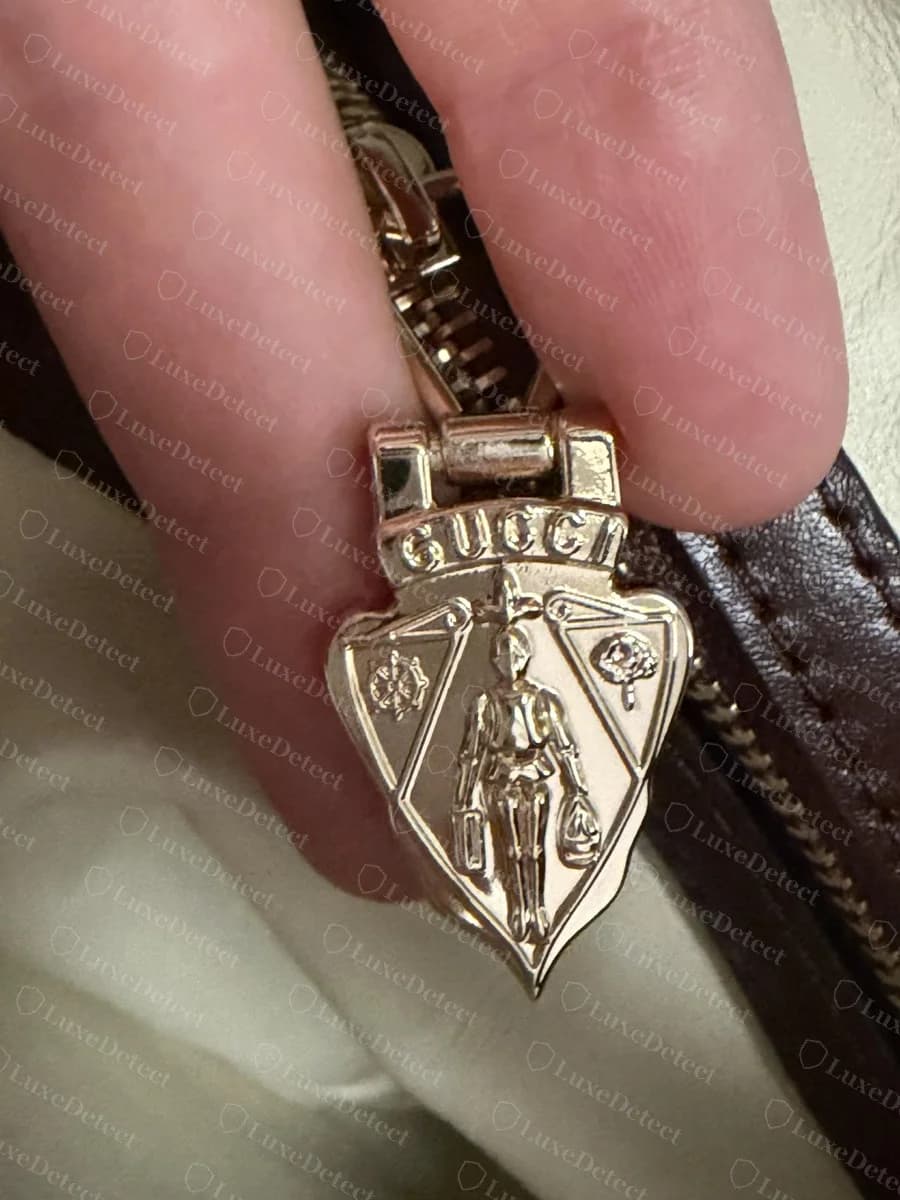
| Shape | Small, plain gold pull engraved "GUCCI" | Large shield-shaped crest with a knight figure |
| Finish | Same warm gold as the clasp | Pale champagne gold, matching the fake's clasp |
Worth knowing
Gucci did use the crest on genuine bags from earlier decades, so a crest pull isn't wrong for Gucci as a whole. It is wrong for a current Jackie 1961, and it's a quick check in a listing photo.
The Fabric QR Label
Current Jackie 1961 bags carry a black fabric label inside, printed "GUCCI" with a code and a small QR-style square. Both of our bags had one, and the counterfeit's was a convincing copy.
Worth knowing
The label is context, not a verdict. Its presence doesn't make a bag genuine, and older Jackies predate it entirely. Our [Gucci Black Label QR code guide](/blog/gucci-black-label-qr-code-year-guide) covers what the code can tell you.
Quick Authentication Checklist
- Clasp: a piston lock with push-button and side lugs, not a snap hook
- Hardware colour: warm yellow gold on the clasp and zip, not pale champagne
- Heat stamp: fine, thin "GUCCI made in Italy", not bold or puffy
- Serial stamp: small, light, evenly spaced digits
- Zipper pull: a small engraved "GUCCI" pull, not a crest
- QR label: present on current bags, but never proof on its own
A snap-hook clasp is on its own sufficient to reject the bag. Failing two of the stamp and zip checks should also end the inspection.
When to Get a Professional Opinion
The fake in this guide gave itself away at the clasp. Better replicas copy the piston lock and get closer on the stamps, and then the decision rests on letter weight, press depth and the colour of the gold, which compressed listing photos can flatten.
Where physical inspection isn't practical, our handbag specialists authenticate Gucci Jackie bags from photos starting at $25 for 24-hour turnaround, with faster options available, and return a Certificate of Authenticity you can use in a dispute or resale listing. For general Gucci authentication principles that apply across the brand's bag lines, see our Gucci bag guide.
FAQ
What years was the Gucci Jackie bag produced?
The original Jackie O hobo dates to the 1960s. Gucci has reissued the silhouette several times since, most notably as the "Jackie 1961" line, which remains part of the brand's current core collection. Both vintage originals and current-production bags are counterfeited, so compare a bag against references from its own era.
What is the fastest way to spot a fake Jackie 1961?
Look at the clasp first. A genuine Jackie 1961 closes with a piston lock; a snap hook or clip ends the inspection. If the clasp passes, check the interior heat stamp for fine, thin lettering.
Can I tell a fake Jackie from photos alone?
Often, yes. The clasp, heat stamp, serial stamp and zipper pull all show up in clear close-up photos. Ask the seller for sharp, well-lit shots of each; a seller who won't provide them is a warning in itself.
Does the serial number prove my Jackie is authentic?
No. Counterfeiters copy genuine serial numbers from listings, so a correct style number only tells you the fake was made with care. How the number is stamped matters more than the number itself.