Luxury Handbag Authentication Specialist
Luxury leather goods specialist. Works on Italian house construction, hardware, and interior stamping.
Published November 2026 · Contact
Vintage Prada Bags: The Short Answer
How do you know if a vintage Prada bag is real? Work out roughly which era it comes from, then check that the triangle plaque, the interior plate, the lining and the zips all belong to that era and to that model, and that the nylon or Saffiano feels like the period material. Do not look for a date code or a serial number that proves the bag: Prada has no date code, and the small white tag and the authenticity card that come up in every search are copied by fakes.
Vintage Prada is worth the care because the 1990s nylon bags are in steady demand on resale sites, and because the plain design gives a buyer few marks to check, which is exactly what makes a good fake hard to spot. About a third of the Prada handbags checked with us (34% for 2024 to 2026) came back fake. This guide covers the eras, what each part of the bag should look like and which of the usual advice is not a tell.
Worth knowing
This guide combines what genuine vintage Prada nylon bags show in our authentication orders and in published reseller references, with every source named where we use it. We list something as a tell only when we saw it on fakes and not on genuine bags. For vintage Prada we have no such detail that we would stand behind: the fakes we compared reproduced the plaque, the plate, the lining and even the small white tag. So this guide is about whether the parts fit the bag's era, not about one decisive mark.
What to check, ranked by reliability
| Checkpoint | Reliability | What it tells you |
|---|---|---|
| 1. The Triangle Plaque by Era | ★★★★★ | Fixing and wording should fit the bag's period; a crooked, loose or era-mismatched plaque is a reason to look harder, but fakes copy a neat one. |
| 3. The Jacquard Lining | ★★★★★ | A woven rope pattern with alternate lines inverted is right; a printed or blurry lining is a warning sign. |
| 4. Zips and Hardware by Era | ★★★★★ | Early unbranded zips and later maker marks both occur on genuine bags; look for fit with the era and crisp engraving. |
| Vintage Prada Eras at a Glance | ★★★★★ | Catches parts from the wrong period, such as a Re-Nylon label on a 1990s design; it will not catch a good fake. |
| 2. The Interior Plate and "Made in Italy" | ★★★★★ | The plate is copied closely and the country line is never a tell; use it only to check the plate fits the era. |
| 5. The White Tag, the Card and Why There Is No Date Code | ★★★★★ | Prada has no date code, and fakes copy the tag, its numbers and the card. |
Vintage Prada Eras at a Glance
Prada was founded in Milan in 1913 as Fratelli Prada by Mario Prada and his brother Martino, making leather goods and travel luggage, and Miuccia Prada took over the house in 1978 (Wikipedia). The bag that made the house's name for a modern buyer is the black nylon backpack, which sources date to 1984. It was made in a water-resistant nylon called Pocone (also spelled Pocono) and carried a small metal triangle (Etoile Luxury Vintage, Atelier Victor).
The dates below are approximate and the sources do not agree at the edges, so use them to ask whether a bag's parts fit its style, not to date it to the year.
| Period | What you see on the bags | Parts that tend to change |
|---|---|---|
| Before the mid-1980s | Prada leather goods and luggage, in the house's founding trade | Few markings are documented; do not expect a modern plate or card |
| 1984 to 1990s | The Vela and Tessuto nylon backpacks, totes, pouches and shoulder bags; leather trims | Triangle plaque with rivets on all three corners, early unbranded zips, nylon with a dense, slightly satin feel |
| Late 1990s to 2005 | Tessuto and Saffiano bags of every shape, the designs later reissued as Re-Edition 2000 and 2005 | Rectangular PRADA / MADE IN ITALY interior plate, jacquard lining, branded zips from Italian makers |
| 2010s onward | Re-Nylon (recycled nylon) and the Re-Edition reissues, chip-era packaging | Domed rivets or no rivets on the triangle, white composition labels, newer cards |
Worth knowing
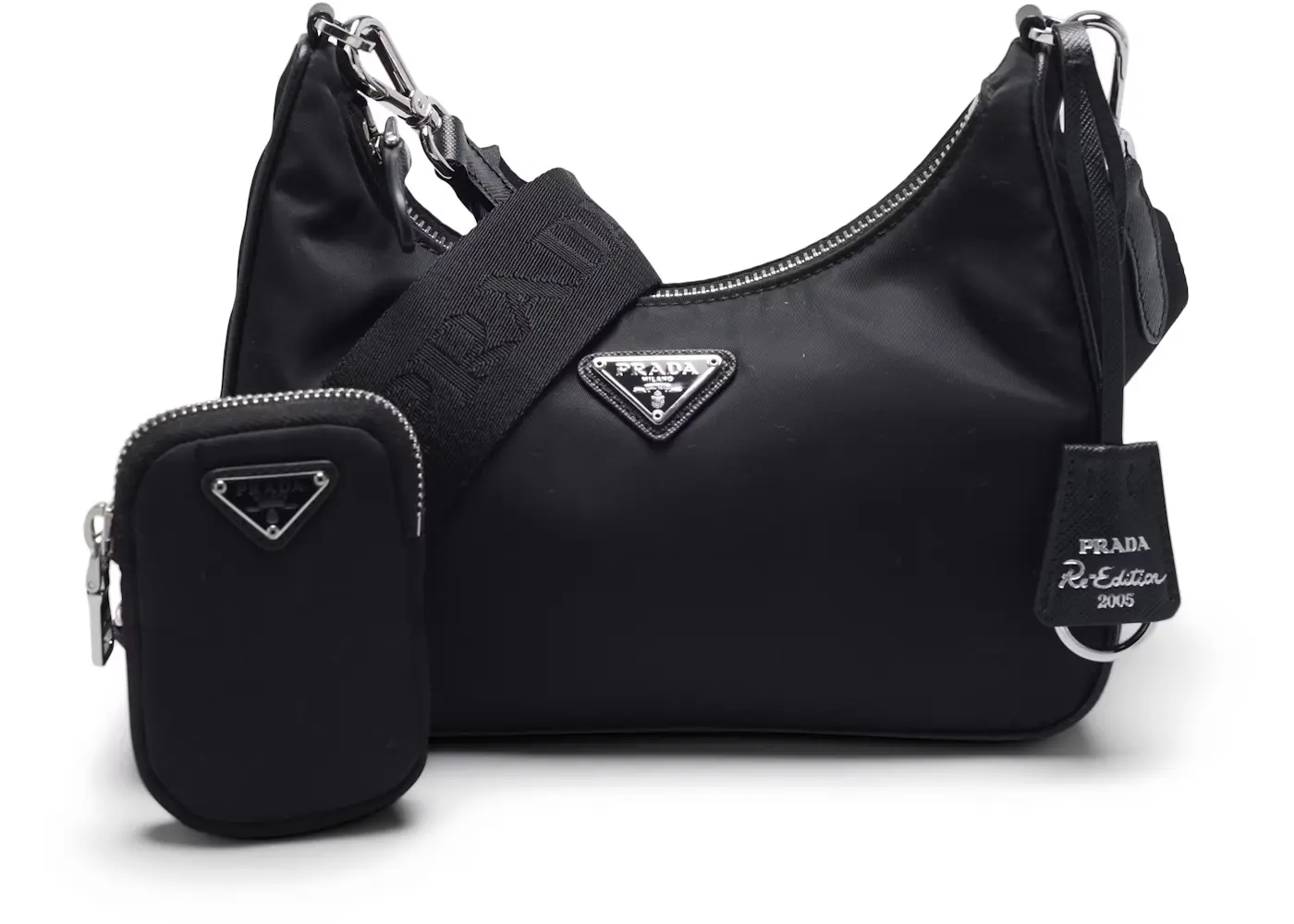
A bag whose style belongs to the 1990s but whose label says Re-Nylon, or that carries a recent chip or card, is a reissue or a mismatch and needs a closer look. Our [Re-Edition 2005 guide](/blog/authenticate-prada-re-edition-2005-guide) covers the reissues, which are modern bags in vintage shapes.
Prada Nylon and Saffiano: What Collectors Look For
Tessuto and Vela nylon
Tessuto is the usual name for Prada's nylon bags and Vela for the entry-level pieces such as pouches and cosmetic bags, though the two words are often used for each other (see The RealReal). Genuine Tessuto and Vela bags are often unlined with bound seams, or lined in a jacquard. Collectors regard the 1990s nylon as denser and a little more satin than modern production, and the original fabric as light and thin, closer to ripstop than the heavier twill used now. The nylon backpack has its own authentication guide.
Saffiano leather
Saffiano is calf leather pressed with a fine diagonal cross-hatch and finished with wax; sources credit Mario Prada with the process, from 1913. It is the leather of the structured Prada totes and briefcases of the 1990s and 2000s. Vintage Saffiano is described as having a deeper grain and a denser feel than modern leather (Atelier Victor). Edges should be painted in smooth, even coats, and the grain should run across seams without smearing at corners.
Nappa and other leathers
Prada also made soft nappa and calf bags. The same rules apply: era first, then whether the parts fit. Our general Prada bag guide covers the leather checks.
The Triangle Plaque by Era
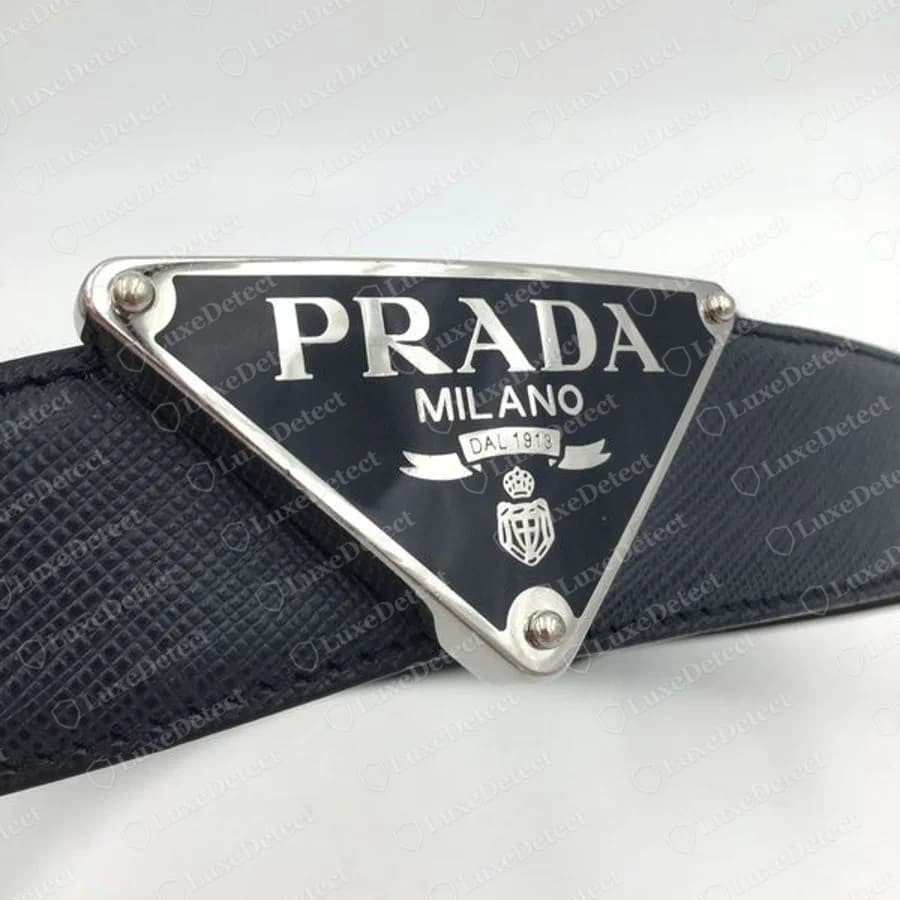
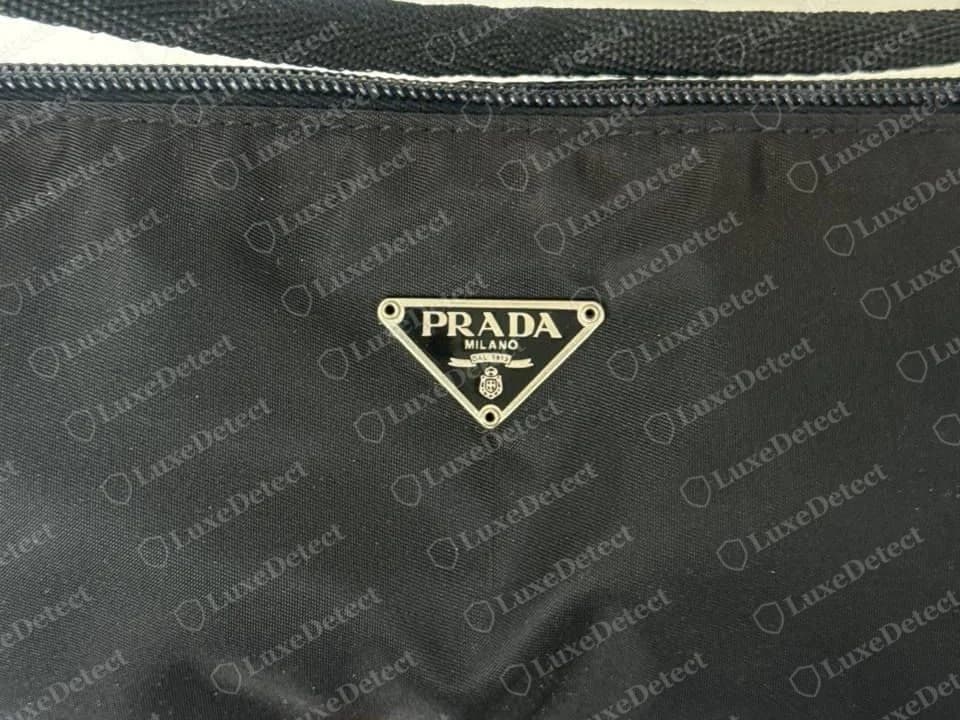
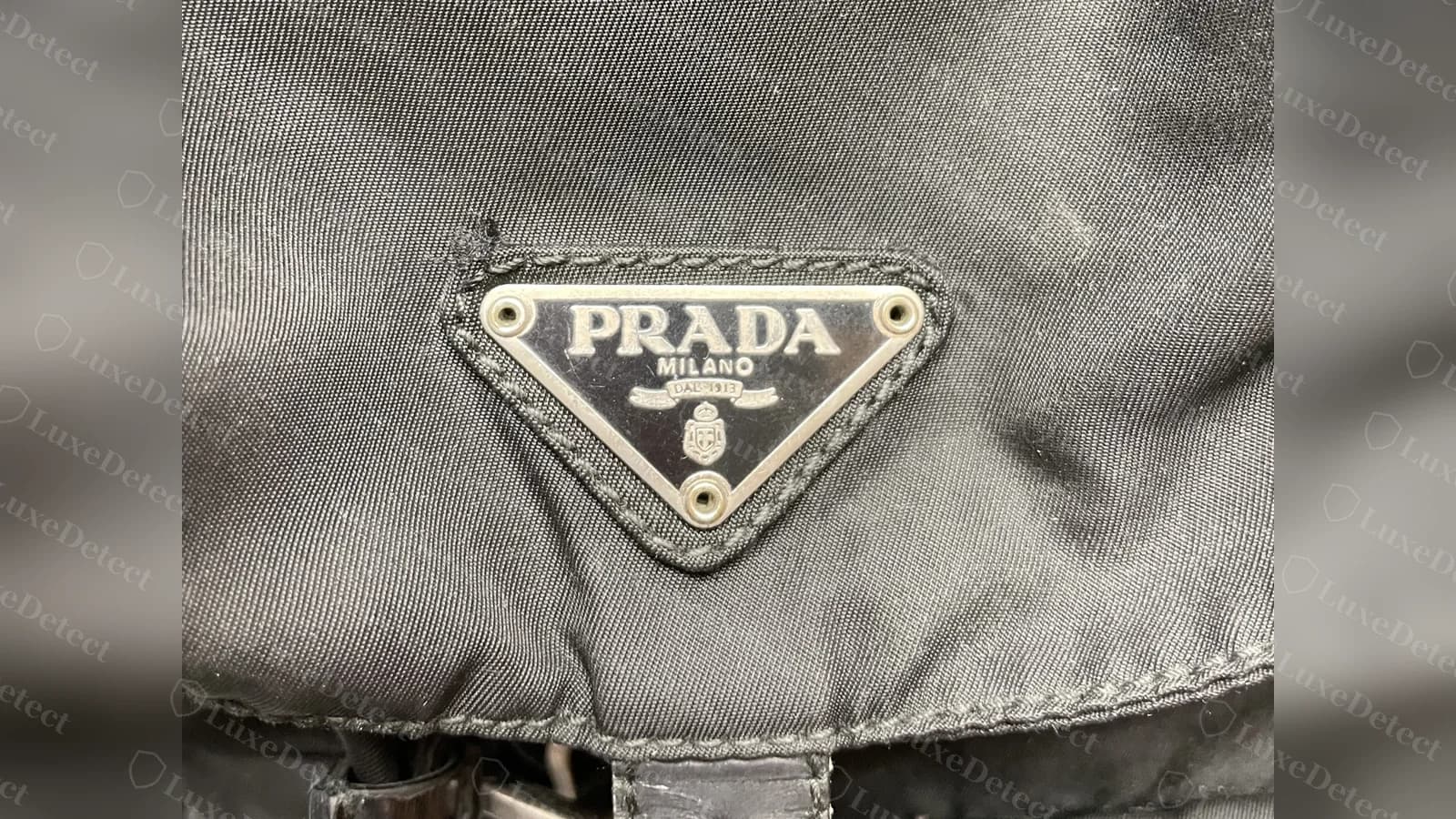
The enamelled metal triangle is the first thing every buyer checks, and it is also the best clue to age. On the bags we compared the plaque reads PRADA, MILANO and DAL 1913 with a crest, but the way it is fixed changes. Older plaques have a rivet or screw head on each of the three corners, and newer ones have domed rivets or none (The RealReal). The plaque sits on a small triangle of nylon or leather that is stitched to the bag, and both treatments appear on genuine bags.
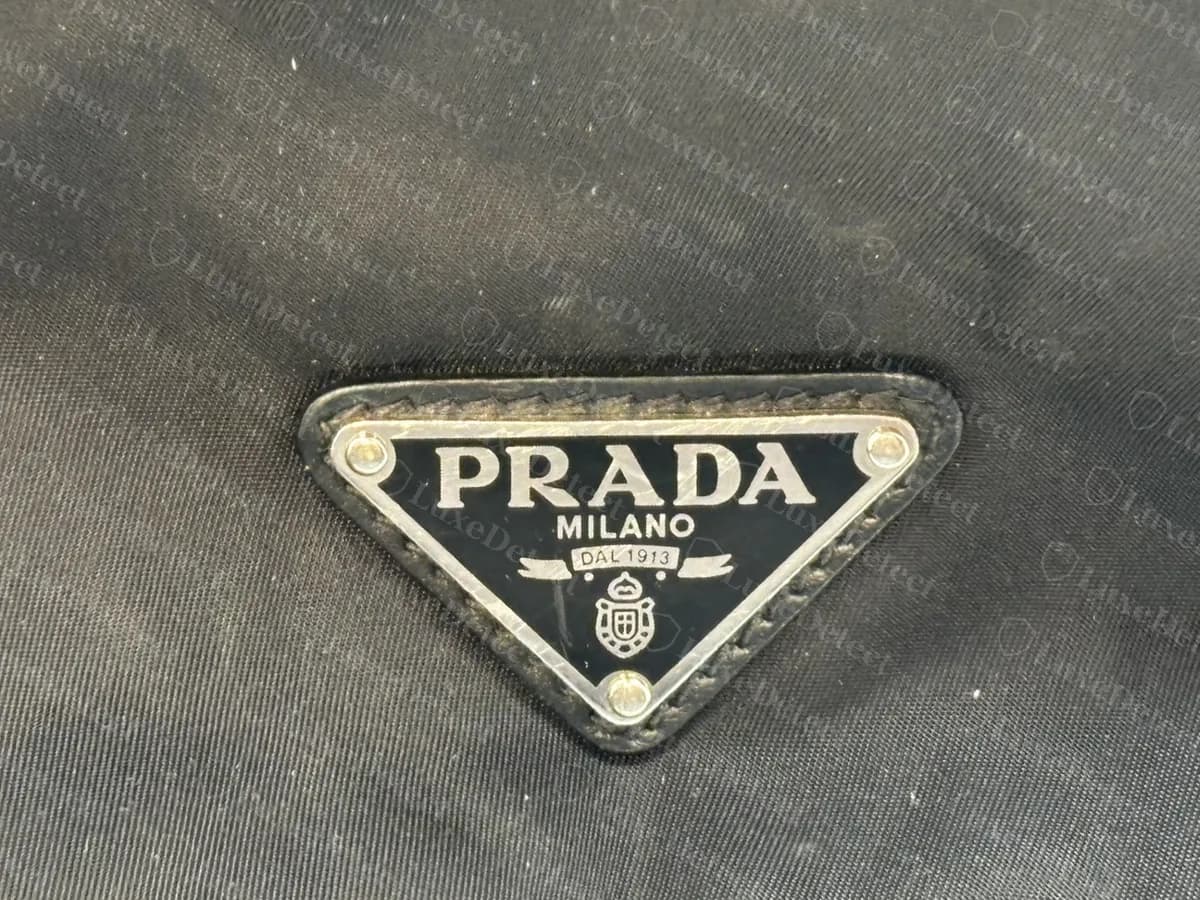
Two reseller references add details we cannot confirm from our own orders. One says the early plaques were sometimes made in sterling silver, marked 925 with an Italian hallmark, and that they were quickly discontinued, which would make them a sign of a very early model rather than a fake (The RealReal). Another says the notch at the base of the R is missing on some pre-2000 plaques (Fashionica). Treat both as reasons to look, not rules.
| Element | Authentic | Counterfeit |
|---|---|---|
| Wording | PRADA, MILANO, DAL 1913 and crest, evenly cut | Same wording copied; stop for misspelling or uneven lettering |
| Fixing | Rivets or screws at three corners on older bags, domed rivets or none on newer | A loose plaque or a central brad is reported by resellers; a riveted plaque is also copied |
| Enamel | Smooth and flat | Bubbled or sloppy enamel |
| Surround | Stitched nylon or leather triangle, centred | Plaque off-centre in its triangle |
Worth knowing
Fakes copy the plaque closely, including the rivets. A neat triangle clears nothing; a plaque that does not fit the bag's claimed era, or sits crooked and loose, is a reason to look at everything else harder.
The Interior Plate and "Made in Italy"
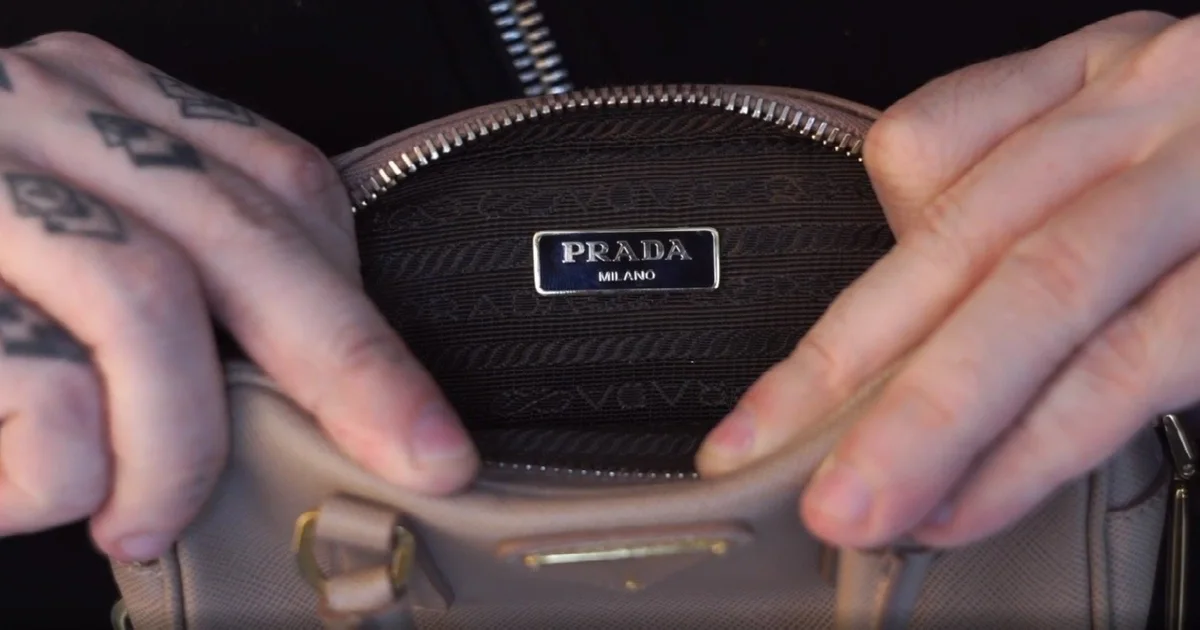
Genuine nylon bags from the 1990s and 2000s usually carry a small rectangular metal plate sewn to the lining, in enamel, reading PRADA over MADE IN ITALY. The plate matches the colour of the bag. Its shape, position and thickness vary by era (The RealReal), and some small bags have the name printed straight on the lining. One reseller guide describes an older three-line plate that also reads MILANO, and we have not confirmed that from our own orders, so compare against a verified bag of the same period.
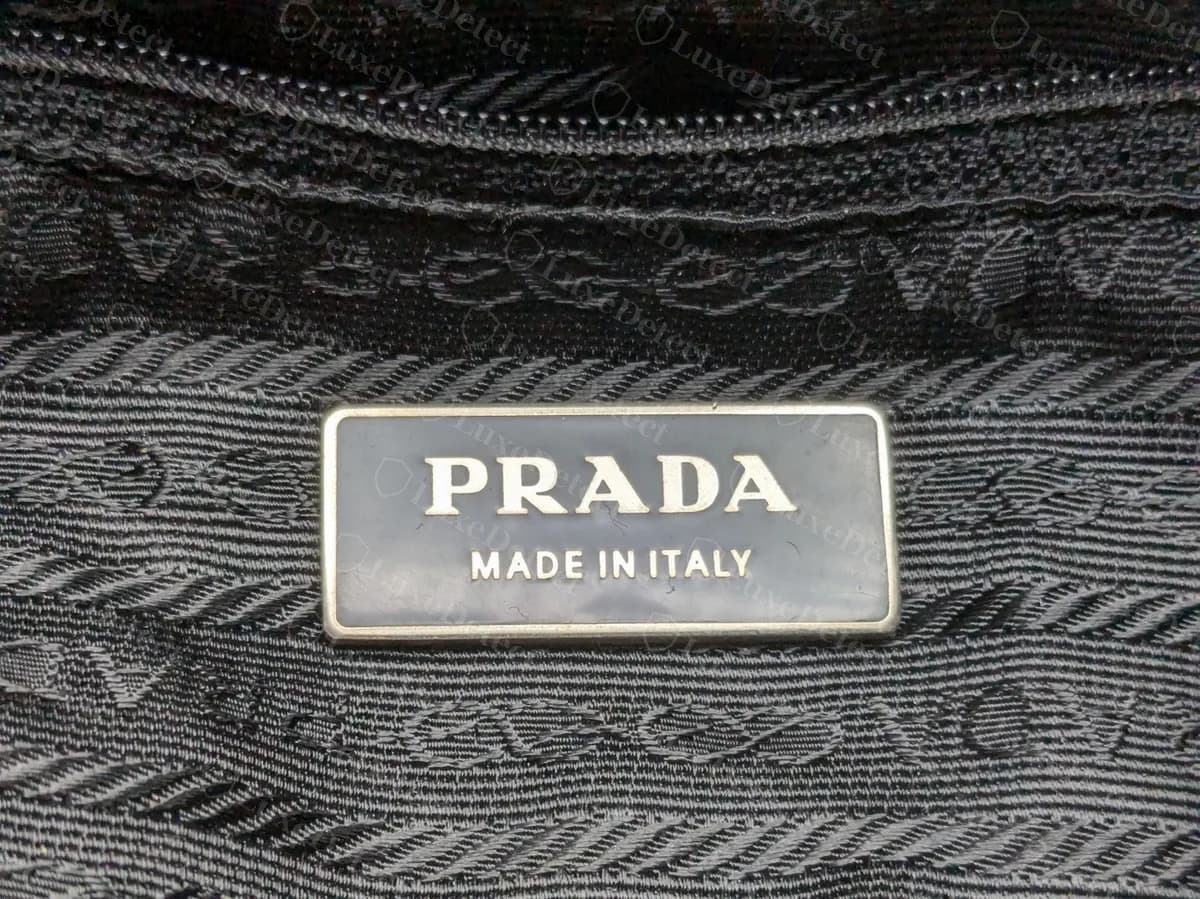
| Element | Authentic | Counterfeit |
|---|---|---|
| Plate | Metal and enamel, flat and centred, even lettering | Copied closely; stop for plastic or fabric where metal belongs |
| Country line | MADE IN ITALY on many bags | The same, so it proves nothing |
| Era fit | Plate style matches the bag's period | A modern plate on a 1990s design |
Worth knowing
The country line is never a tell on its own. A bag that says Made in Italy can be fake, so do not accept or reject a bag on that line.
The Jacquard Lining
Many vintage Prada nylon and leather bags are lined in a woven jacquard whose pattern is a coiled rope with PRADA repeated, with alternate lines running upside down. You can feel the weave through the bag. The letters, particularly the A, should be consistent and a little wide (The RealReal), and the pattern should run straight along the seams. A lining that is printed rather than woven, blurry, or without the inverted lines is the warning sign.
Not every vintage Prada has a lining. Tessuto and Vela bags are often unlined with bound seams, so a missing lining on a pouch is not a tell.
| Element | Authentic | Counterfeit |
|---|---|---|
| Pattern | Woven rope motif, PRADA repeated, alternate lines inverted | Reported: printed or blurry pattern, no inverted lines |
| Feel | Can be felt through the fabric | Thin or slippery lining |
| Unlined bags | Bound seams on many Tessuto and Vela pieces | A lining on a model that should have none |
Zips and Hardware by Era
Zips date a bag better than almost any other part. The RealReal describes the first generation as powder-coated, unbranded and blank on the back, with teeth matching the fabric and a rectangular nylon pull rather than a leather one. Later bags carry zips from Italian and other makers, such as Lampo, Riri, IPI, Opti and YKK, with the maker's name on the back of the slider and pulls that gain PRADA lettering and leather trim. Our own genuine nylon bags show the Lampo mark.
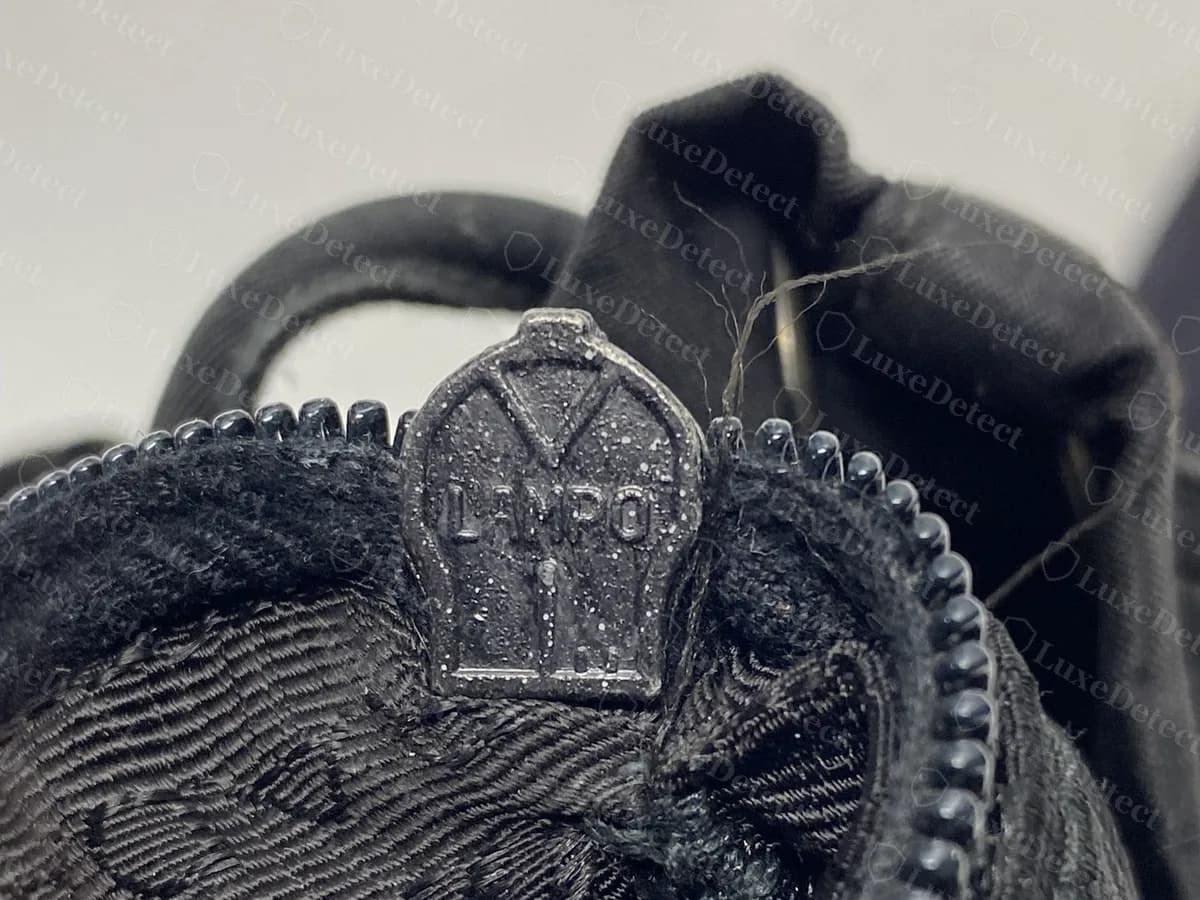
Prada has used more than one zip maker over the years, so the maker's name is never a tell on its own. What helps is fit: an early-style unbranded zip on a bag with a 1990s plate looks right, while a modern branded zip on a bag sold as the 1980s original is worth a question. Buckles and zip pulls say PRADA on most bags, while grommets do not (The RealReal). Metals should be one tone across the bag; engraving should be crisp. Heavy, solid hardware is a better sign than light or hollow parts.
| Element | Authentic | Counterfeit |
|---|---|---|
| Early zips | Unbranded, powder-coated, nylon pull | A branded modern pull on an early bag |
| Later zips | Lampo, Riri, IPI, Opti or YKK mark, crisp | Soft, uneven or missing engraving |
| Metal tone | One tone across plaque, zips, buckles | Mixed silver and gold tones |
The White Tag, the Card and Why There Is No Date Code
Search for "vintage Prada serial number" and you will find three claims, none of which we can support: that Prada used a date code, that a unique serial is stamped on a white leather patch, and that the number must match a black card. What genuine Prada bags in our reviews carry is a small white fabric tag sewn into a lining seam with a short number, one to three digits on the bags we photographed. It is a factory or production code, it is not unique, it is not a date, and fakes copy it, including numbers found on genuine bags. Our Prada serial number guide shows genuine and fake tags side by side, and the serial number checker tests whether a code has the right shape.
Reseller sources disagree about the older years. Several say bags from before the 1990s have no tag, serial or card at all (Fashionica); one says a white lining tag with a factory number is an excellent sign on bags after 2000 (Atelier Victor). We would not use either to date a bag, and a missing tag proves nothing because tags are cut out, hidden or lost.
The authenticity card is a white or light grey card in a dark envelope, printed in English and Italian with the model, article code, colour and material, and it belongs to the later years. It is useful only if it describes your bag, and cards are sold loose and packed with fakes.
Red flag
A seller who offers a "date code" or "unique serial on a leather patch" as proof of a vintage Prada is describing something Prada does not do. That does not make the bag fake, but it means the seller's evidence is worthless and the bag has to pass on its construction.
Worth knowing
A card that does not match the bag (the wrong model, colour or material) is the one useful finding. A matching card, a missing card and a short white tag number each prove nothing.
Condition vs Authenticity: Reading Wear on a Vintage Bag
Wear is evidence of age, not of fakery. Some things are normal on a genuine bag of twenty or thirty years:
- Normal: scuffed or chipped enamel on the plaque, rubbed nylon at the corners, frayed or faded white tag, flaking or sticky coating on an old lining, a sagging or stretched strap, a worn zip.
- Worth asking about: replaced zips, a relined interior, re-dyed or repainted leather, replaced straps. These are repairs, not proof of a fake, but a new lining can remove the plate and tag you would check.
- A warning: wear that does not match, such as a pristine plaque and plate on a heavily worn bag, or a modern label on a bag that looks twenty-five years old.
Condition changes value; authenticity is decided by whether the parts that are there belong to the bag.
What Vintage Prada Fakes Get Right and Wrong
The fakes we compared were good at the things buyers are usually told to check. They reproduced the triangle plaque, the interior plate, the jacquard lining, the engraved zip and the small white tag with a believable number. We did not find a repeated detail that we would call a tell for vintage Prada, so we do not list one.
What does catch bags is a mismatch between parts:
- Era mismatches. A modern plate, label or card on a bag styled for another decade.
- Material. Loose, thin nylon that feels limp, or a Saffiano pattern that smears at corners and seams.
- Poor fixing. A plaque that wobbles, a central brad, bubbled enamel.
- Lining. A printed or blurry pattern in place of a woven one.
The things buyers are usually told to look for, a MADE IN ITALY plate, a white tag number, a card and a Lampo-marked zip, appear on genuine and fake bags alike, so none of them is a tell.
Vintage Prada Buying Checklist
- Identify the model and period from the bag itself (shape, nylon, hardware), not from the listing title, and rule out a Re-Edition or Re-Nylon reissue.
- Check the triangle plaque: wording, centred in its triangle, fixing at three corners for older bags, smooth enamel.
- Check the interior plate fits the period and the colour, with even lettering.
- Check the lining is woven jacquard with inverted lines, or that an unlined bag is the kind that should be.
- Check the zips for an early unbranded type or a maker's mark that fits, with crisp engraving and one metal tone.
- Feel the nylon or Saffiano against a verified bag of the same model.
- Read the wear and ask about replaced zips, linings or straps.
- Treat the white tag, card and dust bag as context only.
Two or more failures means walk away. Passing every step means the bag is consistent with a genuine one, not that it is confirmed.
When to Get a Professional Opinion
Vintage Prada fakes copy the plaque, the plate and the lining, and 34% of the Prada handbags checked with us (2024 to 2026) came back fake. If you are paying real money for a vintage nylon backpack, a Saffiano tote or a 1990s shoulder bag, a second pair of eyes is the reliable next step, especially for a private sale or a bag with no history.
LuxeDetect's handbag authentication starts at $25 for a 24-hour turnaround and includes a Certificate of Authenticity. Start an order with Prada selected and upload clear photos of the front and back, the triangle plaque up close, the interior plate, the lining, the zip slider backs, any white tag and any card.
A code that checks out doesn't prove the item is real. Counterfeiters copy genuine codes.
Our authenticators check the stamps, hardware and construction of your Prada against verified references, from $25. You get a verdict within 24 hours, and a Certificate of Authenticity if the item passes.
Authenticate My Prada →FAQ
How do I know if my vintage Prada bag is real?
Work out the model and era, then check that the triangle plaque, interior plate, lining and zips all fit that period. Prada has no date code, and the white tag and card are copied by fakes, so no single mark settles it. Compare the whole bag with a verified example or have it authenticated.
Does vintage Prada have serial numbers or date codes?
Not in the way Louis Vuitton or Chanel do. Prada bags usually carry a small white fabric tag with a short number, which is a factory code, not a date or a unique serial. Older bags may have no tag or card at all. Our Prada serial number guide explains what the tag shows.
How old is my Prada bag?
You can place it in a period, not a year. The Prada nylon backpack dates from 1984, so a plain black nylon bag with riveted triangle and unbranded zips points early, while Re-Nylon labels and domed or no rivets point to recent production. Seller claims such as "1980s" or "rare" are not evidence.
Is a vintage Prada nylon bag with no white tag fake?
No. Tags are cut out, hidden in a seam or lost, and some bags never had one. What matters is whether the parts that are present fit the bag.
Is a Prada bag made in Italy always real?
No. The country line is never a tell: fakes carry MADE IN ITALY, and it is not a guide to age.
What is the difference between Tessuto and Vela?
Both are Prada's nylon. Tessuto generally refers to higher-value bags with more features, such as backpacks and satchels, and Vela to entry-level pieces such as pouches, though the words are used interchangeably.
Is a vintage Prada Saffiano bag worth authenticating?
Yes. Saffiano totes are widely copied and the leather, edge paint and plaque are all things a second opinion can check against verified bags. Our Prada bag guide covers the leather.
Can I authenticate a vintage Prada bag from photos?
Yes. What decides it is how the plaque, plate, lining, zips and material fit together against verified bags of the same model and era, and clear photos show all of that. On an expensive bag a professional review is the safer route, because good fakes copy the individual marks.