Luxury Handbag Authentication Specialist
Luxury leather goods specialist. Works on Italian house construction, hardware, and interior stamping.
Last updated September 2026 · Published August 2026 · Contact
What the Gucci Serial Number Tells You, and What It Does Not
Most Gucci bags carry a leather tag sewn into the lining, or numbers stamped straight into the interior leather. Those numbers identify the model and the production batch. They do not carry a production date, and Gucci publishes no key that turns them into one. Any site that claims to date a bag from these digits is guessing.
This guide is built from our own order archive. We went through interior tags from a large number of genuine, authenticated Gucci bags, and compared them with tags from bags ruled fake. What we found is the main thing to know: the tags on the fake bags we reviewed looked just as clean and correctly laid out as the genuine ones. A tag is worth checking, but a good-looking tag clears nothing.
Prefer the full-screen version? The Gucci serial number checker validates the digit count and splits the style number from the serial.
A code that checks out doesn't prove the item is real. Counterfeiters copy genuine codes.
Our authenticators check the stamps, hardware and construction of your Gucci against verified references, from $25. You get a verdict within 24 hours, and a Certificate of Authenticity if the item passes.
Authenticate My Gucci →Worth knowing
We did not find a repeatable, photo-visible fault in the serial tags of the fake bags we reviewed, so this guide does not include a ranked "fake tells" table. It shows the layouts genuine tags use and says plainly what we could and could not confirm.
The Modern Leather Tag: Two Rows of Six Digits
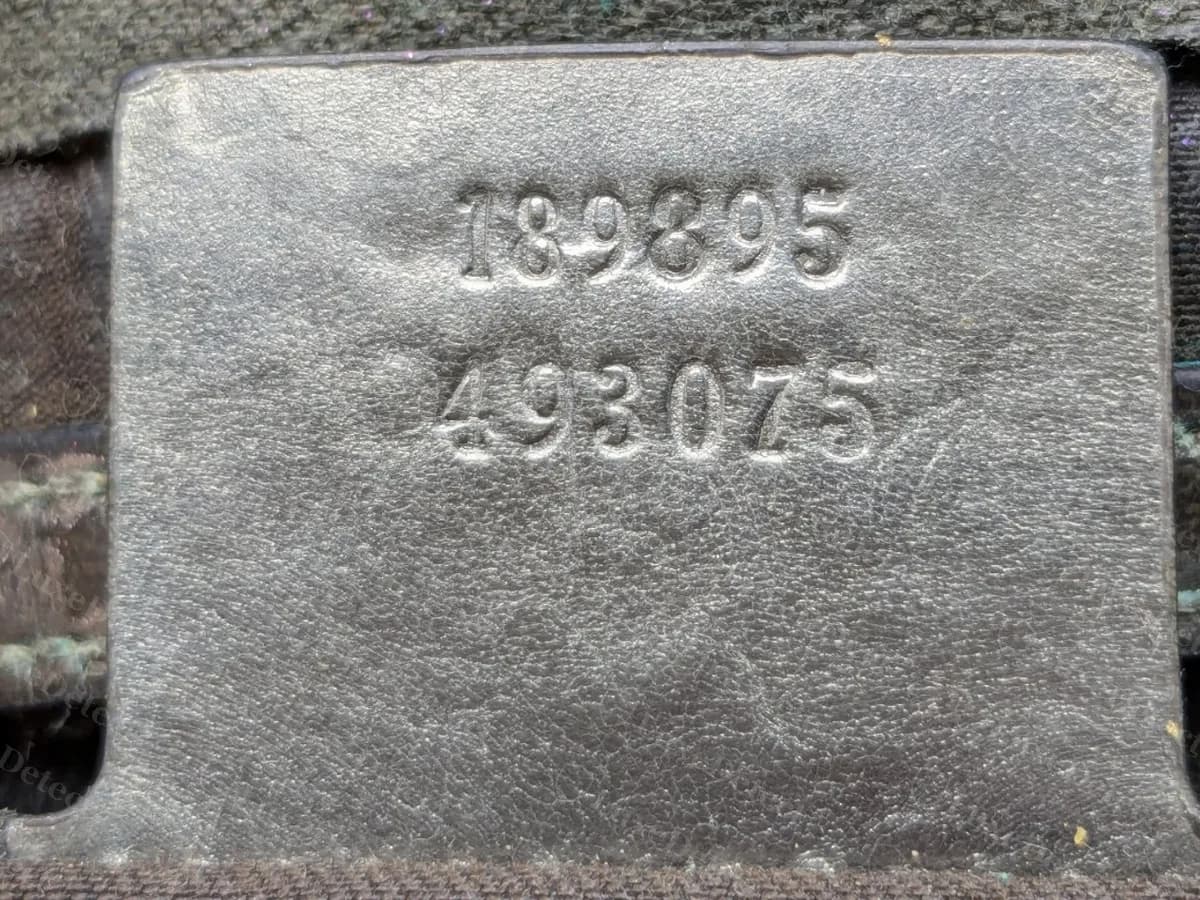
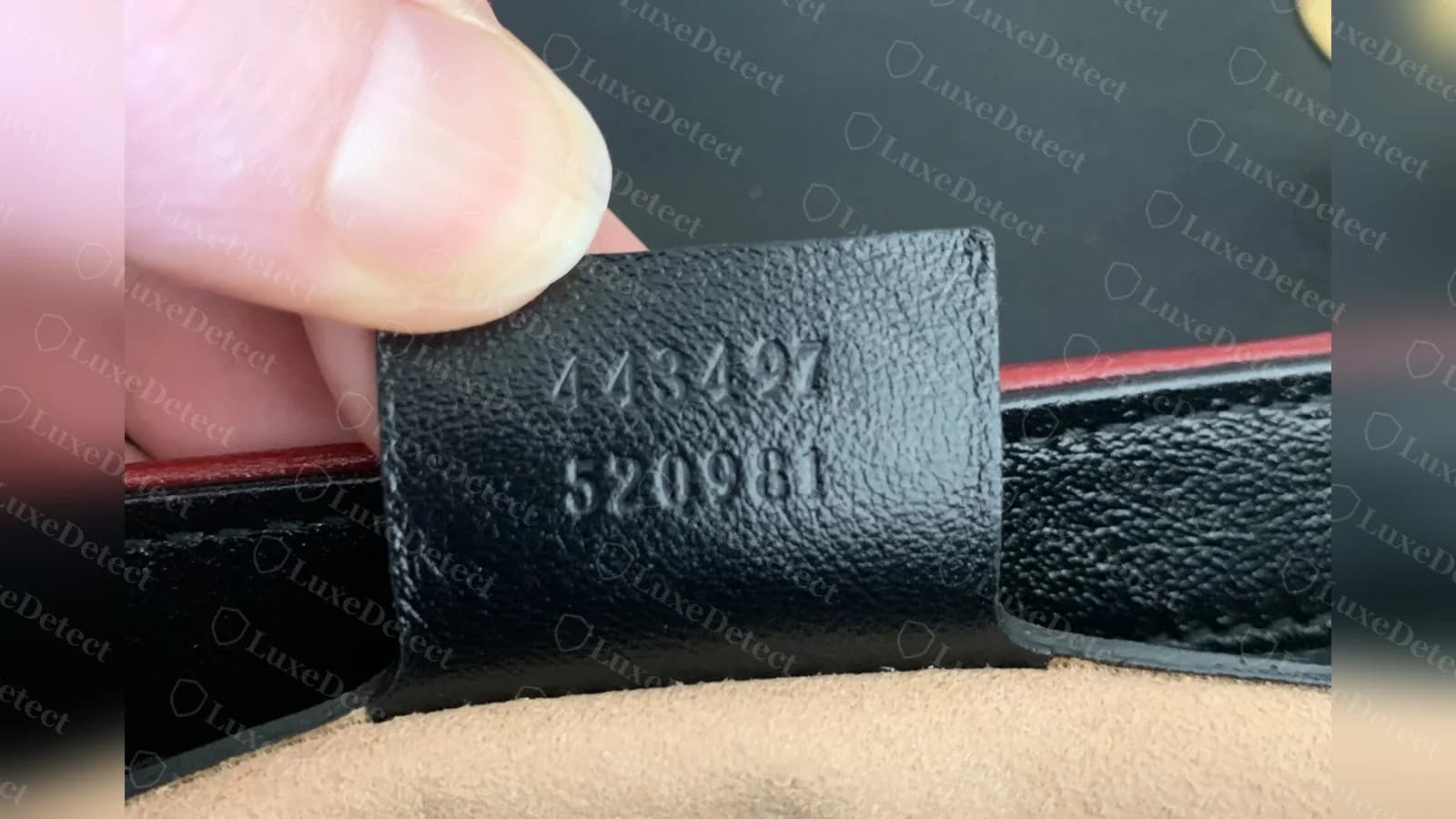
The most common layout on the genuine bags we reviewed is a small leather patch with two rows of six digits: a style number on top and a second number beneath. Examples from genuine bags in our set are 189895 over 493075, 443497 over 520981, 447632 over 204991 and 448065 over 467891. The digits were evenly spaced and pressed to a consistent depth.
On the tag we saw, only digits appear on the number rows. Belts, black fabric labels and some other pieces carry letters, so that rule applies to the number rows on bag tags rather than to every Gucci mark.
The Front of the Tag

The side that faces you carries three lines: a registered mark, "GUCCI" in capitals and "made in Italy" in lower case. The numbers are on the reverse of the patch, so you often have to lift the tag to see them. On the genuine bags we reviewed the patch was sewn in along its top edge, near a zip or at the top of an interior pocket, rather than left loose.
Numbers Stamped Straight Into the Lining Leather
Not every bag has a separate patch. On some genuine bags the numbers are stamped directly into a strip of the interior leather.
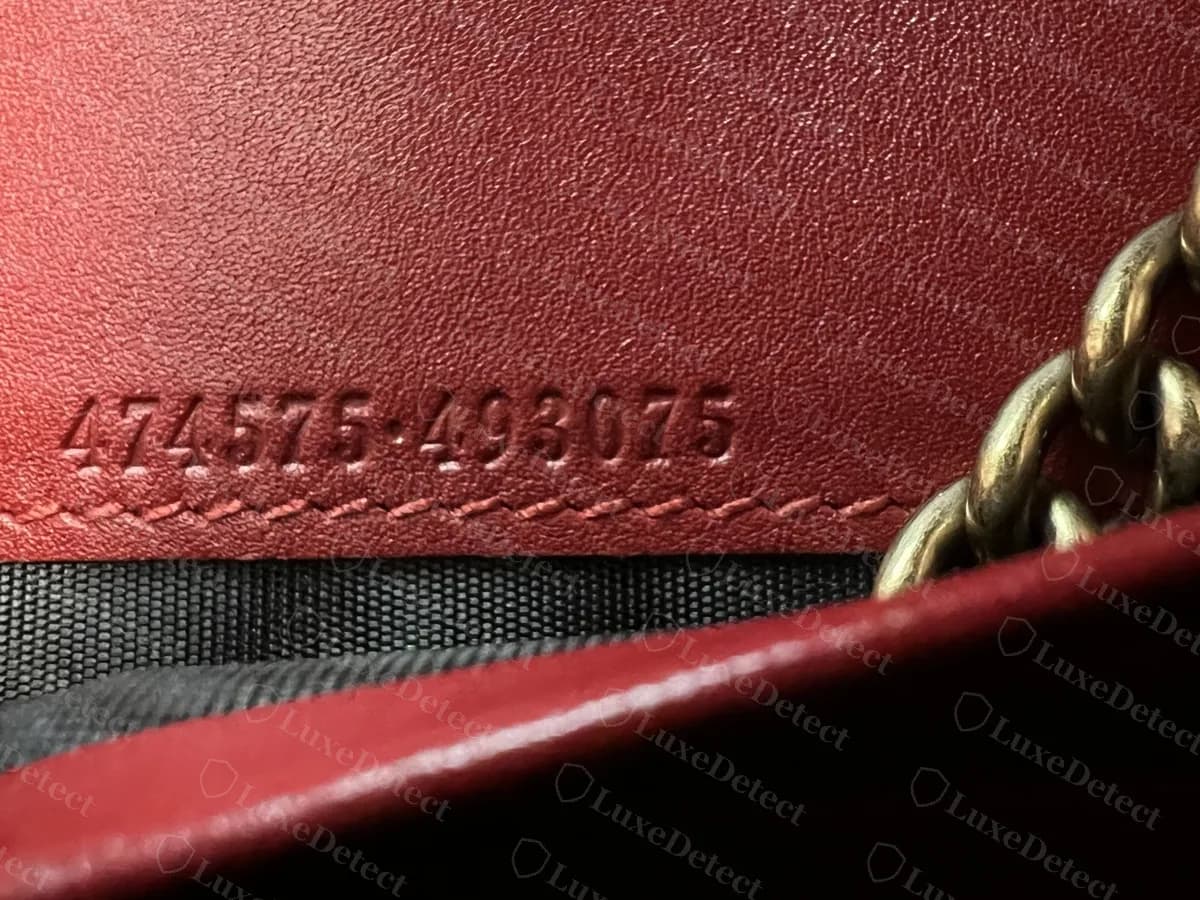
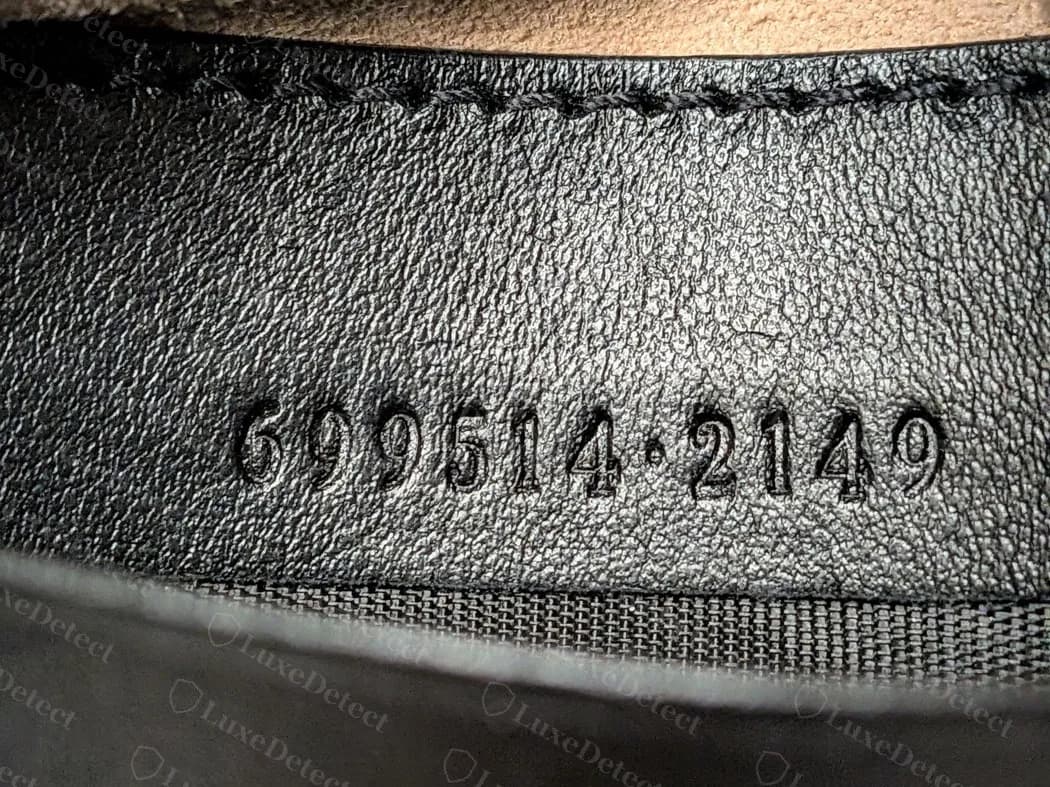
Two layouts appeared here. One is six digits, a dot and six digits (474575 · 493075). The other is six digits, a dot and four digits (699514 · 2149), which is only ten digits in all.
That second one matters, because many guides treat a ten-digit number as an old-format tag that pre-dates the two-row layout. The bag in our photo is a recent Marmont. Digit count alone therefore does not date a bag, and a ten-digit number is not a warning sign.
Older and Vintage Layouts
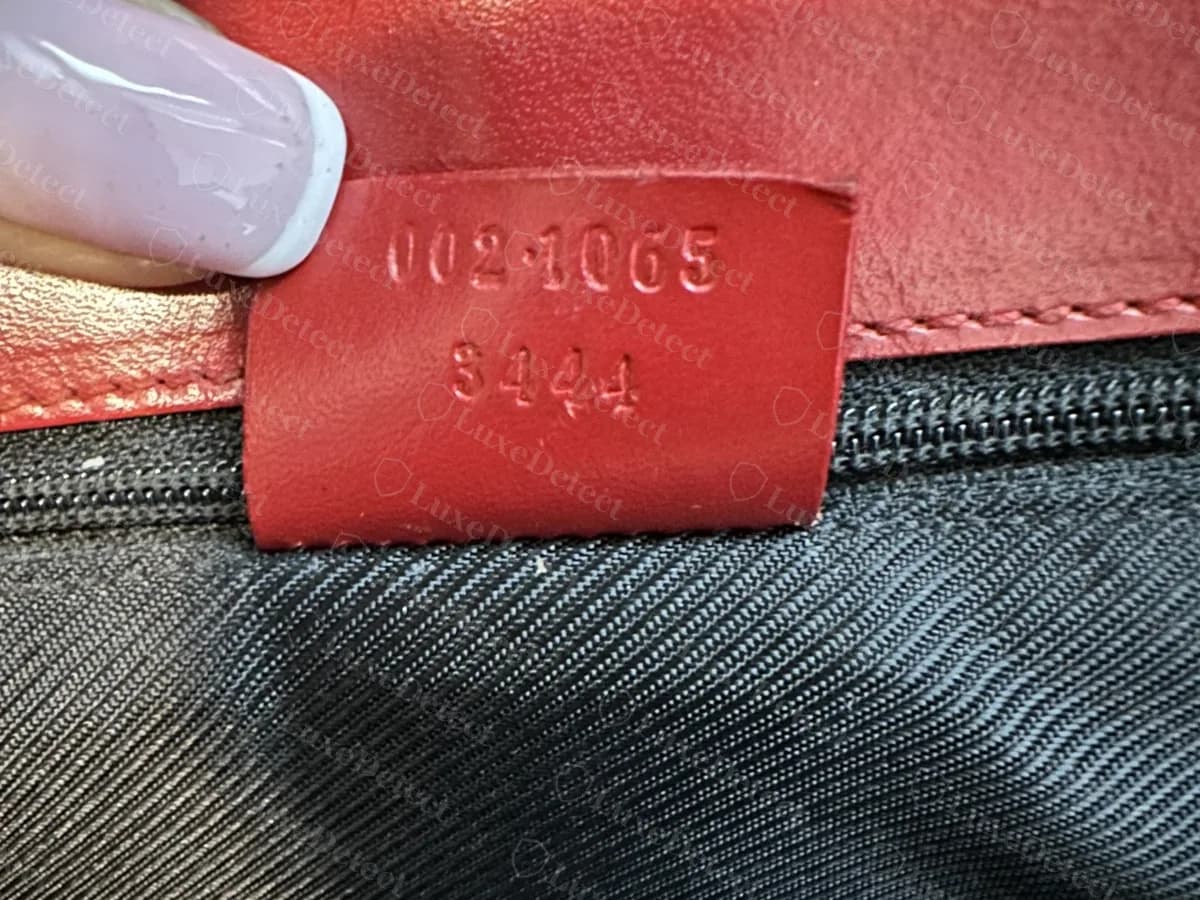
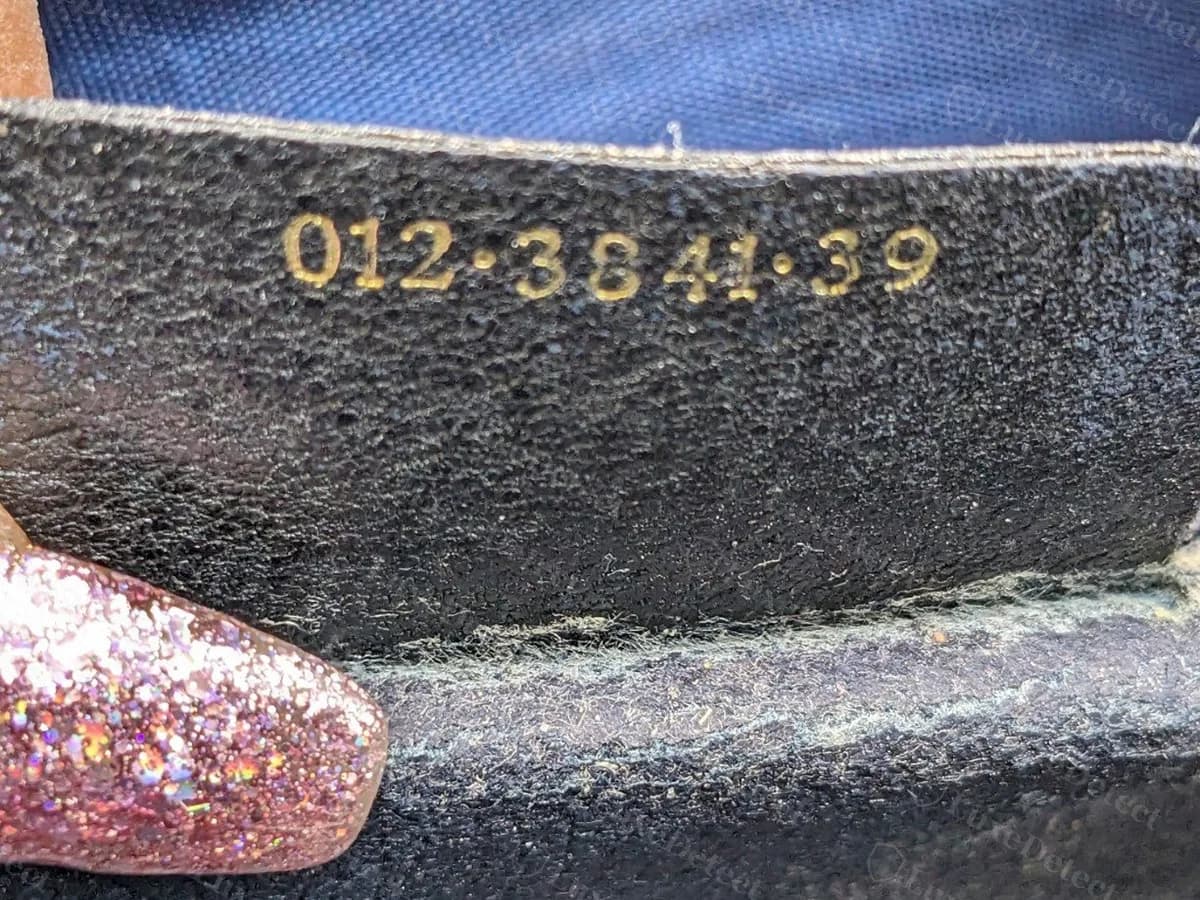
Older bags use different patterns, often with dots between short groups of digits: 002 · 1065 over 3444 on a red tag, and 012 · 3841 · 39 in gold foil on a vintage bag. We saw these on genuine older bags. The lesson is that an unfamiliar layout on an older bag is not automatically wrong, and a checker built for the modern layout may not recognise them.
The Black Fabric Label With the QR Code
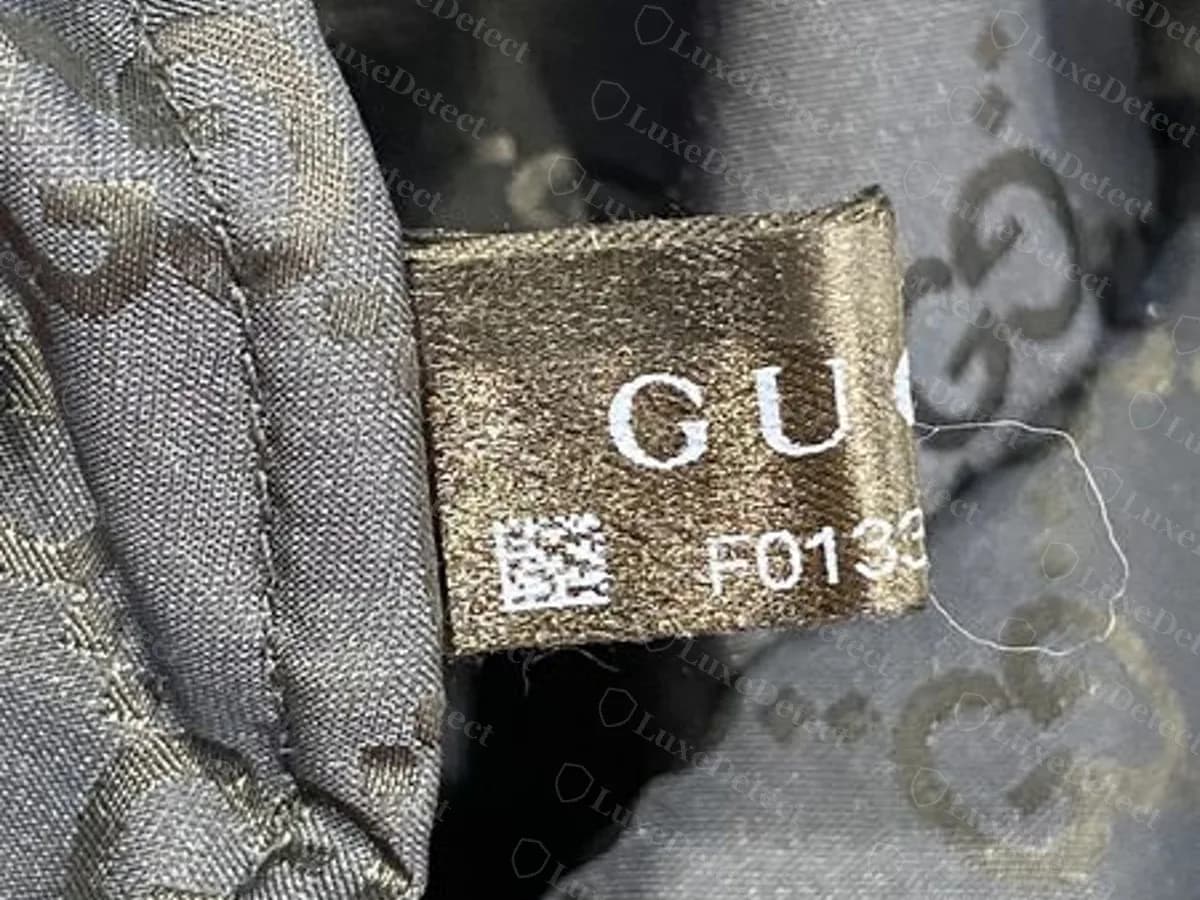
Newer bags also carry a black fabric label with a QR block and a short number. It is a separate item from the leather tag. Our black label guide explains how it is used and includes a year table, which comes from third-party sources rather than from Gucci. The QR code is designed to be read in Gucci's own app.
Two things from our photos. The label is copied: a fake bag we reviewed carried a black label with the same layout, a QR block and a number, next to the wordmark:
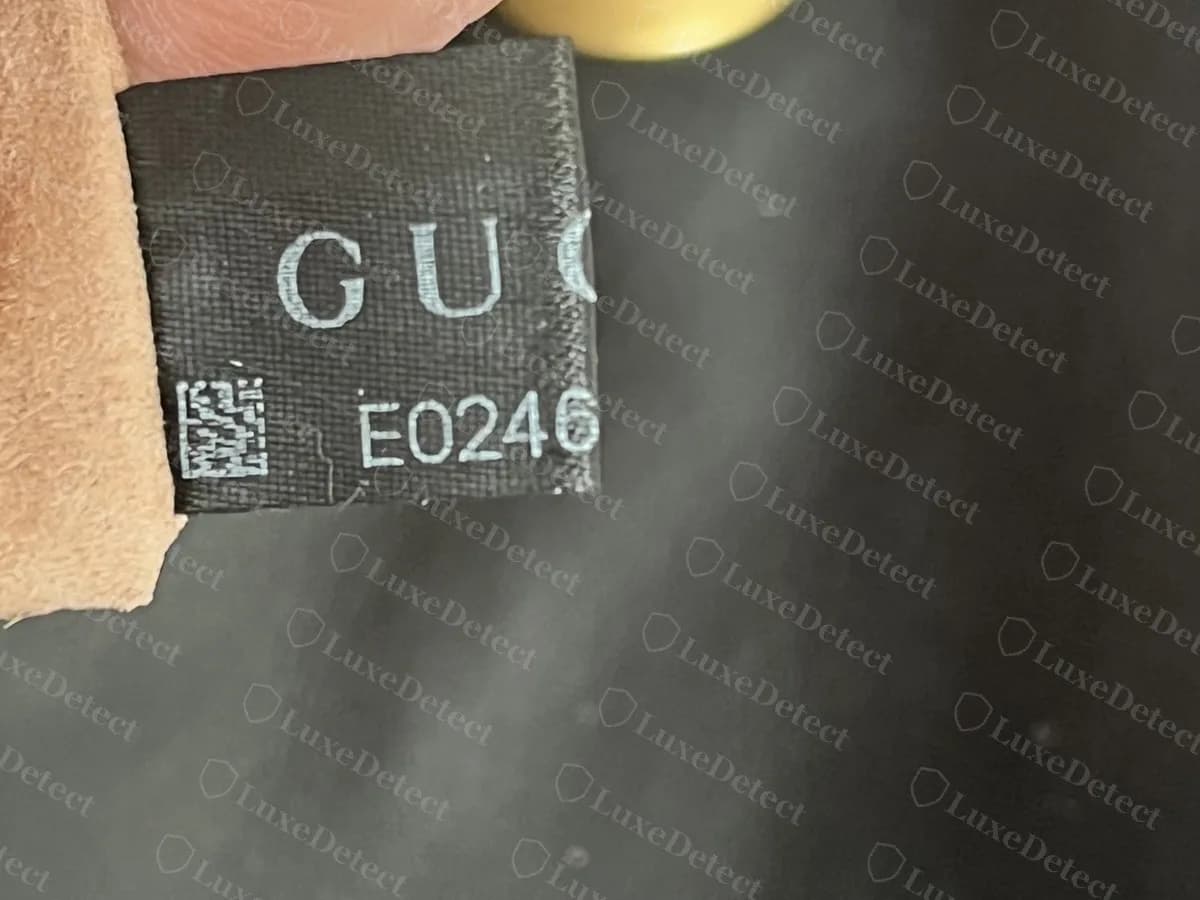
And its presence therefore proves nothing on its own. A couple of the fake bags we reviewed carried one.
What We Did and Did Not Find on Fakes
Across the fake orders we looked at:
- The tags looked right. Fake bags carried leather tags with the correct layout, clean digits and even spacing.
- They copied real numbers. Two fake Marmont tags carried exactly 443497 over 493075, and a third looked to carry a second number of 493075 as well. That second number turned up on genuine items of several different styles too (belts and bags), so the second row is clearly not a one-off serial for each bag.
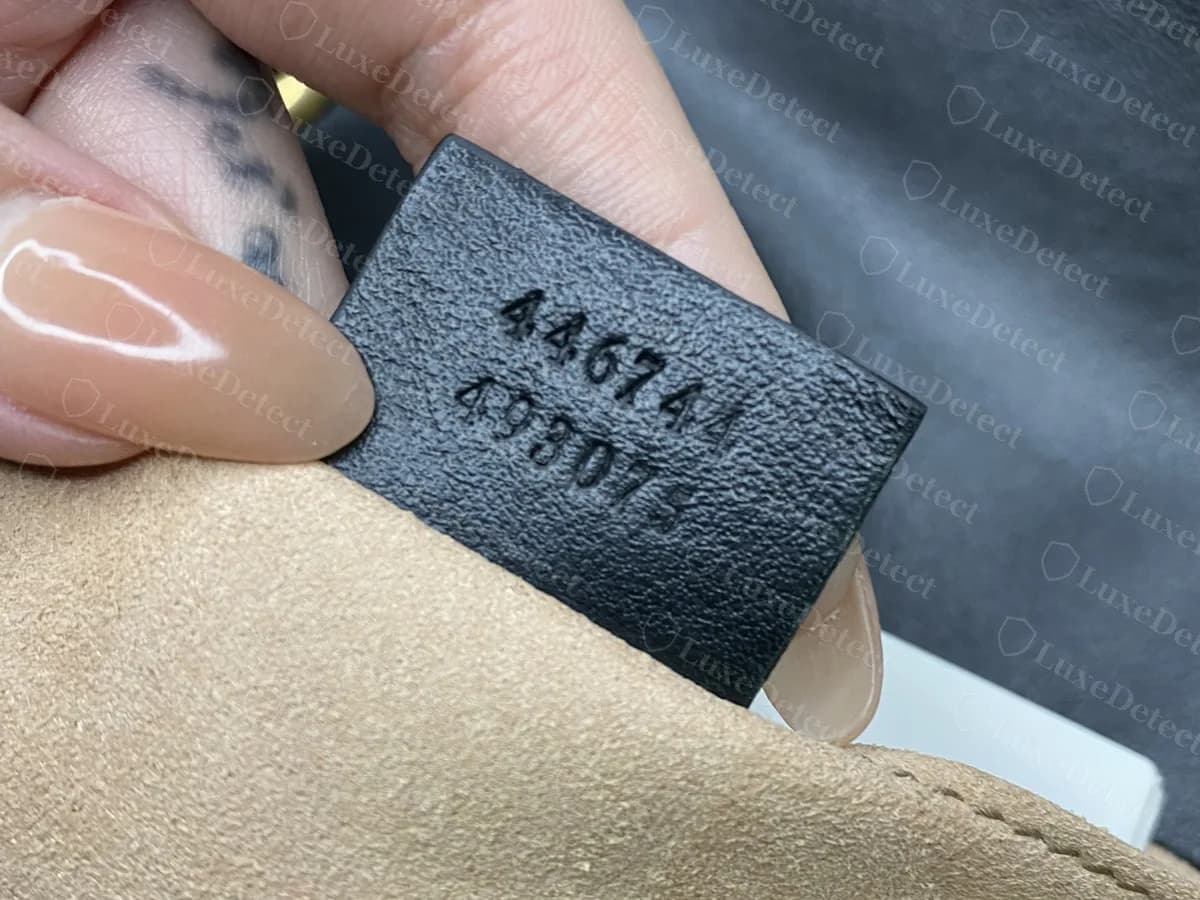
- The black fabric label was copied too.
- We found no reliable way to judge a tag from its digits. We could not confirm from our photos that a specific style number was wrong for a specific bag, because we do not have Gucci's database.
Beyond our own photos, authenticators commonly point to the depth and font of the stamping and to how the tag is stitched. We have not confirmed those against our own fake set, so we list them as general market knowledge only.
What to Rely On, and What Not To
- Rely on: a tag that is genuine leather, sewn in neatly, with even stamping, as one check among several, and the overall match of the bag.
- Do not rely on: the digits looking plausible, the digit count, the black label or QR code being present, or a "serial check" result. Numbers can be copied from real bags, and we saw fakes carrying them.
When to Get a Professional Opinion
If the tag looks right and the bag is valuable, that is exactly when a second look matters, since our fakes carried convincing tags. A professional review of clear photos of the hardware, tag and lining is the dependable next step. Our authentication service gives a verdict quickly.
Related guides
- Gucci black label and QR code guide
- How to authenticate a Gucci bag
- Gucci Marmont bag real vs fake
- Gucci belt real vs fake
- How to authenticate a Gucci Jackie bag
FAQ
Can I date my Gucci bag from the serial number?
No. Gucci does not publish a scheme that turns the leather-tag digits into a date, and we saw nothing in our photos that would let you do so. The black fabric label on newer bags has a number with a year code, which is covered in our black label guide, but its table comes from third-party sources.
My bag has ten digits instead of twelve. Is it fake?
Not on that basis. We saw ten digits (six and four) stamped into the lining of a recent genuine Marmont, and older bags use other patterns too. What matters is whether the layout, the tag and the rest of the bag hold up together.
Does a valid serial number mean the bag is authentic?
No. Fake bags in our set carried correctly formatted tags, and numbers can be copied from real bags. A correctly formatted number confirms only the format.
Where do I find the number?
Look inside the bag for a small leather patch near a zip or at the top of an interior pocket; the numbers are on the reverse. On some bags the numbers are stamped straight into the lining leather instead. Older bags may hold them elsewhere.
Can a Gucci store verify my serial number?
Boutique staff can look at a piece and may say informally whether it looks right, but Gucci does not typically issue written authentication for items not bought through its own channels. For resale, insurance or a dispute you need documented third-party authentication.