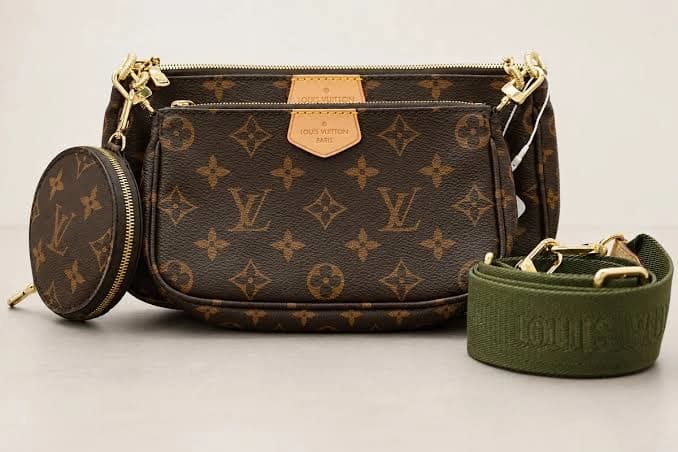
Louis Vuitton Authentication Specialist
French luxury house specialist. Covers Chanel, Celine, and Saint Laurent construction and date coding.
Last updated September 2026 · Published June 2026 · Contact
Why LV Wallets Are Heavily Faked
Louis Vuitton wallets retail between $300–$700 — the entry point to LV ownership. That accessible price combined with high brand recognition makes them one of the most faked LV categories. The Zippy Organizer, Sarah Wallet, and Victorine are the three most counterfeited models.
The wallet category has a specific problem that bags don't: size. There is far less canvas to align, fewer hardware components, and no structural shape to hold. A counterfeiter who cannot build a convincing Speedy can build a passable Victorine, because the wallet asks less of them. This is why wallet fakes cluster at a higher average quality than bag fakes at the same price tier, and why the checks below lean on materials and finishing rather than silhouette.
The second factor is inspection habit. Buyers who would demand twenty photographs of a $3,000 bag often accept three of a $450 wallet. Counterfeiters know this. Request the same photographic evidence you would for a bag: canvas at both fold lines, the date code tab, the interior stamp, all card slots, and the zipper pull from both faces.
What to check, ranked by reliability
| Checkpoint | Reliability | What it tells you |
|---|---|---|
| 1. Monogram Canvas — Pattern and Alignment | ★★★★★ | A flat, cool-toned canvas with no red warmth, or a motif bisected arbitrarily at the fold, is the most common and most reliable tell. |
| 3. Zipper Pull (Zippy Models) | ★★★★★ | Dark tarnish or corrosion inside the engraved letters is inconsistent with genuine plating, which wears evenly rather than pitting. |
| 4. Interior — Lining and Card Slots | ★★★★★ | Mustard-yellow stitching, spring-back card slots and glue-free corners corroborate a verdict but require the piece in hand to judge fully. |
| 5. Brand Stamp | ★★★★★ | A convincing fake stamp is easy to photograph well — weight it below canvas tone and hardware plating, not as a standalone check. |
| 2. Date Code | ★★★★★ | Proves the format is right, not that the piece is genuine — codes are copied freely from listing photographs. |
Monogram Canvas — Pattern and Alignment
Colour and tone
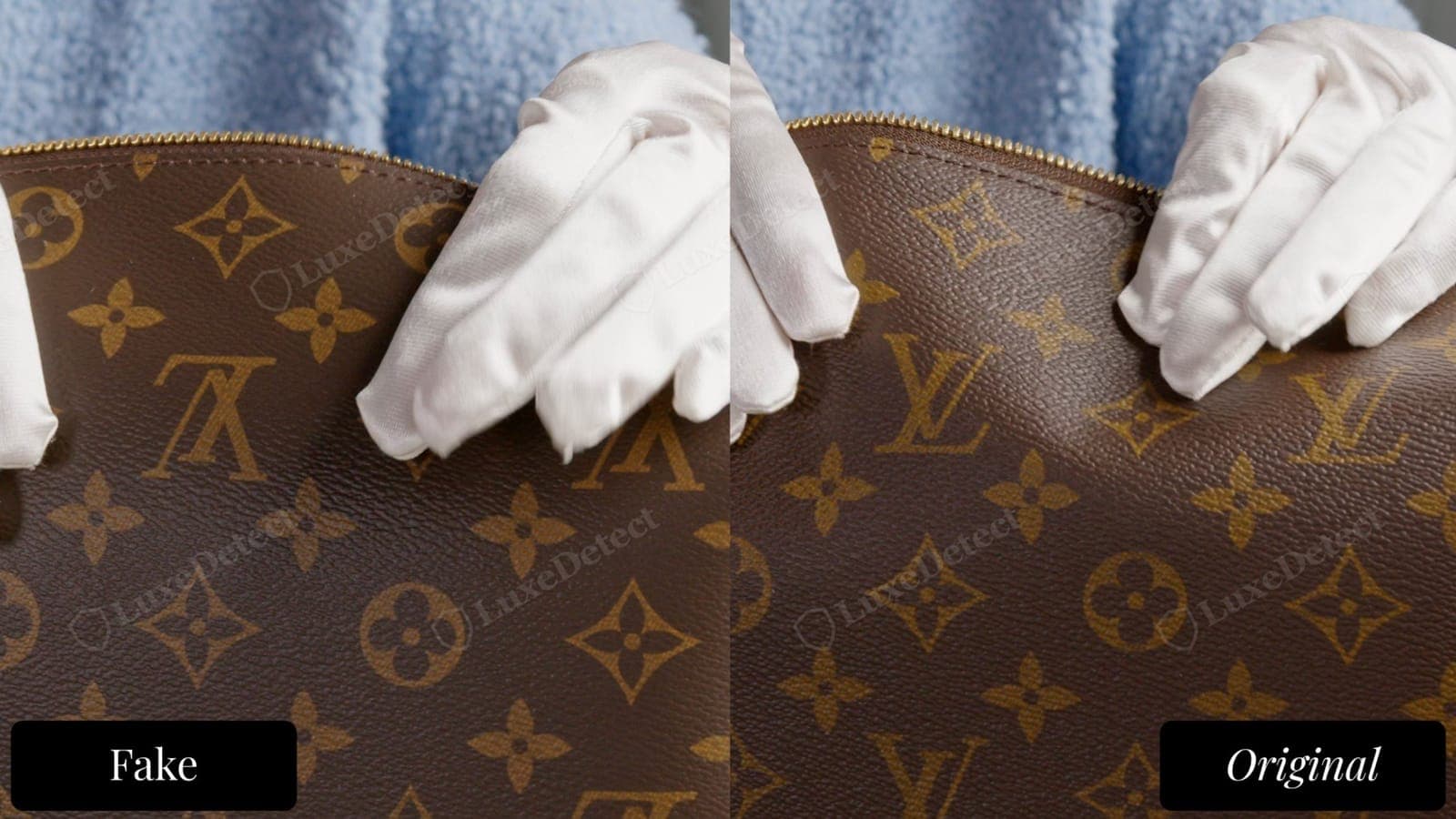
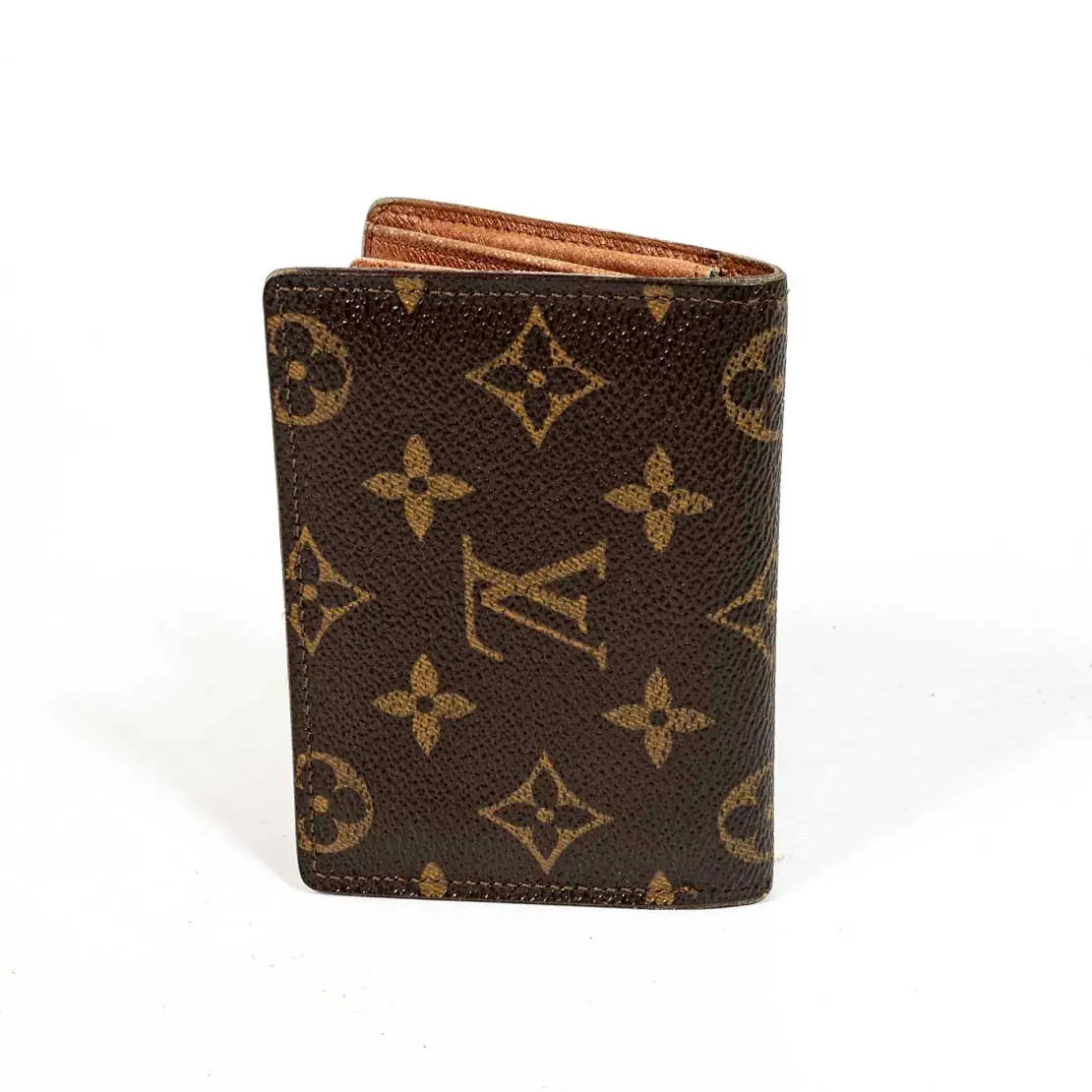
Authentic canvas: The background is a warm chocolate brown with camel-coloured LV motifs. Under daylight the brown reads with a slight red undertone, never grey and never black. The motifs are a muted camel — closer to tan than yellow.
Fake tells: Canvas that photographs black or near-black in normal light. Motifs printed in a bright or acidic yellow. A flat, cool-toned brown with no warmth is the most common failure on mid-tier fakes.
Motif placement and scale
Authentic: The LV motif and the three flower forms are placed symmetrically on the front face. Motif scale is fixed — on a Sarah Wallet the LV monogram measures consistently across every genuine example of that model. Louis Vuitton cuts canvas to a plan, so placement repeats reliably within a model line.
Fake tells: Motifs noticeably larger or smaller than reference images of the same model. Random placement, where the front face begins mid-flower with no symmetry. Pattern that runs off the edge asymmetrically at left versus right.
The fold line
Authentic: At the fold, the pattern is cut intentionally. Louis Vuitton positions the cut so the motif meets the fold in a consistent place for that model — the canvas is not simply wrapped and trimmed wherever it lands.
Fake tells: A motif bisected arbitrarily at the fold, or a fold that lands mid-LV on one side and mid-flower on the other. This is one of the most reliable checks available from photographs alone.
Coating and edge
Authentic: The canvas has a waxy, slightly tacky hand and resists a fingernail rather than marking. At any cut edge, colour penetrates into the weave rather than sitting on top of it.
Fake tells: Dry or papery surface. Print sitting visibly on the surface with white or pale weave showing at the cut edge.
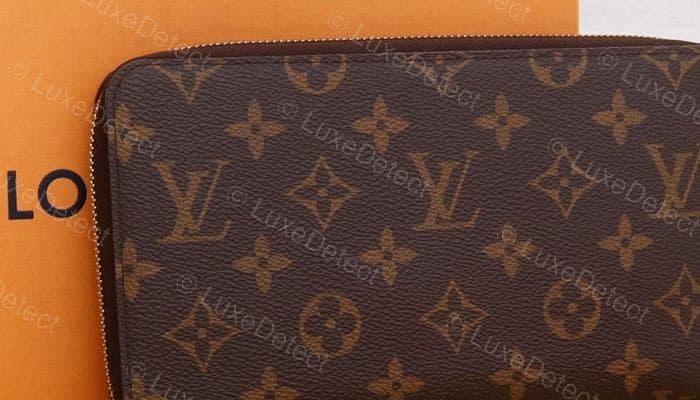
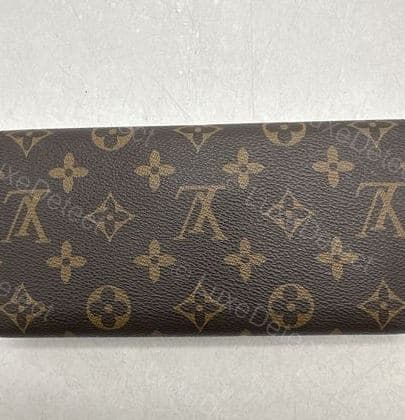
| Element | Authentic | Counterfeit |
|---|---|---|
| Canvas tone | Warm chocolate brown, visible red undertone | Flat, cooler brown with little to no warmth |
| Motif scale | Fixed, consistent with reference examples of the model | Noticeably larger or smaller than reference photos |
| Fold placement | Cut intentionally, lands in a consistent spot for the model | Motif bisected arbitrarily at the fold |
Red flag
Canvas that photographs flat and cool-toned, with no red warmth in the brown, is the single most common tell on mid-tier fakes — genuine LV canvas always carries that undertone.
Date Code
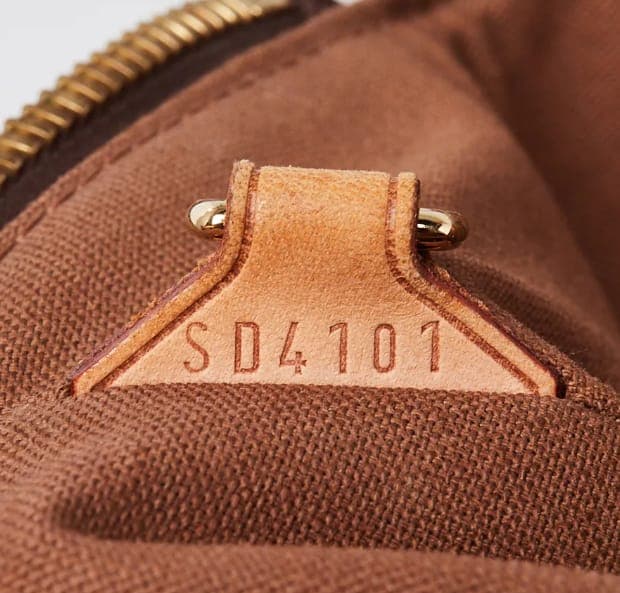
LV wallets carry a date code stamped on a leather tab inside the piece, or debossed directly into the interior lining. The format follows the same convention as bags — two letters identifying the factory, four digits encoding week and year in alternating order. Pieces produced from 2021 onward use an 8-character numeric code instead.
Authentic execution: Heat-debossed without ink, so the characters sit below the leather surface and you feel a clean depression under a fingernail. Depth is even across every character. The typeface is a specific narrow sans-serif with tight, consistent spacing.
Fake tells: Printed or inked codes sitting flush with the surface. Fuzzy character edges from rubber tooling rather than a metal punch. Uneven depth where one end of the code is pressed harder than the other. A factory code that does not correspond to a real Louis Vuitton facility, or a week number above 52.
Worth knowing
This guide doesn't yet have a side-by-side date-code photo pair — treat the checks above as things to verify in hand or in a clear close-up photo, not something to judge from a distance.
Use our free LV Date Code Checker to instantly decode your bag's factory and production year.
Check My Date Code →An important limitation: a correctly formatted date code proves the format is right, not that the piece is genuine. Counterfeiters copy valid codes from listing photographs, and the same code now appears across many fakes. Treat the date code as one signal among five, and weight the canvas and interior construction above it.
Zipper Pull (Zippy Models)
Authentic pull: Solid brass with a warm, slightly golden tone that darkens gradually with handling rather than flaking. "LOUIS VUITTON" is stamped in the correct typeface with even depth across all thirteen characters. The pull swivels freely on a solid brass ring with no play. On a Zippy Organizer the pull and ring together have a noticeable density — the zip tab falls under its own weight when the wallet is held vertically.
Fake tells: A lightweight, hollow-feeling pull that does not fall under its own weight. Blurred or shallow stamping, particularly on the narrow letters. Plating that has already worn at the edges of a supposedly new piece, revealing a pale grey base metal rather than brass. A ring with visible seam or side-to-side movement.
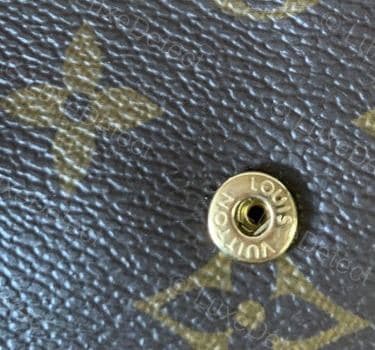
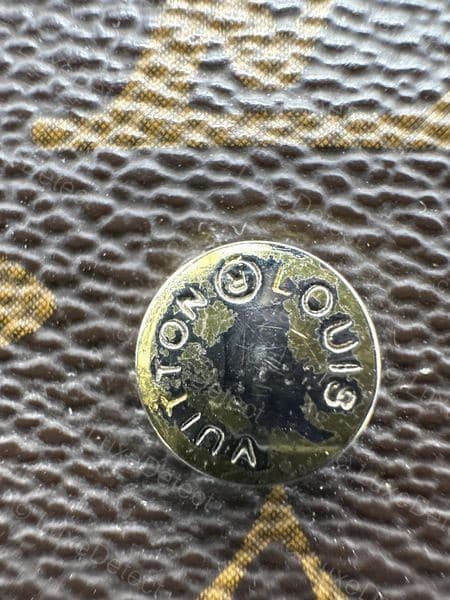
| Element | Authentic | Counterfeit |
|---|---|---|
| Plating | Bright, even gold tone, wears gradually and evenly | Plating shows dark tarnish or corrosion inside the engraving |
| Lettering | Crisp, even depth across every character | Legible but pitted or scratched where the plating has failed |
| Base metal | Never exposed under normal wear | Grey or black base metal visible through worn plating |
Red flag
Dark corrosion or tarnish sitting inside the engraved letters on hardware presented as new or lightly used is inconsistent with genuine LV plating, which wears evenly rather than pitting.
Zipper action
Authentic: The zip runs the full curve of a Zippy in one smooth motion with no catching at the corners. Louis Vuitton uses a specific gauge of tooth that engages evenly; there is no need to hold the wallet flat to close it.
Fake tells: Catching or requiring force at the curved corners is the single most common failure on Zippy fakes, because the tooth gauge and the tape tension are difficult to match. Any zip that needs two hands at the corner should be treated as suspect.
Interior — Lining and Card Slots
Leather quality
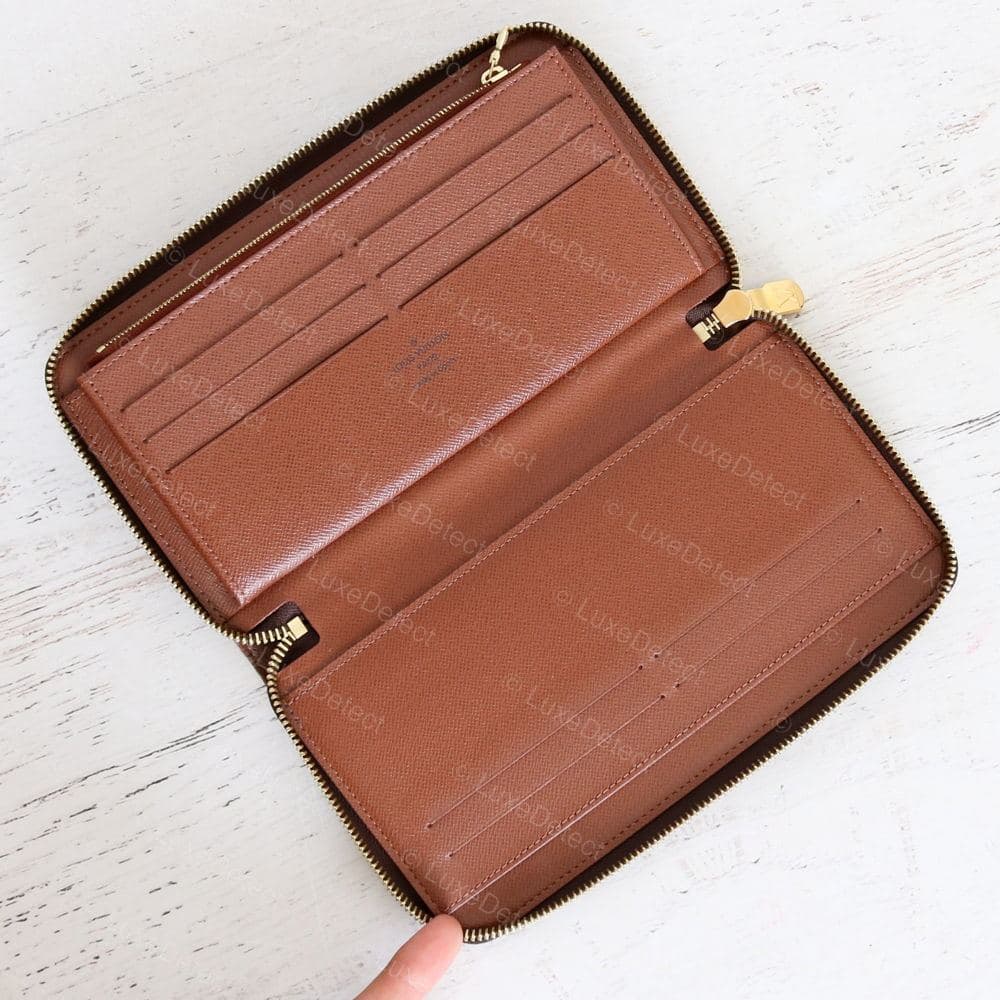
Authentic: Supple cowhide with a fine, consistent grain. The leather has body — it holds a soft shape rather than collapsing. Colour is even across every panel, including the areas not visible in normal use.
Fake tells: A synthetic, rubbery hand. Grain that repeats in a visible pattern, indicating an embossed synthetic. Colour that shifts between panels, showing separately sourced material.
Card slots
Authentic: Each slot opens with light resistance and springs back to flat when released, because the leather has structure. Slot depth and width are identical across every position. The top edge of each slot is cleanly cut with no fraying.
Fake tells: Floppy slots that stay open when flexed. Variable slot depth across positions. Raw or fibrous top edges.
Stitching
Authentic: Mustard-yellow thread at approximately 5 stitches per centimetre, with consistent tension throughout. Every stitch enters the leather at the same slight angle. Corners are clean with no glue overflow or excess adhesive visible at the seam.
Fake tells: Orange or cream thread rather than mustard yellow — a frequent and easily spotted error. Irregular stitch spacing. Visible glue bleed at the interior corners, which is the most common finishing failure on wallet fakes.
Brand Stamp
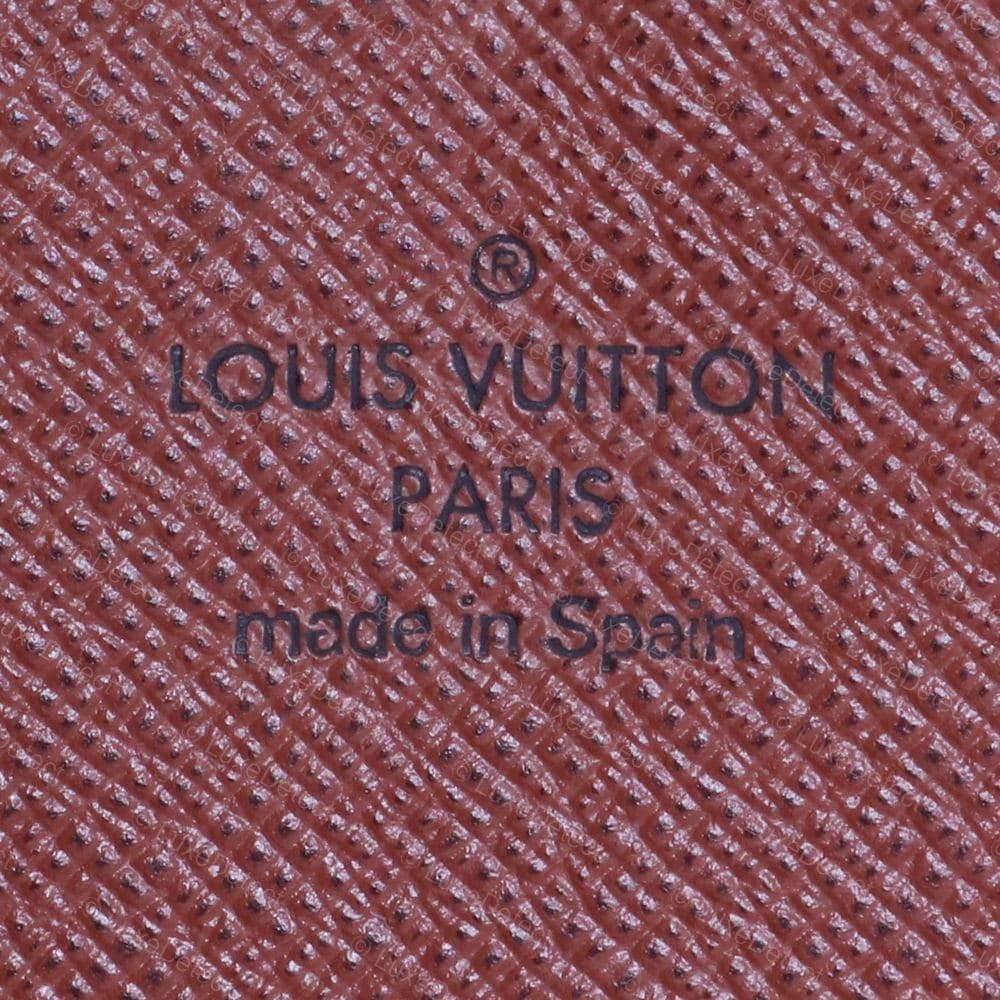
Inside the main compartment: "LOUIS VUITTON PARIS" on the first line, "MADE IN [COUNTRY]" on the second, applied in gold hot-stamping.
Authentic: A warm gold tone with a light-to-moderate impression — visible and legible but not deeply pressed. The typeface has distinctive proportions: the "O" characters are near-circular, and the letter spacing across "LOUIS VUITTON" is generous and even. Country of manufacture is commonly France, Spain, Italy, or the USA.
Fake tells: A brassy or greenish gold tone. Over-pressed stamping that has visibly compressed the leather around the characters. Compressed or uneven letter spacing. Any country of origin outside LV's known manufacturing locations.
Worth knowing
High-quality fakes can reproduce a stamp this convincingly from photographs alone — this check is one signal among five, not a standalone verdict. Weight it alongside the canvas tone and hardware plating, which are harder for a counterfeiter to match cheaply.
Quick Authentication Checklist
- Canvas: warm chocolate brown with camel motifs, symmetrical placement, intentional cut at the fold, waxy coating with colour penetrating the cut edge
- Date code: present, heat-debossed not printed, even depth, valid factory code and week number
- Zipper pull: solid brass weight that falls under gravity, clean "LOUIS VUITTON" stamp, smooth action through the corners
- Interior: supple cowhide with body, card slots that spring back, mustard-yellow stitching at ~5 per cm, no glue bleed
- Brand stamp: warm gold, correct typeface proportions, light-to-moderate impression, valid country of origin
Any single failure warrants closer inspection. Two failures across different components is conclusive.
Related guides
More Louis Vuitton authentication references:
FAQ
Which LV wallet is faked most?
The Zippy Organizer and the Victorine, with the Sarah Wallet third. The Zippy is targeted because its size makes it the most visible of the three in daily use; the Victorine because its lower retail price puts it within reach of buyers less practised at spotting fakes.
Do LV wallets come in Damier canvas?
Yes, in both Damier Ebene and Damier Azur. They authenticate on the same principles, with one addition: verify that the checks are uniformly sized and that the pattern meets cleanly at every fold and seam. Damier is less forgiving than Monogram, because a misaligned grid is immediately visible where a misplaced flower may not be.
Can I authenticate from photographs only?
Partially. Canvas alignment, motif scale, fold placement, stamp quality, and stitch colour are all assessable from good photographs. Leather hand-feel, card slot spring-back, zipper action, and hardware weight require the piece in hand. For any wallet above $300, request interior video showing the zip running through its full travel before buying.
My date code is missing — is the wallet fake?
Not necessarily. Some small leather goods produced before the date code convention carry none, and on certain models the code is debossed directly into a lining seam where wear can render it illegible. On any piece produced in the last two decades, though, an absent code on a model that should carry one is a serious red flag.
Why do fake wallets often pass the date code check?
Because the code is the easiest element to copy. It is a short string of characters with a published format, harvested freely from marketplace listing photographs. Physical construction — stitch density, leather body, zipper tooth gauge — requires tooling and materials that cost real money to match. Weight your judgement accordingly.
How much does professional LV wallet authentication cost?
Photo-based authentication typically runs $15 for accessory authentication with a 24-hour turnaround, which is proportionate for an item in the $300–$700 range. A certificate also supports resale value, since wallets are frequently resold and buyers increasingly expect documentation.