Watch Authentication Specialist
Watch authentication specialist. Focuses on movement inspection, case finishing, and serial verification.
Published October 2026 · Contact
Yes, Omega Has Serial Numbers, but They Date a Range and Prove Nothing
Omega numbers its movements in one continuous series that began around 1895 and never switched to random serials, so almost every Omega can be placed in a production range from its number. That is the good news. The limits matter more than the dates.
The serial is the movement number. On vintage watches it is engraved on a bridge inside the movement, so the caseback has to come off to read it. From the early 1990s Omega also marks it on the outside, on the case beside a lug or on the caseback. It is a plain run of 6 to 9 digits, with no letters, and it is not the dotted reference number (such as 210.30.42.20.01.001), which names the model and not the individual watch.
Two cautions up front. A serial dates a watch only by range: watches were made in batches and not sold in strict order, so expect to be off by one to three years. And a serial in the right format proves nothing, because it is only a number that can be engraved on any case. The value of the number is in catching a contradiction, not in confirming a watch.
What to check, ranked by reliability
| Checkpoint | Reliability | What it tells you |
|---|---|---|
| 3. Contradictions Worth Acting On | ★★★★★ | A serial that dates decades before the model existed, or one with letters in it, points to a franken-watch or a fake; a gap of a year or two is normal. |
| 1. Where the Serial Number Is on an Omega | ★★★★★ | Movement bridge on vintage watches and the case from the early 1990s; a serial in the wrong place for its era is a warning, not a verdict. |
| 2. Dating the Number: A Production Range, Not a Date | ★★★★★ | Gives a range within one to three years from a community table, so it catches big contradictions only. |
| 4. Reference, Caliber and Case Numbers Are Not the Serial | ★★★★★ | Rules out a seller quoting the wrong number; it does not test the watch. |
| What a Matching Serial Does Not Prove | ★★★★★ | A serial in the right format and range can be engraved on any case, so the watch itself must pass. |
The checker below turns a serial into the production year range. Our full Omega serial number checker uses the same table.
A code that checks out doesn't prove the item is real. Counterfeiters copy genuine codes.
Our authenticators check the movement, dial, case and bracelet of your Omega against verified references, from $45. You get a verdict within 24 hours, and a Certificate of Authenticity if the item passes.
Authenticate My Omega →Where the Serial Number Is on an Omega
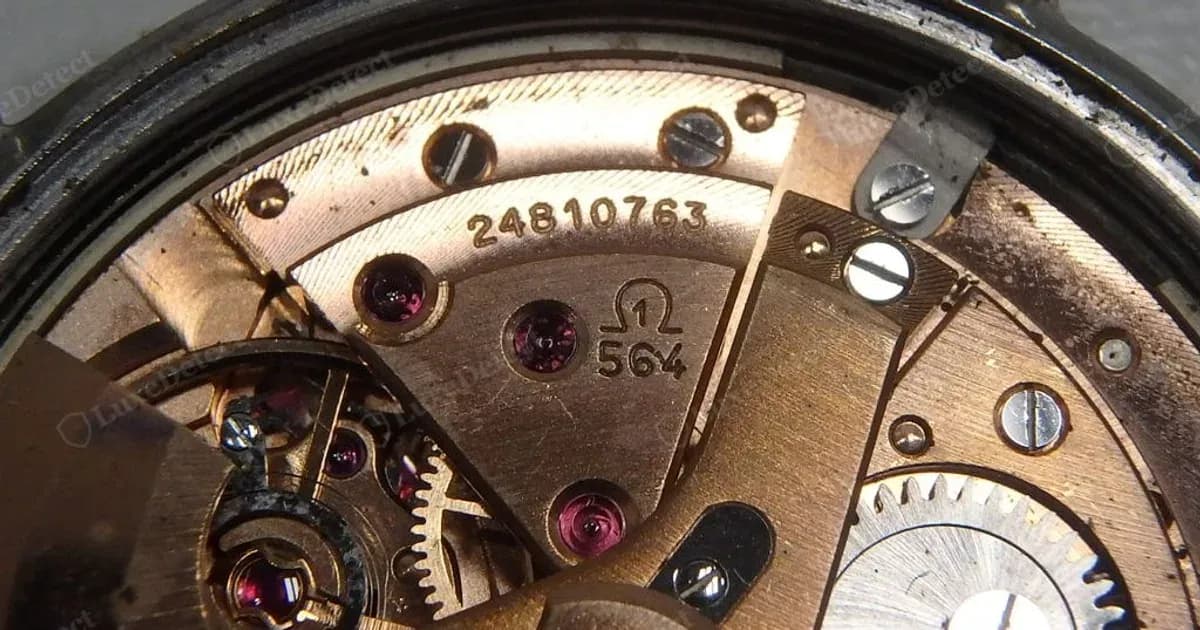
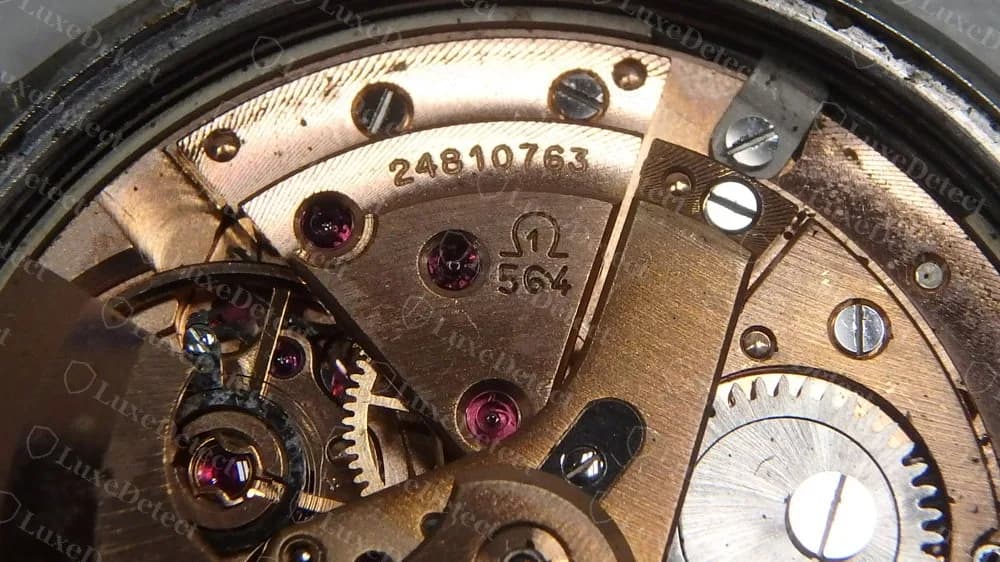
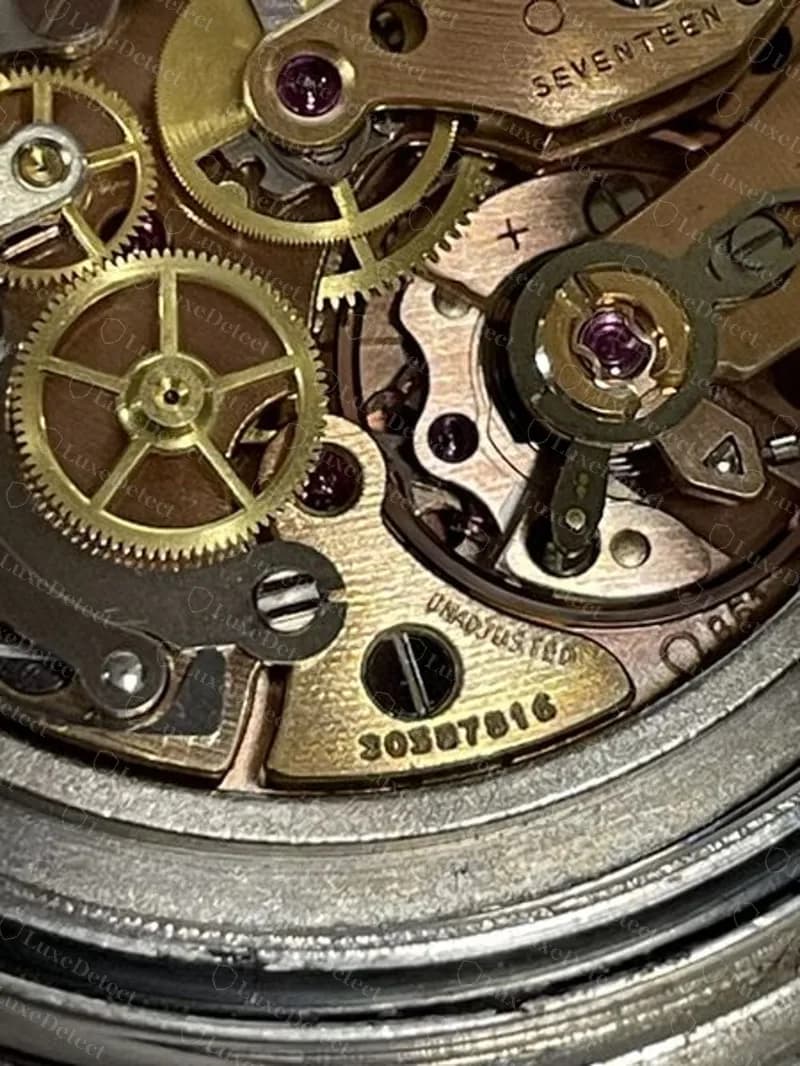
Vintage Omegas (before about 1990): the serial is engraved on a bridge of the movement. You need to open the caseback or have a watchmaker do it. On the Constellation movement in the cover photo it is the number above the Omega symbol and caliber 564; on the Speedmaster Mark II below it is on the lower bridge, beside the word "Unadjusted".
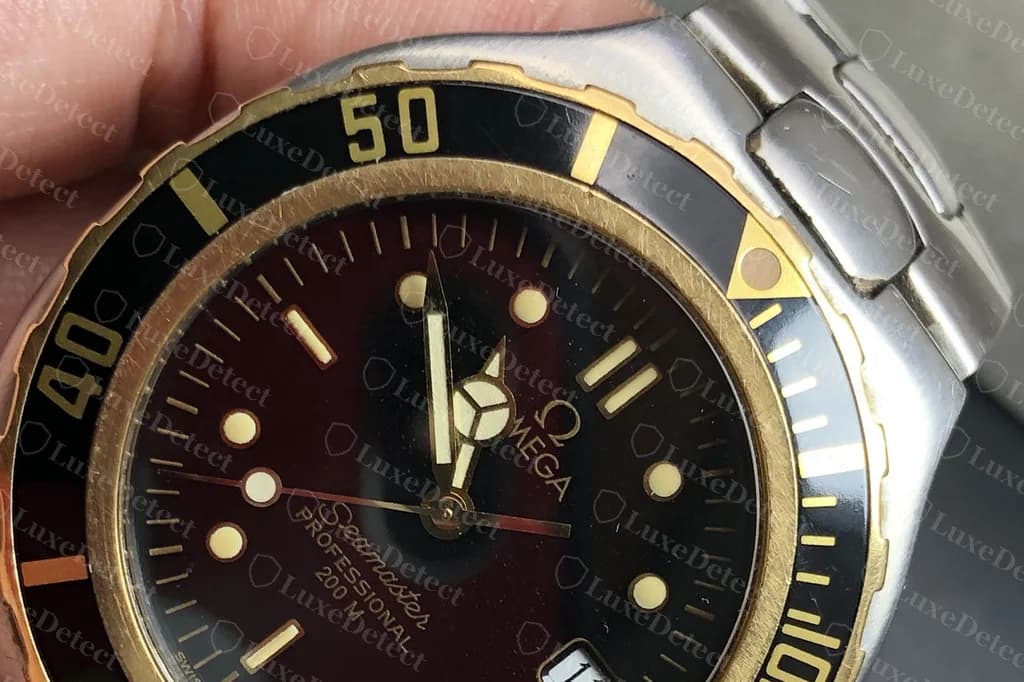
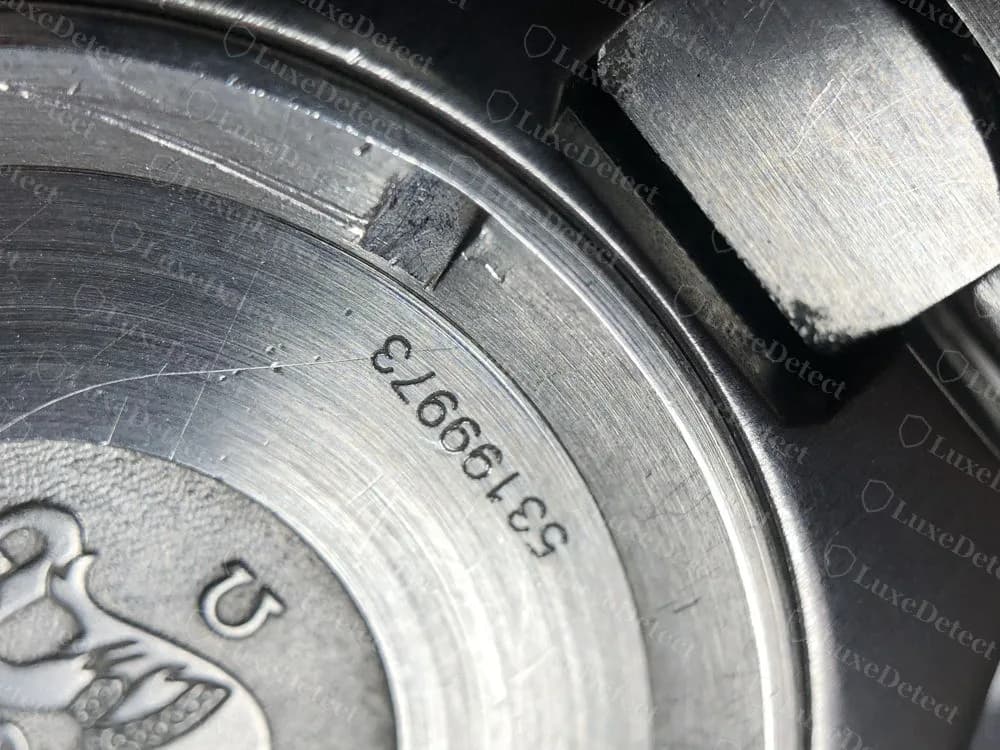
From the early 1990s: the same number appears on the outside of the case, on the back of a lug or on the caseback. On the Seamaster Professional below it is engraved around the rim of the caseback, next to a lug.
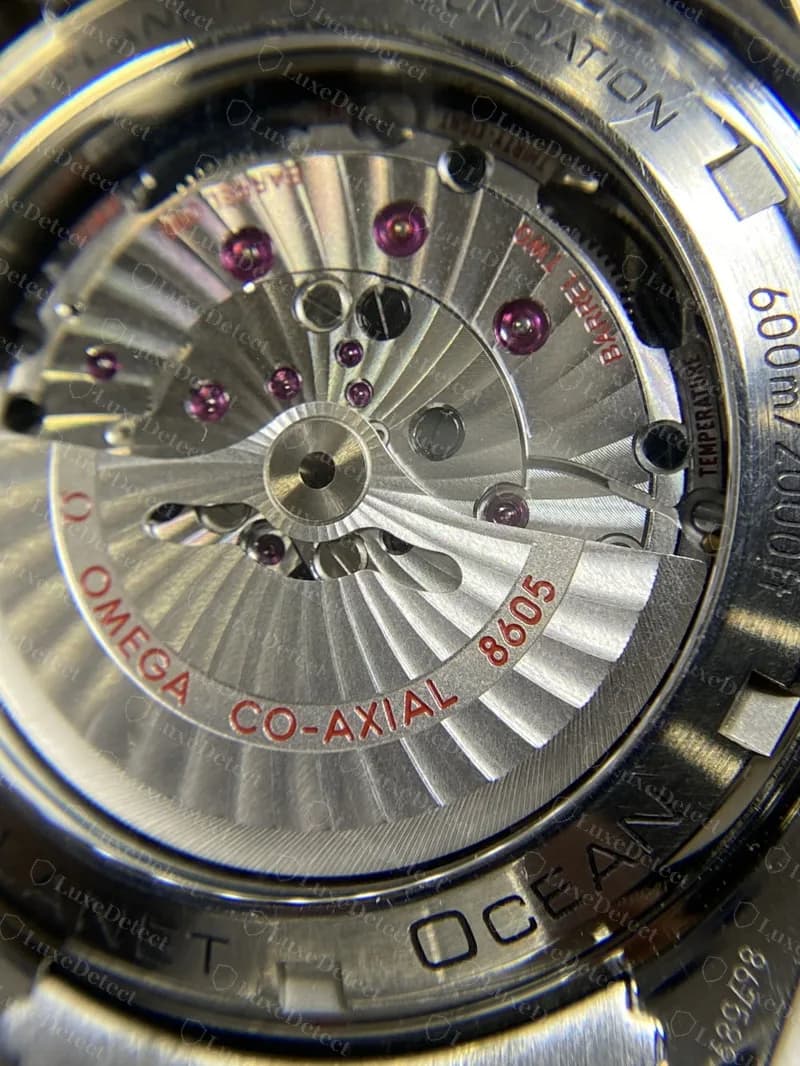
Modern Omegas with display backs: the caseback often carries engraved text around the rim, and the calibre is named on the rotor. Look for the serial on the case itself before you assume it is on the movement.
| Era | Where to look |
|---|---|
| Before about 1990 | A bridge of the movement, inside the caseback |
| From the early 1990s | The outside of the case (back of a lug or the caseback), and the movement |
| Modern | The case and the movement; the exact spot depends on the model |
Worth knowing
This is the layout we saw in the watches we reviewed, and it matches the checker's logic. Omega has changed where it marks watches more than once and varies by model, so a serial in an unexpected place is a reason to look harder, not a verdict.
Dating the Number: A Production Range, Not a Date
The table below is a community reference. Omega has never published an official serial database, and published tables disagree by a year or more at the edges. Each row reads "a serial at or above this number was made around this year".
| Serial from about | Approximate year |
|---|---|
| 5,000,000 | 1916 |
| 10,000,000 | 1944 |
| 14,000,000 | 1954 |
| 20,000,000 | 1963 |
| 25,000,000 | 1967 |
| 29,000,000 | 1970 |
| 40,000,000 | 1977 |
| 45,000,000 | 1982 |
| 51,000,000 | 1989 |
| 53,000,000 | 1991 |
| 56,000,000 | 1998 |
The three serials in the photos on this page read like this: 24,810,763 (the Constellation movement) is in the mid-1960s band, 30,387,816 (the Speedmaster Mark II) is around 1970, and 53,199,973 (the Seamaster Professional) is in the early 1990s band. A year that looks a little early or late for the model is normal.
Things that loosen the date further: after about 1980 Omega used ETA-based movements and the mapping is looser; the Speedmaster has its own more detailed sequence; and the table ends in the late 1990s, so a longer number is simply outside what a table like this can date.
Contradictions Worth Acting On
A single check is hard to turn into a verdict, but these contradictions are worth acting on:
| Detail | Genuine | Fake or altered |
|---|---|---|
| Serial format | 6 to 9 digits, numeric only | Contains letters, or is the dotted reference number |
| Serial against the model | The year range fits when the model was made | A modern reference on a serial that dates decades earlier |
| Place | On the movement, and on the outside from the early 1990s | On the outside of a case claimed to be from the 1960s |
| Movement serial against case | The numbers agree | Missing from the movement, or a different number |
| Engraving | Crisp, even depth and spacing | Shallow, fuzzy or uneven |
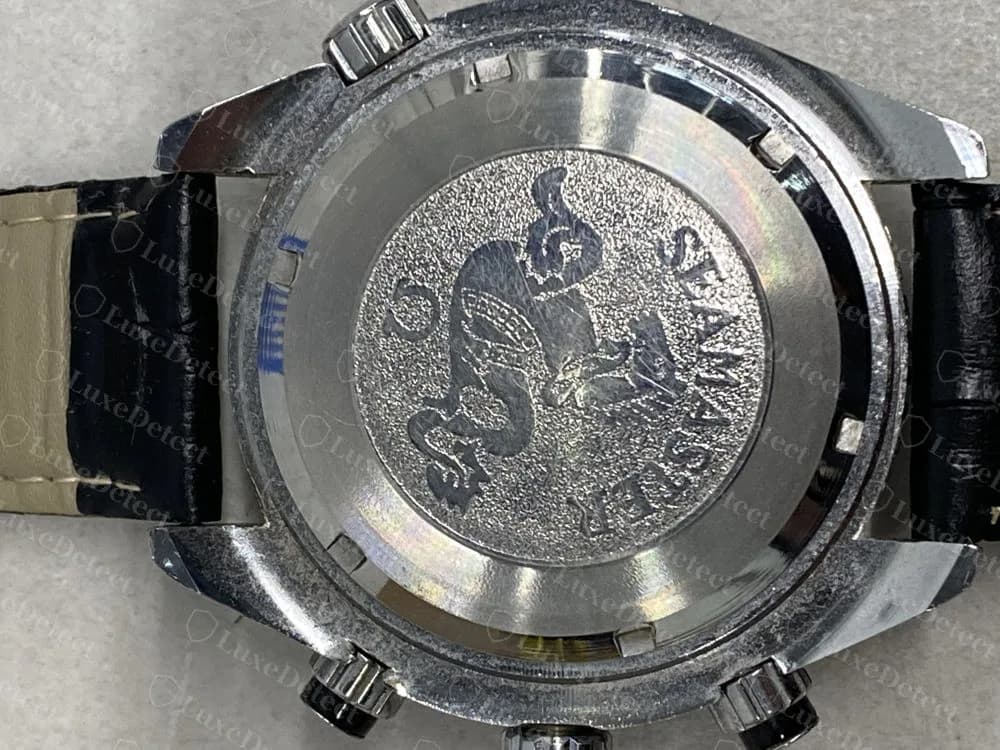
A closed caseback is also worth a look. The fake below, a chronograph sold as a Planet Ocean-style watch, has a solid back engraved with a Seamaster seahorse and no serial that we can see on the rim in the photos, where the genuine Planet Ocean above has a display back and engraved rim text.
Red flag
A modern-looking Omega whose serial dates it decades before its model existed, or a serial with letters in it. A mismatch of several years between the serial's range and the reference is a franken-watch or a fake. A mismatch of a year or two is normal.
Cross-check against the model's production history: our brand-wide Omega guide lists the other checks, and the Seamaster guide covers that line in detail. This guide is about Omega-made watches; the Omega x Swatch line has its own MoonSwatch guide.
Reference, Caliber and Case Numbers Are Not the Serial
Omega watches carry several numbers and sellers mix them up:
- The reference number names the model. Older pieces show it inside the caseback, such as 166041 below. On newer watches it is the dotted string.
- The caliber number names the movement type, such as 564 or 8605. Thousands of watches share it.
- The serial is unique to the watch and is 6 to 9 digits.
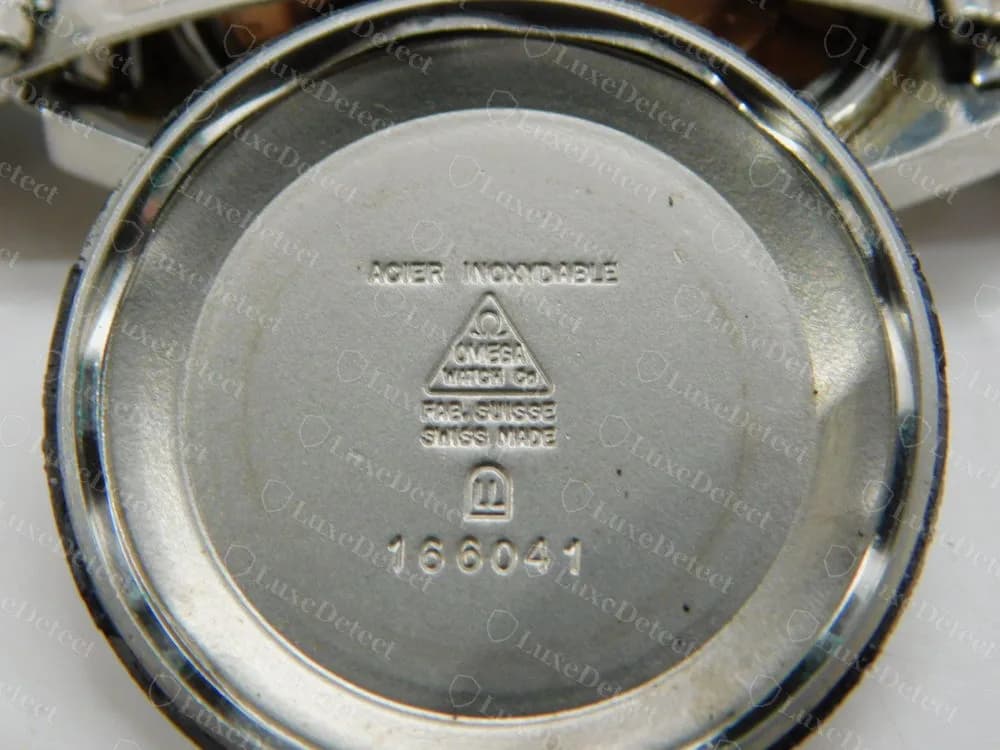
When a seller gives you "the serial", check which number it is. A short number inside the caseback is a reference, and a number with dots is a model reference too.
What a Matching Serial Does Not Prove
- A serial in the right format and range proves nothing. It is a number that can be engraved on any case, and nothing stops a seller using one taken from a listing photo.
- There is no public register to check it against. Omega offers a paid extract from its archives for owners, but we are not aware of a free lookup that confirms a watch. Any site that "verifies" a serial is checking the format.
- A genuine movement can sit in the wrong watch. A real Omega movement in a replacement case or a refinished dial carries a real serial.
What does carry weight is the physical watch: dial printing, the movement finish, the case and crown, as covered in our other Omega guides.
Quick Serial Checklist
- Find the serial: movement bridge on vintage watches, the case from the early 1990s.
- Make sure it is 6 to 9 digits, numeric only, and not the reference or caliber number.
- Decode the range and compare it with when the model was made.
- Check it is in a sensible place for the era.
- Check the engraving is crisp and even.
- Where you can open the case, check the movement serial agrees with the case.
- Treat a fitting serial as neutral and a contradiction as a warning.
When to Get a Professional Opinion
A serial that fits is the start of an inspection. For a watch worth a few hundred dollars or more, the movement and dial need a professional look. LuxeDetect watch authentication starts at $45 with a 24-hour turnaround, and the result comes with a Certificate of Authenticity.
FAQ
Where is the serial number on an Omega watch?
On vintage watches it is engraved on a bridge of the movement, inside the caseback. From the early 1990s it is also on the outside of the case, on the back of a lug or on the caseback. It is 6 to 9 digits with no letters.
How can I tell how old my Omega is?
Read the serial and look it up in a production table: a serial of about 30 million is around 1970, and one of about 53 million is around 1991. Expect to be off by one to three years, since watches were not sold in strict serial order. Our free checker gives you the range.
Is the number inside my Omega's caseback the serial number?
Usually not. The number inside the caseback on older Omegas is normally the case reference, such as 166041. The serial is on the movement, and on the outside of the case from the early 1990s. A dotted number such as 210.30.42.20.01.001 is the model reference.
Can I look up an Omega serial number online?
Not to confirm a watch. There is no free official lookup, and the tables online are community references that give a year range. Omega itself offers a paid extract from its archives for owners.
Does a valid Omega serial number mean the watch is genuine?
No. It only shows the number has a plausible format and falls in a plausible range. A serial can be engraved on any case, so the dial, movement, case and crown still have to pass.
My Omega's serial gives a different year than the seller says. Is it fake?
Not on its own. Serials give a range and are off by a year or two, and a replaced case can carry a different number. A gap of several years, or a serial that dates before the model existed, is a serious problem.
How much does Omega authentication cost?
LuxeDetect watch authentication starts at $45 with a 24-hour turnaround and comes with a Certificate of Authenticity. For a watch worth a few thousand dollars it is a sensible first screen ahead of an in-person inspection.