Watch Authentication Specialist
Watch authentication specialist. Focuses on movement inspection, case finishing, and serial verification.
Last updated October 2026 · Published September 2026 · Contact
The Scale of the Problem
Omega is one of the most counterfeited Swiss brands in the world, and the fakes now span the full range: $30 airport specials, and $800 "clones" with a decorated automatic movement and a ceramic bezel that will pass a glance.
This guide is brand-wide — the checks that apply to any Omega (Seamaster, Speedmaster, Constellation, De Ville, Aqua Terra) in the order a professional runs them. Model-specific tells come after you have cleared the brand-level checks; the Seamaster 300M has its own Seamaster authentication guide.
What to check, ranked by reliability
| Checkpoint | Reliability | What it tells you |
|---|---|---|
| The Crystal Logo Etch | ★★★★★ | A crystal logo your fingernail catches or that wipes away is surface printing — the genuine mark is etched into the crystal. Not every Omega carries one, so check your reference first. |
| Serial and Reference Numbers | ★★★★★ | A modern dotted reference on a watch whose serial dates decades earlier is a franken-watch or a fake — decisive. |
| The Movement — Co-Axial Sweep and Finishing | ★★★★★ | A countable step rate on a reference that should be automatic is a quartz replica or a clone; a correct sweep only clears the cheap fakes. |
| The Dial — Printing, Applied Markers, and the Logo | ★★★★★ | A printed 12 o’clock logo where the reference carries an applied metal symbol, or a crooked applied one, is where fakes give themselves away under a loupe. |
| The Crown, Caseback, and Case Finishing | ★★★★★ | A flat or soft Seahorse on a Seamaster Professional caseback is a fast fail on that model. |
| Weight, Bracelet, and Clasp | ★★★★★ | Catches the light fakes; a clone in correct-grade steel can hit the right number. |
| Model-Specific Checks | ★★★★★ | Decisive once you know the exact reference, worthless applied to the wrong one. |
| Box, Papers, and Card | ★★★★★ | Context only — cards are forged and genuine ones outlive their watches. Cross-check the serial against the caseback and nothing else. |
The Movement — Co-Axial Sweep and Finishing
Flip the watch over. If it has a display caseback, look at the movement. If it has a solid caseback, watch the second hand.
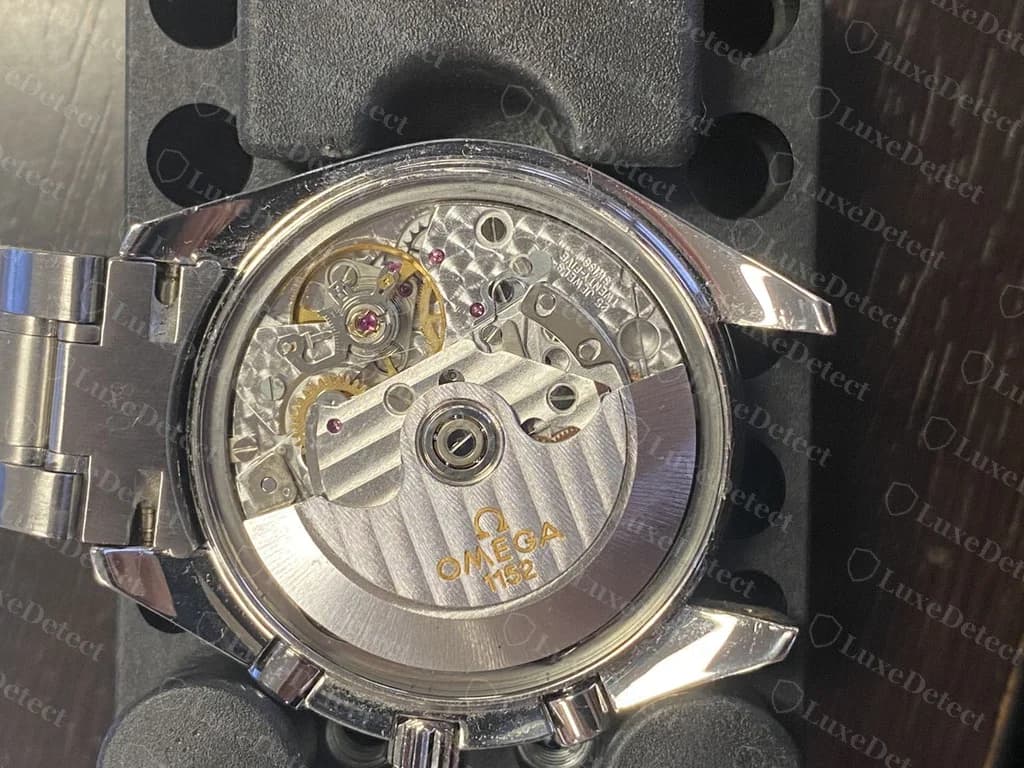
The sweep test: a mechanical Omega's second hand advances several times per second and reads as smooth. Count the steps in one second — if you can count them, it is a quartz replica or a low-grade clone, unless the watch is a genuine Omega quartz (parts of the De Ville, Constellation and Seamaster lines), which the dial and reference confirm.
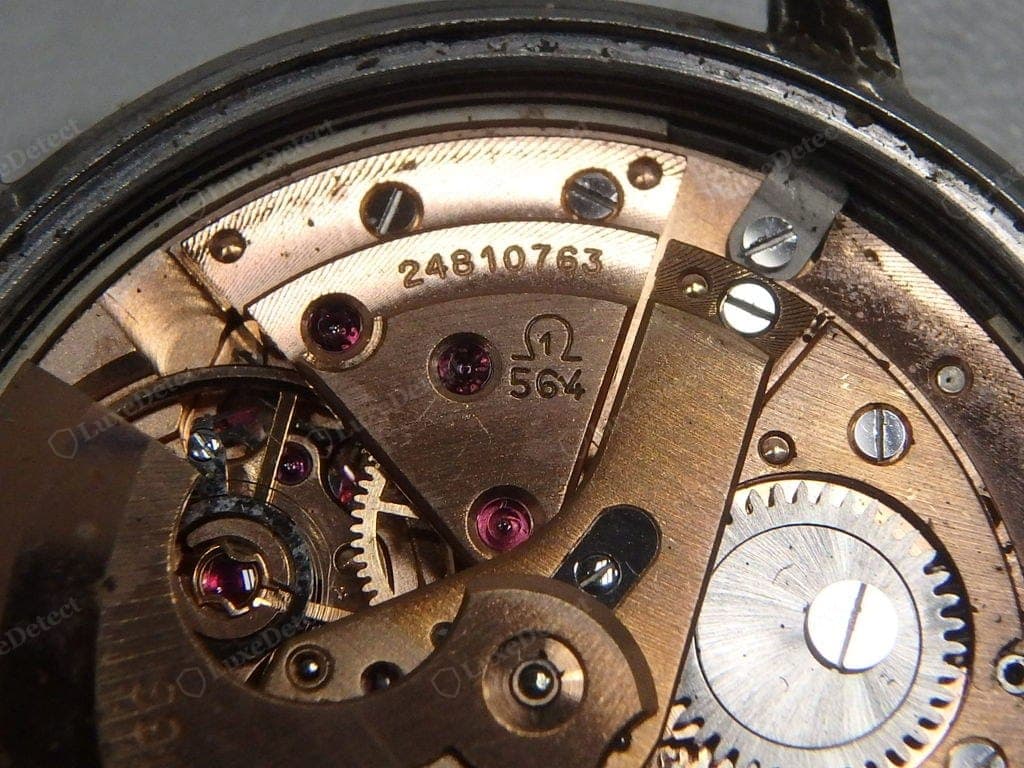
Through a display caseback, a genuine modern Omega shows cleanly applied Côtes de Genève on the rotor and bridges, an engraved Omega logo and calibre number, a free-sprung balance on co-axial calibres (8500, 8800, 8900, 3861), and a movement serial matching the one on the caseback or between the lugs.
| Element | Authentic | Counterfeit |
|---|---|---|
| Second hand motion | Smooth sweep, too fast to count individual steps (mechanical); a clean once-per-second tick on genuine quartz references | A stutter you can count at 3–4 steps per second, or a tick on a reference that should be automatic |
| Rotor | Omega logo and calibre number engraved, consistent finishing | Printed, shallow, absent, or a mismatched generic rotor |
| Bridge decoration | Côtes de Genève / brushed finish applied evenly | Bare plates, or a printed imitation of the stripe pattern |
| Movement serial | Present, matching the external serial | Missing, or contradicting the caseback |
Red flag
A second hand you can count on a reference that should be automatic. A countable step rate is a quartz replica or a clone movement, and no amount of correct dial printing overrides that.
Worth knowing
This clears the cheap fakes. The $600–$1,000 clone tier runs a decorated automatic with a real sweep, and some show a rotor with an engraved Omega logo and calibre number, so a correct sweep or a handsome movement view moves you to the next check rather than settling anything. Compare the calibre named on the rotor with what that exact reference should contain.
The Crystal Logo Etch
Many modern Omega models — Seamaster, Aqua Terra, Constellation, De Ville and the current Speedmaster — carry a tiny Omega logo etched into the crystal, not printed on the surface. It is transparent, visible only when you tilt the watch under light, and one of the hardest details for a counterfeiter to reproduce. Where it sits depends on the model: on many sapphire crystals it is near the 6 o'clock edge, and on a Speedmaster Professional's Hesalite crystal it sits in the centre, where the hands stack up. Vintage Speedmasters are less clear-cut: many carry a faint logo, some periods and some crystals have none, and a replacement crystal will not match the original. Common fake failures:
- No etched logo where the model should have one
- A logo printed on the surface — it catches a fingernail, or wipes with solvent
- A logo etched but misshapen, off-centre, or the wrong size
- The logo present on a model that never carried one
Check what your specific reference and production period should have before treating an absence as a red flag — not every Omega has the crystal etch, and a genuine watch with a replaced crystal may have lost it.
| Element | Authentic | Counterfeit |
|---|---|---|
| Logo location | Etched into the crystal (sapphire, or Hesalite on the Speedmaster Professional), at 6 o'clock or centre depending on model, visible only at an angle | Printed on the surface, or absent on a model that should carry it |
| Feel | Nothing to feel, the etch is within the crystal | A raised or catchable logo means surface printing |
| Shape | Clean, symmetrical Omega symbol, correct proportions | Fat, thin, lopsided, or the wrong size |
Red flag
A crystal logo your fingernail catches, or one that wipes away. The genuine mark is etched into the crystal, so a logo that sits on the surface is printed and points to a fake. An absent logo is weaker evidence: first rule out a model or era without one, or a replaced crystal.
Serial and Reference Numbers
Omega uses two different numbers and counterfeiters routinely confuse them, which is a tell in itself.
The reference number identifies the model — on modern watches a dot-separated string like `210.30.42.20.01.001`, on the papers, the box end, and often the caseback exterior.
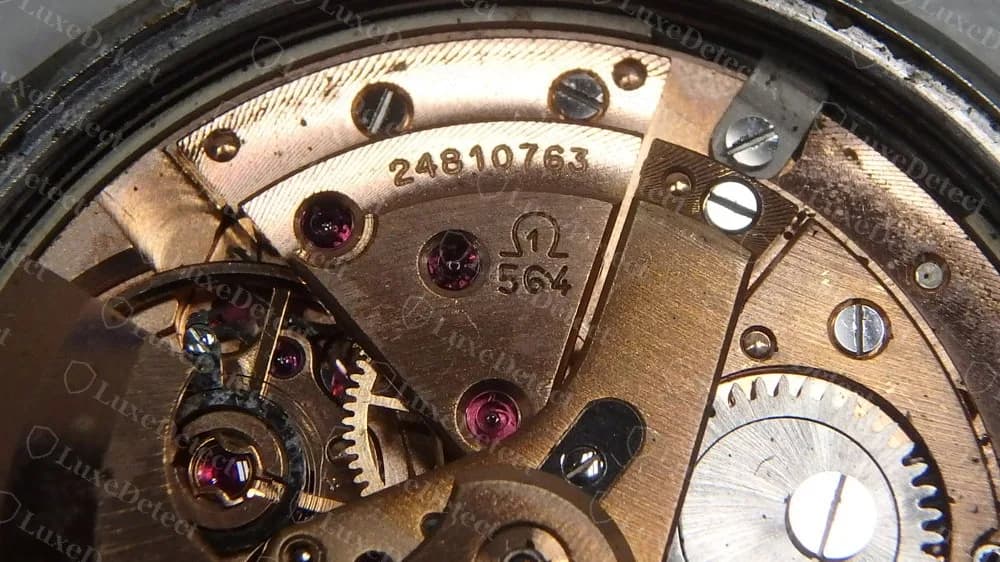
The serial number is the individual watch's movement number. On vintage pieces it is engraved on a bridge inside the movement; from the early 1990s Omega also stamped it outside, on the back of a lug or the caseback exterior. It is a plain run of 6 to 9 digits, not letters or dots.
Omega has used one continuous sequential serial series since roughly 1895, so an Omega can usually be dated from its serial to within one to three years. If the serial's implied year contradicts the reference, something is wrong — a redial, a franken-watch, or a fake.
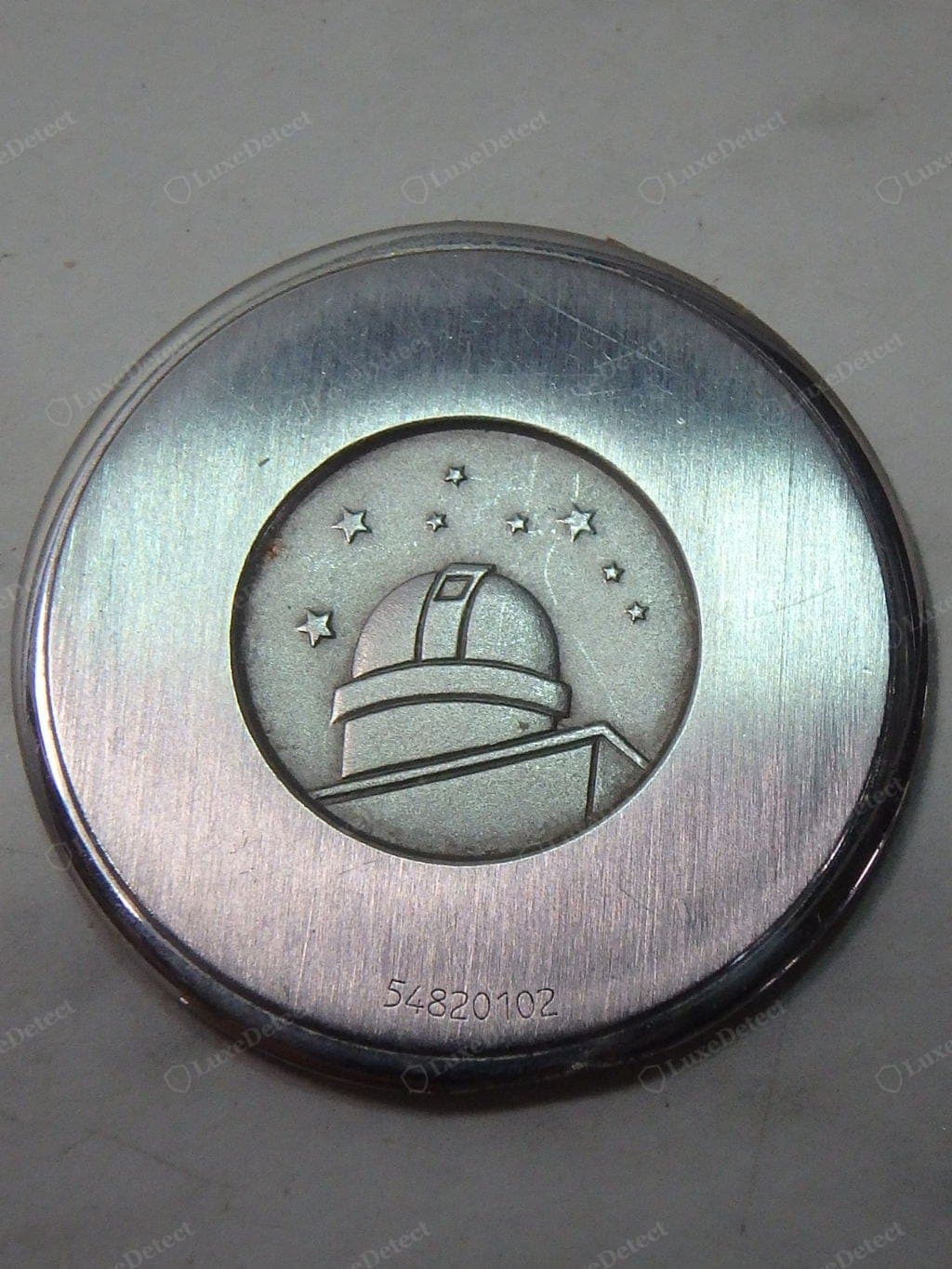
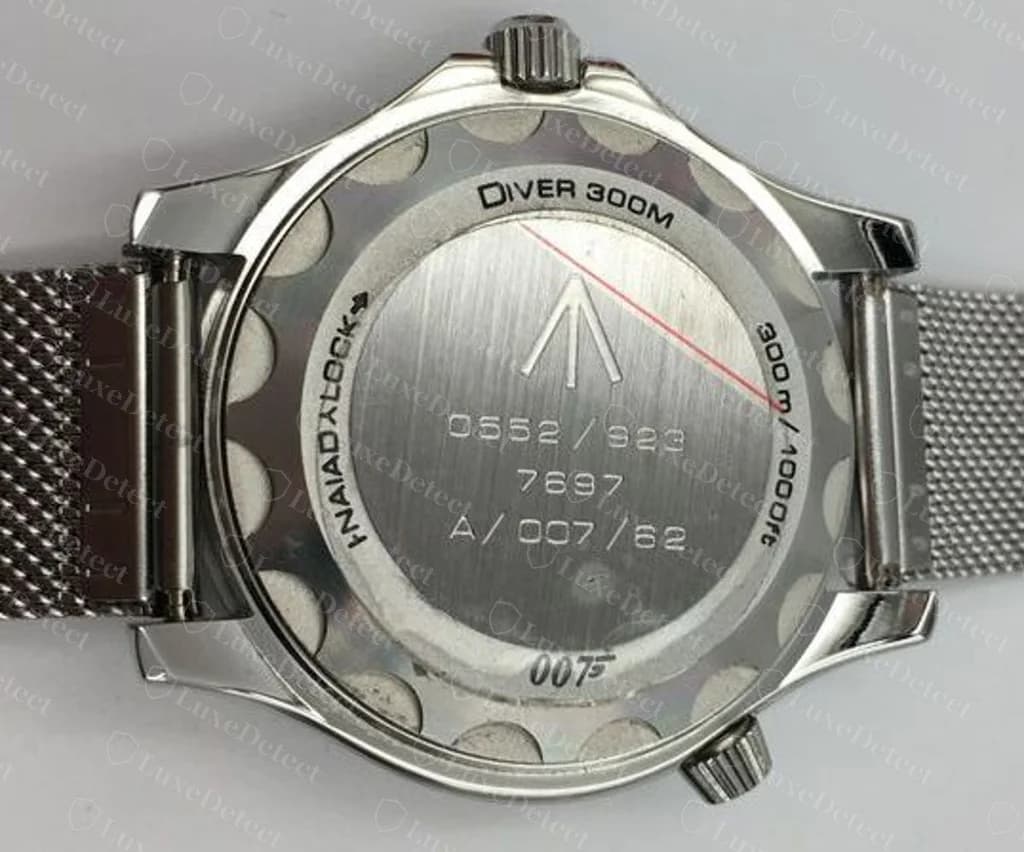
Decode the serial before you go further:
Engraving quality: genuine engraving is crisp, evenly spaced, and consistent in depth. Fakes are often shallow, acid-etched (a slightly eaten look), or stamped unevenly — obvious under a 10x loupe. A serial on the caseback exterior of a watch claimed to be from the 1960s is also wrong: Omega did not put it outside the case that early.
| Element | Authentic | Counterfeit |
|---|---|---|
| Serial format | 6–9 digits, numeric only, on a movement bridge (vintage) or the back of a lug / caseback exterior (1990s on) | Contains letters, matches the dotted reference, or is on the caseback exterior of a pre-1990 watch |
| Serial vs reference | The serial's era agrees with when the reference was in production | A modern reference on a watch whose serial dates decades earlier |
| Engraving | Crisp laser engraving, even depth | Shallow, acid-etched, or unevenly stamped |
Worth knowing
The serial gives you the era, not the verdict. Omega keeps no public database, so a plausible number confirms nothing on its own — what it catches is a contradiction between the serial's date and the reference or the seller's story. The [Omega serial number checker](/omega-serial-number) has the full year table.
The Dial — Printing, Applied Markers, and the Logo
Under a loupe, a genuine Omega dial is where most fakes fall apart.
The Omega symbol at 12 o'clock is applied metal on most modern pieces — a separate polished component, perfectly centred, level, and symmetrical. Printed where it should be applied, slightly rotated, or sitting proud on one side are all fake tells.
Text printing — "OMEGA", the model name, "CO-AXIAL", "MASTER CHRONOMETER", the depth rating — should be razor sharp with even density. Fakes show fuzzy edges, uneven ink weight, letters that vary in height, or the wrong font. Check spelling and spacing letter by letter.
Applied hour markers should be dead straight, evenly spaced, and securely set — no tilt, no height mismatch, no adhesive blob at the base. Genuine Super-LumiNova fills the marker outline cleanly and glows an even green or blue; fake lume is painted over the edges and glows weakly or off-colour.
| Element | Authentic | Counterfeit |
|---|---|---|
| 12 o'clock logo | Applied polished metal (most modern refs), centred, level, symmetrical | Printed where it should be applied, rotated, or proud on one side |
| Text | Sharp edges, even ink weight, correct font and spacing | Fuzzy, uneven density, letters varying in height, cramped or stretched |
| Applied markers | Straight, evenly spaced, no adhesive visible | Tilted, uneven height, glue blobs at the base |
| Lume | Even fill within the marker outline, uniform glow | Painted over the edges, weak or off-colour glow |
Red flag
A 12 o'clock Omega logo that is printed on a reference that should carry an applied metal symbol, or an applied symbol that sits visibly crooked. The logo is the first thing a counterfeiter gets almost-right and rarely gets exactly right.
The Crown, Caseback, and Case Finishing
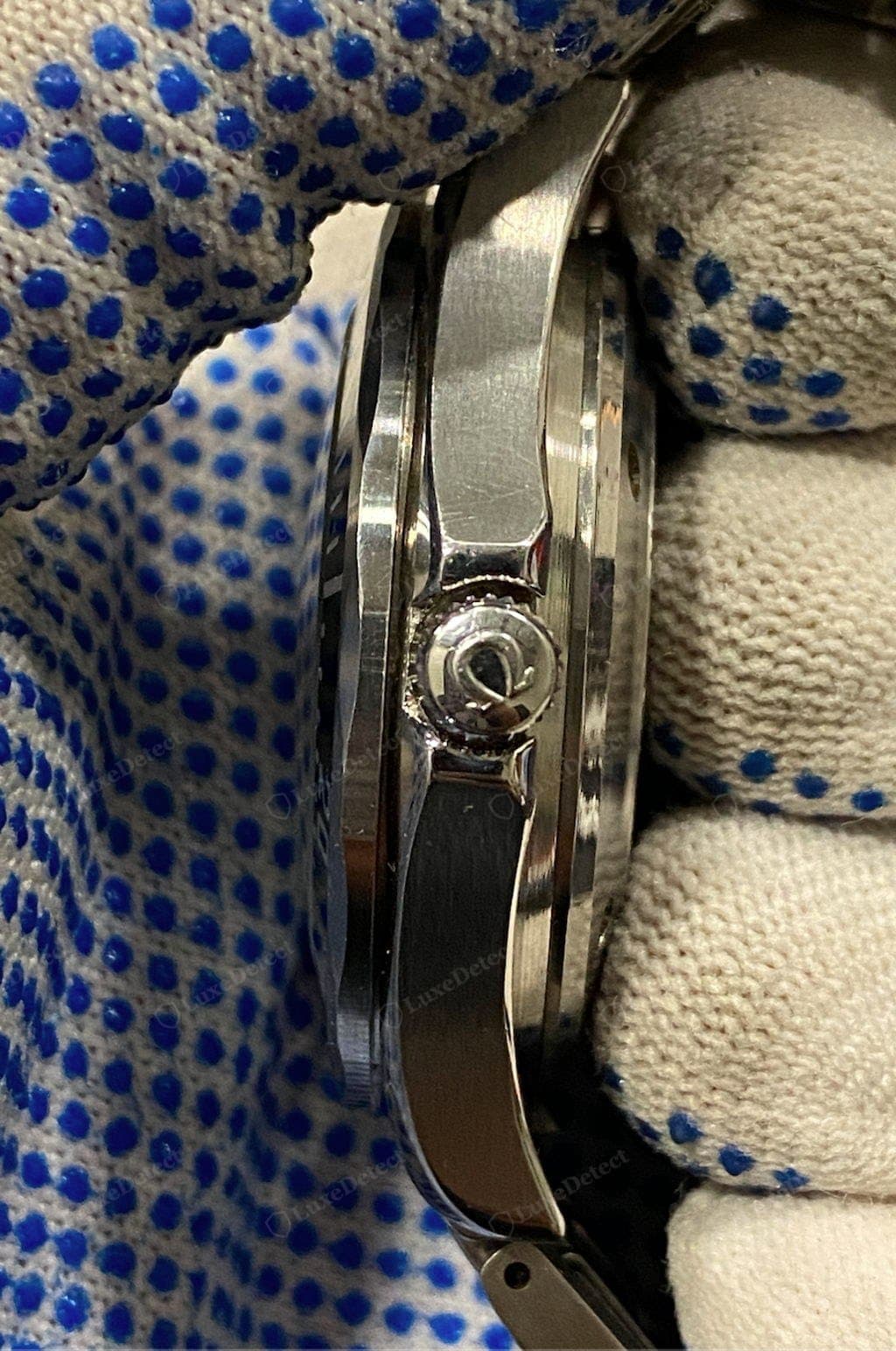
The crown carries an engraved or embossed Omega symbol on its end. It should be crisp, correctly proportioned, and — on screw-down crowns (Seamaster divers, some Aqua Terra) — thread smoothly and seat firmly. A crown logo that is shallow, misshapen, or stamped rather than cut, or a screw-down crown that cross-threads or seats loosely, is a fake tell.
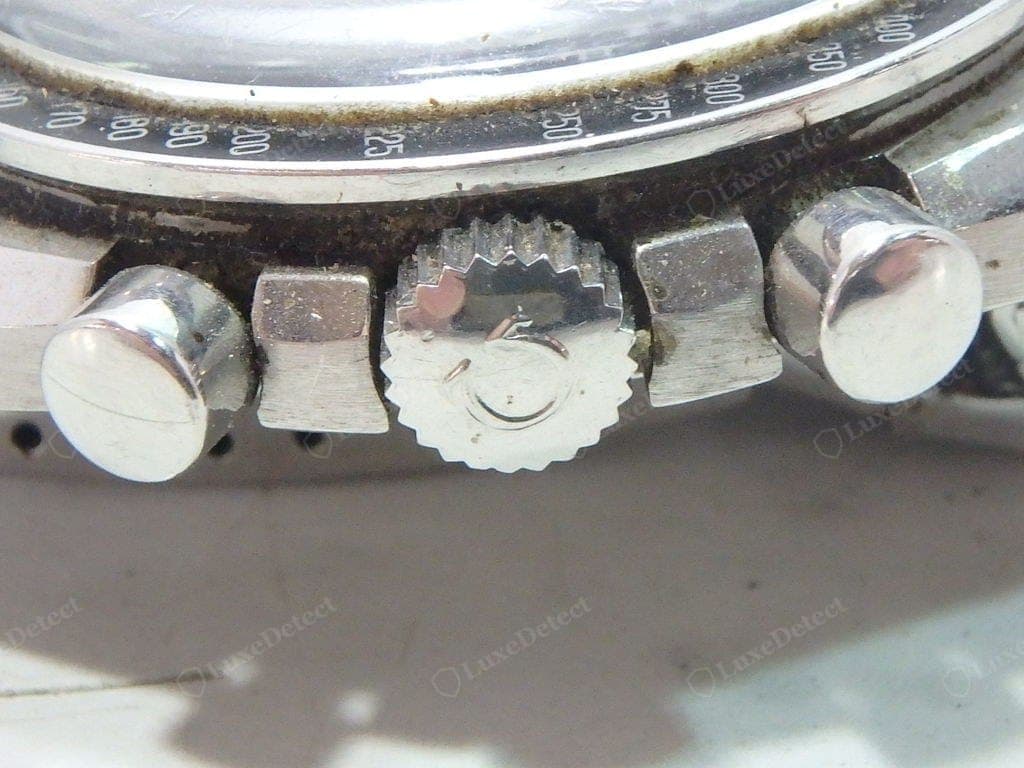
The caseback:
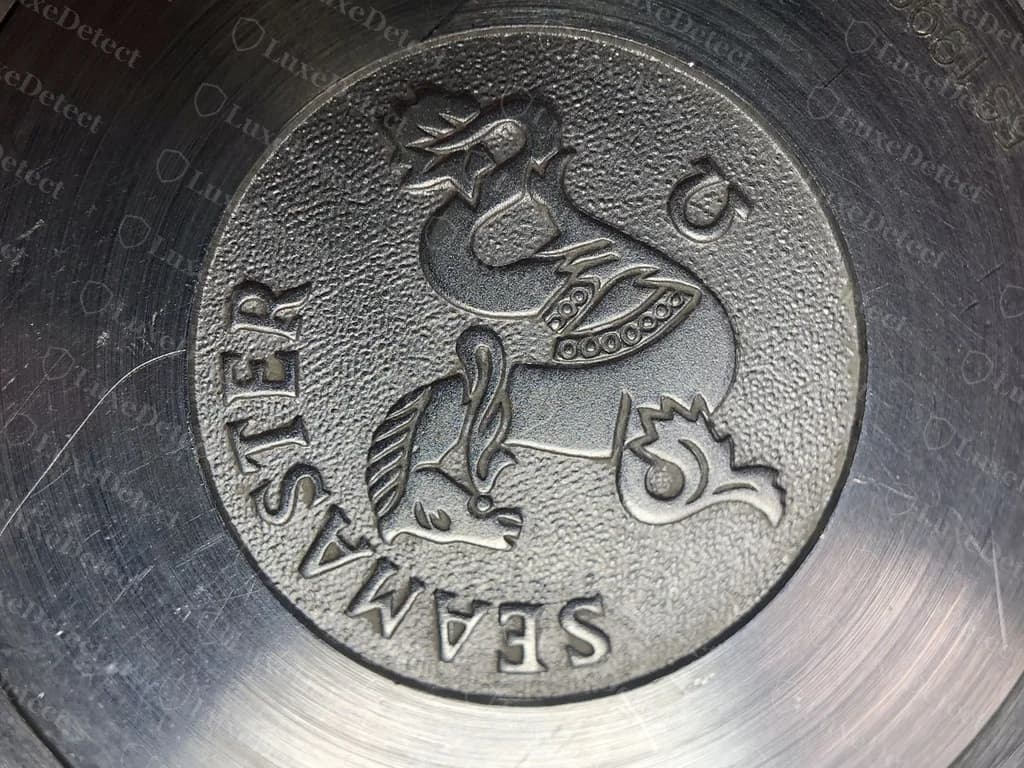
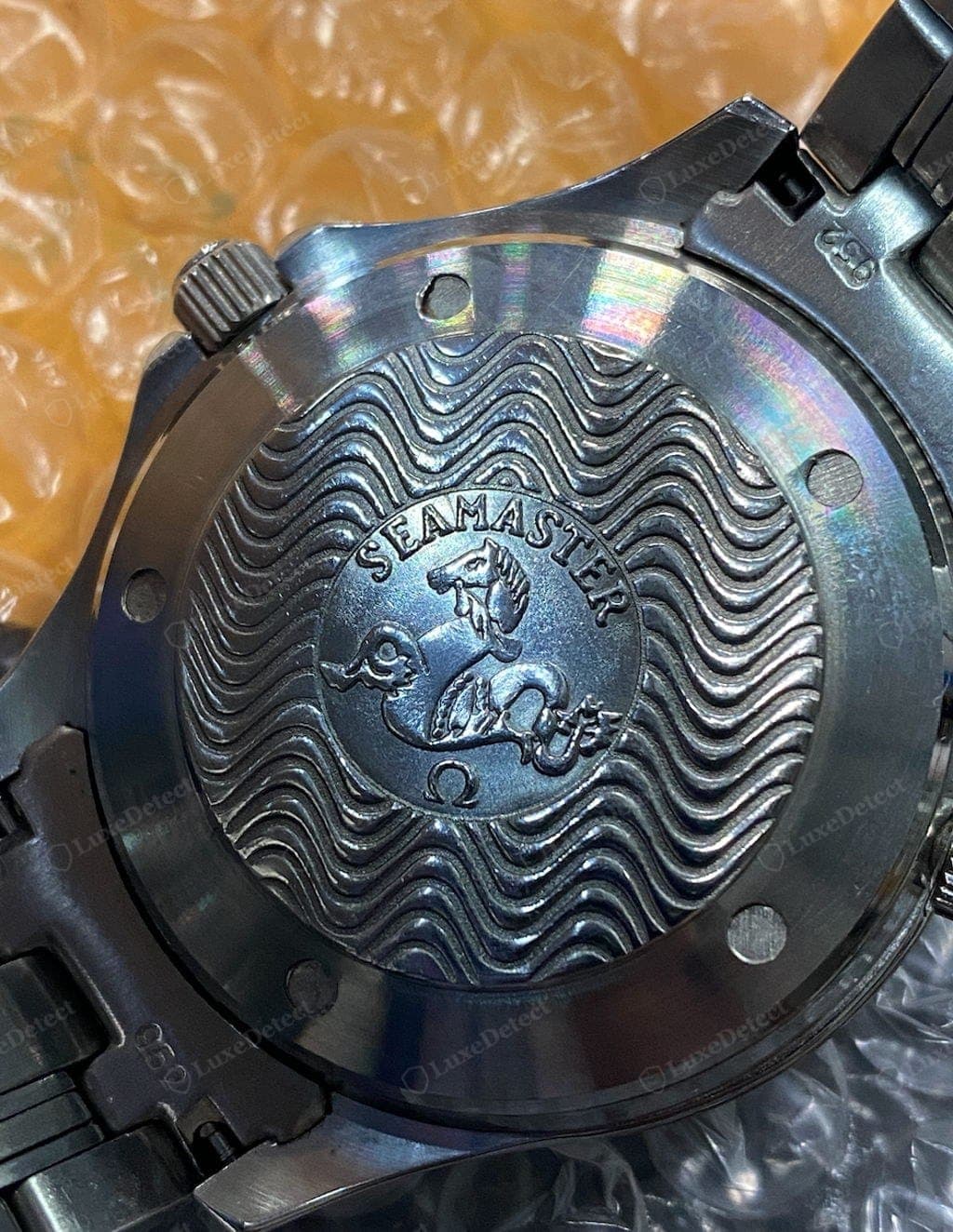
- Seamaster Professional divers: a screw-in caseback with a raised, finely detailed Seahorse medallion. Weaker fakes have a flat, soft, or shallow Seahorse — but the better ones can strike a comparably crisp medallion, so treat a good-looking medallion as inconclusive rather than a pass.
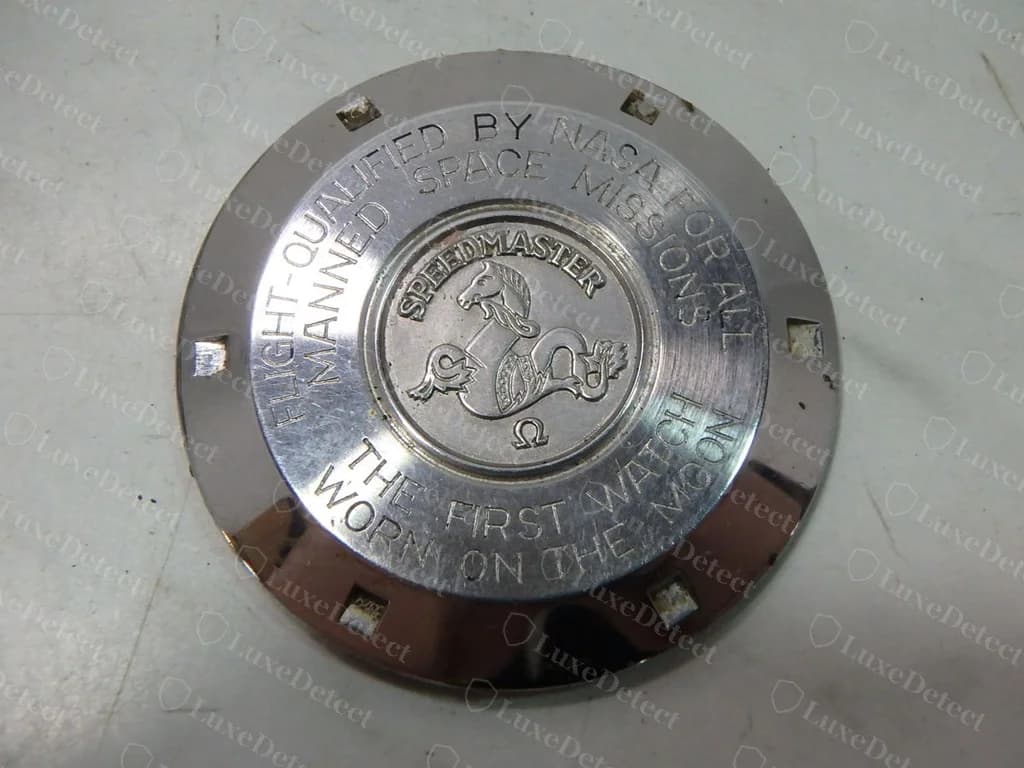
- Speedmaster Professional: specific engraved text ("THE FIRST WATCH WORN ON THE MOON", "FLIGHT-QUALIFIED BY NASA…", the hippocampus) on the solid-back references. Font, depth, and exact wording must be right for the reference — counterfeiters frequently get a word or a line spacing wrong. Some Speedmaster Professional references have a display back instead, so confirm what your reference should have.
- Display casebacks (Aqua Terra, many co-axial pieces): a sapphire crystal matching the front's quality, with crisp exhibition-ring engraving.
Case finishing: genuine Omega alternates brushed and polished surfaces with sharp, clean transitions — a crisp bevel where a brushed top meets a polished flank. Fakes are over-polished everywhere, or have mushy, rounded edges.
| Element | Authentic | Counterfeit |
|---|---|---|
| Crown logo | Crisply cut Omega symbol, correct proportions, screws down smoothly | Shallow, misshapen, cross-threads or seats loose |
| Seamaster caseback | Raised, finely detailed Seahorse medallion | Usually flat, soft, or shallow relief — though a convincing medallion strike does exist on better fakes |
| Speedmaster caseback text | Correct wording, font, and depth for the reference | A wrong word, wrong spacing, or shallow stamping |
| Case finishing | Sharp brushed-to-polished transitions, clean bevels | Over-polished throughout, or mushy rounded edges |
Worth knowing
A flat or soft Seahorse is still a fast fail where you see it, but a crisp medallion is not on its own proof of authenticity — the sample pictured struck a comparably clean relief on a confirmed counterfeit. Read the caseback together with the movement and dial checks rather than treating it as decisive by itself.
Weight, Bracelet, and Clasp
A genuine steel Omega has a specific heft: a Seamaster Diver 300M on its bracelet weighs roughly 190–200 g, a Speedmaster Professional around 150 g. Fakes in lower-grade alloys come in 15–25% light — noticeable in the hand once you have held a real one.
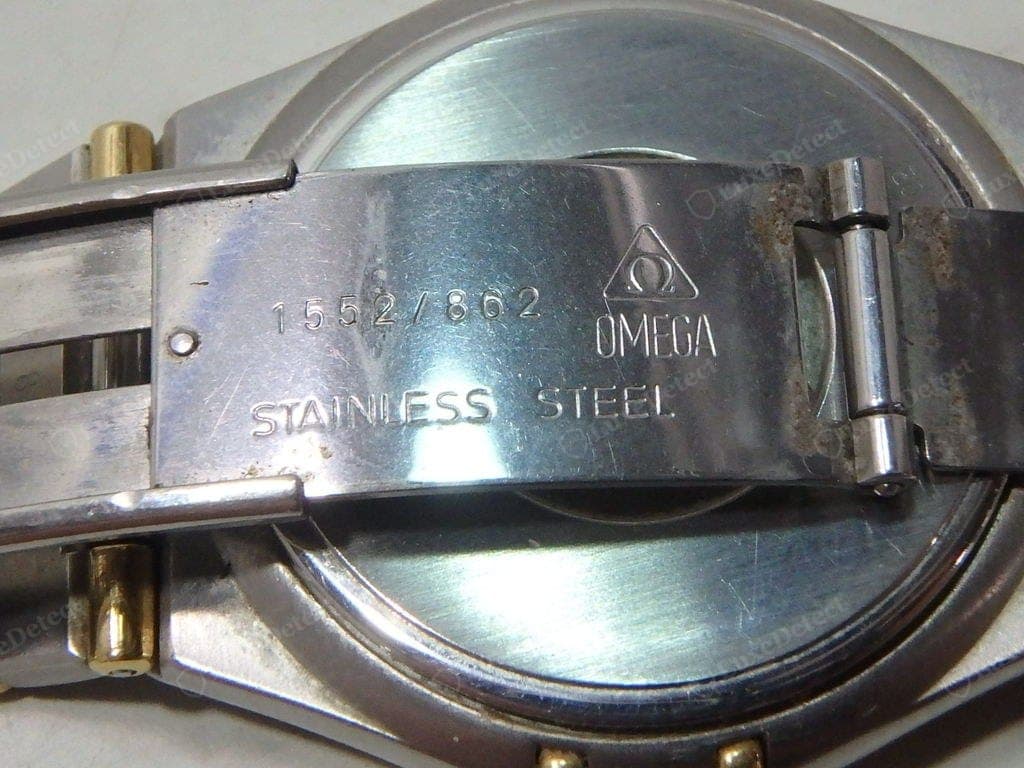
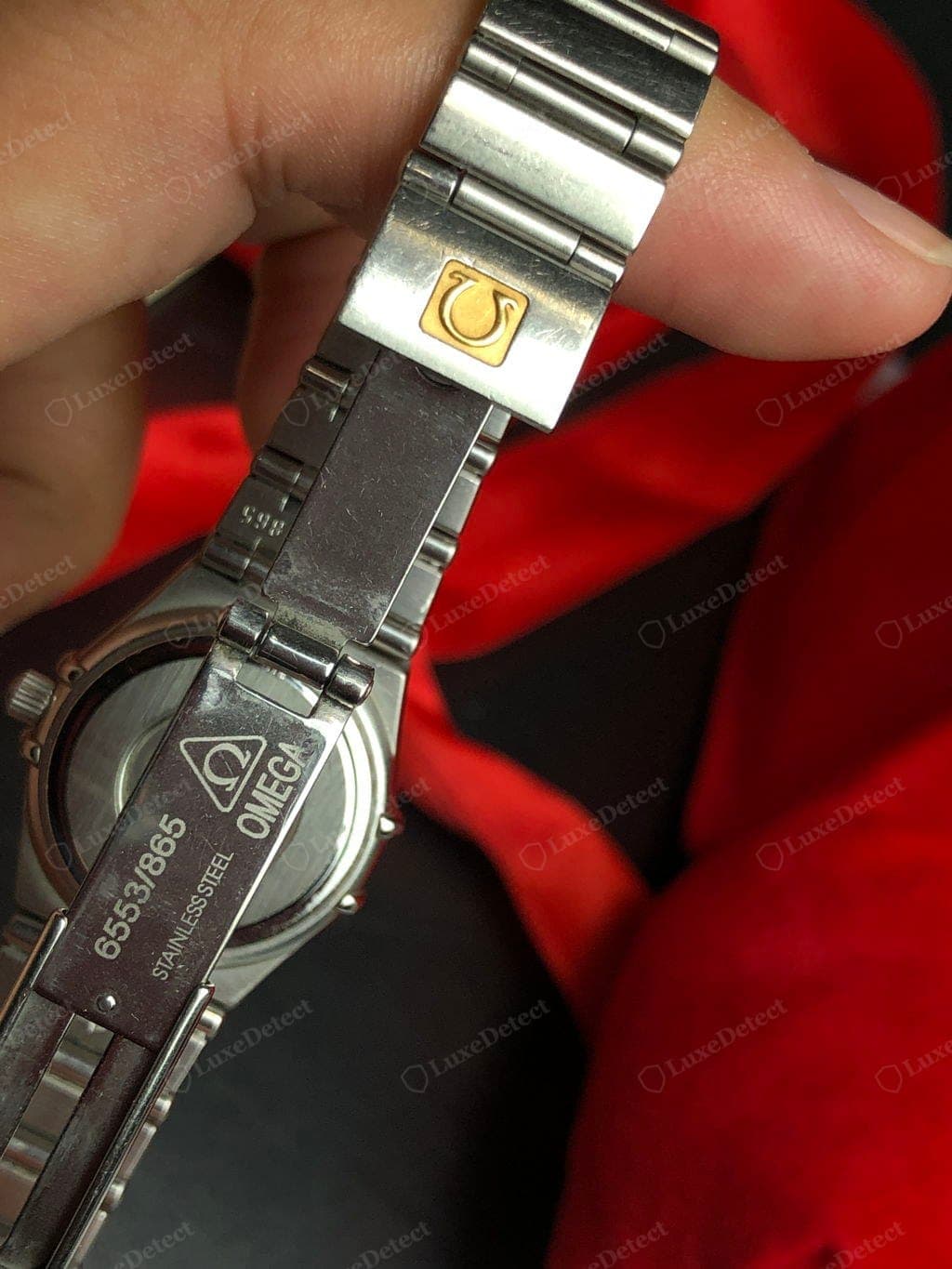
The bracelet: solid links, clean machining, even brushing, end links flush to the case with no gap or rattle, proper screws (not pins pretending to be screws). The clasp carries a crisp, correctly proportioned Omega logo, and the divers' clasps have a milled ratcheting extension with precise clicks — a fake extension feels gritty or loose.
| Element | Authentic | Counterfeit |
|---|---|---|
| Weight | Full for its size, ~190–200 g Seamaster 300M bracelet, ~150 g Speedmaster bracelet | 15–25% under, feels hollow |
| End links | Flush to the case, no gap, no rattle | Visible gap, movement against the case |
| Clasp logo | Crisp applied or engraved Omega symbol, correct proportions | Usually shallow, stamped, or slightly wrong shape — though a clean logo stamp alone does not settle it |
| Divers' extension | Milled ratchet, precise clicks | Gritty, loose, or vague detents |
Worth knowing
Weight is corroboration, not proof — a clone in a correct-grade steel case can hit the right number, and a clasp logo can look clean on a well-made fake too. Use weight and the ratcheting-extension feel to catch the light fakes; don't rely on the clasp logo alone.
Model-Specific Checks
Once the brand-level checks are clear, each Omega family has its own tells:
- Seamaster Diver 300M: the helium escape valve at 10 o'clock (on the reference that should have it), the wave-pattern dial, the bezel insert that matches the era (aluminium on older references, then Liquidmetal or ceramic with an enamel-filled scale).
- Speedmaster Professional: the pusher shape and action, the tachymeter bezel font, spelling and base-1000 scale (compare the exact lettering, including whether "TACHYMETRE" carries an accent, with a verified example of the same era), the sub-dial hand shapes, and the correct calibre for the production year: hand-wound 321 on the earliest pieces, 861 from about 1968, 1861 and 1863 on later Professionals and 3861 on the 2021-on Master Chronometer. An automatic movement in a "Professional" is wrong, but Speedmaster Date and Reduced models are automatic by design.
- Constellation: the four "griffes" (claws) at 3 and 9 o'clock, the Observatory medallion, the half-moon dial facets.
- De Ville / Aqua Terra: the teak-pattern dial striping alignment, the applied logo, the case profile.
The Seamaster 300M has its own guide. Run the brand checks first — a watch that clearly fails the movement or the crystal etch is usually finished before you reach the model tells.
| Element | Authentic | Counterfeit |
|---|---|---|
| Seamaster helium valve | Present and cleanly finished on the reference that carries it | Missing, or a non-functional decorative plug |
| Speedmaster calibre | Hand-wound calibre correct for the era (321, 861, 1861/1863 or 3861) in a "Professional" | An automatic movement, or a decorated clone |
| Constellation claws | Four sharp griffes, symmetrical | Soft, uneven, or wrongly spaced |
Worth knowing
Model-specific checks are decisive once you know the exact reference, worthless applied to the wrong one. Confirm the reference first.
Box, Papers, and Card
An Omega comes with a warranty card (or, since 2021, a digital certificate tied to the serial), a booklet, and a box. None of it proves the watch — cards are forged, real cards are sold separated from their watches, and a genuine box holds anything.
What is worth doing: check that the card's serial and reference match the watch, and that the retailer stamp and date are consistent with the serial's era. A mismatched serial is a red flag; a matching card is a mild positive and nothing more. An authorised dealer or Omega boutique can confirm whether a serial is registered for the post-2021 extended warranty and to which reference — the closest thing to an official check a buyer can get.
| Element | Authentic | Counterfeit |
|---|---|---|
| Card serial | Matches the watch exactly | Blank, mismatched, or a different reference |
| Retailer stamp | Consistent with the serial's production era | A date that predates the reference, or an implausible retailer |
Worth knowing
Papers are context only. Cross-check the serial and reference against the watch; treat everything else in the box as decoration.
Quick Authentication Checklist
- Watch the second hand. A countable step rate on an automatic reference is finished.
- Tilt the crystal under light for the etched Omega logo — and check your reference should have one.
- Read the movement serial (bridge on vintage, back of a lug on modern) and decode its era.
- Check the serial's era against the reference number — a modern ref on an old serial is wrong.
- Loupe the 12 o'clock logo: applied metal on most modern refs, centred and level.
- Loupe the dial text for fuzzy edges, uneven ink, and font errors.
- Check the Seahorse relief (Seamaster) or the caseback text wording (Speedmaster).
- Weigh it in the hand against the known figure for the model.
- Confirm the model-specific tells for the exact reference.
- Match the card serial to the caseback; ignore the rest of the box.
Two or more failures means walk away. A single clear failure on the movement, the crystal etch, or a serial-versus-reference contradiction is usually enough on its own, once you have ruled out a service part, a replaced crystal or a quartz reference.
When to Get a Professional Opinion
The mid-tier clone is where a matching mark proves nothing on its own: an $800–$1,200 fake with a decorated automatic movement, a real sapphire crystal, a ceramic bezel and a correct-weight steel case copies every visible mark and passes the sweep test, the weight check and a casual look at the dial. What separates it from a genuine watch is dial printing under magnification, applied-logo geometry, movement finishing, and engraving depth, compared against a verified watch — judgement calls built on having handled both.
If the watch is a private sale, a gift you cannot open in front of the seller, or anything above the entry tier, get a second opinion before the money moves. LuxeDetect authenticates Omega watches from $45 with a Certificate of Authenticity back in your inbox within 24 hours.
FAQ
How can I tell a fake Omega without opening it?
The three fastest no-tools checks: the second hand sweep (too fast to count on any automatic reference), the etched Omega logo in the crystal (tilt under light — present on many Seamaster, Aqua Terra, Constellation, De Ville and Speedmaster models, but not on every reference or era), and the 12 o'clock dial logo (applied polished metal on most modern references, centred and level). If all three pass, decode the serial and check its era against the reference.
Can every Omega be dated from its serial number?
In principle, yes — Omega has used one sequential serial series since roughly 1895 — but only to about plus or minus one to three years, because watches were made in batches and not sold in strict serial order. The Omega serial number checker has the full year table.
Where is the serial number on an Omega?
It is the movement number: on a bridge inside the movement on vintage pieces (caseback off to read it), and from the early 1990s also outside, on the back of a lug or the caseback exterior. A plain run of 6 to 9 digits — not the dot-separated reference.
Can Omega confirm my serial number?
There is no public lookup, but an authorised dealer or Omega boutique can confirm whether a serial is registered for the post-2021 extended warranty and to which reference. That is the closest thing to an official check a buyer can get.