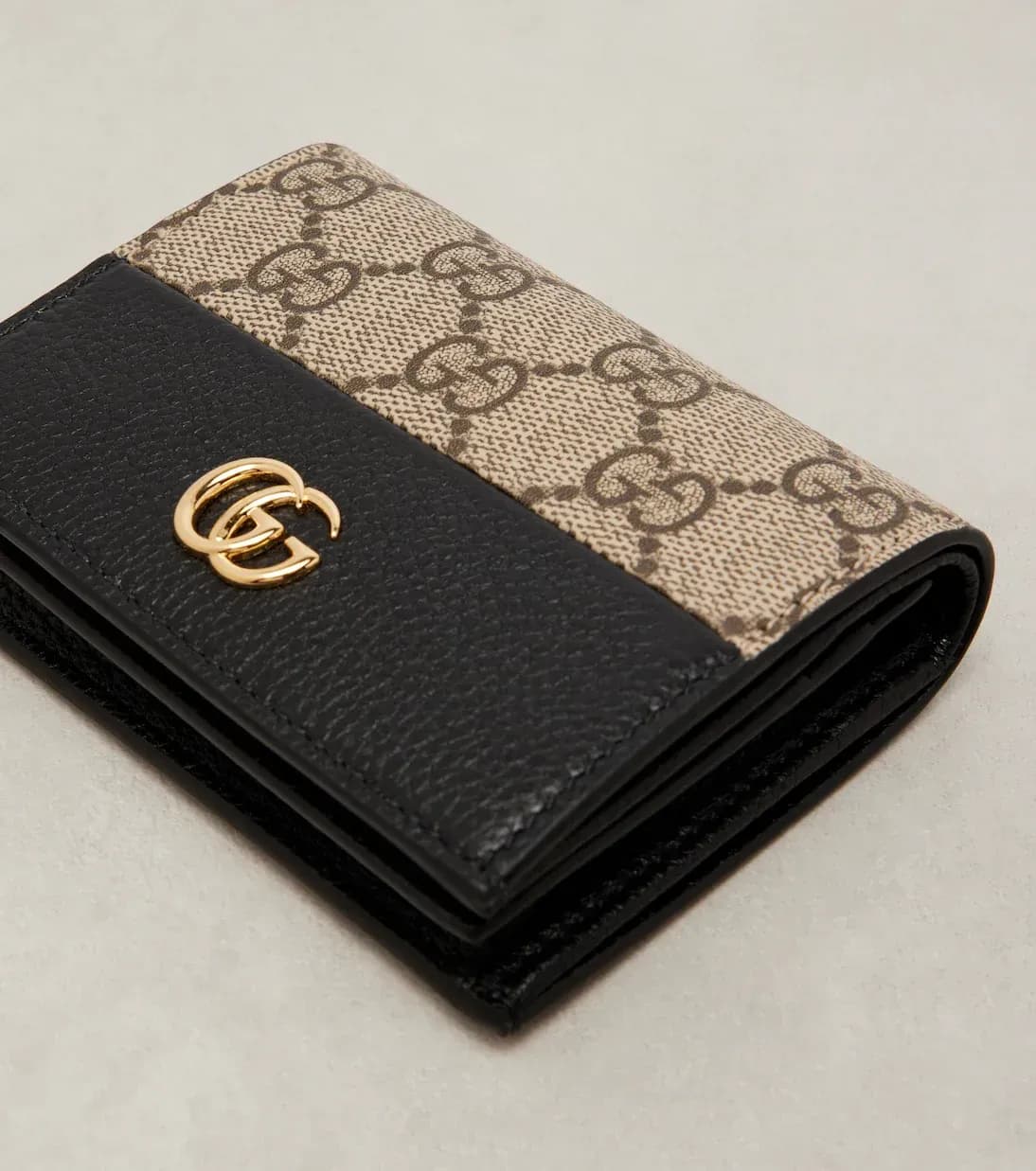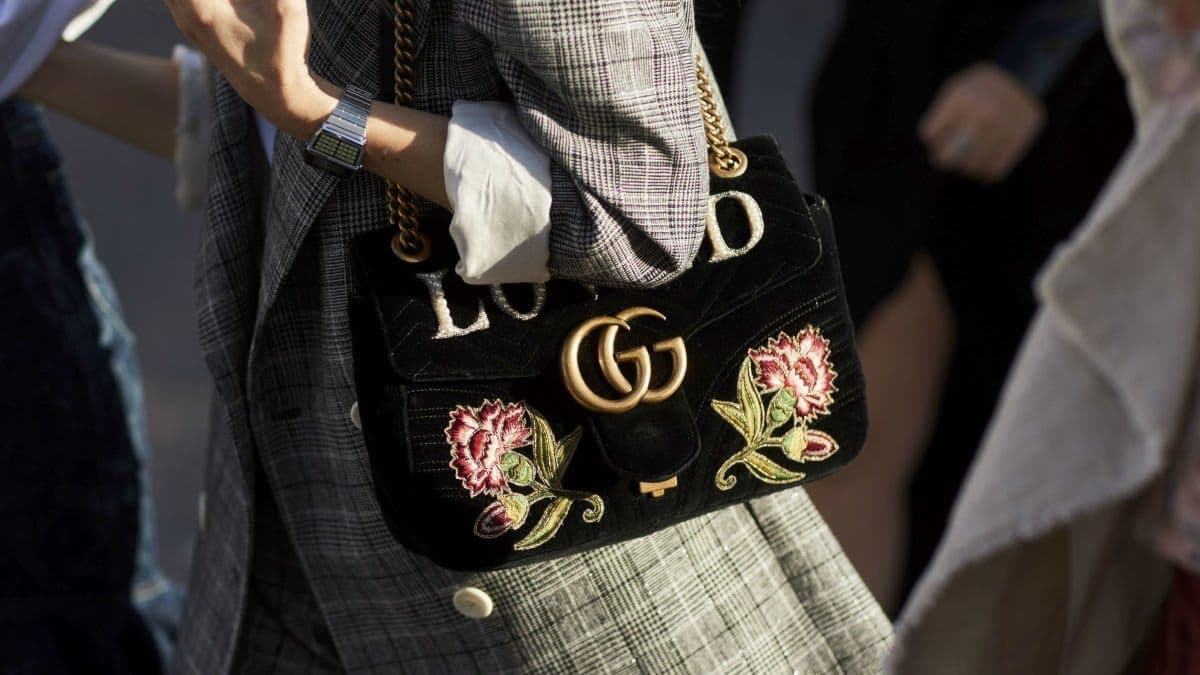
Luxury Handbag Authentication Specialist
Handbag authentication specialist. Has reviewed submissions across Hermès, Chanel, Louis Vuitton, and Dior since 2019.
Last updated September 2026 · Published May 2026 · Contact
Why Gucci Bags Are a Top Counterfeit Target
Gucci's iconic GG monogram and instantly recognizable silhouettes make the brand's bags one of the most replicated in luxury fashion. The counterfeit market ranges from obvious fakes sold on street corners to high-quality "super replicas" that fool casual buyers. The difference lies in specific construction details that counterfeiters consistently fail to reproduce.
This guide walks through the five checks that matter most, in the order an expert would run them.
What to check, ranked by reliability
| Checkpoint | Reliability | What it tells you |
|---|---|---|
| 5. The GG Monogram Pattern | ★★★★★ | A GG pattern that reads flat with a sheen under raking light rather than showing woven texture is a definitive fake. |
| 2. The Interior Leather Tag | ★★★★★ | Off-center text or inconsistent embossing depth across the three lines is enough to reject the bag. |
| 4. Stitching | ★★★★★ | Uneven stitch length or a curved seam that should be straight corroborates a fake, though good replicas increasingly imitate hand-sewn character. |
| 3. The Serial Number | ★★★★★ | Confirms format only; the decisive signal is whether the same code appears online attached to a different Gucci style. |
| 1. The Zipper | ★★★★★ | A fast, useful first screen for low-grade fakes, but a smooth zipper on its own proves nothing. |
The Zipper
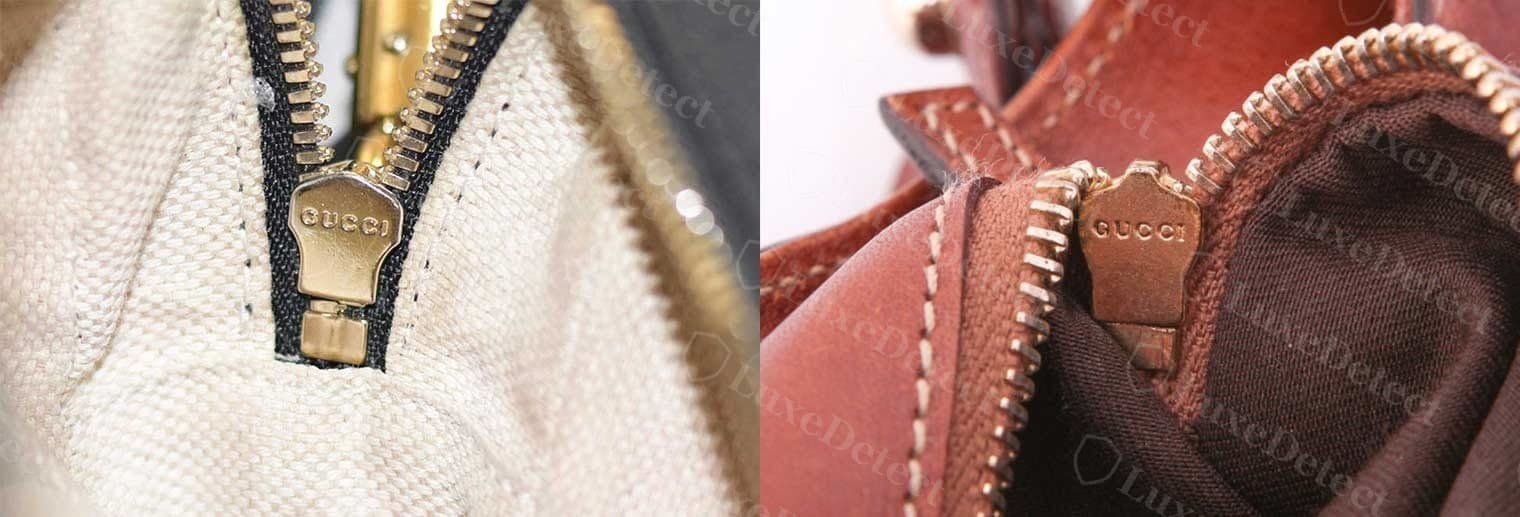
Start with the simplest physical test: open and close the zipper. On a genuine Gucci bag, the slider moves with smooth, effortless resistance — no catching, no stiffness, no tugging. If the zip requires force or skips over teeth, the bag is a low-grade fake.
Engraving on the slider: Turn the zipper pull over and look at the back face of the slider. Genuine Gucci bags have the brand name engraved here — small, clean, and precisely centered. Replica makers frequently omit this detail because it's invisible in product photos.
Carabiners and metal hardware: Any carabiner, D-ring, or clasp on an authentic Gucci bag carries brand engraving — at minimum one piece from each pair. The engraving font must match the font on the zipper slider exactly. Mismatched fonts between hardware elements indicate assembled-from-parts counterfeiting.
Worth knowing
Zipper smoothness is a fast, useful screen but not decisive alone — check it first because it's quick, then weight the leather tag and GG canvas checks more heavily.
The Interior Leather Tag
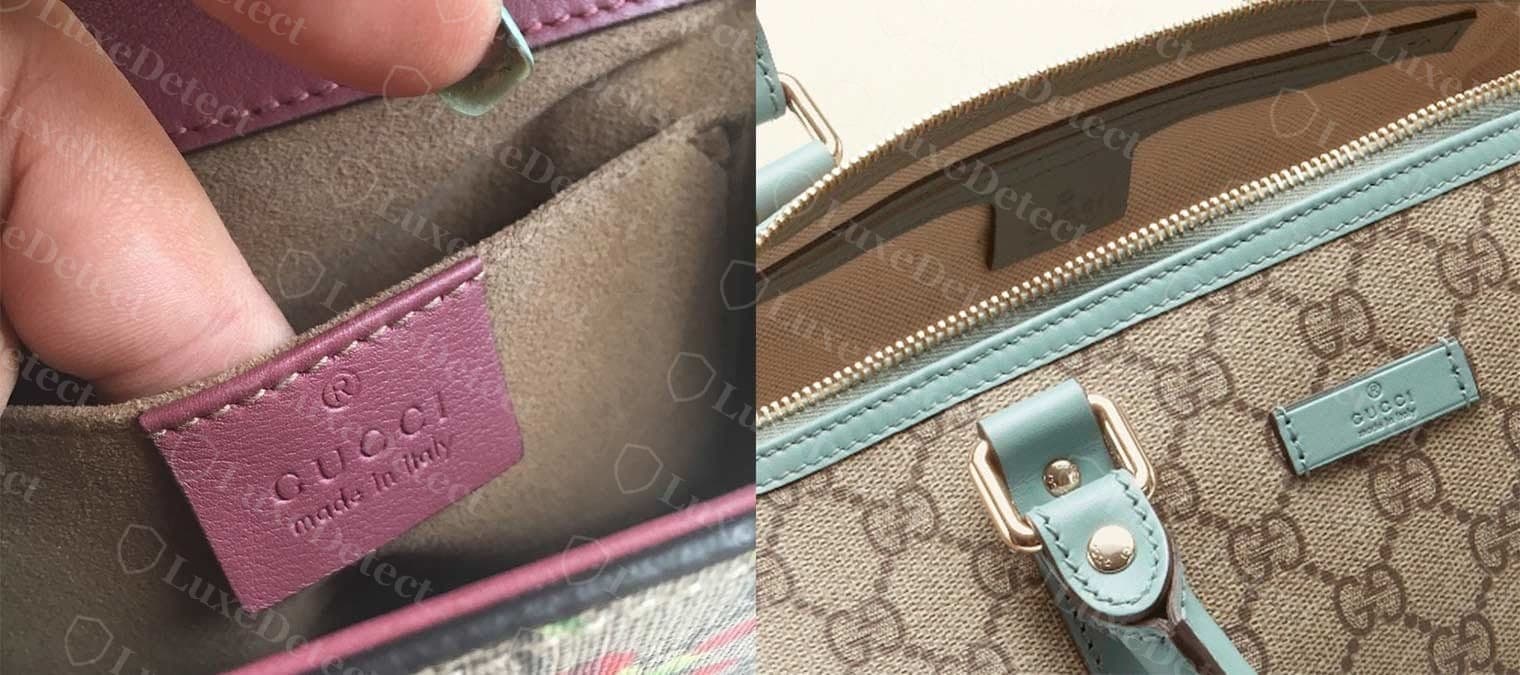
Inside the bag — usually adjacent to the zipper or on an interior pocket — you'll find a small leather tag. This tag has a specific, consistent layout across all genuine Gucci bags:
- Top line: Circled ® symbol
- Center: GUCCI in uppercase block letters
- Bottom line: *made in Italy* in lowercase
All three lines must be perfectly centered on the tag. Every letter within a line must be the same size and sit on the same baseline. The embossing depth must be uniform — deep enough that every letter reads clearly at a glance.
On fakes, the embossing is frequently inconsistent: some letters are sharp while adjacent ones are barely visible, or the text drifts off-center. Gucci has used the same typeface on these tags for decades — compare against the wordmark on the brand's official website to verify the letterform proportions.
Red flag
Text that drifts off-center, or letters within the same line that are sharp next to others barely visible, is enough to reject the bag — Gucci's tag layout and embossing depth are consistent across decades of genuine production.
The Serial Number
On the reverse of the leather tag is the bag's identification code. Authentic Gucci serial numbers are:
- 10 to 13 digits in length
- Printed across two lines
- The top line is the model code; the bottom line is a production code
Counterfeiters commonly use random digit strings, or — more tellingly — reuse a single code across multiple different replica products. This is where verification pays off: search the serial number online. If the code is associated with a completely different Gucci bag style than the one you're examining, the bag is fake.
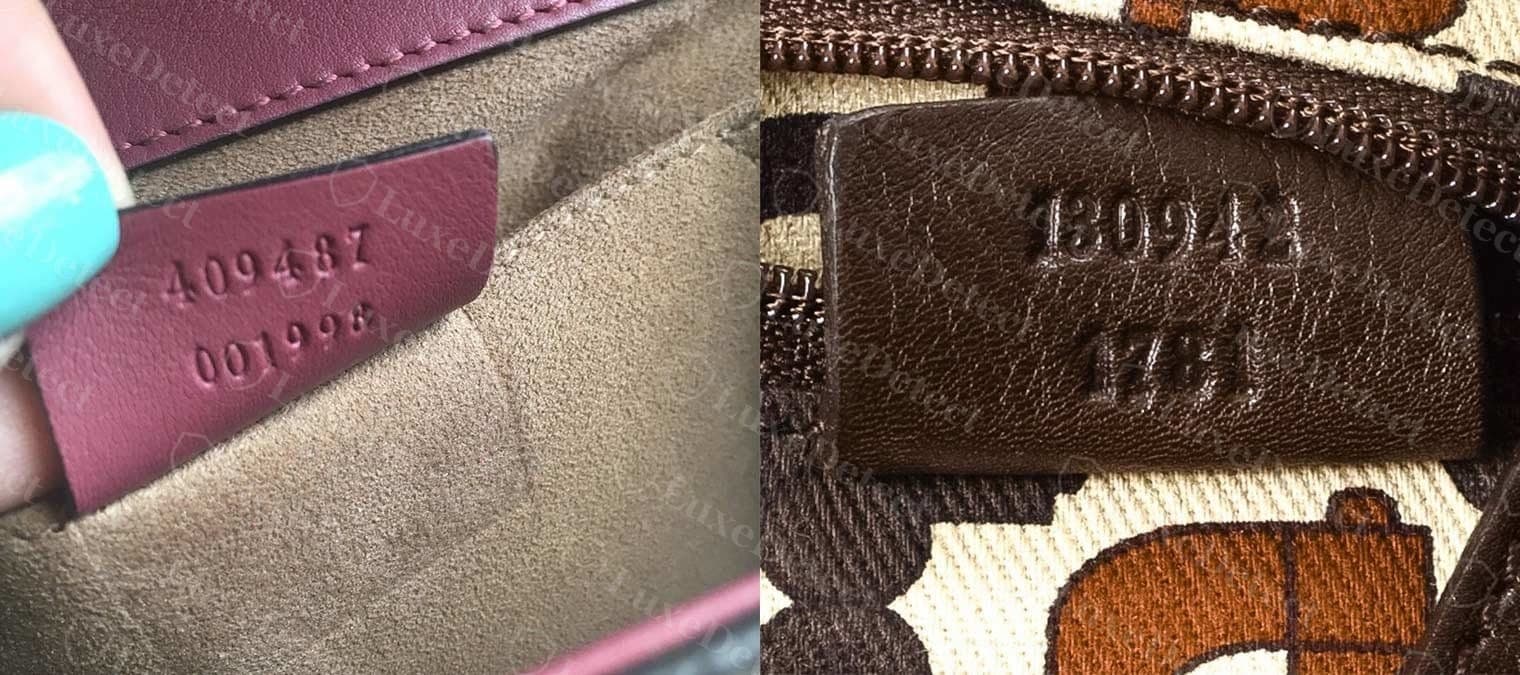
A note on QR codes: Gucci began adding a small secondary tag with a QR code to bags in recent years. The absence of this tag on an older bag does not indicate a fake, it simply predates the system. If your bag does have one, the Gucci Black Label QR code year guide breaks down how to read the production year encoded in it. A QR code's presence is helpful, but its absence is not evidence of inauthenticity.
Worth knowing
A correctly formatted serial confirms format only, not this specific bag — the decisive check is whether the same code turns up online attached to a different Gucci style.
Stitching
Authentic Gucci bags are hand-sewn. This doesn't mean irregular — it means the stitches have a specific character that machine sewing can't replicate exactly.
Thread: Thick, strong, and consistent. The same thread weight throughout the entire bag — no section uses thinner or lighter thread.
Stitch size: Every stitch is the same length everywhere on the bag — along the body, at the handles, around the base. High-quality replicas sometimes imitate Gucci's slightly angled stitch pattern, so look closely at consistency rather than just angle.
Stitch line placement: Each seam runs at a consistent distance from the edge. At corners, the stitch line turns cleanly without bunching or skipping.
What to look for on fakes: Uneven stitch length, thread that's too thin or too uniform (a sign of machine sewing), missed stitches, or puckering where thread tension varied. A seam that curves where it should be straight is almost always a fake indicator.
Worth knowing
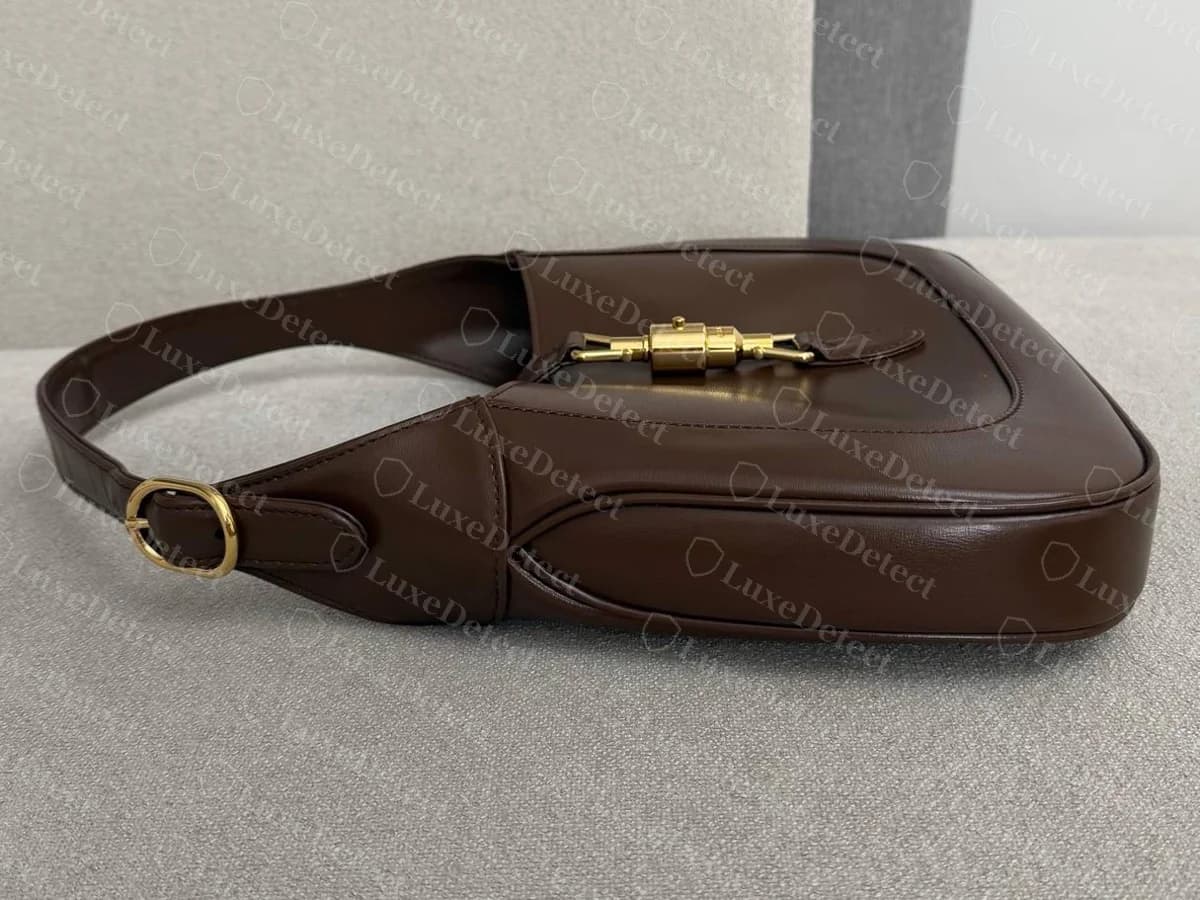
Stitching consistency corroborates a finding well but high-quality replicas increasingly imitate Gucci's hand-sewn character, so treat it as supporting evidence rather than the decisive check. The same hand-sewn stitch logic applies structure-bag-wide — on the [Gucci Jackie](/blog/authenticate-gucci-jackie-bag-guide), for instance, uneven stitch length around the piston-lock closure is one of the fastest tells.
The GG Monogram Pattern
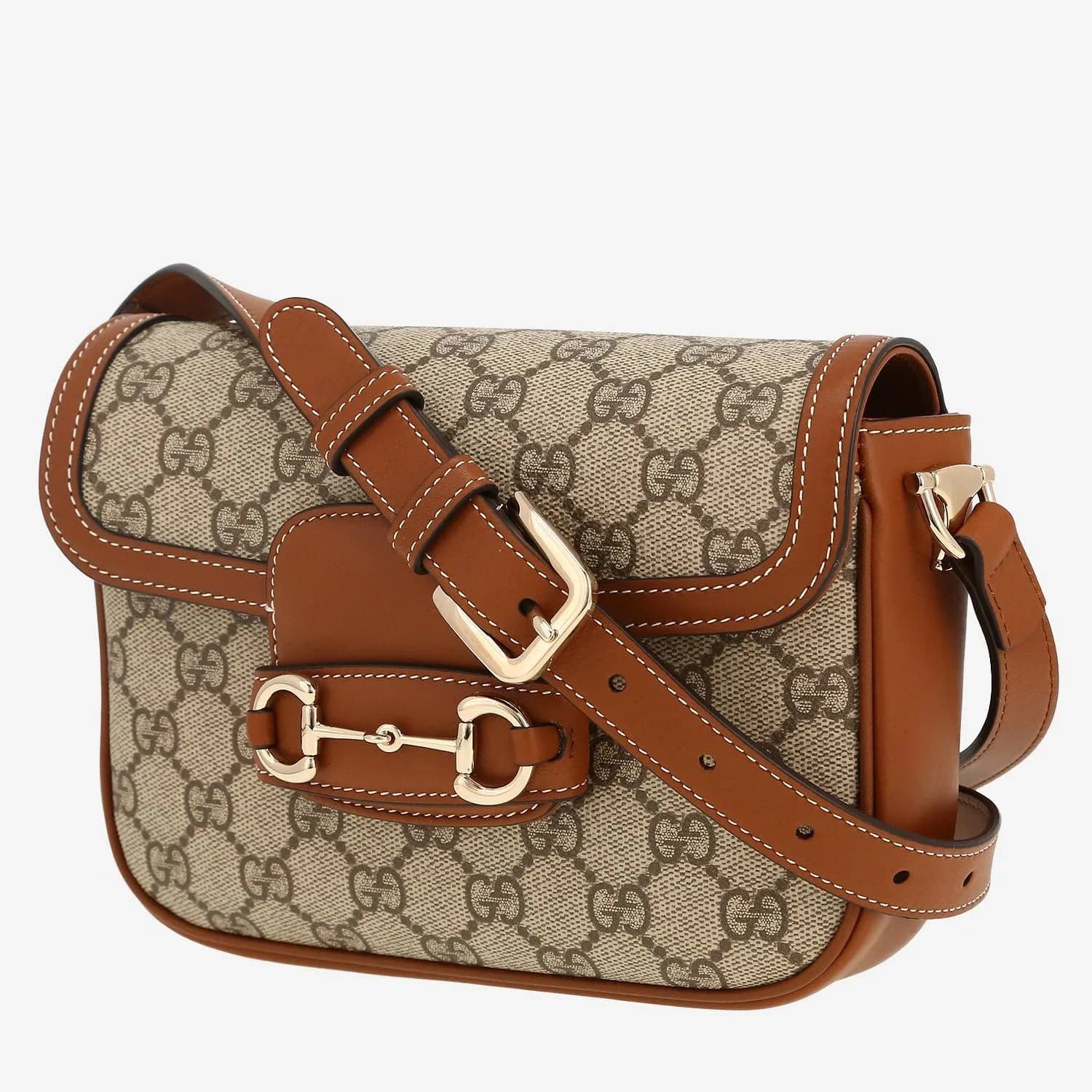
Fabric Gucci bags with the GG monogram are subject to an additional check — and a common misconception to clear up first.
Gucci does not pattern-match at seams the way Chanel does. On authentic Gucci bags, the GG pattern does not align perfectly across every seam. This is intentional. Do not reject a bag because the pattern shifts slightly at a seam.
What to check instead:
Pattern consistency across the entire bag: The letter size, typeface, and spacing between monograms must be identical on every panel. Examine all sides — front, back, base, sides. Any variation in GG scale or spacing indicates a fake.
The GG letterform: The two G's in the monogram do not touch each other in the center. The tips of each G end in small, clean triangular points. Replicas frequently have G's that are slightly too close (touching), with rounded or blunt tips instead of triangular ones.
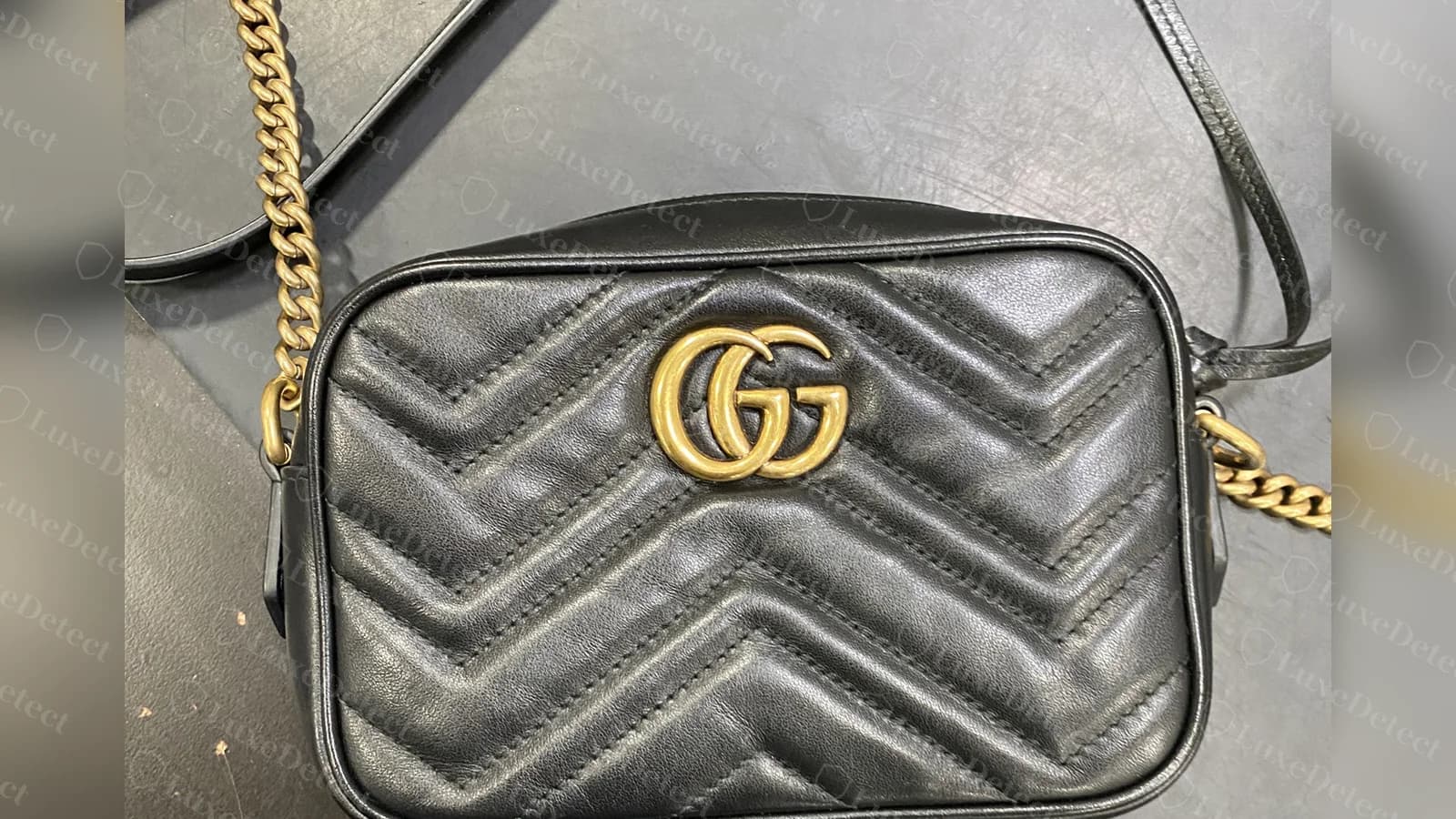
Woven, not printed: The GG pattern on genuine Gucci canvas is a jacquard-woven design, the pattern is created by two tones of thread during weaving, not applied as a print on top of a base fabric. To verify: look at the fabric from an angle in raking light. A woven pattern has slight texture and depth; a printed pattern sits flat and has a slight sheen relative to the background. A GG pattern that is clearly printed onto a plain fabric is a definitive fake. This same weave-versus-print distinction is the first thing to check on the Gucci Marmont, whose quilted leather variants share the GG hardware detailing covered here.
Red flag
A GG pattern that reads flat with a slight sheen under raking light, rather than showing woven thread texture and depth, is a definitive fake, since printed canvas cannot be mistaken for jacquard weave once you know what to look for.
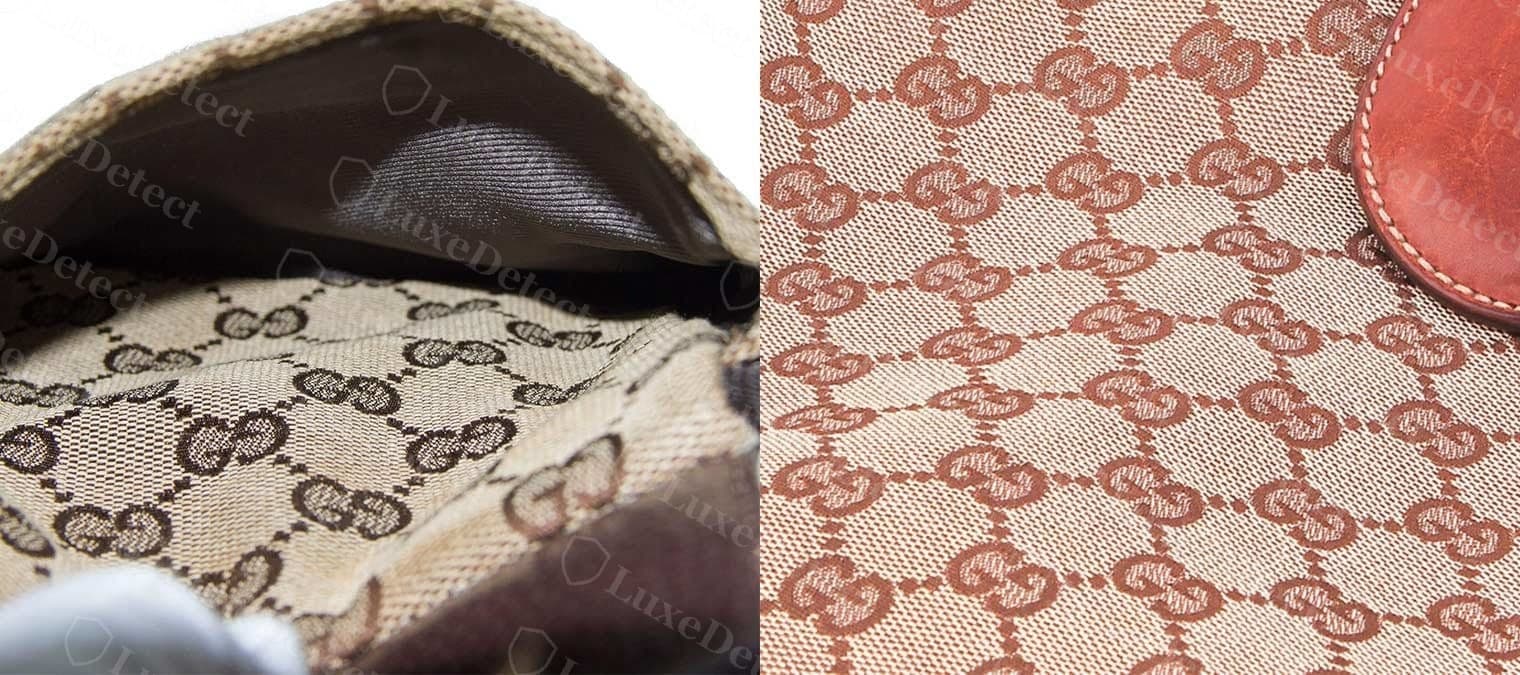
Real vs. Fake: GG Canvas at a Glance
| Detail | Authentic | Counterfeit |
|---|---|---|
| Pattern construction | Jacquard-woven, visible texture/depth under raking light | Printed flat onto plain fabric, slight sheen |
| G letterform | Tips end in small, clean triangular points, G's don't touch | Rounded or blunt tips, G's often touching |
| Pattern consistency | Identical letter size/spacing on every panel | Size or spacing varies panel to panel |
| Seam alignment | Pattern does not need to match across seams | N/A — not a reliable indicator either way |
Quick Authentication Checklist
- Zipper glides smoothly — no catching or stiffness
- Slider back — brand name engraved, legible
- Metal hardware — brand engraving on carabiners/clasps, font matches slider
- Interior tag — ® / GUCCI / made in Italy, all centered, consistent embossing depth
- Serial number — 10–13 digits, two rows, model code matches bag style
- Stitching — thick thread, consistent stitch length, even distance from edge
- GG canvas — woven (not printed), consistent G size/spacing, non-touching G tips with triangular ends
FAQ
Does the GG pattern need to match across seams?
No. Gucci does not align the GG pattern at seams. A pattern mismatch at a seam on a genuine Gucci bag is normal and expected. Judging authenticity by seam alignment will cause you to reject real bags.
What if the serial number returns no results online?
A serial that doesn't appear in search results is inconclusive on its own — not every authentic bag's serial is indexed online. The more useful check is whether the serial format is correct (10–13 digits, two rows) and whether any results that do exist associate it with the correct bag style. If the serial appears alongside a different Gucci model, that's the red flag.
My bag has no QR code tag — is it fake?
Not necessarily. Gucci introduced QR code tags relatively recently. Older authentic bags, pre-owned bags from earlier productions, and bags from certain markets may not have one. Evaluate the bag on the other checks in this guide.
How can I tell if the GG canvas is woven or printed?
Hold the fabric at a sharp angle under a lamp so light rakes across the surface. A woven pattern has visible texture — you can see slight raised and recessed areas from the thread structure. A printed pattern is flat and may show a slight surface sheen. You can also feel the difference: woven jacquard has subtle dimensionality under a fingertip; printed fabric feels uniformly smooth.
Are Gucci bags made anywhere other than Italy?
The vast majority of Gucci bags are produced in Italy. The interior tag will read "made in Italy." Bags with tags claiming other production origins — especially without credible documentation — should be scrutinized carefully.