Watch Authentication Specialist
Watch authentication specialist. Focuses on movement inspection, case finishing, and serial verification.
Published September 2026 · Contact
Why the Movement Is the Question That Actually Matters
Vacheron Constantin is the oldest continuously operating watch manufacturer in the world, and almost every model it sells is built around a mechanical movement — hand-wound or automatic. That single fact does more work in authentication than any logo, font or hallmark, because it gives you a check a counterfeiter can't fake cheaply: what's ticking behind the caseback.
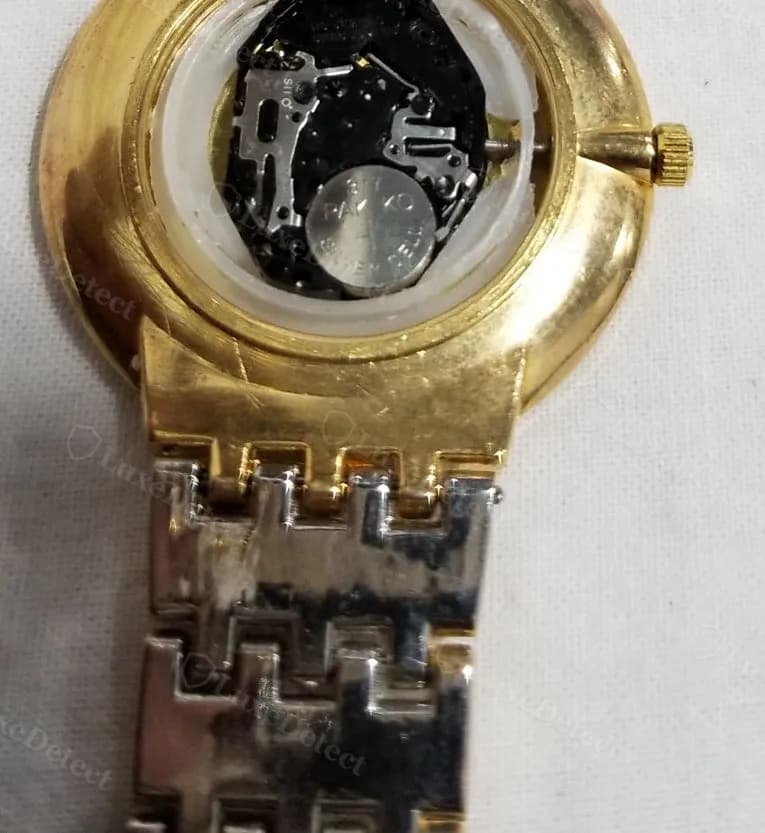
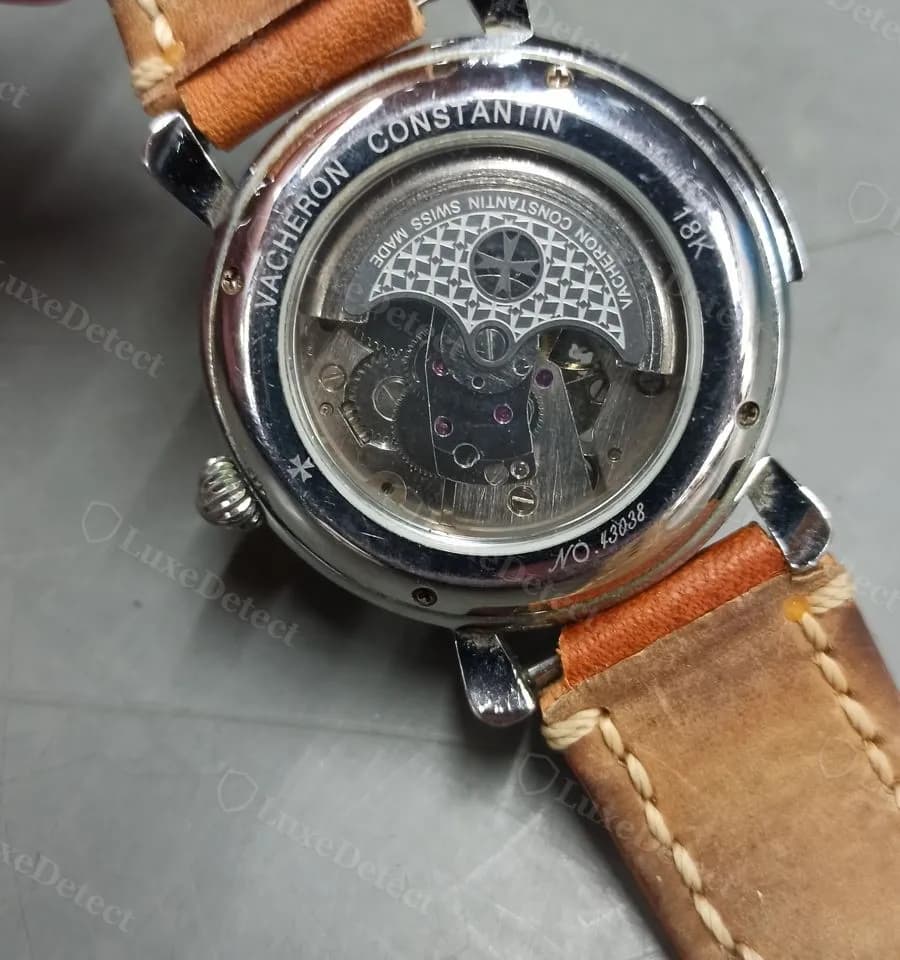
We pulled and reviewed a broad sample of LuxeDetect's own submission photos across dozens of watches sold as Vacheron Constantin, split between confirmed authentic pieces and confirmed fakes. Two findings stood out because they're specific, verifiable, and hold up under scrutiny rather than being a vague "it just looks off." One fake, sold as a "Vacheron Constantin Ladies Chronometer" and engraved on the caseback with "Overseas... Chronometer Officially Certified," opened up to reveal a quartz circuit board and a coin-cell battery — a movement type Vacheron Constantin's Overseas line has never used. A second fake, a hand-wound skeleton dress watch, had a caseback with two concentric rings of text: the outer ring read correctly, the inner ring around the Maltese cross medallion was mirror-reversed. Both are the kind of construction error a workshop faking a $150 quartz movement doesn't bother fixing, because fixing it costs real tooling money — the same logic applies when you authenticate a Patek Philippe Nautilus: at this price tier, the accumulation of small mechanical details is what actually separates real from fake, not the dial photograph.
What to check, ranked by reliability
| Checkpoint | Reliability | What it tells you |
|---|---|---|
| 1. The Movement Type Itself | ★★★★★ | A quartz circuit board and battery behind a "Chronometer" or "Overseas" caseback is an outright fail — Vacheron Constantin has never sold quartz under those names. |
| 2. The Caseback Engraving — Read Every Ring of Text | ★★★★★ | An inner ring of text mirror-reversed relative to the outer ring is a tooling error no genuine case leaves the factory with. |
| 3. Branding Text — Full Name, Correct Spelling | ★★★★★ | An abbreviated brand mark is a fast disqualifier, but correct spelling alone does not confirm the watch. |
| 4. Case Hallmarks on Gold Pieces | ★★★★★ | A missing or vague hallmark on a claimed-gold case is a useful flag; a present one is not hard to reproduce. |
| Model Reference Before You Start | ★★★★★ | Confirms which collection you're looking at and what it should contain; will not catch a well-built fake of that line. |
Model Reference Before You Start
Vacheron Constantin's catalogue spans nearly 270 years of production, so "does this look right for a Vacheron" only means something once you know which line you're looking at.
- Overseas — current sports-luxury collection, automatic or automatic chronograph, COSC chronometer-certified movements only. No quartz reference exists in this line.
- Patrimony / Traditionnelle — thin dress watches, manual or automatic, often with a display caseback showing hand-finished bridges and a 22K gold rotor.
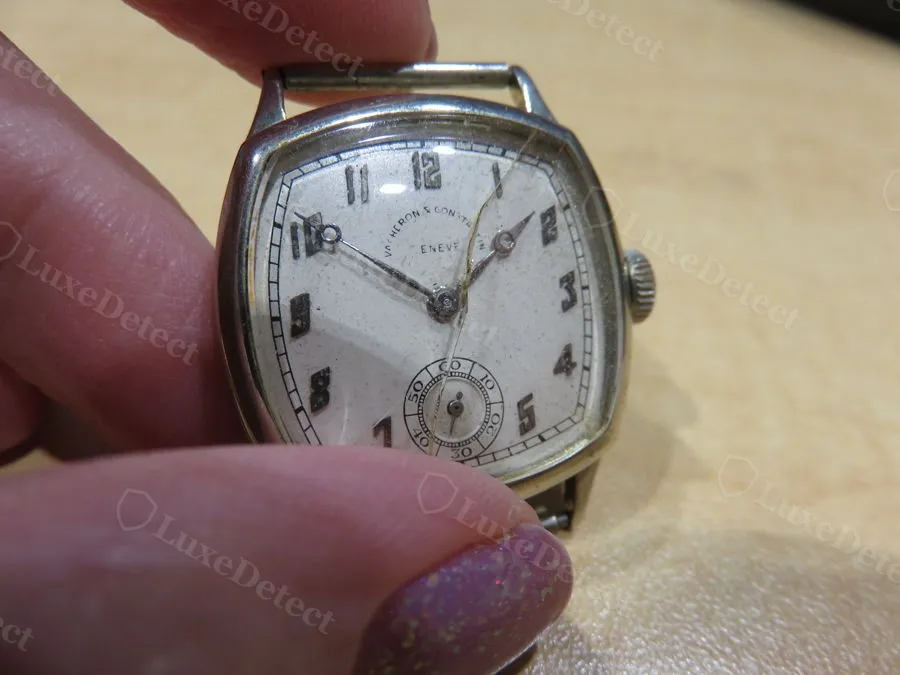
- Historiques — reissues of archive designs (222, American 1921, etc.), mechanical, often with period-accurate case shapes like the cushion case seen on pre-war pieces.
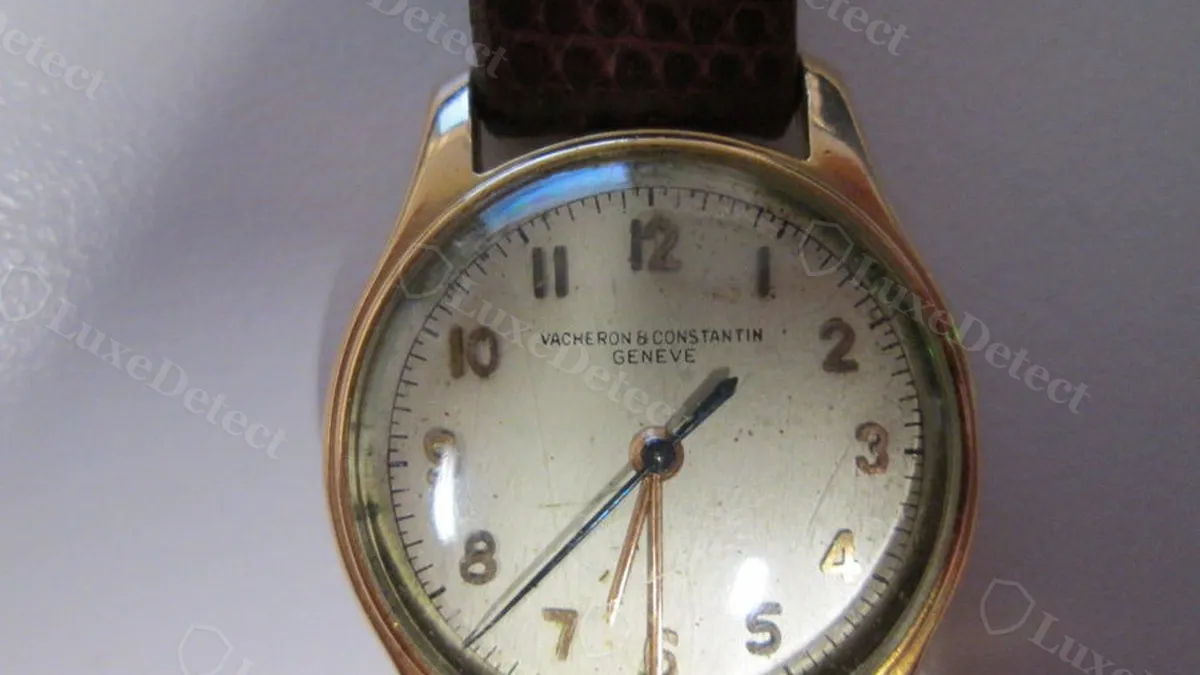
- Vintage pieces (pre-1970s, marked "Vacheron & Constantin") — manual-wind only, often 17-jewel movements, solid gold cases stamped with a poinçon (hallmark) rather than a printed karat mark.
If a listing shows a quartz movement, a stamped-metal rotor bridge, or branding that reads "VC-Constantin" or another abbreviation rather than the full "Vacheron Constantin," you're looking at a fake regardless of how the dial photographs.
The Movement Type Itself
This is the fastest, most decisive check available, and it requires nothing more than opening the caseback or asking the seller for a movement photo.
Vacheron Constantin has not sold a quartz-movement watch in any current collection for decades, and certainly not under a "Chronometer Officially Certified" or "Overseas" designation, which specifically denotes a COSC-certified mechanical movement. A quartz movement — identifiable by an integrated circuit board, a coin-cell battery, and the total absence of a mainspring, gear train or balance wheel — inside a watch sold under those names is not a lesser Vacheron Constantin. It is not a Vacheron Constantin.
| Element | Authentic | Counterfeit |
|---|---|---|
| Movement type | Manual-wind or automatic mechanical; visible mainspring, gear train, balance wheel | Quartz circuit board with visible coin-cell battery |
| Rotor (automatic) | Engraved 22K gold or finished steel oscillating weight, smoothly geared | Absent (quartz has none) or a plain stamped disc |
| Running seconds | Smooth mechanical sweep (or a distinct tick on manual-wind small seconds) | Quartz's single-step-per-second tick, visibly different from a mechanical sweep |
| Case marked "Chronometer" or "Overseas" | Backed by a COSC-certified mechanical calibre | Any quartz movement under this name is automatically fake |
Red flag
A watch sold as a Vacheron Constantin with a quartz circuit board and coin-cell battery visible through an open caseback. We confirmed this directly in a submission photographed as a "Vacheron Constantin Ladies Chronometer Watch," caseback engraved "Overseas... Chronometer Officially Certified" — a designation that, on a genuine piece, guarantees a certified mechanical movement. A quartz movement under that engraving is a decisive, unambiguous fail.
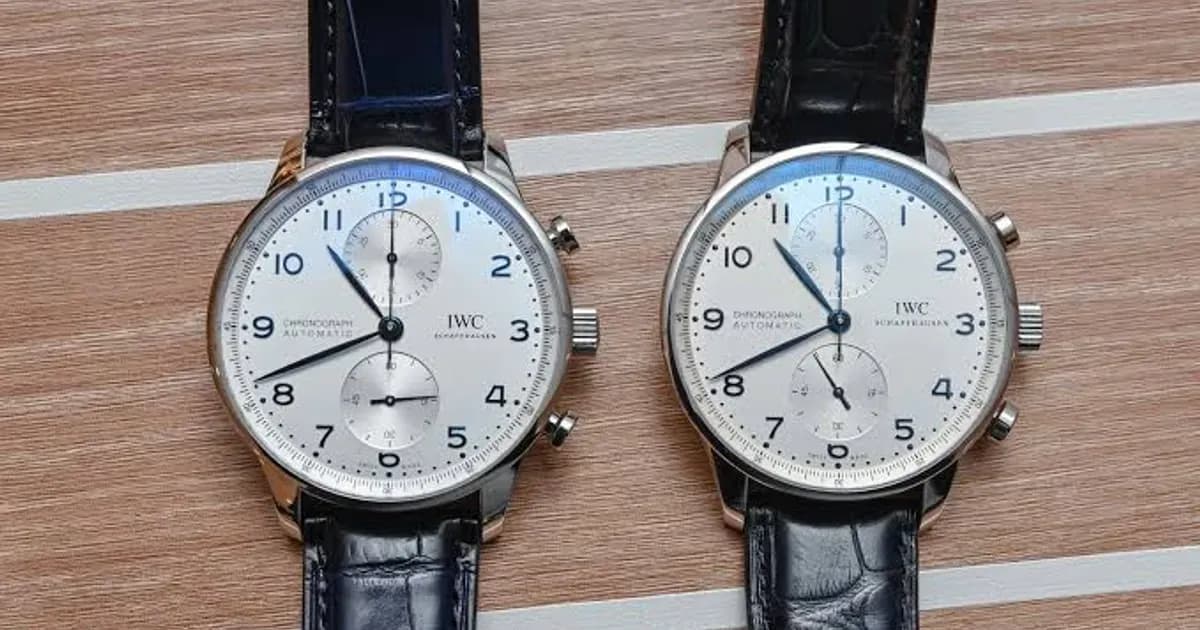
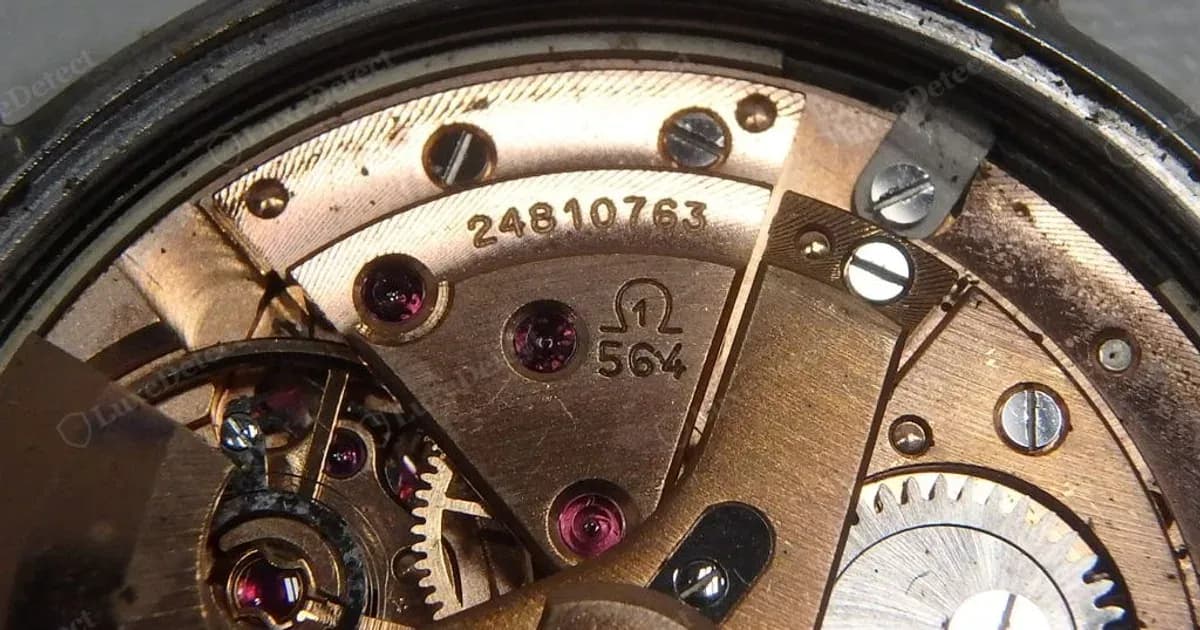
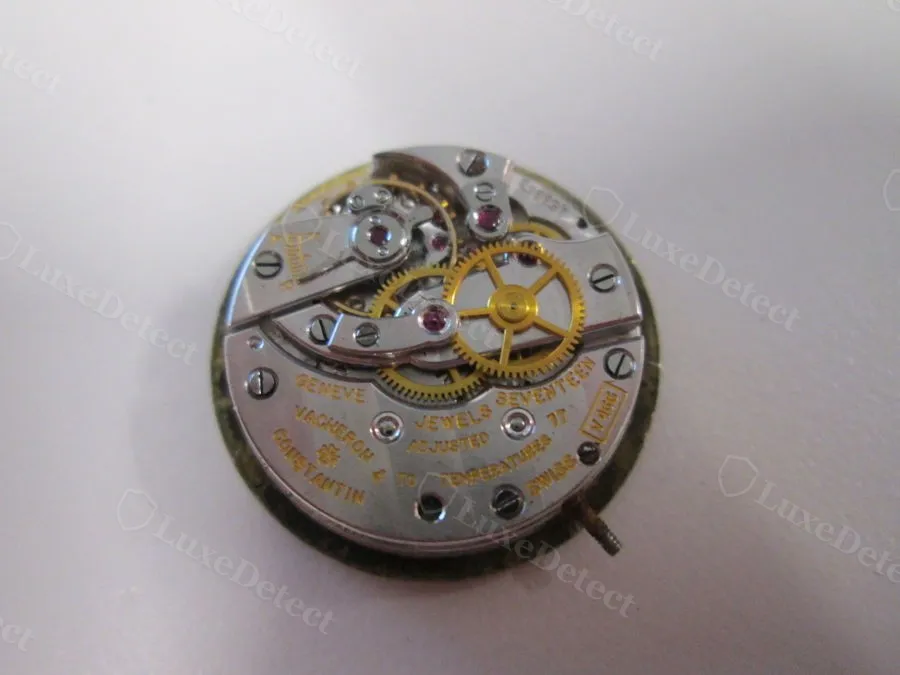
For comparison, a genuine manual-wind Vacheron Constantin movement shows a jewelled gear train, a gold-finished mainspring barrel, and engraved calibre details — the same kind of finishing you'd expect if you authenticate an IWC Portugieser, where the movement is equally the deciding factor over the dial.
The Caseback Engraving — Read Every Ring of Text
Solid and display casebacks on genuine Vacheron Constantin watches carry engraved text: the brand name, "Swiss Made," a reference or serial number, and on jewelled-movement watches, a decorative motif around the Maltese cross logo. Where a caseback has more than one ring of text — an outer ring around the case rim and an inner ring around a central medallion — both rings are cut from the same correctly-oriented master and should read normally in the same rotational direction.
Look carefully at multi-ring casebacks, especially on watches with a moon-phase or decorative bridge motif visible through a display back. Photograph the caseback straight-on and check each ring of text independently rather than skimming the whole thing as "looks engraved, looks branded."
| Element | Authentic | Counterfeit |
|---|---|---|
| Outer ring text | Reads correctly, consistent orientation | May read correctly while inner ring does not |
| Inner ring / medallion text | Reads correctly, same orientation as outer ring | Mirror-reversed relative to the outer ring |
| Engraving depth | Consistent, crisp edges throughout | May vary in depth or sharpness between rings, evidence of two separate tooling passes |
| Maltese cross medallion | Symmetrical, centred, consistent proportions | Usually well reproduced — not the tell here |
Red flag
An inner ring of caseback text that is mirror-reversed relative to the outer ring. We confirmed this on a hand-wound skeleton dress watch: the outer case rim reads "VACHERON CONSTANTIN · 18K" normally, but the inner ring around the Maltese cross medallion, reading "VACHERON CONSTANTIN SWISS MADE," is flipped backward. This is a tooling error a factory fixes once it's caught; a counterfeiter running a short batch often doesn't bother re-cutting the die.
Worth knowing
A single ring of correctly-oriented text does not clear a watch. Most fakes we reviewed had perfectly legible, correctly oriented caseback engraving — the reversed-ring error is a decisive fail when present, but its absence only means this particular fake didn't make that specific mistake.
Branding Text — Full Name, Correct Spelling
Vacheron Constantin's full brand name appears on the dial and caseback as "VACHERON CONSTANTIN" (modern pieces) or "VACHERON & CONSTANTIN" (pre-1960s pieces, with an ampersand). Genuine pieces never abbreviate this on the dial or primary caseback engraving.
Several fakes we reviewed used a shortened or altered brand mark, most commonly "VC-CONSTANTIN" stamped into a caseback ring, or brand text set in a font noticeably heavier or narrower than Vacheron Constantin's house serif. Fantasy engravings claiming a specific anniversary ("250 ANS") or a founding reference ("depuis 1755" / "Manufacture Horlogère depuis 1755") also turn up on fakes — the 1755 founding date is real and genuine watches do reference it, so this alone isn't disqualifying, but it's frequently paired with a wrong movement or reversed text, so treat it as a prompt to check harder, not as reassurance.
| Element | Authentic | Counterfeit |
|---|---|---|
| Brand mark | Full "VACHERON CONSTANTIN" or "VACHERON & CONSTANTIN" | Abbreviated ("VC-CONSTANTIN"), or correct text paired with a fantasy movement |
| Typeface | Consistent house serif across dial and caseback | Sometimes a visibly different weight or spacing between dial and caseback |
| Anniversary/founding references | Used correctly and sparingly on genuine commemorative pieces | Common decorative flourish on fakes trying to look premium |
Worth knowing
Correct spelling and a full brand name are necessary but not sufficient. Treat this as a quick disqualifier when it fails, not as confirmation when it passes — cross-check against the movement and caseback rings above.
Case Hallmarks on Gold Pieces
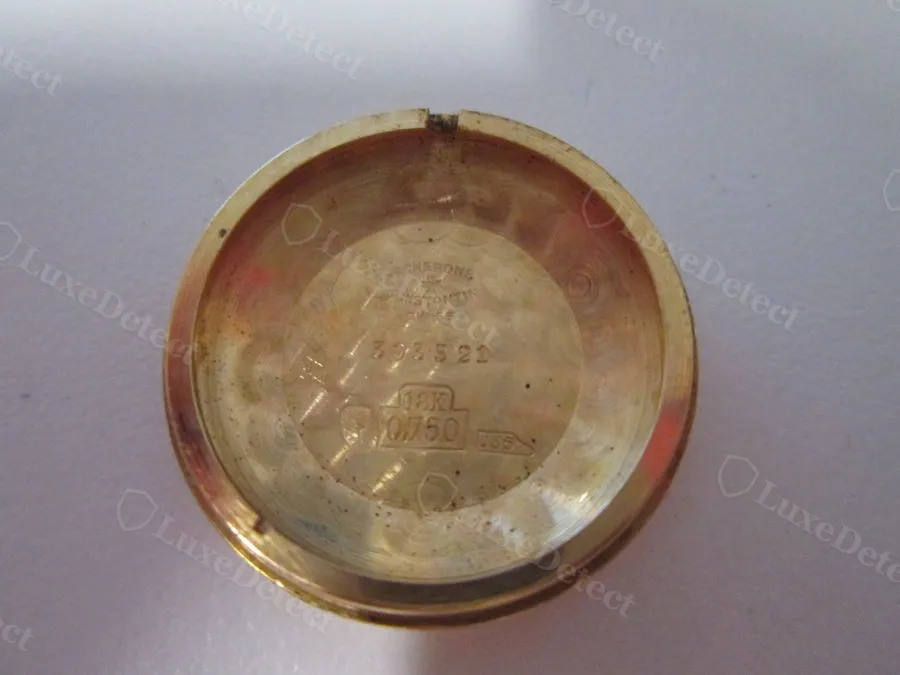
Solid gold Vacheron Constantin watches, particularly vintage examples, carry an official hallmark (poinçon) stamped into the case, typically on the lug, alongside a karat or fineness mark (18K, 0.750, or the Swiss "750" fineness stamp). This is separate from and in addition to any brand engraving.
The stamp is small — often just a few millimetres — and cleanly struck with sharp edges under magnification. It sits in a specific, consistent location (usually the inside of a lug) rather than being scattered decoratively across the case.
| Element | Authentic | Counterfeit |
|---|---|---|
| Hallmark presence | Present on solid gold cases, small and precisely struck | Often absent entirely, or a vague symbol that isn't a real assay mark |
| Fineness mark | Matches case metal (18K / 0.750) | May be missing, wrong, or inconsistent with claimed metal |
| Strike quality | Sharp, consistent depth, legible under a loupe | Shallow, blurred, or inconsistently struck when present at all |
Worth knowing
A hallmark's absence is more useful on a piece claimed to be solid gold than its presence is as proof — reproducing a small stamped mark is not the hardest part of faking a watch. Weigh it alongside the movement check, not instead of it.
What the Box and Papers Do and Do Not Prove
A box, warranty card or service papers add context but are not themselves evidence the watch inside is genuine. Boxes and cards are sold separately and are routinely paired with a fake watch to make a listing look more complete. Their only real use is cross-referencing: does the reference and serial on the card match what's engraved on the caseback, does the card name a plausible retailer, and is the date consistent with the watch's apparent age. A pristine box around a watch with a quartz movement inside a "Chronometer" case is still a fake — the box changes nothing.
Quick Authentication Checklist
- Open or photograph the caseback: mechanical movement (mainspring, gear train, balance wheel), never a quartz circuit board and battery
- Read every ring of caseback text independently — check that an inner ring isn't mirror-reversed relative to the outer ring
- Confirm the brand mark reads the full "VACHERON CONSTANTIN" or "VACHERON & CONSTANTIN," never an abbreviation
- On solid gold cases, look for a struck hallmark and matching fineness mark on the lug
- Cross-reference any box or papers' reference and serial number against the caseback engraving
A quartz movement under a "Chronometer" or "Overseas" designation, or a mirror-reversed ring of caseback text, is on its own sufficient to reject the watch. Two or more softer failures (abbreviated branding, missing hallmark, mismatched papers) should also end the inspection.
When to Get a Professional Opinion
The checks in this guide catch a meaningful share of Vacheron Constantin fakes, particularly the quartz-movement substitution and the reversed-engraving error, because both are structural mistakes a counterfeiter can't easily correct without re-tooling. But Vacheron Constantin sits at a price point where higher-effort fakes exist too — correctly finished mechanical movements dressed up to resemble a specific reference, for instance — and those need someone who has handled the real calibre to tell apart reliably.
Our watch specialists review Vacheron Constantin submissions from $45 with 24-hour turnaround and return a Certificate of Authenticity. Send clear photos of the dial straight-on, the full caseback (both rings of text if present), the movement through any display back, and any papers alongside the caseback so references and serials can be compared directly.
FAQ
Does Vacheron Constantin make any quartz watches?
Not in any current collection, and specifically not under the Overseas or any "Chronometer Officially Certified" designation, which guarantees a COSC-certified mechanical movement. A quartz movement inside a watch branded this way is not a lower-tier genuine piece — it did not come from Vacheron Constantin.
How can I check a Vacheron Constantin's movement without a watchmaker?
Many references have a sapphire display caseback, so you can look directly: a genuine mechanical movement shows a visible mainspring barrel, gear train and balance wheel, and on automatics, an oscillating rotor. A quartz movement instead shows a flat circuit board and a small coin-cell battery, with no visible moving gear train. If the caseback is solid, ask the seller for a photo with it removed, or have the reference and serial checked against known specifications before buying.
What does it mean if the caseback text is reversed?
It means the engraving die used to cut that text was made or applied incorrectly — a tooling error, not a wear pattern or photo artefact. On a genuine Vacheron Constantin, every ring of engraved text on the caseback reads correctly in the same orientation. If one ring reads backward relative to another, the case was not engraved to Vacheron Constantin's standard, and the watch is not genuine.
Is a Vacheron Constantin with the correct brand spelling and a nice box automatically real?
No. Brand spelling and packaging are the easiest parts of a fake to get right, precisely because they cost a counterfeiter very little. The decisive checks are structural: the movement type behind the caseback, and whether every ring of engraved text reads correctly. A perfect box around a quartz movement is still a fake.
Where is the serial number on a Vacheron Constantin?
Typically engraved on the caseback, sometimes alongside a separate reference number. Formats vary by era and collection — vintage pieces often show a shorter numeric serial near a hallmark, while modern pieces pair a reference and serial in the caseback engraving. Vacheron Constantin does not offer a public serial lookup tool, so verifying it against the brand's own records requires a boutique, an authorised service centre, or a professional authentication service.
Are Vacheron Constantin watches worth authenticating professionally before buying?
Yes, especially for a private sale. The most decisive checks in this guide (movement type, caseback engraving orientation) are things you can screen for from photos, but distinguishing a well-finished mechanical fake from a genuine calibre at a glance takes hands-on experience with the real thing. A professional review is inexpensive relative to what a Vacheron Constantin costs, and it's a sensible first step before committing to payment or travel.