Watch Authentication Specialist
Watch authentication specialist covering Swiss manufacture references and bracelet construction.
Published September 2026 · Contact
Why Rado Counterfeits Cluster on One Line
Rado's watch output spans nearly a century, from 1950s and 60s mechanical DiaStar and Voyager pieces to the scratch-resistant high-tech ceramic watches the brand is best known for today. Across our own sample of Rado authentication submissions (112 confirmed authentic, 63 confirmed fake), the counterfeit side tells a specific story: almost none of it touches the vintage mechanical watches. Roughly one in ten authentic submissions we reviewed was an older mechanical piece, and none of the confirmed fakes were. Counterfeiters are copying the modern ceramic watches, above all the Jubilé line, Rado's bracelet-integrated ceramic dress watch, not the decades-old collector pieces.
That focus is what this guide covers: modern high-tech ceramic Rado, built primarily on Jubilé examples where we have real depth on both the genuine and counterfeit side. If you're authenticating an older mechanical DiaStar or Voyager, the checks below (which lean on ceramic-specific caseback wording) don't transfer cleanly, treat a vintage piece as its own job and get a specialist opinion instead.
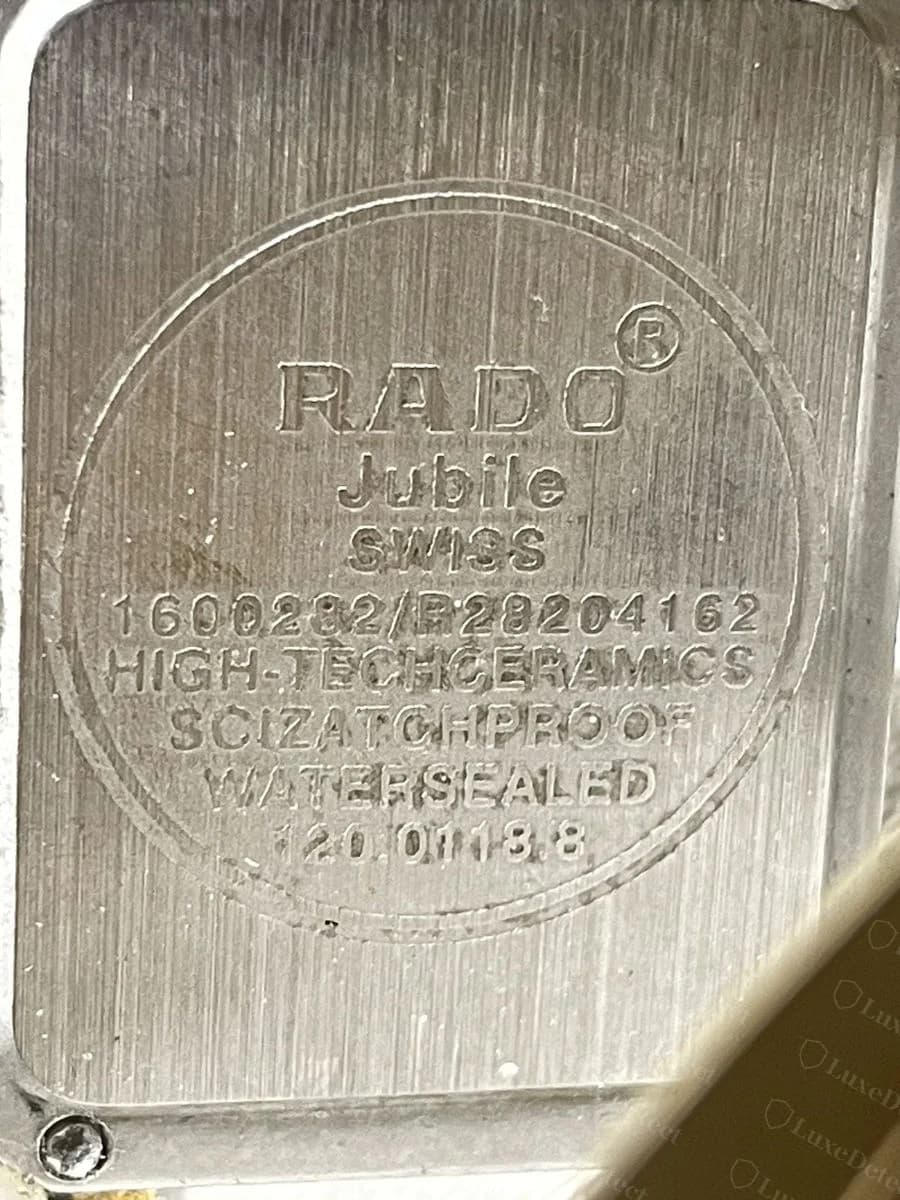
The strongest tell we found is also the simplest to check: a genuine Rado caseback keeps its engraved words apart and spelled correctly, every time, across every authentic example we compared. Some counterfeits don't. Two independent fakes, from different customer submissions on different dates, ran two words together and mangled a third on the same engraving, a level of sloppiness no genuine caseback in our sample ever showed.
What to check, ranked by reliability
| Checkpoint | Reliability | What it tells you |
|---|---|---|
| 1. Caseback Engraving: Spacing and Spelling | ★★★★★ | "HIGH-TECHCERAMICS" run together or "SCRATCHPROOF" garbled into "SCIZATCHPROOF" is decisive, but a clean caseback does not clear the watch on its own. |
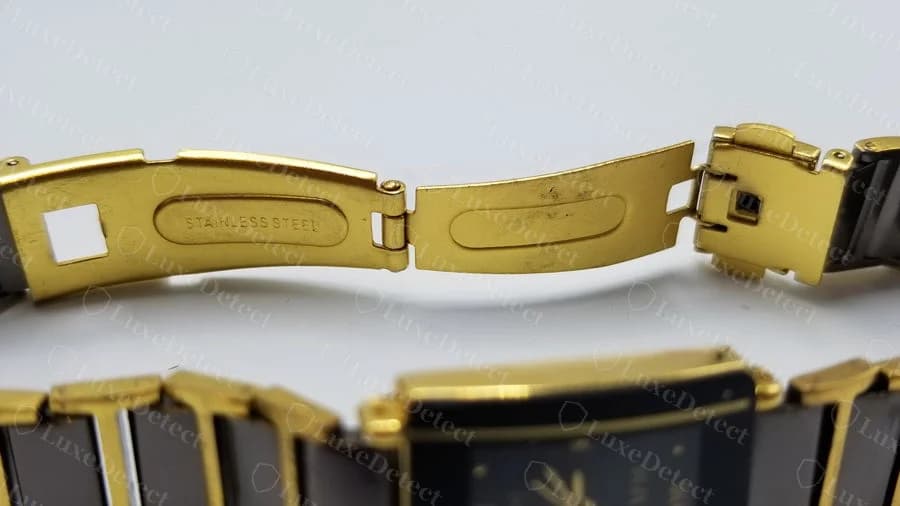
| 2. Clasp Branding (Supporting Check Only) | ★★★★★ | An unbranded "STAINLESS STEEL" secondary link also appears on a confirmed genuine bracelet, so weigh this alongside the caseback, never alone. |
| What the Box and Papers Do and Do Not Prove | ★★★★★ | Packaging is context only; a correct box or warranty card proves nothing about the watch inside it. |
Model Reference Before You Start
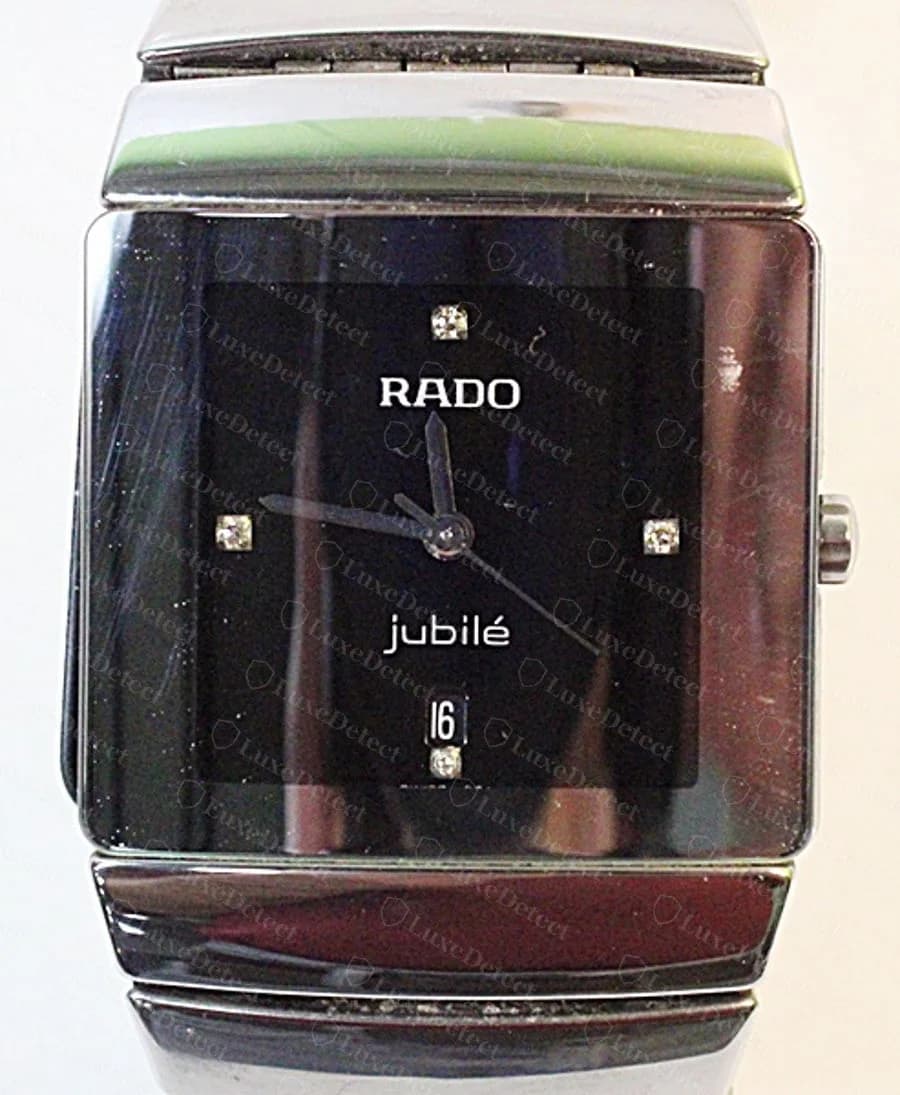
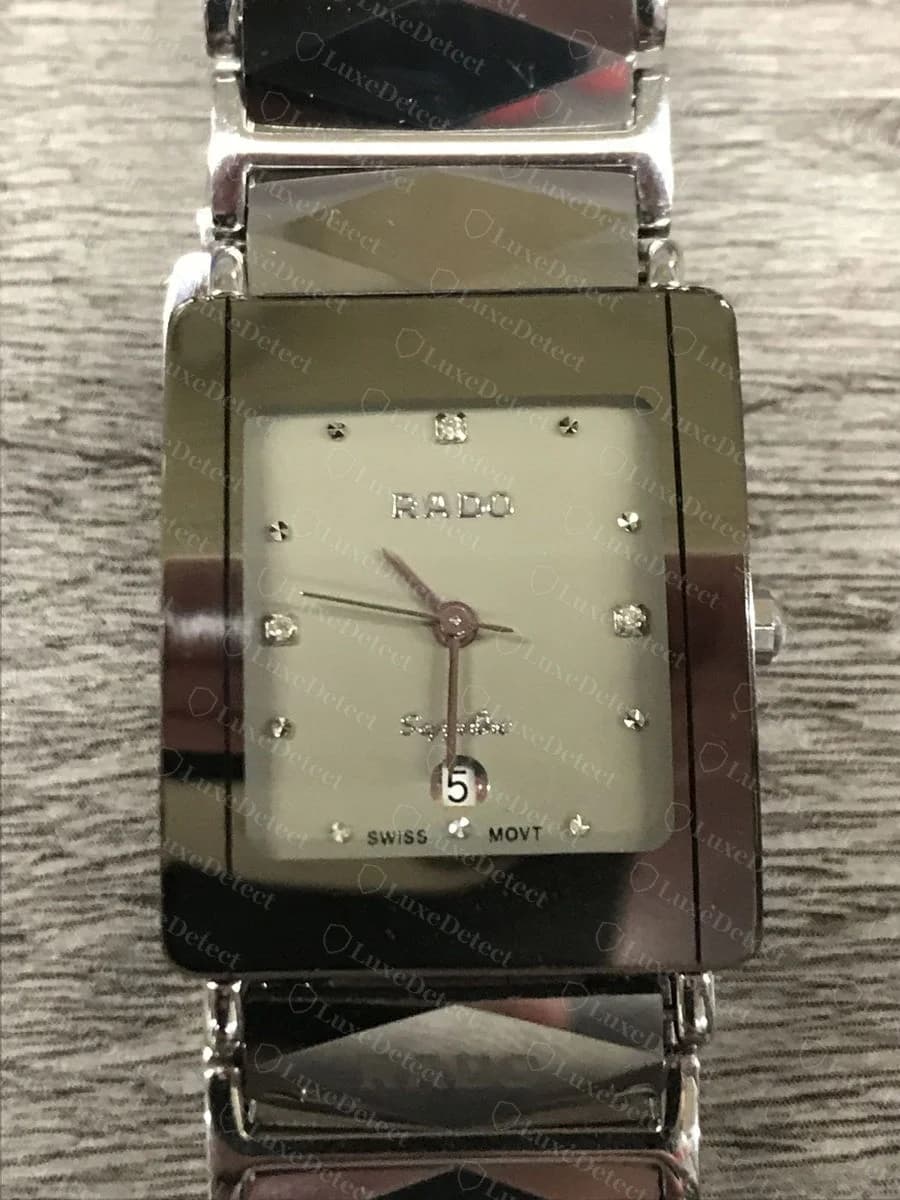
- Jubilé: Rado's ceramic bracelet-integrated dress watch, typically a rectangular or tonneau case in black or two-tone high-tech ceramic, dial reads "RADO" and "jubilé" in lowercase script. This is the line counterfeiters target, and the line this guide is built on.
- DiaStar (modern ceramic): a related ceramic line, similar caseback wording conventions to the Jubilé ("HIGH-TECH CERAMICS," "SCRATCHPROOF," "WATERSEALED"). The checks below apply.
- True, Centrix, HyperChrome, and other modern ceramic or steel lines: fewer examples in our sample, but the caseback-wording check is a general Rado construction standard, not unique to one model name, so it's still worth checking.
- Vintage mechanical Rado (DiaStar, Voyager, pre-1990s pieces): a different category with its own conventions. We don't have a matched sample of vintage fakes to build checks around, so this guide doesn't cover them. Treat an older mechanical Rado as its own authentication.
- Genuine Rado is Swiss made. Every authentic caseback we reviewed says so explicitly.
- A Rado box is a rigid case, usually black, with "RADO SWITZERLAND" branding on the lid and a fitted interior. A box alone proves nothing about the watch inside it.
Caseback Engraving: Spacing and Spelling
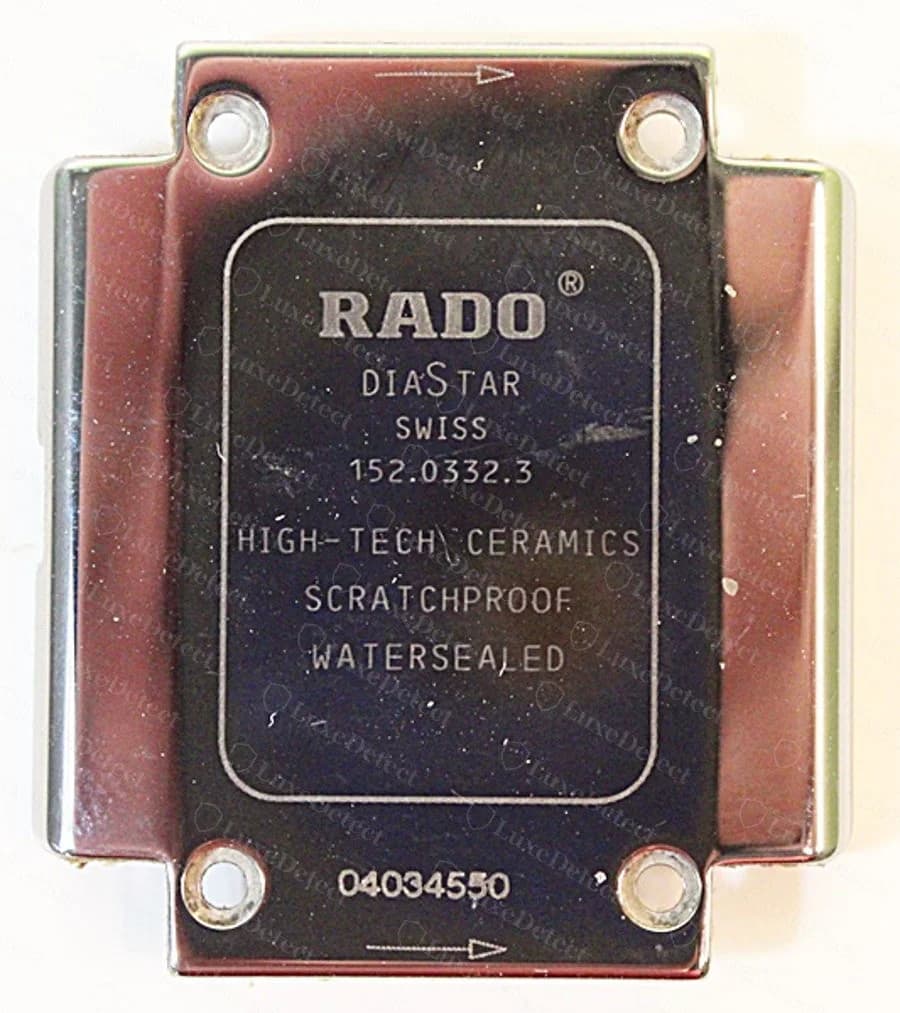
This is the clearest, most decisive check we found, and it's available on almost any listing, since a caseback photo is one of the first things a seller includes. Genuine Rado casebacks we compared, across Jubilé and DiaStar references alike, are engraved in a clean, evenly spaced block: brand name, model name, "SWISS," a reference and serial number, then a run of material and durability wording, "HIGH-TECH CERAMICS," "SCRATCHPROOF," "WATERSEALED," each a separate, correctly spelled word or phrase, then the model number again.
Two independent fake Jubilé watches in our sample, submitted separately with different order dates, share a caseback that gets this wrong in exactly the same way: "HIGH-TECHCERAMICS" is engraved as one run-together word with no space, and directly below it, "SCRATCHPROOF" is mangled into "SCIZATCHPROOF," while "WATERSEALED" on the same line just below is spelled and spaced correctly. That inconsistency, one line wrong, the line right next to it fine, is itself telling: it isn't a house style or a font quirk, it's a production error. Because both fakes carry the identical error on the identical reference number, this looks like output from a single counterfeit mold or batch rather than two unrelated mistakes, which is exactly why it's a strong, repeatable checkpoint rather than a one-off.
| Element | Authentic | Counterfeit |
|---|---|---|
| Word spacing | Every word and phrase engraved separately, clear gaps throughout | "HIGH-TECHCERAMICS" run together with no space on confirmed fakes |
| Spelling | "SCRATCHPROOF" correctly spelled on every authentic caseback checked | "SCIZATCHPROOF," a garbled misspelling, on confirmed fakes |
| Internal consistency | Uniform spacing and spelling across the whole engraving | One line garbled, an adjacent line ("WATERSEALED") spelled correctly, an inconsistency genuine production doesn't show |
Red flag
A caseback reading "HIGH-TECHCERAMICS" run together with no space, or "SCRATCHPROOF" garbled into "SCIZATCHPROOF," does not match genuine Rado engraving. We confirmed this exact error on two independent fake submissions sharing the same reference number, and found no authentic caseback in our sample with any comparable spacing or spelling fault.
Worth knowing
This check cuts one way. We reviewed other confirmed-fake Jubilé casebacks that were correctly spelled and evenly spaced, so a clean caseback doesn't clear a watch on its own, it just means this particular check didn't catch it. Weigh it alongside the checks below rather than stopping here if the caseback looks fine.
Clasp Branding (Supporting Check Only)
This second check is worth knowing about, but we're rating it low and flagging it honestly as unresolved rather than presenting it as a rule. On two confirmed fakes, one clasp link is stamped only "STAINLESS STEEL" in a plain oval, with no "RADO" branding anywhere on that link, while the opposite link on the same bracelet does say "RADO." That pattern is directionally suggestive of a fake.
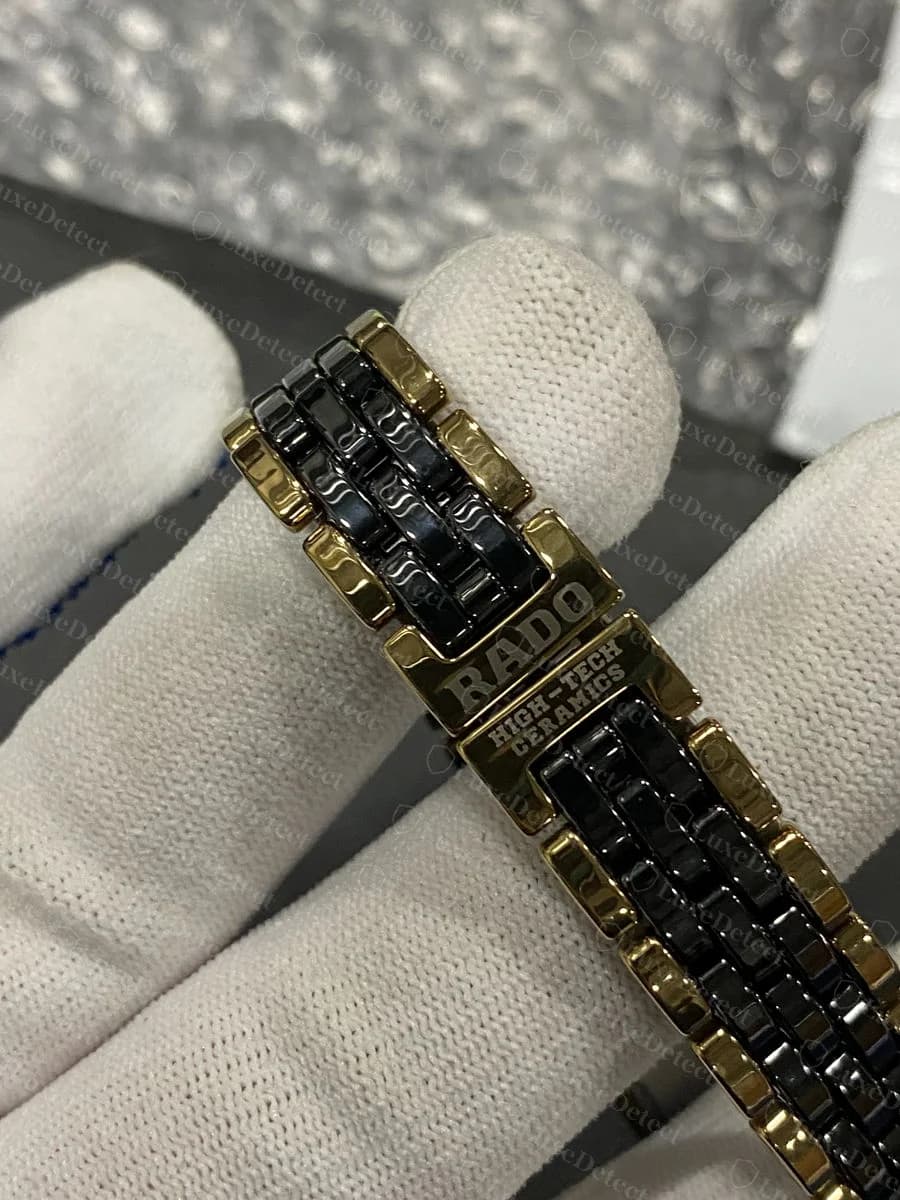
The problem is we found the same thing on a genuine watch. One authentic Jubilé bracelet in our sample has a secondary clasp link stamped "STAINLESS STEEL" (with a reference number, no "RADO" wordmark) sitting right next to a different link that says "RADO / HIGH-TECH CERAMICS." Multi-link clasps on genuine Rado bracelets aren't uniformly branded on every single link, only the main clasp housing consistently carries "RADO." That means an unbranded secondary link, on its own, doesn't distinguish a fake from a genuine watch, and we can't respectably rate this any higher than a weak supporting signal.
| Element | Authentic | Counterfeit |
|---|---|---|
| Main clasp housing | Consistently engraved "RADO," often with "HIGH-TECH CERAMICS" | Also engraved "RADO" on the primary link in our sample, not a reliable differentiator alone |
| Secondary links | Sometimes plain "STAINLESS STEEL" with no RADO wordmark, this is normal on genuine multi-link clasps | Also sometimes plain "STAINLESS STEEL," the same pattern appears on both sides |
Worth knowing
Don't reject a Rado on an unbranded secondary clasp link alone. We found the identical pattern, a plain "STAINLESS STEEL" stamp with no RADO wordmark, on a link of a confirmed genuine bracelet. Check the main clasp housing (it should say "RADO" on every genuine example we reviewed) and weigh this alongside the caseback check, never in place of it.
What the Box and Papers Do and Do Not Prove
A Rado box, warranty booklet, or precious-stones certificate establishes that someone, at some point, owned or acquired genuine Rado packaging. It doesn't confirm the watch currently in that box is the one it shipped with. If a reference or serial number is printed on a warranty card, cross-reference it against the number actually engraved on the caseback, a mismatch is a real problem, but a match only tells you the two numbers agree, not that either is genuine. Treat packaging as context, never as evidence on its own.
Quick Authentication Checklist
- Confirm you're authenticating a modern ceramic Rado (Jubilé, DiaStar, or similar), not a vintage mechanical piece, since the checks below are built on the modern ceramic line specifically.
- Read the full caseback engraving. Look for "HIGH-TECHCERAMICS" run together with no space, or "SCRATCHPROOF" garbled into "SCIZATCHPROOF." Either one, especially alongside a correctly spelled neighboring line, is on its own sufficient to reject the watch.
- If the caseback reads clean, don't stop, check the clasp housing for a "RADO" stamp, but don't reject the watch over an unbranded secondary link alone.
- Cross-reference any box or warranty card serial number against the number actually engraved on the caseback. A mismatch is a real problem; a match alone proves nothing.
A garbled or run-together caseback engraving ends the inspection on its own. Everything else here is supporting evidence, not a standalone verdict.
When to Get a Professional Opinion
The caseback check catches a real, confirmed counterfeit batch outright, but we also found other fake Jubilé watches in our sample with clean, correctly engraved casebacks that this check simply doesn't flag. If the caseback and clasp both look right and you're still not confident, particularly on a higher-value two-tone or pavé Jubilé, that's the point where a checklist stops being enough. LuxeDetect's watch authentication starts at $45 for a 24-hour turnaround and includes a written Certificate of Authenticity referencing the specific checks above, useful documentation whether you're buying, selling, or insuring the piece.
FAQ
What's the fastest way to check if a Rado watch is real?
Photograph the full caseback engraving, clearly and in good light. Look for "HIGH-TECHCERAMICS" run together with no space, or "SCRATCHPROOF" misspelled as "SCIZATCHPROOF." We confirmed this exact error on two independent counterfeit Jubilé watches, and found no genuine caseback in our sample with a comparable spacing or spelling fault.
Does a correctly spelled Rado caseback prove the watch is genuine?
No. We reviewed other confirmed counterfeit Jubilé watches with clean, correctly engraved casebacks. A clean caseback means this particular check didn't catch a fake, not that the watch is confirmed authentic. Weigh it alongside the clasp branding and, where possible, an in-person inspection.
Is an unbranded "STAINLESS STEEL" clasp link a sign of a fake Rado?
Not reliably on its own. We found the same plain "STAINLESS STEEL" stamp, with no "RADO" wordmark, on a secondary link of a confirmed genuine bracelet. Genuine multi-link clasps aren't always branded on every link. Check the main clasp housing for "RADO" instead, and treat this as weak supporting evidence at most.
Does this guide cover vintage mechanical Rado watches like the original DiaStar or Voyager?
No. Our fake-side sample is almost entirely modern ceramic watches, we didn't find a matched set of confirmed vintage Rado fakes to build checks around. If you're authenticating an older mechanical piece, treat it as a separate job with its own conventions, and consider a professional opinion.
Why do Rado counterfeits mostly copy the Jubilé and not older models?
Based on our sample, counterfeiters are targeting Rado's modern high-tech ceramic watches, above all the Jubilé, rather than vintage mechanical pieces. About one in ten authentic submissions we reviewed was an older mechanical watch, and none of the confirmed fakes were, a real skew toward the ceramic line that likely reflects where current resale demand and price points sit.
How much does it cost to authenticate a Rado watch?
LuxeDetect's watch authentication starts at $45 for a 24-hour turnaround, with faster options available. Every authentication includes a written report referencing the specific checks performed.