Watch Authentication Specialist
Watch authentication specialist. Focuses on movement inspection, case finishing, and serial verification.
Published September 2026 · Contact
Why the Caseback Is the Question That Actually Matters
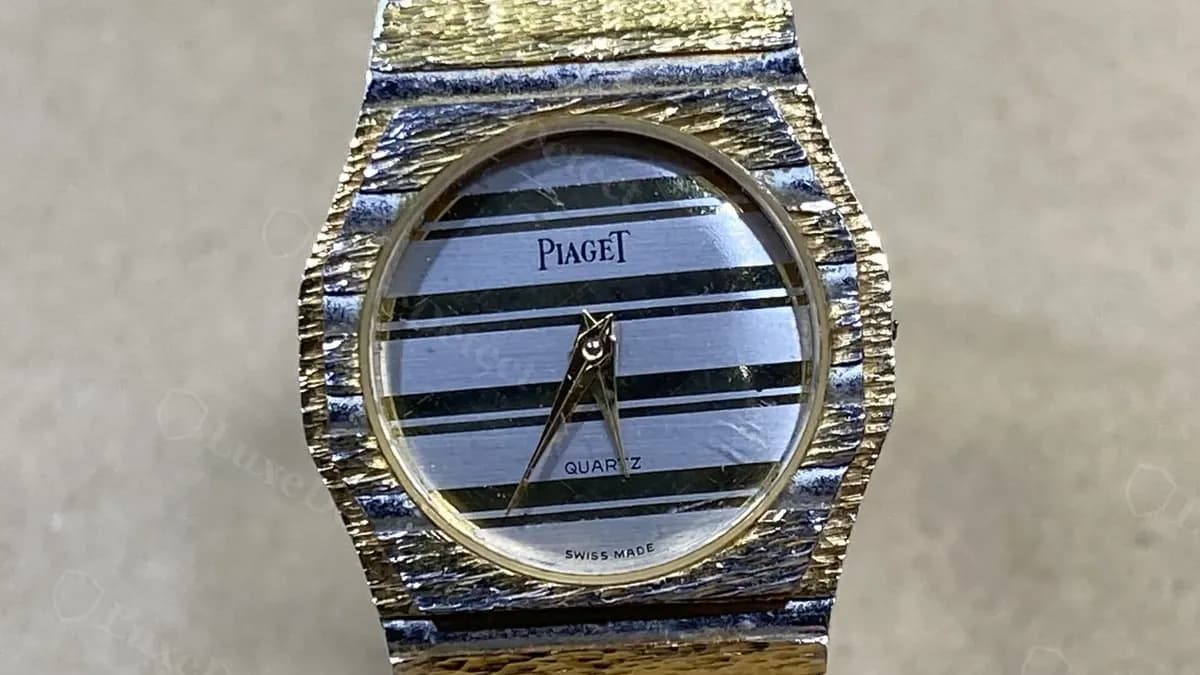
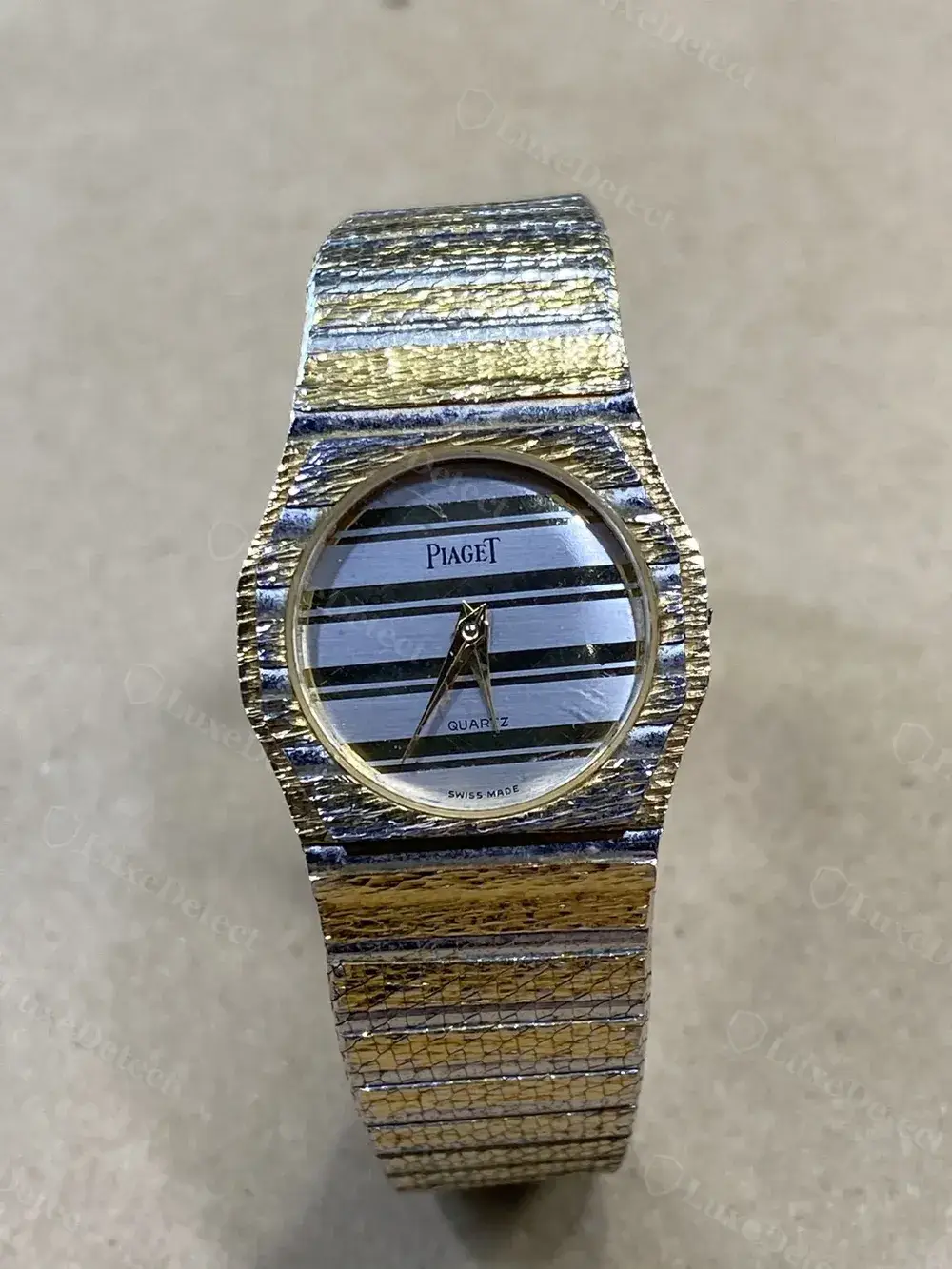
Piaget's watches, especially the integrated-bracelet Polo and Dancer lines from the late 1970s through the 1990s, are some of the most copied vintage designs on the resale market: a fluted or textured two-tone bracelet that flows straight into the case, a small round or square dial signed simply "PIAGET," and no other branding visible from the outside. That simplicity is exactly what makes the watch easy to copy convincingly at a glance, and exactly what makes the caseback and movement so decisive once you open the case.
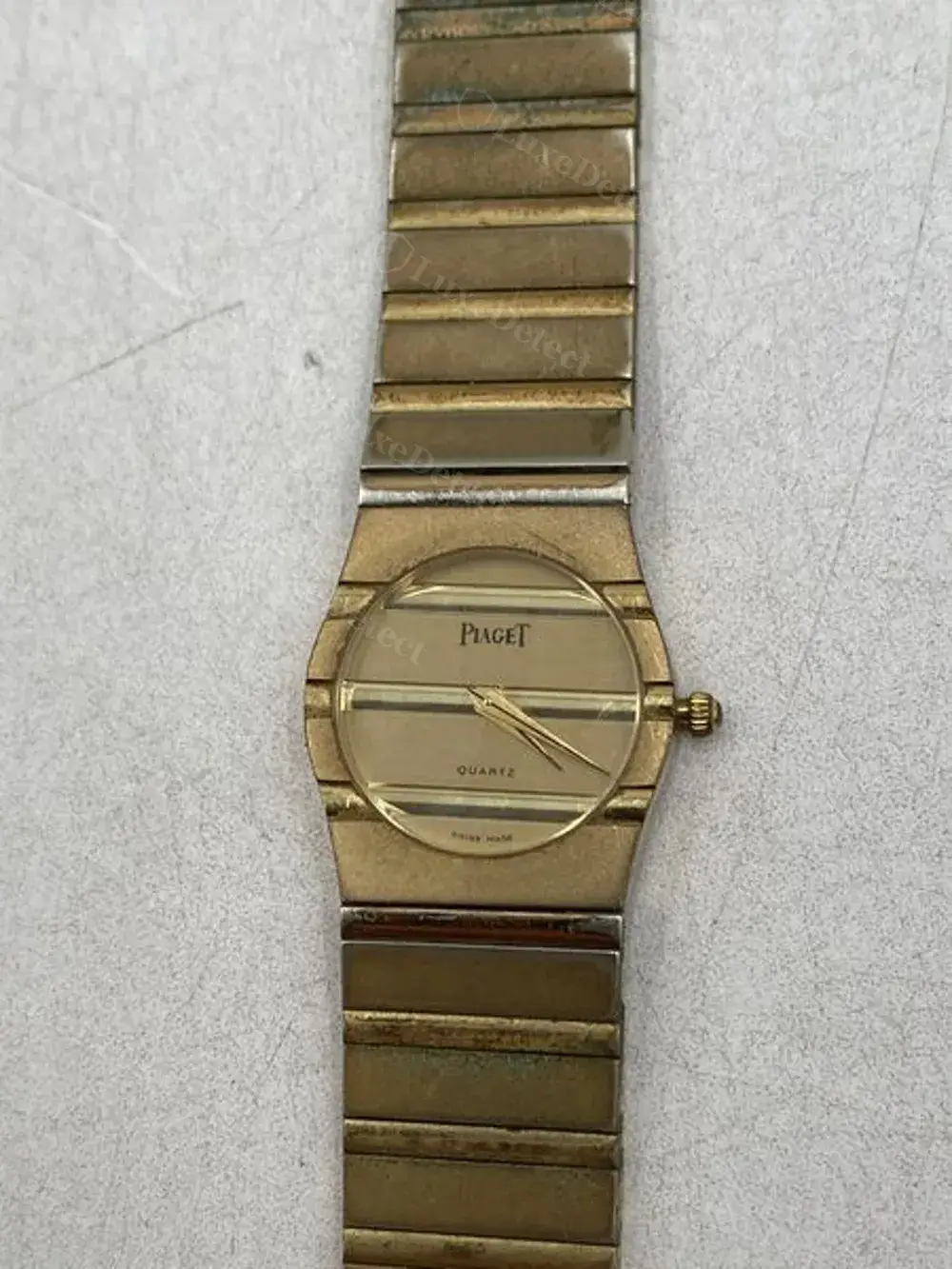
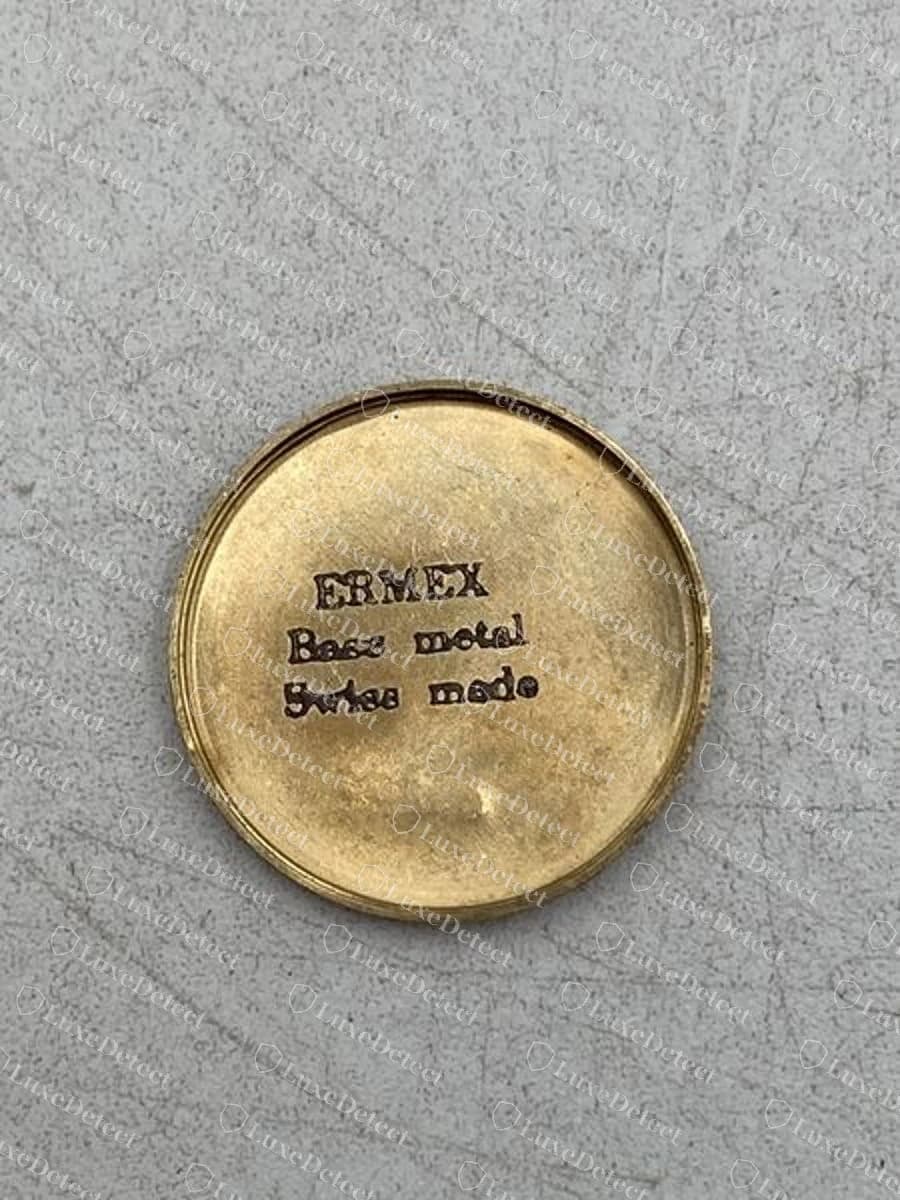
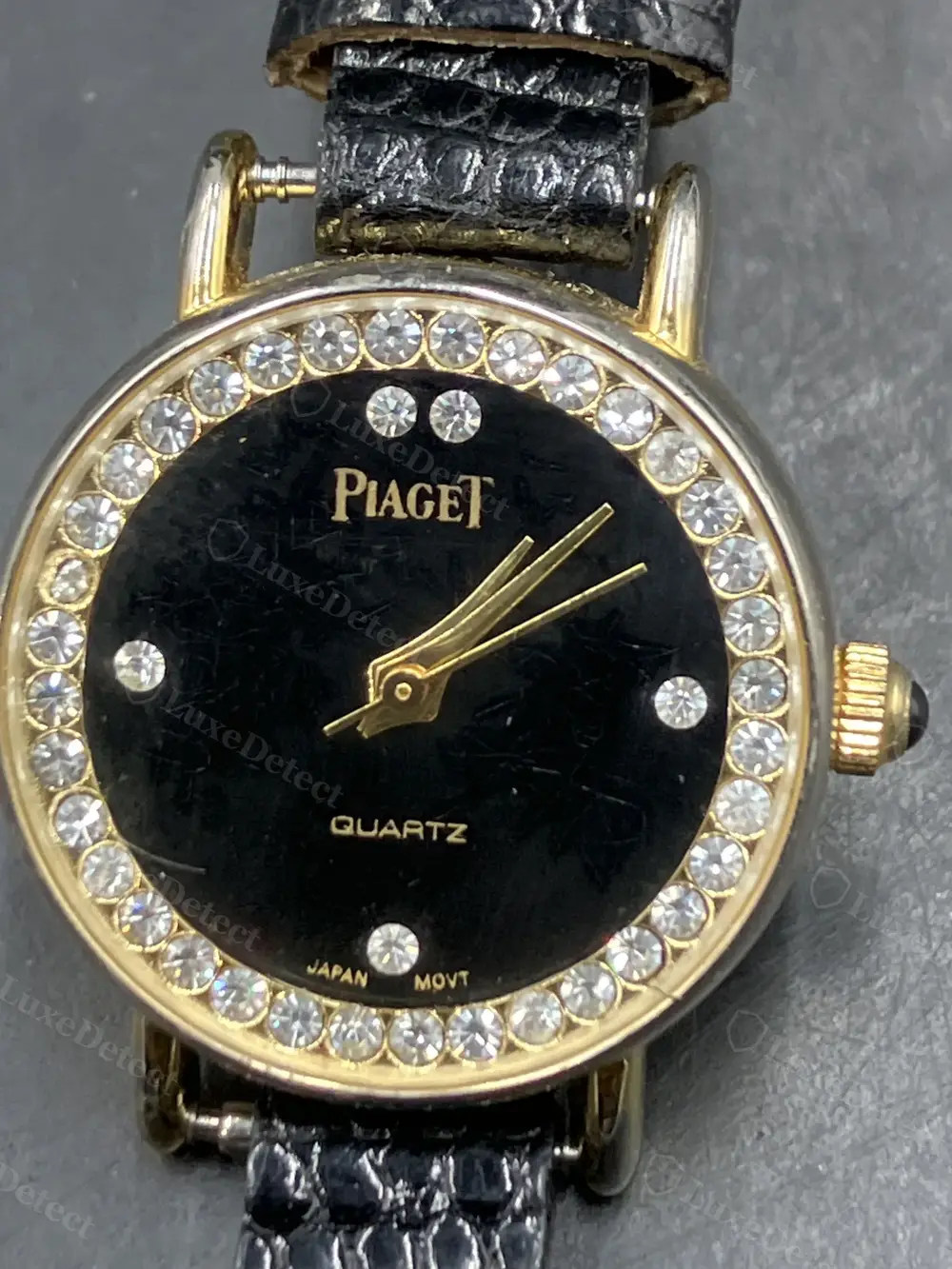
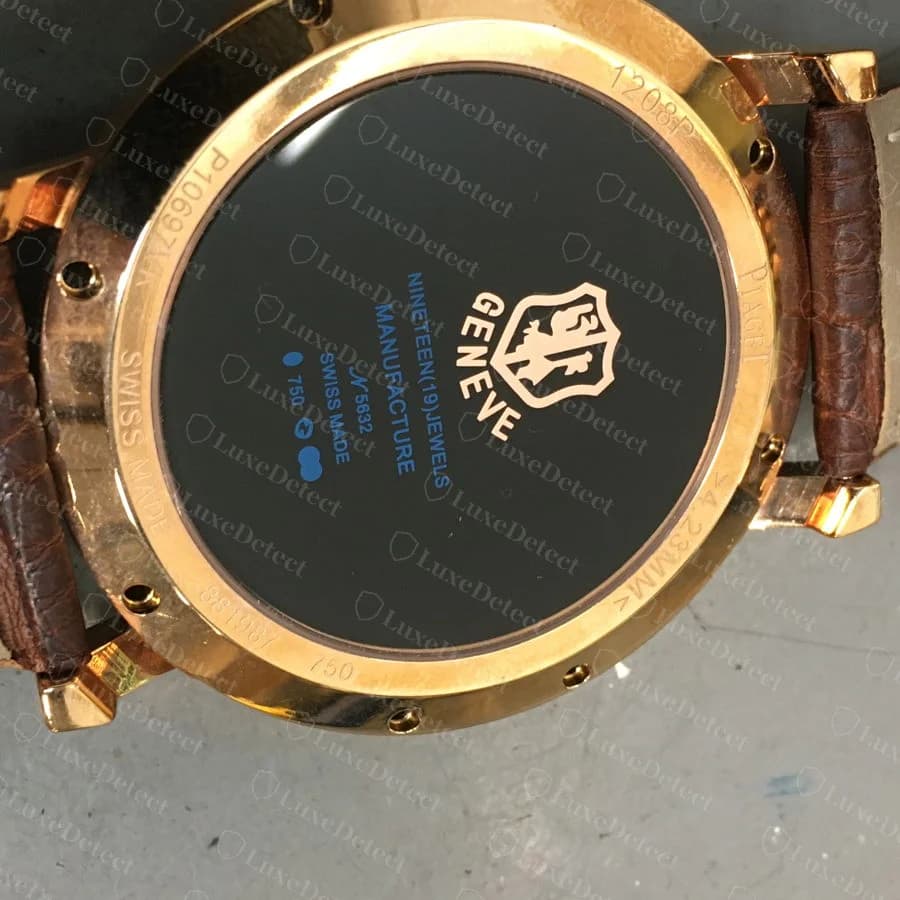
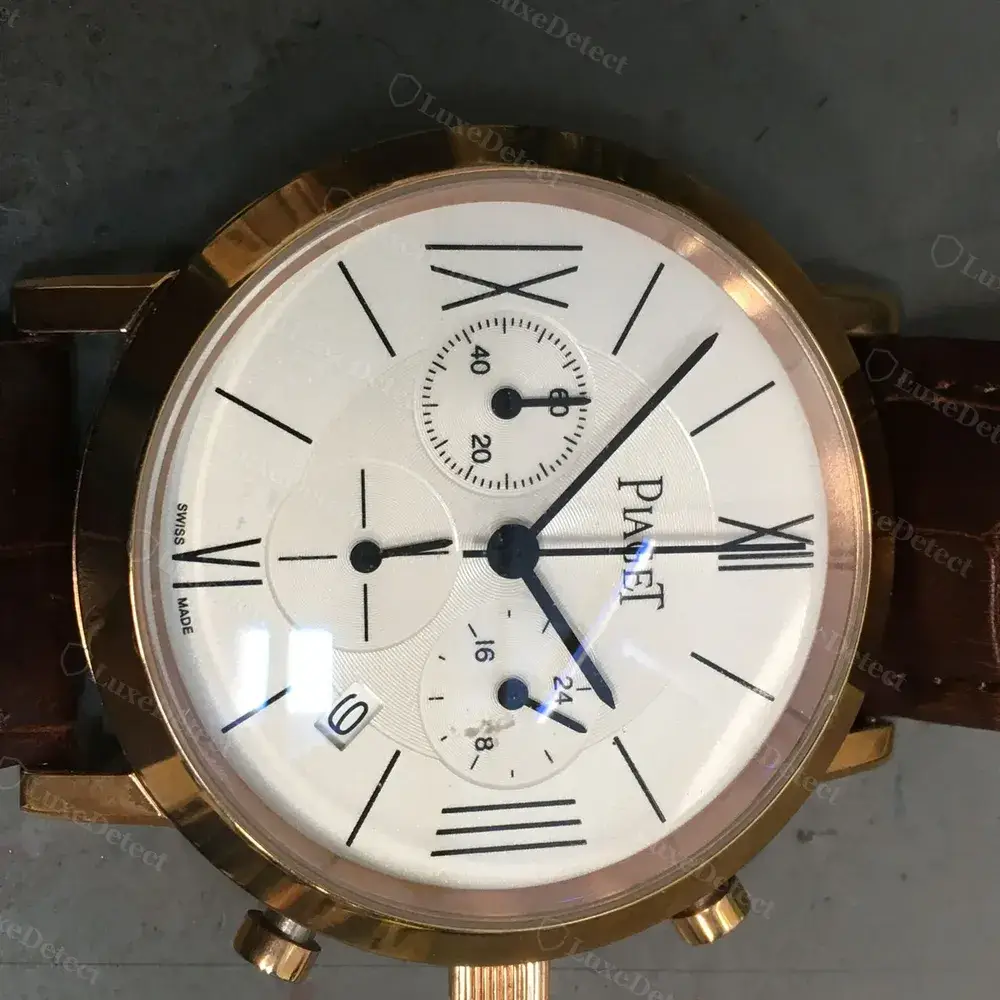
We pulled and reviewed a broad sample of LuxeDetect's own submission photos across dozens of watches sold as Piaget, split between confirmed authentic pieces and confirmed fakes. The clearest, most repeatable finding wasn't a font or a hallmark, it was a flat contradiction between what the dial claims and what the case and movement actually are. One fake, a textured gold Polo-style piece with a correctly printed "PIAGET / QUARTZ / SWISS MADE" dial, opened up to a caseback stamped "ERMEX, Base metal, Swiss made," a different, invented brand name on base metal rather than gold. A second fake, a diamond-bezel dress watch, had a caseback engraved "NINETEEN(19)JEWELS MANUFACTURE... GENEVE... 750 SWISS MADE," while the movement inside was stamped "SII O JAPAN, UK63A, NO JEWELS," a Japanese quartz module with a printed "JAPAN MOVT" line sitting right on the dial itself, directly under the diamond bezel. Neither fake is subtle once the case is open, and neither is visible from a dial-only listing photo, which is exactly why they keep getting sold. Piaget's date-window watches carry their own well-documented tell, too: genuine pieces show the date under roughly 2.5x magnification, sharp and legible, which is a difficult effect for a counterfeiter to reproduce cheaply. One chronograph-style fake in our sample showed the opposite: a flat, unmagnified date disc with a cropped, tilted digit sitting off-center from the subdials around it.
What to check, ranked by reliability
| Checkpoint | Reliability | What it tells you |
|---|---|---|
| 1. The Caseback Brand Name and Metal Claim | ★★★★★ | A caseback naming a different brand than the dial, or reading "base metal" under a claimed-gold case, is decisive on its own. |
| 2. Jewel Count vs. Movement Reality | ★★★★★ | A caseback engraved with a Swiss jewel count over a movement plate stamped "NO JEWELS" is a contradiction no genuine piece leaves the factory with. |
| 3. The Date Window, When One Exists | ★★★★★ | A flat, unmagnified, off-centre date digit is a real tell on models with a date complication, but only applies where one exists. |
| 4. Dial Printing and Case Finishing | ★★★★★ | Worth a look, but modern fakes print a convincing wordmark; use this as a tiebreaker, not a first pass. |
| Model Reference Before You Start | ★★★★★ | Confirms which Piaget line you're looking at and what it should contain; will not catch a well-built fake of that line. |
Model Reference Before You Start
Piaget's watch catalogue spans luxury dress pieces, the ultra-thin Altiplano, and the integrated-bracelet sports-luxury Polo and Dancer lines, so "does this look right for a Piaget" depends heavily on which one you're looking at.
- Polo / Dancer (vintage, c. 1979–1990s) — the most copied silhouette: a fluted or textured yellow gold or two-tone bracelet that integrates directly into a round, square, or tonneau case, no visible lugs. Usually a plain quartz movement, rarely a date window.
- Gouverneur and other dress chronographs — thinner cases, Roman numeral dials, a date aperture typically positioned at 6 o'clock, automatic movements with genuine Piaget or Piaget-modified calibres.
- Vintage manual-wind dress watches (pre-1980s) — solid gold cases hallmarked "750" with a poinçon (assay mark), 17-jewel manual movements signed "PIAGET" across the bridge, no date complication.
- Diamond and gem-set pieces — pavé, opal, or lapis dials framed in a diamond bezel. Genuine examples still carry a correctly signed dial and a matching case metal; a "JAPAN MOVT" line printed on the dial itself is not something a genuine Piaget dial carries.
If a listing shows a caseback brand name that isn't Piaget, a "base metal" stamp under a claimed-gold case, or a movement marked "NO JEWELS" behind a caseback claiming 19 jewels, you're looking at a fake regardless of how clean the dial photographs.
The Caseback Brand Name and Metal Claim
Open the case, or ask the seller for a caseback photo, before anything else. This is the single most reliable check across our sample, because it doesn't depend on interpreting a font or comparing a logo, it's a plain yes-or-no read.
| Element | Authentic | Counterfeit |
|---|---|---|
| Caseback brand name | Reads "PIAGET," matches the dial | Reads a different name entirely (we found "ERMEX") |
| Metal claim | Matches the case: "750" (18k) hallmark with a poinçon, or a genuine quartz module marked "SWISS PARTS" | Stamped "Base metal" under a dial claiming gold, or a jewel count that contradicts the movement inside |
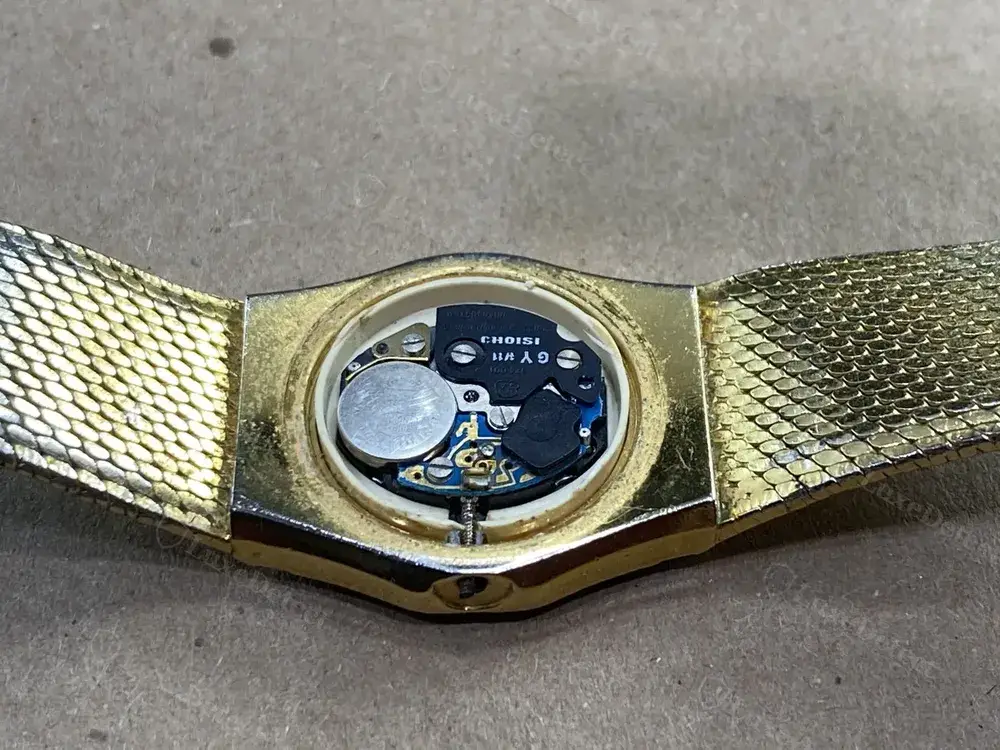
| Movement origin vs. dial claim | Consistent: a Swiss-signed quartz module (we found one marked "CHOISI," a legitimate Swiss case and movement house Piaget used) under a genuine dial | Mismatched: caseback engraved "NINETEEN(19)JEWELS... MANUFACTURE... GENEVE... 750 SWISS MADE" over a movement stamped "SII O JAPAN... NO JEWELS" |
Red flag
A caseback that names a different brand than the dial, or that reads "base metal" under a case sold as gold, ends the inspection on its own. A genuine Piaget caseback names Piaget, and a genuine gold case carries a karat mark, not a base-metal disclosure.
Jewel Count vs. Movement Reality
A second, related contradiction shows up specifically on pieces with an engraved caseback claiming a jewelled Swiss movement. The engraving is cheap to apply and easy to overstate; the movement underneath is what it is regardless of what the case says.
| Element | Authentic | Counterfeit |
|---|---|---|
| Caseback engraving | Matches what's inside, or the case is left plain rather than overstated | Reads "NINETEEN(19)JEWELS MANUFACTURE... GENEVE" |
| Movement jewel count | 17 jewels on vintage manual pieces (visible on the movement bridge), or a genuine low-jewel Swiss quartz module correctly left unengraved on the case | Movement stamped "NO JEWELS" directly on the plate, contradicting the caseback |
| Movement origin marking | "SWISS PARTS," "SWISS MADE," or a Swiss house name (Choisi, and similar) stamped on the module itself | "SII O JAPAN" or another Japanese movement code, with "JAPAN MOVT" sometimes printed directly on the dial |
Red flag
A jewel count engraved on the case that the movement itself contradicts is not a matter of interpretation. If the caseback says nineteen jewels and the movement plate says "NO JEWELS," the watch is not what the case claims to be, full stop.
The Date Window, When One Exists
Not every Piaget carries a date complication, vintage Polo and dress pieces usually don't, but on the models that do, Piaget's date window is a genuinely difficult detail to fake well: the date disc sits under roughly 2.5x magnification built into the crystal, producing a sharp, oversized digit rather than a flat, same-size number. Reproducing that level of clarity and magnification cheaply is hard, and it shows.
| Element | Authentic | Counterfeit |
|---|---|---|
| Magnification | Date digit appears noticeably larger and sharper than the surrounding hour markers | Date digit is the same scale as the rest of the dial, or smaller, with no magnifying effect |
| Placement and framing | Centred cleanly in its window, positioned consistently with the model's published layout (6 o'clock on Gouverneur-family chronographs) | Cropped, tilted, or sitting off-centre in its aperture |
| Print quality | Crisp edges, consistent with the dial's other printed text | Flat, slightly blurred printing that doesn't match the sharpness of the hour markers around it |
Worth knowing
We were not able to source a clean authentic date-window photograph from our own archive for this guide, most of our confirmed-authentic Piaget submissions are vintage no-date Polo and dress pieces, so this checkpoint is built on the documented, published mechanics of Piaget's date magnification plus the one clear counterexample we found in a confirmed fake. Treat this check as supporting evidence, not a standalone verdict, until you can compare it directly against a verified genuine example of the same reference.
Dial Printing and Case Finishing
Printing quality on the dial itself is the weakest of the checks here precisely because it's the part counterfeiters have gotten good at. Every fake in our sample had a legibly printed "PIAGET," correct spelling, plausible typography. This check is worth doing but won't catch a well-made fake on its own.
| Element | Authentic | Counterfeit |
|---|---|---|
| Wordmark | Clean, evenly weighted "PIAGET" lettering, consistent stroke width | Usually close, occasionally slightly heavier or uneven stroke weight, but not reliably distinguishable in photos |
| Case texturing (Polo/Dancer bracelets) | Sharp, consistent fluting across every link, crisp transitions between polished and textured surfaces | Can be very close on a good fake; look instead at wear patterns that don't match the claimed age, or texturing that stops abruptly at the case edge |
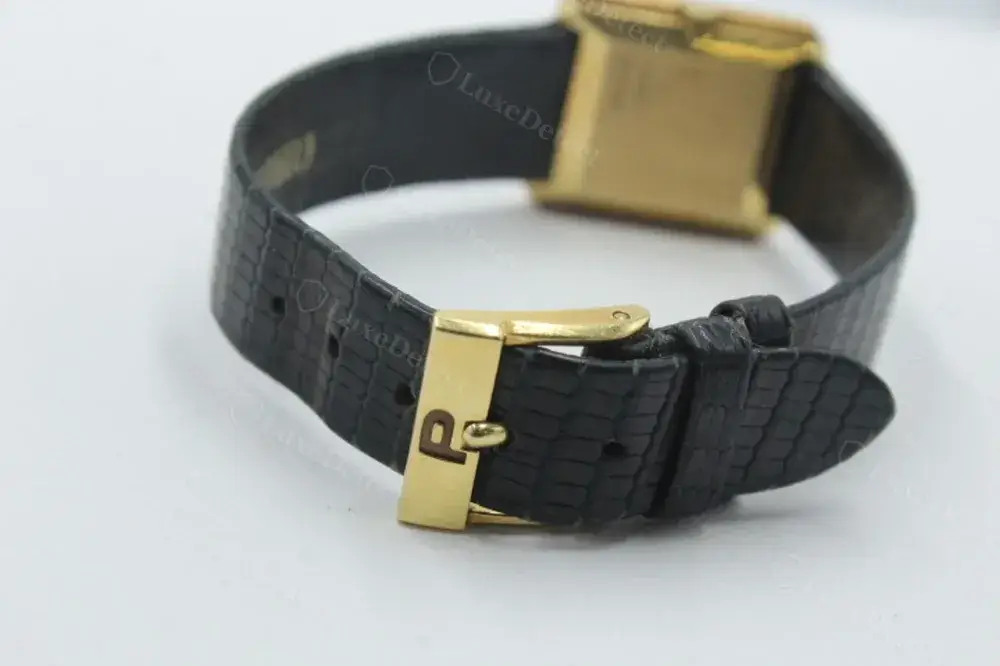
| Bracelet clasp stamp | Stamped "PIAGET" on the clasp or buckle, matching the dial | Sometimes unmarked, sometimes correctly stamped, not reliable alone |
Worth knowing
Dial printing quality is a supporting check, not a decisive one. Treat it as a tiebreaker after the caseback and movement checks, not as your first or only pass.
What the Box and Papers Do and Do Not Prove
A box, a warranty card, or a Piaget pouch tells you what the seller has in a drawer, not what's on the watch. Papers and a case are easy to separate from the item they originally belonged to, and easy to buy separately or forge outright. Their real value is cross-referencing: does the model or reference number on the papers match what's actually on the watch, does the purchase date make sense against the movement's likely production era. On their own, a nice box and a printed card prove nothing about the watch inside.
Quick Authentication Checklist
- Open the case and read the caseback brand name, it must say Piaget, not any other name.
- Check the metal claim on the caseback against the case: a genuine gold case carries a karat/hallmark, never a "base metal" disclosure.
- If the caseback engraves a jewel count, confirm the movement plate doesn't contradict it (look for "NO JEWELS" or a non-Swiss movement code).
- If the dial has a date window, look for genuine magnification, a flat, unmagnified, off-centre date is a red flag.
- Check dial printing and bracelet finishing last, as a tiebreaker, not a first pass.
Any single failure on checks 1 through 3 is sufficient to reject the piece. Checks 4 and 5 support a verdict but won't reliably deliver one on their own.
When to Get a Professional Opinion
Vintage Piaget pieces are old enough, and the Polo/Dancer silhouette common enough, that DIY photo review has a real ceiling. A caseback and movement mismatch is something you can screen for yourself from clear photos, but distinguishing a well-finished fake movement from a genuine low-jewel Swiss quartz module at a glance takes hands-on experience, and reference numbers on pre-1990s Piaget pieces aren't always easy to look up publicly. A professional watch authentication service starting at $45 for a 24-hour turnaround is inexpensive relative to what a Piaget costs, and it's a sensible step before paying for or shipping a piece you can't physically inspect first. LuxeDetect issues a Certificate of Authenticity on a confirmed genuine piece, which is also useful documentation to keep with the watch going forward.
FAQ
Where is the serial number on a Piaget watch?
Typically engraved on the caseback, sometimes alongside a separate reference or case number. Formats vary by era: vintage manual-wind pieces often show a shorter numeric case number near a Swiss hallmark, while later quartz-era Polo and Dancer pieces carry a longer reference stamped into the case back or lug. Piaget doesn't offer a public serial lookup tool, so verifying it against the brand's own records means going through a boutique, an authorised service centre, or a professional authentication service.
Does every genuine Piaget have a date window?
No. Vintage Polo, Dancer, and most dress models from the late 1970s through the 1990s have no date complication at all, a plain two- or three-hand dial. The date window and its magnified display are specific to models built with a date function, such as certain Gouverneur references, not a universal Piaget feature. If a listing photo shows no date window, that alone tells you nothing either way, you still need to check the caseback and movement.
Is "Japan Movt" printed on a dial always a fake?
For Piaget specifically, yes. Genuine Piaget dials don't carry a "Japan Movt" disclosure line, because Piaget doesn't use Japanese movements in its watches. If you see that text printed on a dial signed "Piaget," you're looking at a fake, and it's worth checking the caseback for a contradicting jewel or Swiss-made claim, which is common on the same pieces.
What does a "base metal" caseback stamp actually mean?
It means the case itself isn't gold, regardless of how the watch was described or sold. "Base metal" is a legally required disclosure on cheap watch cases, so its presence isn't itself suspicious on an honestly sold piece, but it's an immediate disqualifier on anything represented as a solid gold Piaget. If the dial and any listing description claim gold and the caseback says base metal, the watch is not what it's being sold as.
Can a good fake pass the caseback and movement checks too?
It's possible but expensive to do well, which is exactly why we didn't find one in our sample: matching a caseback engraving to a correct, jewel-appropriate Swiss movement costs real money, more than most counterfeiters selling a $200–400 "vintage Piaget" are willing to spend. The fakes we reviewed took the cheaper path, a convincing dial over a mismatched or base-metal case. A determined, well-funded counterfeiter could in principle get closer, which is part of why a professional opinion is worth the cost on anything expensive enough to matter.
Are vintage Piaget watches worth authenticating professionally before buying?
Yes, especially for a private sale or an online listing where you can't handle the piece first. The checks in this guide (caseback brand name, jewel count vs. movement, date magnification) are things you can screen for from clear photos, but a confident final call on an older piece, especially one without easily searchable reference numbers, benefits from someone who handles Piaget watches regularly. A professional review is inexpensive relative to what a genuine Piaget costs, and it's a sensible first step before committing to payment.