Watch Authentication Specialist
Watch authentication specialist covering Swiss manufacture references and bracelet construction.
Published October 2026 · Contact
What Makes Tissot Authentication Different
Tissot is one of the most widely sold Swiss watch brands, and that is exactly why it is hard to pin down. The same name covers a vintage Stylist dress watch, a titanium PR 100 quartz, a steering-wheel PRS 516 chronograph, a touchscreen T-Race Touch and a modern PRX. Each family has its own caseback artwork, its own wording and, often, its own movement. A checklist that fits one will mislead you on another.
So this guide is organised by model family. For each one it shows what a genuine example looks like, using photos of genuine Tissot watches that passed authentication with us. It is a reference guide, not a real-vs-fake comparison: we have reviewed counterfeit Tissot watches too, but we have not identified a caseback or dial detail that reliably separates counterfeits from genuine watches of the same model and era. Without that, handing out a "red flag" would be guessing, so this guide does not.
Worth knowing
This guide is built from verified genuine examples. It shows what to expect, so you can notice when your watch departs from it. A watch that matches everything here is not thereby proven genuine, and a small difference in wording or spacing is not proof of a fake either (see the section on details that look suspicious but are not).
Which Tissot Do You Have
Listings often say only "Tissot watch". Identify the family first, because the checks below depend on it.
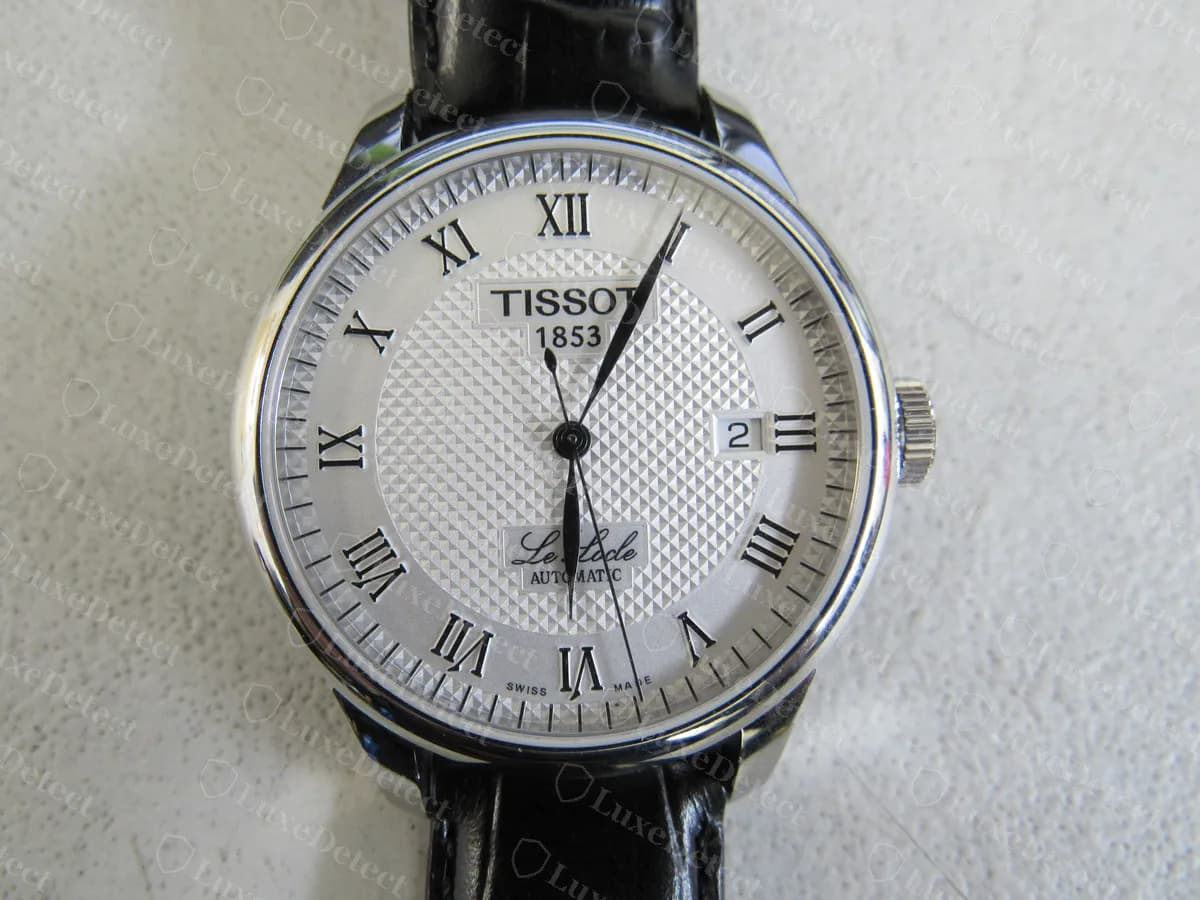
- Dress and classic lines: Le Locle, Ballade, Couturier, Carson, Everytime, Visodate, Gentleman. On the examples we reviewed, a clean dial with Roman numerals or baton markers, "TISSOT 1853" printed under 12 o'clock and often a script or printed model name lower on the dial.
- Sport lines: PRC 200, PRS 516, PR 50, PR 100, T-Race, T-Touch and T-Race Touch. These carry their own artwork on the caseback.
- Modern lines: PRX, Seastar and the Powermatic 80 automatics (Le Locle, Couturier), many of which have a sapphire exhibition back.
- Vintage: older Stylist, Seastar, Visodate and Le Locle pieces, often with French wording and no "1853" at all.
Tissot also sells quartz, Powermatic automatic and touch watches that look alike from the front. The movement listed in the ad should match what the caseback and the family say it is.
The Caseback on Modern Tissot Watches
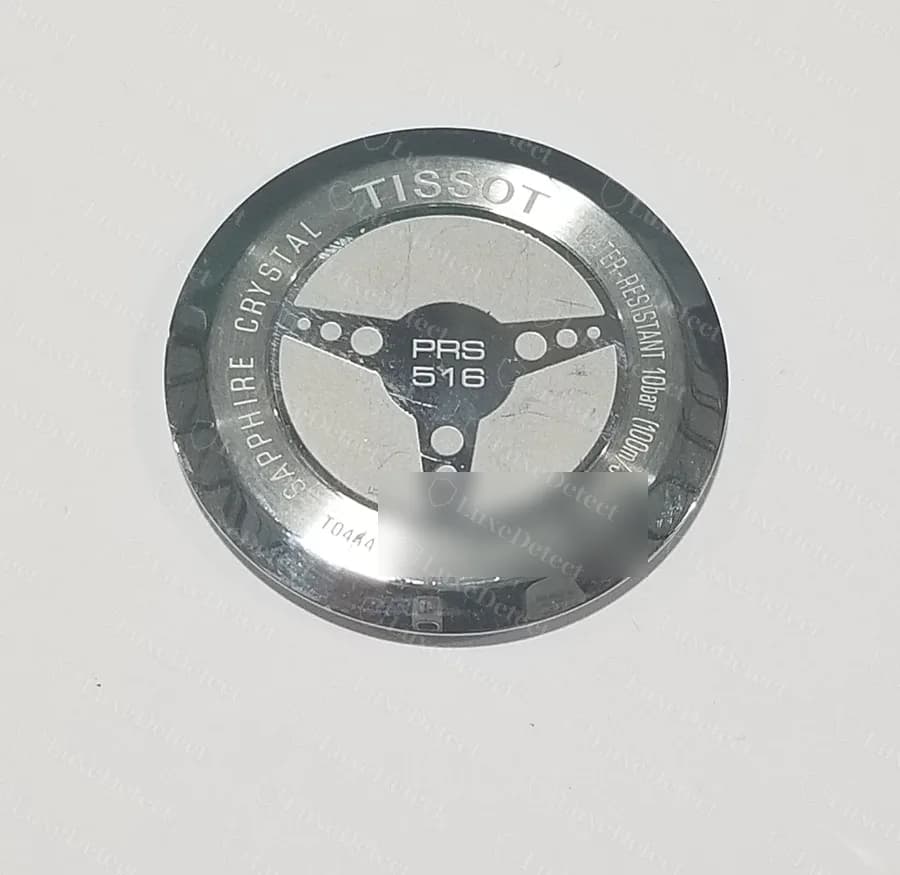
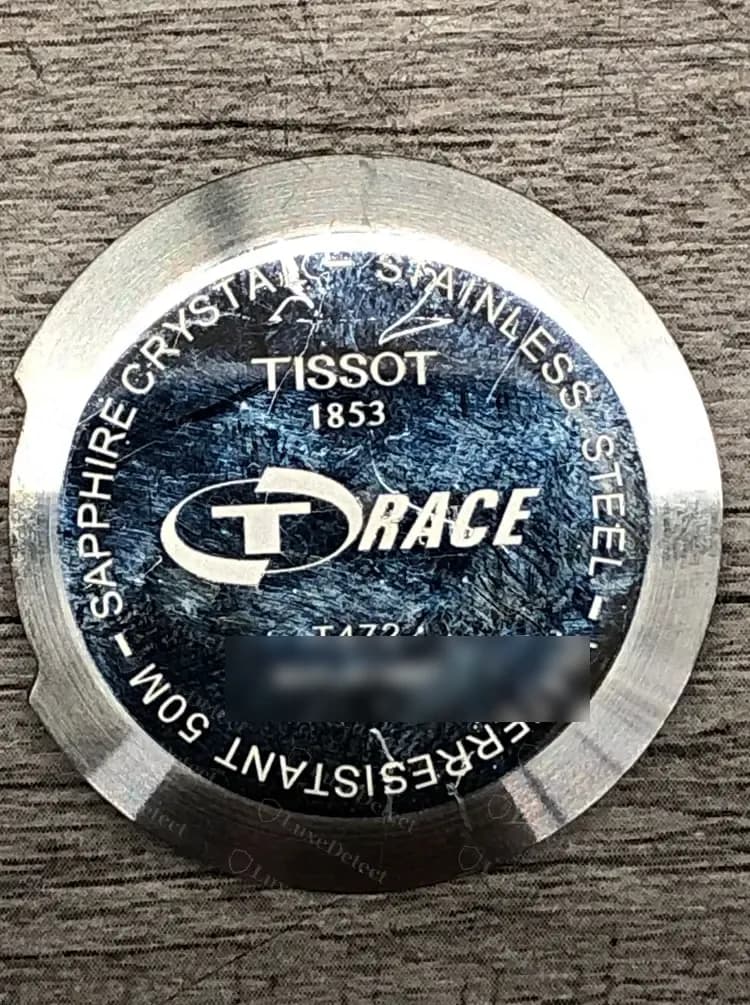
On the modern watches we reviewed, casebacks follow a common idea but not one fixed layout. The word TISSOT, usually with 1853 underneath, is engraved at the top or along the edge. Curved text runs around the edge: the case material or crystal (SAPPHIRE CRYSTAL, STAINLESS STEEL or TITANIUM) and a water resistance statement, in bar, metres and feet on most (some sport models show only metres). On many casebacks the reference, a capital T followed by six digits and a letter, sits in the centre with a serial below it; on others, such as the PRX and PRS 516, the reference is printed on the rim.
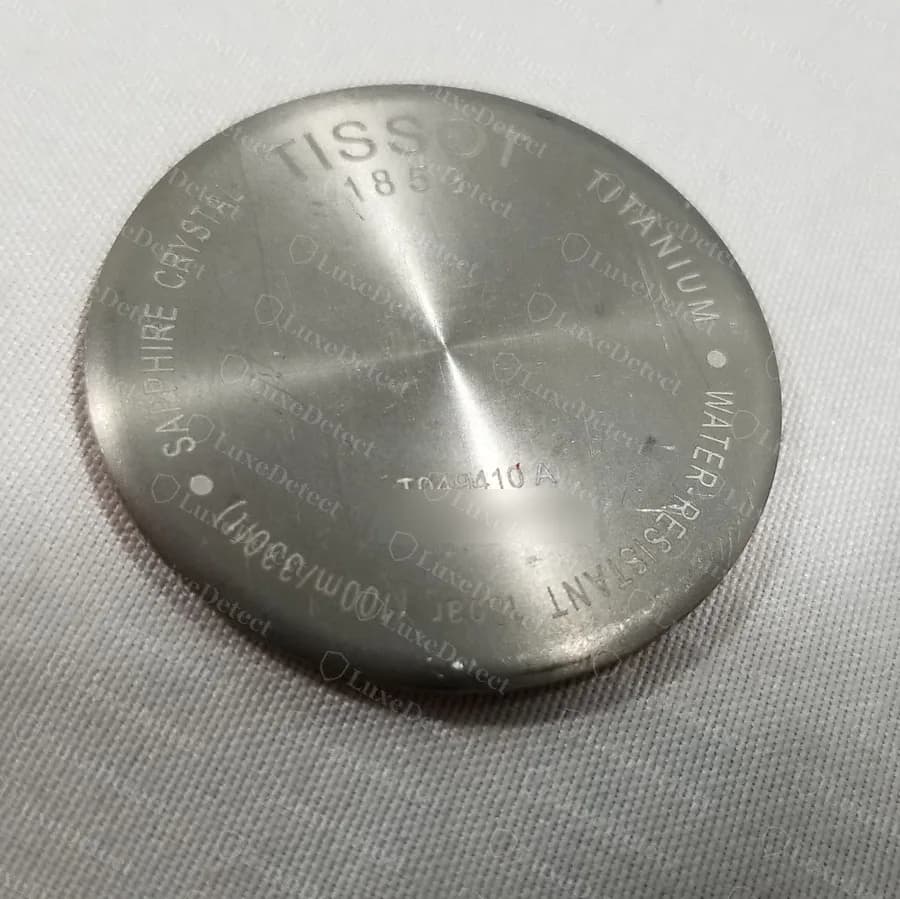
The reference on this PR 100 belongs to the PR 100 it came from, which is what you want to see: the reference should fit the model on the dial. On several modern casebacks we read (PR 100, T-Race Touch, PRS 516, a ladies Dream, and the Le Locle), the serial is two digits, two letters, then seven digits. Not every back follows it: the older T-Race shows a reference of T472 and a different serial style, the Seastar 1000 uses an older A-number reference, and on the PRX we saw no serial in that shape. Counterfeits can copy this format, so it is not proof. Many casebacks also carry a short code of three groups of three characters beside a small WS mark; that is a separate code, not the serial. We blur serials in our photos because a serial belongs to one watch.
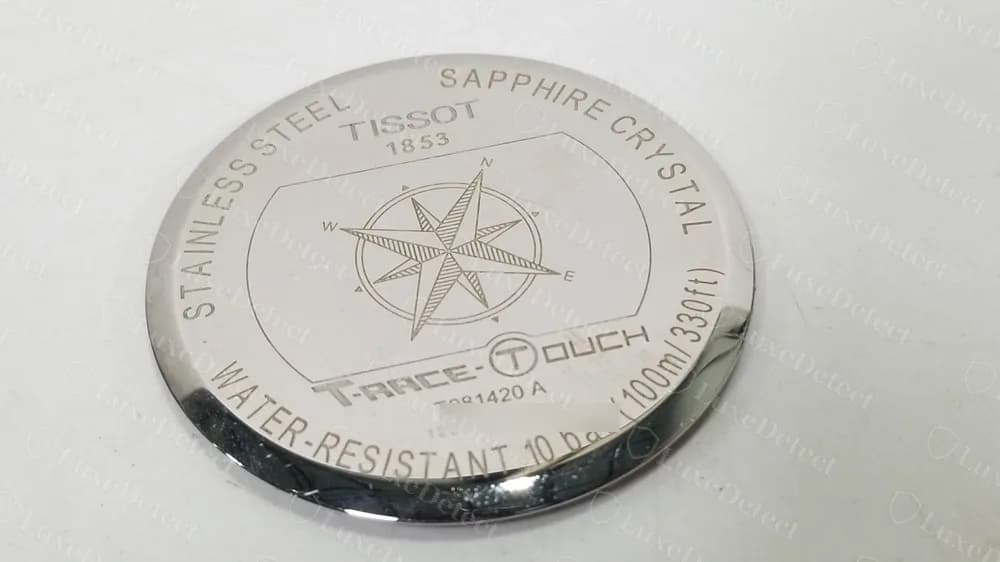
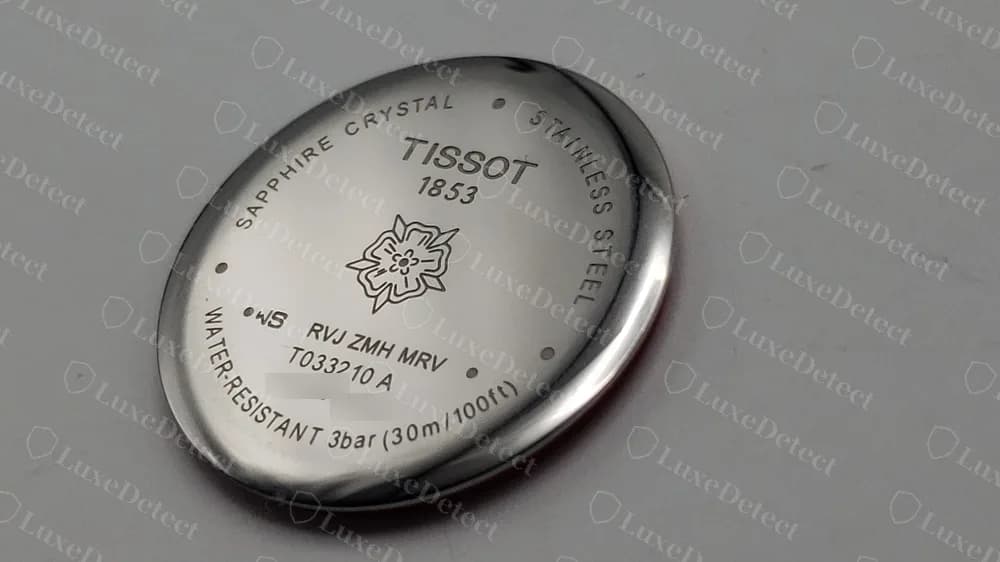
Water resistance differs by model, and a lower figure is normal on dress and ladies watches: 10 bar on the PR 100 and T-Race Touch above, 3 bar on the ladies model. Do not expect one number across the brand.
Automatics Show Their Movement
Many Tissot automatics have a sapphire exhibition back, so the caseback is also a view of the movement. On the genuine Le Locle below, the plaque on the rotor window reads TISSOT with 1853 beneath it, flanked by MECANIQUE and AUTOMATIQUE, and the edge carries French wording (ETANCHE 3bar (30m/100ft)) and a reference in the older L-number style rather than a T-number.
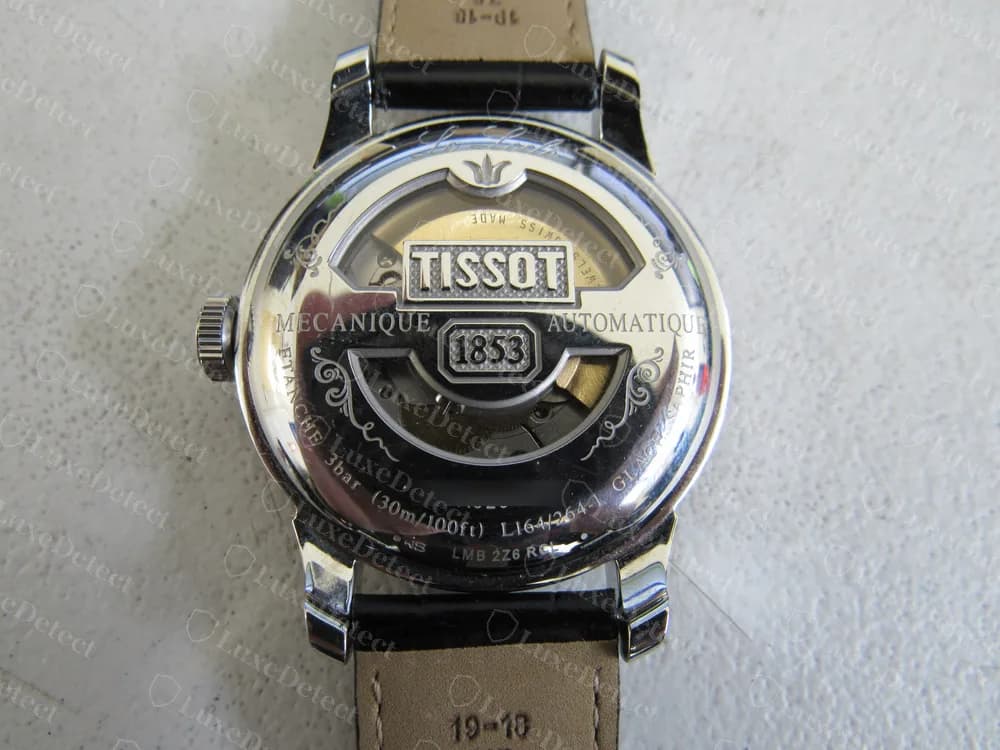
The same watch carries the model on the dial, a textured pyramid-pattern centre, Roman numerals, a date at 3 and SWISS MADE at the bottom.
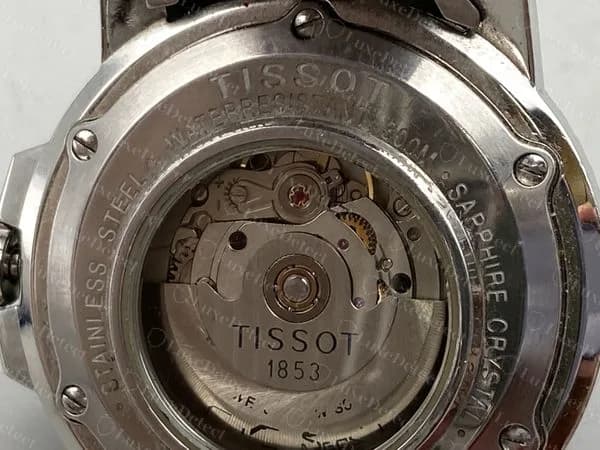
On the genuine Seastar 1000 diver below, the screwed ring around the window carries the material, crystal and water resistance wording, and the rotor is marked TISSOT 1853. The photo is small, so we use it for the layout only.
Sport Lines Carry Their Own Caseback Art
Tissot's sport lines put model artwork on the caseback. The PRS 516 shows a steering wheel with the model name on it. The T-Race shows its own logo. The T-Race Touch above shows a compass rose. If a caseback from a different line is fitted to a watch, it will not match the artwork its family uses, so check the caseback against the family.
Dials, the T Logo and Swiss Made
On the modern dials we reviewed, TISSOT 1853 is printed under 12 o'clock, the model name appears lower on the dial and SWISS MADE is printed in small letters at the bottom edge. Tissot's brand T logo is a capital T inside a box. Some model logos, such as T-Touch and T-Race, use a T inside a circle or ring; those are model marks, not the brand logo. The boxed T appears on clasps, strap buckles and some casebacks rather than on every dial.
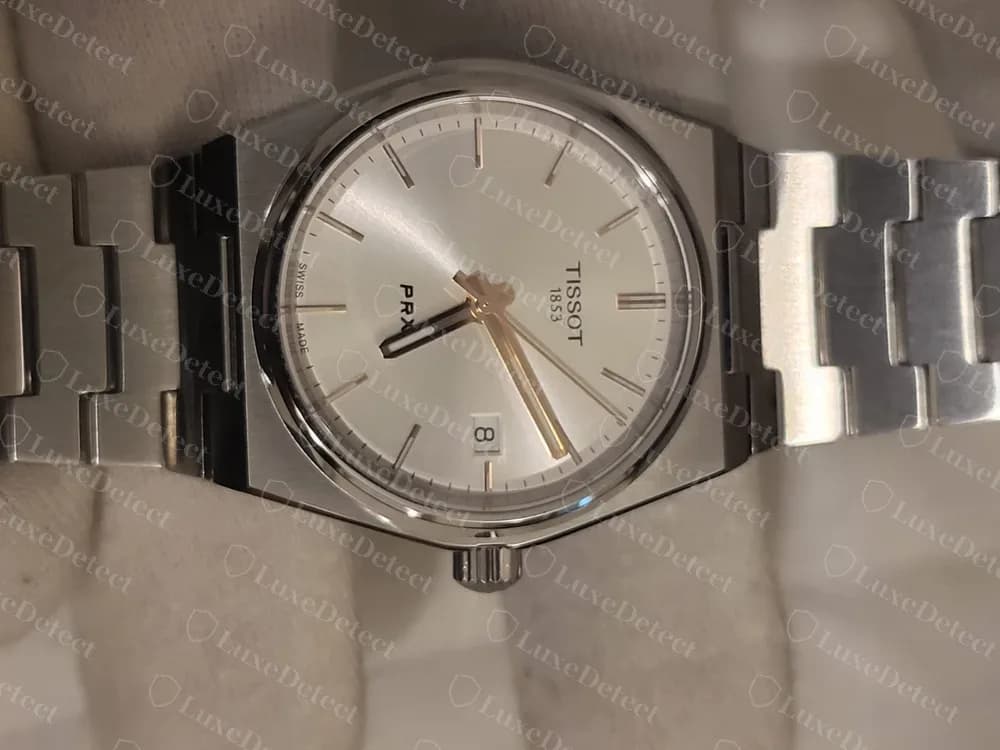
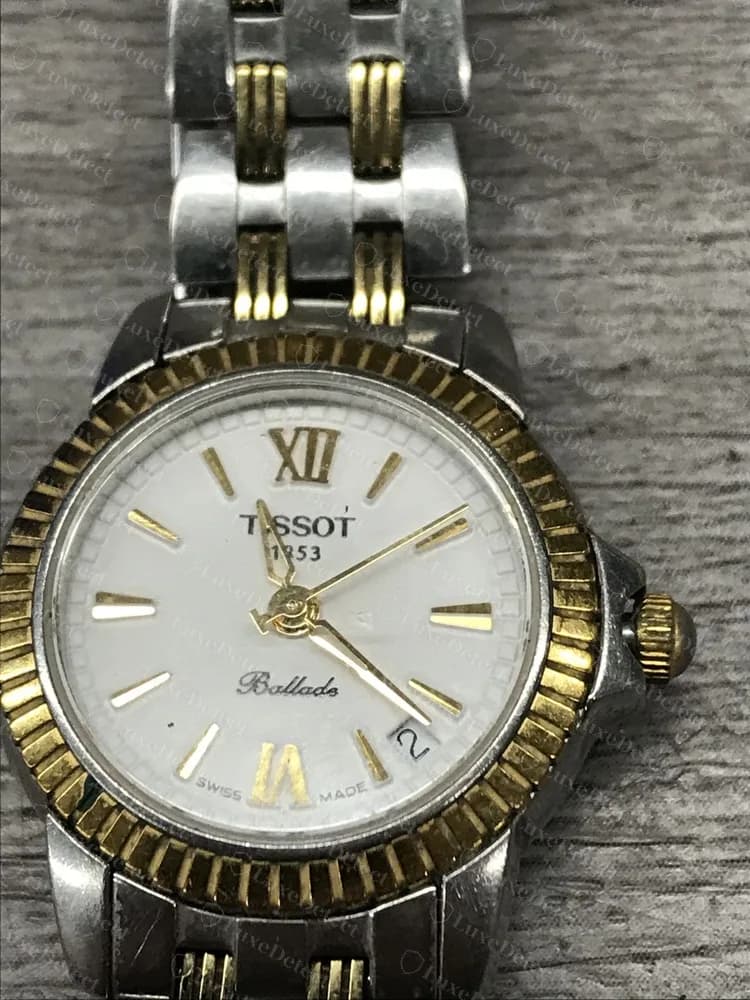
"Swiss Made" alone proves nothing, since it is printed on fake dials as readily as genuine ones. What a dial can tell you is whether the logo, the 1853 line and the model name match the family, and whether the printing is crisp.
Clasps and Bracelets
Tissot clasps on the watches we reviewed carry the brand either as the T logo in relief on the clasp cover or as TISSOT 1853 engraved along the clasp. A watch can legitimately have either.
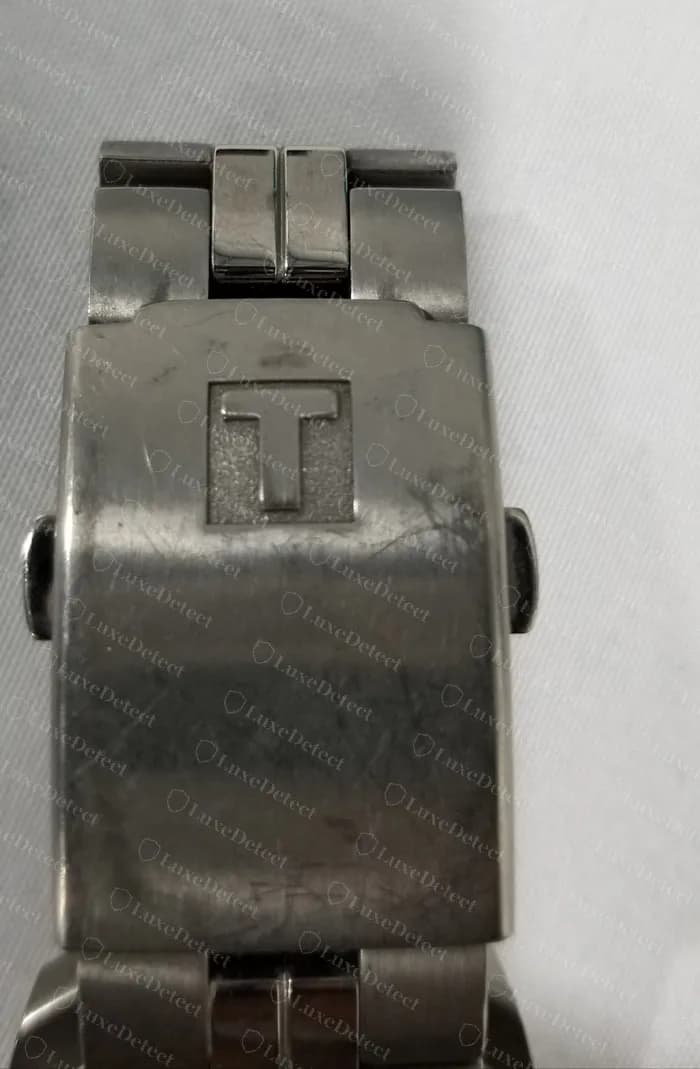
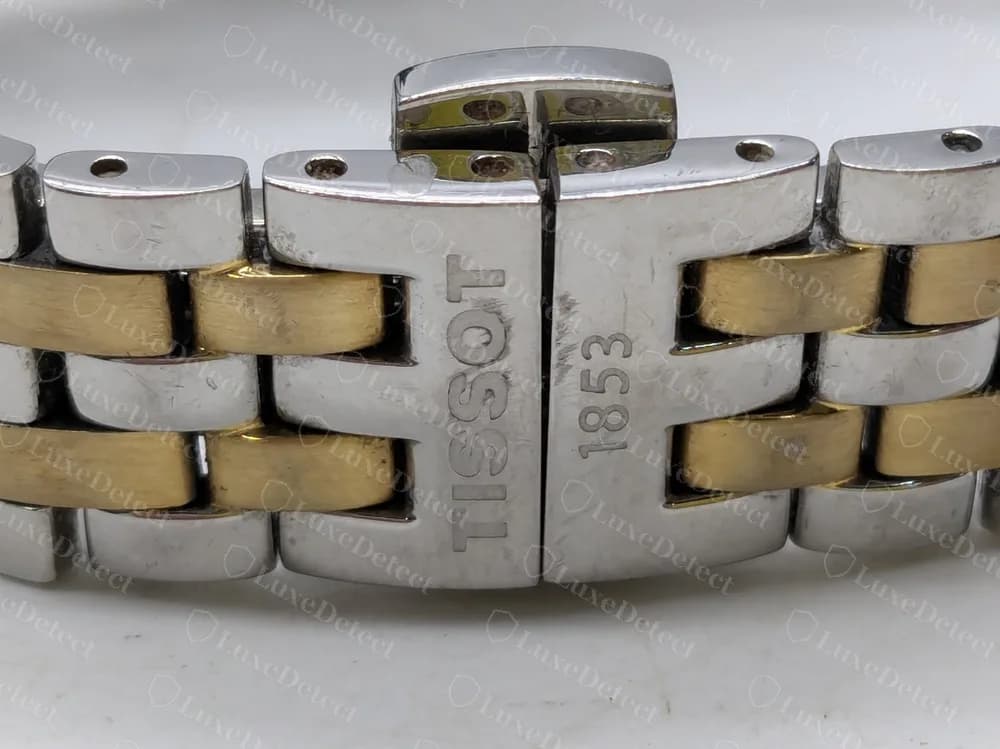
On the genuine straps we saw, the genuine leather strap we saw carried TISSOT 1853 on the underside, and the rubber strap on a sport model carried the T logo on its buckle. A replaced strap is not a problem in itself, and clasps are among the parts most often swapped, so a clasp that matches proves little.
Vintage Tissot Follows Older Rules
The two vintage pieces we reviewed do not follow the modern layout. Reviewed in the same way as the others, they have no 1853 on the dial or caseback at all. The dial of the Stylist movement reads TISSOT and STYLIST with SWISS T MADE at the bottom. The caseback of the vintage Seastar quartz shows the T logo, TISSOT LE LOCLE, ACIER INOXYDABLE (stainless steel in French), a case number and a SWISS stamp.
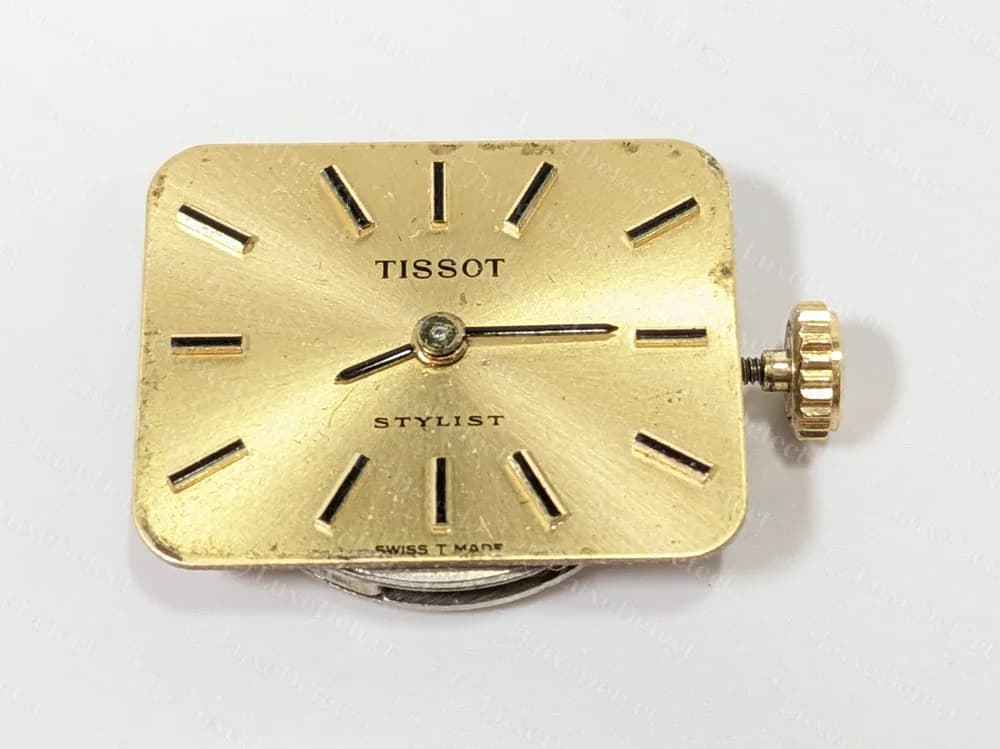
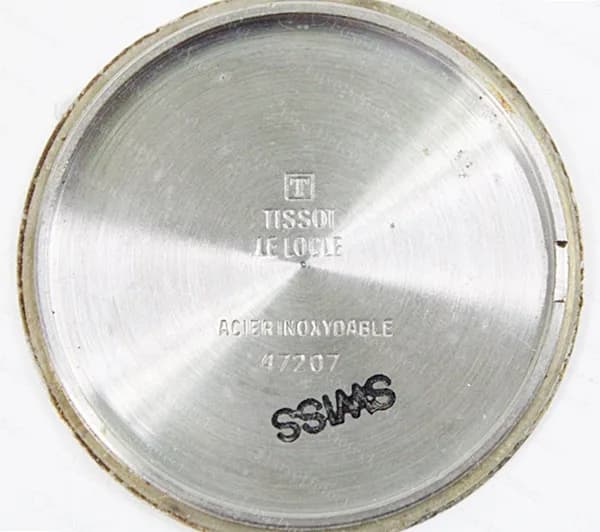
Do not hold a vintage Tissot against the modern checklist. A vintage piece without "1853", like the two above, is normal, not suspicious. Many vintage Tissots are also served well by a watchmaker's look at the movement, because the case and dial are often the least informative parts.
Details That Look Suspicious But Are Not
These come up often and none of them is a verdict on its own.
- Wording and spacing differ by line. Most casebacks above read WATER-RESISTANT with a hyphen. The T-Race and Seastar 1000 casebacks above print WATERRESISTANT as one word. Do not reject a watch for one run-together word until you have checked what its family uses.
- A red ring inside the caseback. Quartz watches show a red sealing ring around the inner cover of the caseback on several genuine watches, and the same ring also appears on counterfeits. It does not separate them.
- A "Hong Kong" mention on an inner disc. The inner cover inside some genuine quartz casebacks carries TISSOT HONG KONG. It is not a sign of a fake, and it appears on counterfeits too, so it does not prove a watch genuine either.
- Different water resistance figures. See above; they vary by model.
- A replacement strap or clasp. Common on any used watch.
What Photos Cannot Prove
A photo of the dial, caseback and clasp narrows things down. It cannot show:
- The movement. A Tissot can contain a quartz module, a Powermatic automatic or a mechanical movement, and only a caseback opened by a watchmaker, or an exhibition back in good light, shows which. The movement should match the family.
- Whether the parts belong together. A genuine caseback on a different watch, or a genuine dial in a damaged case, passes a photo check. Check that the reference on the caseback fits the model on the dial.
- The papers. A warranty card or box proves the card or box existed. Compare any reference or serial on the card with the caseback, and treat a match as a minor point only. Fakers copy numbers from real watches, so a repeated reference or serial is a warning rather than proof.
- Servicing and refinishing. Polished cases and refinished dials change the look of a genuine watch.
When to Get a Professional Opinion
The checks above are a way to learn what to expect, not a substitute for examining the watch. Given the range of Tissot families (for other watch brands, see our Rado, Tudor and Omega Seamaster guides), an unusual caseback, an inconsistent reference or a movement that does not match the family is the point to stop guessing. LuxeDetect's watch authentication starts at $45 for a 24-hour turnaround, with faster options available, and every authentication includes a written report and a Certificate of Authenticity.
A code that checks out doesn't prove the item is real. Counterfeiters copy genuine codes.
Our authenticators check the movement, dial, case and bracelet against verified references, from $45. You get a verdict within 24 hours, and a Certificate of Authenticity if the item passes.
Authenticate My Item →FAQ
How can I tell if my Tissot watch is real?
Identify the model family, then compare the caseback layout, the dial printing and the clasp with what that family uses. On modern Tissots the caseback shows TISSOT 1853, the material and water resistance wording, a T-reference and a serial. No single detail is a verdict, so look at all of them together and confirm the movement matches the model.
Where is the serial number on a Tissot watch?
On the modern casebacks we reviewed, the serial is a string of two digits, two letters and seven digits on several modern casebacks, usually under or beside the reference; some lines, such as the older T-Race and Seastar 1000, use other styles. On automatics with an exhibition back it can run along the edge of the caseback ring. Older watches may carry only a case number.
What does the Tissot reference number look like?
On modern watches it is a capital T, six digits and a letter, for example T049410 A. Some older families use other styles, such as the L-numbers on a Le Locle, T472 on an older T-Race, or A-numbers on an older Seastar. The reference should belong to the model on the dial.
What does the T logo on a Tissot look like?
The brand logo is a capital T inside a box, found on clasps, strap buckles and some casebacks. Some model logos (T-Touch, T-Race) use a circled T instead, and the boxed T is not printed on every dial.
Does Swiss Made on the dial mean a Tissot is real?
No. Swiss Made is printed on counterfeit dials as readily as on genuine ones. It is not evidence either way.
Are all Tissot watches marked 1853?
No. Modern dials and casebacks carry TISSOT 1853, but the vintage examples we reviewed do not, and that is normal.
Can I authenticate a Tissot from photos alone?
You can learn a lot from dial, caseback and clasp photos, but not the movement, whether the parts belong together, or the papers. For a purchase or a resale where the answer matters, have the watch examined.
How much does it cost to authenticate a Tissot watch?
LuxeDetect's watch authentication starts at $45 for a 24-hour turnaround, with faster options available. Every authentication includes a written report and a Certificate of Authenticity.