Eyewear Authentication Specialist
Luxury accessories authenticator. Covers small leather goods, belts, and eyewear.
Published September 2026 · Contact
Why Oakley Is One of the Most Faked Eyewear Brands
Oakley sits at a price point (roughly $120 to $250 for the popular Holbrook and Frogskins, more for Prizm and metal frames) that is high enough to be worth faking and low enough that buyers do not scrutinise. The shapes are iconic and simple to mould, the branding is minimal, and the volume sold on marketplaces is enormous. The result is a counterfeit market that ranges from $5 gas-station knockoffs to convincing replicas sold as genuine at near-retail prices, a pattern that shows up just as often on more design-forward brands like Gentle Monster.
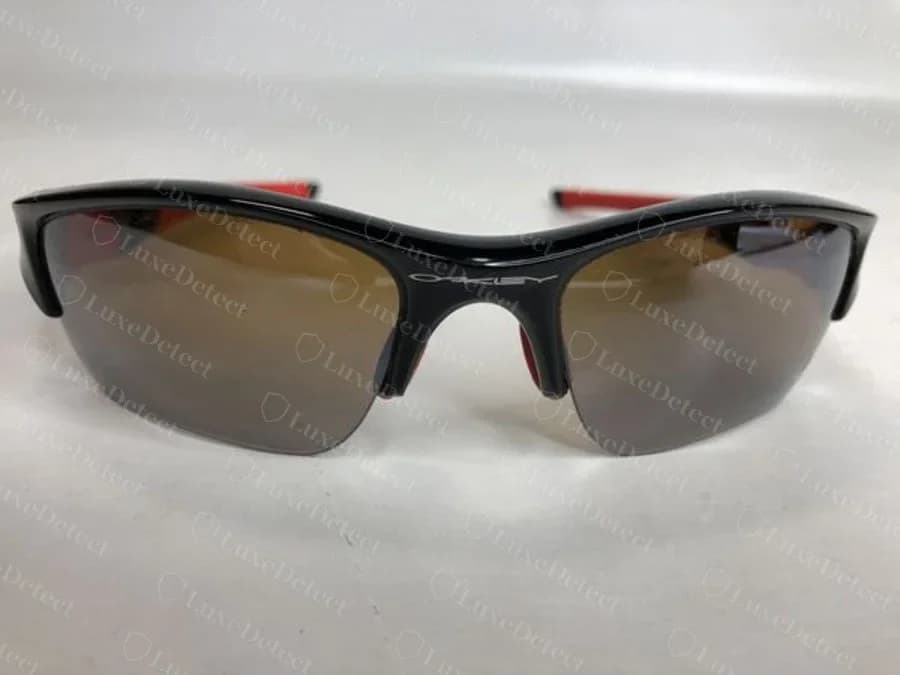
The good news: Oakley builds in several checks that are cheap for them and expensive to fake. A genuine pair carries an etched icon on the lens, precise temple engraving, and proprietary rubber components with a specific feel. Fakes get one or two of these close and rarely all of them, and the better ones copy the lens etch and print a real-looking model code, so no single mark settles a pair. This guide focuses on the Holbrook and its lifestyle siblings; the sport-performance Flak line has its own guide, since its half-rim shield construction and bridge branding differ enough to need a separate check.
What to check, ranked by reliability
| Checkpoint | Reliability | What it tells you |
|---|---|---|
| Earsocks, Nose Pads and Hinges | ★★★★★ | Hard, non-tacky rubber components cannot match genuine Unobtainium and settle it. |
| Temple Engraving and Model Code | ★★★★★ | A code in a format Oakley does not use is a tell, but most fakes print a correct code, so a match proves nothing. |
| The Icon on the Temple | ★★★★★ | A circular "O" instead of the stretched ellipse supports a verdict. |
| The Lens Laser-Etch | ★★★★★ | A printed "O" visible head-on is a reason to look harder, but fakes carry etches too and many listings never show one. |
| Model Reference Before You Start | ★★★★★ | Establishes the model and which code format to expect (older SKU, shield, Holbrook printing 57) before the real checks. |
| What the Box, Microbag and Papers Do and Do Not Prove | ★★★★★ | Reproduced cheaply — cross-reference the SKU sticker to the temple code only. |
Model Reference Before You Start
Confirm the model and that the seller's description matches it. The counterfeit volume concentrates on:
- Holbrook — the squared-off "classic" acetate frame. The single most faked Oakley.
- Frogskins — the retro square, thinner acetate.
- Radar EV / Jawbreaker — the sport shields, faked for the cycling market.
- Gascan / Turbine — wraparound acetate.
- Metal frames (Crosshair, Whisker) — faked less often but harder to check.
Every genuine Oakley has a model and size code on the inside of one temple (left or right, depending on the model), but the format varies:
- Current code: "OO9102-K555 57□18 137" (prefix and model number, colourway, then lens, bridge and temple in millimetres). The prefix is OO for sunglasses, OX for prescription frames, OJ for youth sunglasses and OY for youth prescription frames.
- Older SKU (from before the OO numbers): "12-856 60⬭15 128".
- Shields such as the Batwolf print only the code and the temple length ("OO9101-05 127"), and some metal frames print the size on the bridge instead.
- Holbrooks commonly print 57 while the catalogue number in the colourway ends 55. That is the same frame, not a fake tell.
- The square size symbol, a "3N" or "3P" filter mark, and a space after "OO" are all printed on genuine pairs.
Our Oakley model number checker decodes all of these. That string and its consistency with the listing is a reference, not proof.
The Lens Laser-Etch
This is the fastest check, and the one cheap fakes fail, but it is not decisive: the better fakes carry an etch too.
On genuine Oakley lenses there is a tiny "O" icon laser-etched into the lens itself, near an edge — usually the top outer corner of one lens, sometimes both. It is small (2–3 mm), precise, and etched *into* the lens surface, so it catches the light at an angle and is invisible head-on. On polarised models the word "POLARIZED" is often etched along a lower edge in the same way.
Fake tells: no etch at all (most common on cheap fakes); a printed or painted "O" that sits on the surface and is visible head-on; an etch that is oversized, blurry, or in the wrong position; a crooked or double-struck mark.
| Element | Authentic | Counterfeit |
|---|---|---|
| "O" icon | Micro laser-etch into the lens, ~2–3 mm, near an edge | Absent, or printed on the surface |
| Visibility | Catches light at an angle, invisible head-on | Visible head-on (printed), or not present |
| Edge quality | Crisp, clean lines | Blurry, oversized, crooked, or double-struck |
| "POLARIZED" etch (polarised models) | Fine etch along a lower edge, matches the icon | Printed, wrong font, or absent on a "polarised" pair |
Worth knowing
A missing lens etch proves nothing, and a present one proves nothing. Many listings never show the lens edge, genuine Prizm lenses can show a PRIZM etch instead of an O, and fakes carry PRIZM, PRIZM P and POLARIZED etches too. A printed "O" you can see straight on is a reason to look harder, but weigh it with the temple, the rubber and the hinges.
Temple Engraving and Model Code
Open the arms and read both inner temples.
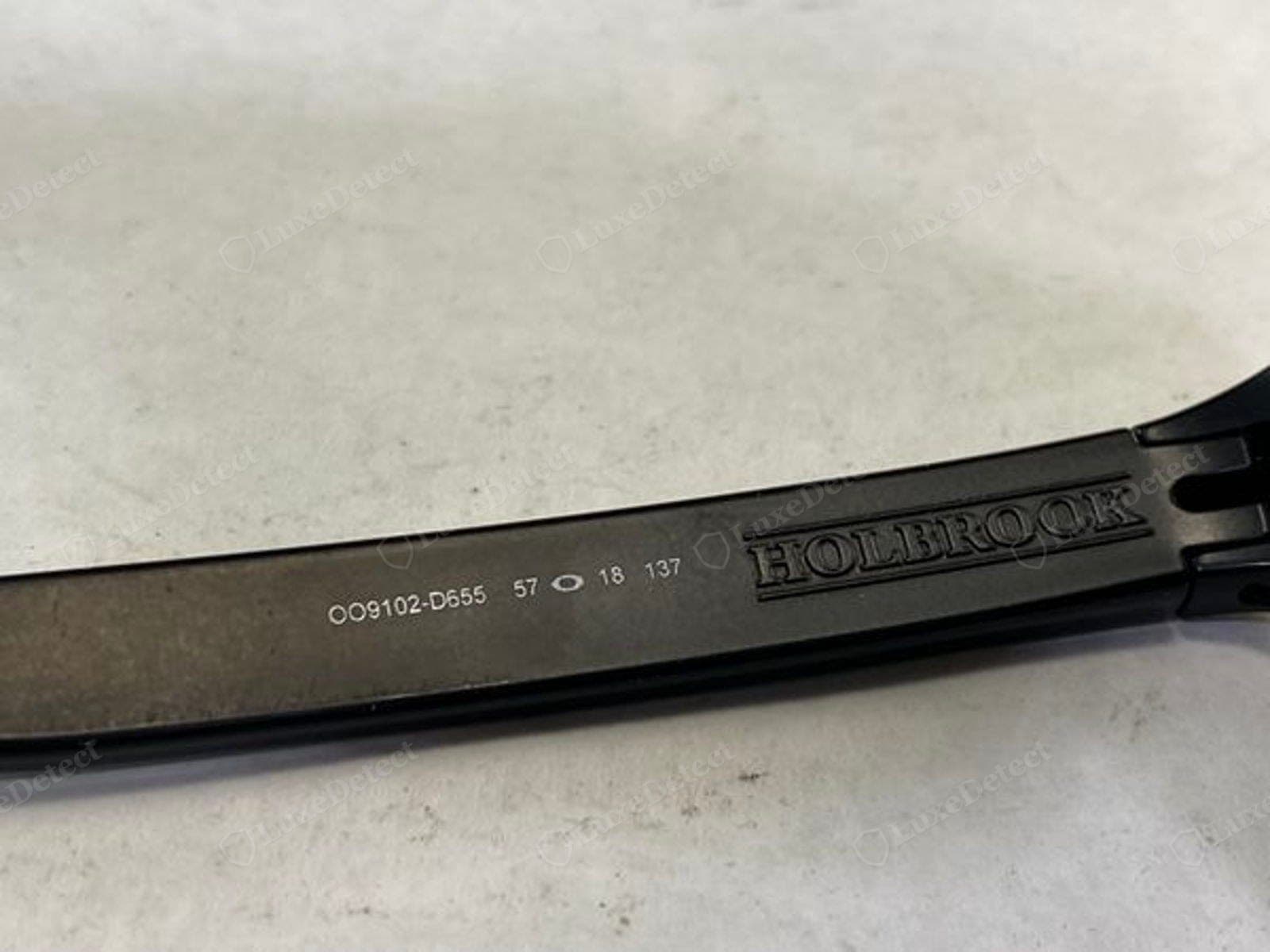
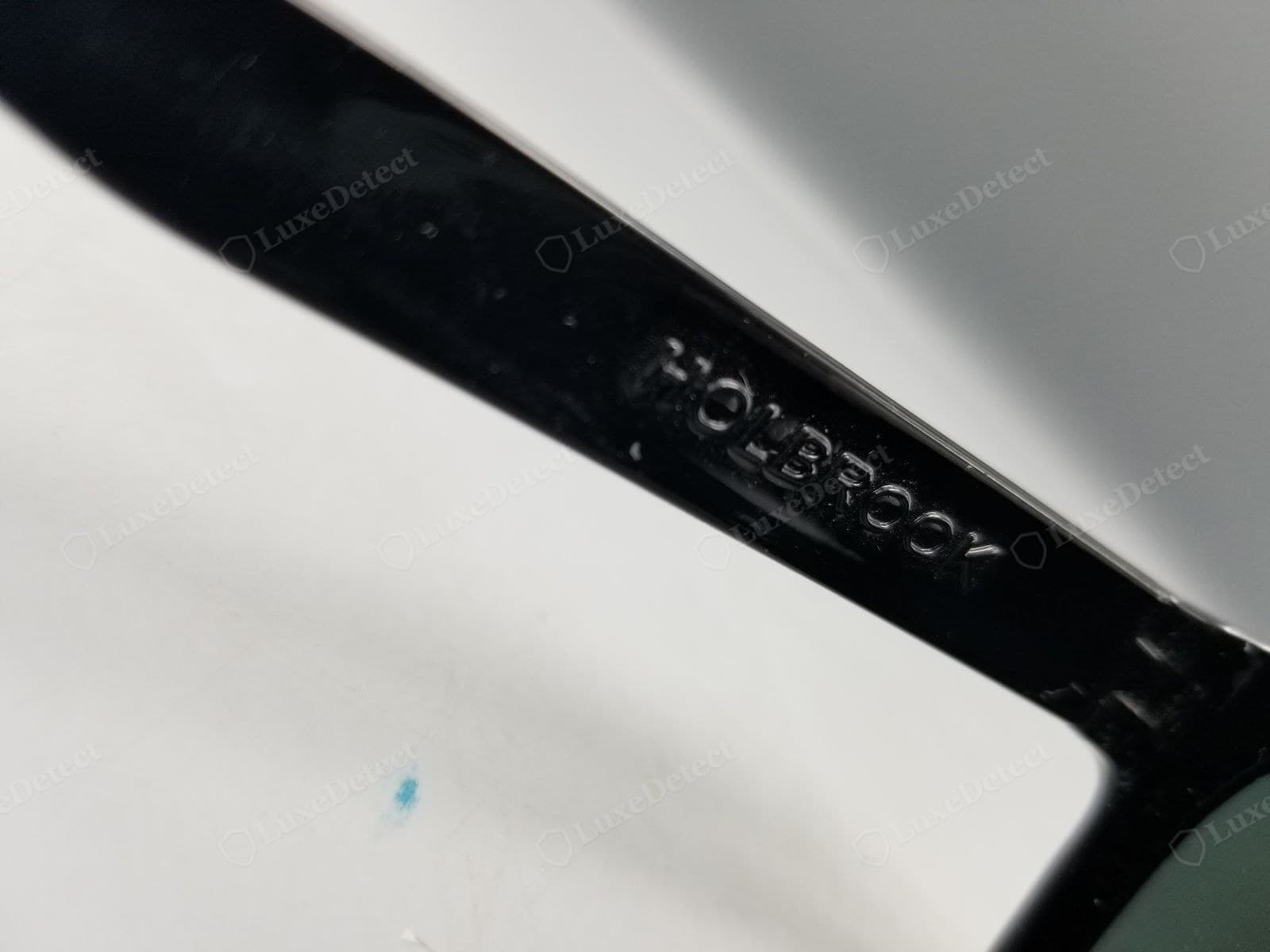
One temple carries the code line, for example "OO9102-K555 57□18 137" (the last number is the temple length), or an older SKU such as "12-856 60 15 128". Genuine engraving is crisp, evenly spaced and consistent in depth. OO is the prefix for sunglasses, OX for prescription frames, OJ for youth sunglasses and OY for youth prescription frames. On prescription frames the temple length comes first and the colour is spelled out ("142 OX5079-0153 Matte Black").
Type the line into the checker below. It decodes the prefix, model, colourway and size, and flags the one thing worth flagging: a code printed in a format Oakley does not use. About one fake in four that showed a readable code had one. The rest printed a well-formed code, often copied character for character from a genuine pair, so a code that checks out proves nothing on its own.
The other temple: usually "MADE IN U.S.A." and/or "CE", sometimes nothing else. Genuine pairs are also made in China (metal frames, the Frogskins LX, prescription frames), Italy (the Obsessed) and Japan (a titanium prescription frame), and on those the country is often printed on the same temple as the code. Fakes almost always say MADE IN U.S.A., so the country line does not separate real from fake either way.
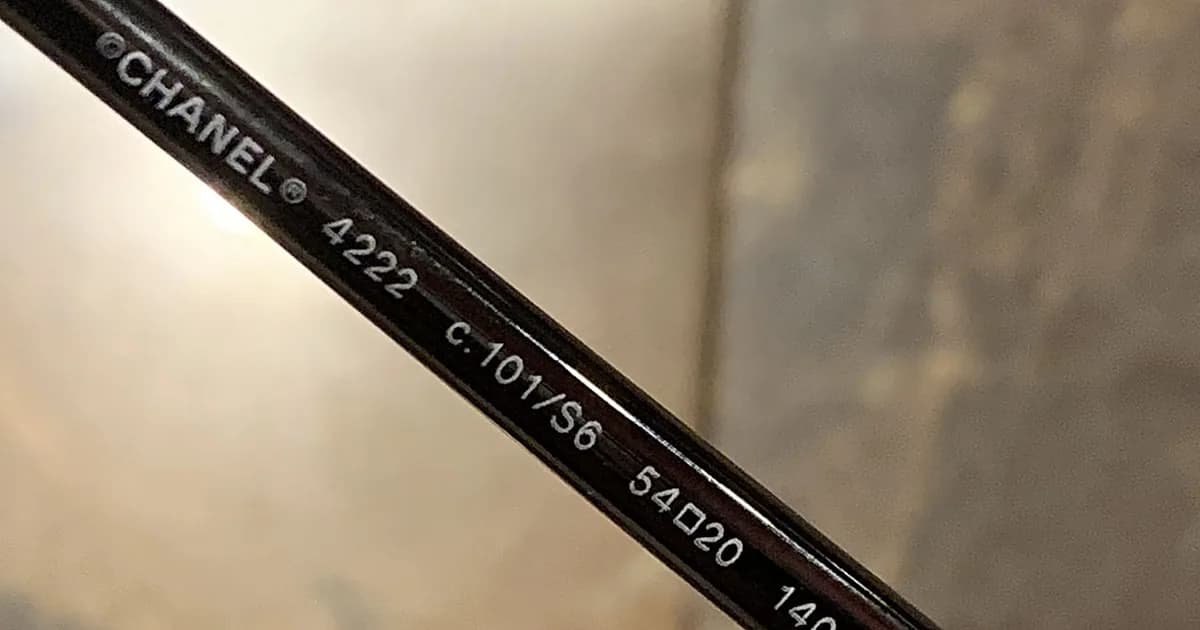
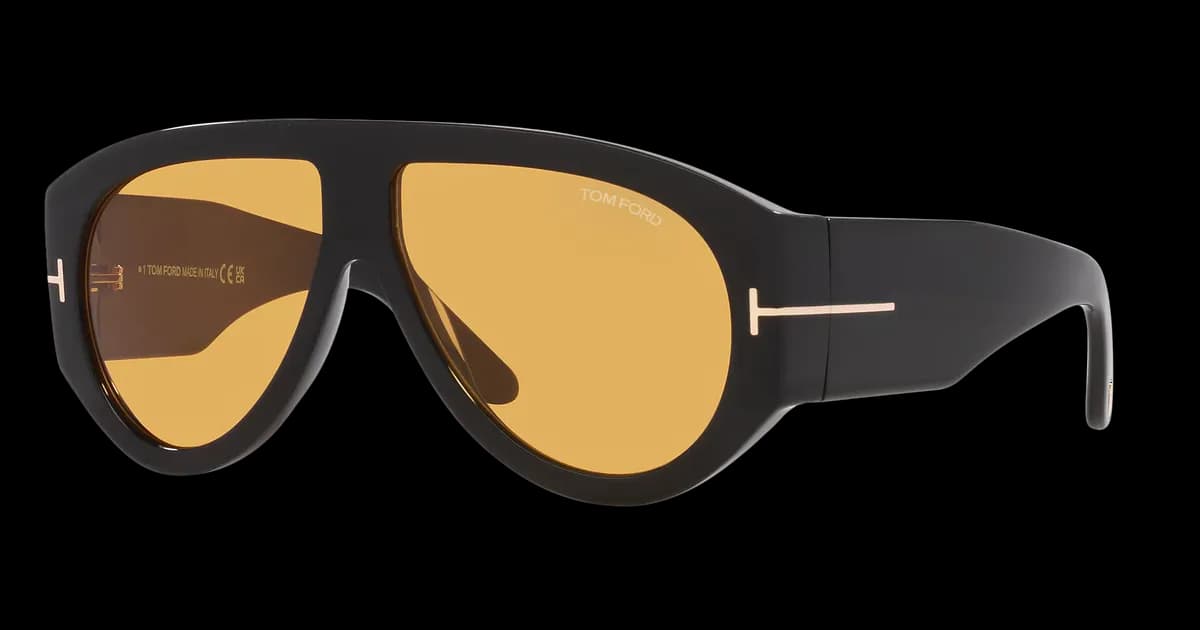
Fake tells: a code in no Oakley format (we have seen codes such as AL9236, A-2057 and SP39567); an OO number with no colourway; a size that runs into the temple length like 60□18-140; shallow or uneven engraving; crowded or drifting character spacing. A model number that does not match the frame is only a claim check against the listing: no fake we checked printed the wrong number. A stamped temple code of this kind is standard across luxury eyewear; see our Tom Ford eyewear guide for how the same principle applies on a different frame construction.
These are not fake tells, because genuine pairs print them: the square size symbol, "3N" or "3P", China, Italy or Japan on the temple, a space after "OO", a code with no size, and a Holbrook that prints 57 with a 55 in the colourway.
| Element | Authentic | Counterfeit |
|---|---|---|
| Model code | OO/OX/OJ/OY number + colourway + measurements, or an older NN-NNN SKU | A code in no Oakley format, no colourway, or a size run into the temple length. Most fakes print a correct code |
| Engraving quality | Crisp, even depth, consistent spacing | Shallow, uneven, crowded or drifting |
| "Oakley" wordmark | Correct typeface | A near-miss font |
| Country of origin | USA, China, Italy or Japan, depending on the model | Most fakes say MADE IN U.S.A.; the line settles nothing |
Worth knowing
Country of origin is not a tell — Oakley genuinely produces in the USA, China, Italy and Japan, and fakes almost always print MADE IN U.S.A. The red USA MADE and USA ASSEMBLED badges are copied too.
The Icon on the Temple
Both arms carry the Oakley "O" icon (the "Ellipse O") on the outside, near the hinge.
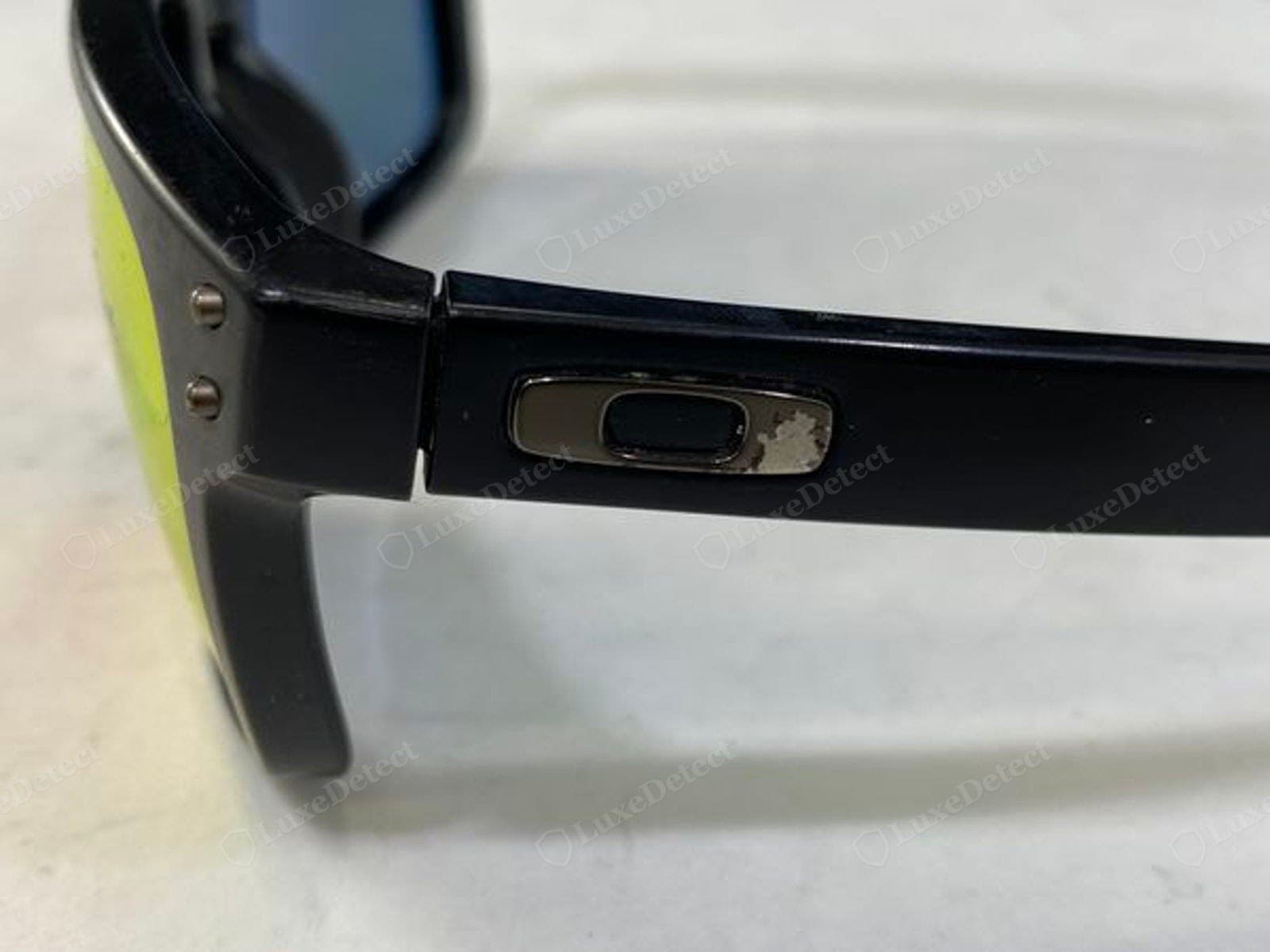
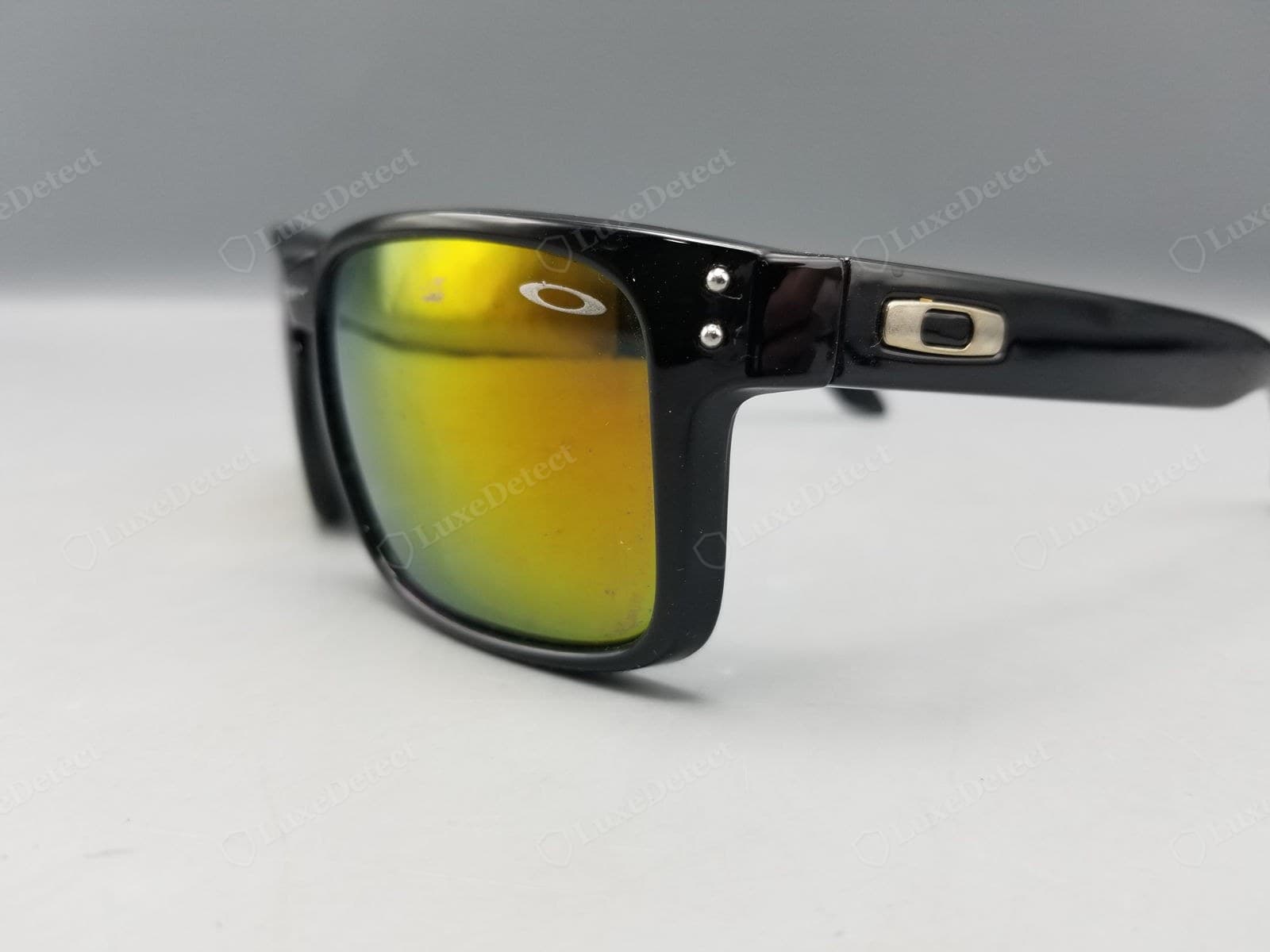
On genuine frames this is a metal or precisely-moulded icon, applied cleanly and flush, with the correct proportions — a horizontally-stretched O, not a circle. On Holbrooks it is a metal rivet-style icon; on Frogskins it is moulded into the acetate.
Fake tells: a perfectly circular "O" instead of the stretched ellipse; an icon that is raised proud or sunk unevenly; a painted-on icon; icons that differ slightly left to right; a metal icon that is loose or a different finish from the frame.
| Element | Authentic | Counterfeit |
|---|---|---|
| Shape | Horizontally stretched ellipse | Circular, or the wrong aspect ratio |
| Application | Clean, flush, symmetrical left and right | Proud, sunken, uneven, or mismatched sides |
| Finish | Metal or crisp moulding, matches the frame | Painted, loose, or a different finish |
Earsocks, Nose Pads and Hinges
Oakley's rubber components use a proprietary compound ("Unobtainium") with a specific feel, and the hardware is precise.
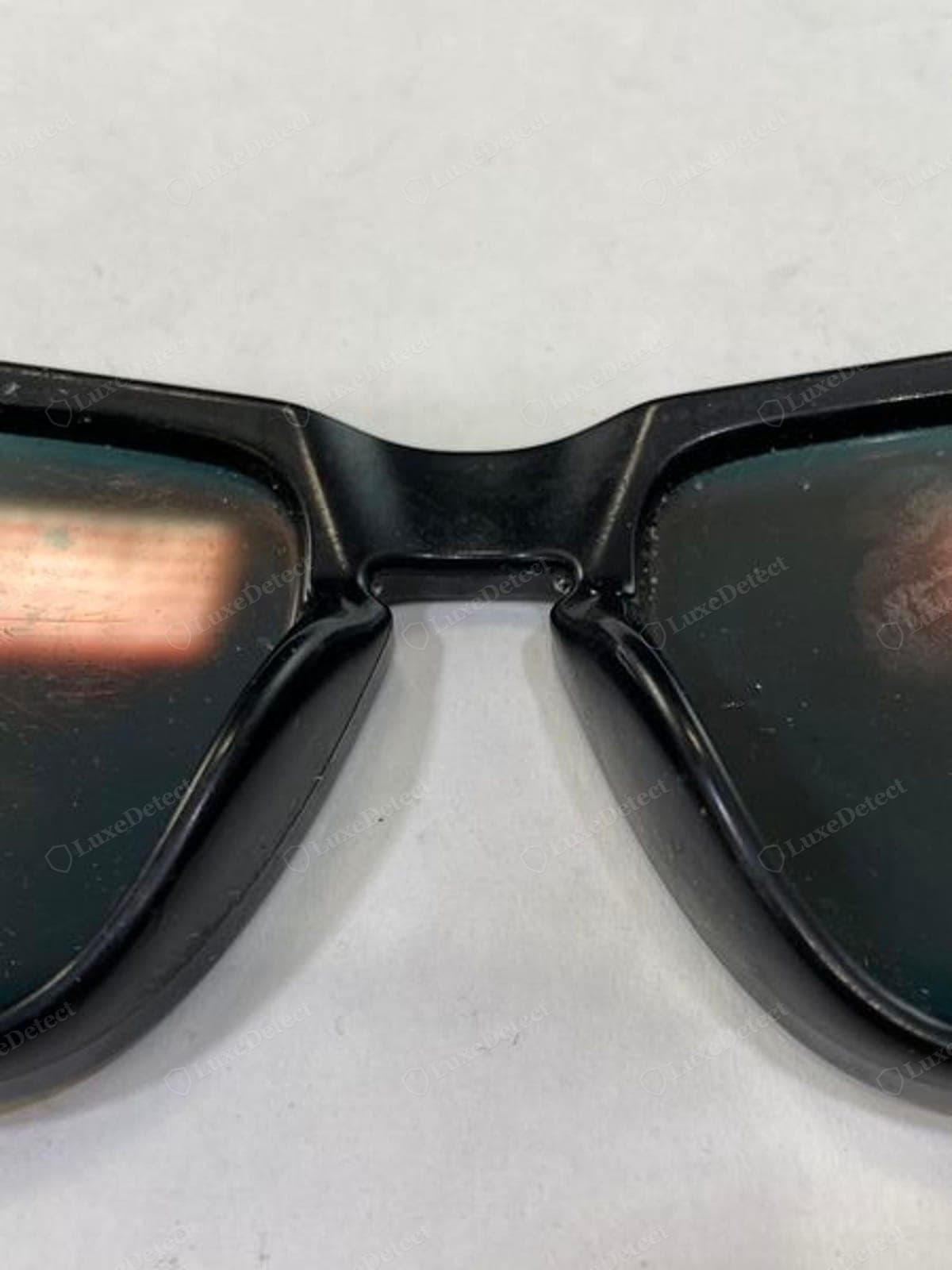
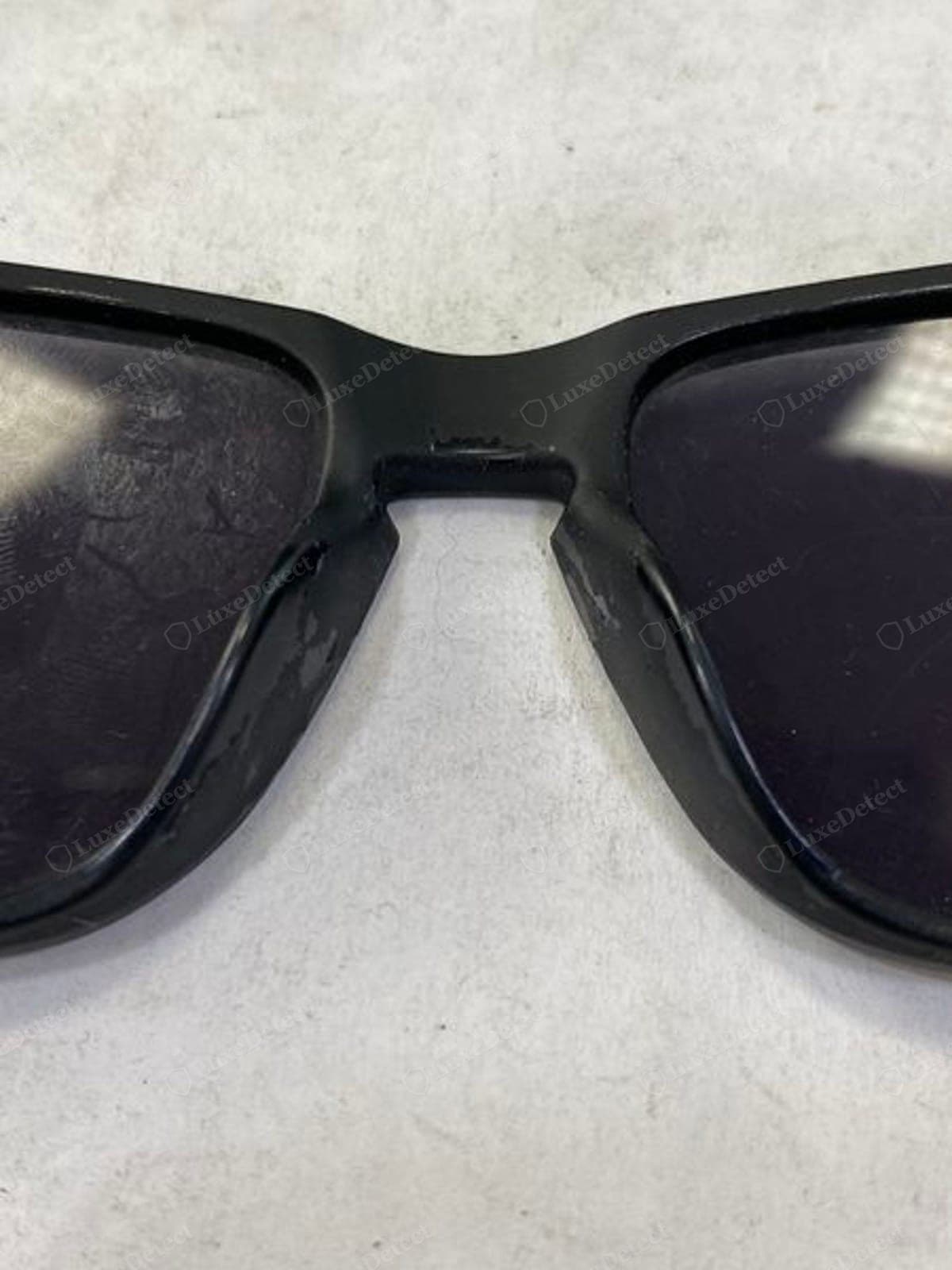
Earsocks and nose pads: genuine Unobtainium has a slightly tacky, grippy texture that increases friction when damp — it does not feel like ordinary smooth rubber or hard plastic. The colour is consistent and the moulding is clean. On sport models (Radar, Jawbreaker) the earsocks are often co-moulded in two colours with a clean boundary.
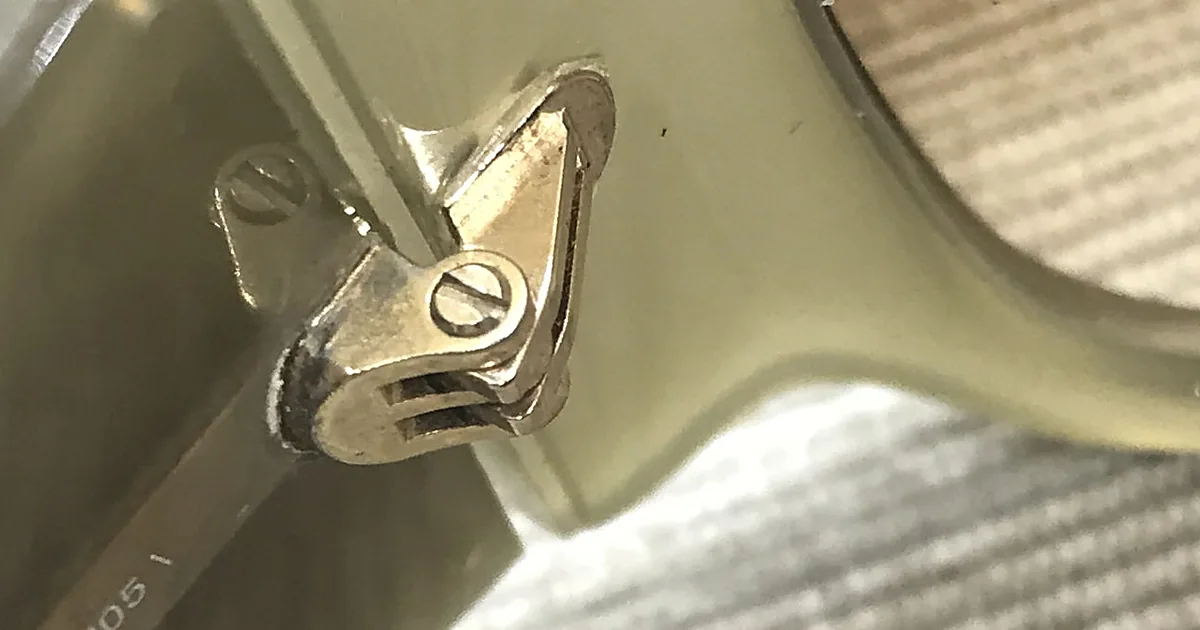
Hinges: genuine Oakley hinges are metal, move with smooth even resistance, and have no play or wobble when the arm is half-open. Cheap fakes use a loose plastic hinge or a stiff, gritty metal one.
Frame material: the acetate ("O Matter" on many models) is dense and slightly flexible, not brittle. It should not have visible mould seams down the arms or flash at the edges.
| Element | Authentic | Counterfeit |
|---|---|---|
| Earsock / nose-pad rubber | Tacky, grippy Unobtainium, grips more when damp | Smooth rubber or hard plastic, no tack |
| Rubber moulding | Clean, consistent colour, crisp two-tone boundary | Blurred boundary, uneven colour, flash |
| Hinges | Metal, smooth even resistance, no play | Loose plastic, or stiff and gritty |
| Frame acetate | Dense, slightly flexible, no mould seams | Brittle or floppy, visible seams and edge flash |
Red flag
Hard, smooth, non-tacky earsocks and nose pads. Genuine Unobtainium has a distinctive grippy feel that a counterfeiter using standard rubber cannot match; combined with a circular temple "O", it is decisive.
What the Box, Microbag and Papers Do and Do Not Prove
Genuine Oakley ships with a microfibre bag (which doubles as a lens cloth), often a hard or soft case depending on the model, and a booklet with an authenticity statement and SKU sticker.
All of it is reproduced. A counterfeiter can print a convincing microbag and booklet cheaply. Packaging is context, not evidence; its only use is cross-referencing the SKU on the box sticker against the code on the temple. Both are copied by counterfeiters, so agreement there is mildly reassuring at best; the packaging's own quality settles nothing. If you're weighing a designer sport frame, our Gucci sunglasses guide covers a similar SKU cross-reference for acetate frames.
Quick Authentication Checklist
- Lens etch, where visible, is crisp and invisible head-on (a missing or present etch proves little)
- One temple: a code in a format Oakley uses (OO/OX/OJ/OY or an older SKU) with a colourway and sensible measurements
- Engraving crisp and even on both temples
- Temple "O" icon is a stretched ellipse, clean and symmetrical
- Earsocks and nose pads are tacky grippy Unobtainium, not hard rubber
- Hinges metal, smooth, no play
- Box SKU sticker matches the temple code
Two or more failures means walk away. Hard non-tacky rubber components, or a code in a format Oakley does not use, is a strong reason to stop on its own. A matching code or a present lens etch is never enough to pass a pair.
When to Get a Professional Opinion
Many fake Oakleys are caught in seconds on the earsock feel, a badly printed code or a crude lens mark. The reason to get a second opinion is the higher-tier replicas — the ones that include a laser-etch, a plausible model code, and decent rubber — sold as genuine on marketplaces at 70–90% of retail. Those get the visible details close enough that the etch and the code alone will not settle it, so we compare the Prizm lens tint, the engraving and the rubber against a verified pair.
Photo-based authentication typically runs $15 for eyewear authentication with a 24-hour turnaround, which against a $150–$300 frame pays for itself on a single avoided fake, and returns a Certificate of Authenticity. Send clear macro shots of the lens etch, both inner temples, and a temple icon.
FAQ
Where is the authenticity mark on real Oakley sunglasses?
There is no single authenticity mark. Genuine lenses carry a tiny "O" icon etched into the lens near an edge, which catches light at an angle and is nearly invisible head-on, and Prizm or polarised lenses often carry PRIZM or POLARIZED etches. Fakes carry those etches too, and many listings never photograph them, so a missing or present etch proves nothing alone. A printed "O" you can see straight on is a reason to look harder.
Are Oakley sunglasses made in China real?
They can be. Oakley produces some models in the USA (Foothill Ranch, California) and others in China, Italy and Japan, and all are legitimate: metal frames, the Frogskins LX and prescription frames say China, the Obsessed says Italy. Fakes almost always say MADE IN U.S.A., so the country line is not an authentication check in either direction.
How do I check the model number on Oakley sunglasses?
Open either arm and read the inside of the temple. It carries an "OO" (sunglasses), "OX" (prescription), "OJ" (youth sunglasses) or "OY" (youth prescription) model number, a colourway code, and usually the lens, bridge and temple measurements, e.g. "OO9102-K555 57□18 137". Older pairs print an SKU like "12-856 60 15 128". A code in a format Oakley does not use is a tell, but most fakes print a correct code, so a match proves nothing. Our Oakley model number checker decodes it.
What does genuine Oakley Unobtainium feel like?
Slightly tacky and grippy, not smooth. The compound is designed to increase friction when it gets damp with sweat, so genuine earsocks and nose pads feel a little sticky and hold to skin. Fakes use ordinary smooth rubber or hard plastic that has no tack. It is one of the more reliable in-hand checks.
Can a fake Oakley have a laser-etched lens?
Yes. The better replicas carry an etch, including PRIZM and POLARIZED etches, so its presence does not confirm authenticity, and a missing one does not confirm a fake either. On a pair with an etch, check that it is crisp, correctly sized and positioned, and invisible head-on, then move to the temple code and the rubber components.
How much does it cost to authenticate Oakley sunglasses?
Photo-based authentication starts at $15 for eyewear with a 24-hour turnaround. The cheap fakes show themselves on a crude lens mark, a badly printed code or hard rubber; the value of a professional check is on the higher-tier replicas sold near retail, where the etch and model code are present but the details are subtly off.