Watch Authentication Specialist
Watch authentication specialist. Focuses on movement inspection, case finishing, and serial verification.
Last updated October 2026 · Published September 2026 · Contact
The Scale of the Problem
The Hublot Big Bang is one of the most counterfeited modern luxury watches — loud, instantly recognisable, and a prime target. The fakes range from $40 street versions to $500–$1,200 "clones" with a real automatic movement, a ceramic bezel and convincing H-recess bezel screws.
This guide is brand-wide: the checks for any Hublot — Big Bang, Classic Fusion, Spirit of Big Bang, MP series — in the order a professional runs them. The tool below checks the caseback numbers; the physical checks are where a Hublot fake is caught.
What to check, ranked by reliability
| Checkpoint | Reliability | What it tells you |
|---|---|---|
| The Bezel Screws — Type and Count | ★★★★★ | On a modern Big Bang or Classic Fusion, plain bezel screws or only a faint, shallow imitation of the H, or the wrong number of them, fail. Which way the H’s point is not a test; vintage MDM pieces commonly use twelve slotted screws. |
| The Movement — HUB Calibre and Sweep | ★★★★★ | A UNICO reference with no column wheel, a chrono hand that parks off-12, or a Japanese quartz module behind a “Swiss Made” dial means a movement no genuine Hublot of that reference ships with. |
| Ceramic, King Gold, and Weight | ★★★★★ | “Ceramic” that warms fast and taps dull, or a chip showing metal beneath a coating, is decisive — genuine Hublot ceramic is solid through. |
| The Caseback Numbers — Reference, Serial, Limited Edition | ★★★★★ | A limited-edition number with a size that doesn’t match the real run, or a piece number above the run, is decisive; format alone is only a starting point. |
| The Dial, Crystal, and Hands | ★★★★★ | Printed logos where they should be applied and fuzzy sub-dials are where a clone fails under a loupe. |
| Strap, Deployant, and the "One Click" System | ★★★★★ | Straps get swapped, so a wrong strap isn’t decisive — but a fake One Click mechanism built into the case is. |
| Model-Specific Checks | ★★★★★ | Decisive with the exact reference in hand, misleading without it. |
| Box, Papers, and Warranty Card | ★★★★★ | Context only — cards are forged and sold separately. Cross-check the reference and serial against the caseback. |
The Bezel Screws — Type and Count
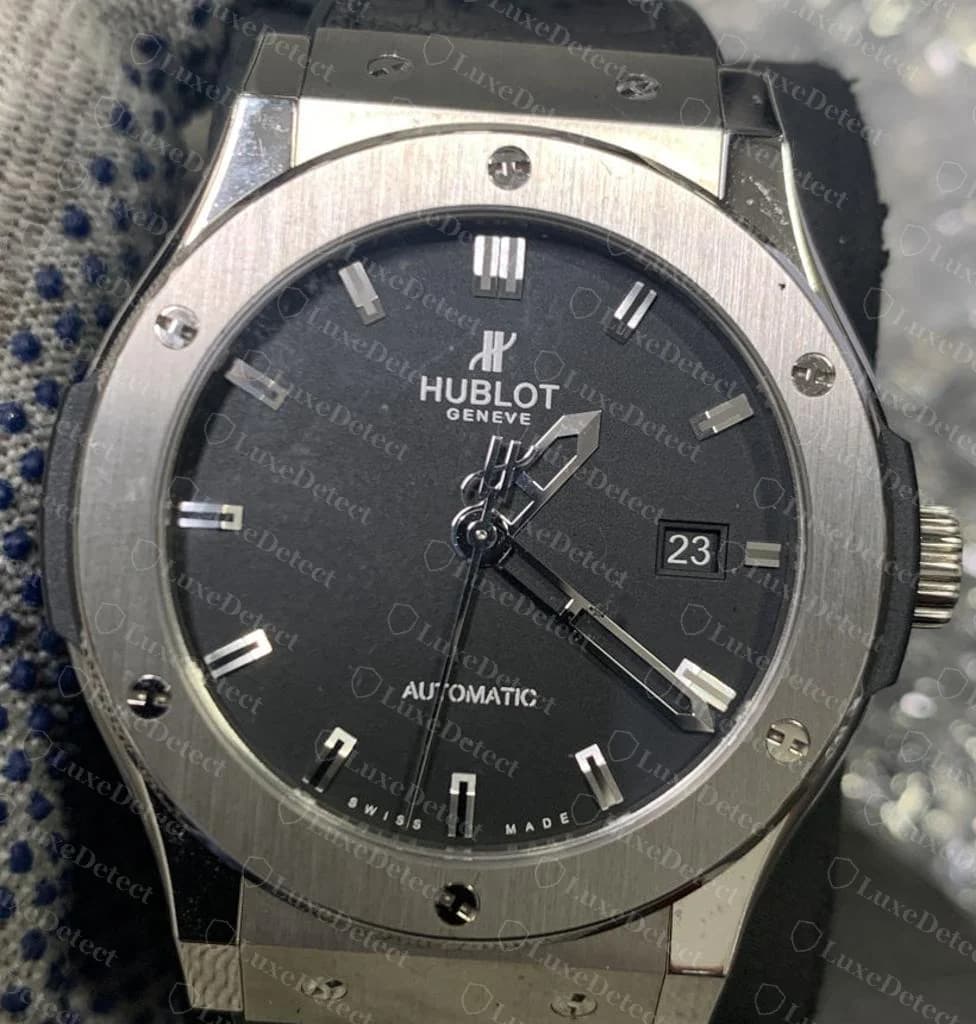
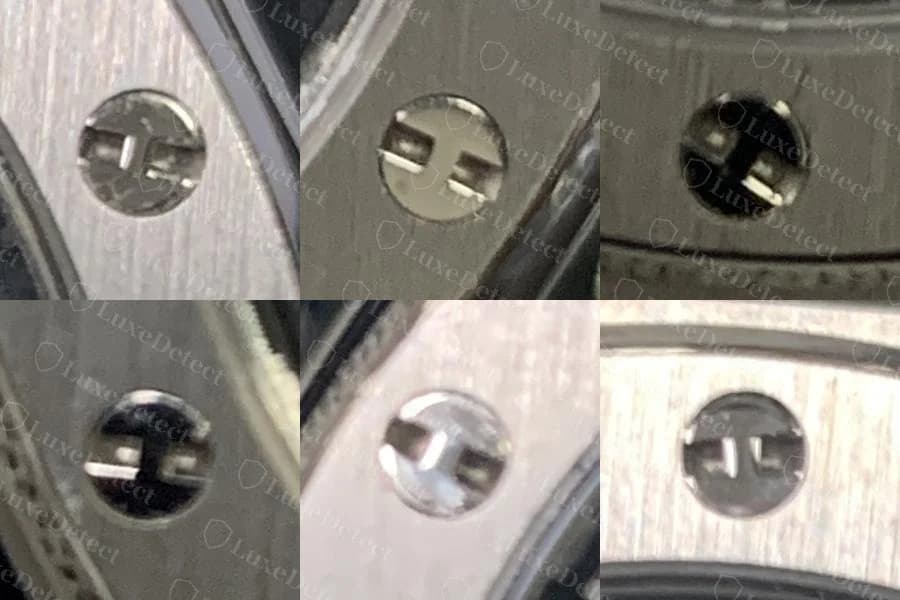
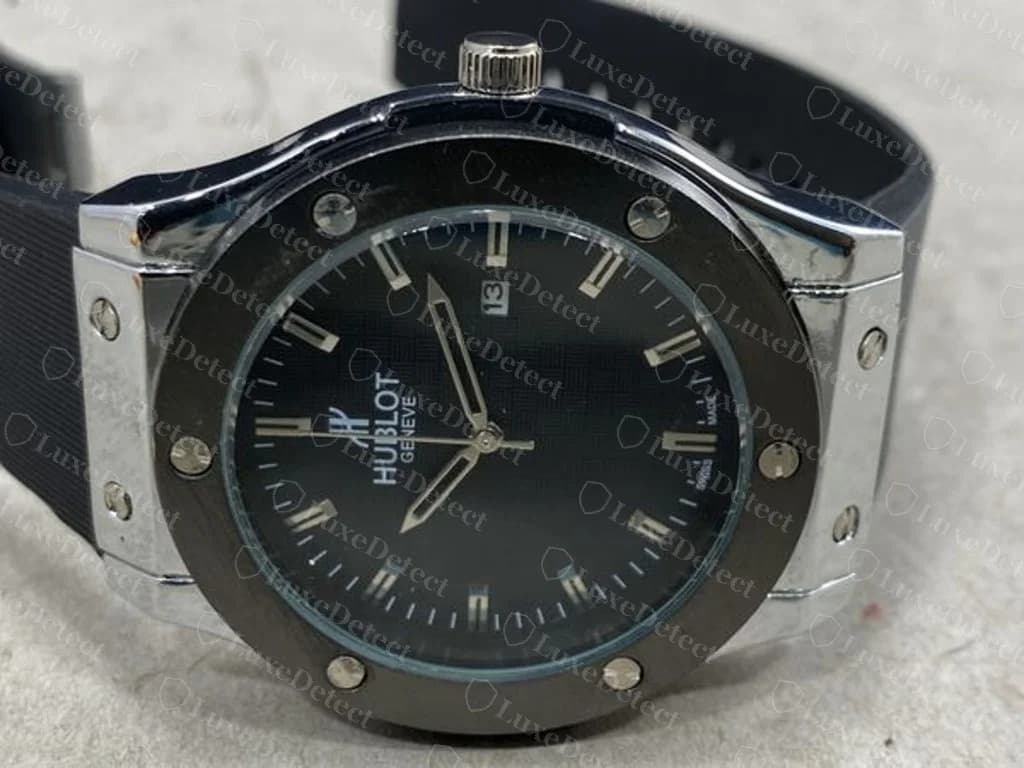
Hublot's signature is the ring of exposed screws around the bezel — six on the modern Big Bang and Classic Fusion, each a broad flat head with an H-shaped recess cut into it, varying on the MP lines. Check two things on a modern piece: the count is right for the model, and every head carries a clean, deep H. Budget fakes use plain domed or slotted heads, or, like the counterfeit above, small soft-edged screws with only a faint, shallow mark where a crisp H should be; others put Phillips or hex screws under a fake H-shaped cap.
Don't judge which way the H's point. Many guides say the H's on a genuine Hublot all line up. The genuine watches in our own archive don't bear that out: at full resolution, the H's on the genuine Classic Fusion above, on genuine Big Bangs we checked, and on the genuine Spirit of Big Bang in section 7 all sit at different angles. Screws get turned in servicing, and better fakes line theirs up neatly, so orientation proves nothing either way. The same goes for the screws on the back — the genuine casebacks further down this guide show them at all sorts of angles.
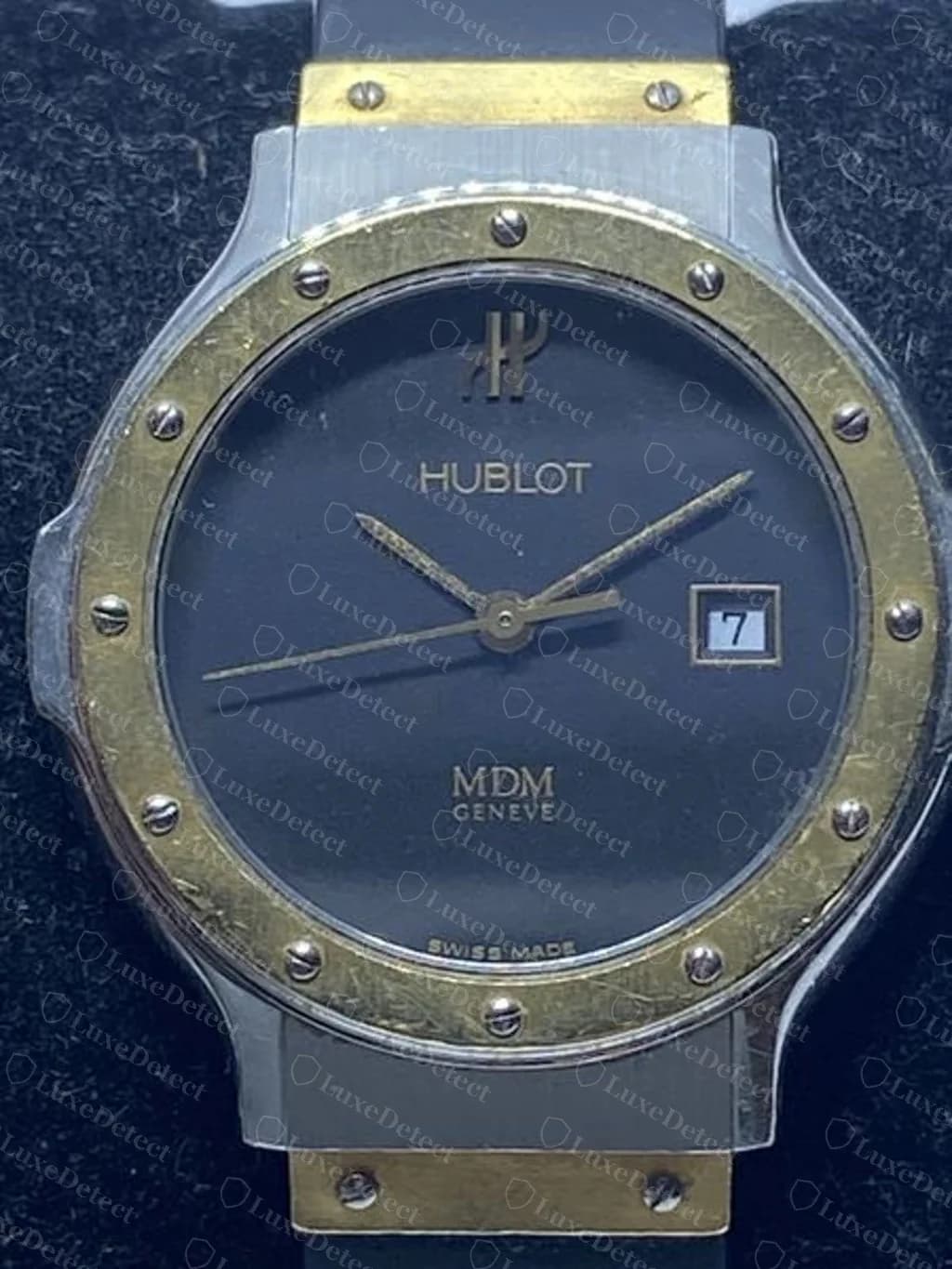
Vintage pieces are different. The MDM and early Classic models from before the 2005 Big Bang commonly have twelve bezel screws with plain slotted heads, as on the MDM pictured below (sizes and references vary, so compare against your exact reference). On those the H check does not apply; check the count and the even spacing instead.
| Element | Authentic | Counterfeit |
|---|---|---|
| Screw count | Six on Big Bang and Classic Fusion; commonly twelve on vintage MDM / Classic (varies by size and reference); varies on MP lines | A wrong count for the model, or decorative screws that hold nothing |
| Screw type | Modern: broad flat head with a crisp, deep H recess. Vintage MDM: plain slotted heads | Plain domed or slotted heads on a modern model, Phillips or hex under a fake cap, or a soft, shallow H |
Red flag
On a modern Big Bang or Classic Fusion: bezel screws with no crisp H recess (plain domed or slotted heads, or only a faint, shallow imitation of the H), or the wrong number of them. Genuine modern bezel screws all carry a crisp H. Which way the H's point is not a test — genuine watches show them at mixed angles.
The Movement — HUB Calibre and Sweep
Flip the watch over. Most modern Hublots have a display caseback.
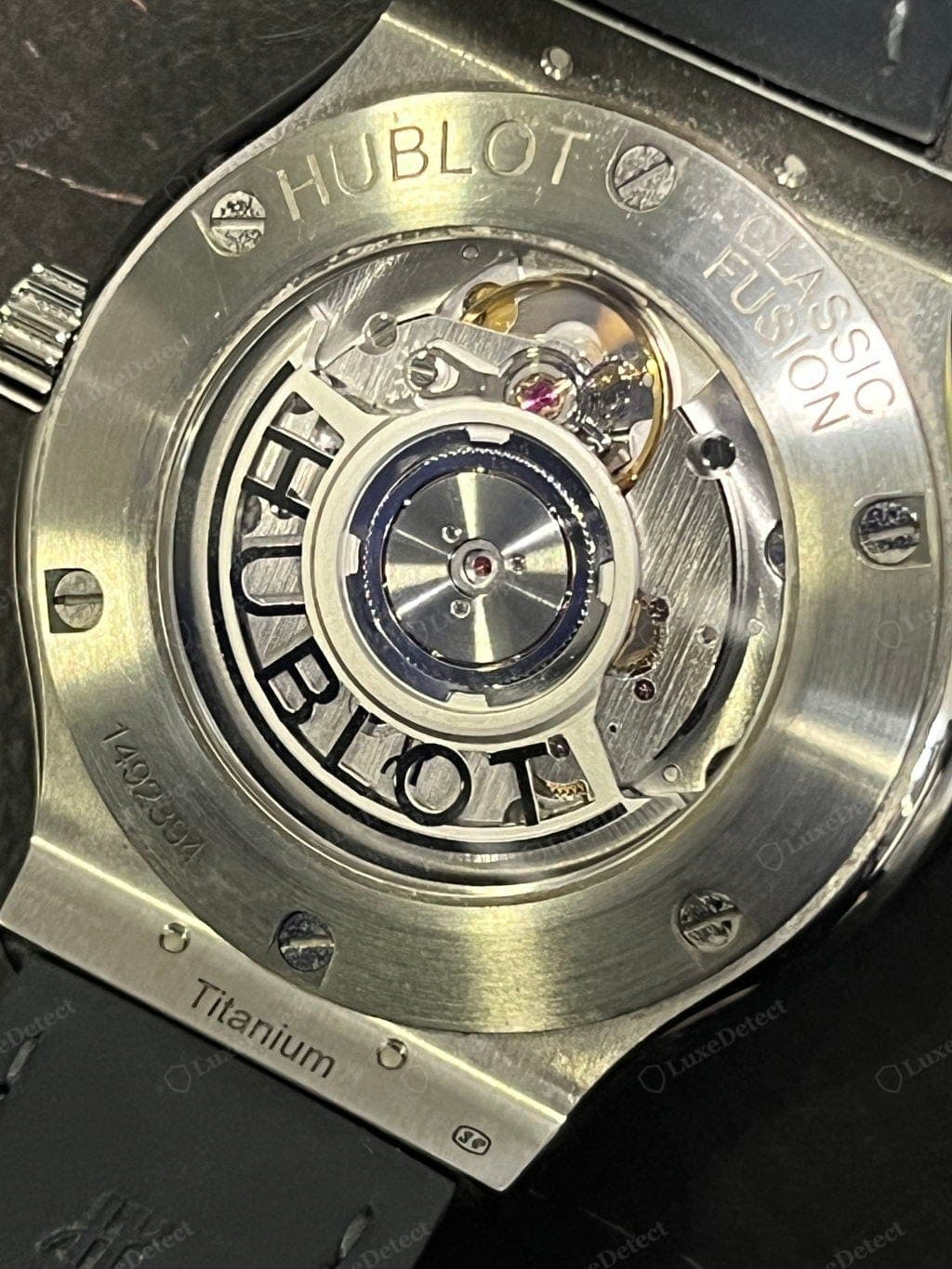
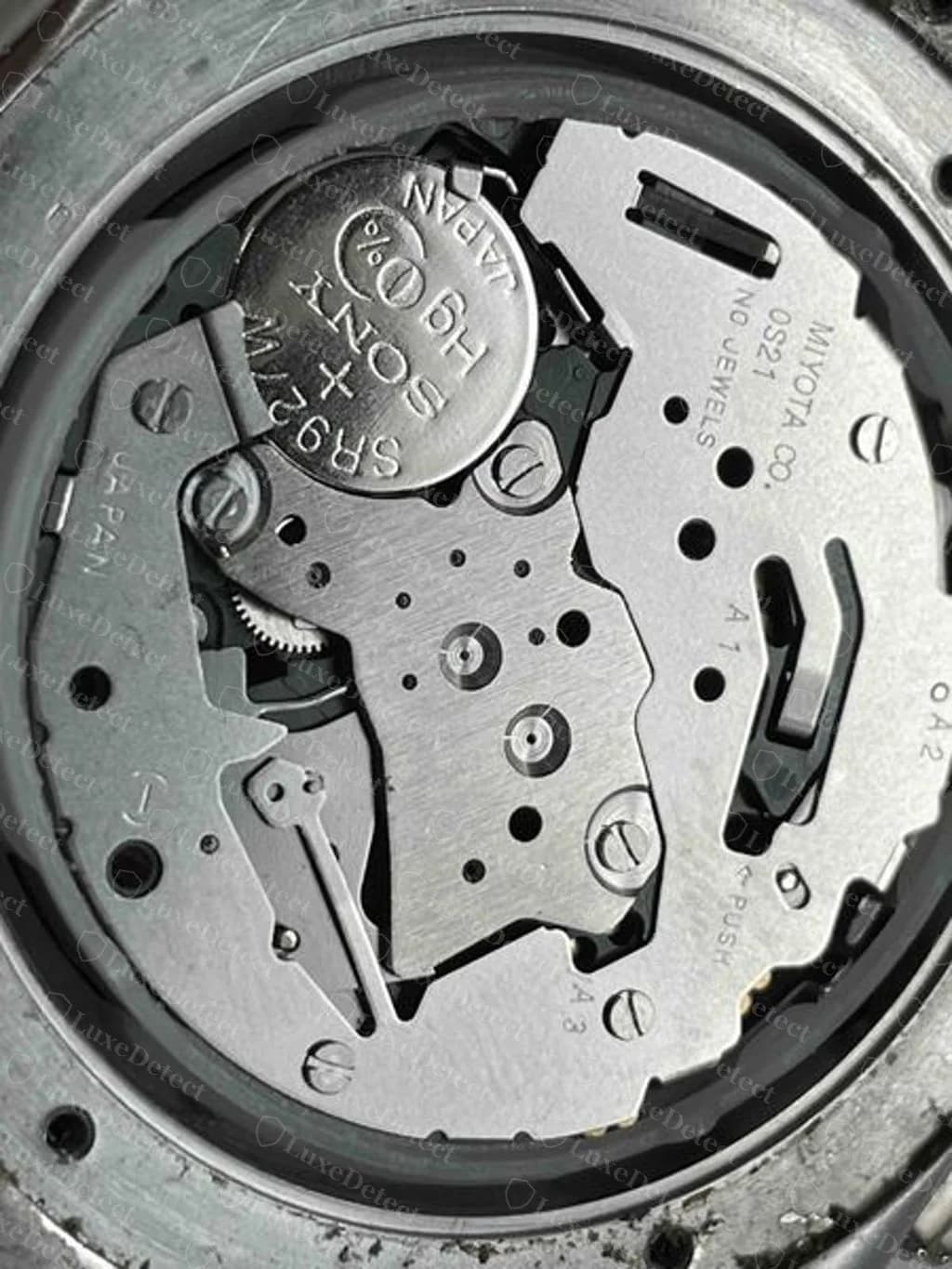
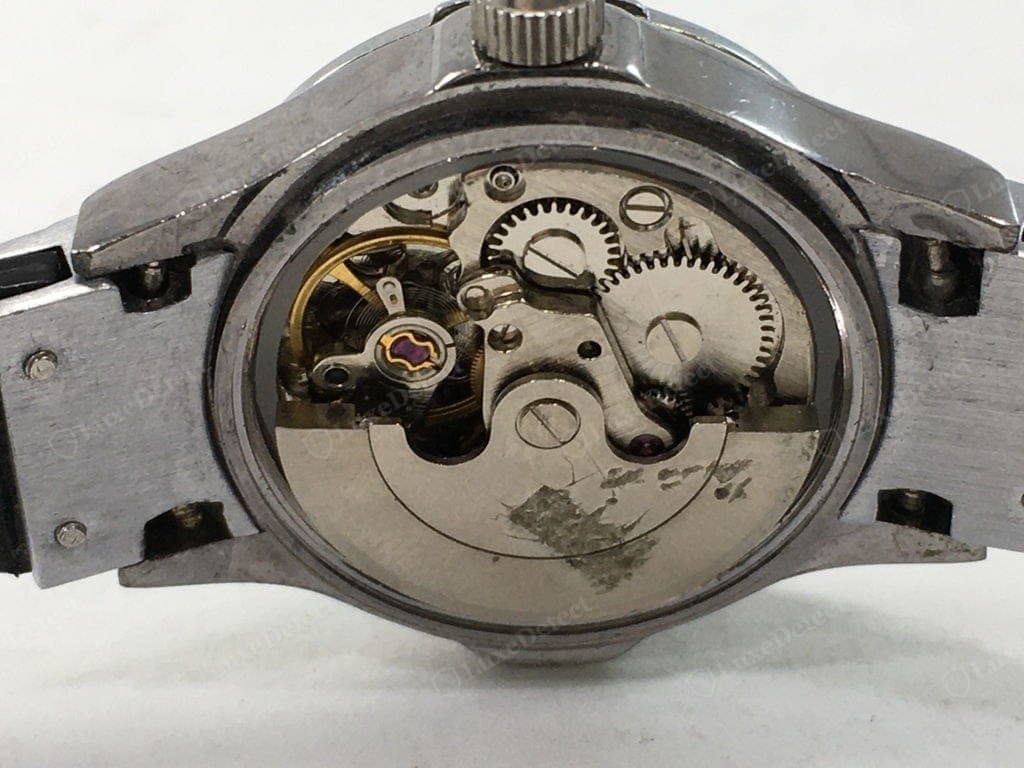
A modern mechanical Hublot runs a HUB calibre — an in-house UNICO (HUB1240 and derivatives, a column-wheel flyback chronograph with the column wheel visible on many Big Bang models) or a Sellita/ETA-based movement finished for Hublot (HUB1110, HUB1112). Either way it sweeps.
Hublot has made quartz watches too — the vintage MDM and early Classic pieces, and some smaller models — so a ticking seconds hand on its own does not make a Hublot fake. What is decisive is quartz where the reference calls for an automatic: a tick under a dial that says "Automatic", or a battery module behind a Big Bang sold as UNICO. And a genuine Hublot quartz is Swiss: a Japanese module like the Miyota above, behind a dial printed "Swiss Made", is a fake.
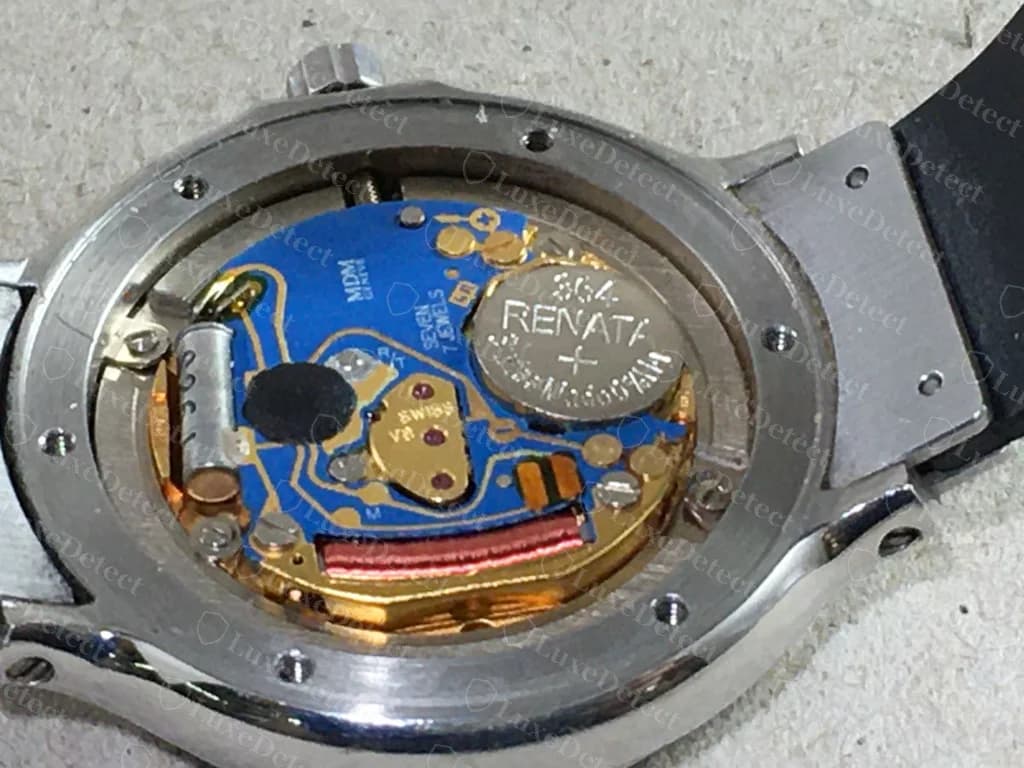
Through the caseback, a genuine Hublot shows a "HUBLOT"-engraved rotor (often skeletonised, frequently with the calibre number), clean deliberate industrial finishing, the column wheel and flyback correctly built on UNICO models, and a movement that matches the reference — a plain three-hander behind a "Big Bang chronograph" dial is decisive.
| Element | Authentic | Counterfeit |
|---|---|---|
| Second hand / chrono | Smooth sweep on automatic references; chronograph resets crisply to exactly 12 | A tick where the reference is automatic, or a chrono hand that parks off-12 |
| Quartz (where fitted) | Swiss-made module — vintage MDM, Classic and some small models | Japanese module (marked "JAPAN", often Miyota) behind a "Swiss Made" dial |
| Rotor | "HUBLOT" engraved, often skeletonised, consistent finish | Generic rotor, printed logo, or a plain oscillating weight |
| UNICO column wheel | Present and correctly built where the reference has UNICO | Absent, or a dressed-up clone with no column wheel |
Red flag
A UNICO reference with no column wheel behind the caseback, a chronograph hand that does not snap back to exactly 12 on reset, or a Japanese quartz module behind a "Swiss Made" dial. Any one of them means a movement no genuine Hublot of that reference ships with.
The Caseback Numbers — Reference, Serial, Limited Edition
Hublot engraves the caseback with a reference number, a serial number, and — on limited pieces — a limited-edition number.
The reference on a modern Hublot (the Big Bang system from 2005 on) is dot-separated: a 3-digit model block, a 2-letter case-material code (NX titanium, SX/SB steel, CX ceramic, OX King Gold, MX Magic Gold), then bracelet and dial codes — e.g. `301.SB.131.RX`. Older pieces — MDM and early Classic models — use a shorter form: a 4-digit model number with dot suffixes, sometimes behind a letter, such as `1391.1` or `B 1405.1`. An older format is not a red flag on a genuine MDM or early Classic, and the checker below accepts both — but a 4-digit reference on a Big Bang, Classic Fusion or Spirit of Big Bang is a contradiction, because those lines only ever used the modern system. Not every Hublot shows the reference on the back face (the Classic Fusion below shows only the serial), so take it from the card or the listing and check it fits the watch.
The serial identifies the individual watch. On the genuine pieces we see it is usually 6–7 digits, sometimes behind a short letter prefix; Hublot publishes no serial-to-year table. The limited-edition number is engraved piece-over-size, e.g. `088/500`, and must be internally consistent (piece ≤ size) and match the published run for that exact edition.
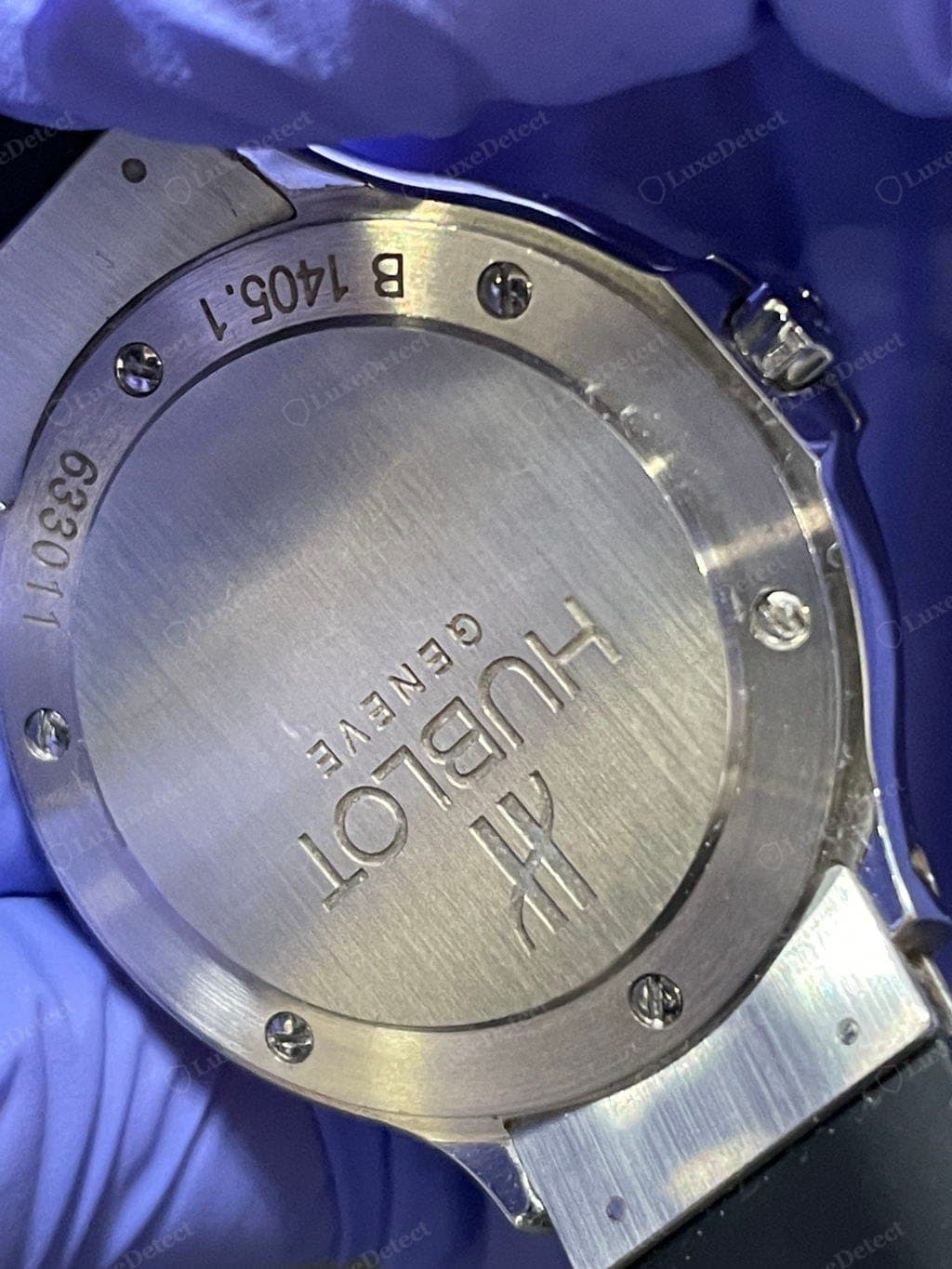
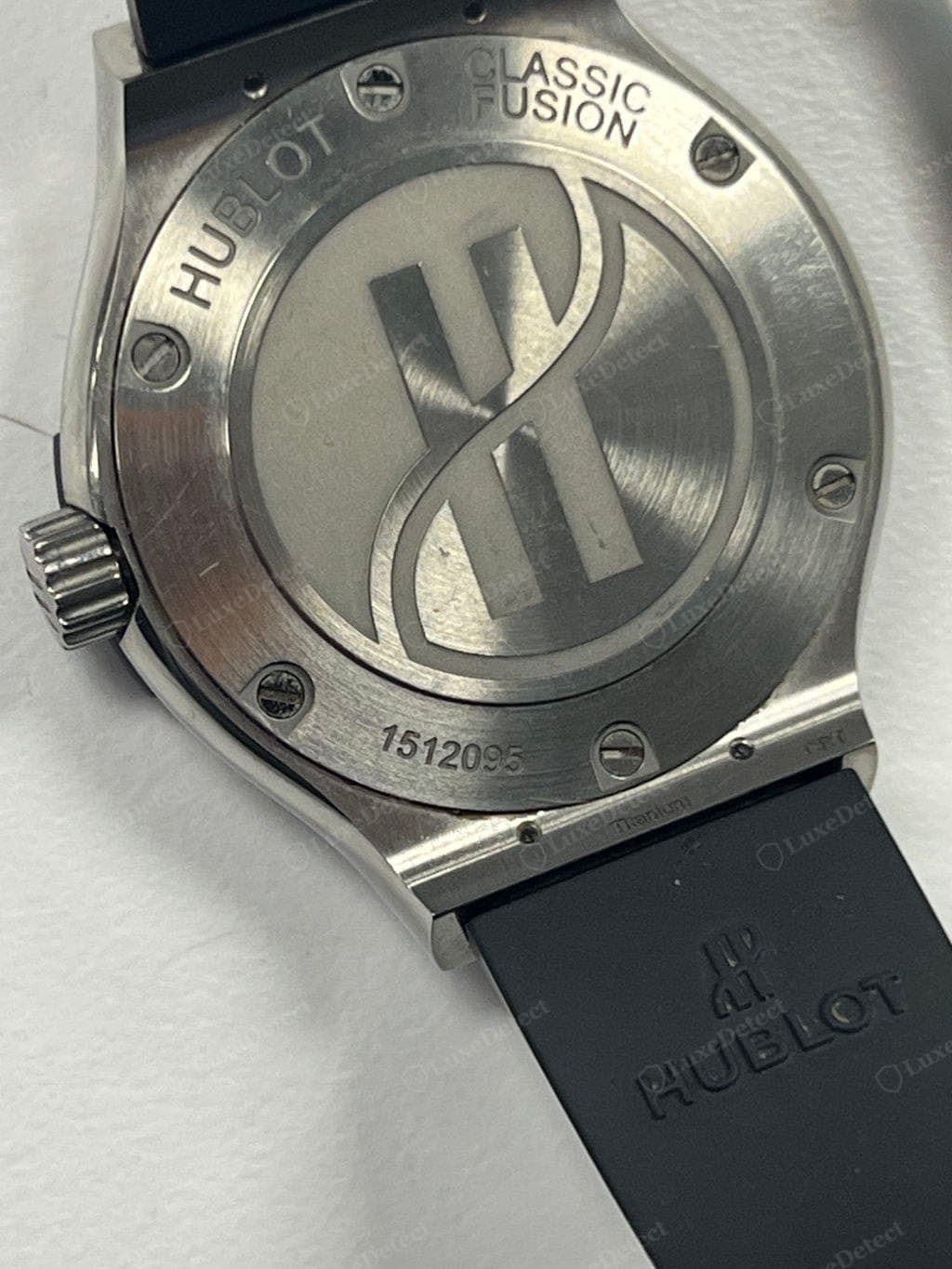
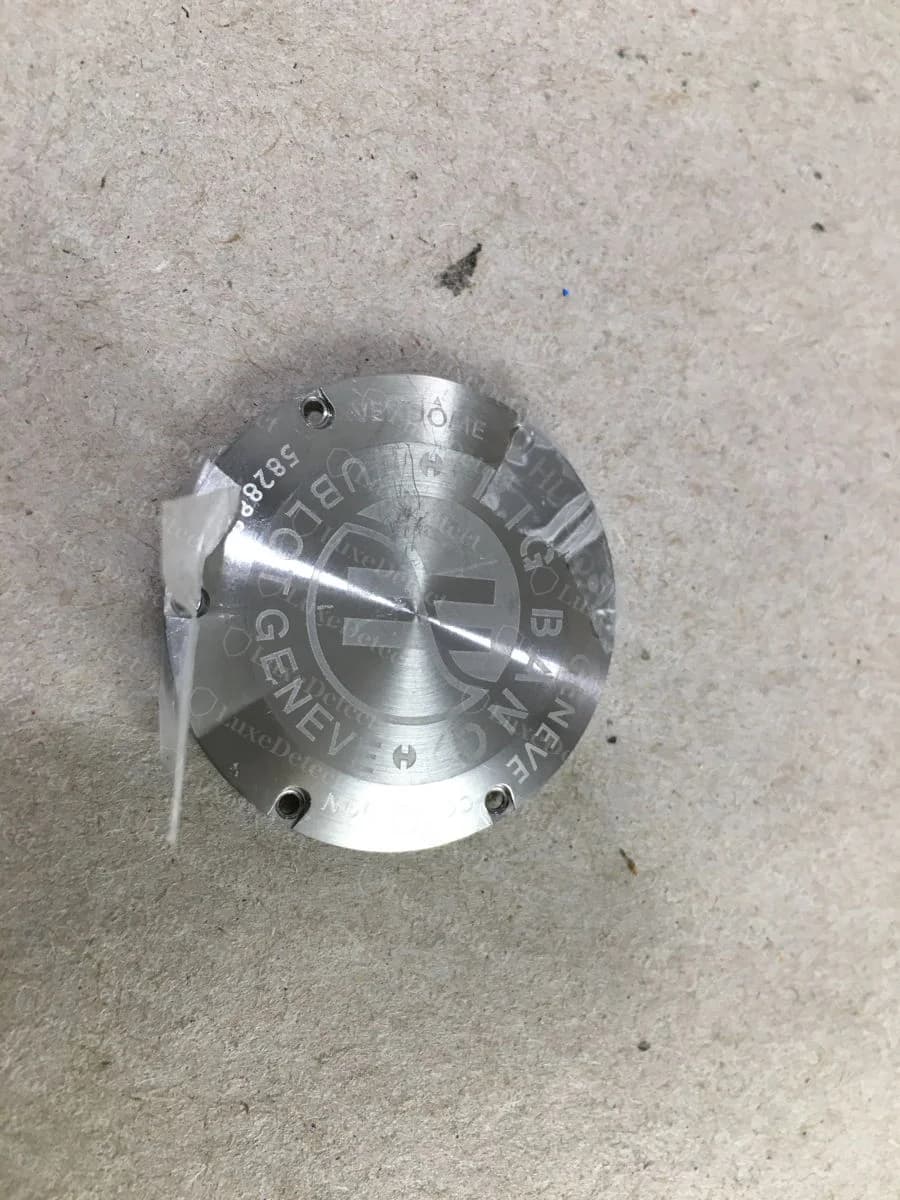
Check the format and the internal consistency:
Engraving quality: genuine engraving is deep, crisp, and evenly spaced; fakes show shallow, fuzzy, or unevenly stamped characters, sometimes a wrong font. A limited-edition size that does not match the real edition (a "500" where the run was 250), or a piece number above the run, is decisive.
| Element | Authentic | Counterfeit |
|---|---|---|
| Reference format | Modern: dot-separated, 3-digit block + 2-letter material code + more. Vintage: 4-digit model + dot suffixes | Run together, missing blocks, or a material code that does not match the metal |
| Serial | Usually 6–7 digits, sometimes with a letter prefix, crisply engraved | Fuzzy or shallow engraving, or a format that fits no Hublot era |
| Limited-edition number | Piece ≤ size, size matches the published run | Piece > size, or a round size that does not match the edition |
| Engraving | Deep, crisp, even | Shallow, fuzzy, unevenly stamped |
Worth knowing
The caseback numbers are a format and consistency check, not proof. Hublot does not confirm serials for the public, so a caseback that passes here still has to be authenticated on the screws, movement, and materials. The [Hublot caseback checker](/hublot-serial-number) has the material-code table.
Ceramic, King Gold, and Weight
Hublot's materials are central to the brand and hard to fake convincingly.
Ceramic (Big Bang and Classic Fusion in black, white, blue, grey) is dense, cool to the touch, with a fine matte or polished finish and no casting porosity. Fake "ceramic" is usually coated metal or a lighter polymer — it warms faster in the hand, may show a seam or a chip revealing metal, and looks slightly plasticky. Tapped gently, real ceramic gives a hard high click; coated metal is duller.
King Gold is Hublot's proprietary red-gold alloy — noticeably heavier than steel of the same size, a specific warm red, not the yellow of standard 18k. A "gold" fake at steel weight is plated.
Weight overall: a genuine Big Bang 44mm in steel-and-ceramic is around 140–160 g on the strap; a King Gold piece is well over 200 g. Fakes run light.
| Element | Authentic | Counterfeit |
|---|---|---|
| Ceramic feel | Dense, stays cool, hard high click when tapped | Warms quickly, dull click, possible seam or chip showing metal |
| King Gold | Heavy, deep warm-red colour | Steel weight (plated), or a yellow-gold tone |
| Overall weight | Full for the size and materials | 15–25% under, feels hollow |
Red flag
"Ceramic" that warms up fast in your hand and gives a dull tap, or a chip anywhere on the case showing metal under the coating. Genuine Hublot ceramic is solid through.
The Dial, Crystal, and Hands
The dial: many Big Bang models have a skeletonised or sapphire dial. Genuine Hublot dial work is precise — the applied "HUBLOT" logo and "H" appliqué cleanly set, level, correctly proportioned; sharply printed sub-dials with even concentric finishing; a cleanly cut date window with an aligned disc. Fakes show a printed logo where it should be applied, fuzzy sub-dials, and misaligned or wrong-font date discs.
The crystal is sapphire, often domed and anti-reflective — optically clean, no distortion. Heavy blue or green glare, edge distortion, or a crystal that scratches easily (mineral glass or acrylic) is wrong.
The hands are precisely finished, often faceted, with clean lume inside the outline. Roughly cut hands, uneven heights, or lume over the edges are fake tells.
| Element | Authentic | Counterfeit |
|---|---|---|
| Applied logo | "HUBLOT" and "H" cleanly applied, level, correct proportion | Printed where it should be applied, or crooked |
| Sub-dials | Sharp printing, even concentric finish | Fuzzy, uneven, wrong proportions |
| Crystal | Optically clean sapphire, minimal distortion | Heavy glare, edge distortion, scratches easily |
| Hands | Faceted, clean lume within the outline | Rough edges, uneven height, lume over the edges |
Worth knowing
Dial and hand finishing is where a clone gives itself away under a loupe. It is strong corroboration but read it alongside the screws and movement rather than alone.
Strap, Deployant, and the "One Click" System
Hublot's straps are a signature — structured rubber, often with a bonded leather or fabric top layer, a specific texture, and a cleanly moulded "HUBLOT" on the keeper or underside. Genuine straps are dense and hold their shape; fakes are floppier, thinner, and the moulded text is soft.
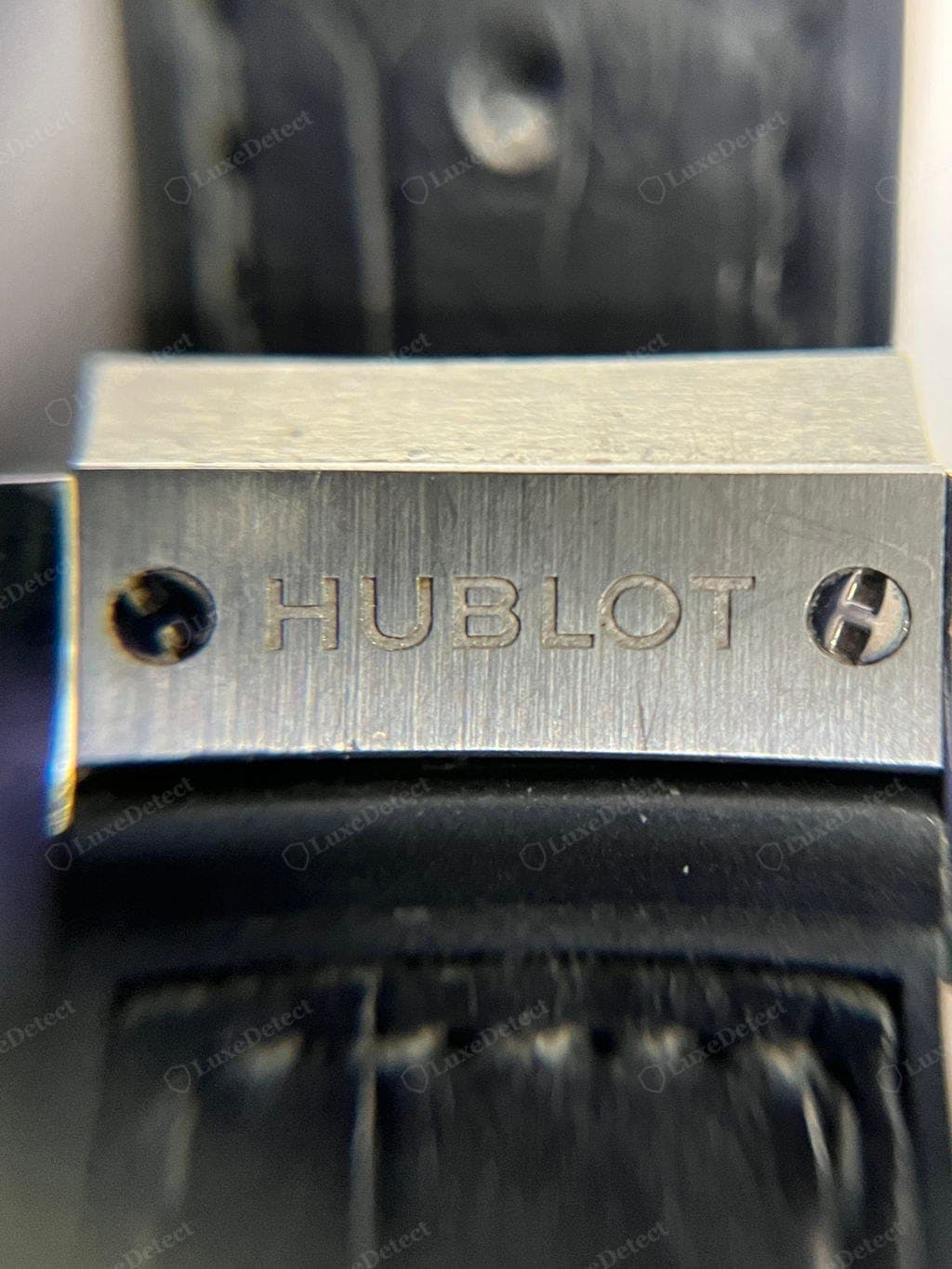
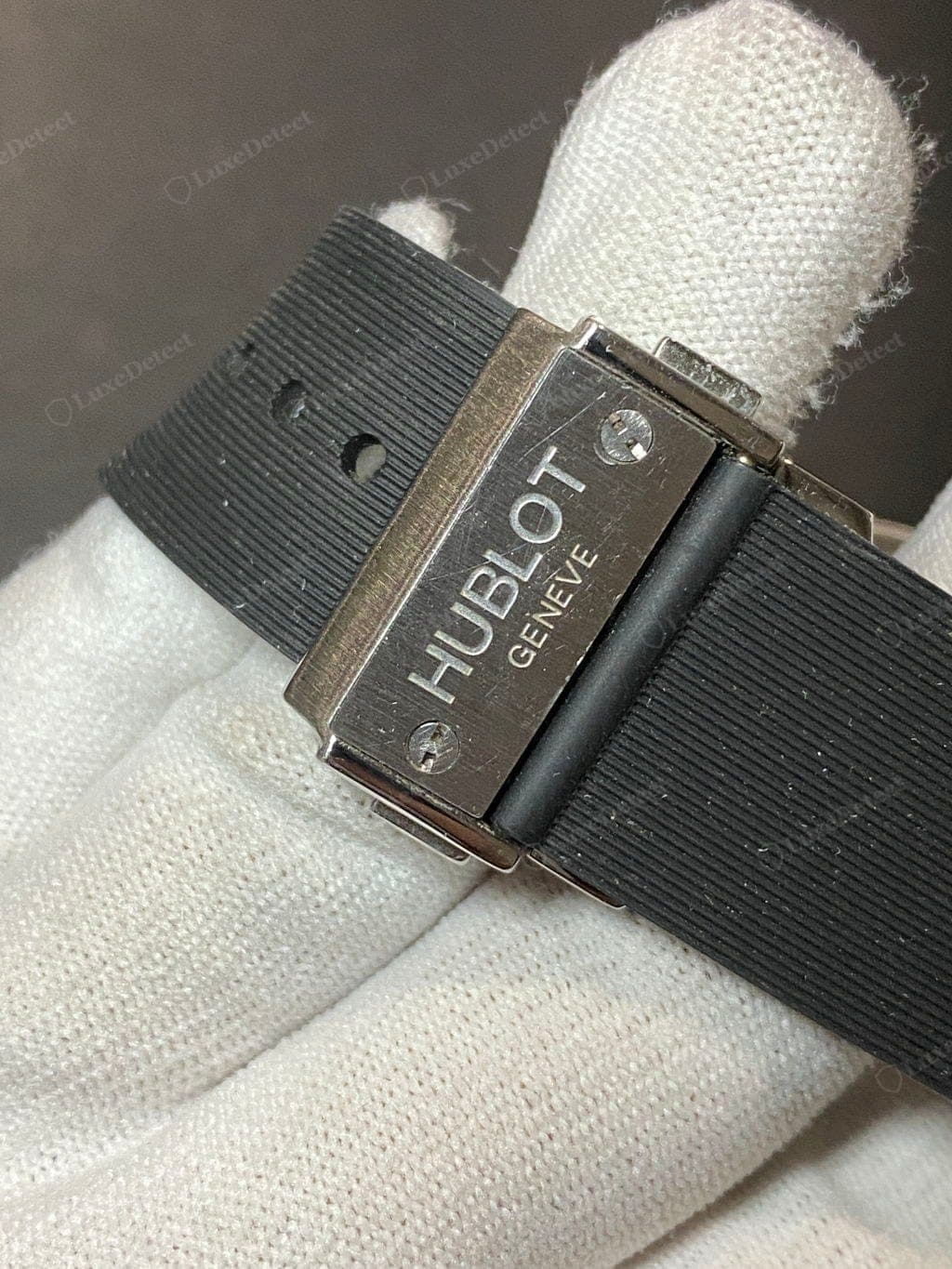
Later Big Bang and Classic Fusion models use Hublot's One Click quick-change system — a push-button under the strap at the lug releases it with a precise click, no tools. On a genuine watch the button is crisp and the strap seats with zero play. A fake One Click feels vague, or the watch has fixed spring bars behind a fake button.
The deployant clasp carries a crisply engraved Hublot logo and closes with firm, even clicks. A gritty or loose clasp, or a shallow logo, is a fake tell — but as the counterfeit clasp above shows, better fakes get the engraving right, so a good clasp proves little.
| Element | Authentic | Counterfeit |
|---|---|---|
| Strap | Dense structured rubber, crisp moulded "HUBLOT", holds shape | Thin, floppy, soft moulded text |
| One Click | Crisp button, strap seats with no play | Vague action, or a non-functional button over fixed bars |
| Clasp (corroboration only) | Crisp engraved logo, firm even clicks | Shallow logo, gritty or loose action — but a clean clasp proves little |
Worth knowing
Strap and clasp quality is corroboration — straps get swapped over a watch's life, so a wrong strap is not decisive on its own, but a fake One Click mechanism built into the case is.
Model-Specific Checks
Once the brand-level checks are clear:
- Big Bang: the "sandwich" case construction (bezel, case, back bolted together in visible layers), the correct UNICO or HUB movement, the chronograph pusher shape.
- Classic Fusion: thinner sandwich case, often a simpler HUB1110/1112, polished bezel over a brushed case.
- Spirit of Big Bang: the tonneau case — proportions and strap integration are specific and hard to fake. The bezel and case carry screws with the same H recess, again at mixed angles on a genuine watch, and the display back is engraved "SPIRIT OF BIG BANG" down one side.
- MP series: effectively one-off engineering; any MP claim needs specialist verification.
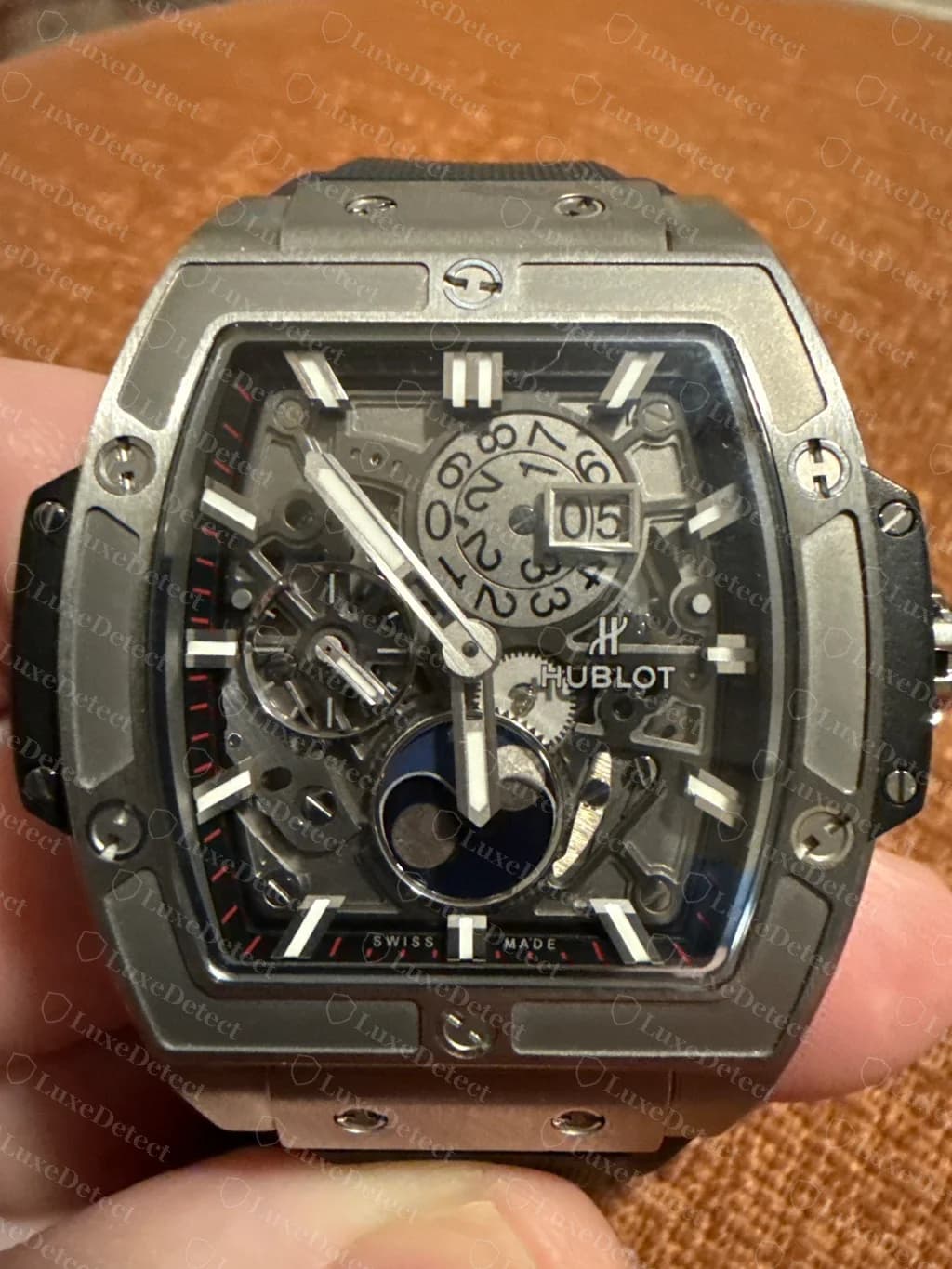
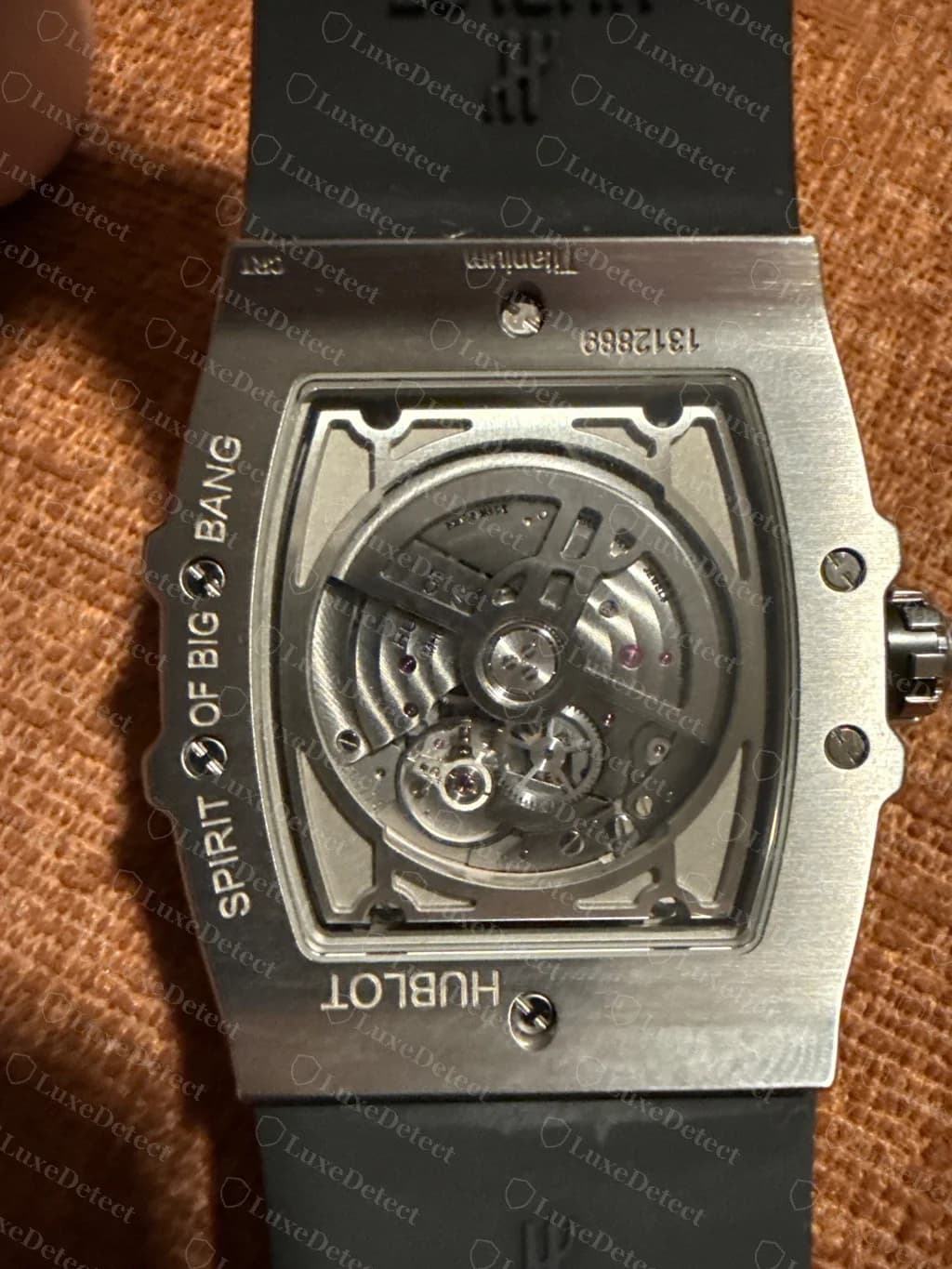
Run the brand checks above first; these only narrow it down.
| Element | Authentic | Counterfeit |
|---|---|---|
| Big Bang sandwich case | Distinct bolted layers, clean machining | Faked layer lines, or a one-piece case with etched "seams" |
| Classic Fusion profile | Thin, polished bezel over brushed case | Thicker, over-polished, soft edges |
| Spirit tonneau shape | Precise barrel proportions, integrated strap, "SPIRIT OF BIG BANG" engraved on the display back | Off proportions, awkward strap join, a generic caseback |
Worth knowing
Model checks are decisive with the exact reference in hand and misleading without it. Confirm the reference, then apply them.
Box, Papers, and Warranty Card
A Hublot comes with a warranty card, booklets, and a substantial box, often with a strap screwdriver. None of it authenticates the watch — cards are forged and genuine ones are sold separately from their watches.
Check that the card's reference and serial match the caseback exactly and that the retailer and date are plausible. An authorised dealer can confirm whether a serial is on Hublot's system. A card–caseback mismatch is a red flag; a match is a mild positive.
| Element | Authentic | Counterfeit |
|---|---|---|
| Card reference / serial | Match the caseback exactly | Blank, mismatched, or a different reference |
| Retailer + date | Plausible for the reference's production period | Predates the reference, or an implausible dealer |
Worth knowing
Papers are context only. Cross-check the reference and serial against the caseback; treat the rest of the box as packaging.
Quick Authentication Checklist
- On a modern Big Bang or Classic Fusion, count six bezel screws, each with a crisp H recess. Plain heads or a faint, shallow imitation of the H are a fast fail. Ignore which way the H's point, and ignore the caseback screws. Vintage MDM pieces commonly have twelve slotted screws instead.
- Through the caseback: a HUBLOT-signed rotor on automatics, a column wheel on UNICO references, and no Japanese quartz module behind a "Swiss Made" dial.
- Reset the chronograph — the seconds hand must snap to exactly 12.
- Check the reference format (modern or vintage) and the limited-edition number's internal consistency.
- Feel the ceramic — dense, cool, hard tap. Warm and dull means coated metal.
- Weigh it against the known figure for the model and materials.
- Loupe the dial: applied logo level and proportioned, sub-dials sharp.
- Test the One Click button (where the model has it) — crisp, no play.
- Confirm the model-specific case construction for the exact reference.
- Match the card reference and serial to the caseback; ignore the rest.
Two or more failures means walk away. A single failure on the bezel screws, the movement, or the ceramic is on its own sufficient.
When to Get a Professional Opinion
The clone tier is where a matching mark proves nothing on its own: a $500–$1,200 fake with a real automatic movement, convincing H-head bezel screws, a sapphire crystal and a convincing ceramic-look bezel copies every visible mark and passes a quick handling. What separates it from a genuine watch is the movement architecture (a real UNICO column wheel), ceramic density, engraving depth, and dial finishing under magnification, compared against a verified watch — judgement calls built on having handled both.
If the watch is a private sale, a gift you cannot open in front of the seller, or anything above the entry tier, get a second opinion before the money moves. LuxeDetect authenticates Hublot watches from $45 with a Certificate of Authenticity back in your inbox within 24 hours.
FAQ
How can I tell a fake Hublot quickly?
Look at the bezel screws — a genuine modern Hublot has six, each with a crisp H-shaped recess; budget fakes use plain domed or slotted heads or only a faint, shallow imitation of the H. Don't judge which way the H's point: genuine watches show them at mixed angles. Vintage MDM pieces commonly use twelve plain slotted screws instead. Then check that the chronograph seconds hand snaps back to exactly 12 on reset, and that any "ceramic" feels dense and stays cool.
Are there genuine quartz Hublots?
Yes. Vintage MDM and early Classic pieces and some smaller models are quartz, with a Swiss-made module. A ticking seconds hand only condemns a Hublot when the reference should be automatic — a dial that says "Automatic", or a Big Bang sold as UNICO — or when the module inside is Japanese behind a "Swiss Made" dial.
My Hublot's reference doesn't look like 301.SB.131.RX — is it fake?
Not necessarily. That dot-separated format with a 2-letter material code is the modern system, from the 2005 Big Bang on. Older MDM and Classic pieces use a 4-digit model number with dot suffixes, such as 1391.1 or B 1405.1. The Hublot caseback checker accepts both. A 4-digit reference only makes sense on one of those older models, though: on a Big Bang or Classic Fusion it is a contradiction.
Can a Hublot serial number be dated?
No. Hublot publishes no serial-to-year table and does not confirm serials for the public. The Hublot caseback checker validates the format of the reference, serial and limited-edition number and flags contradictions, but it cannot date the watch or confirm it is genuine.
How can I check if Hublot ceramic is real?
Genuine Hublot ceramic is dense, stays cool, and gives a hard high-pitched click when tapped. Fake "ceramic" is often coated metal or polymer — it warms faster, taps duller, and may show a seam or a chip revealing metal. A "gold" Hublot at steel weight is plated, not King Gold.
Does a matching warranty card mean my Hublot is real?
No. Cards are forged and genuine ones are sold separately from their watches. A card whose reference and serial match the caseback exactly is a mild positive; a mismatch is a red flag. An authorised Hublot dealer can confirm whether a serial is on Hublot's system.