Luxury Handbag Authentication Specialist
Luxury leather goods specialist. Works on Italian house construction, hardware, and interior stamping.
Published November 2026 · Contact
Why the Fendigraphy Is Checked From the Inside Out
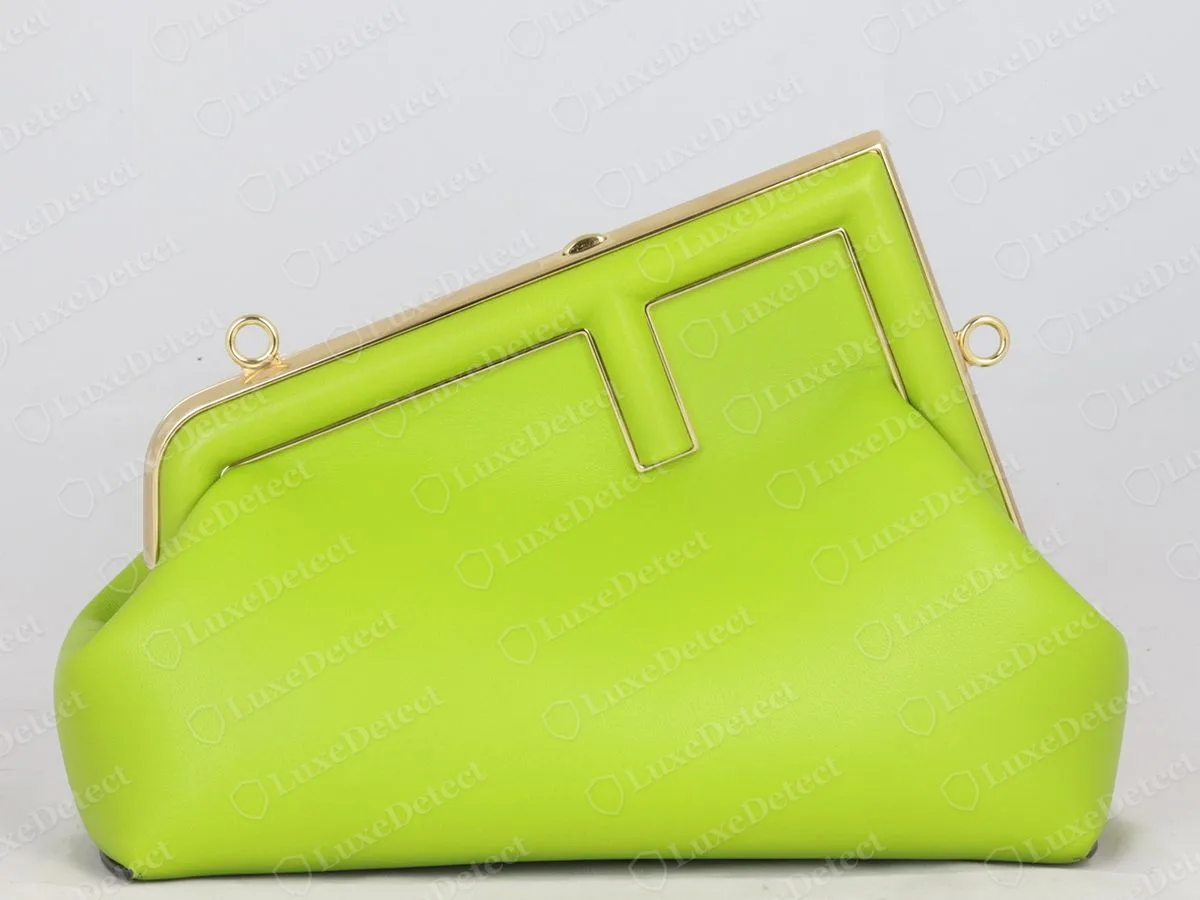
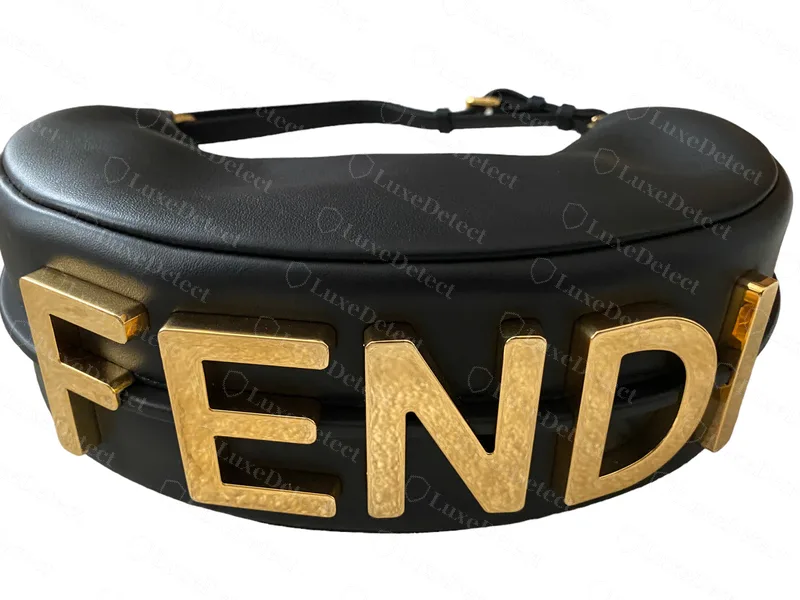
The Fendigraphy is the crescent-shaped leather hobo Fendi introduced in 2022, named for the slanted FENDI lettering that runs along its side in oversized metal letters. It quickly became one of the house's most resold bags, and one of the most copied: in our order records it is among the Fendi bags we see faked most often.
The outside of a counterfeit Fendigraphy is usually good. The curve, the leather and the gold letters were close enough on the fakes we reviewed that the front of the bag settled nothing, and the serial code inside was often a copy of a real one. What the factories got wrong was the small, cheap material inside the zip: a woven RFID label they reuse from bag to bag, a leather patch dyed to match the outside, and a brown or taupe lining where Fendi uses black. That is the angle of this guide: open the zip before you look at the letters.
What to check, ranked by reliability
| Checkpoint | Reliability | What it tells you |
|---|---|---|
| 1. The RFID Label: REMBVABLE and 00705759 | ★★★★★ | REMBVABLE, a run-together RFIDRIMOVIBILE or the number 00705759 rejects the bag on its own. |
| 2. The Leather Patch Inside: Colour and Wording | ★★★★★ | On a standard edition, a patch that is not black or reads FENDI ROMA points strongly to a fake. |
| 3. The Lining Colour | ★★★★★ | A brown or taupe fabric lining is common on fakes; confirm with the labels. |
| 5. The FENDI Letters, Hardware and Strap | ★★★★★ | Copied well; loose or crooked letters raise doubt, good ones prove nothing. |
| Model Reference Before You Start | ★★★★★ | Matches the size to the model code and flags collaboration editions with their own interiors. |
| 4. The Code Tab: 8BR798 A5DY 228-0501 Proves Nothing | ★★★★★ | Counterfeits copy a genuine code exactly; a correct tab settles nothing. |
| What the Box, Dust Bag and Cards Do and Do Not Prove | ★★★★★ | Context only, useful to cross-check the model code on the card. |
Model Reference Before You Start
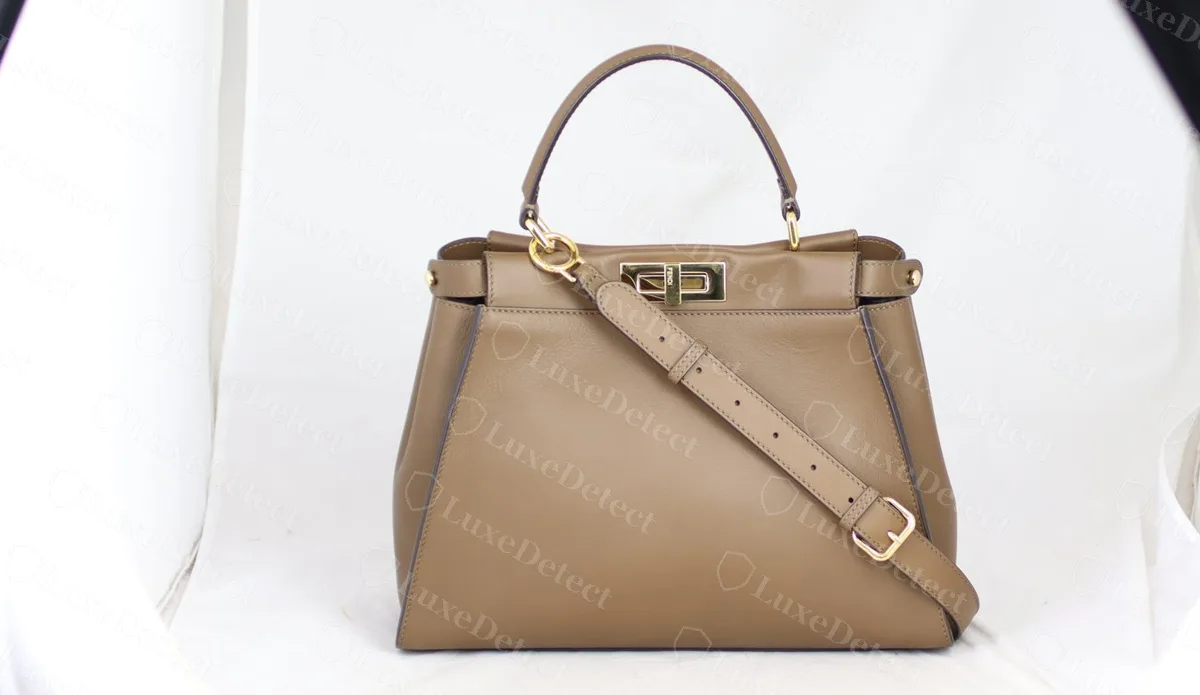
- Shape: a half-moon hobo with a single adjustable leather shoulder strap, a top zip and the word FENDI in large metal letters along the base and side. Listings sometimes call it the "Fendi crescent bag" or "Fendi hobo with letters".
- Sizes: Nano (a charm-sized version with a clip strap), Small and Medium. Small is the size we see most often, genuine and fake.
- Model codes: the genuine Small bags we examined carried a code tab beginning 8BR798; the genuine Nanos carried 7AS089. A different code points to a different size or edition, not on its own to a fake.
- Materials and editions: smooth calfskin in black, grey, nude, pink and other seasonal colours, FF jacquard denim, straw, metallic and printed versions, and collaborations such as the Marc Jacobs edition with its own printed letters. The interior checks below were made on standard editions; a collaboration can differ, and we say where it does.
- Origin: Made in Italy. Do not treat any country of origin as a tell on its own.
The RFID Label: REMBVABLE and 00705759
Inside the lining, near the zip, a genuine Fendigraphy carries a small black woven label that houses an RFID chip. On the genuine Small bags we examined it read RFID LABEL over ETICHETTA RFID, with an eight-digit number woven at the edge. On some genuine bags, including the Nanos we examined, a newer version adds REMOVABLE and RIMOVIBILE with a small scissors mark at the cut line. In every case each word was spelled correctly and every bag had its own number.
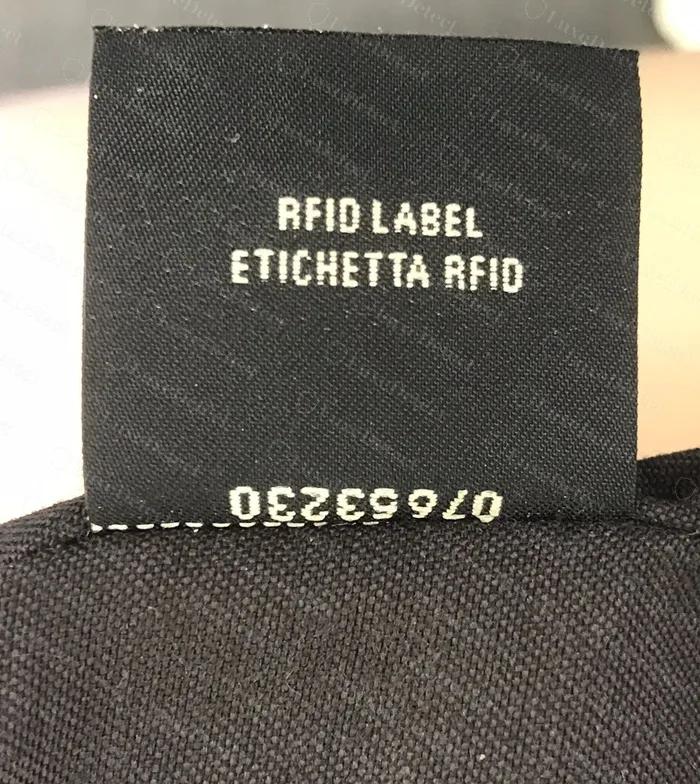
Most of the counterfeit Fendigraphys we reviewed carried the same badly woven copy of the newer label. The O in REMOVABLE comes out as a B, so it reads RFID LABEL REMBVABLE; the Italian line runs together as ETICHETTA RFIDRIMOVIBILE (one fake read RIMOVILE); and the number below the cut line is 00705759 on bag after bag, in black, nude, red, metallic and printed fakes alike. It is the same label, with the same number, that we find in counterfeit Fendi First, Sunshine Shopper and Peekaboo bags.
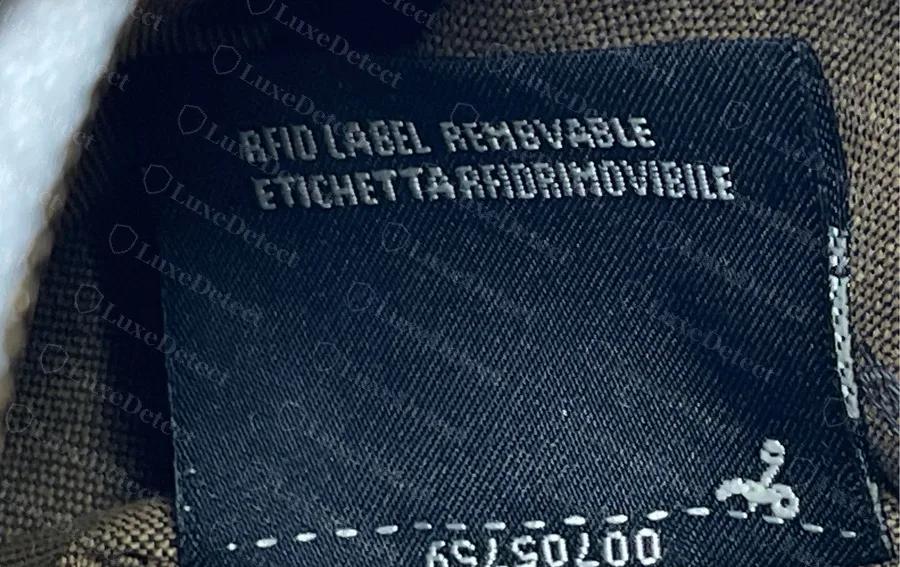
| Element | Authentic | Counterfeit |
|---|---|---|
| English line | RFID LABEL, or RFID LABEL REMOVABLE, spelled correctly | RFID LABEL REMBVABLE (B in place of the O) |
| Italian line | ETICHETTA RFID, with RIMOVIBILE as a separate word when present | ETICHETTA RFIDRIMOVIBILE run together, sometimes RIMOVILE |
| Number | Different on every genuine bag we compared | 00705759, repeated across fakes of every colour |
Red flag
An RFID label that reads REMBVABLE, runs RFIDRIMOVIBILE together or carries the number 00705759 is not a Fendi label. Any one of them is enough to reject the bag.
Worth knowing
A correctly spelled label is not proof. We have seen a second counterfeit label that spells every word correctly (or runs RFIDLABELREMOVABLE together under a rainbow hologram) and carries the number 05528708 on more than one fake. The label rules a bag out; it does not rule one in. It is also designed to be cut off, so a missing label is not suspect on its own.
The Leather Patch Inside: Colour and Wording
Every standard genuine Fendigraphy we examined had the same leather patch sewn into the lining: black leather, FENDI over MADE IN ITALY, stamped in gold (or blind-stamped on some beige bags), whatever the colour of the outside. Nude, pink, grey, white, denim and black bags all had the black patch.
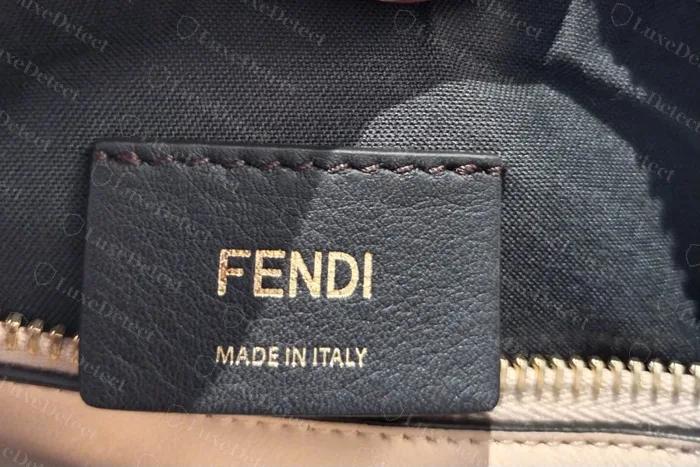
The counterfeits were less disciplined. Many had a patch dyed to match or sit near the outside: mauve in a pink bag, grey in a black bag, tan in a tan bag, brown in a denim bag, lilac in a silver bag, grey in a straw bag. Several more had a patch that read FENDI ROMA instead of FENDI and MADE IN ITALY. Genuine bags do carry FENDI ROMA, but on a separate black woven fabric label, not on the leather patch.
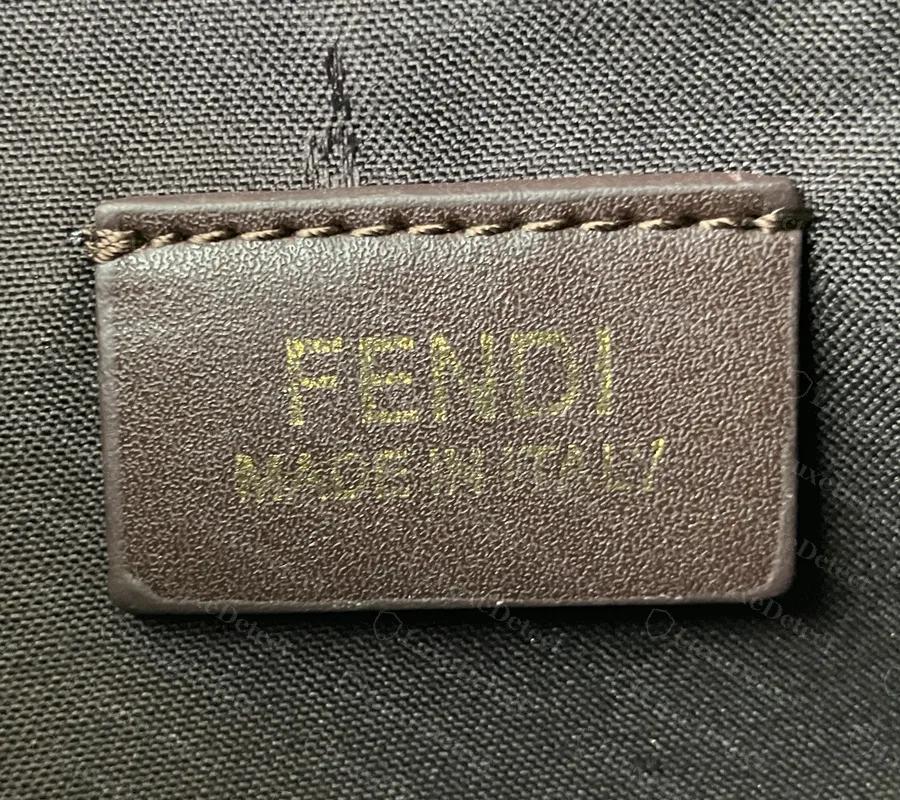
| Element | Authentic | Counterfeit |
|---|---|---|
| Patch colour | Black on every standard edition we examined | Often dyed to match the outside (mauve, grey, tan, brown, lilac) |
| Patch wording | FENDI over MADE IN ITALY | Often the same, sometimes FENDI ROMA |
| FENDI ROMA | On a black woven fabric label | Sometimes stamped on the leather patch instead |
Red flag
On a standard-edition Fendigraphy, a leather patch that is not black, or a leather patch stamped FENDI ROMA, is a strong sign of a counterfeit. Check the RFID label and the lining before you decide.
Worth knowing
Collaborations follow their own rules. The genuine Marc Jacobs edition we examined had a white leather lining with a tonal white patch and a printed FENDI ROMA MARC JACOBS NEW YORK CITY label. Compare a collaboration or special print only against a verified bag of the same edition.
The Lining Colour
The genuine standard Fendigraphys we examined were lined in plain black fabric, so the black patch sits almost invisibly on it. The exceptions were metallic gold leather linings, which we found in some beige and white genuine bags. The counterfeits, by contrast, were mostly lined in brown, taupe or grey-brown fabric, and one in a brown and beige stripe. The denim pair below shows both differences at once.
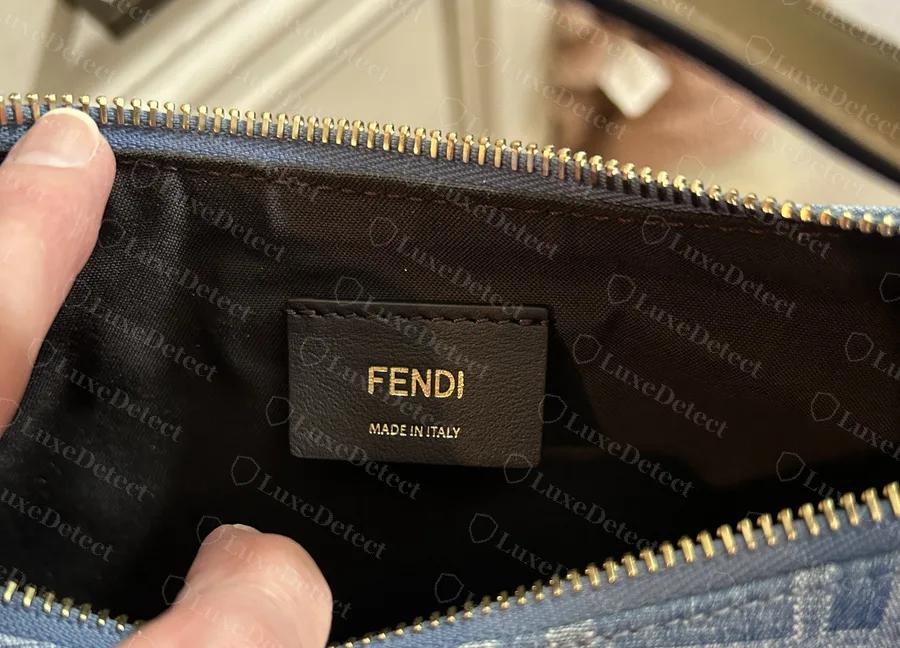

| Element | Authentic | Counterfeit |
|---|---|---|
| Lining | Black fabric, or metallic gold leather on some editions | Brown, taupe or grey-brown fabric, occasionally striped |
| Patch against lining | Black on black | Often a coloured patch on a brown lining |
Worth knowing
We rate the lining lower than the patch because Fendi changes interiors between editions and we have not seen every colourway. A brown or taupe fabric lining is a reason to read the labels very carefully, not a verdict on its own. A black or gold lining does not clear a bag either, because some fakes had one.
The Code Tab: 8BR798 A5DY 228-0501 Proves Nothing
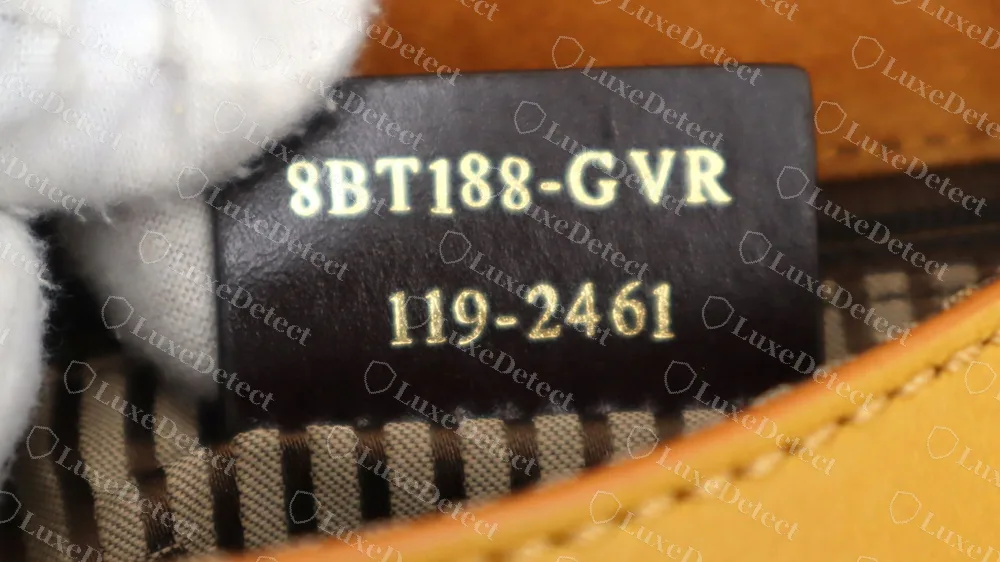
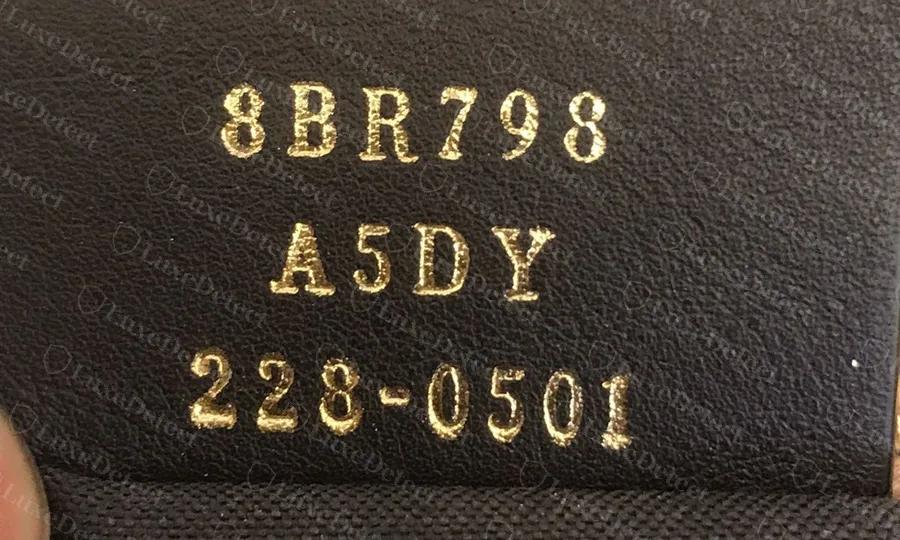
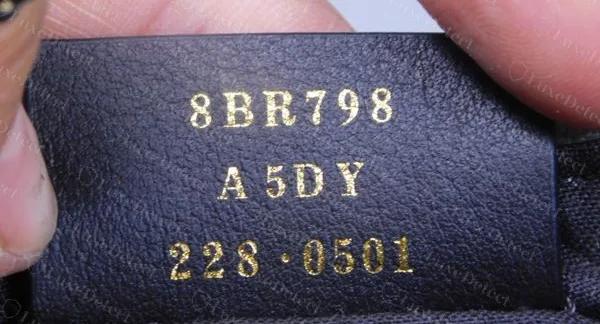
A small black leather tab inside the lining is heat-stamped in gold with three lines: the model code, a colour and material code, and a production number. Our Fendi serial number guide explains the format. On a genuine Small the first line reads 8BR798.
This is the check counterfeiters have solved. 8BR798 / A5DY / 228-0501 appears on more than one genuine black Fendigraphy we examined, and on more than one counterfeit, stamped just as cleanly. We have also seen 8BR798 / AGXJ / 228-0059 on more than one fake. On Fendi tags the production number repeats across genuine bags, so a code is never a unique ID.
Worth knowing
A correct code proves nothing: counterfeit Fendigraphys copy a genuine one exactly. The checker tests whether a code has the right shape and matches the card, which can catch a mismatched or invented code, but it cannot tell you whether the bag is real.
A code that checks out doesn't prove the item is real. Counterfeiters copy genuine codes.
Our authenticators check the stamps, hardware and construction of your Fendi against verified references, from $25. You get a verdict within 24 hours, and a Certificate of Authenticity if the item passes.
Authenticate My Fendi →The FENDI Letters, Hardware and Strap
This is where buyers look first, and where the Fendigraphy gives the least away. On genuine bags the metal letters are solid, evenly spaced and set flush along the curve, the strap hardware is engraved FENDI, and the zip pull carries a small FF.
The counterfeits we reviewed had all of these: convincing letters, engraved hooks and an FF zip. A few showed details we did not see on genuine bags (a round FENDI ROMA coin hanging from the zip, for example), but none often enough to call it a tell. How the letters sit and how the leather feels are checks for the hand, against a genuine bag you know.
Worth knowing
Letters, engraving and hardware are copied well. Good letters raise no confidence; letters that are loose, uneven or crooked are a reason to stop.
What the Box, Dust Bag and Cards Do and Do Not Prove
Fendigraphys are often sold with a yellow Fendi box, a dust bag, a care booklet and a white product card with a barcode. Every one of these is reproduced and sold separately, and some fakes we reviewed came with a full set. Packaging is context, not evidence. Its use is a cross-check: the genuine product cards we saw named the model (FENDIGRAPHY SMALL or NANO FENDIGRAPHY) and the same model code as the tab, so a card for a different bag, colour or code is a question for the seller.
Quick Authentication Checklist
- Open the zip and find the woven RFID label. Read every word: REMOVABLE with an O, RFID and RIMOVIBILE separate.
- Read the number on the label. 00705759 is a counterfeit number.
- Find the leather patch. On a standard edition it is black and reads FENDI over MADE IN ITALY.
- Look at the lining: black fabric (or gold metallic on some editions), not brown or taupe.
- Read the code tab, but do not rely on it: 8BR798 / A5DY / 228-0501 is on genuine and fake bags alike.
- Check the letters, hardware and strap last, and treat the box and cards as context.
A REMBVABLE or RFIDRIMOVIBILE label or the number 00705759 is enough on its own to reject the bag. A coloured or FENDI ROMA leather patch with a brown lining is close to it. If the RFID label has been cut off, rely on the patch, lining and build together and get a second opinion.
When to Get a Professional Opinion
A Fendigraphy that passes every check above can still be a good counterfeit: the tells here catch the factories that reuse labels and colour-match their interiors, not every factory. If the RFID label is missing, the bag is a collaboration or an unusual material, or the seller's photos skip the interior, compare it against verified bags of the same edition before you pay. LuxeDetect's handbag authentication starts at $25 for a 24-hour turnaround and includes a Certificate of Authenticity. Start an authentication with clear photos of the front and back, the letters, the strap hardware, the inside of the bag with the lining visible, the leather patch, the code tab and both sides of the RFID label.
For other Fendi bags, see our Fendi First guide, our Fendi Baguette guide and our Peekaboo and Zucca reference.
FAQ
How can you tell if a Fendi Fendigraphy is real?
Start inside. Read the woven RFID label (REMBVABLE, a run-together RFIDRIMOVIBILE or the number 00705759 marks a fake), then look at the leather patch, which is black and reads FENDI over MADE IN ITALY on standard editions, and the lining, which is black on most genuine bags. The letters and the code tab are copied well, so check them last.
Where is the serial number on a Fendi Fendigraphy?
On a small black leather tab sewn inside the lining near the zip, heat-stamped in gold on three lines. On a Small the first line is 8BR798; on a Nano it is 7AS089. A correct code does not prove the bag is genuine, because counterfeits copy real codes.
Is 8BR798 A5DY 228-0501 a fake Fendi code?
No. We have seen it on genuine black Fendigraphy Small bags and on counterfeit ones. It tells you which bag the tab claims to belong to, not whether the bag is real. Check the RFID label, the patch and the lining instead.
Does a fake Fendigraphy have an RFID label?
Usually, yes. Most counterfeits we reviewed carried a copy of the RFID LABEL REMOVABLE tag, misspelled REMBVABLE and numbered 00705759. A label being present proves nothing; read it.
What colour is the inside of a real Fendi Fendigraphy?
On the standard genuine bags we examined, the lining was black fabric and the leather patch was black, whatever the colour of the outside; a few editions had a metallic gold leather lining instead. A brown or taupe lining with a patch dyed to match the bag is common on counterfeits. Collaborations such as the Marc Jacobs edition have their own interiors.
Can I authenticate a Fendi Fendigraphy from photos?
Yes. Clear close photos of the RFID label, the leather patch, the lining, the code tab, the letters and the hardware show what decides it, compared against verified bags of the same size and edition. On an expensive bag a professional review is the safer route.
Sources
Photos are from LuxeDetect's own order records; every genuine detail shown was checked on Fendigraphys that passed authentication, and every counterfeit detail on Fendigraphys that failed. The bag's introduction in 2022 and its sizes are public information from Fendi.