Luxury Handbag Authentication Specialist
Luxury leather goods specialist. Works on Italian house construction, hardware, and interior stamping.
Last updated September 2026 · Published June 2026 · Contact
The Baguette's Cultural Status and Why It's Faked
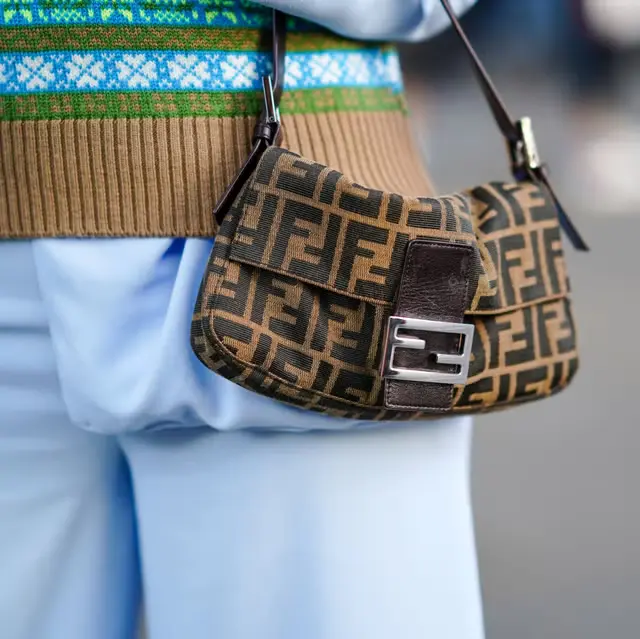
Silvia Venturini Fendi designed the Baguette in 1997, and its appearance on Sex and the City cemented its status as a cultural touchstone. The bag's compact rectangular shape, worn under the arm like a French baguette, became one of the most distinctive silhouettes in accessories history. Fendi has produced over 1,000 variations — different materials, colors, hardware combinations, and collaborations — which both complicates authentication and increases the number of people wanting to fake it.
That variation is the catch for authentication: there is no single "correct" Baguette, so a check has to start with identifying the exact edition. What stays constant across every version is the Zucca canvas grid and the interior stamp, and those are where fakes lose first — the FF motif has to be identical instance to instance and aligned across seams, and the Fendi typeface has to be exact.
What to check, ranked by reliability
| Checkpoint | Reliability | What it tells you |
|---|---|---|
| Interior Lining | ★★★★★ | A wrong-typeface interior stamp survives a good body and is decisive. |
| The Zucca FF Pattern | ★★★★★ | FF motifs that vary instance to instance, or mis-register at a seam, settle it. |
| Leather Versions | ★★★★★ | Perfectly regular scales expose embossed calf sold as python or croc. |
| Hardware | ★★★★★ | Tone mismatch across elements and light hollow castings are supporting tells. |
| The Magnetic Snap Closure | ★★★★★ | A weak multi-click snap points to inferior hardware but is edition-dependent. |
| Stitching | ★★★★★ | Spacing that breaks down at corners and curves is a production-precision tell. |
| Dimensions and Proportions | ★★★★★ | Rules out a mislabelled size or a too-deep body; will not catch a good fake. |
| "Made in Italy" and Serial Number | ★★★★★ | Wrong origin is decisive, but the card is replicated and often absent by design. |
Use our free Fendi Serial Checker to check the serial format, the authenticity-card match, and the tag feature your bag's era should carry.
Check My Serial →The Zucca FF Pattern
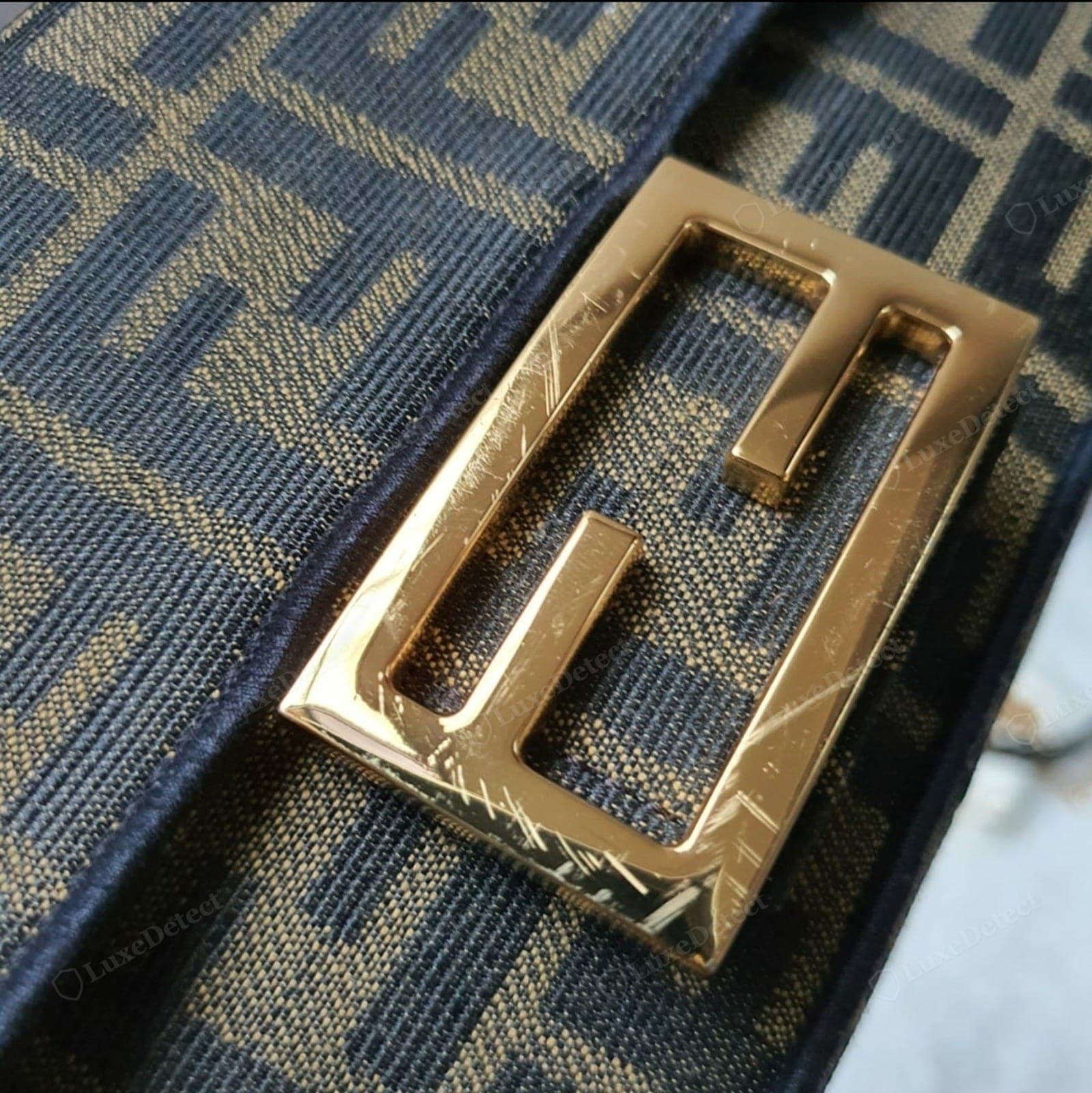
Many Baguettes use the Zucca (pumpkin) print — the repeating double-F monogram on coated canvas. This is the most faked element.
Pattern precision: The FF motifs are evenly spaced in a diagonal grid. Each F is identical to every other F — same proportions, same stroke weight. On fakes, individual motifs vary slightly in size or alignment across the canvas.
Color accuracy: The Zucca comes in specific color combinations — tan on tan, brown on beige, black on grey, and seasonal variations. Compare any colorway against Fendi's documented production. Off-color combinations don't exist in authentic production.
Canvas texture: Authentic Zucca canvas has a slight sheen and a firm, smooth hand. It's not slippery, not matte, and not textured. Fakes often produce canvas that's slightly rougher, shinier, or softer than authentic.
Seam alignment: On an authentic Baguette, the FF pattern continues cleanly across seams where panels meet. The motifs don't shift position or lose alignment at joins.
| Element | Authentic | Counterfeit |
|---|---|---|
| FF motifs | Identical proportions and stroke weight, instance to instance | Individual Fs vary in size or weight across the canvas |
| Grid | Evenly spaced diagonal grid | Spacing drifts, motifs sit at slightly wrong angles |
| Colourway | Matches a documented Fendi combination | An off-colour pairing that never existed in production |
| Canvas hand | Slight sheen, firm and smooth | Rougher, shinier, or softer than authentic |
| Pattern at seams | Continues cleanly across every join | Shifts position or loses alignment at panel joins |
Red flag
FF motifs that vary from one to the next — different widths, uneven stroke weight. The Zucca is printed from a fixed repeat; motifs that drift in size are a low-grade copy and settle it.
The Magnetic Snap Closure
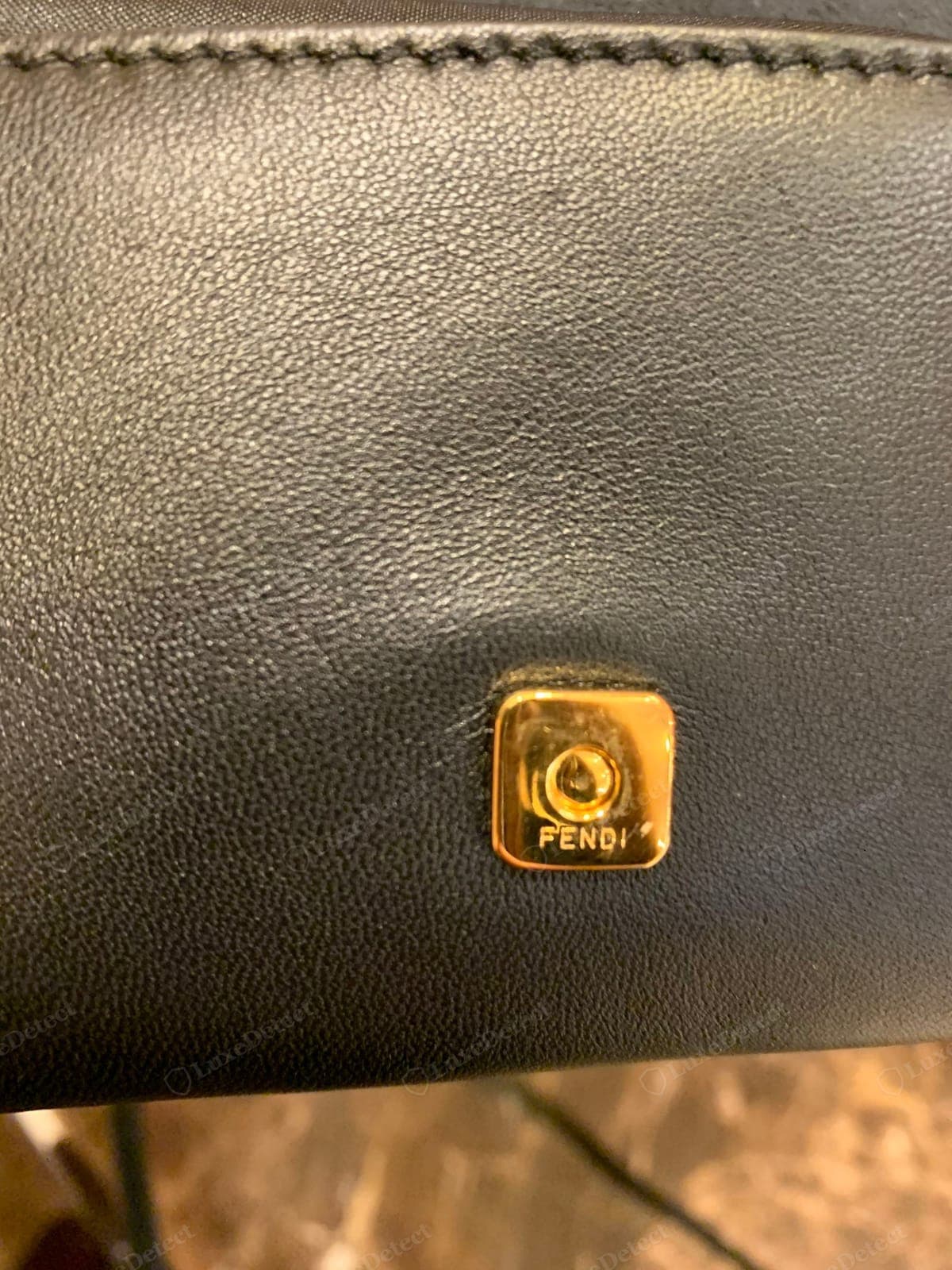
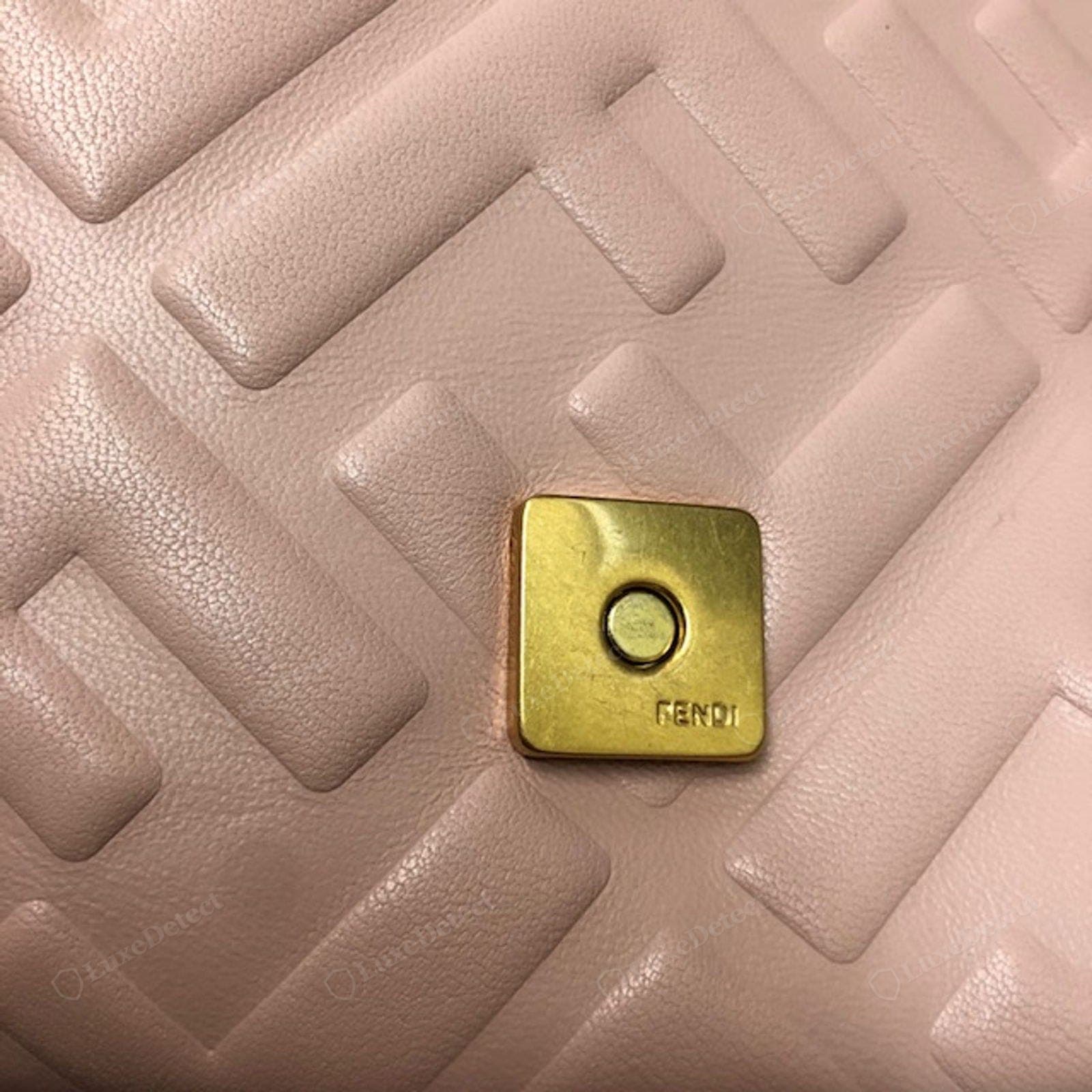
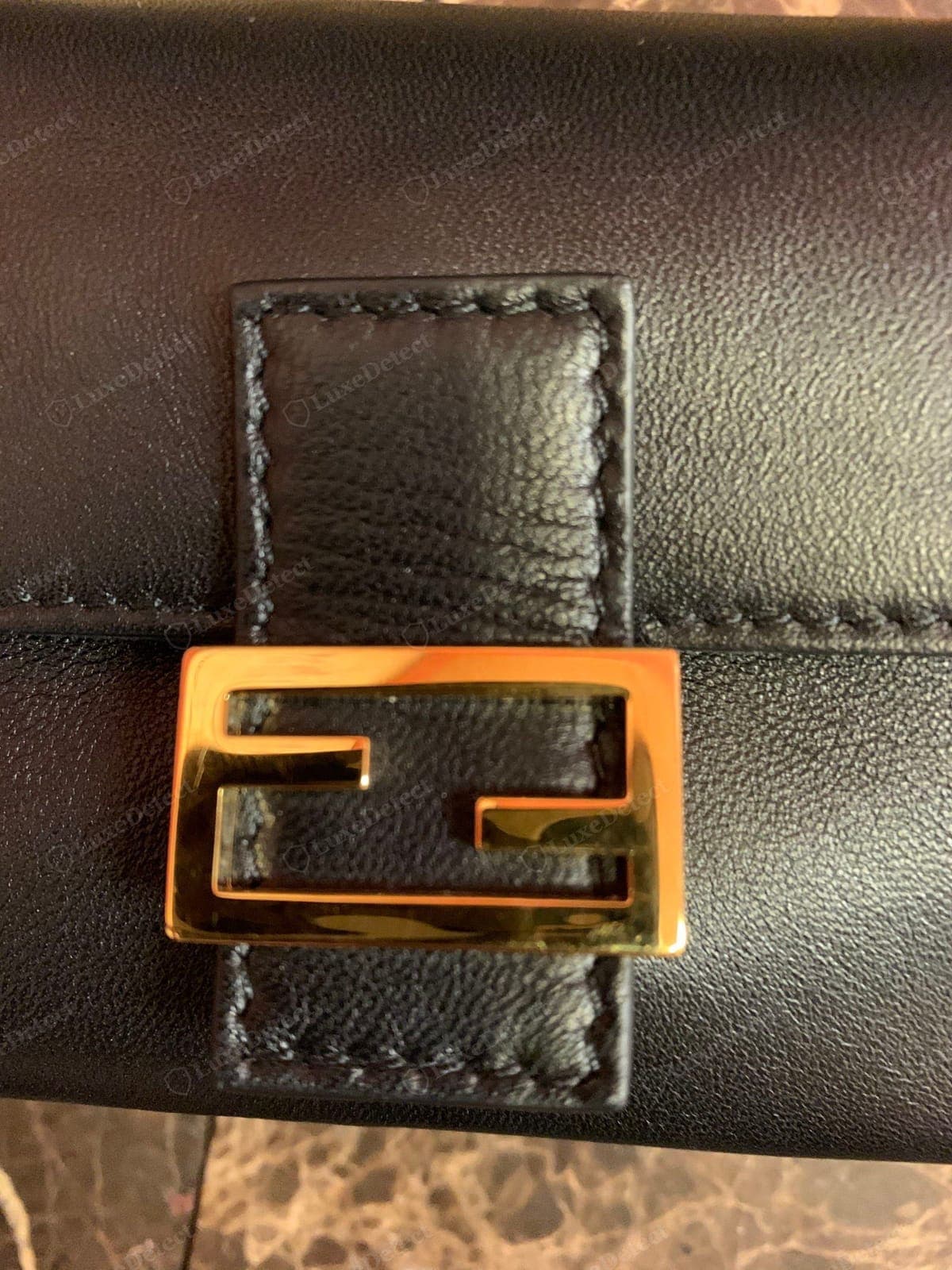
The Baguette's signature closure is a simple magnetic snap — understated relative to the bag's importance.
Snap quality: The snap should close with a definitive, single click. There should be no rattle, no wobble, and no resistance. Weak snaps or multiple-click mechanisms indicate inferior hardware.
Logo on snap: Many authentic Baguette snaps carry "FENDI" on the snap hardware itself — check with a loupe. If the snap is plain metal with no marking, compare against documented authentic examples for that specific edition.
| Element | Authentic | Counterfeit |
|---|---|---|
| Closing action | One definitive click, no rattle or resistance | Weak, multiple clicks, or wobble when closed |
| Snap marking | "FENDI" on the hardware where the edition uses it | Plain where documented examples are marked |
| Alignment | Halves meet dead centre | Offset, so the flap sits crooked |
Interior Lining
FF logo lining: Most Baguette interiors are lined with fabric printed with the FF Zucca pattern in a lighter color — typically tan on tan or taupe on beige. The interior print should be clear and evenly spaced.
Lining quality: Fendi uses quality fabric linings. The lining should be securely sewn, wrinkle-free when new, and not show adhesive residue at the edges.
Interior stamp: "FENDI" is stamped on the interior — typically on a leather tab or directly on the lining. The font is Fendi's proprietary typeface: the letters are proportionate, even, and legible.
| Element | Authentic | Counterfeit |
|---|---|---|
| Lining print | FF pattern, clear and evenly spaced, correct tone | Blurred print, wrong colour, uneven spacing |
| Lining attachment | Securely sewn, wrinkle-free when new, no adhesive at edges | Glue residue at the edges, puckering |
| Interior stamp | Fendi's proprietary typeface, proportionate and even | A near-miss font, uneven depth, wrong position |
| "Made in Italy" | Present near the brand stamp | Missing, or another country |
Red flag
An interior stamp in the wrong typeface. The Fendi wordmark has fixed letterforms; a stamp where the E or the tail of the R is off is the tell that survives even a well-made body, and it is decisive.
Stitching
Thread quality: Fendi uses heavy thread that matches the exterior material — same color family, consistent weight.
Stitch count: Even and consistent — no variation in spacing across any single seam. Fakes produce stitching that becomes uneven at corners or on curved sections.
Edge finishing: Where leather panels are turned and stitched, edges are clean — typically painted or edge-coated in a matching tone. Raw or fraying edges indicate inferior production.
| Element | Authentic | Counterfeit |
|---|---|---|
| Thread | Heavy, matched to the exterior material | Thin, or a clashing colour |
| Spacing | Even across every seam, including corners and curves | Becomes uneven at corners and on curves |
| Edge finish | Painted or edge-coated in a matching tone | Raw or fraying edges |
Hardware
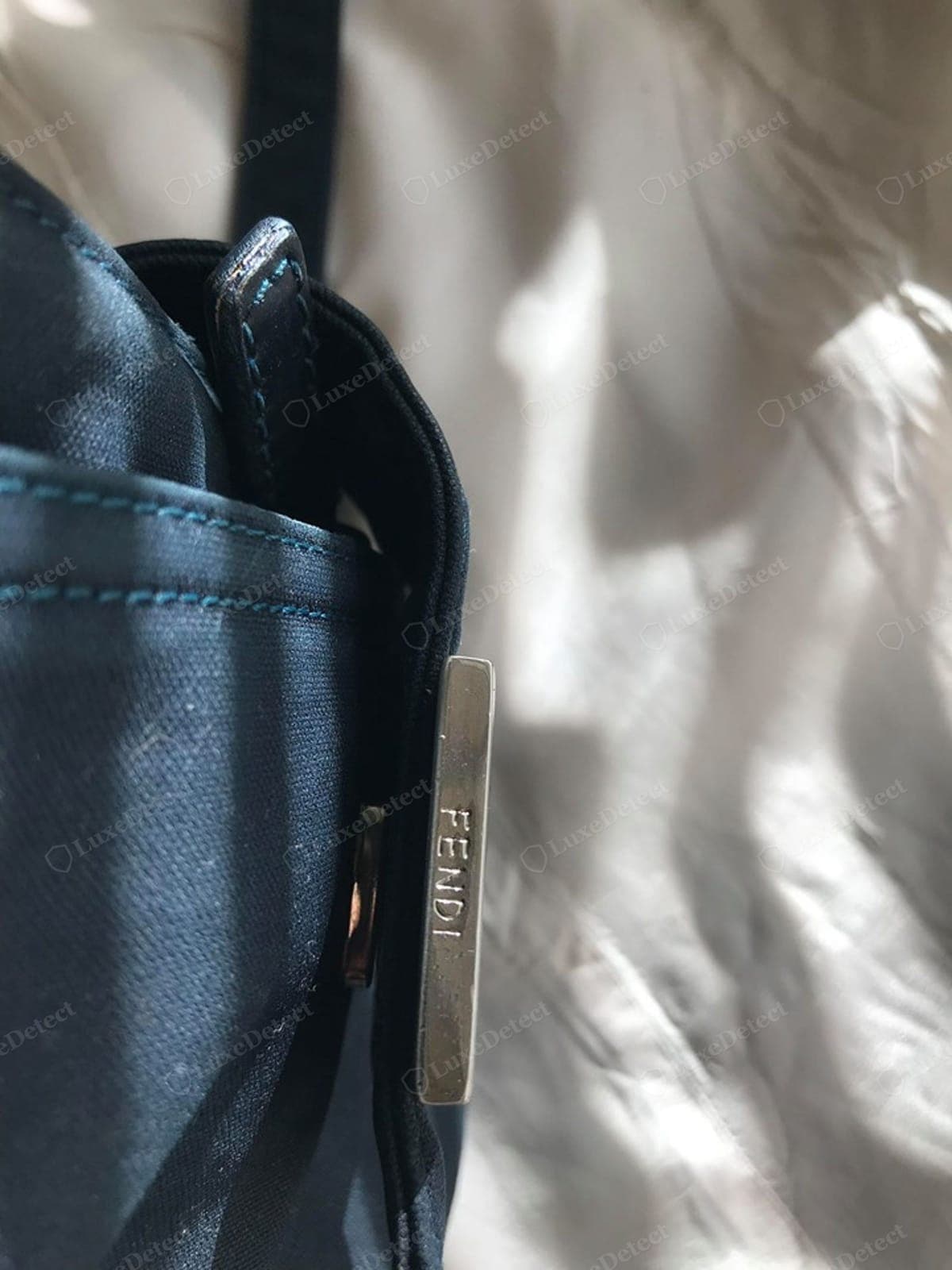
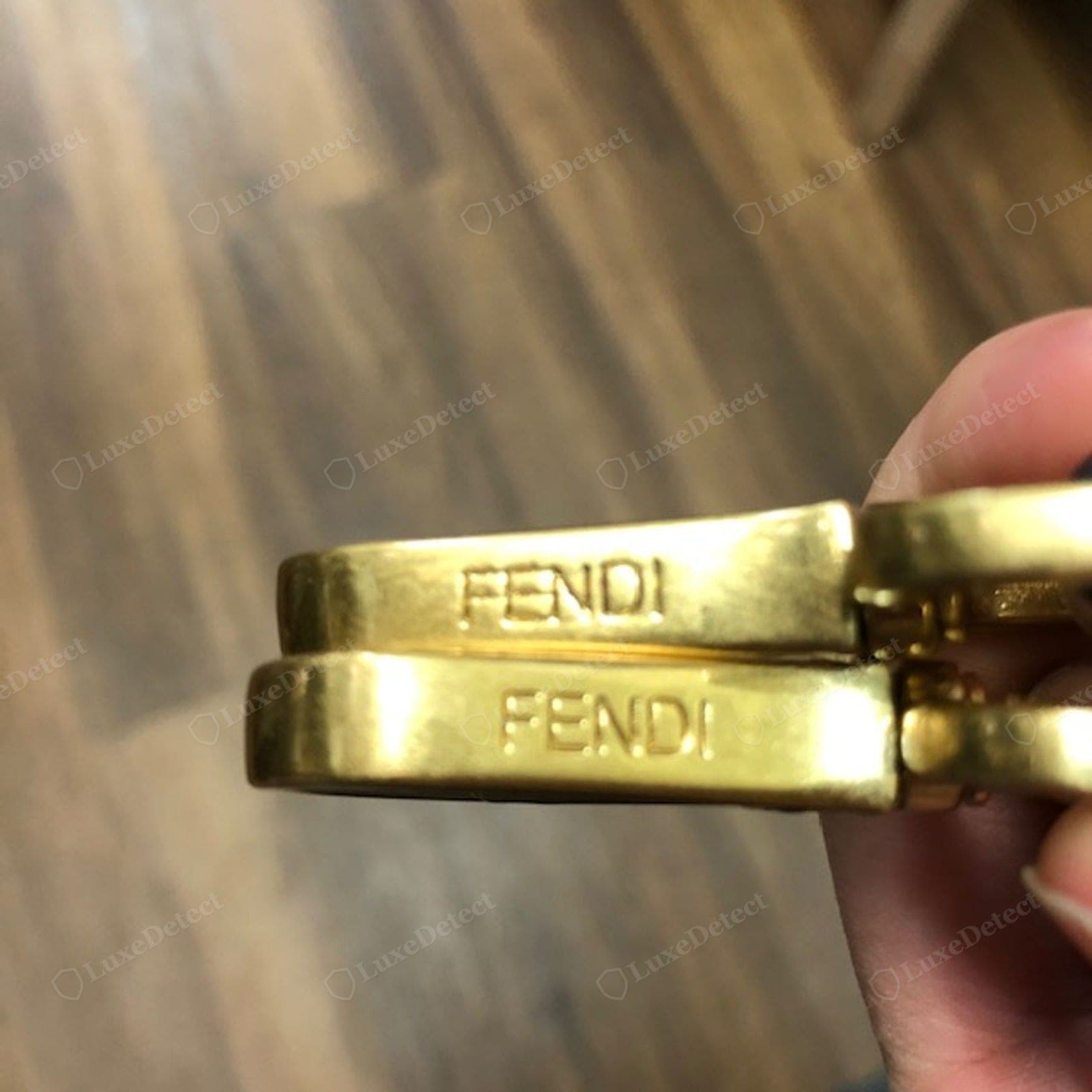
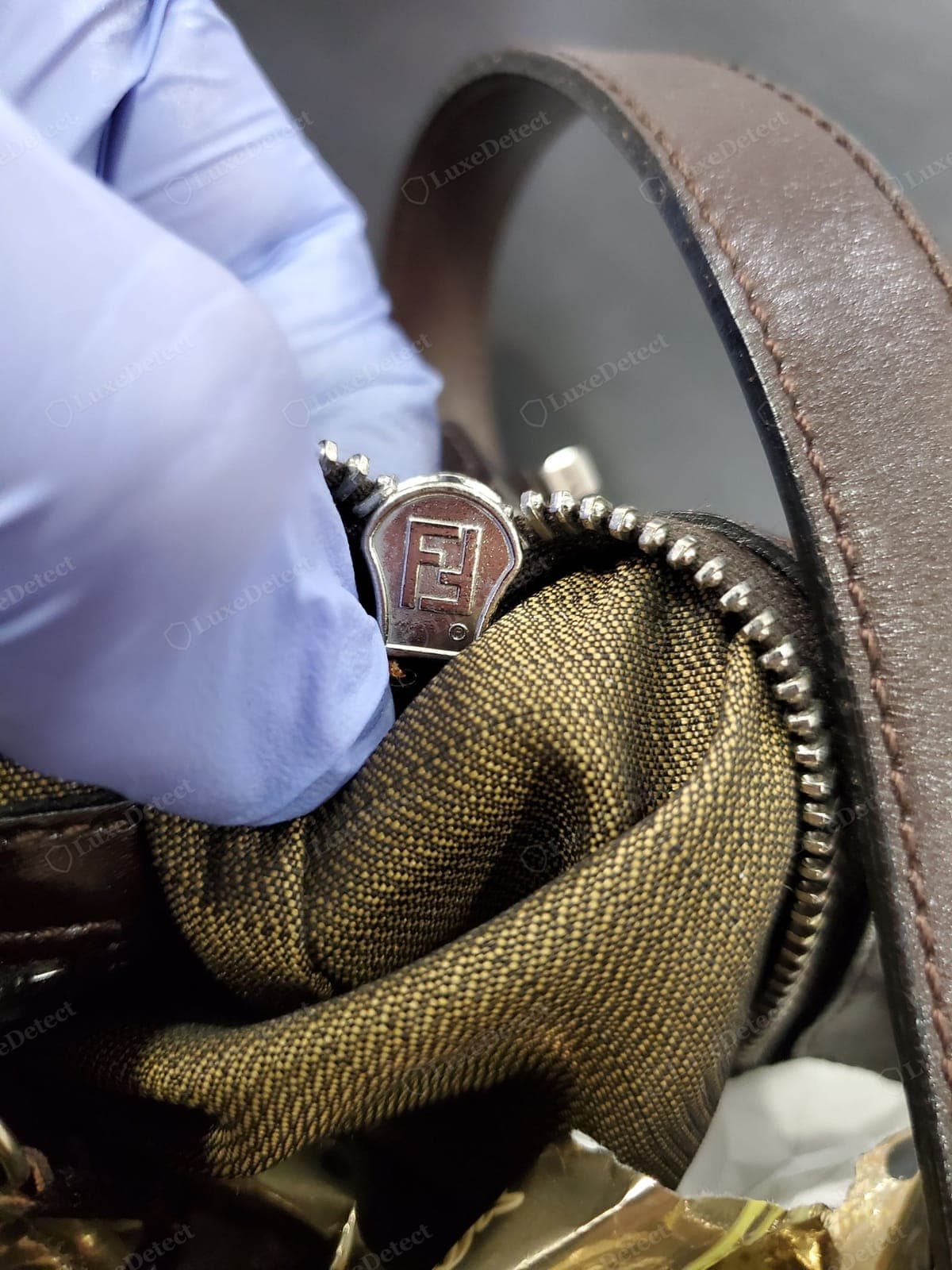
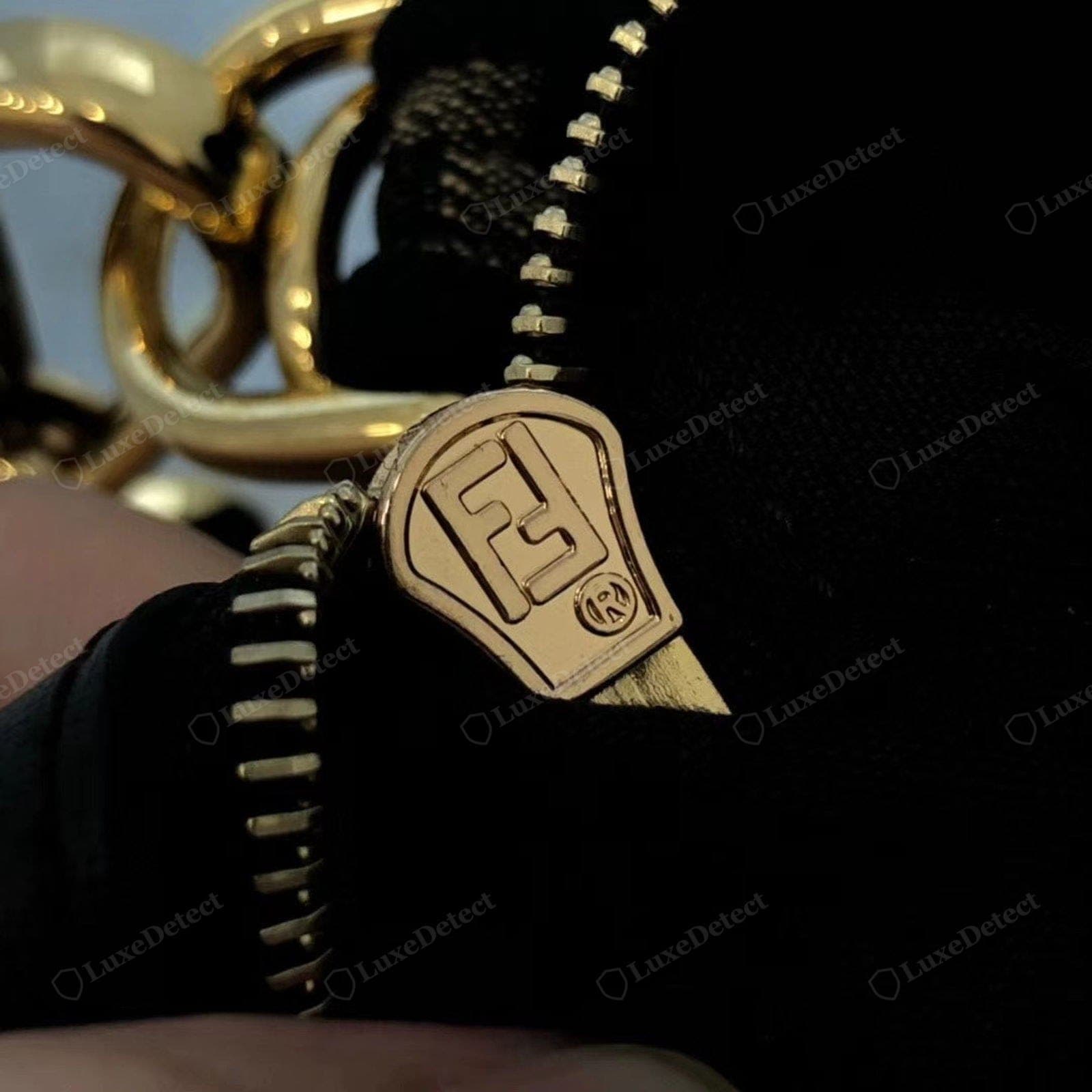
Fendi Baguettes come with various hardware depending on the edition — gold tone, silver tone, palladium. Within a single bag, all hardware should be exactly the same tone.
Weight: Authentic Fendi hardware is cast metal with real weight. Zippers, snap closures, and any decorative hardware should feel substantial.
Zipper (if present): The zipper pull bears Fendi branding. "FENDI" on the pull should be clear and legible with a loupe.
FF logo hardware (if present): Some Baguette editions have the double-F as a hardware element — a pendant or clasp. On authentic bags, this hardware is precisely proportioned with the same FF as the Zucca canvas. Asymmetric or poorly proportioned FF hardware is a fake tell.
| Element | Authentic | Counterfeit |
|---|---|---|
| Tone match | Every element the same tone across the bag | Mixed tones across snap, zip and rings |
| Weight | Cast metal, substantial | Light, hollow-feeling |
| Zip pull | "FENDI" clear and legible under a loupe | Shallow, blurred, or unmarked |
| FF hardware | Same proportions as the Zucca FF, symmetrical | Asymmetric or poorly proportioned double-F |
Leather Versions
The Baguette is produced in numerous leathers — nappa, suede, python, crocodile, and others.
Nappa leather: Smooth, supple, and slightly matte. Authentic nappa yields softly under light pressure. Stiff, plasticky, or overly shiny "nappa" is not genuine.
Suede: Uniform nap direction. Authentic suede Baguettes have even color saturation and consistent nap.
Exotic skins: Python and crocodile versions have scale patterns that are natural — each scale has slight variation. Perfect, uniformly sized scales indicate embossed leather (passing fake material off as exotic).
| Element | Authentic | Counterfeit |
|---|---|---|
| Nappa | Smooth, supple, slightly matte, yields softly | Stiff, plasticky, or overly shiny |
| Suede | Uniform nap direction, even colour saturation | Patchy saturation, inconsistent nap |
| Exotic scales | Natural size variation scale to scale | Uniform, perfectly repeating (embossed calf) |
| Thermal feel | Cool to the touch | Warm and synthetic |
Worth knowing
On an exotic-skin Baguette, a perfectly regular scale pattern is the tell that the skin is embossed calf, not python or croc. That is a materials fraud rather than a construction fault, and it is worth as much as an outright fake.
"Made in Italy" and Serial Number
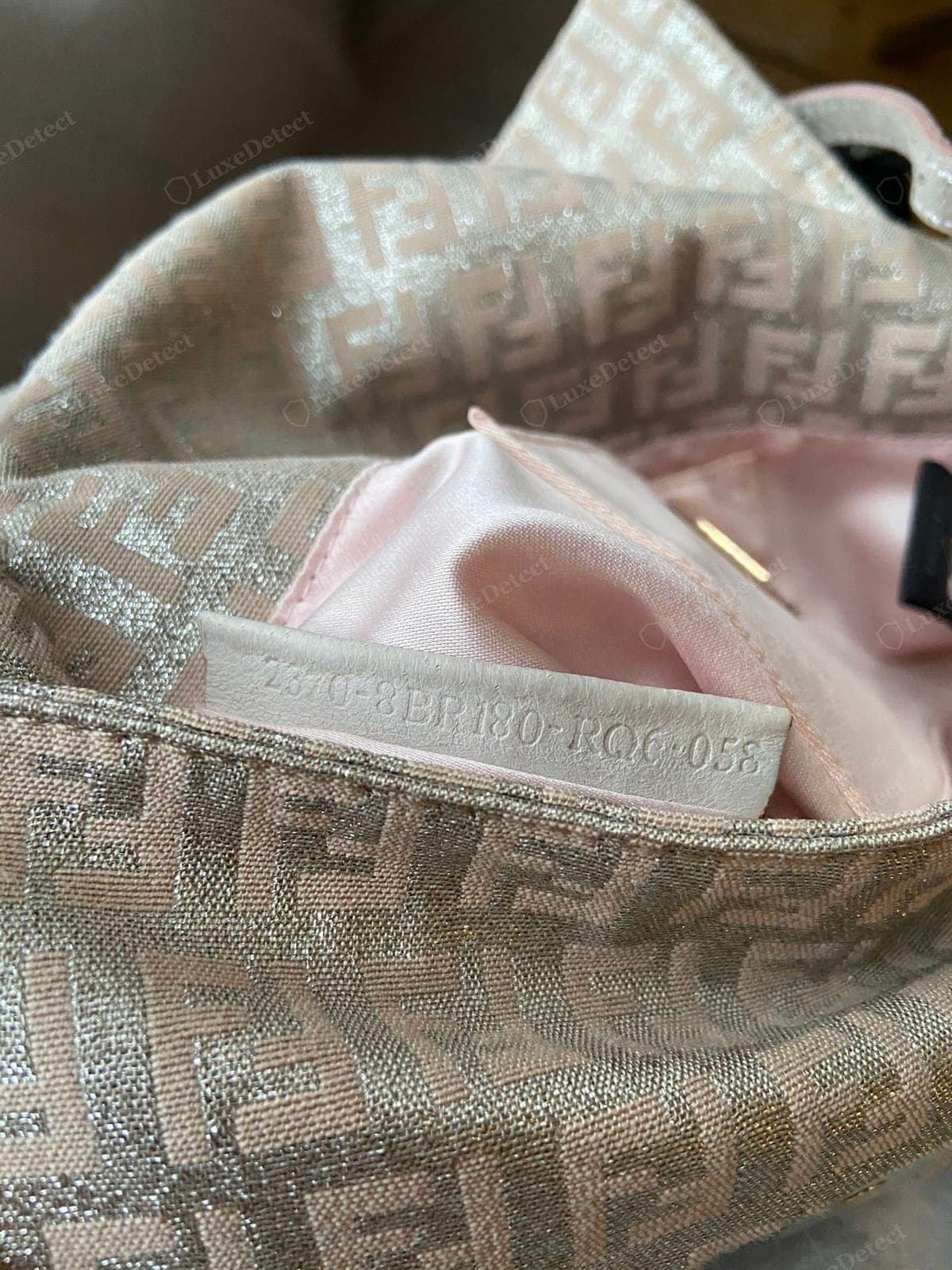
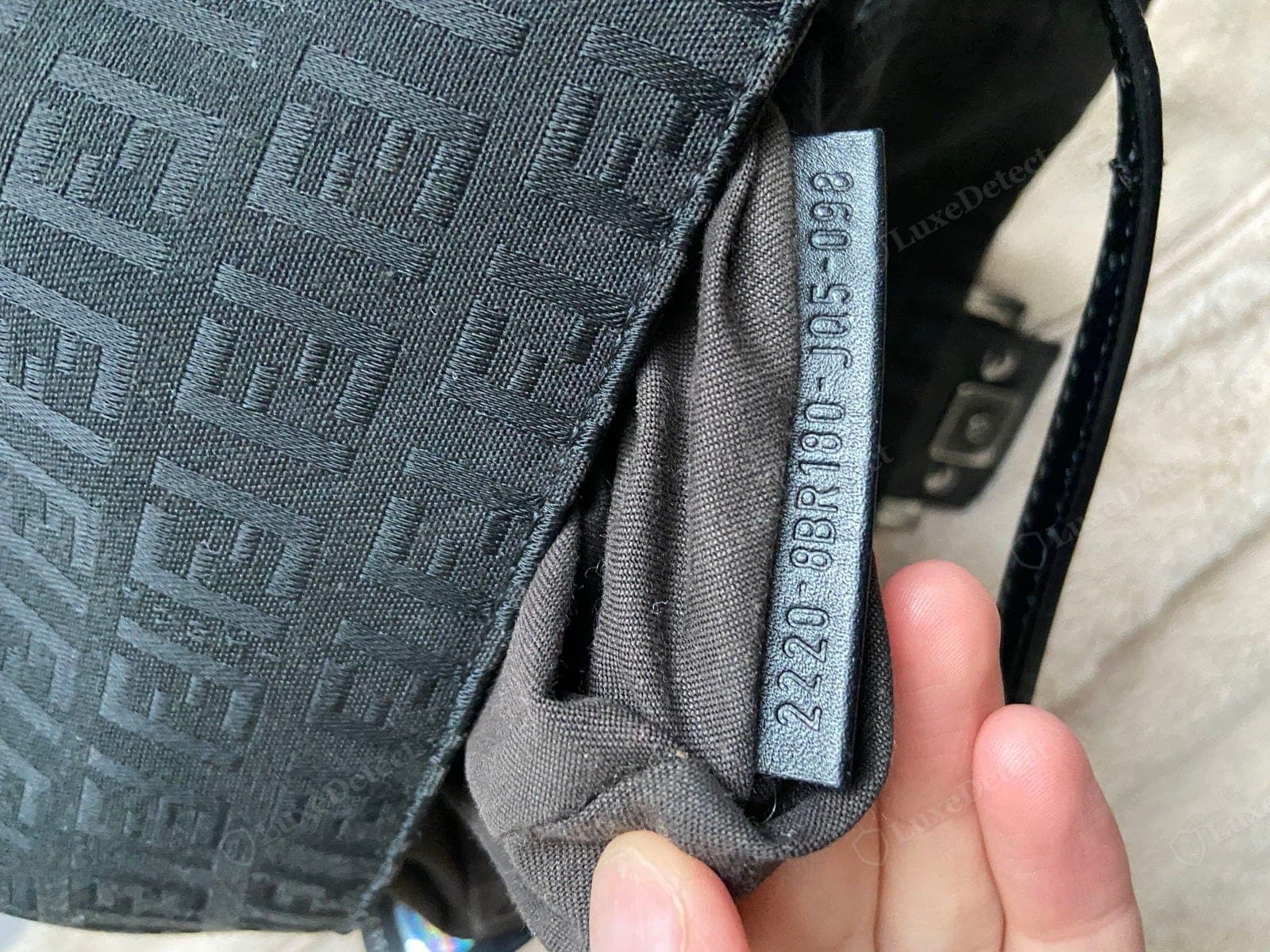
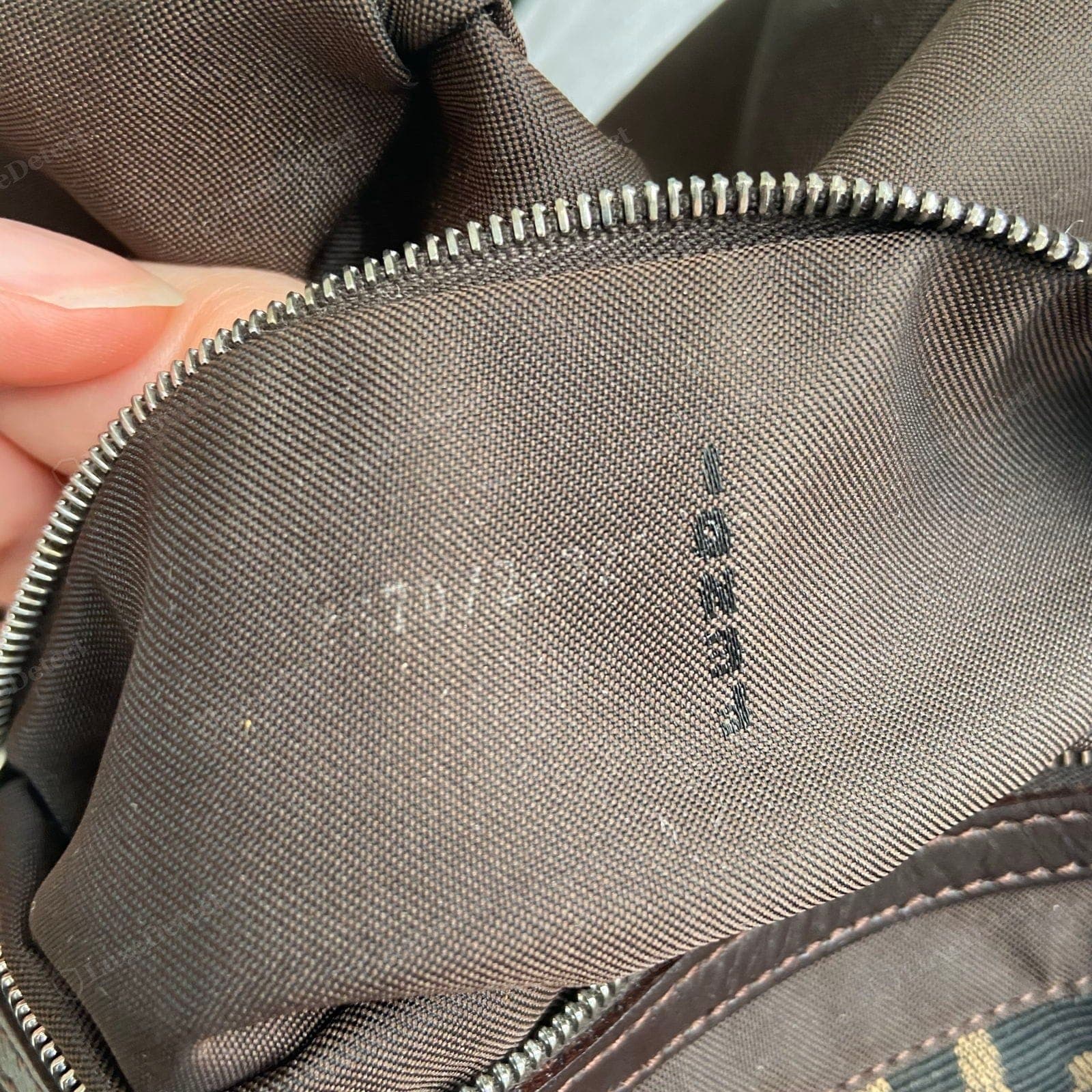
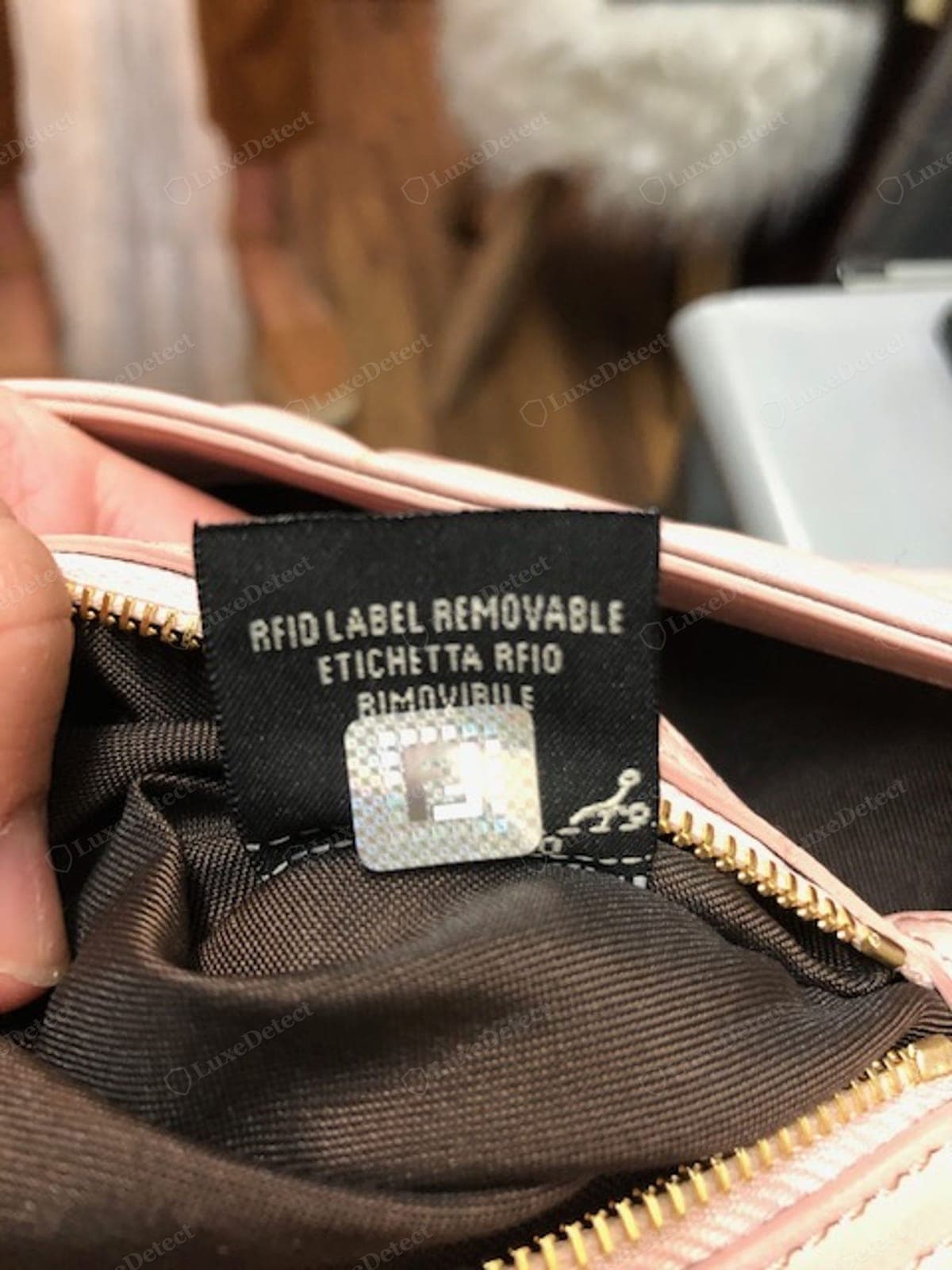
All authentic Fendi bags are made in Italy. "Made in Italy" appears on the interior stamp. Some editions include a serial number on a separate tab or card.
Serial card: Fendi includes a product card with serial numbers in some bag styles. The serial should match any number on the bag's interior tag. Cards can be replicated — use them as supporting evidence, not primary authentication.
| Element | Authentic | Counterfeit |
|---|---|---|
| Origin | "Made in Italy" on the interior stamp | Any other country |
| Serial card (where fitted) | Number matches the interior tag | Mismatched, or a card with no matching tag |
| What it proves | Supporting evidence only | Nothing on its own |
Worth knowing
Fendi has not consistently used an authentication hologram across all eras, unlike Chanel — so absence of a card or chip is not a tell. The interior stamp and "Made in Italy" line are what carry the origin claim.
Dimensions and Proportions
The standard Baguette Bag measures approximately 27 × 13 × 6 cm. The Mini Baguette is approximately 18 × 10 × 4 cm. Verify measurements match the stated size.
The bag's depth is notably slim — the "baguette" profile when worn under the arm should be visible. A bag that's too deep loses the characteristic slim profile.
| Element | Authentic | Counterfeit |
|---|---|---|
| Standard Baguette | ~27 × 13 × 6 cm | Off by more than a centimetre in any dimension |
| Mini Baguette | ~18 × 10 × 4 cm | Proportions that don't match either documented size |
| Depth | Notably slim, keeps the under-arm profile | Too deep, loses the characteristic slim look |
Quick Authentication Checklist
- Zucca canvas: precise FF motifs, correct color, pattern aligned at seams
- Snap closure: definitive click, "FENDI" marking on snap hardware
- Interior lining: FF print, quality fabric, clean attachment
- Interior stamp: correct Fendi font, "Made in Italy"
- Stitching: even tension, matched thread, clean edge finishing
- Hardware: consistent tone across all elements, substantial weight
- Leather: correct texture and softness for the stated material
- Dimensions: match stated size
Two or more failures means walk away. A single failure on the interior stamp font or Zucca motif consistency is on its own sufficient.
When to Get a Professional Opinion
The Baguette's 1,000-plus editions are the problem. A check that works for the FF canvas version tells you little about a beaded, sequined or exotic-skin edition, and the collaboration pieces (Marc Jacobs, Porter, Versace) each have their own reference set. A convincing fake of a common edition gets the Zucca close and the proportions right; the interior stamp and the tactile leather qualities are where it fails, and a photo carries neither well.
If you are buying a Baguette pre-owned above resale entry level, a professional check is a small fraction of the exposure. Photo-based authentication typically runs $25 for handbag authentication with a 24-hour turnaround, and returns a Certificate of Authenticity you can use in a dispute — send the interior stamp, a seam close-up, and the specific edition's defining feature.
FAQ
How many Fendi Baguette versions exist?
Fendi has produced over 1,000 Baguette variations since 1997. This includes canvas, leather, exotic skin, embroidered, beaded, sequined, and collaboration editions. Authentication requires knowing which specific edition you're examining — a check for the FF canvas Baguette won't be identical to authenticating a python version.
Does the Fendi Baguette come with an authenticity card?
Some Fendi bags include a product card. The Baguette has not consistently included an authentication hologram across all eras, unlike Chanel. Primary authentication relies on the physical markers above.
Is the Fendi Baguette still in production?
Yes. The Baguette is a permanent part of Fendi's collection. Fendi periodically releases new iterations, collaborations (with Marc Jacobs, Porter, Versace, and others), and anniversary editions. The 25th anniversary in 2022 brought significant renewed attention.
What's the most reliable fake tell on a Fendi Baguette?
Interior stamp font and Zucca pattern alignment at seams. The interior stamp requires getting the Fendi typeface exactly right — which fakes rarely do. The seam alignment requires production precision that's expensive to replicate.