Luxury Footwear Authentication Specialist
French luxury house specialist. Covers Chanel, Celine, and Saint Laurent construction and date coding.
Published October 2026 · Contact
Why Chanel Shoes Are Hard to Check From a Photo
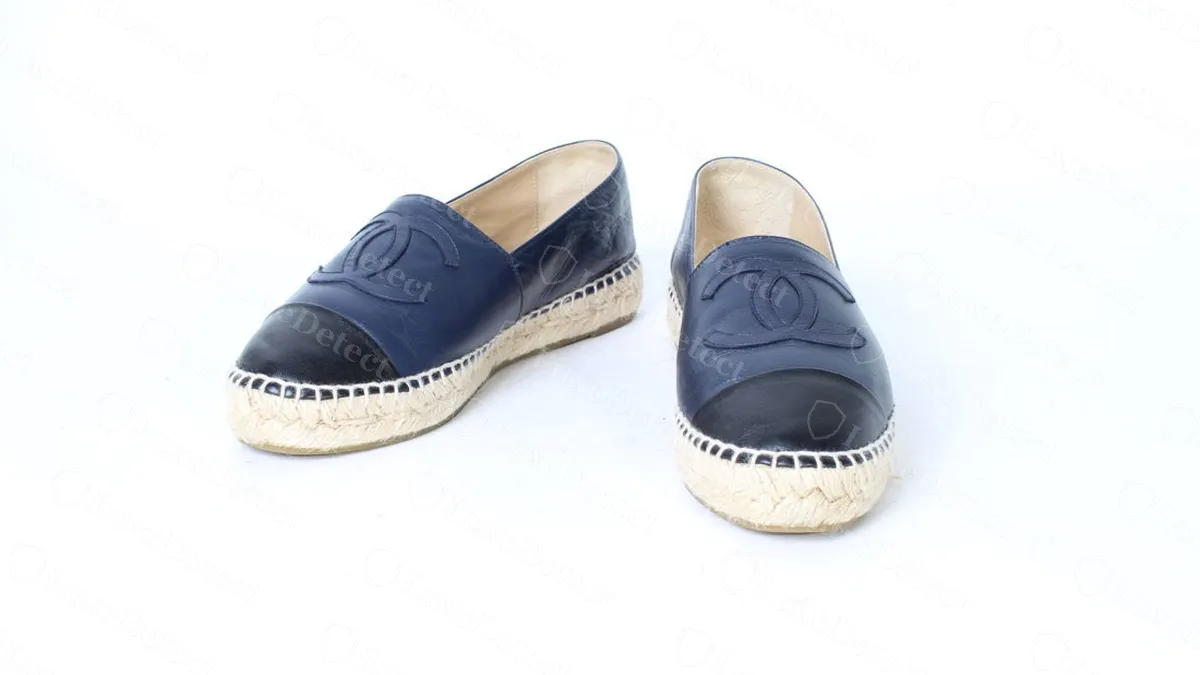
Chanel's rope-soled espadrille is a house classic and widely copied: the cap-toe flat in lambskin, canvas, tweed or denim, with the CC on the vamp, plus the espadrille mule and slide. The counterfeits are good. The gold-foil insole, the stamped "MADE IN SPAIN" sole, the CHANEL wordmark between the tread panels, the CC on the heel and the printed code inside the lining are all reproduced well enough to pass a listing photo.
So this guide does two honest things. It shows the few marks where counterfeit espadrilles in our reviews slipped, and it says how much each one is worth. No single check here catches most fakes. Each one catches a minority, and a pair that passes all of them is still not proven genuine. We also include what genuine cap-toe ballet flats and slingbacks look like, as reference only: the counterfeits of those that we have seen copy every visible detail, so we give no tell for them.
One thing sets the shoe apart from a Chanel bag. There is no serial sticker and no chip. Shoes carry a printed model code inside the lining instead (see our Chanel serial codes and NFC chip guide for the bag system, which shoes do not use), and as you will see below, that code is copied too.
What to check, ranked by reliability
| Checkpoint | Reliability | What it tells you |
|---|---|---|
| 1. Origin Country: Insole Against Sole | ★★★★★ | A "MADE IN ITALY" insole on a flat espadrille whose sole says Spain rejects the pair; matching marks prove nothing. |
| 2. The Lining Code | ★★★★★ | A size after the code leans fake, but a genuine pair carried one too, and a clean code is copied constantly. |
| 3. The Tread Panels and the Jute | ★★★★★ | A lifting or cracked panel edge with fibres in it is a prompt to look harder; jute seen through worn rubber is normal. |
| What Fakes Copy Correctly | ★★★★★ | The gold insole, sole stamp, CC and a well-formed code are copied well, so passing them clears nothing. |
| Model Reference Before You Start | ★★★★★ | Tells you which checks apply to the style in hand; the origin check is for the flat CC espadrille only. |
| What the Box and Dust Bag Do and Do Not Prove | ★★★★★ | Packaging is context only; its value is matching the box label size to the shoe. |
Use our free Chanel Serial Number Checker to decode your bag's production era and see exactly what the sticker should look like.
Check My Serial →Model Reference Before You Start
- The classic cap-toe flat. Leather, canvas, tweed, denim or glitter body, a contrast toe cap and a CC on the vamp, on a jute sole with a rubber outsole. This is the shoe the checks below were built for.
- Espadrille mules and slides. An open-back version with a jute footbed and a CHANEL patch where a leather insole would be. The insole check does not apply to them, and the lining code is placed differently.
- Other rope-soled styles. Low-heeled rope slides, wedges and older seasons exist. In our reviews a genuine low-heel rope slide was made in Italy on both the insole and the sole, so the origin check below is for the flat CC espadrille only.
- Cap-toe ballet flats and slingbacks. Leather-soled, made in Italy, covered in their own section near the end as reference only.
The model reference printed in the lining changes with the style. The one we saw most on the classic flat is G29762, but other seasons and the mules carry other references, so do not reject a pair because its code is not G29762. If you are also looking at clothing from the same seller, our Chanel clothing guide covers that label system.
Origin Country: Insole Against Sole
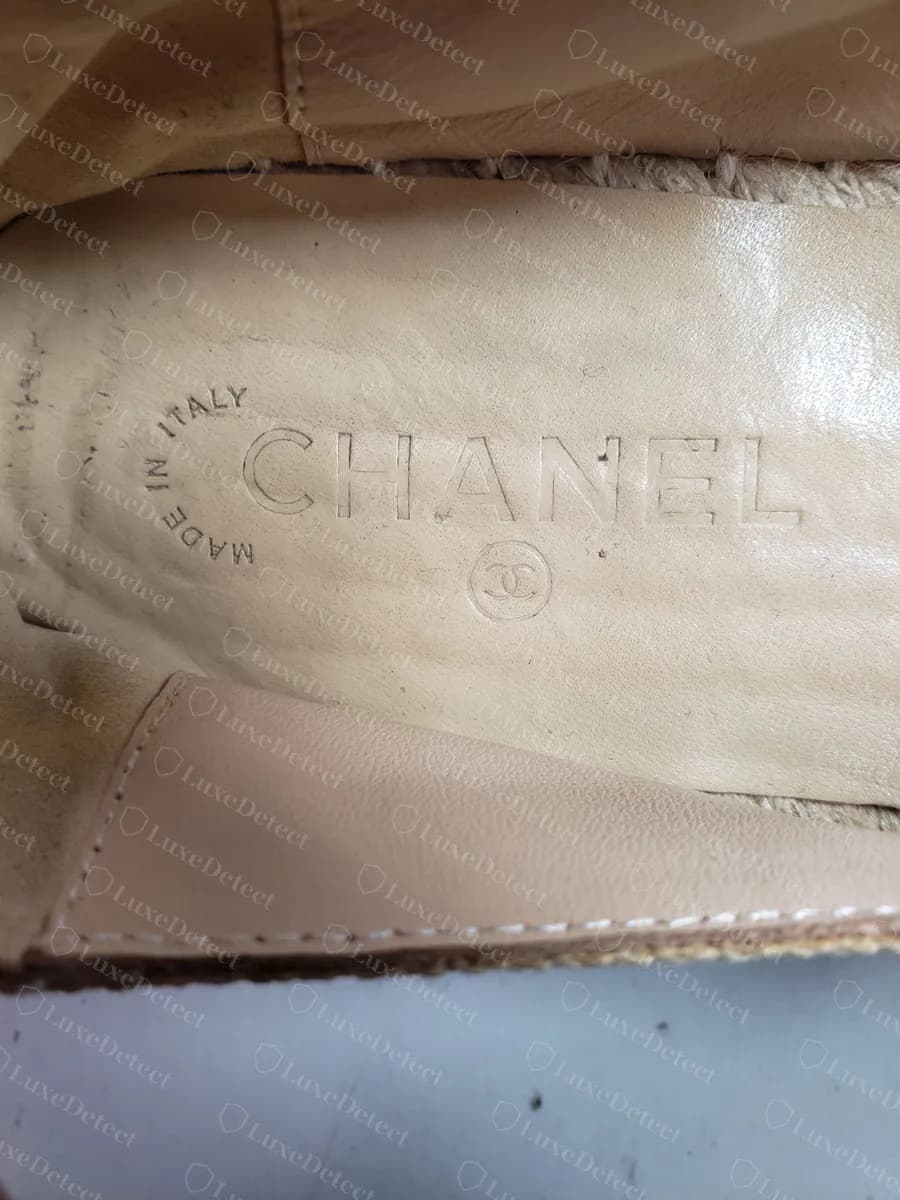
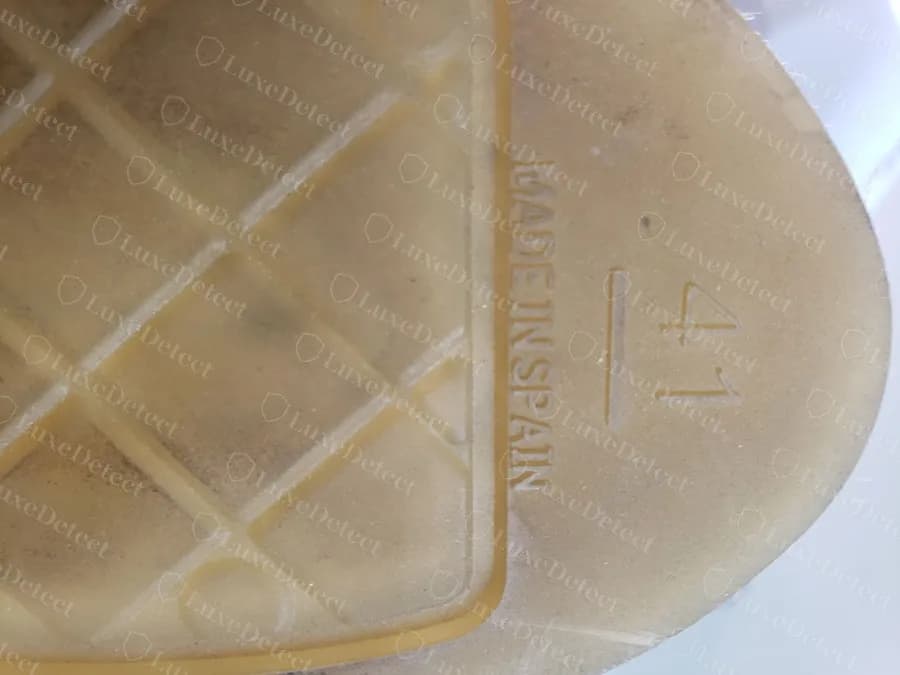
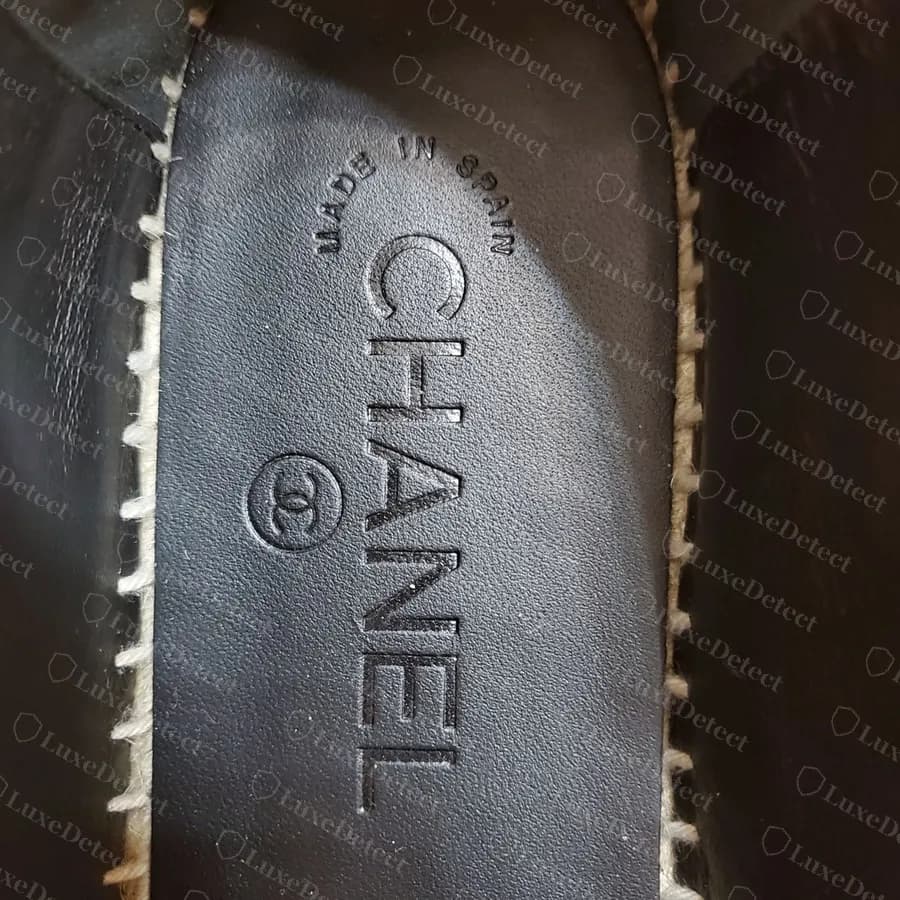
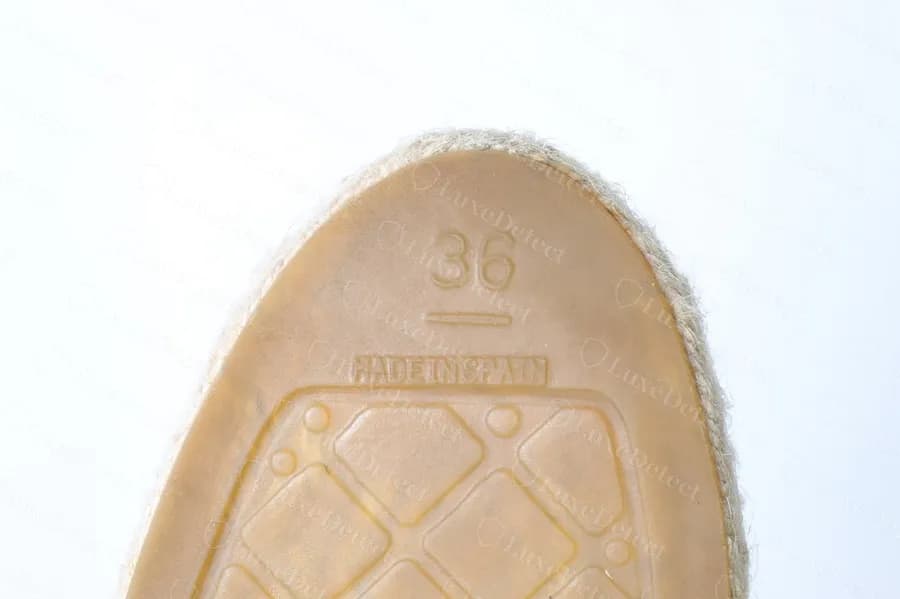
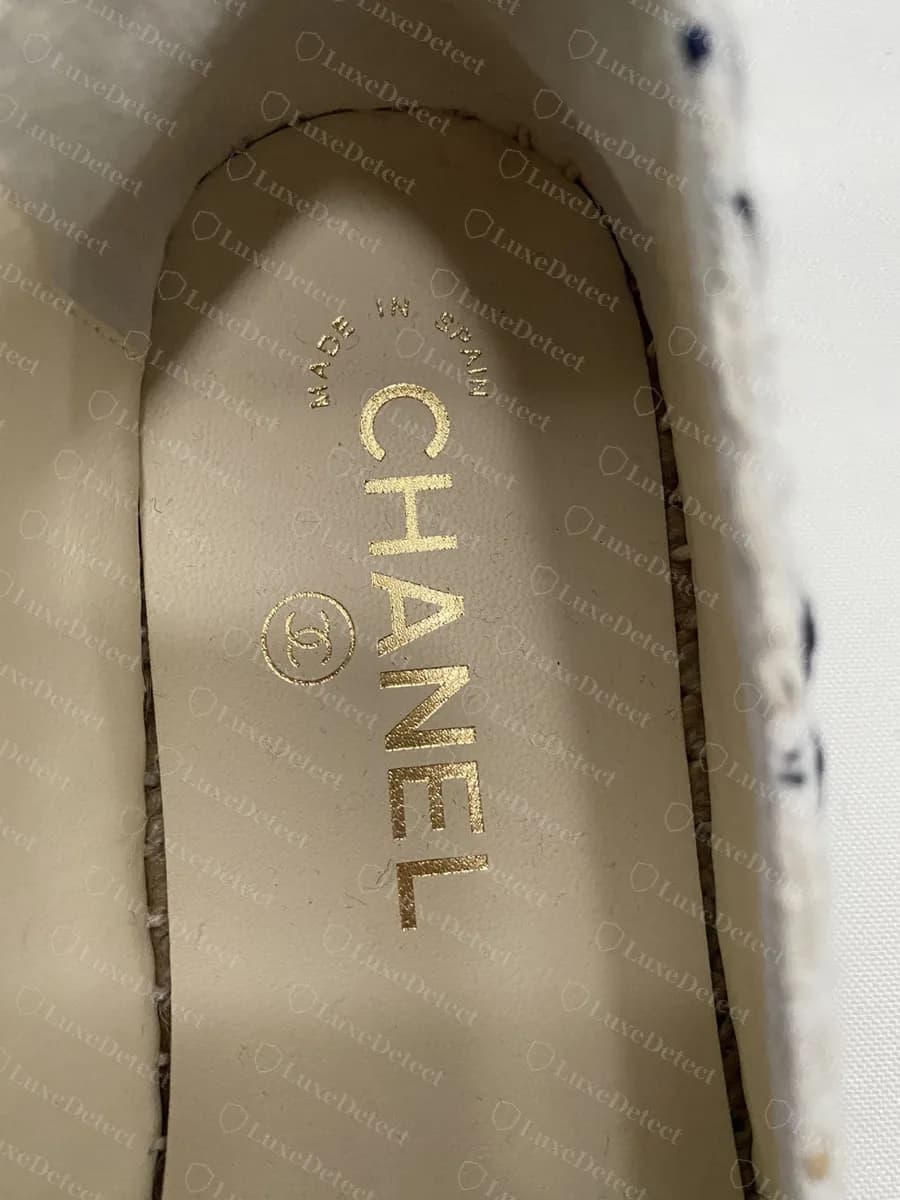
This is the strongest check in the guide, and it is a contradiction test rather than a format test. The flat CC espadrille has two origin marks: a "MADE IN ..." arc printed in foil above the CHANEL wordmark on the insole, and a "MADE IN SPAIN" line moulded into the rubber at the toe, under the size. In every genuine flat espadrille we reviewed, both said Spain. Resale and authentication write-ups say the same, that espadrilles are the Spanish-made exception in a mostly Italian shoe range, though we could not find a statement from Chanel itself.
Several counterfeits printed "MADE IN ITALY" on the insole while the sole still said "MADE IN SPAIN".
| Element | Authentic | Counterfeit |
|---|---|---|
| Insole arc | "MADE IN SPAIN" above CHANEL and the CC roundel | "MADE IN ITALY" on a shoe whose sole says Spain |
| Sole toe | Size, a short rule, then "MADE IN SPAIN" | Spain on the sole, so the pair contradicts itself |
| Agreement | Insole and sole name the same country | Insole and sole name different countries |
Red flag
A flat CC espadrille with "MADE IN ITALY" on the insole and "MADE IN SPAIN" on the sole. We saw this on several counterfeits and on none of the genuine flats, so it is enough on its own to walk away.
Worth knowing
Two limits. First, the check only works on the flat CC espadrille: a genuine low-heel rope slide we reviewed was made in Italy on both marks, so an Italian pair is not automatically wrong, only a pair that disagrees with itself. Second, Spain on both marks proves nothing, because many counterfeits get both right. Most fakes pass this check.
The Lining Code
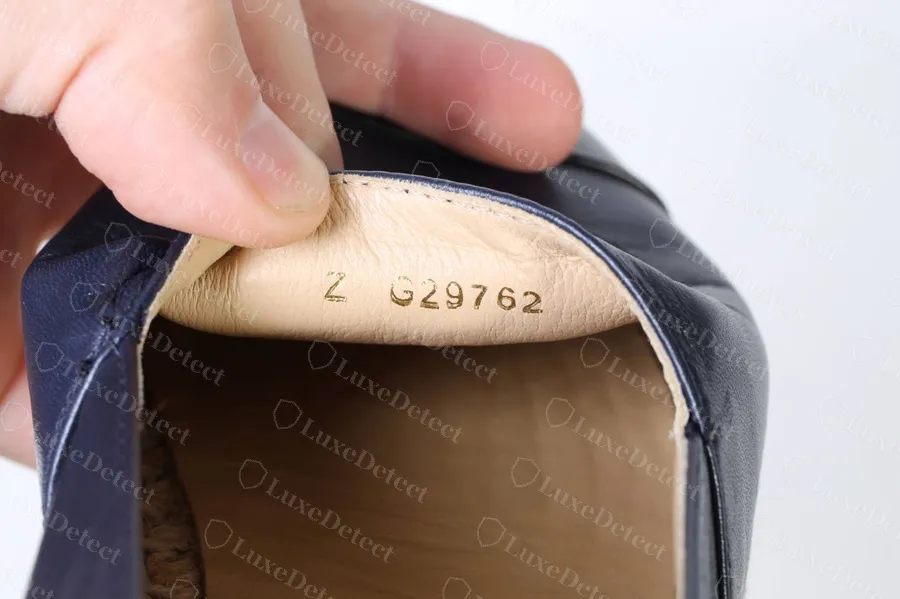
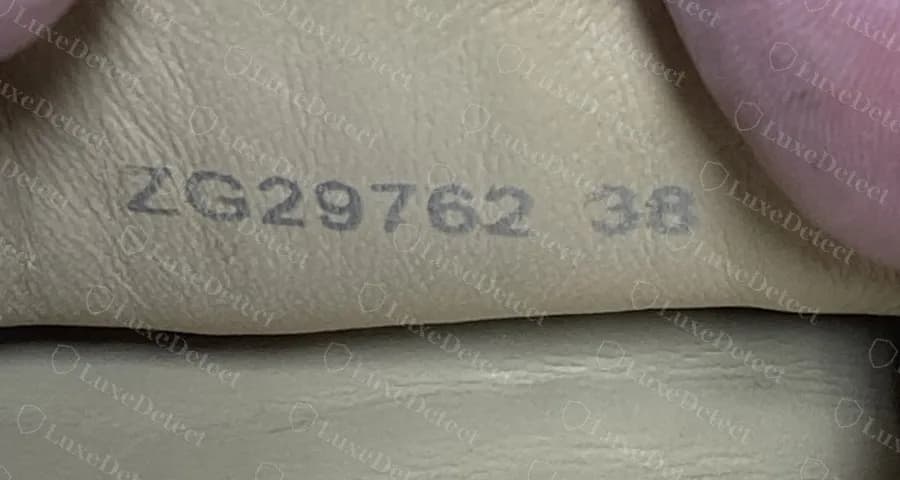
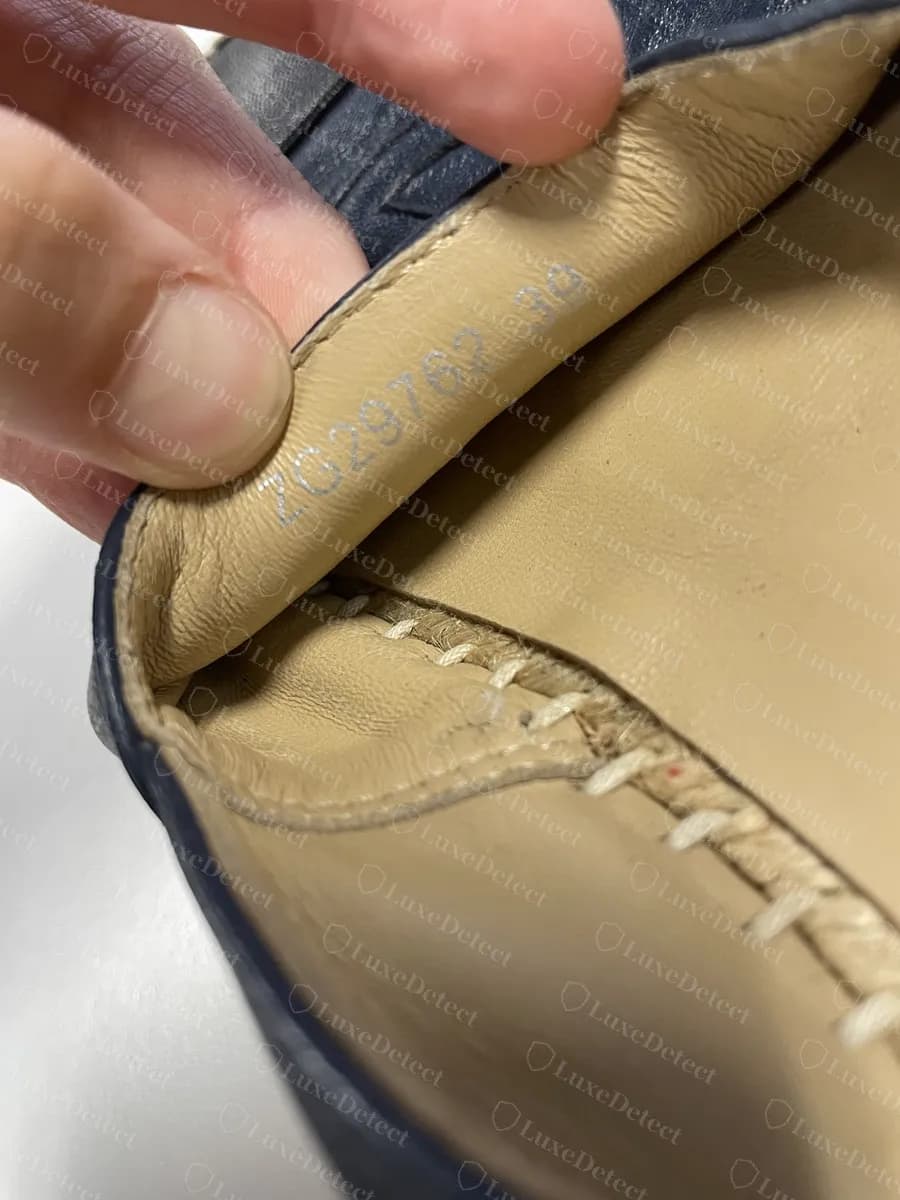
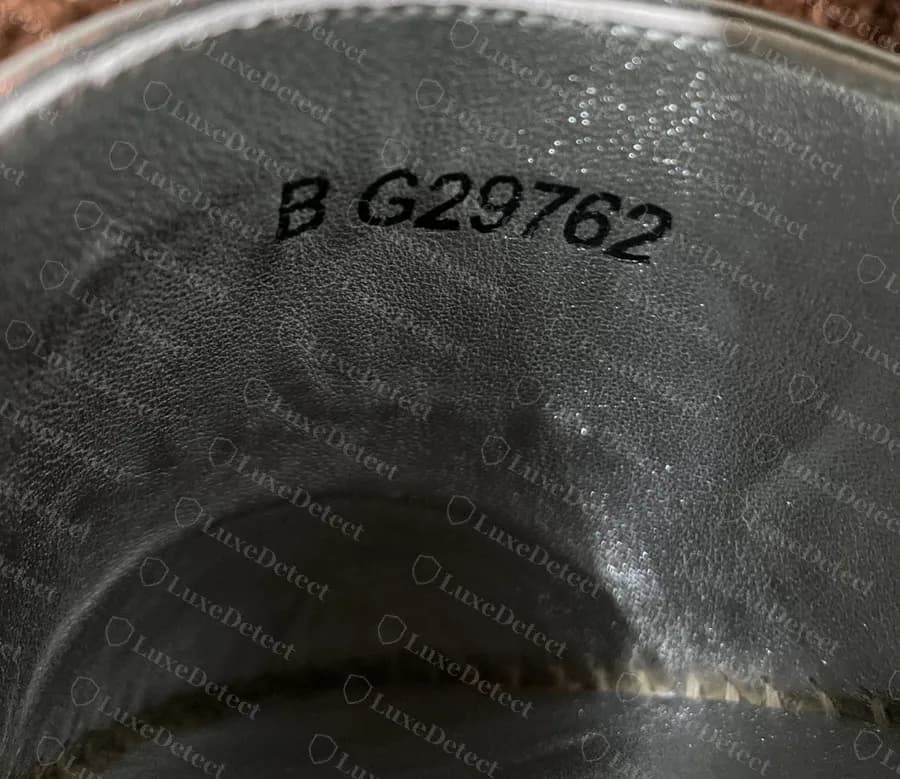
Fold back the top edge of the lining at the heel or the side and you will find a short printed code. On the classic flat it reads as one letter, a space and a model reference, for example "Z G29762", with nothing after it. The letter is not a size, and the reference identifies the style rather than the pair.
Some counterfeits add the size after the code, as in "ZG29762 38", or run the letter into the reference. That is a lean toward fake, but not a verdict: we also found a genuine pair with a size printed after the code, in the same format, so the size alone cannot decide it. We could not find a published Chanel specification for this code, so everything here rests on our own comparisons.
| Element | Authentic | Counterfeit |
|---|---|---|
| Format | One letter, a space, then the reference, e.g. "Z G29762" | Letter run into the reference, or a size added, e.g. "ZG29762 38" |
| After the reference | Usually nothing | Often a size, but not always |
| Ink | Gold, silver or dark, varies by lining colour | Also varies, so colour is not a tell |
Worth knowing
Treat a size printed after the code as a reason to look harder at the insole and sole, not as proof. A well-formed "B G29762" or "Z G29762" is the format counterfeiters copy most often, and it appeared on fake pairs in our reviews, so a clean code clears nothing.
The Tread Panels and the Jute
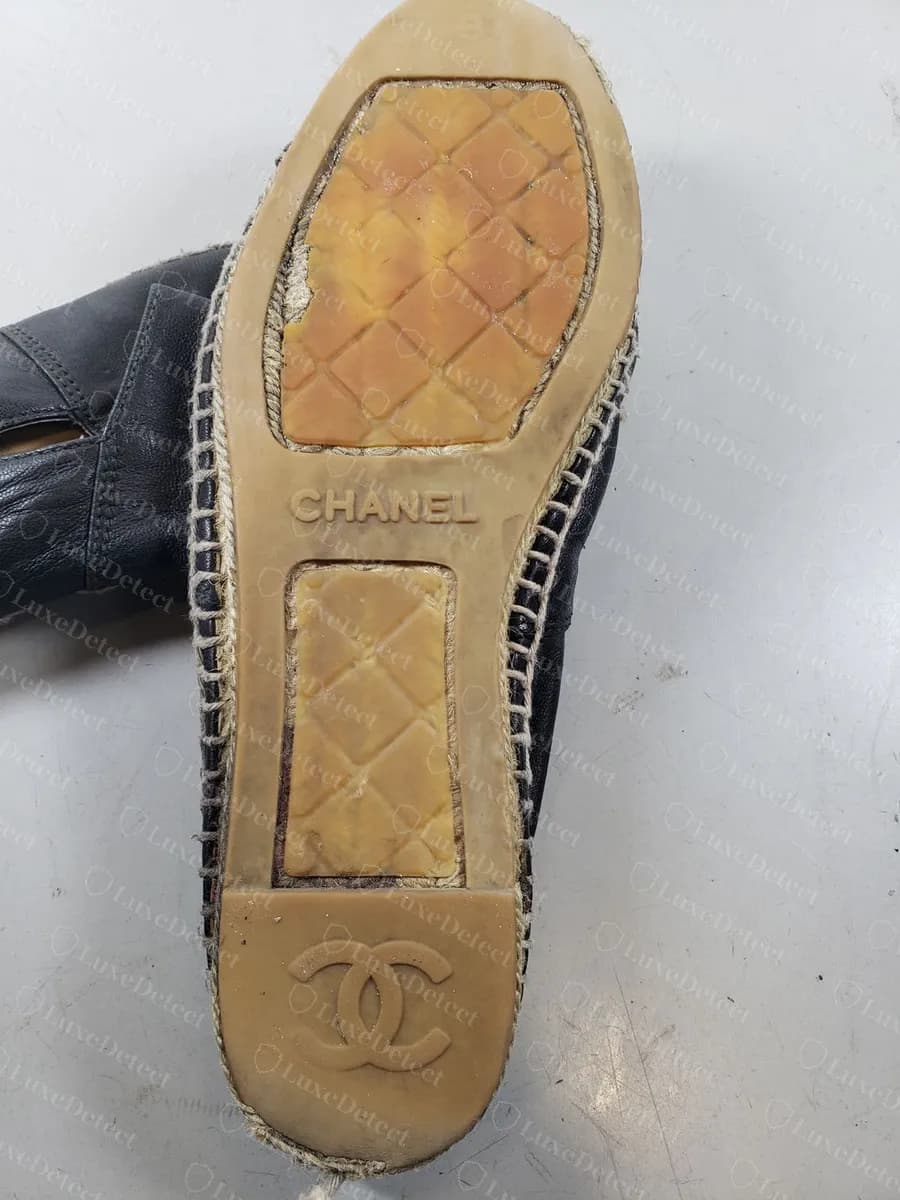
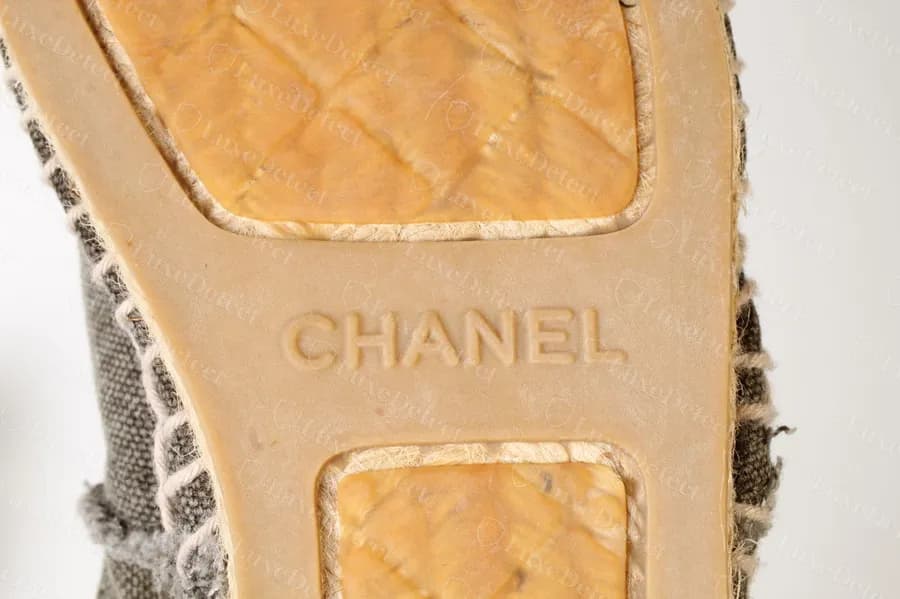
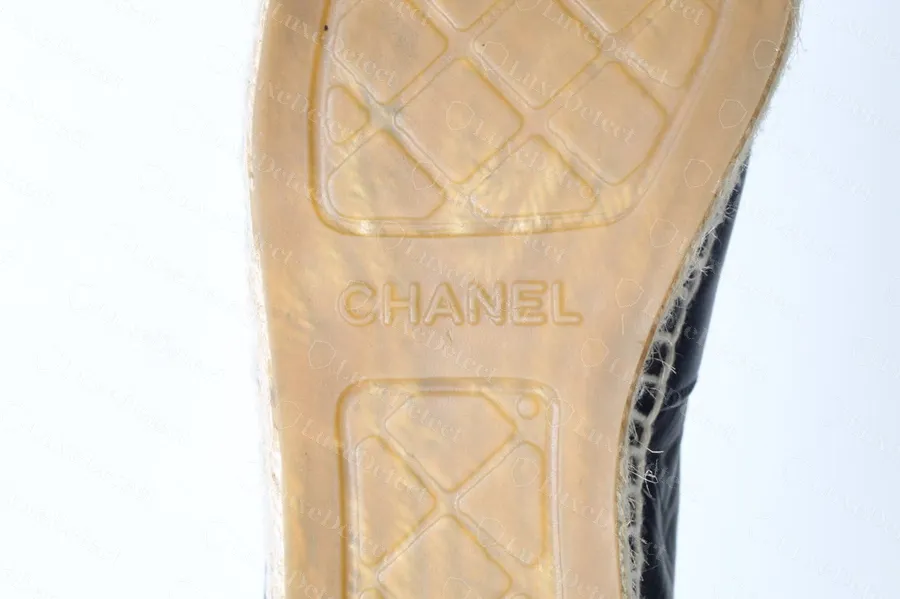
The rubber outsole of the classic flat has two quilted tread panels, one under the ball of the foot and one under the heel, with the CHANEL wordmark moulded in the bar between them and the CC on the heel cap. Some counterfeits have panels that look like separate inserts: each one sits in a window with a rim of exposed jute, and on worn pairs the edge lifts or cracks to show loose fibres.
This is where a photo misleads most. Genuine rubber outsoles go translucent with wear, so the jute underneath can show through the rubber, which looks like a gap but is not one. What matters is a physical seam with fibres in it, not fibres seen through clear rubber. And the window-and-rim layout is not exclusive to fakes: we found it on a genuine pair too. So this check can send you looking harder, but it cannot decide a pair.
| Element | Authentic | Counterfeit |
|---|---|---|
| Rubber | Translucent when worn, jute visible through it | Same translucency on worn pairs, so it is not a tell |
| Tread panels | Moulded quilting, sometimes set in a jute-rimmed window | Often a window with a lifting or cracked edge and loose fibres |
| Wordmark and CC | CHANEL between the panels and a CC on the heel cap | Copied, usually well |
Worth knowing
Jute seen through translucent rubber is normal on a worn genuine sole. Do not call a pair fake because you can see fibres under the tread. Look for a lifting edge or a crack with fibres in it, and weigh it against checks 1 and 2.
What Fakes Copy Correctly
Most of what a buyer looks at first is not evidence. In our reviews counterfeit pairs got these right, so a correct one tells you nothing:
- The gold-foil insole. CHANEL, the CC roundel and a "MADE IN SPAIN" arc, in good foil.
- The sole stamp. A size, a rule and "MADE IN SPAIN", with the right spacing.
- CHANEL between the tread panels and the CC on the heel cap.
- A well-formed lining code. The G29762 reference and letter, with or without the size.
- The CC on the vamp and the toe cap, including leather and tweed versions.
Worth knowing
The pair above passes the origin check. A pair can pass every check in this guide and still be counterfeit, because each check only catches the fakes that got that one detail wrong.
Ballet Flats and Slingbacks: What Genuine Looks Like
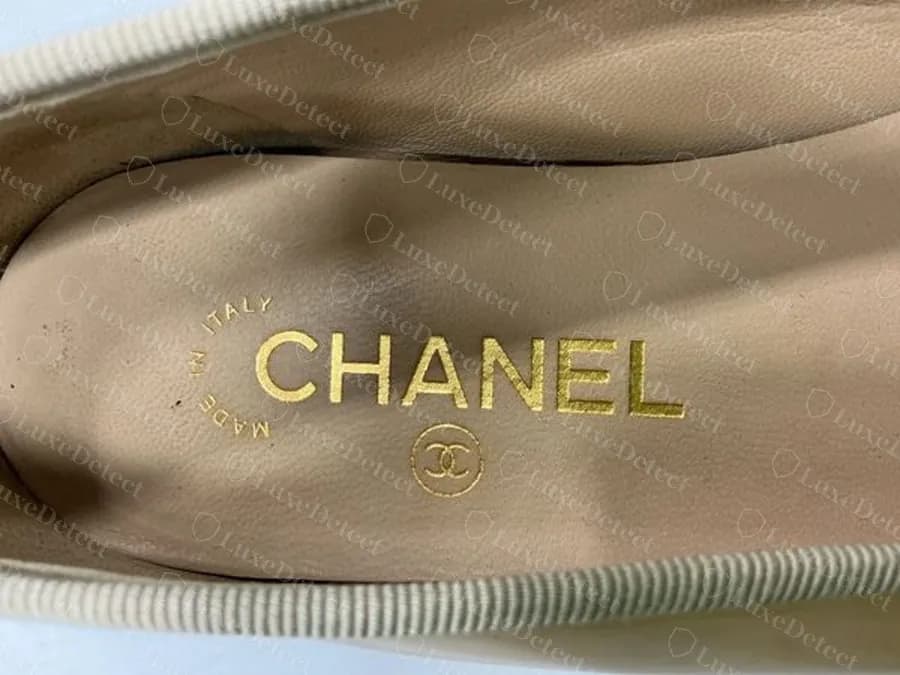
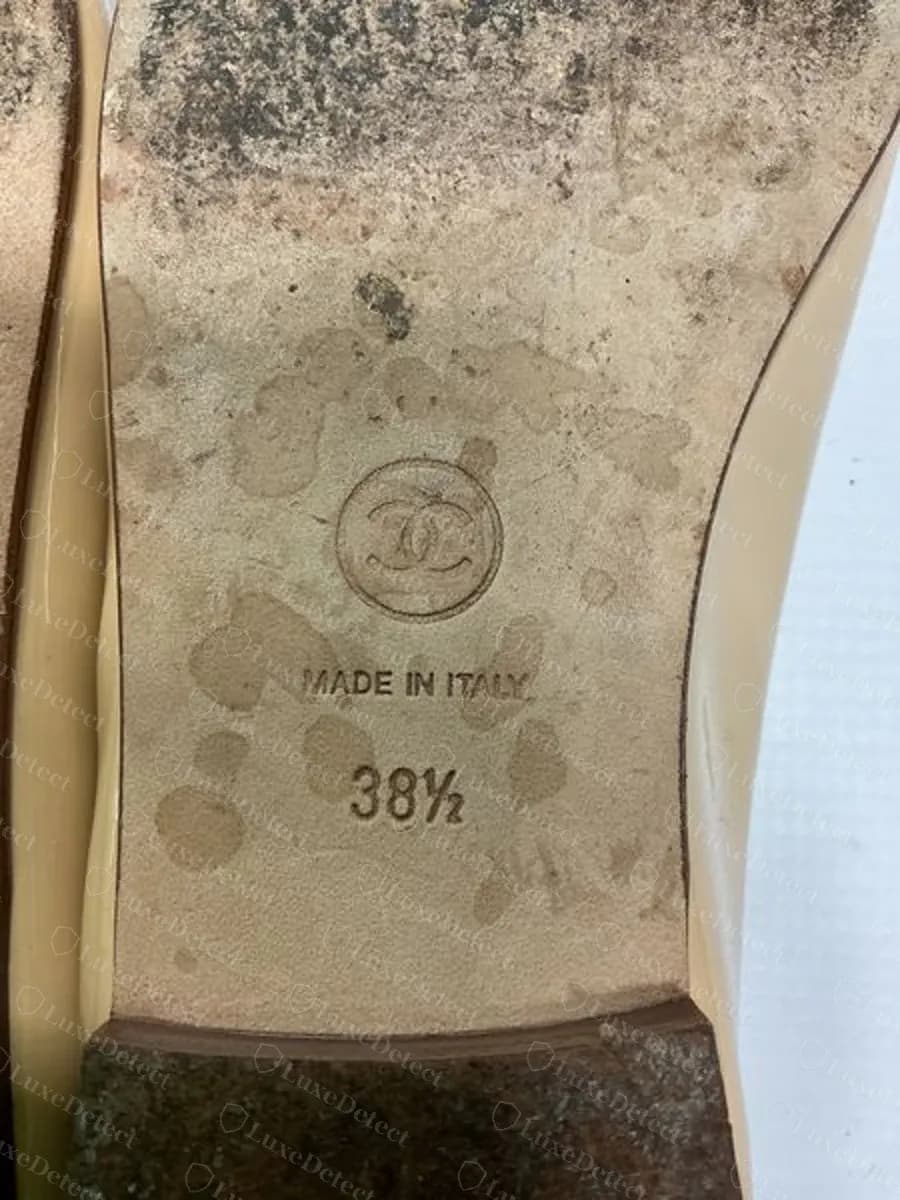
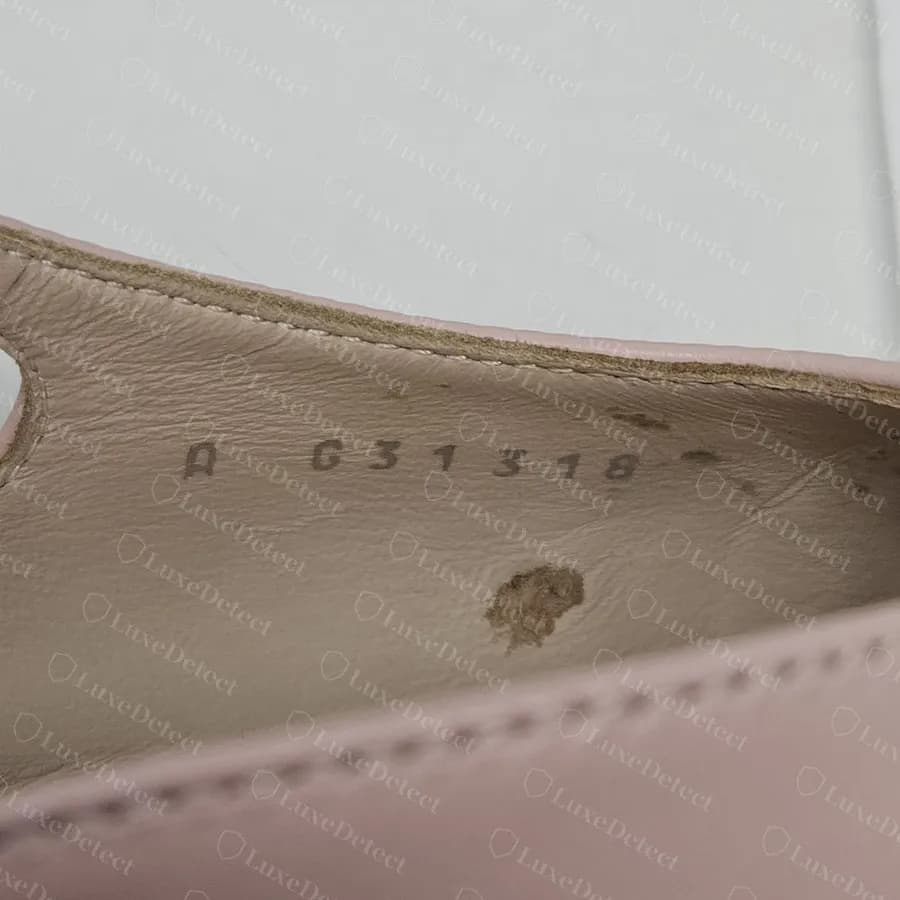
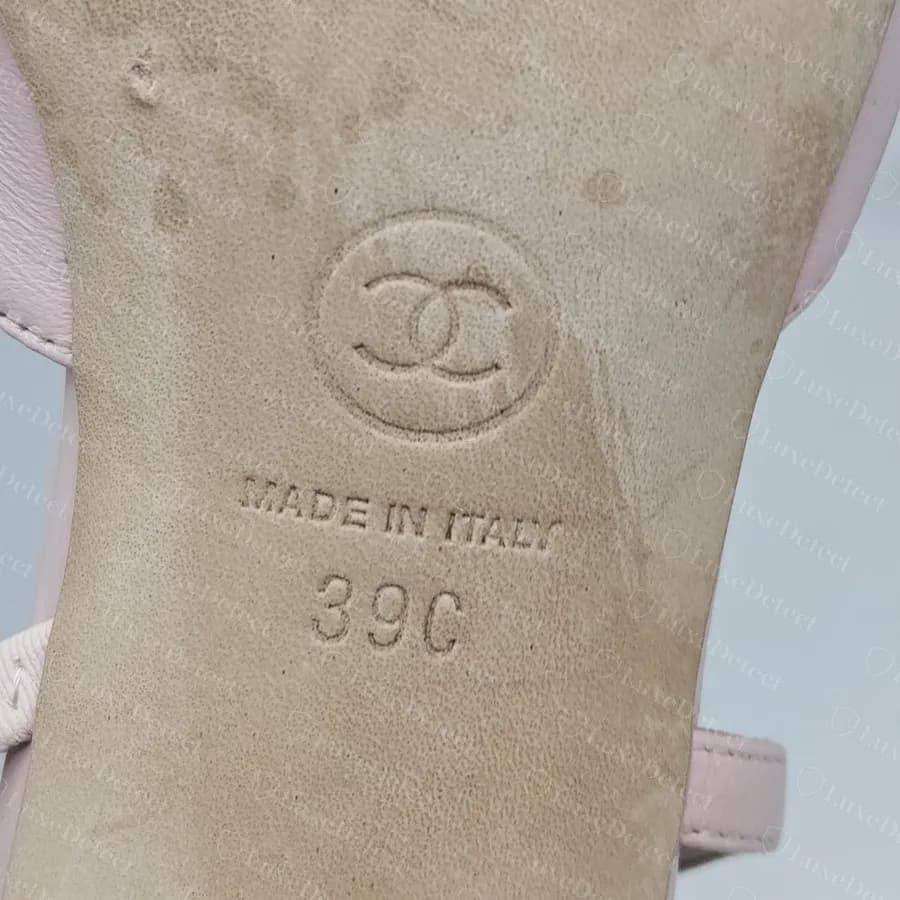
These are included as reference only. The counterfeit cap-toe ballet flats and slingbacks we have seen reproduce the insole, the sole stamp and the lining code, so we do not offer a tell. Use the photos to know what a genuine pair carries, and send the pair for a professional opinion if it matters.
On the cap-toe ballet flat, the genuine insole has a gold "MADE IN ITALY" arc, CHANEL and the CC roundel, and the leather sole carries the CC roundel, "MADE IN ITALY" and the size, stamped into the leather. The slingback follows the same plan, with a lining code of a letter, a space and a reference, such as "A G31318", and a sole stamp that can show a width letter after the size, such as "39C".
Worth knowing
The origin check in section 1 does not apply to these shoes. Their genuine insole and sole both say Italy, so Italy on a ballet flat or slingback is correct.
What the Box and Dust Bag Do and Do Not Prove
Packaging is context, not evidence. A genuine Chanel shoe box carries a label with the style code, material, colour and size, and the size should match the one inside the shoe. That cross-check is the box's only real value. Dust bags and boxes are easy to buy separately, and plenty of genuine pairs are resold without either, so a missing box is not a warning and a convincing one is not a reassurance.
Quick Authentication Checklist
- On a flat CC espadrille, compare the country on the insole arc with the one stamped under the size on the sole. If they differ, stop.
- Read the lining code. A size after it, or a letter run into the reference, means check everything else more closely.
- Look at the tread panels. Jute seen through clear rubber is normal; a lifting edge or crack with fibres in it is worth a closer look.
- Match the lining code and the size to the box label, if there is one.
- Do not count a correct sole stamp, gold-foil insole, CHANEL between the panels or a tidy "G29762" in the pair's favour.
A mismatch between the insole and the sole is enough to reject a flat espadrille on its own. A size after the lining code or an odd tread panel is only a prompt to look harder. A pair that passes everything here is not proven real, because the better counterfeits get the visible details right.
When to Get a Professional Opinion
This guide rests on a large set of authenticated and counterfeit Chanel shoe orders in our own archive, but the espadrille checks above catch only a minority of fakes between them, and the genuine and counterfeit examples overlap more than a buyer would like. If a pair is a meaningful purchase, get a second opinion before you pay. LuxeDetect authenticates Chanel shoes from $15 with a verdict and Certificate of Authenticity within 24 hours; send the full sole, the insole, the lining code with the lining folded back, and the box label. Our Louis Vuitton shoes guide shows how another house's shoe markings compare.
FAQ
How can I tell if Chanel espadrilles are real?
Start by comparing the country on the insole with the country on the sole. Genuine flat CC espadrilles in our reviews said Spain on both, so a "MADE IN ITALY" insole on a Spain-soled pair is a strong warning. No single check is decisive, though, and a pair that passes every one is not proven real.
Are Chanel espadrilles made in Spain?
In every genuine flat CC espadrille we reviewed, yes, and resale guides report the same. We could not find a statement from Chanel, so we treat it as a strong pattern rather than a rule. Other rope-soled styles, such as low-heel slides and wedges, can be made in Italy.
What does the code inside Chanel espadrilles mean?
It is a printed model code, usually one letter, a space and a reference such as G29762. The reference identifies the style. It is not a serial number and it cannot be looked up to confirm a pair, because counterfeits copy it.
Should the lining code include the size?
Usually not on the classic flat, and a size after the code appeared more on fakes in our reviews. But we also found a genuine pair that carried one, so a size is a prompt to look harder, not a verdict.
Can you see jute through the sole of real Chanel espadrilles?
Yes, on worn pairs. The rubber outsole goes translucent with use and the jute shows through it. That is not a gap. A lifting or cracked edge with fibres in it is different, and worth a closer look.
Do Chanel shoes have serial numbers?
Not in the way Chanel bags do. There is no serial sticker or chip on a shoe, only the printed model code inside the lining and the stamps on the insole and sole.
Are Chanel ballet flats and slingbacks copied too?
Yes. The counterfeits we have seen copy the insole, the sole stamp and the lining code, so a visual check is weak. These shoes are made in Italy, so Italy on the sole and insole is correct. If the pair matters, get a professional opinion.