Streetwear Authentication Specialist
Published October 2026 · Contact
Certilogo is a service that brands use to put a code on their products so that a buyer can check the item with the brand's own system. On the garment it is a security label inside the piece with a 12-digit CLG code and a QR code. You scan the QR code, or type the code in at certilogo.com, and Certilogo takes you through a check. It is a check against a brand-linked code, so it tells you something about the label and the code. It is not a full examination of the garment.
What Is Certilogo?
Certilogo is a Milan-based company that describes itself as connecting products with people for brands. Press coverage describes it as a provider of AI-powered digital IDs and authentication for fashion and other goods. A 2017 Panorama profile says the service runs through an app or the website and uses an AI engine on data from brands and consumers. That profile is promotional and its numbers come from the company, so treat it as a description of the idea rather than a measure of accuracy. In July 2023 The Retail Bulletin reported that eBay had completed its acquisition of Certilogo.
The point to hold on to: the brand chooses to use Certilogo and decides which products carry a code. It is not a service you can point at any item. If a product has no Certilogo label, there is nothing to check.
Which Brands Use Certilogo?
We only list brands where we found the use stated on a brand page or in press coverage we opened:
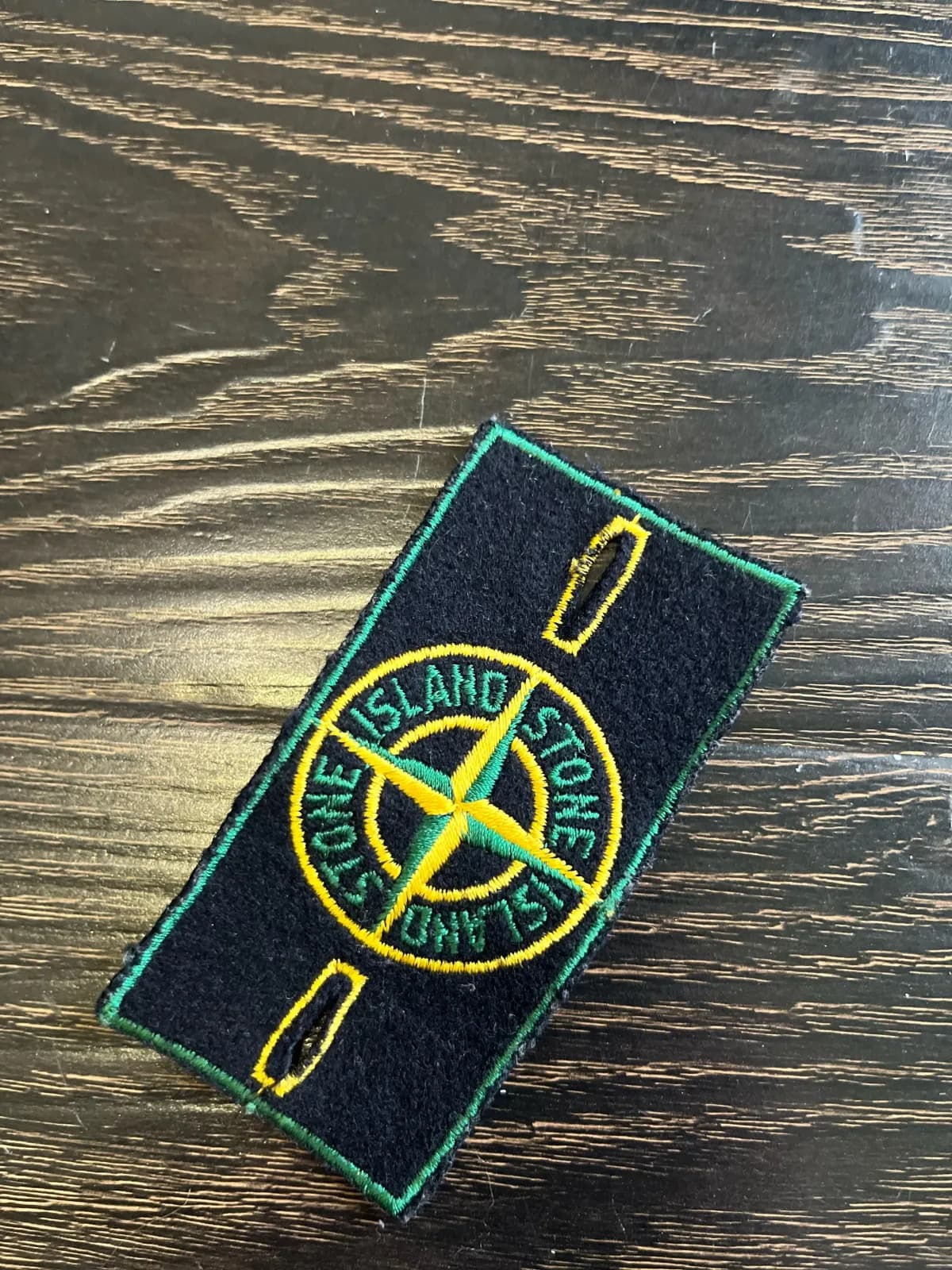
- Stone Island. Stone Island's authenticity page says the brand has used Certilogo since the Spring/Summer 2014 collection, with a 12-digit code or a QR code on the security label inside the garment. Footwear and some accessories do not carry these codes. Our Stone Island guide covers the label in more detail, and our Stone Island ART number checker reads the season from the article code.
- Armani. Armani's authenticity page tells buyers to scan the QR code on the garment label or enter the 12-digit CLG code, which sends you to the authentication system on the Certilogo site. It says the check can be started before and after purchase, including for items bought online.
- Moncler (older jackets). Moncler introduced Certilogo with its Spring/Summer 2009 collection: a unique code sewn into the label that could be checked at certilogo.com. Later Moncler jackets use other label systems, which our Moncler label and code guide walks through, so do not assume a recent Moncler has a Certilogo label.
- Others named in press coverage. The 2017 Panorama profile names Versace, Diesel and Campagnolo among the brands then using the platform. That list is dated, so check the brand's own site before relying on it.
A brand missing from this list may still use Certilogo. We simply have not opened a source for it.
How a Certilogo Label and Code Check Works
Worth knowing
We could not load the interactive screens on certilogo.com, so the steps below follow what the brands' own pages say, plus how retailer guides describe the questions. Screens and wording can change, so follow what the site shows you.
- Find the label. It is inside the garment, a security label with the QR code and the 12-digit CLG code. Not every product from a participating brand has one (Stone Island says footwear and some accessories do not).
- Scan the QR code, or type the 12-digit code at certilogo.com. Both Armani and Stone Island describe these two routes.
- Answer the questions. Retailer guides describe a short series of questions, starting with whether you bought the item in a shop or online.
- Send more photos if asked. The same guides say Certilogo may ask for extra pictures of the label before it gives a verdict when something looks unusual.
- Read the result. See the next section.
Keep your code to yourself. Retailer guides advise against showing or sending a genuine code to anyone, and our own Stone Island findings (below) show why a copied code is a problem.
How to Read a Certilogo Result
Certilogo shows a verdict after the check. Because we could not load the result screens, we do not quote their wording. What matters is what each outcome can tell you:
| Outcome | What it can tell you | What it cannot tell you |
|---|---|---|
| Code accepted | The code exists in the system and the check did not flag it | That the garment you are holding is the one the code was made for |
| Code not accepted, or flagged | Something is wrong with the code, the label or the way it was used. Take it seriously | Which part is wrong. A damaged or removed label, an old item or a typing error can look the same |
| No label at all | The item has no Certilogo code to check | That it is fake. Items from before the brand adopted Certilogo, and product types a brand leaves out, have none |
Red flag
A garment from a season when the brand fitted Certilogo labels, with no label where there should be one, is worth acting on. A pre-adoption piece with a Certilogo label is also odd.
What a Certilogo Check Does and Does Not Prove
A Certilogo code is a brand-linked mark, and the useful way to think about it is the same as for any mark on a garment: a matching mark proves nothing on its own, because marks can be copied, while a missing or inconsistent mark can tell you a lot.
Worth knowing
In our Stone Island guide, counterfeit jackets in our archive carried the same CLG code as a genuine one, and a code that scans did not separate real from fake. That is one brand's pattern in our records, not a claim about every brand or every check.
What we can say fairly:
- A Certilogo check is a real first step when the item has a label. It can catch a fake whose code is wrong, reused in an odd way or missing.
- It is one check among several. Weigh it with the other marks: the brand's article code against the season, the label printing, stitching, hardware and fabric, compared with a verified pair of the same model.
- A passing result is not a guarantee, and a failing one is not always a fake. Treat the first as consistent with genuine and the second as a reason to look harder.
- It does not cover items without a label, which includes a lot of second-hand stock and any product the brand left out.
Our comparison pages go deeper on how Certilogo sits next to other approaches: LegitCheck vs Certilogo, Entrupy vs Certilogo and RealAuthentication vs Certilogo.
Stone Island Certilogo: What to Expect
Searches for "Stone Island Certilogo" are common because Stone Island has fitted the label since SS2014. The practical rules from our Stone Island guide are:
- A genuine post-2014 garment should have the label unless it is footwear or an accessory type without one.
- A garment whose ART number points to SS2014 or later but has no Certilogo label (outside those exceptions) is a flag.
- A code that scans is not enough on its own, because fakes in our records carry codes copied from genuine garments.
Read the full walk-through in the Stone Island real vs fake guide.
How a LuxeDetect Authentication Fits Next to a Certilogo Check
The two answer different questions. Certilogo checks a code the brand issued. A LuxeDetect authentication is a review of the item itself from your photos: the label printing, stitching, hardware, fabric and construction, compared against verified examples of the same model. It works on items with no Certilogo label, such as older pieces or product types the brand does not label, and on items that do have one it looks at the label together with everything else on the garment.
A sensible order for a Certilogo-labelled piece: run the Certilogo check first, then use a review when the item is expensive, the result is unclear, or you are buying second-hand and the label alone settles little. LuxeDetect's clothing authentication starts at $15 with a 24-hour turnaround, and includes a written verdict. You can start an order with photos of the full garment, the neck label, the care and Certilogo labels, the zip and the buttons.
FAQ
What is Certilogo?
Certilogo is a service brands use to put a code on their products so buyers can check the item on certilogo.com. On a garment it is a security label with a 12-digit CLG code and a QR code. The brand decides which products carry one.
How do I do a Certilogo check?
Find the security label inside the garment, scan the QR code or enter the 12-digit code at certilogo.com, answer the questions it asks and follow the steps shown. Armani and Stone Island both describe the QR code and the 12-digit code as the two routes.
Is there a Certilogo checker I can use without the label?
No. The check starts from the code on the label, so an item without one cannot be checked this way. For those items, compare the marks against a verified pair or have the item reviewed.
Does a Certilogo code prove my item is real?
No, a code on its own is not proof. In our Stone Island records, counterfeit jackets carried the same code as a genuine one, so a code that scans did not separate real from fake. Use it with the other marks on the garment.
What does a Stone Island Certilogo label look like, and does every piece have one?
It is a security label inside the garment with a 12-digit code and a QR code, on Stone Island garments since SS2014. Stone Island says footwear and some accessories do not carry the codes. See our Stone Island guide for the full rules.
What does it mean if my Certilogo check fails?
It means something about the code, the label or how it was used did not pass, and you should investigate. A damaged label, a typing error or an older item can also cause a failed check, so look at the other marks and, if the item is valuable, get a second opinion.
Is "certi logo" the same as Certilogo?
Yes. The name is spelled Certilogo, one word. Be careful with lookalike sites: type certilogo.com yourself or use the link on the brand's own authenticity page.
Can I authenticate a Certilogo-labelled item from photos?
Yes. What decides it is how the label, the stitching, the hardware and the fabric fit together on that model, compared with verified examples. Send clear photos of the whole item and each label.