Luxury Fashion Authentication Specialist
Luxury leather goods specialist. Works on Italian house construction, hardware, and interior stamping.
Published October 2026 · Contact
Why Givenchy Hoodies and T-Shirts Are Checked on the Care Label
Givenchy's logo hoodies, sweatshirts and graphic T-shirts are widely copied clothing. In our archive, far more of these casual pieces came back counterfeit than genuine, and they cluster around the same designs: the distressed "GIVENCHY PARIS" logo, the Rottweiler and shark graphics, the star-collar and Cuban-fit tees, and the Bambi sweatshirts.
The obvious checks do not separate them. The cracked, worn-looking logo print appears on genuine and counterfeit pieces alike, because Givenchy prints it that way on purpose. The woven neck label is copied well enough that we could not split genuine from fake on the lettering alone. What does separate them is the care label sewn into an inside seam, and in particular the block at the bottom that names Givenchy's importer for Japan.
This guide is built from genuine and counterfeit hoodies, sweatshirts and T-shirts in our authentication archive. We opened the label photos from both sides at full size and kept a tell only when we found it on several counterfeits and on none of the genuine pieces we checked. Two checks we expected to work did not, and they are explained below so you do not rely on them.
What to check, ranked by reliability
| Checkpoint | Reliability | What it tells you |
|---|---|---|
| 1. The Japan Importer Block: Does It Match the Label's Year? | ★★★★★ | An importer block that does not belong to the label's year, or the "Givenchy Company" block with 03-3404-0361, is a strong reason to doubt it; the 2015 block on a 2015 label is normal and a correct block proves nothing. |
| 2. The Style Code Line: Does It Belong to This Garment? | ★★★★★ | A style code whose category belongs to a different kind of garment, such as a shirt code on a hoodie, shows the label was copied. |
| 3. The Neck Label and the Distressed Logo: Why They Do Not Decide It | ★★★★★ | Fakes copy both the woven neck label and the chipped logo print; a good one rules nothing in. |
| Before You Start: Label Eras and Origins | ★★★★★ | Sets which importer block and code format to expect for the label's year; the Portugal origin line is copied by fakes and proves nothing. |
Before You Start: Label Eras and Origins
Genuine Givenchy care labels changed over time, so know which era you are looking at before you judge one. The Japan importer block at the foot of the label changed twice, and each version is right only for its own years.
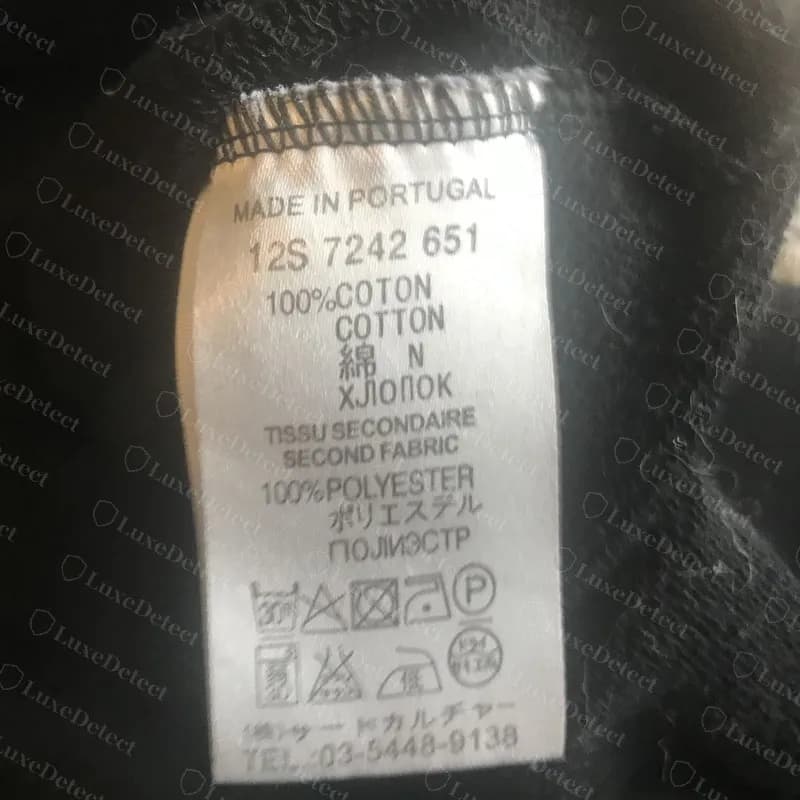
- Until about 2014: a season-and-number line such as "12S 7242 651", a second-fabric line for printed or lined pieces, and a Japanese importer line reading (株)サードカルチャー with the phone number 03-5448-9138. Counterfeits of the same designs copy this label too, so on its own it proves nothing either way.
- Around 2015: the importer block reads "LVMH Fashion Group Japan K.K" over "LVMH FG ジャパン株式会社" and "ジバンシィ カンパニー", with PHONE #03-3263-9663. Genuine pieces from the 2015 season carry exactly this block, so it is not a fake template.
- 2016 onward: the block becomes "LVMHファッション・グループ・ジャパン (株)" over "ジバンシィ ジャパン", with PHONE#03-5786-0962. Season-and-number lines kept running on genuine labels until about 2017 to 2018, and style codes such as "BM70..." (with the fit written out, "OVERSIZED FIT", "REGULAR FIT") take over from about 2018. Labels from the 2020s drop the English "LVMH Fashion Group Japan K.K" line and keep the rest of the block, so a missing English line is normal on a current piece.
- Origin: the adult hoodies, sweatshirts and tees we reviewed were made in Portugal. Children's pieces carry a long multilingual label that names Tunisia. Counterfeiters copy origin lines too, so the country settles nothing on its own.
The Japan Importer Block: Does It Match the Label's Year?
The block at the foot of the care label is printed small, and it is the part counterfeiters get wrong. The test is not whether the block looks like the current one. It is whether the block belongs to the year the rest of the label points to: the collection year in a season line (the first two digits of "16S 7369 342" mean 2016), or, on a style code such as BM71333Y6B, a label from about 2018 on.
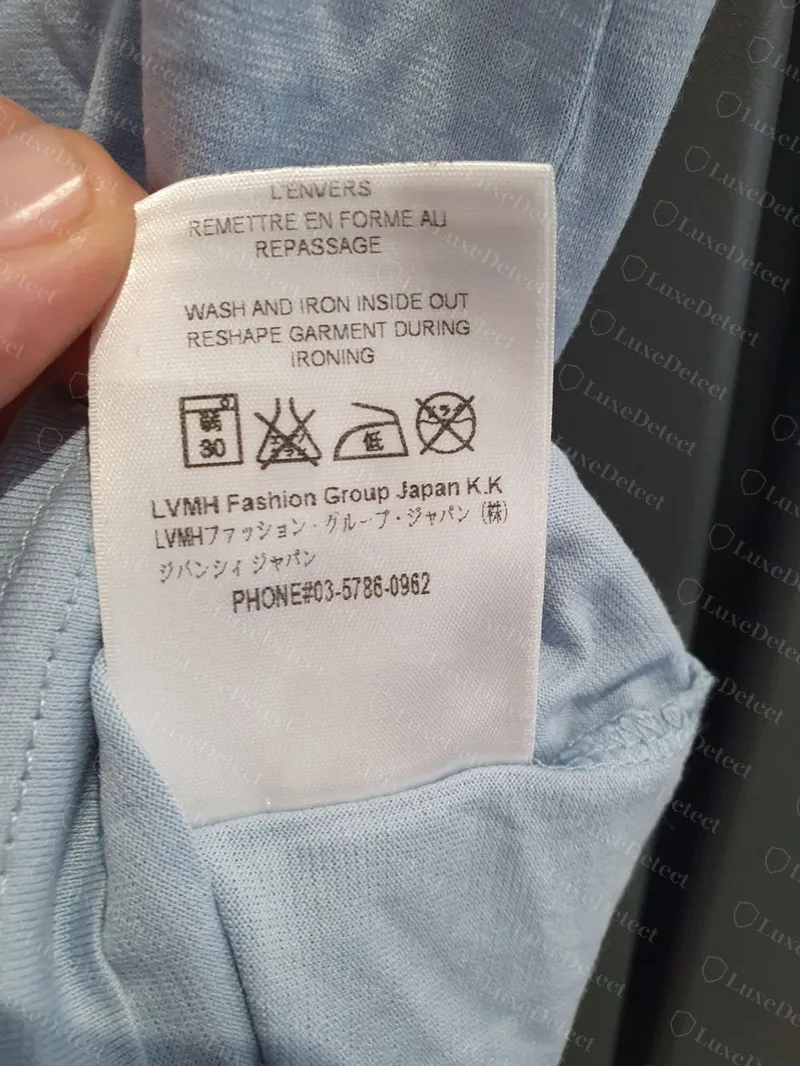
Several counterfeits carry an older block on a newer garment. The block below is the 2015-era one, which is correct on a 2015 piece. It is a warning when the code line on the same label points to 2017 or later, or is a BM or BW style code; on a 2016 line it is only worth a second look.
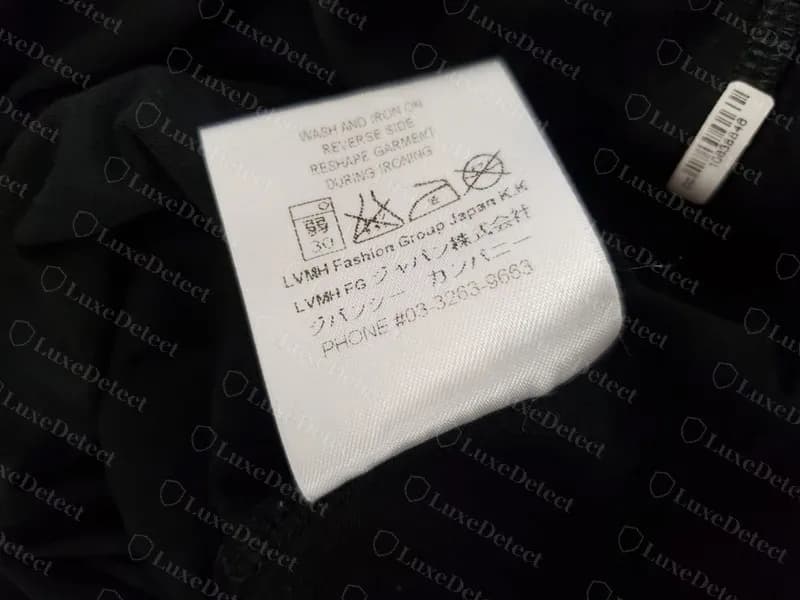
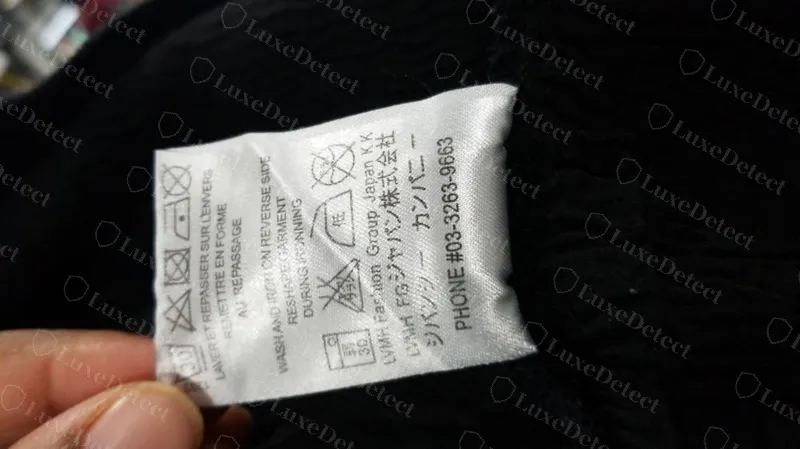
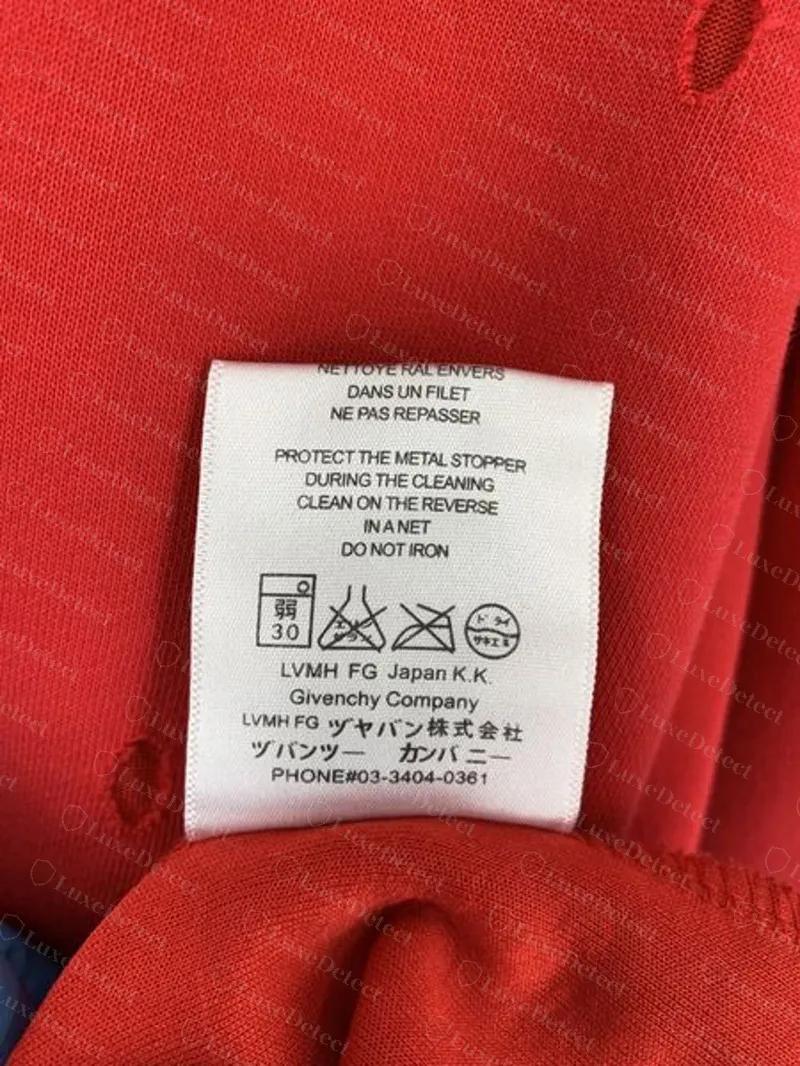
The block in the next photo is different in kind. It reads "LVMH FG Japan K.K." over "Givenchy Company", with garbled katakana (ツヤバン株式会社) and PHONE#03-3404-0361. We have only ever seen this version on counterfeits.
| Label year | Importer block | Phone |
|---|---|---|
| Until about 2014 | (株)サードカルチャー | 03-5448-9138 |
| About 2015 | LVMH Fashion Group Japan K.K / LVMH FG ジャパン株式会社 / ジバンシィ カンパニー | 03-3263-9663 |
| 2016 onward (the English line is dropped on 2020s labels) | LVMHファッション・グループ・ジャパン (株) / ジバンシィ ジャパン | 03-5786-0962 |
| Never seen on a genuine label | "LVMH FG Japan K.K." / "Givenchy Company" / garbled katakana | 03-3404-0361 |
Red flag
A Japan block that does not match the label's year is a strong reason to doubt the garment: the 2015 block (03-3263-9663) on a 2017 or later season line or on any BM or BW style code, the サードカルチャー block on a label from 2016 on, or the "LVMH FG Japan K.K." / "Givenchy Company" block with 03-3404-0361, which we have never seen on a genuine label. The 2015 block on a 2015 label is not a flag, because genuine pieces from that season carry it. On a 2016 line the 2015 block is only worth a second look: the change fell around then.
Worth knowing
A correct block proves nothing. Some counterfeits carry a perfect copy of the block that belongs with their code line, so a clean one only means the garment survives this check. If the block fits the year, move on to the code line.
The Style Code Line: Does It Belong to This Garment?
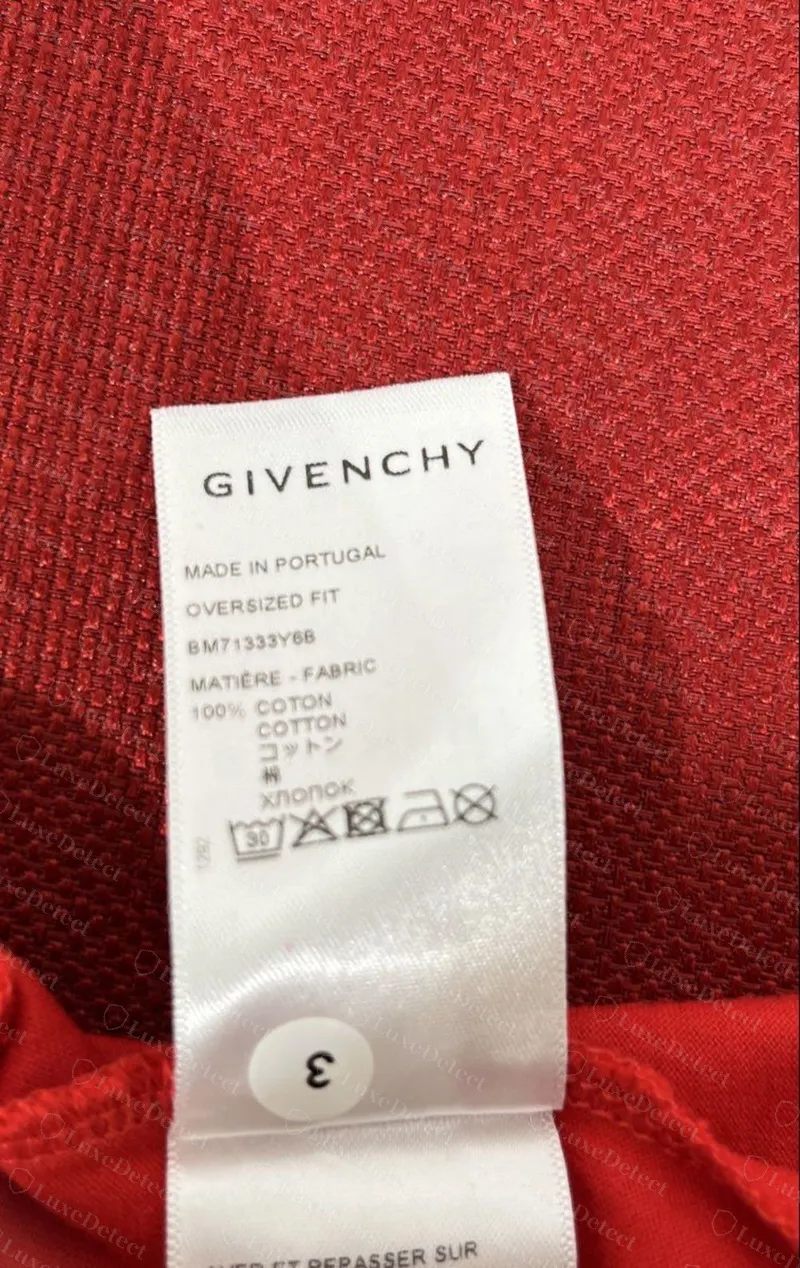
Genuine later-era labels carry a style code (for example BM70703Y2W on a Cuban-fit star tee, or BM71333Y6B on an oversized red T-shirt) and the fit written beside it. The code reads left to right: B for the brand, M or W for men's or women's ready-to-wear, a two-character category (70 and 71 T-shirts, J0 sweatshirts and hoodies, 60 and 61 shirts, 50 and 51 trousers, 90 knitwear), a two-character model and a material block whose first character is the fabric (3 is jersey, 1 woven). So the code tells you what kind of garment it was made for, and it should agree with the one in your hands.
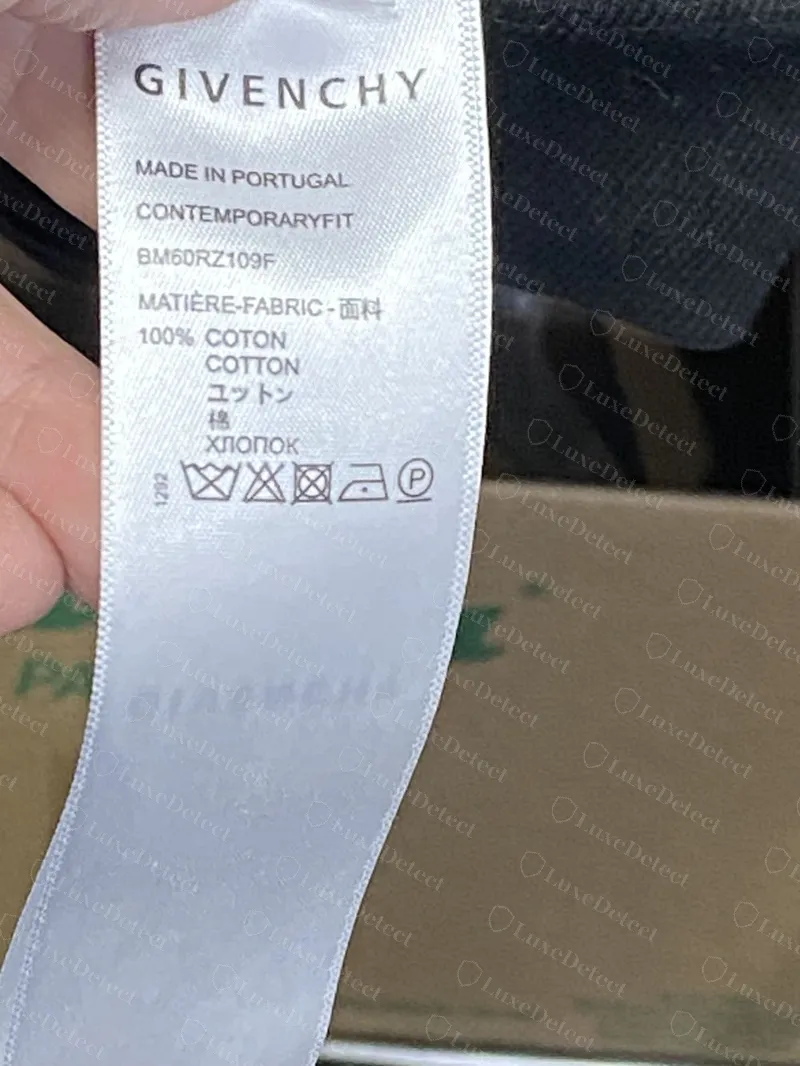
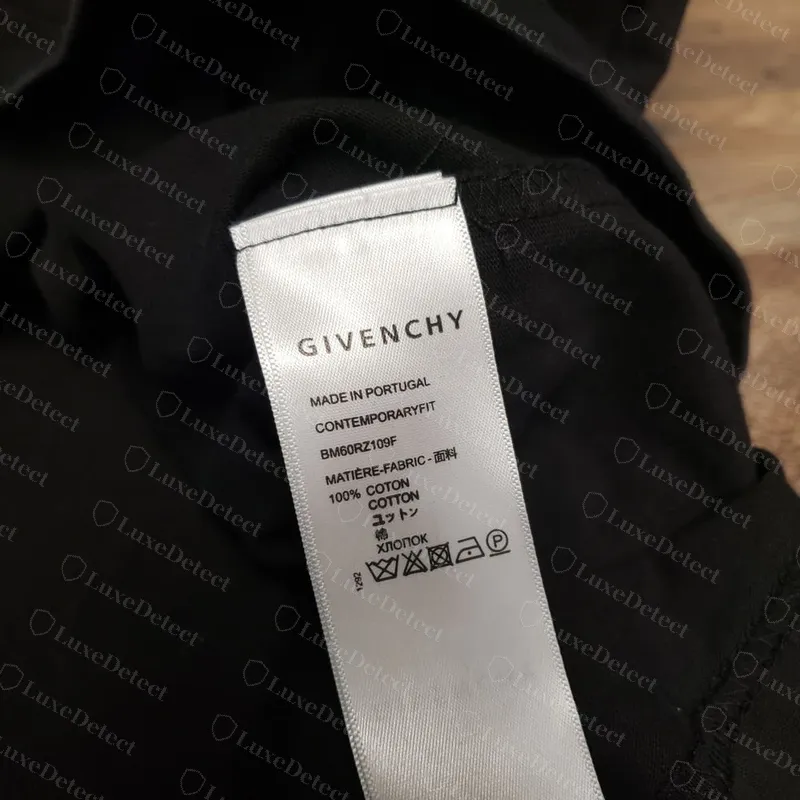
We found the same code, BM60RZ109F, with the same "CONTEMPORARYFIT" wording (no space), on a counterfeit hoodie and on a counterfeit T-shirt from different orders. It is a shirt code: 60 is men's shirts, the 1 after the model is woven fabric, and "CONTEMPORARY FIT" is a shirt fit. We have since found it on another counterfeit, a denim zip shirt. It was almost certainly copied from a genuine shirt and reused on other pieces, and you can spot the mismatch from the code itself without searching it.
Red flag
Read the category in the code before you search it. If it belongs to a different kind of garment from the one in your hands, such as a shirt code (BM60 or BM61) or a trousers code (BM50 or BM51) on a hoodie or a T-shirt, the label was copied from another product.
Worth knowing
Two limits. BM70 genuinely covered crewneck sweatshirts as well as T-shirts from about 2017 to 2020 (a genuine Shark sweatshirt carries BM704C3Y0V), so the same category on a T-shirt and a sweatshirt is a tell only when the exact code is known to belong to the other garment. And a matching code does not make a piece genuine: counterfeiters also copy codes from the exact product they are faking, so this catches careless copies, not every copy. We rate it below the importer block because we saw the repeated code on only a few counterfeits.
The checker below reads the code, compares it with the item, and compares the importer block with the label's year. It never says a piece is genuine; only a mismatch means anything.
The Neck Label and the Distressed Logo: Why They Do Not Decide It
These are the two things buyers check first, and they are the weakest evidence.
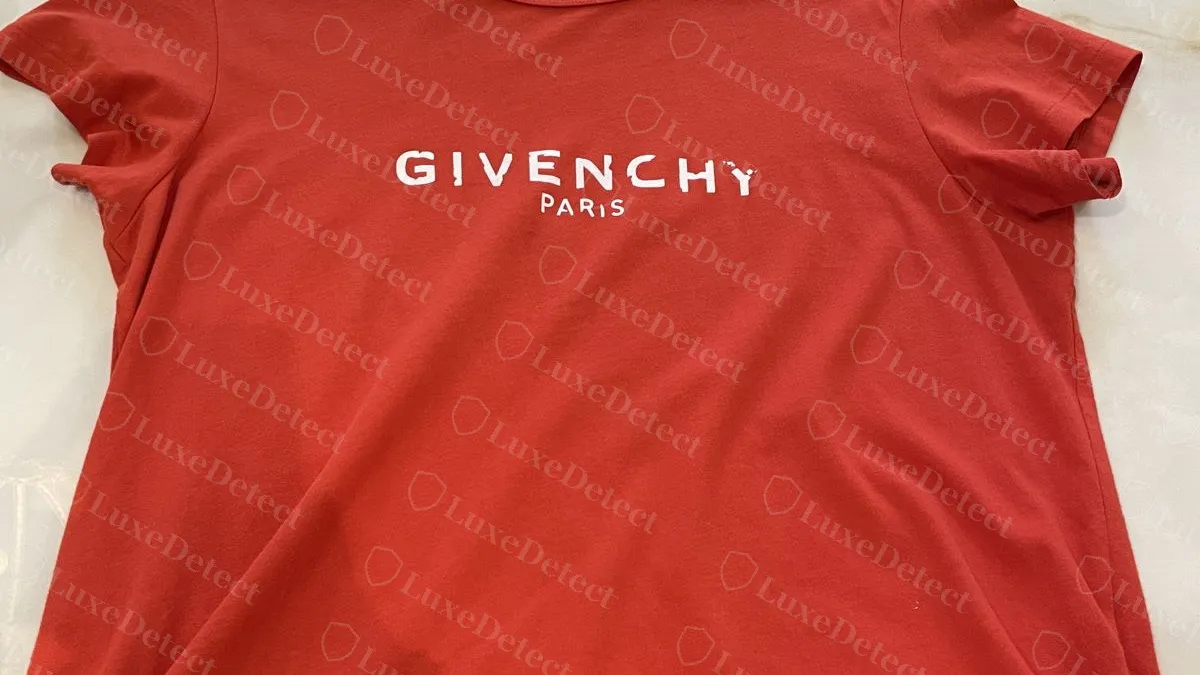
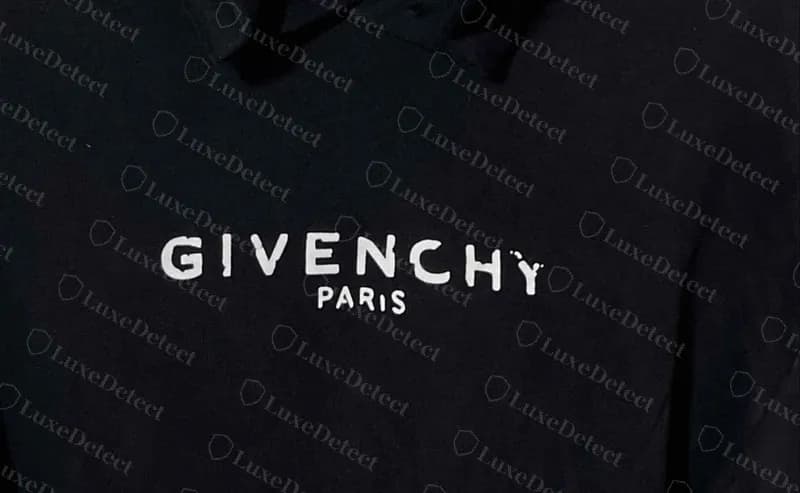
The distressed logo. The "GIVENCHY PARIS" print on the logo hoodies and tees is deliberately broken: chipped letter edges and a split Y. Genuine pieces have it, and counterfeits copy it closely.
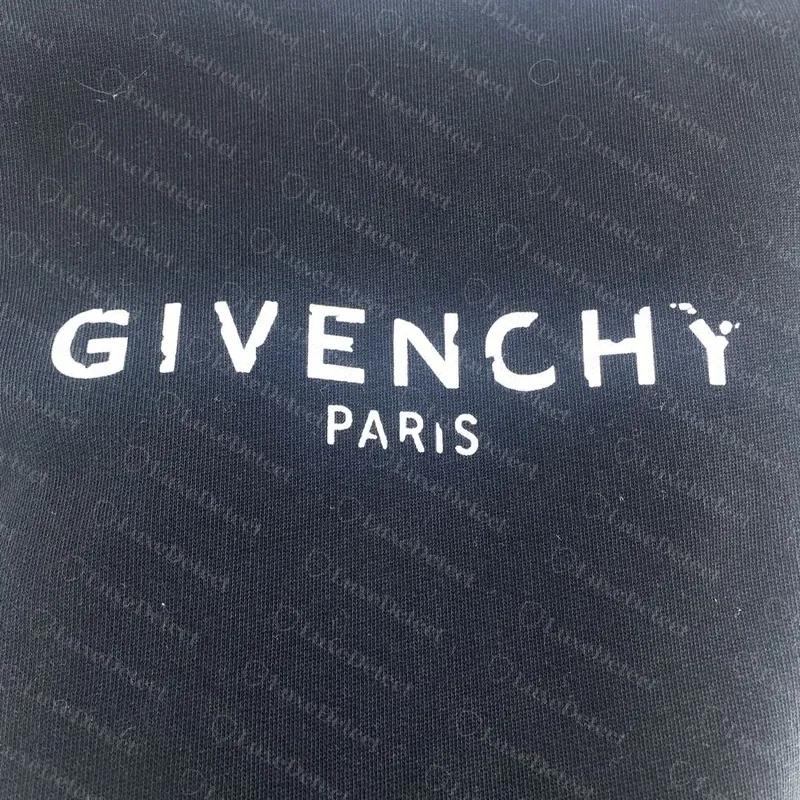
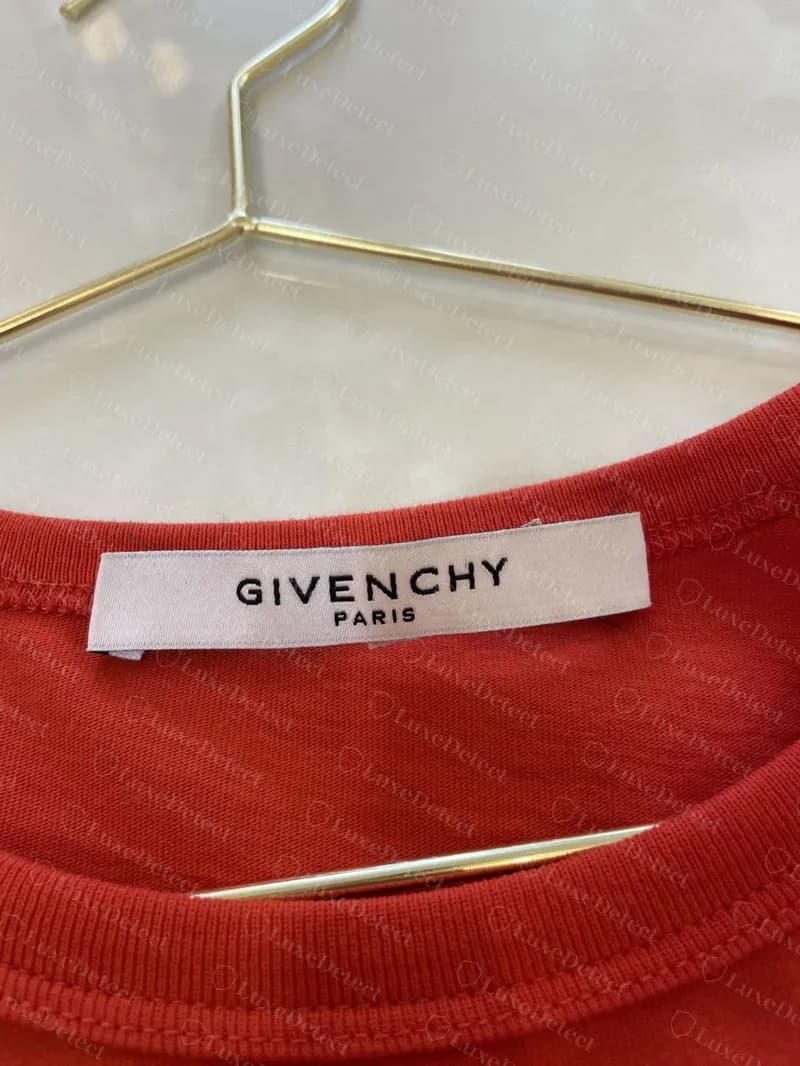
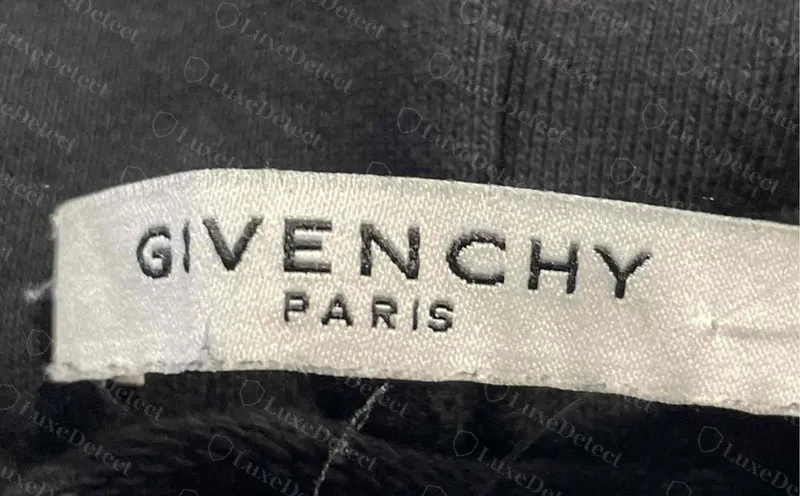
The neck label. The woven "GIVENCHY PARIS" label is the right shape and weight on genuine pieces. Fakes copy it well enough that the lettering alone did not split them for us.
Worth knowing
A good neck label and a convincingly cracked logo rule nothing in. Treat both as a first glance, then go to the care label. A neck label that is plainly wrong (a misspelled brand, a different wordmark) settles it, but that is rare in current fakes.
Quick Authentication Checklist
- Find the care label in the inside seam and photograph the whole label, including the importer block at the bottom
- Note the year the label points to: the collection year in a season line ("16S" is 2016), or about 2018 on if it carries a BM or BW style code
- Check that the importer block belongs to that year: サードカルチャー and 03-5448-9138 until about 2014, 03-3263-9663 around 2015, and ジバンシィ ジャパン with 03-5786-0962 from 2016. Current labels may drop the English "LVMH Fashion Group Japan K.K" line; that is normal
- A block reading "LVMH FG Japan K.K." over "Givenchy Company", or the number 03-3404-0361, fails on its own
- Read the category in the style code (BM70/71 T-shirts, BMJ0 sweatshirts and hoodies, BM60/61 shirts, BM50/51 trousers) and confirm it belongs to this type of garment
- Treat the neck label, the distressed print and the made-in-Portugal line as context only
An importer block that does not match the label's year is a strong reason to doubt the garment; the 2015 block on a 2015 label is normal. A style code that belongs to a different garment is a strong second signal.
Where This Guide Is Limited
This guide is built from the care labels, neck labels and logo prints of hoodies, sweatshirts and T-shirts in our archive. It does not cover embroidered or beaded pieces, knitwear, or the children's line in depth, and some counterfeits carry a flawless copy of the genuine care label. A guide like this cannot catch those.
When to Get a Professional Opinion
Cheap Givenchy fakes fail on an importer block that does not match the label's year, or on a code from another garment. The harder cases are counterfeits that copy the genuine care label word for word, especially on the distressed-logo hoodie and the Rottweiler and star-collar tees. If the label is missing, cut out or unreadable, the code does not search cleanly, or the price is too good for the design, get it checked before you pay or before a return window closes. LuxeDetect authenticates clothing from $15 with a verdict from a specialist and a Certificate of Authenticity you can use with a marketplace or payment provider.
FAQ
How can I tell if a Givenchy hoodie is real?
Read the care label, not just the neck label. The Japan importer block at the foot has to match the year of the label: (株)サードカルチャー until about 2014, "LVMH FG ジャパン" with 03-3263-9663 around 2015, and "ジバンシィ ジャパン" with 03-5786-0962 from 2016. An older block on a later label, or the "Givenchy Company" block with 03-3404-0361, is a strong reason to doubt the piece. A matching block proves nothing on its own.
Is a Givenchy label with "LVMH FG" and 03-3263-9663 fake?
Not on its own. Genuine pieces from the 2015 season carry exactly that block. It points to a counterfeit when the rest of the label is from a later year, for example a 2017 or 2018 season line or any BM style code. On a 2016 line it is only worth a second look, because the change fell around then.
Are the cracked logos on Givenchy hoodies and T-shirts a sign of fake?
No. Givenchy prints the "GIVENCHY PARIS" logo with chipped, broken edges on purpose, and genuine pieces carry it. Counterfeits copy the look closely, so the distressing alone proves nothing either way.
Where is the care label on a Givenchy T-shirt?
Sewn into an inside seam, usually with a separate size tab. The woven neck label inside the collar carries only the brand name and "PARIS".
Is a Givenchy hoodie made in Portugal real?
Usually, but it is not a test. The adult hoodies, sweatshirts and tees we reviewed were made in Portugal, and counterfeits copy the "MADE IN PORTUGAL" line too. Check the importer block and style code instead.
What does the code on a Givenchy care label mean?
Newer labels carry a 10-character style code such as BM70703Y2W or BM71333Y6B: B for the brand, M or W for men's or women's ready-to-wear, a category (70 and 71 T-shirts, J0 sweatshirts and hoodies, 60 and 61 shirts, 50 and 51 trousers), a model and a material block that starts with the fabric (3 is jersey). Older labels, until about 2017 to 2018, carry a season line such as 12S 7242 651. Try the Givenchy style code checker. A shirt code on a hoodie means the label was copied.
Can a Givenchy hoodie with a good label still be fake?
Yes. Some counterfeits carry a flawless copy of the genuine care label, including the correct importer block. A correct label only means the garment passes this check, which is why we recommend a professional opinion for a higher-value piece.