Luxury Handbag Authentication Specialist
Watch authentication specialist covering Swiss manufacture references and bracelet construction.
Published August 2026 · Contact
Why the Goyard Serial Matters — and Why It Isn't Proof
Goyard occupies an unusual position among luxury houses: it does not advertise, operates a small number of boutiques, and publishes almost nothing about its own products. That secrecy is part of the brand's appeal and a genuine problem for buyers, because there is no official reference to check a bag against.
The serial number is one of the few structured pieces of information a Goyard bag carries. It is heat-stamped into a leather tab inside the lining and encodes the workshop, month, and year of manufacture. As with every brand code, it proves format rather than authenticity — counterfeiters copy valid serials freely. Its real value is catching internal contradictions and, more importantly, in how it is stamped: Goyard's stamping quality is difficult to reproduce, and the impression tells you more than the characters do.
Prefer the full-screen version? The Goyard serial number checker validates the workshop code, month, and year.
A code that checks out doesn't prove the item is real. Counterfeiters copy genuine codes.
Our authenticators check the stamps, hardware and construction of your Goyard against verified references, from $25. You get a verdict within 24 hours, and a Certificate of Authenticity if the item passes.
Authenticate My Goyard →How the Serial Is Structured
| Part | Format | Example | Note |
|---|---|---|---|
| Factory code | 3 letters | BAE | Internal Goyard workshop identifier. Known codes include BAE, MAE, PIR, AAS, ARO, VAE, SAL. |
| Month | 2 digits (01–12) | 03 | Month of manufacture. 03 = March. |
| Year | 4 digits | 2019 | Full four-digit year. Goyard has used this format since the mid-20th century. |
The checks this gives you
Month must fall between 01 and 12. A middle segment reading 13 or higher is invalid — a common error where counterfeiters treat the digits as one sequence.
Year is written in full. Goyard uses four digits, not two. A two-digit year is wrong.
Factory code is three letters. Codes outside the documented set warrant caution, though the list is not exhaustive and Goyard publishes nothing official, so an unfamiliar code is a reason for scrutiny rather than an automatic fail.
Where to Find the Serial
| Model | Location |
|---|---|
| Saint Louis Tote (PM/GM) | Heat-stamped into the interior leather tab, often near the zip pocket or interior base |
| Artois Tote | Interior leather tab, same position as the Saint Louis |
| Bellechasse | Leather tab on the interior back wall |
| Anjou Tote (reversible) | Inside the leather tab on the main compartment lining |
| Cap-Vert | Leather tab near the interior zip pocket |
| Alpin backpack | Interior leather tab, usually on the inner back panel |
The Red Flags That Actually Matter
Goyard's construction gives you four tells that are harder to fake than the serial itself.
Inked or printed serial rather than stamped
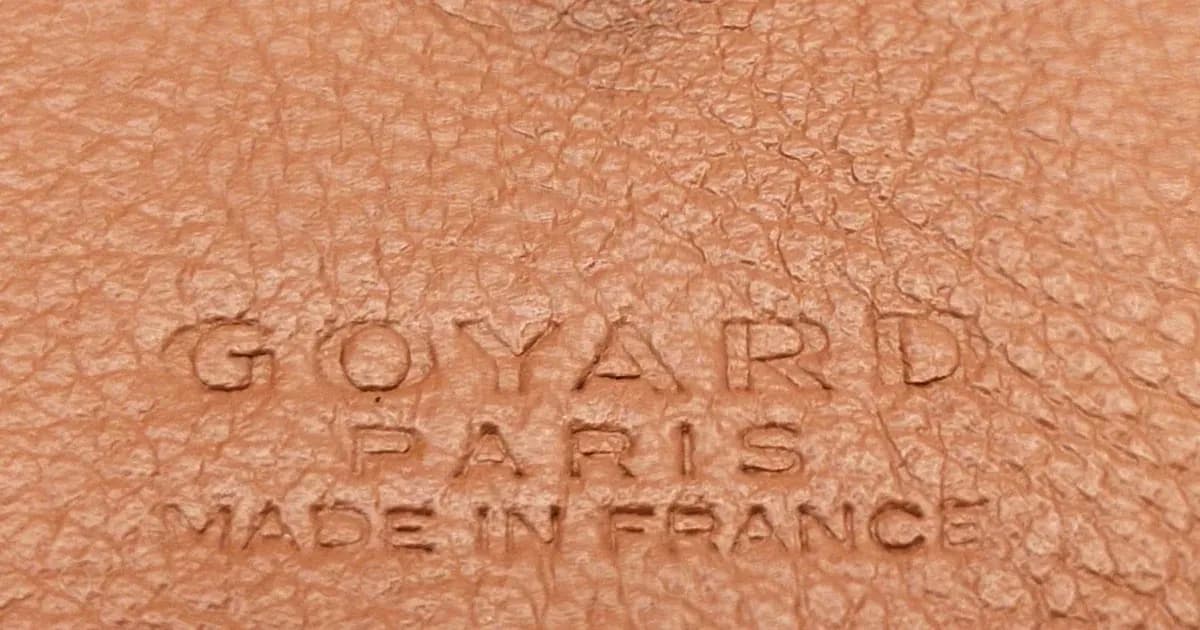
Authentic Goyard serials are heat-stamped into the leather. The impression sits below the surface and catches light at an angle — tilt the tab and the characters shadow. If the serial looks painted or printed onto the surface, it is a fake. This is the fastest and most decisive check on the tab.
Characters thick, deep, or irregular
Genuine stamps are fine, thin, and precise, with consistent pressure across every character. Counterfeits tend to stamp too deep or with uneven pressure, producing letters that look blurry, bloated, or inconsistent in depth from one end of the code to the other.
Goyardine chevrons misaligned at seams
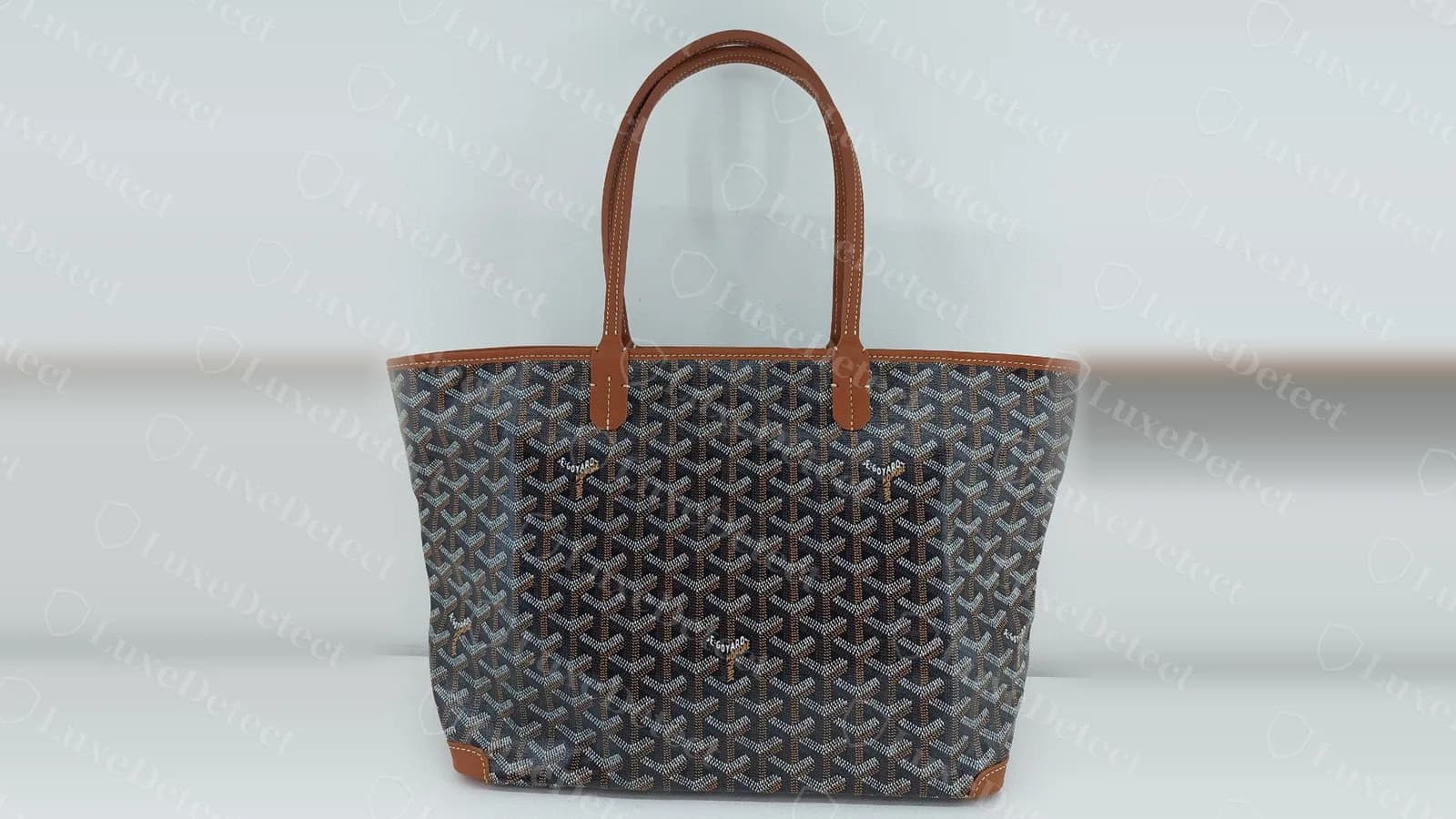
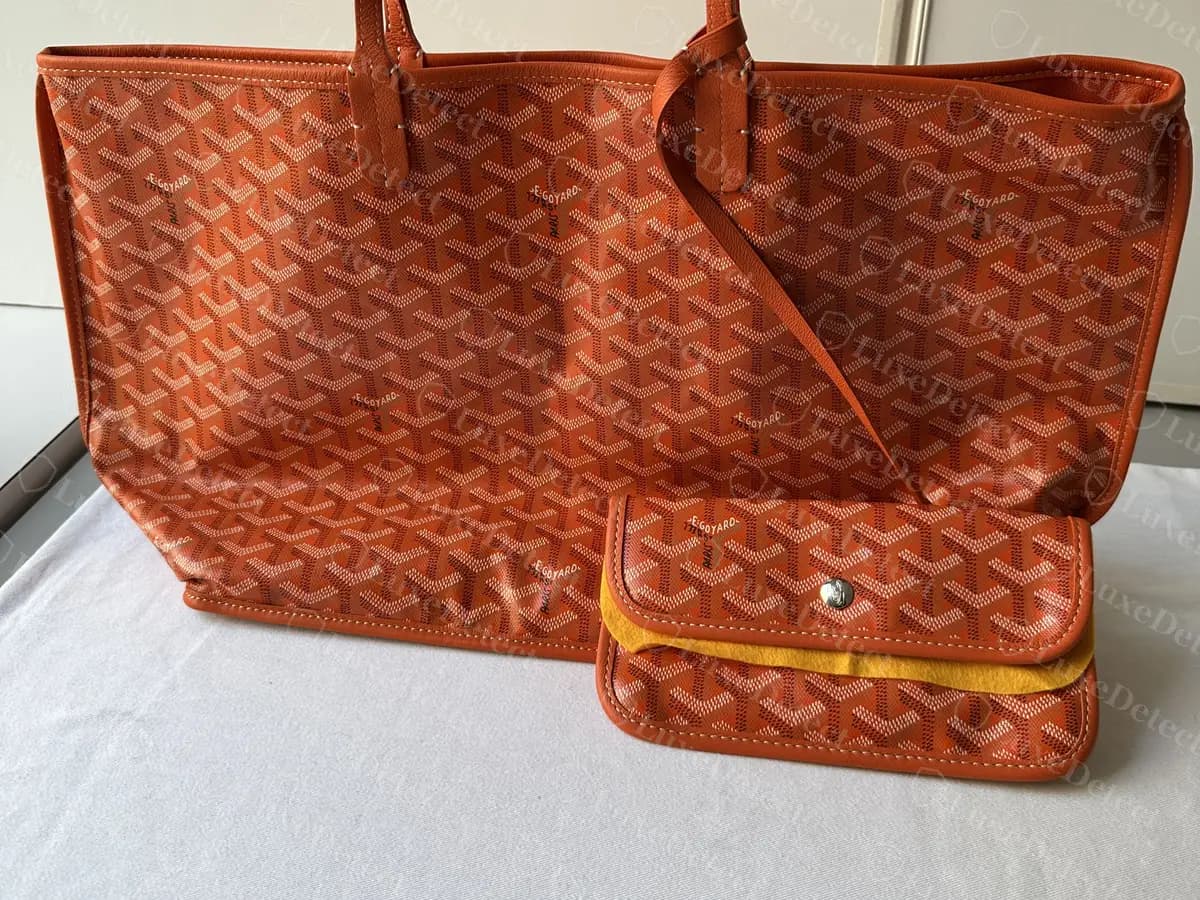
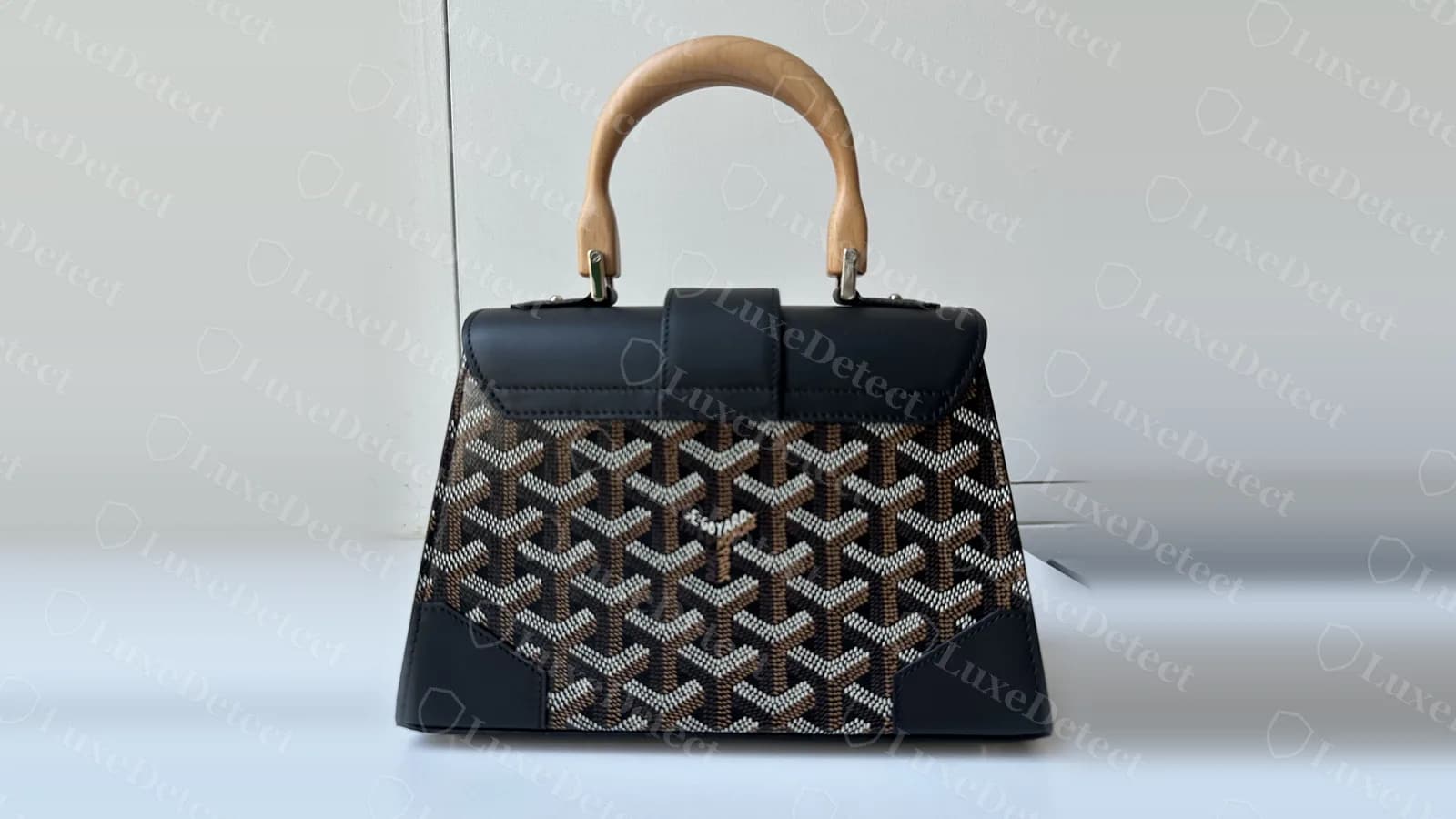
This is the strongest exterior check. Goyard's Y-chevron pattern is hand-applied, and on authentic bags it aligns across seams — the pattern continues logically where the body meets the handles and where panels join. Fakes frequently misalign here because matching a hand-applied pattern across a seam requires cutting to a plan rather than to yield.
Check specifically where the handle attaches to the body, and where the side panels meet the front. A chevron that jumps, inverts, or breaks its rhythm at a seam is a serious red flag.
Light hardware or shallow logo engraving
Authentic: Hardware is solid with real weight, evenly plated including reverse faces. Logo engraving is crisp with consistent depth.
Fake tells: Hardware that feels hollow or light for its size. Engraving that is shallow enough to catch no shadow. Plating that has thinned at edges on a bag described as new.
The Goyardine Canvas
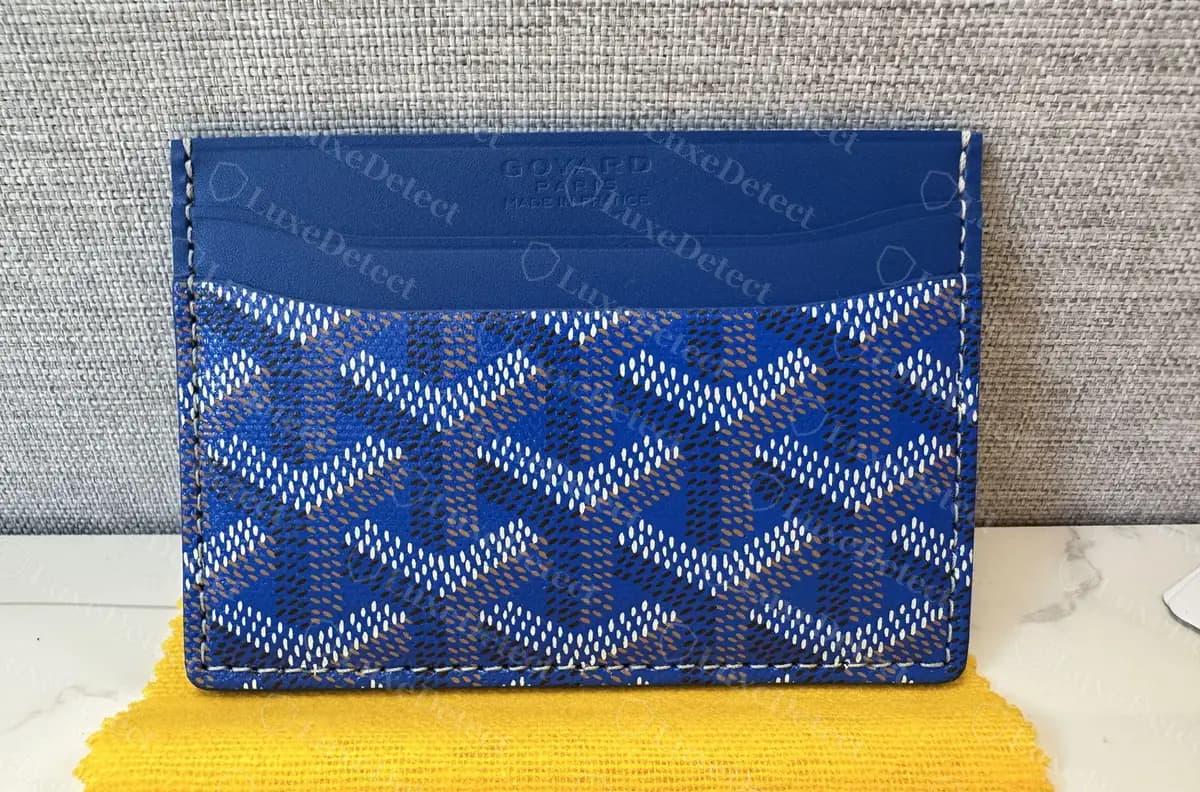
Authentic: The canvas is a coated linen-and-cotton composite with a distinctive slightly textured hand — neither slick nor papery. The chevron pattern is applied by hand, which means minute irregularities in individual chevrons are normal and expected. What stays consistent is the pattern's overall rhythm and its alignment at seams.
Fake tells: A printed pattern with machine-perfect chevron uniformity, which paradoxically indicates a fake — hand application produces small variations. A surface that feels plasticised. Colour that sits on the surface rather than penetrating, visible at any cut edge.
A useful frame: on most brands, perfect uniformity signals authenticity. On Goyard, slight hand-applied variation is authentic and mechanical perfection is suspect. Counterfeiters print where Goyard paints.
Quick Authentication Checklist
- Serial format: three letters, month 01–12, four-digit year
- Stamping: heat-debossed below the surface, fine and precise, even depth throughout
- Location: tab position matches the documented location for the model
- Chevrons: pattern aligns across every seam, especially at handle attachments
- Canvas: slight hand-applied variation present, textured hand, colour penetrating the cut edge
- Hardware: solid weight, even plating on reverse faces, crisp engraving
FAQ
Can Goyard verify a serial number?
Goyard boutiques maintain production records and can sometimes confirm details for pieces bought through their own channels. The house is notably reticent, publishes no authentication guidance, and does not issue statements for items purchased elsewhere. This is precisely why third-party authentication matters more for Goyard than for more transparent brands.
Why is there so little official Goyard information?
The house has cultivated deliberate opacity for decades — minimal advertising, few boutiques, no public product catalogue. It is a brand strategy rather than an oversight. The practical consequence for buyers is that reliable reference material is scarce, and counterfeiters exploit the resulting uncertainty.
My Saint Louis tote has slightly uneven chevrons. Is it fake?
Possibly the opposite. The Goyardine pattern is hand-applied, so small variations between individual chevrons are normal on authentic bags. What matters is whether the pattern maintains its rhythm and aligns across seams. Machine-perfect uniformity is more concerning than minor hand variation.
Does a valid serial mean my bag is authentic?
No. Counterfeiters copy real serials from listing photographs, so a well-formed number confirms only the format. On Goyard specifically, how the serial is stamped — fine, precise, heat-debossed — carries far more evidential weight than what it says.
Is the Saint Louis harder to authenticate than other Goyard models?
It is the most counterfeited, simply because it is the most recognisable and the most traded. The checks are the same across models, but the volume of fakes means Saint Louis buyers encounter better-executed counterfeits more often. Chevron alignment at the handle attachment is the check that most reliably separates them.
How much does professional Goyard authentication cost?
Photo-based authentication typically runs $25 for handbag authentication with a 24-hour turnaround. Given how little official reference material exists for Goyard and how strong the secondhand market is, third-party verification carries more practical value here than for brands with published authentication guidance.