Footwear and Accessories Authentication Specialist
Luxury accessories authenticator. Covers small leather goods, belts, and eyewear.
Published November 2026 · Contact
Why Stuart Weitzman Shoes Have No Single Giveaway Stamp
Stuart Weitzman makes everything from stretch over-the-knee boots and ankle-strap sandals to loafers, pumps and sneakers, and the marks inside a pair change with the style, the season and the factory. There is no one stamp that every genuine pair carries. A leather-soled pump from an earlier decade, a recent lug-soled Chelsea boot and a new loafer each use a different arrangement of the same few elements: a wordmark, a size, a style code and a country of manufacture.
That is the angle of this guide. Instead of one "tell", it shows the families of marks that genuine pairs actually carry, so you can place your pair in the right family before judging any single detail. A mark that is correct for a boot from one season can be wrong for a sandal from another.
Worth knowing
This guide is built from genuine Stuart Weitzman pairs we have authenticated, from boots and sandals to loafers and sneakers. Our confirmed counterfeit sample for this brand is still small, and the marks on those pairs matched genuine layouts (more on that below), so we do not list a "counterfeit tell" we have not verified. Use this guide to learn what genuine looks like, and treat any single matching mark as a reason to keep checking, not a verdict.
The Mark Families at a Glance
| Mark | Where to look | What genuine pairs we have seen show |
|---|---|---|
| Sole stamp, modern | Outsole or heel tread | STUART WEITZMAN in one or two lines, MADE IN SPAIN, and a stacked SW monogram or a starburst, often with the size |
| Leather sole shield | Leather outsole, under the arch | Spaced STUART WEITZMAN, a shield-shaped LEATHER SOLE mark, MADE IN SPAIN |
| Insole wordmark | Inside, on the footbed or lining | STUART WEITZMAN in gold, silver or white print, one or two lines |
| Size and style code | Inside the shaft, behind the tongue, or under the insole | Older pairs: two letters and five or six digits, then size and width. Newer pairs: a style code, a season code and a US / EU / CN size grid |
| Country of manufacture | Sole stamp or interior label | Spain on many pairs; Vietnam and Indonesia on others |
The Modern Sole Stamp
On recent pairs the sole carries a moulded or stamped block: the STUART WEITZMAN name, MADE IN SPAIN, and below it the stacked SW monogram. On a loafer with a rubber sole the monogram sits under the name; on a leather-soled sandal the same block is pressed into the leather in a darker tone.
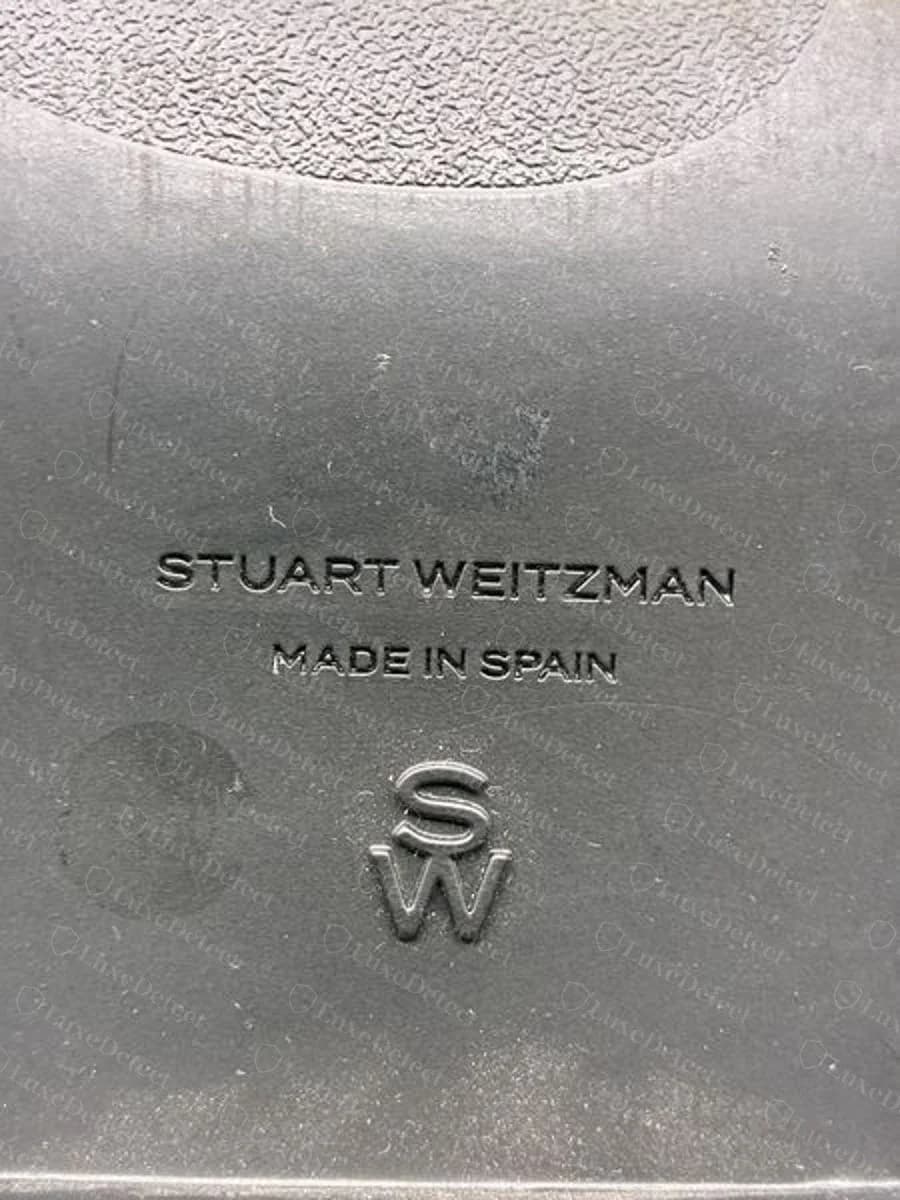
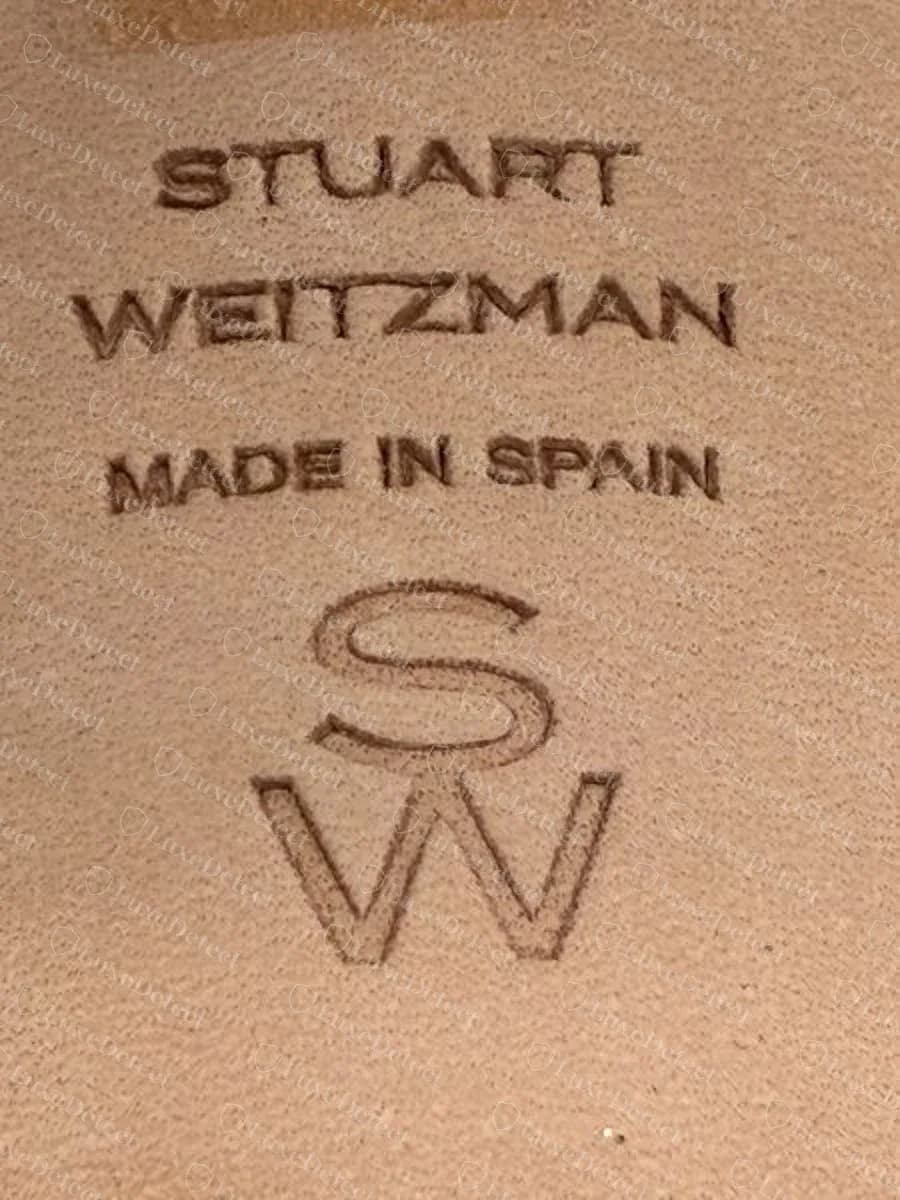
Look at the depth and edge of the letters, the spacing between the lines, and whether the monogram is a clean, even-weight S over a W. Compare against the brand's photos of the same style, because the layout is not identical on every model.
The Leather Sole Shield
Many leather-soled pairs, especially older ones, carry a different block: STUART and WEITZMAN in widely spaced capitals, a shield-shaped mark reading LEATHER SOLE, and MADE IN SPAIN underneath. The block is pressed into the leather, so on a worn pair it fades with use around the ball of the foot but stays legible near the arch.
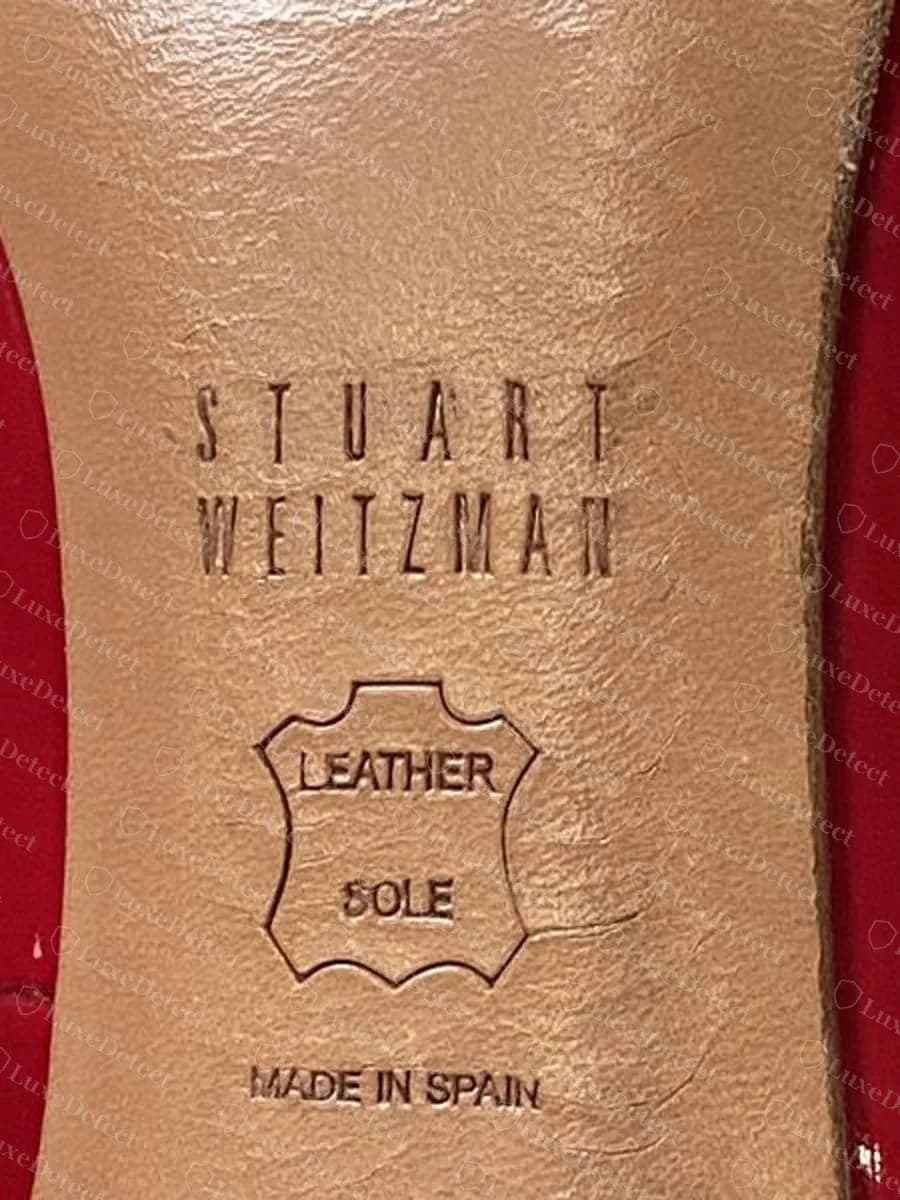
Some pairs use a variant of the same idea: a vertical STUART WEITZMAN with VERO CUOIO (Italian for genuine leather) and MADE IN SPAIN. We have seen this on genuine boots and slides, so do not treat it as an error.
Starburst and Monogram Soles
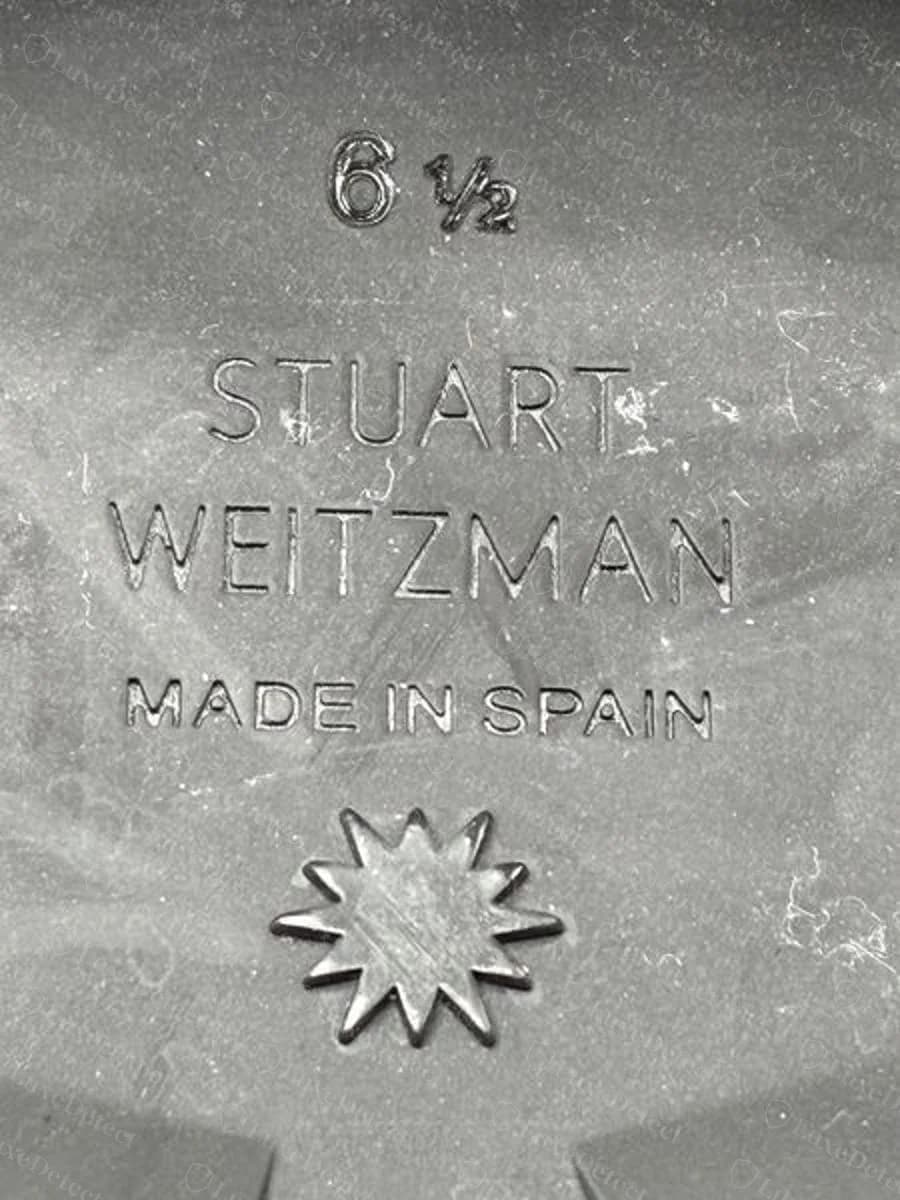
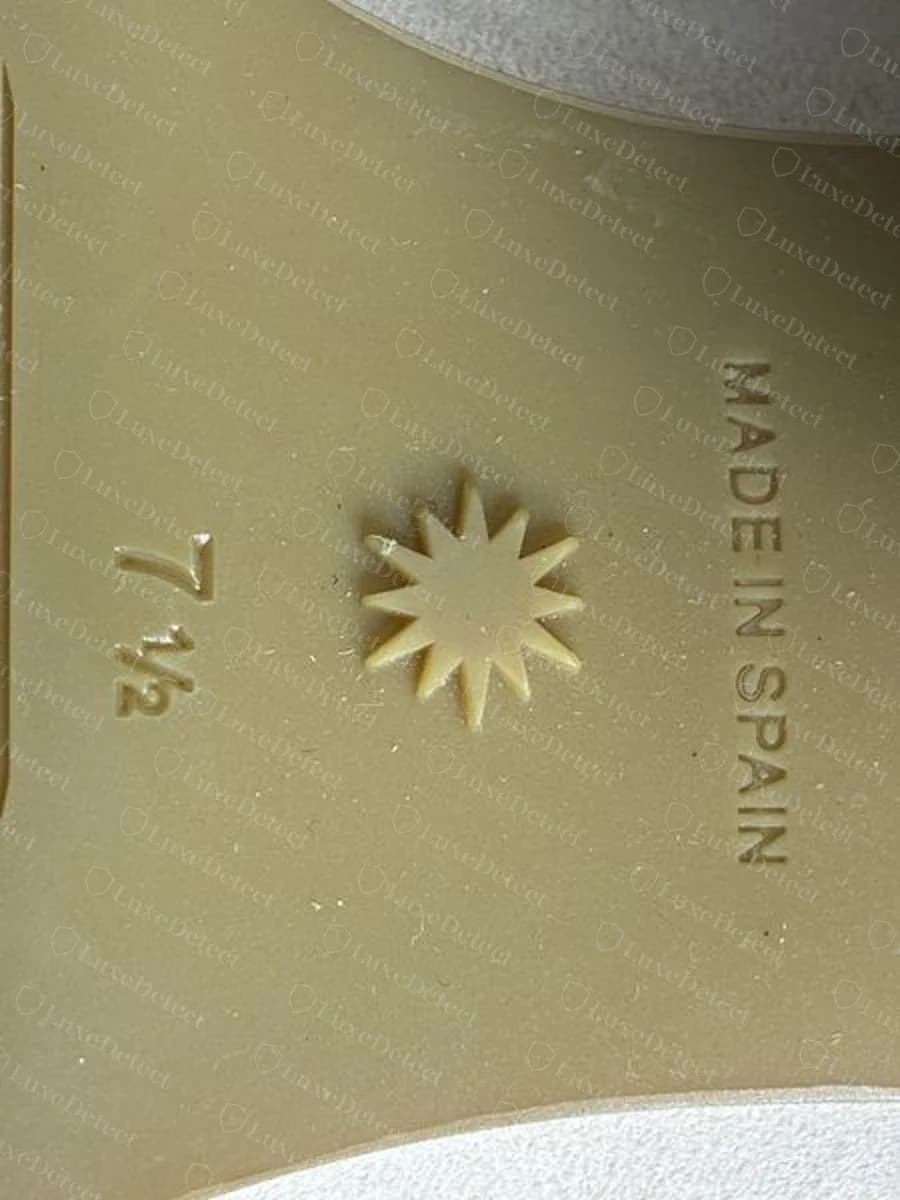
Lug-soled boots, loafers and sneakers often drop the shield and use a starburst or the SW monogram moulded into the rubber, with the size beside it. This is also genuine.
Older Insole Codes: Letters, Digits, Size and Width
Pairs from earlier decades carry a printed or stamped code inside the shoe, usually under the footbed edge or along the lining. It reads as two letters, a run of digits, then the size and width, for example PW 38261 followed by 8½ and M. The prefix letters and digit count vary from pair to pair, so we do not treat any one prefix as the "right" one.
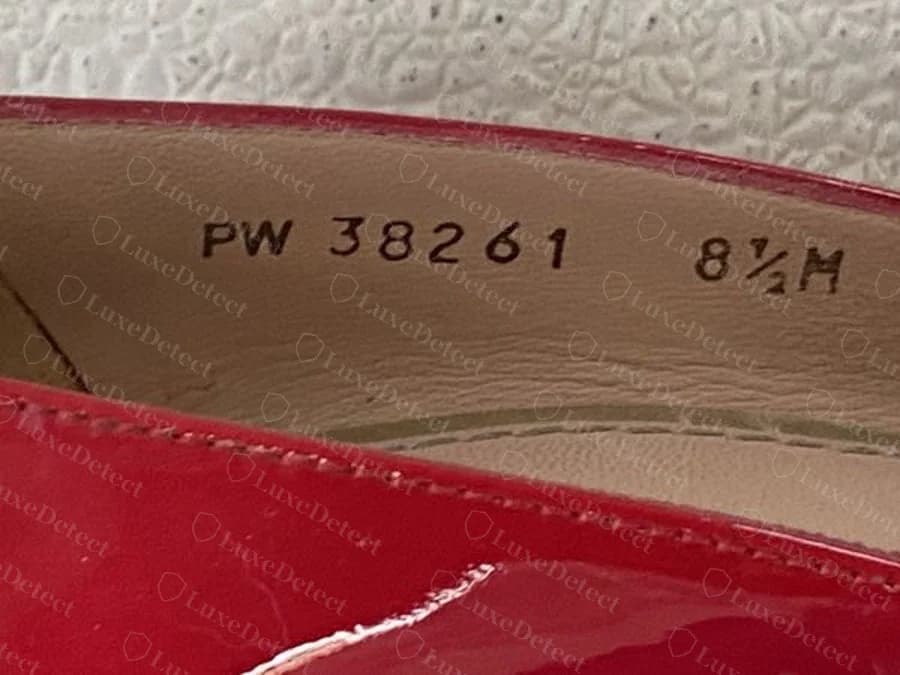
What you can check: the size and width should agree with the size on the sole or label, and the print should sit cleanly on the lining rather than smearing or floating above it.
The Style Code Label in the Shaft
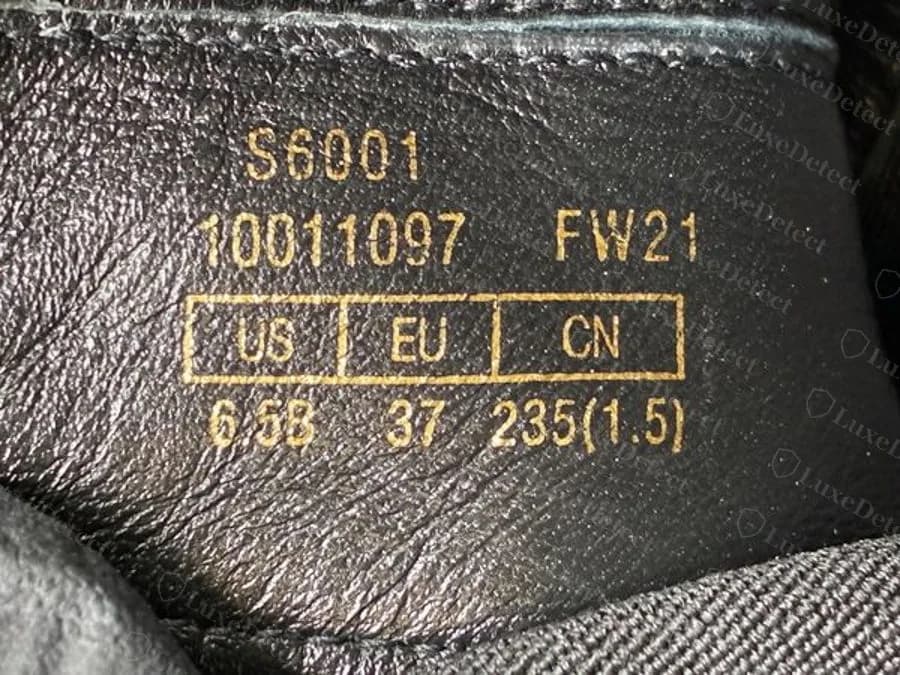
Newer boots, loafers and sneakers carry a small label or direct print inside, showing a style code (an S followed by digits), a longer numeric code, a season-and-year code such as FW21 or FA24, and a boxed US / EU / CN size grid. On genuine pairs we have seen it printed in gold on a black lining, in white on a white tag, or stitched into the shaft.
Worth knowing
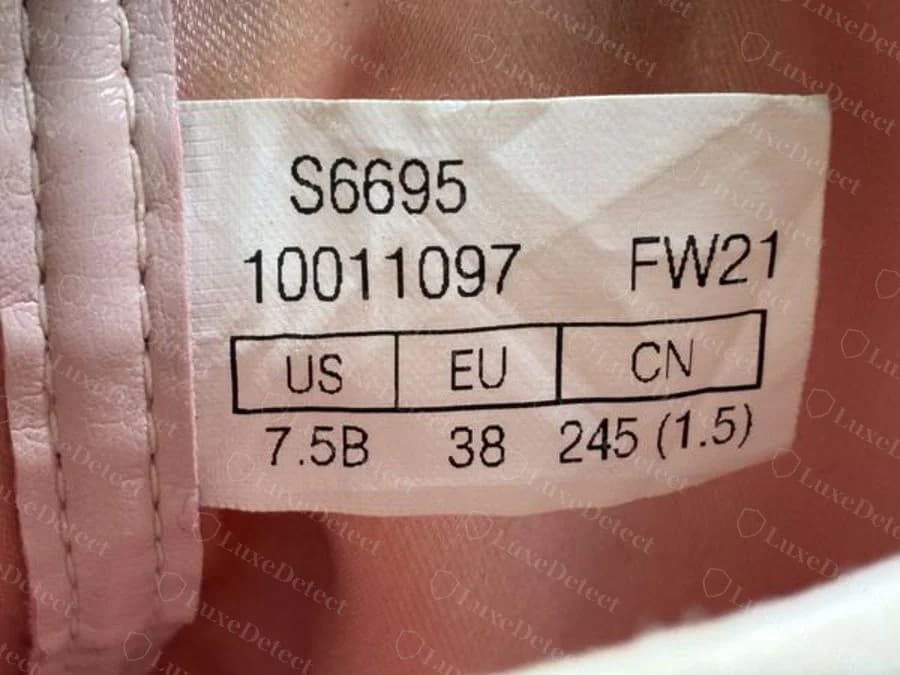
A label that reads correctly is not a pass. Among the counterfeits we have examined for this brand, one boot carried a label in exactly this layout, with a style code in the same format, the same season code and the same middle number as the genuine boot above. The layout is easy to copy, so use the label to cross-check (does the size on the label match the sole?) and not as proof.
The same counterfeit boot also had a sole with a starburst and a MADE IN SPAIN stamp that looks like the genuine one.
The Insole Wordmark
Inside, the name is usually printed on the footbed or lining, either as one line (STUART WEITZMAN) or two. We have seen gold, silver and white print, and on some pairs the lettering is wider-spaced than on others, depending on the era.
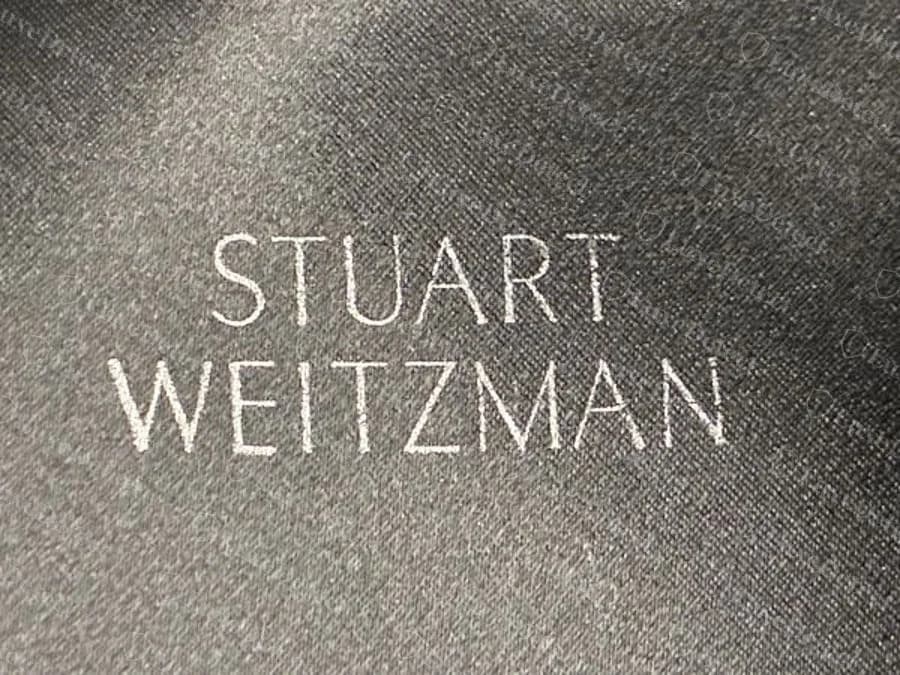
On a genuine pair the print is crisp and sits flat on the leather or fabric, and it wears down gradually where the foot presses. Check the pair's other marks for the same typeface family; a wordmark in a style that appears nowhere else on the shoe deserves a second look.
Where It Is Made
The brand's soles say MADE IN SPAIN on many pairs, but that is not the only genuine answer. We have authenticated genuine pairs whose interior label reads Made in Vietnam or Made in Indonesia, and the brand changed hands in 2025 when Tapestry sold it to Caleres, so production and labelling keep moving.
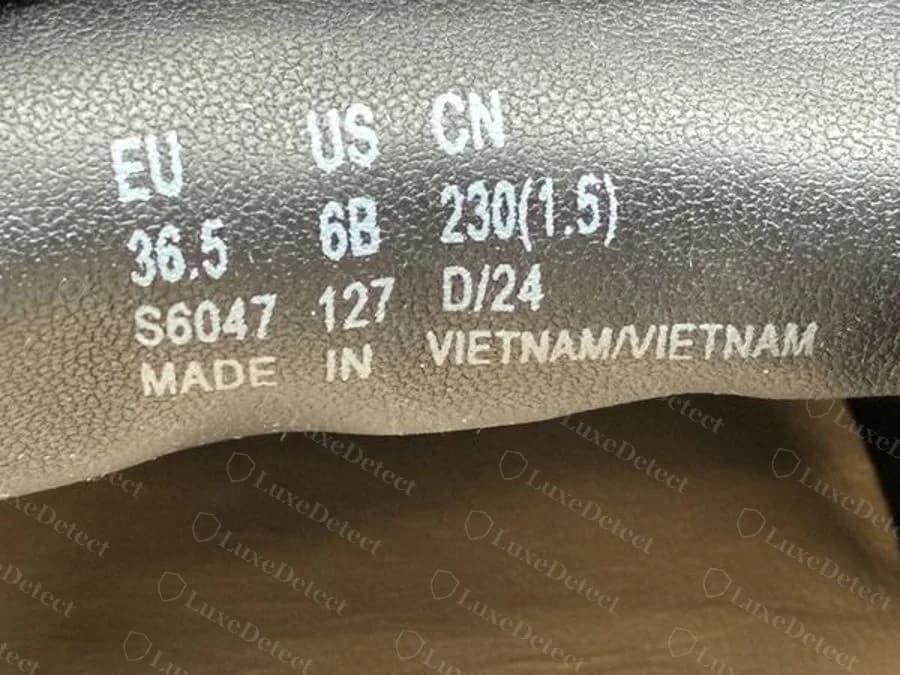
A country on its own is never a test, because fakes print the same words. Use it to check consistency: a pair whose sole says Spain and whose interior label says another country, or a style the brand is not known to make in the stated country, is worth asking the seller about.
What the Counterfeits in Our Archive Show
We would rather be plain about this than invent a tell. The counterfeits we have examined for Stuart Weitzman carried marks that, on their own, matched genuine pairs: the same insole wordmark style, a correctly formatted size and style label, and a sole stamp in a layout that genuine pairs also use. We are not going to pin that sample on one mark. What separated them was how the whole pair fit together, for example whether the construction, materials and marks matched the specific style being claimed.
Practically, that means two things for a buyer:
- A pair is not safe because the stamp looks right.
- A pair is not suspect because a mark differs from another pair you have seen; compare against the same style and era.
The Dust Bag and Box
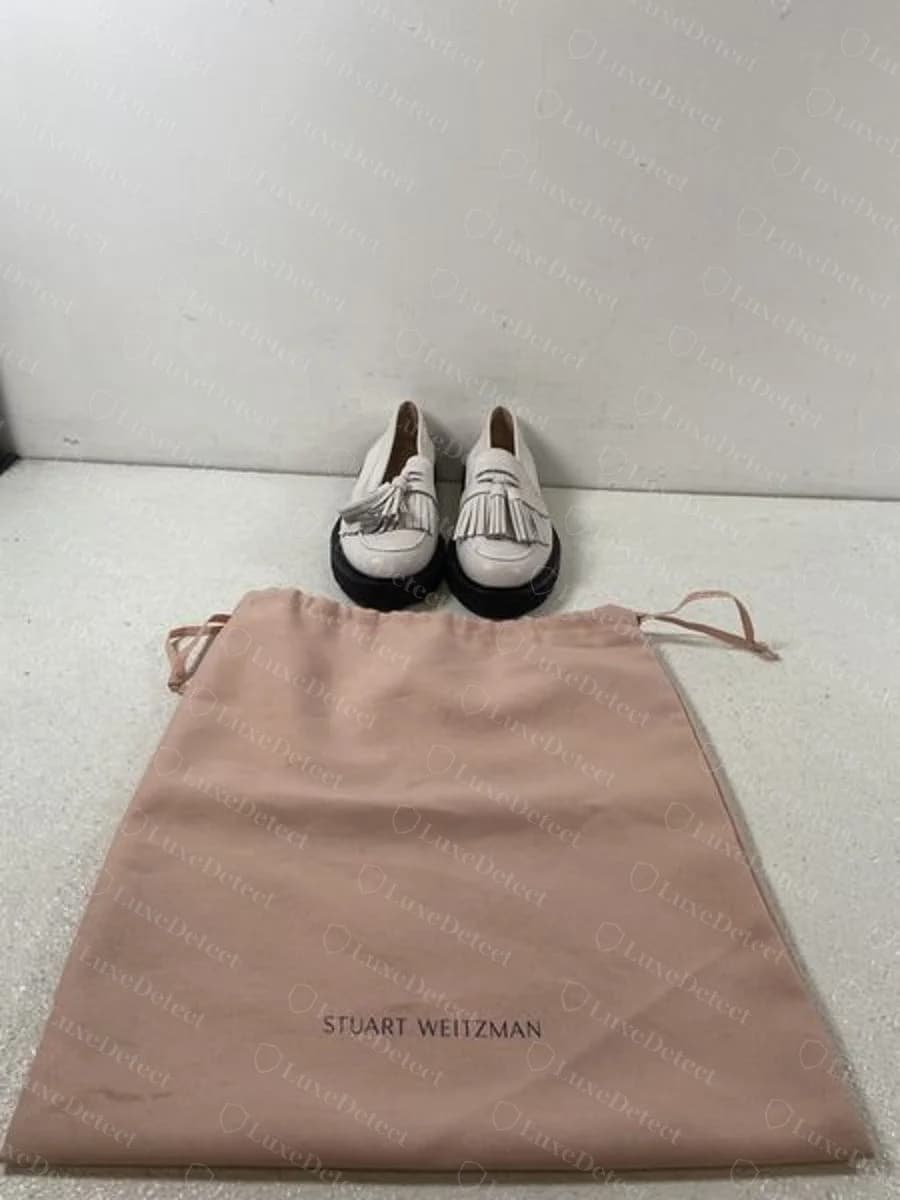
Genuine pairs we have seen came with a soft drawstring dust bag in a blush or cream fabric, printed with STUART WEITZMAN in small capitals. Packaging is context, not evidence: bags and boxes are sold separately and reused, so the receipt and the shoe itself carry more weight.
What a Matching Mark Does and Does Not Prove
A correct sole stamp, a tidy insole wordmark and a label in the right layout are reasons to keep going, not a verdict. Fakes copy exactly the details buyers check, so a single match proves nothing on its own. What decides it is how the marks, the materials and the construction fit together for that specific style and season, compared with verified pairs. Weight, the feel of the leather, the way the sole is attached and the smell of the glue are checks you can only make with the pair in hand. Our guides to other designer footwear, such as Jimmy Choo shoes, Manolo Blahnik and Christian Louboutin heels, follow the same method.
What to Photograph
Before you buy on resale, or when you submit a pair for review, take clear, well-lit photos of:
- The whole pair from the front, back and both sides.
- The sole, including any stamp, and the heel tread.
- The insole wordmark and the footbed under the heel.
- The interior label or printed code, straight on and sharp.
- The shaft or upper, including stitching and any hardware.
- The dust bag, box and receipt, if you have them.
Quick Authentication Checklist
- Identify the style and rough era before judging any mark.
- Find the sole stamp and see which family it belongs to (modern block, leather shield, starburst or monogram).
- Check that the size and width on the sole match the interior label or code.
- Read the interior label or code for format only; do not treat it as proof.
- Compare the insole wordmark's print quality and typeface with the other marks on the pair.
- Treat the country of manufacture as a consistency check, not a test.
- Weigh the receipt and purchase trail above the packaging.
When to Get a Professional Opinion
If the pair cost real money, a specialist review is cheaper than a wrong purchase. LuxeDetect's shoe authentication starts at $15 for a 24-hour turnaround and includes a Certificate of Authenticity. Send the photos listed above; our authenticators compare the marks, materials and construction against verified pairs of the same style, and the pair never has to be shipped anywhere. Start an authentication.
A code that checks out doesn't prove the item is real. Counterfeiters copy genuine codes.
Our authenticators check the labels, stitching and fabric of your Stuart Weitzman against verified references, from $15. You get a verdict within 24 hours, and a Certificate of Authenticity if the item passes.
Authenticate My Stuart Weitzman →FAQ
How can I tell if my Stuart Weitzman shoes are real?
Start by working out which family of marks your pair should carry: a modern sole block, a leather sole shield, or a starburst or monogram on a rubber sole. Then compare the insole wordmark, the size and style label and the construction with verified pairs of the same style. No single mark settles it, because counterfeits copy the stamps and labels buyers look for.
Where is the size and style code on Stuart Weitzman shoes?
Newer pairs carry a label or print inside the shaft or under the insole showing a style code, a season-and-year code and a US / EU / CN size grid. Older pairs carry two letters, a run of digits, the size and the width inside the shoe. Check that the size matches the sole.
Are Stuart Weitzman shoes made in Spain?
Many are, and the sole often says so. We have also seen genuine pairs with interior labels reading Made in Vietnam or Made in Indonesia, so the country alone is not a test.
Do real Stuart Weitzman shoes have a leather sole stamp?
Leather-soled pairs usually do: the spaced name, a LEATHER SOLE shield and MADE IN SPAIN, or a vertical name with VERO CUOIO. Rubber-soled pairs use a moulded block or a starburst instead.
Do Stuart Weitzman shoes come with a dust bag?
Genuine pairs we have seen came with a soft drawstring dust bag printed with the name. A missing bag does not make a pair fake and a bag does not make it real, because packaging is easy to buy or reuse.
Can you authenticate Stuart Weitzman shoes from photos alone?
Yes. What decides it is how the sole stamp, the interior marks, the materials and the construction fit together for that style, compared with verified pairs. Send sharp photos of the sole, the insole and the interior label; for an expensive pair, a specialist review is the safer route.
Is a correct label proof of a genuine pair?
No. A label in the right layout, with a correctly formatted style code and season, is easy to copy, and we have examined a counterfeit boot whose label matched a genuine one. Use the label to cross-check the size and style, not as the verdict.
Sources
Our own review of genuine and counterfeit Stuart Weitzman pairs. Ownership: Tapestry's sale of Stuart Weitzman to Caleres, completed in August 2025, as reported by Business Wire and FashionUnited.