Luxury Fashion Authentication Specialist
Handbag authentication specialist. Has reviewed submissions across Hermès, Chanel, Louis Vuitton, and Dior since 2019.
Published October 2026 · Contact
Why No Single Dries Van Noten Mark Settles It
Dries Van Noten launched his label in 1986, and the house has put its name on clothing and shoes in several label styles and production countries since. That is the angle of this guide: the marks on a genuine piece change from garment to garment, so no one label or stamp is "the" rule, and a mark that matches proves nothing on its own. Fakes copy the main label, and a woven "DRIES VAN NOTEN" label with a script size beneath it is not a pass mark.
We could not find an authentication guide from the brand itself. What follows is a short, first reference built from genuine Dries Van Noten pieces in our authentication records: a handful of garments (a blazer, dresses, a trench coat, trousers) and several pairs of shoes. It covers only the marks those pieces show.
Worth knowing
This guide is built from verified genuine examples across different label styles. We do not yet have a set of confirmed counterfeits that differ visibly from genuine pieces, so we are not publishing red flags or a real-vs-fake comparison. When we do, this guide will be upgraded. Until then, use it to learn what genuine marks look like, and treat label formats as varying by era and country, not as a fixed template.
The Main Woven Label
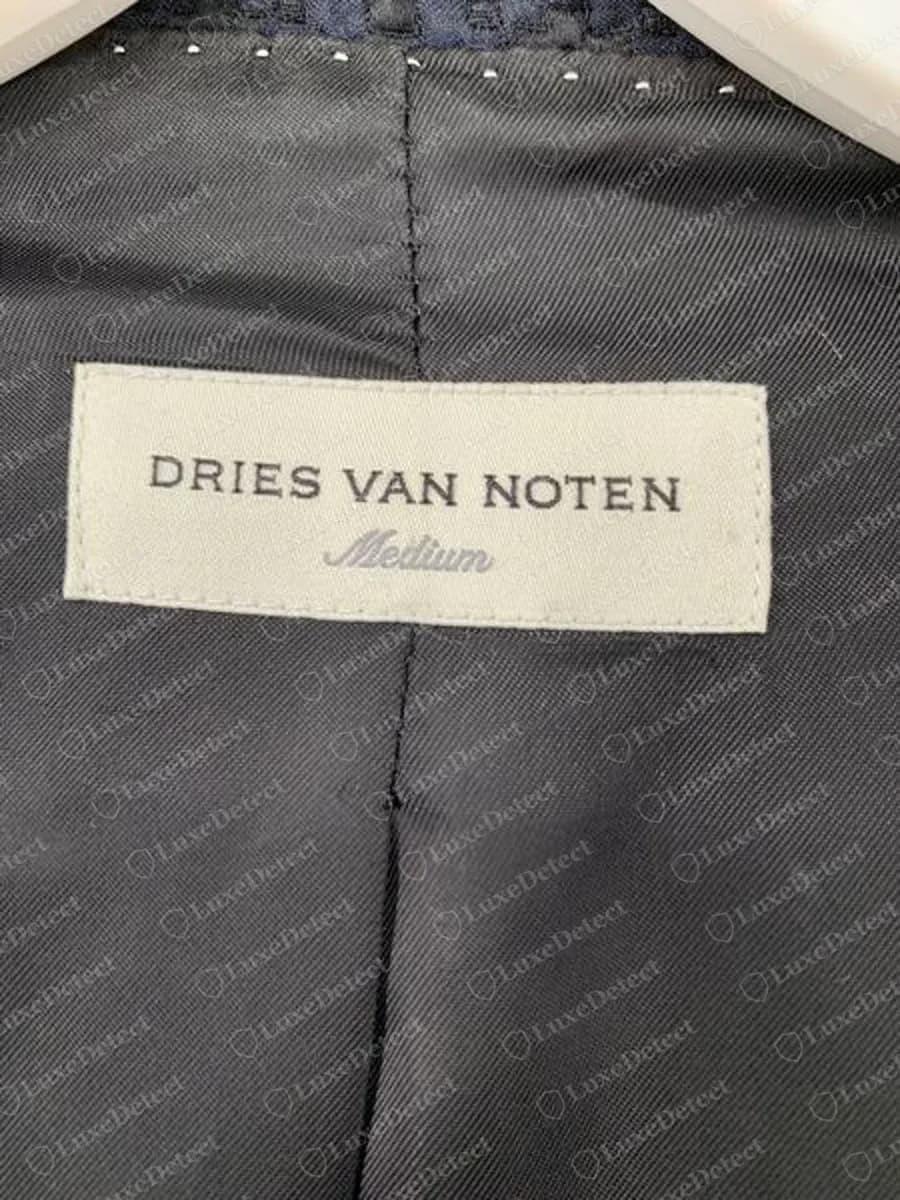
On the garments in our records, the main label is a cream or white woven rectangle with "DRIES VAN NOTEN" in spaced capitals and the size written beneath in a small script, such as "Medium", "Large" or "Size 38". The edges are cleanly cut and the lettering is even. We see the same layout on genuine dresses, a blazer and a coat, sewn inside at the neck or on the lining.
Read this label for weave and print quality, but do not stop there. A counterfeit can carry the same wording and the same script size, so a good-looking label is only a starting point.
The Care and Composition Label
Care labels on genuine pieces vary more than the main label does, and they are worth reading closely because the details on one piece should agree with each other.
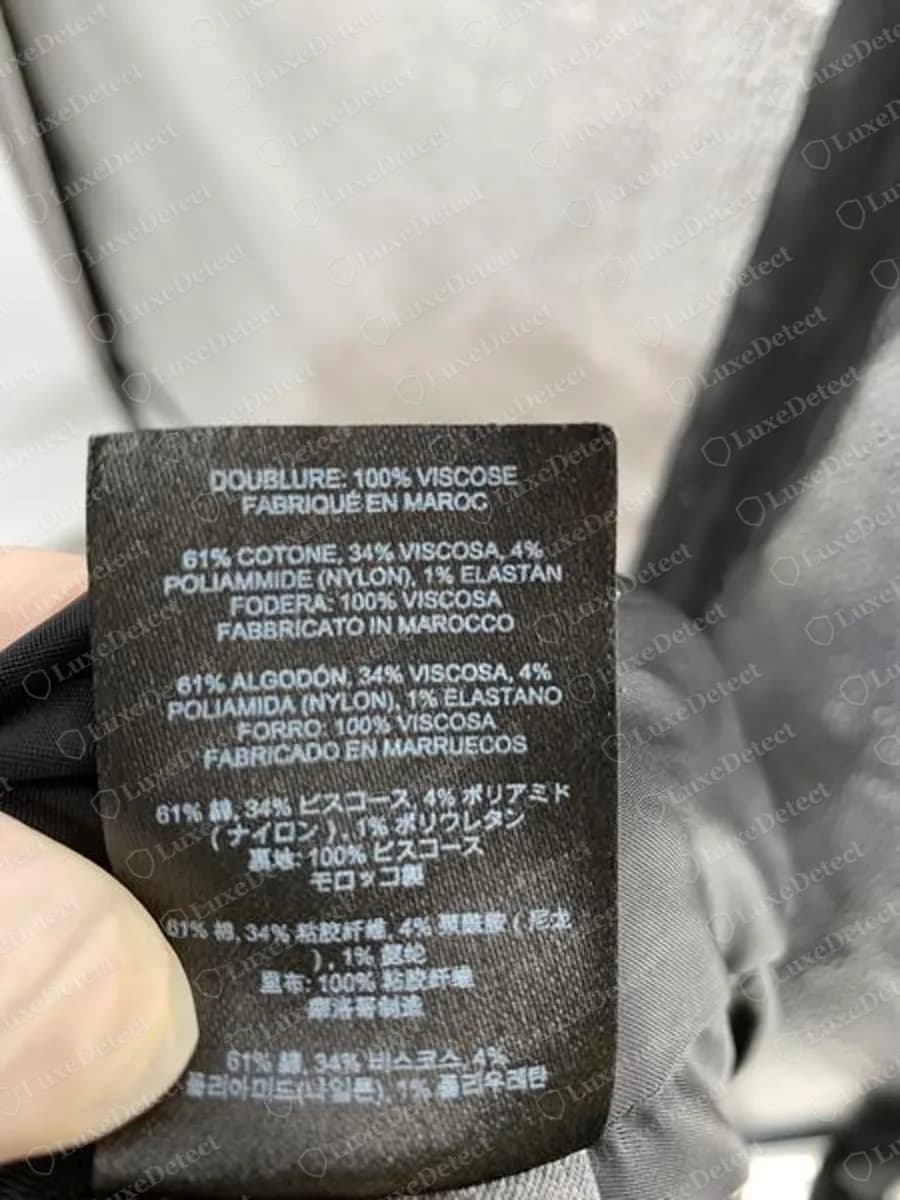
The blazer above carries a black woven label with fibre content repeated in several languages, including Japanese, Chinese and Korean, and the country of manufacture. Another genuine piece, a silk dress, has a plain white printed label instead.
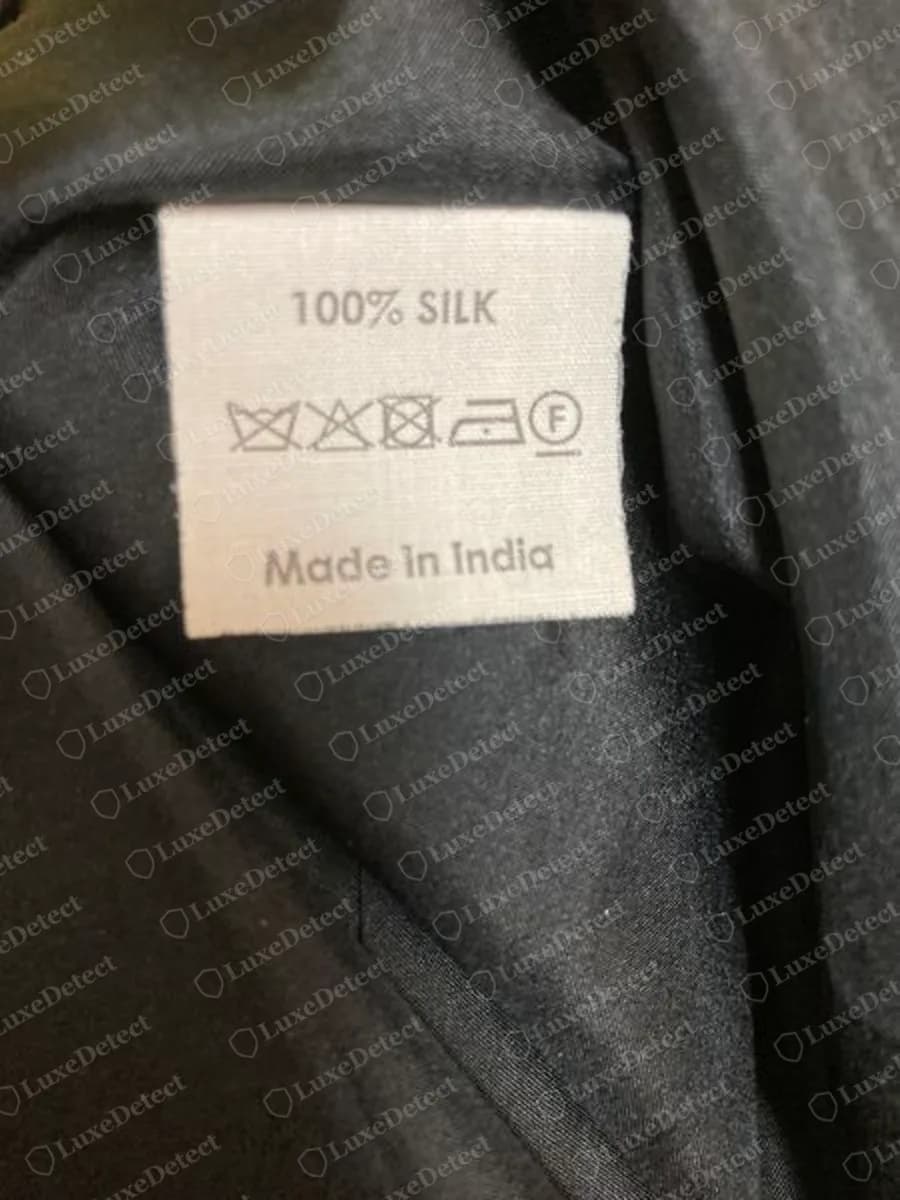
Other genuine garments in our records show different layouts again, including a black multilingual label that names Poland and a white strip that names Romania. The countries differ because production sites differ. A country of manufacture is a plain fact of one garment, never a tell: Morocco, India, Poland and Romania all appear on genuine pieces in our records.
Check that the fibres match what you can feel and see (a label that says silk on a garment that is plainly not), that the wash symbols are crisp, and that the label is sewn in cleanly. We do not know how to date a piece from these labels, so we do not try.
Shoes: The Sole Stamp
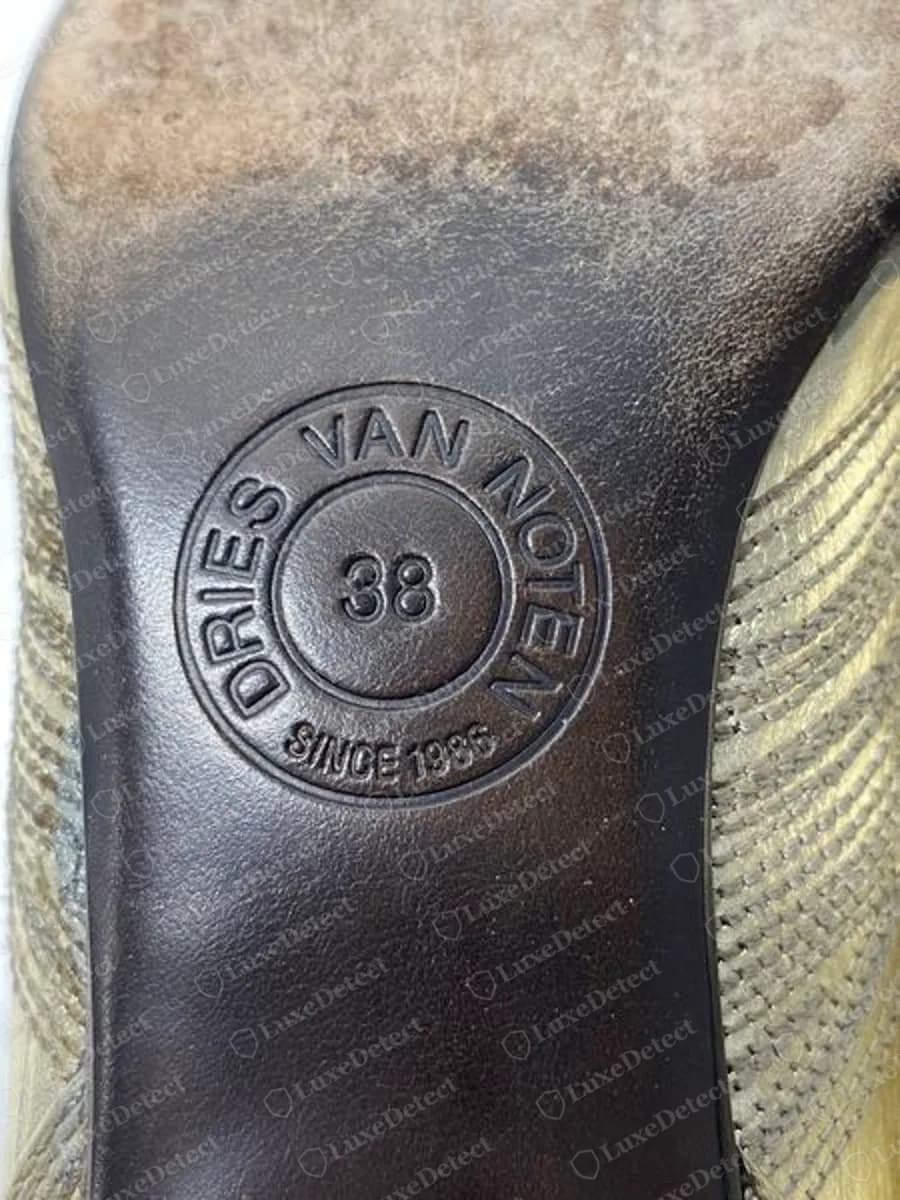
On a pair of gold leather shoes in our records, the sole carries a round embossed stamp: "DRIES VAN NOTEN" around the top, "SINCE 1986" along the bottom and the size in a centre circle. The impression is deep and even, and the circles are concentric.
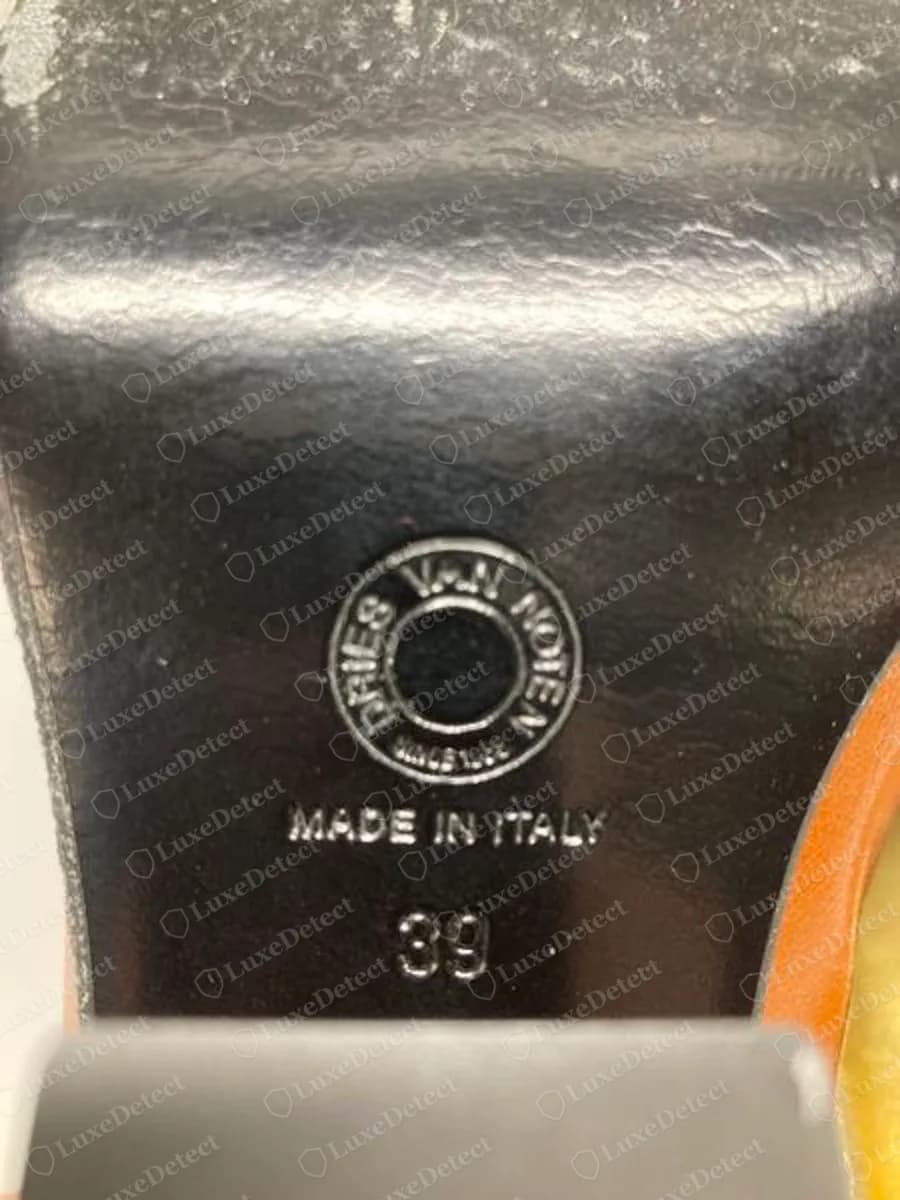
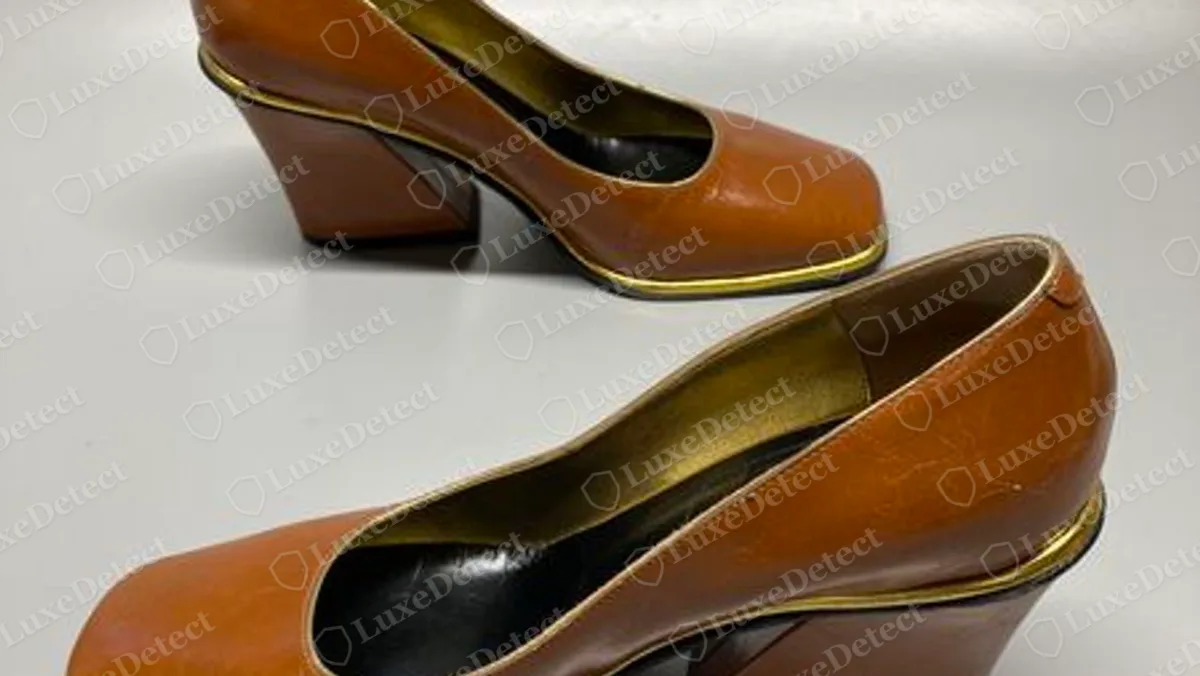
A pair of brown block-heel pumps shows a different stamp. It is smaller, with the name around a round centre and "MADE IN ITALY" and the size printed beneath. Two genuine pairs, two sole stamps: a shoe whose stamp differs from the one above is not suspect for that reason alone.
Shoes: The Insole Print and Inside Numbers
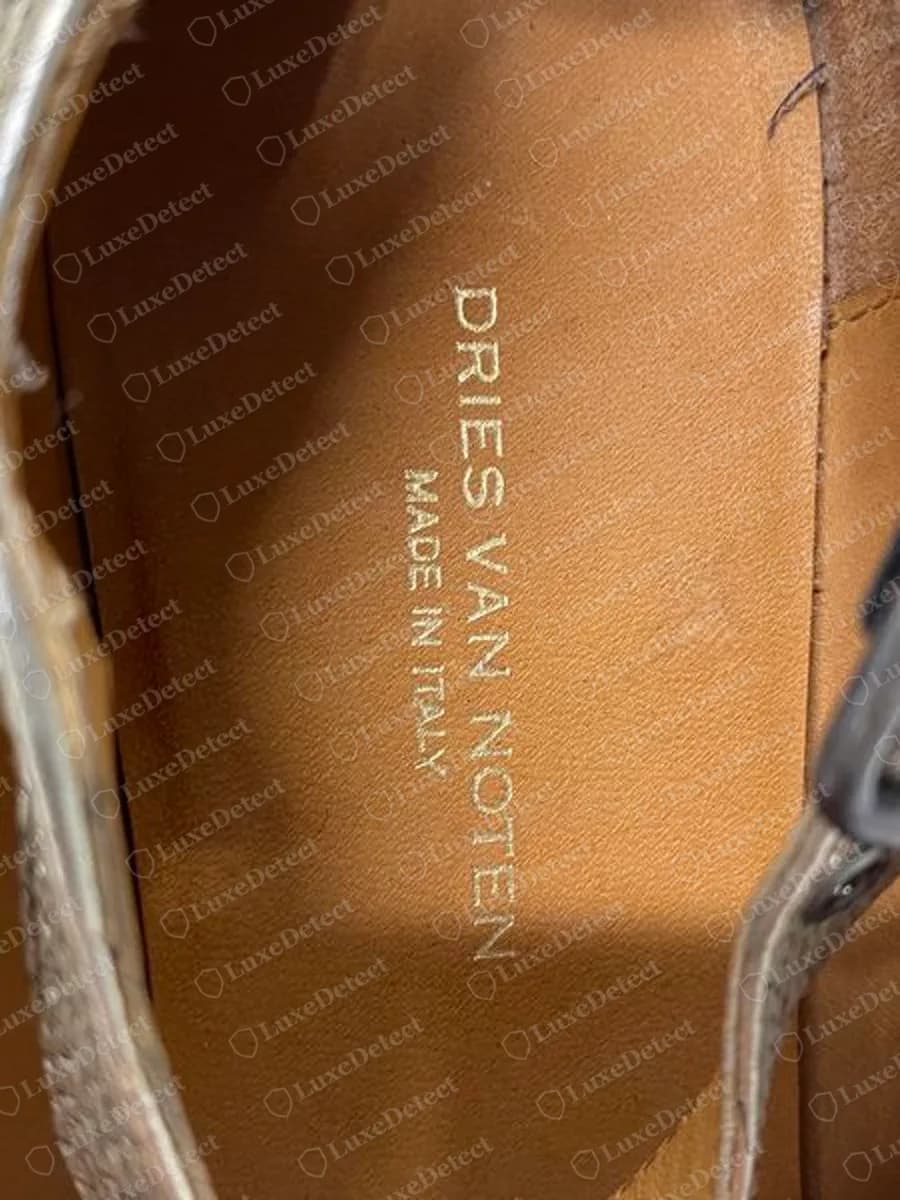
Inside the shoes, the insole carries a gold print reading "DRIES VAN NOTEN" with "MADE IN ITALY" in smaller letters beneath. Our records also show a number and size stamped inside, for example "8060 38" on one pair and "18685 39" on another. The format is not consistent between pairs, and we have not confirmed what the numbers mean, so treat them as what these pairs show, not a code you can look up.
What a Matching Mark Does and Does Not Prove
A woven label, a care tag, a sole stamp and an insole print can each be copied, and the ones above are only what genuine pieces in our records show. Fakes copy the main label, so a matching mark proves nothing on its own, and a mark that differs from the examples here does not prove a piece is fake either: the label style and the country change across eras, and our records cover only a few of them.
The checks that count are the ones that fit together on one piece: label, care tag, fibre, stitching and construction agreeing with each other, and weight, drape and feel judged with the item in hand against a verified piece from the same collection. If you are comparing, our Yohji Yamamoto guide and Issey Miyake guide cover other designer clothing in the same spirit.
When to Get a Professional Opinion
Dries Van Noten pieces are often bought second-hand at a price that matters, and the brand's label styles vary enough that a reference like this one cannot pass a piece on its own. If the listing does not show the main label, the care tag and the construction clearly, ask for them, or send the piece for review. LuxeDetect authenticates clothing and shoes from clear photos with a 24-hour turnaround, a verdict from a specialist and a Certificate of Authenticity. Include the main label, every care tag with both sides visible, the sole and insole of shoes, and the stitching and lining.
A code that checks out doesn't prove the item is real. Counterfeiters copy genuine codes.
Our authenticators check the labels, stitching and fabric of your Dries Van Noten against verified references, from $15. You get a verdict within 24 hours, and a Certificate of Authenticity if the item passes.
Authenticate My Dries Van Noten →Related guides
FAQ
How can I tell if my Dries Van Noten is real?
No single mark proves it. Genuine pieces in our records show a cream woven "DRIES VAN NOTEN" label with a script size, a care label that varies by garment, and, on shoes, a sole stamp and a "MADE IN ITALY" insole print. Check that these fit together on the piece, and get it reviewed if the purchase matters, because fakes copy the main label.
Can I authenticate Dries Van Noten from photos?
Yes. What decides it is how the label, care tag, fibres, stitching and construction fit together against verified pieces, not any one mark. Clear photos of the main label, every care tag, the sole and insole of shoes and the lining are what a review needs, and a professional review is the safer route on an expensive piece.
What does "SINCE 1986" on the sole mean?
It is the wording on the round sole stamp of one genuine pair of shoes in our records. The label launched in 1986, but a different genuine pair in our records carries a smaller stamp with "MADE IN ITALY" and the size instead, so the wording is not on every pair.
Does "Made in Morocco", "Poland" or "India" mean my Dries Van Noten is fake?
No. Genuine pieces in our records name several countries, including Morocco, India, Poland and Romania on clothing and Italy on shoes. The country is a fact of that one garment, not a tell.
My Dries Van Noten label looks different from the one in this guide. Is it fake?
Not necessarily. Label formats vary by era and country, and this guide covers only the styles our genuine records show. Compare the label against a verified piece of the same type and period, and get it checked if you are unsure.
Does Dries Van Noten use a serial number?
We found no consistent serial number. Shoes in our records carry an inside number and size, such as "8060 38", but the format differs between pairs and we have not confirmed its meaning, so it is not a code you can verify.