Luxury Leather Goods Specialist
Luxury leather goods specialist. Works on Italian house construction, hardware, and interior stamping.
Published September 2026 · Contact
What Makes Saint Laurent Shoes Hard to Pin Down
Saint Laurent's footwear output doesn't have one dominant silhouette the way some other categories do. Across a sample pulled from LuxeDetect's own authentication archive (1,743 confirmed authentic Saint Laurent shoe records against 313 confirmed fakes), the shoes span heels, strappy sandals, slingback pumps, mules, platform booties, one leather espadrille, and even a single flat sneaker. A printed "YSL" insole logo used on some of the brand's dressier styles came up more than most, but at roughly 18 authentic and 15 fake keyword-matched listings, it's still too thin on either side to support its own model-specific guide, the same shape of finding that led our Prada Shoes guide to cover the brand generally rather than picking one style.
There's a second layer of variety here that's easy to mistake for inconsistency: Saint Laurent's branding itself changed. The house traded under "Yves Saint Laurent," with a gold cursive script logo, for most of its history, then shortened to "Saint Laurent" with block capital branding after the 2012 rebrand under creative director Hedi Slimane. Genuine shoes from both eras are in active resale right now, so a buyer comparing two real Saint Laurent pairs can see two entirely different wordmarks and two different stamp layouts without either one being wrong. This guide covers what's actually consistent across that spread, the construction and stamping patterns confirmed on verified-authentic pairs, rather than forcing a single-era rule that would incorrectly flag half of Saint Laurent's genuine output.
Worth knowing
This guide is built from verified-authentic Saint Laurent shoe examples pulled directly from our own order archive. We looked closely at two specific construction details as possible checkpoints, the printed insole logo and the cursive script wordmark deboss, and neither cleared the bar we hold checkpoints to: at least two or three independent, verifiable examples on both the authentic and counterfeit side. One candidate fake showed a rougher, smudged insole print than our authentic references, but a second fake's print looked just as clean as the genuine examples, contradicting the first. We're naming both as open questions below rather than publishing a checkpoint table on a single contradicted data point. When we've sampled enough of the archive's Opyum/logo-heel fakes specifically to settle it one way or the other, this guide will be upgraded.
Use our free Saint Laurent Serial Number Checker to decode the serial on your YSL leather tag and check the format.
Check My Serial →Shoe Reference: What Authentic Saint Laurent Footwear Looks Like
The Two Branding Eras: Cursive Script vs. Block Capitals
The clearest, most reliable thing to check first isn't a hidden detail, it's simply which wordmark era the shoe is claiming to be from, and whether the rest of the shoe is consistent with it.
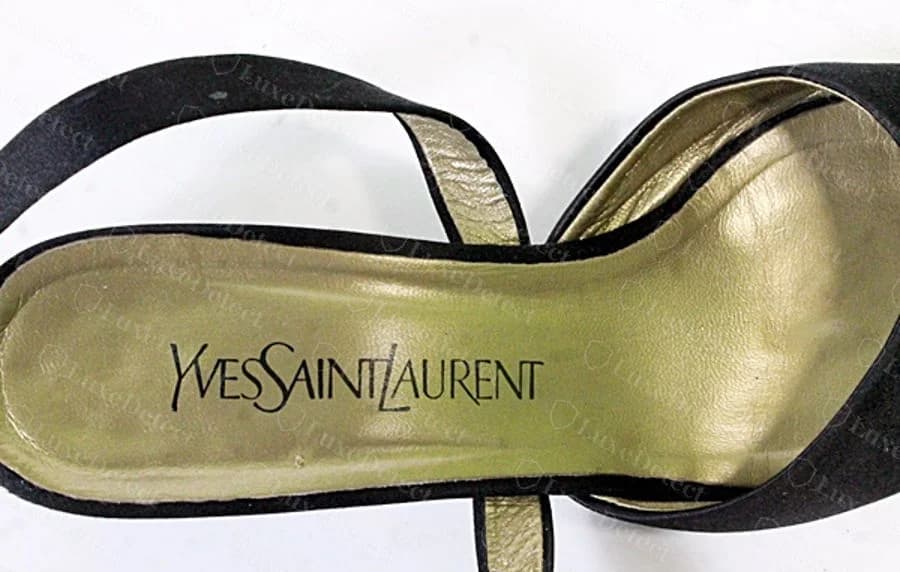
Vintage Yves Saint Laurent shoes, pre-dating the 2012 rebrand, carry a gold or dark cursive script reading "Yves Saint Laurent," usually printed or foil-stamped on the insole. We confirmed this exact script logo, letterform and all, printed cleanly on the insoles of several genuinely different pairs in our sample: cream pointed pumps, cobalt-blue pumps, a black satin evening sandal, and a metallic gold woven mule, spanning at least three different decades of production based on styling.
Modern Saint Laurent shoes, post-rebrand, use plain block capitals, "SAINT LAURENT / PARIS," usually heat-stamped into the outsole leather rather than printed on the insole. We confirmed this exact layout on a men's leather harness boot in our sample, stamped "SAINT LAURENT / PARIS / MADE IN ITALY" directly into the outsole with the size below.
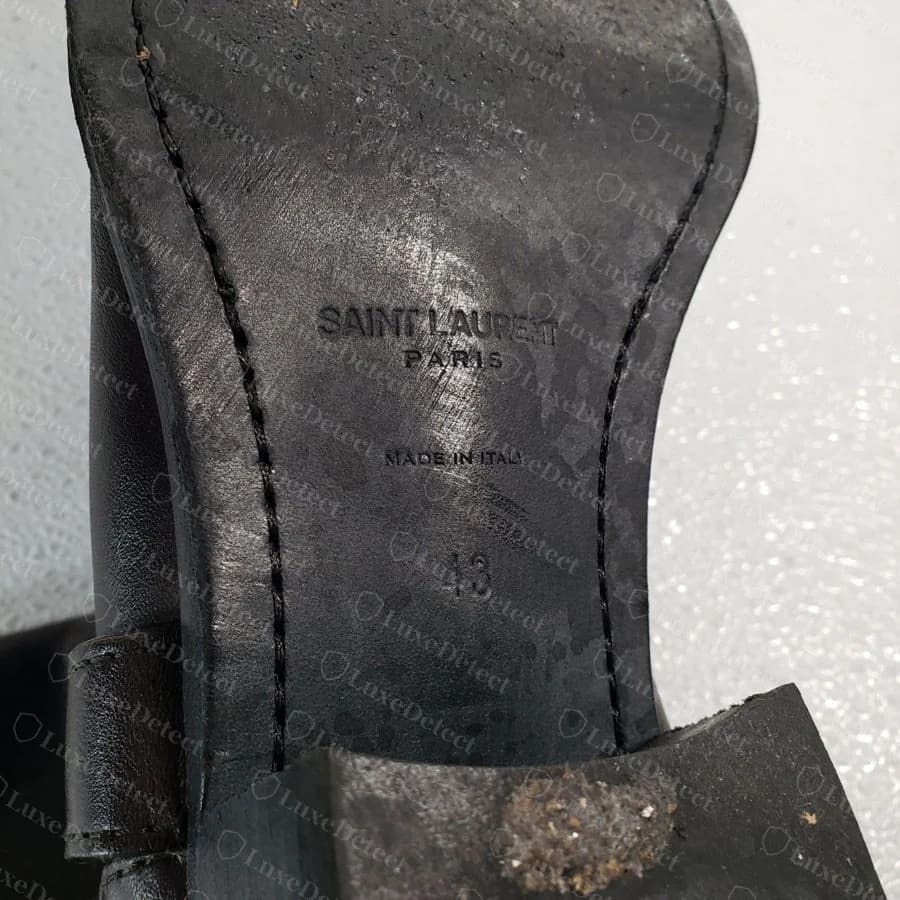
Both are genuine. Neither wordmark is more "correct" than the other; what matters is that the branding era is consistent with the rest of the shoe's construction and styling. A shoe styled like an early-2000s pointed pump with a modern block "SAINT LAURENT PARIS" outsole stamp (or the reverse, a current-collection platform silhouette carrying a vintage cursive script) is the kind of mismatch worth asking a seller about directly, more so than either wordmark style on its own.
Sole and Insole Stamp Format Varies Legitimately, Even Within One Era
This is the finding we went in expecting to contradict, and our own sampling confirmed it instead: sole and insole stamping is not standardized, even among shoes from roughly the same period, and format alone is not a usable tell.
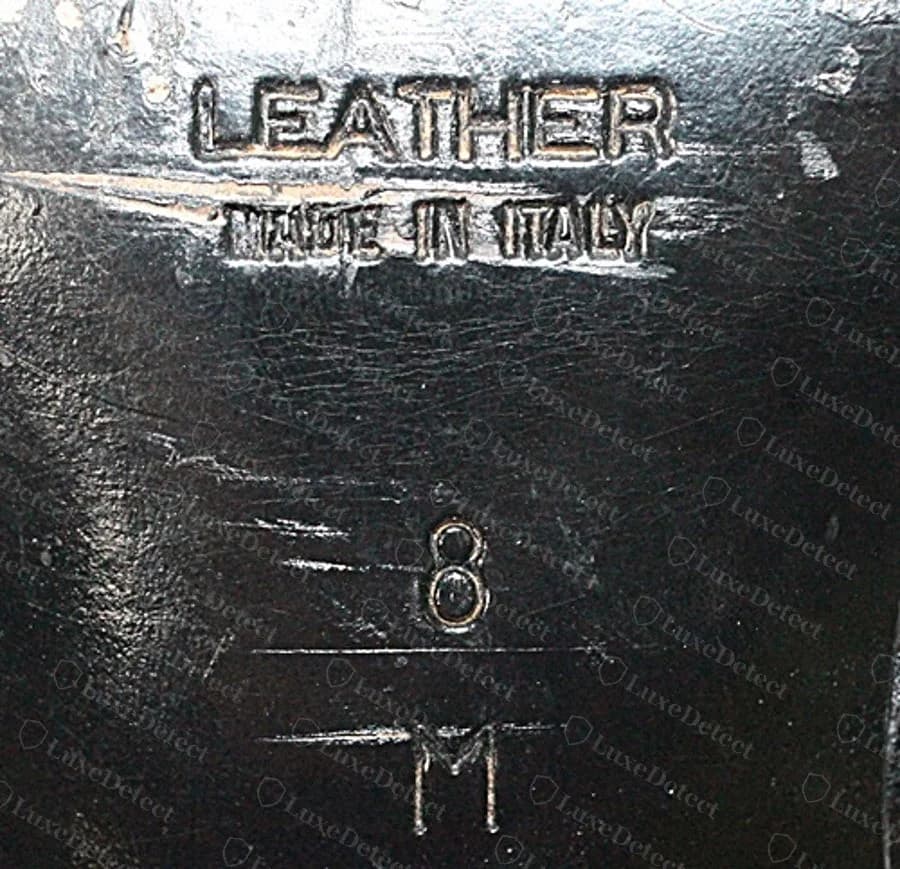
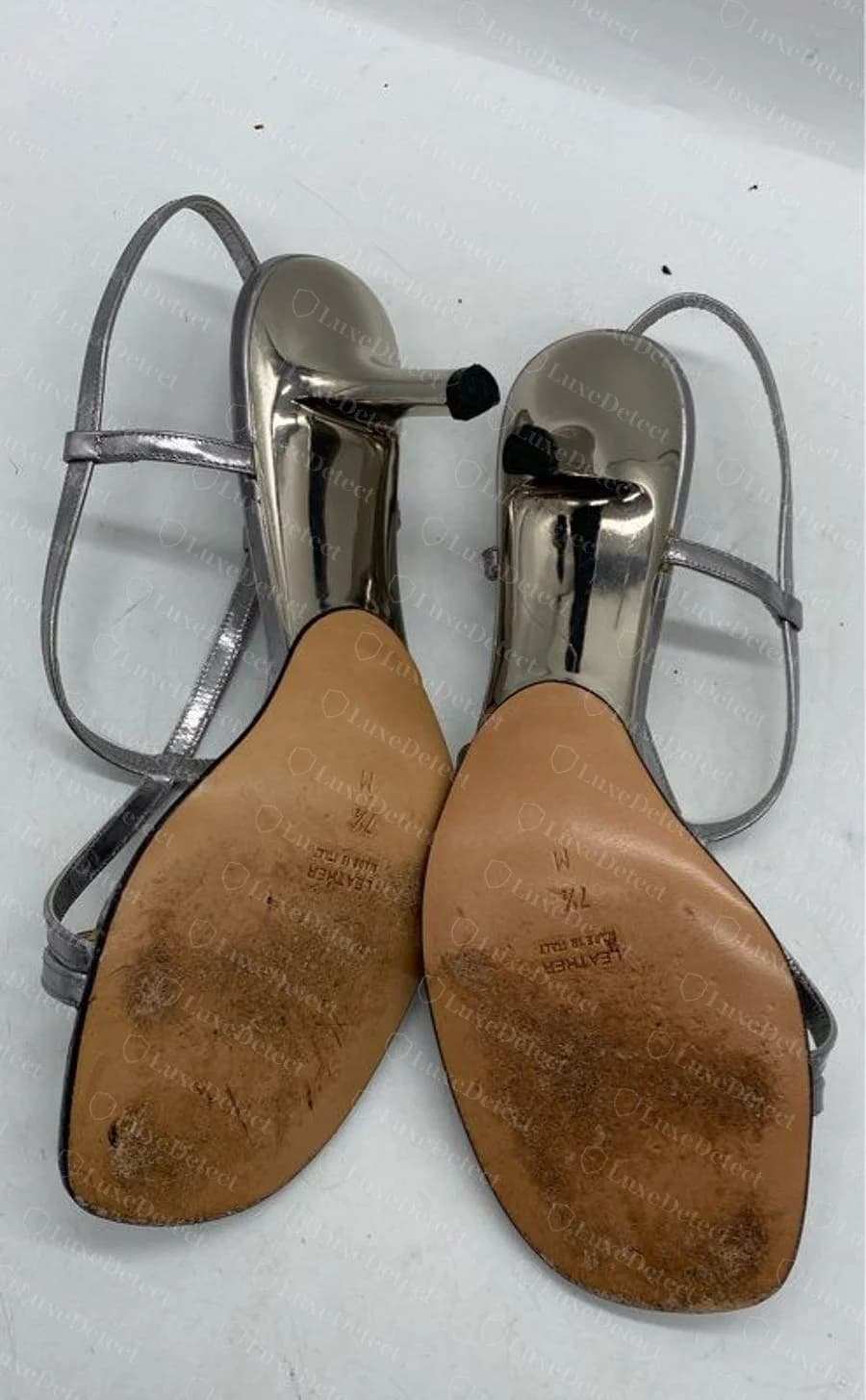
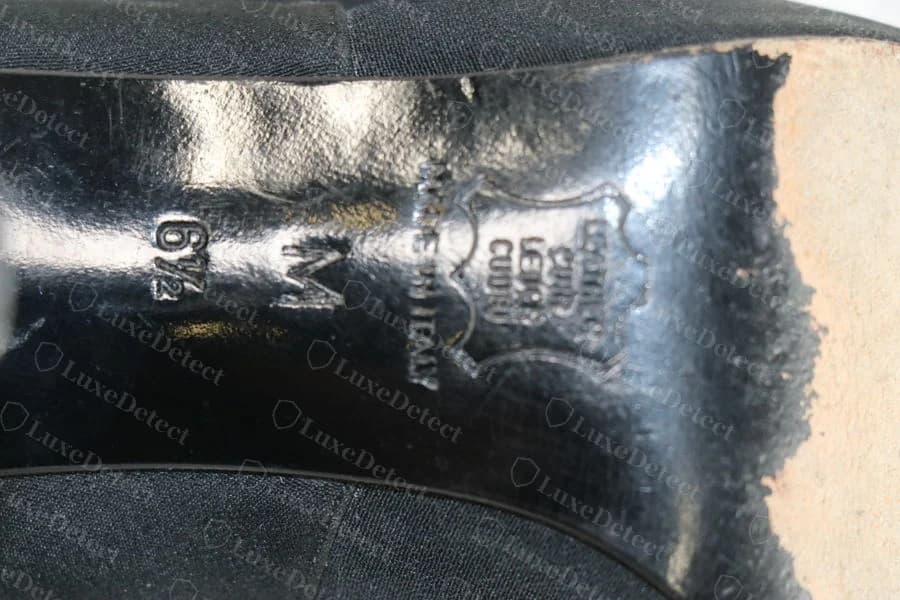
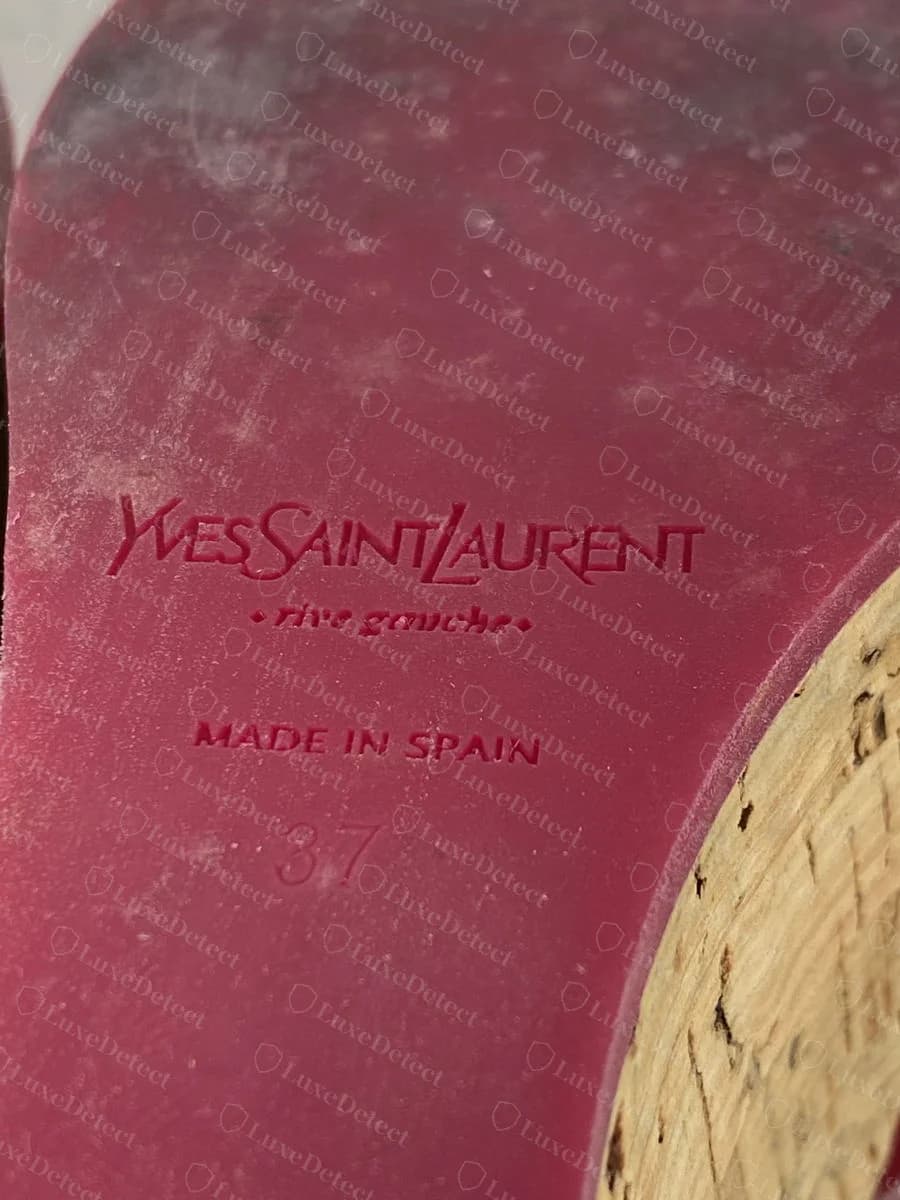
Across our authentic sample we found at least four distinct legitimate formats. A plain outsole stamp reading only "LEATHER / MADE IN ITALY" with the size below and no logo of any kind, confirmed on a vintage cream pump. A separate, equally vintage metallic sandal with almost the identical "LEATHER / MADE IN ITALY / 7½ M" outsole stamp. A leather-crest oval stamp reading "GENUINE / LEATHER / MADE IN ITALY," a heraldic-shield layout different from either of the above, on a black patent slingback. And a heel-stamped wedge reading "Yves Saint Laurent rive gauche · MADE IN SPAIN · 37," combining the cursive-era script with a country of manufacture that isn't Italy.
| Format | Where confirmed |
|---|---|
| "LEATHER / MADE IN ITALY / [size]," no logo | Two separate pairs: a vintage cream pump and a metallic sandal |
| Cursive "Yves Saint Laurent" script, printed insole | Cream pumps, blue pumps, satin sandal, gold woven mule |
| Leather-crest oval, "GENUINE LEATHER MADE IN ITALY" | Black patent slingback pump |
| "Yves Saint Laurent rive gauche," Made in Spain | Cork-wedge sandal |
| Block "SAINT LAURENT / PARIS," Made in Italy | Men's harness boot (modern era) |
| Alphanumeric code plus size, no separate country line | Men's harness boot interior (paired with the block outsole stamp above) |
Worth knowing
Do not treat "no logo on the sole" or "an unfamiliar stamp layout" as a red flag by itself. We found a completely unbranded "LEATHER / MADE IN ITALY" stamp on two separate confirmed-genuine pairs, and a shoe with no country-of-origin claim at all isn't automatically suspicious either, some formats simply don't include one. Judge the stamp on legibility and internal consistency with the shoe's other details, not on matching a single expected template.
Interior Codes: A Second, Independent Number to Cross-Reference
Beyond the sole stamp, several genuine pairs carry a separate alphanumeric code, either on the insole or stamped inside the shoe against the lining. On the men's harness boot mentioned above, the interior carries "WA 649094 43" in gold foil, a two-letter prefix followed by a six-digit number and the size, stamped separately from (and in a different format than) the block "SAINT LAURENT PARIS" outsole branding on the same pair.
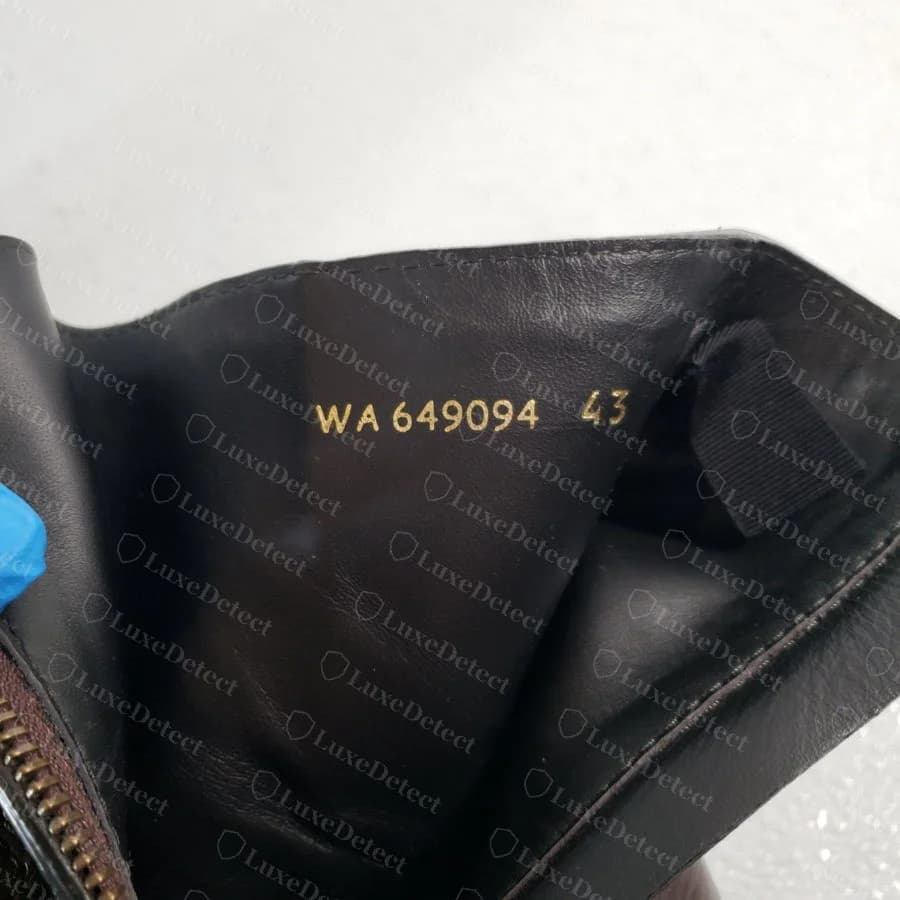
A different vintage pump in our sample carried a simpler numeric code, "508," followed by the size, stamped directly into the interior leather rather than gold-foiled. Both are genuine; the coding format isn't consistent across pairs, but on any single pair, the interior code and the outsole stamp should agree on size, and both should look like they were applied at the factory (evenly stamped, consistent depth) rather than added later.
The Printed Insole Logo: A Genuine Reference, Not a Confirmed Tell
Several of Saint Laurent's dressier heel and sandal styles carry a "YSL" logo printed or foil-stamped directly onto the insole, visible through an open-toe or slingback silhouette rather than embossed as raised hardware. We're showing genuine examples here because it's a striking, photographable detail that buyers reasonably want to check, but we want to be direct about what we can and can't confirm about it.
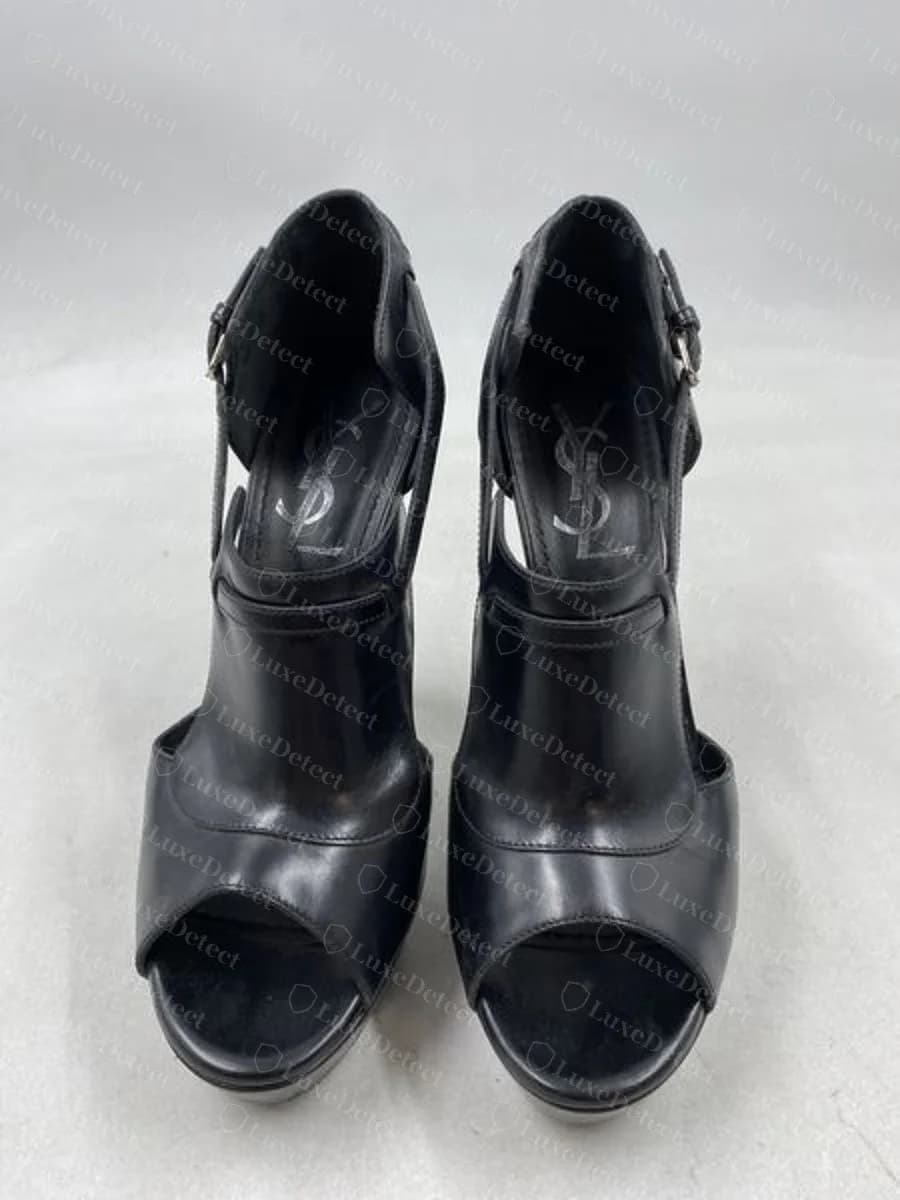
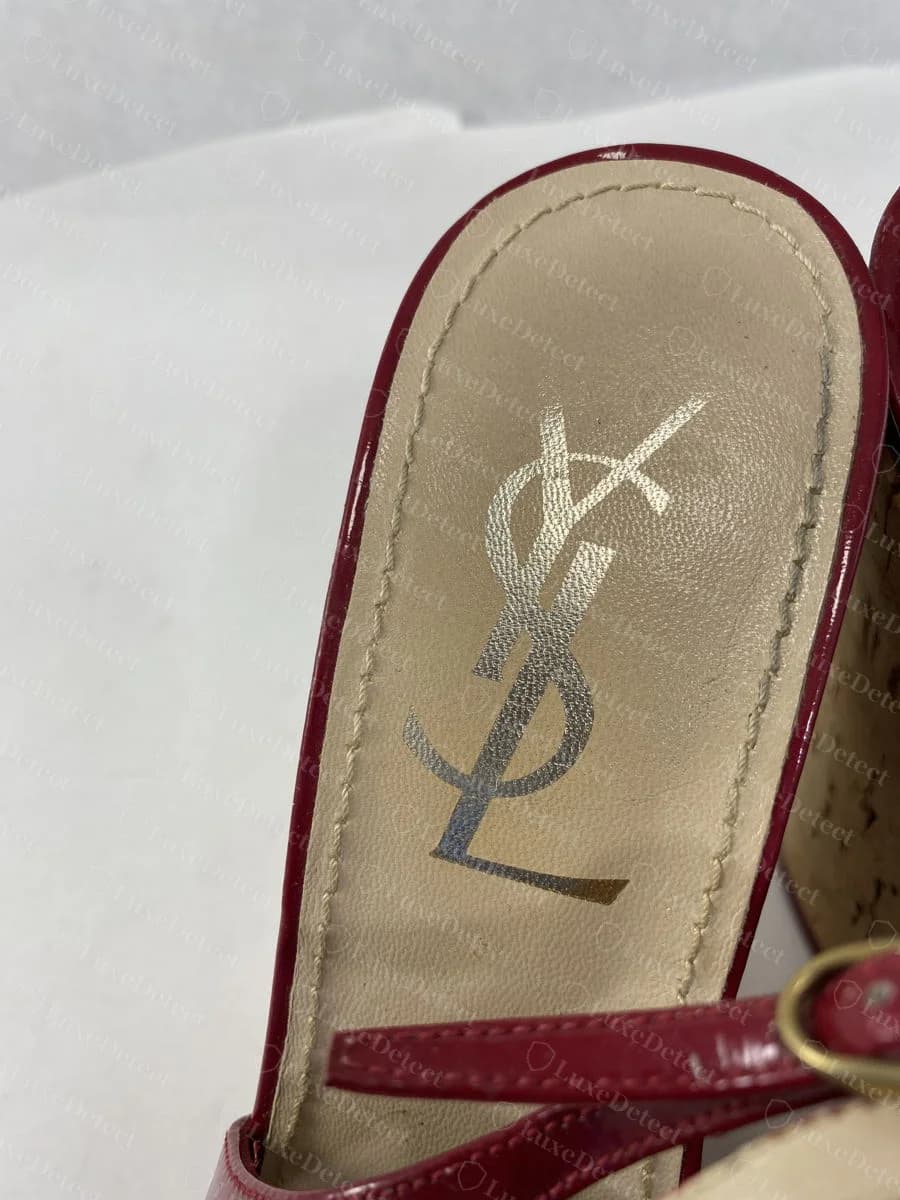
Across the genuine examples in our sample, this print is applied cleanly: even coverage, no smudging, no visible misregistration between the two overlapping letterforms. We looked at counterfeit examples of this same detail specifically because it's a striking, photographable element buyers keep asking about. One fake showed a noticeably rougher, uneven print with visible smudging at the letter edges, exactly the kind of shortcut we'd expect a lower-effort counterfeit to take. But a second fake's insole print looked just as clean and well-applied as our genuine references, directly contradicting the first. One confirming example and one contradicting example isn't enough to publish this as a reliable checkpoint, so we're naming it as an open lead rather than a tell you can rely on. If you're evaluating a pair with this insole logo and the print looks rough or smudged, that's worth factoring in, but a clean-looking print doesn't clear a pair on its own.
The Debossed Monogram on Leather Espadrilles
Saint Laurent's leather espadrille carries a tone-on-tone debossed "YSL" monogram pressed directly into the leather toe, with no ink or foil, just a shadow from the impression itself, alongside the modern "...LAURENT / PARIS" heel-lining stamp partially visible on the interior.
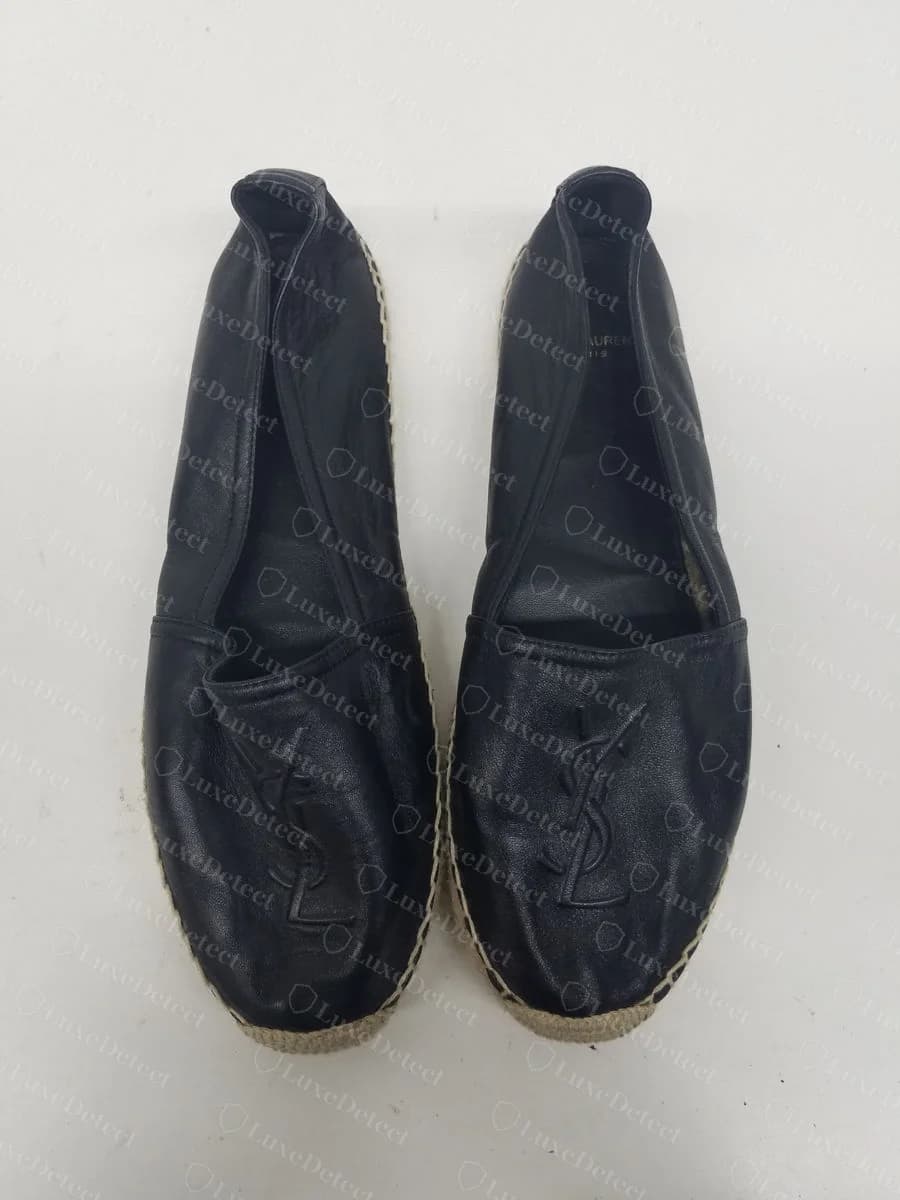
The deboss is even in depth across the whole monogram, with no side of the mark pressed shallower than the other, and the leather grain around the impression is undisturbed, no crushed or torn fibers at the edges of the stamp.
The One Sneaker: Embroidered Script, Not Printed
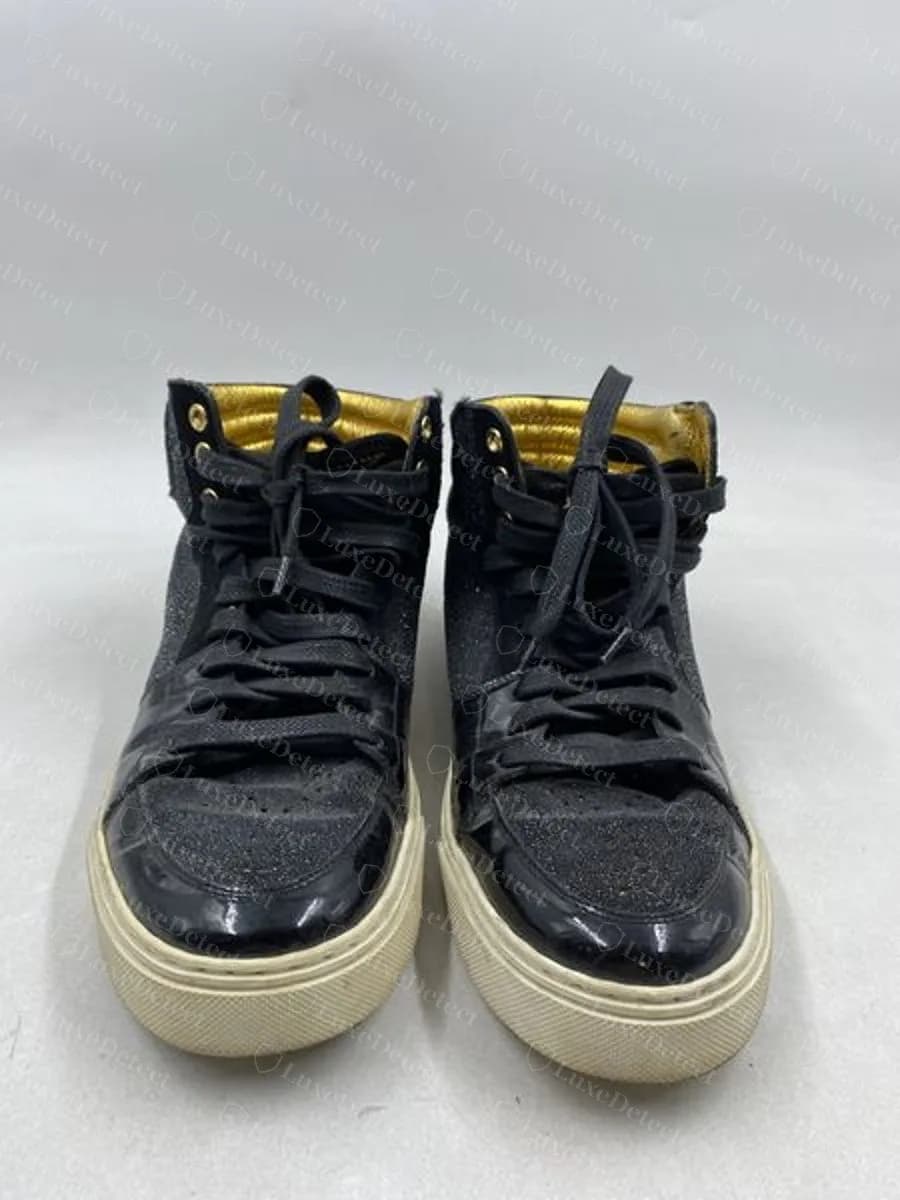
The single sneaker in our sample, a black-and-gold high-top with a suede and patent-leather panel construction, carries its "Yves Saint Laurent" branding as gold thread embroidery on the heel counter rather than a printed or stamped mark, along with a small raised "YSL" rubber tab on the outsole edge.
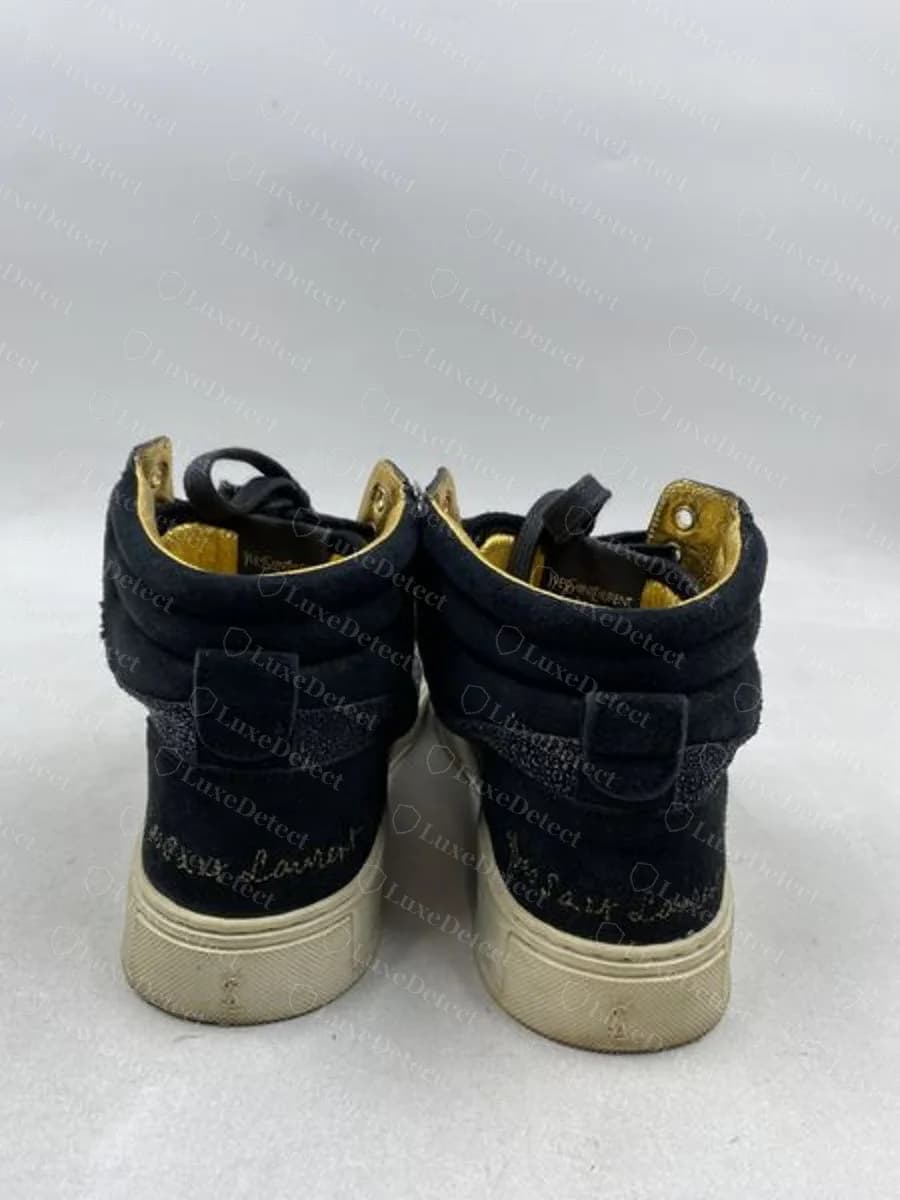
The embroidery stitching is dense and even, with no loose or skipped threads, and sits flush against the suede rather than puckering the material around it. This is the only embroidered wordmark we found in our sample; every other example used a printed, foil, or debossed mark instead, one more reminder that Saint Laurent's branding technique varies by silhouette and era rather than following one fixed rule.
General Construction and Finishing
Across the full range of silhouettes we reviewed, from a $200-era leather flat to a structured platform heel, genuine construction shows even stitching with consistent tension, clean glue lines at the sole edge with no visible overspill, and hardware (buckles, straps, zip pulls) that sits flush with no play at the attachment point. None of these are exclusive to Saint Laurent, and none held up in our sampling as a standalone signal strong enough for a dedicated checkpoint; use finishing quality to add weight to a decision you're already leaning toward, not to make the call by itself.
One authentic pair in our sample used a Vibram-branded rubber outsole rather than a Saint Laurent-branded one. This is the same pattern our Prada Shoes guide flagged: some genuine luxury footwear legitimately outsources its outsole to a third-party maker, so a Vibram (or other third-party) sole with no Saint Laurent text on it is not, by itself, evidence of anything. The question to ask is whether that specific silhouette is known to use a third-party sole, not whether the brand's own name appears on the rubber.
General Red Flags Across Saint Laurent's Market
We did pull and review a sample of confirmed counterfeit Saint Laurent shoe listings alongside the authentic examples above, and the honest finding is that the fakes in our sample were, on the whole, well executed. A counterfeit patent Tribute-style sandal we reviewed reproduced the printed "YSL" insole logo and a gold-foil "SAINT LAURENT PARIS" insole stamp closely enough that neither would have been a safe standalone tell in a listing photo. That's consistent with Saint Laurent being a heavily counterfeited flagship brand with a mature supply chain behind its fakes, the same pattern we found researching Gucci and other high-volume labels. We're not going to overstate what a written guide can catch photographically on a brand at this level of counterfeit sophistication.
Generic, brand-level patterns worth being alert to (not claims this guide's own photos demonstrate against a specific fake): a wordmark, cursive or block, with uneven letter weight or soft, blurred edges rather than crisp printing or stamping; a sole or insole stamp that looks glued on or sits proud of the surface rather than integrated into the material; and hardware with visible mold lines or a gritty, unfinished casting texture. Treat these the way you'd treat any general counterfeit-awareness advice, useful context, not a verdict.
When to Get a Professional Opinion
Saint Laurent's genuine footwear legitimately spans two branding eras, at least five sole-stamp formats we've directly confirmed, and construction techniques from printed foil to gold thread embroidery, which means a buyer applying one fixed rule (say, "it must have the cursive logo" or "the sole must say Made in Italy") will end up rejecting real shoes as often as catching fake ones. Combine that with a counterfeit supply chain sophisticated enough to reproduce the brand's most distinctive hardware convincingly, and DIY photo authentication on a meaningful purchase has real limits here. If you can't physically handle the shoes before paying, get a second opinion. LuxeDetect authenticates Saint Laurent shoes from $15 with a verdict and Certificate of Authenticity within 24 hours; send clear photos of the full outsole, any insole or interior stamps, size codes, and all visible hardware from several angles.
FAQ
Is there one Saint Laurent shoe model that gets counterfeited the most?
No. Unlike some other product categories, Saint Laurent footwear counterfeits in our sample are spread across heels, sandals, pumps, mules, boots, and one sneaker, with no single silhouette carrying independent volume. A printed "YSL" insole logo used on some dressier styles comes up more than most, but not enough to support its own dedicated guide.
Should Saint Laurent shoes say "Yves Saint Laurent" or "Saint Laurent"?
Either can be genuine, depending on the era. The house used "Yves Saint Laurent" with a gold cursive script logo for most of its history, then shortened to "Saint Laurent" with block capital branding after the 2012 rebrand. What matters is that the branding era is consistent with the shoe's overall styling and construction, not which wordmark it uses.
Does the sole need to say "Made in Italy" to be authentic?
No. We confirmed genuine Saint Laurent shoes manufactured in Italy and in Spain in our own sample, and at least one confirmed-genuine pair had no country-of-origin stamp on the sole at all. Country of manufacture alone isn't a reliable tell for this brand.
Is a missing logo on the insole or outsole a red flag?
Not by itself. We found two separate confirmed-genuine pairs with an outsole reading only "LEATHER / MADE IN ITALY" and the size, no Saint Laurent branding of any kind. Some legitimate stamp formats simply don't include a logo.
What is the printed "YSL" insole logo, and does its quality prove a shoe is real or fake?
It's a distinctive logo print used on some of Saint Laurent's dressier heels and sandals, applied directly to the insole. We looked closely at print quality as a possible tell: one counterfeit example showed a rough, smudged print, but a second counterfeit's print looked just as clean as our genuine references. That contradiction means we can't publish print quality as a reliable checkpoint yet, so don't rely on it alone either way.
Can I trust a Vibram-branded sole on a Saint Laurent shoe?
A third-party sole brand like Vibram isn't automatically suspicious. Some genuine luxury footwear legitimately uses third-party outsoles. We confirmed one authentic Saint Laurent pair with a Vibram sole in our sample. The question is whether that specific silhouette is known to use one, not whether Saint Laurent's own name appears on the rubber.
Why doesn't this guide have a full real-vs-fake comparison table?
Two candidate tells, the insole-print quality and a rougher cursive-stamp deboss on one vintage fake, came up in our research, but neither had enough independent, verified examples on both sides to responsibly publish as a checkpoint. We'd rather say that plainly and show what genuine construction looks like than force a comparison the evidence doesn't yet support. When we've sampled enough of the fake side to settle these questions, this guide will be upgraded with a full checkpoint table.