Luxury Leather Goods Specialist
Luxury leather goods specialist. Works on Italian house construction, hardware, and interior stamping.
Published September 2026 · Contact
Why Prada Shoes Don't Have One "Fake Model" to Watch For
Most brand authentication guides can point to one dominant counterfeit target, a single bag or sneaker that accounts for the bulk of what shows up in resale. Prada footwear doesn't work that way. Across a sample of confirmed counterfeit Prada shoe listings pulled from LuxeDetect's own authentication archive, spanning heels, loafers, sneakers, boots, and sandals, no single silhouette or named line dominated. A handful of records referenced real Prada sub-lines like the America's Cup sneaker or the Monolith platform loafer, but each was a small fraction of a much larger, generic pool. Most listings are simply labelled "Prada shoes" on both the genuine and counterfeit side alike.
That absence of a dominant target is itself the finding: it means the useful checks here are the ones that hold up regardless of silhouette, not a single style-specific tell. This guide covers what actually transfers across a heel, a loafer, a sneaker, and a boot, and is equally honest about what doesn't.
What to check, ranked by reliability
| Checkpoint | Reliability | What it tells you |
|---|---|---|
| 3. Size Stamp: Check Consistency, Not Format | ★★★★★ | Contradictory size markings on the same pair are hard to fake by accident; the format itself proves nothing. |
| 1. Sole Branding and Maker's Mark | ★★★★★ | A completely unbranded sole with no maker's mark at all is the real concern, not a missing "PRADA." |
| 5. General Finishing and Construction Quality | ★★★★★ | Worth noting as supporting evidence only; genuine wear and well-made copies both blur this signal. |
| 2. Insole Branding: What It Confirms and What It Doesn't | ★★★★★ | Genuine stamps vary widely in format and finish across eras; completeness or legibility alone proves nothing. |
| 4. Triangle Logo Plaque: An Open Question, Not a Confirmed Tell | ★★★★★ | No verified quality difference found yet; well-made counterfeit plaques matched genuine references closely. |
| What the Box and Dust Bag Do and Do Not Prove | ★★★★★ | Packaging is context only, useful for cross-referencing a size or style code, never as evidence. |
Use our free Prada Serial Number Checker to decode the serial inside your Prada bag and check it against the era.
Check My Serial →Model Reference Before You Start
- Prada footwear spans decades and multiple sub-brands under one house: mainline Prada dress shoes and heels, Prada Sport (technical/red-tab styles, now folded back into mainline branding on newer pieces), and current-collection platform sneakers and loafers with the enamel or rubber triangle logo.
- Genuine production is marked "Made in Italy" on almost every style we reviewed; a small number of technical/sport-adjacent styles are legitimately marked "Made in Vietnam" (seen on an authenticated America's Cup-style sneaker), so country of manufacture alone is not a reliable tell for this category.
- Box labelling and dust bags vary by era and retailer repackaging; treat any packaging as context, never as evidence on its own (see below).
- If the shoe carries a serial or reference code on a hangtag, LuxeDetect's Prada serial number guide covers reading it, though a code alone doesn't verify a shoe.
Sole Branding and Maker's Mark
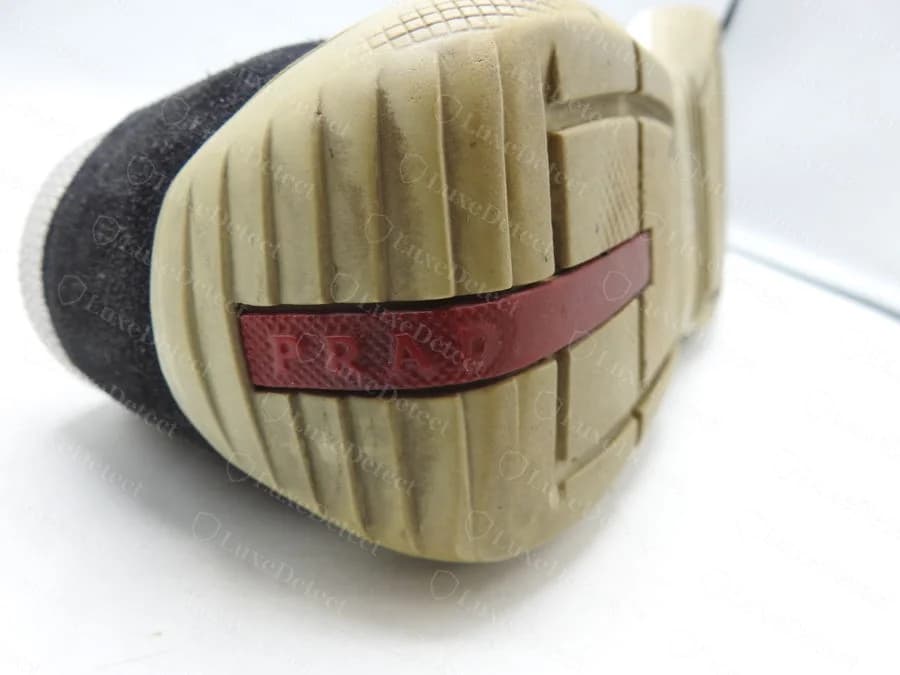
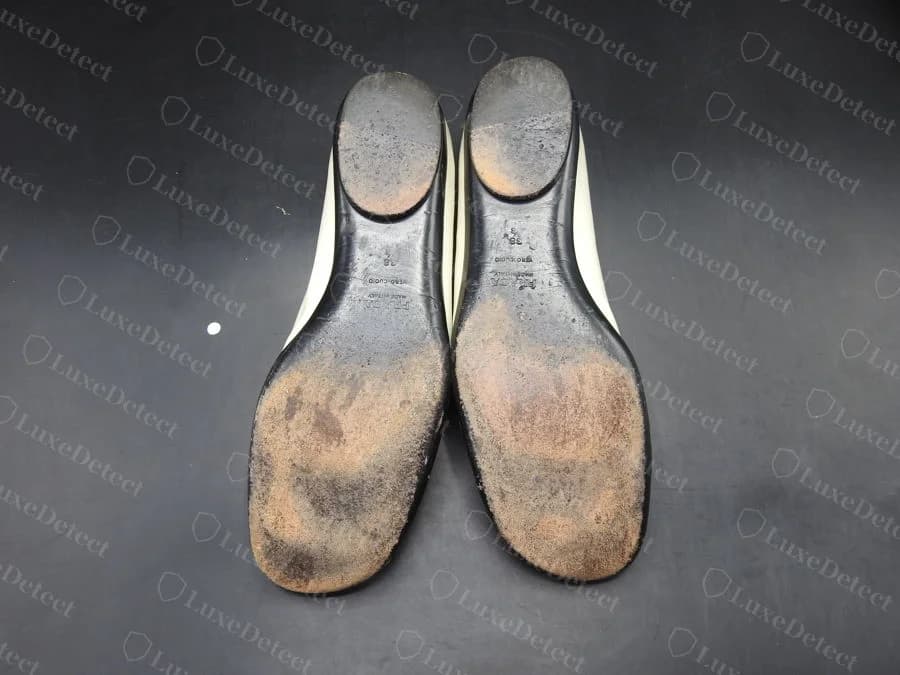
Nearly every genuine and counterfeit shoe we reviewed carried some form of "PRADA" branding on the outsole, but the exact format is not standardized, and that variation is legitimate, not a warning sign by itself. In our sample we found: a molded rubber tread stamp reading "PRADA MILANO" in sans-serif block caps on a current-collection platform sneaker (both genuine and counterfeit examples used this exact format); a flat leather-sole heel stamp reading "PRADA / [size] / VERO CUOIO / MADE IN ITALY" in a stacked four-line layout on a classic loafer; and a small rectangular red rubber inset tab reading "PRADA" on Prada Sport technical soles, again on both genuine and counterfeit examples.
| Element | Authentic | Counterfeit |
|---|---|---|
| Sole branding | "PRADA" molded, stamped, or on a rubber inset tab; format varies by era and line | Same range of formats seen, including on well-made copies with crisp, correctly spelled text |
| Country mark | "Made in Italy" on most styles; "Made in Vietnam" confirmed genuine on a technical sneaker line | Country claim should match what's plausible for that style, not assumed to always say Italy |
| Third-party sole tags | Genuine technical/hiking-adjacent Prada lines can carry a Vibram or other third-party sole maker's tag instead of Prada branding | An unbranded sole with no maker's mark at all, Prada or third-party, is the actual concern |
Worth knowing
Do not treat "no Prada name on the sole" as a standalone red flag. Prada legitimately outsources soles to third-party makers like Vibram on some technical and hiking-adjacent lines, so a genuine Vibram-branded sole with no Prada text anywhere on it is expected, not suspicious. The real tell is a completely blank, unbranded rubber sole carrying no maker's mark of any kind, from Prada or a legitimate third party.
Insole Branding: What It Confirms and What It Doesn't
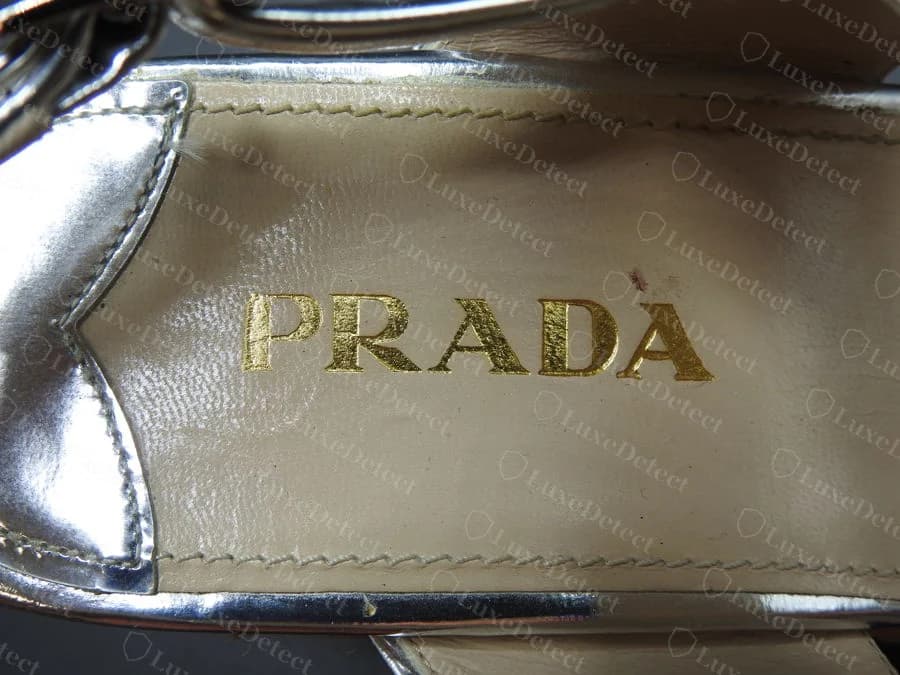
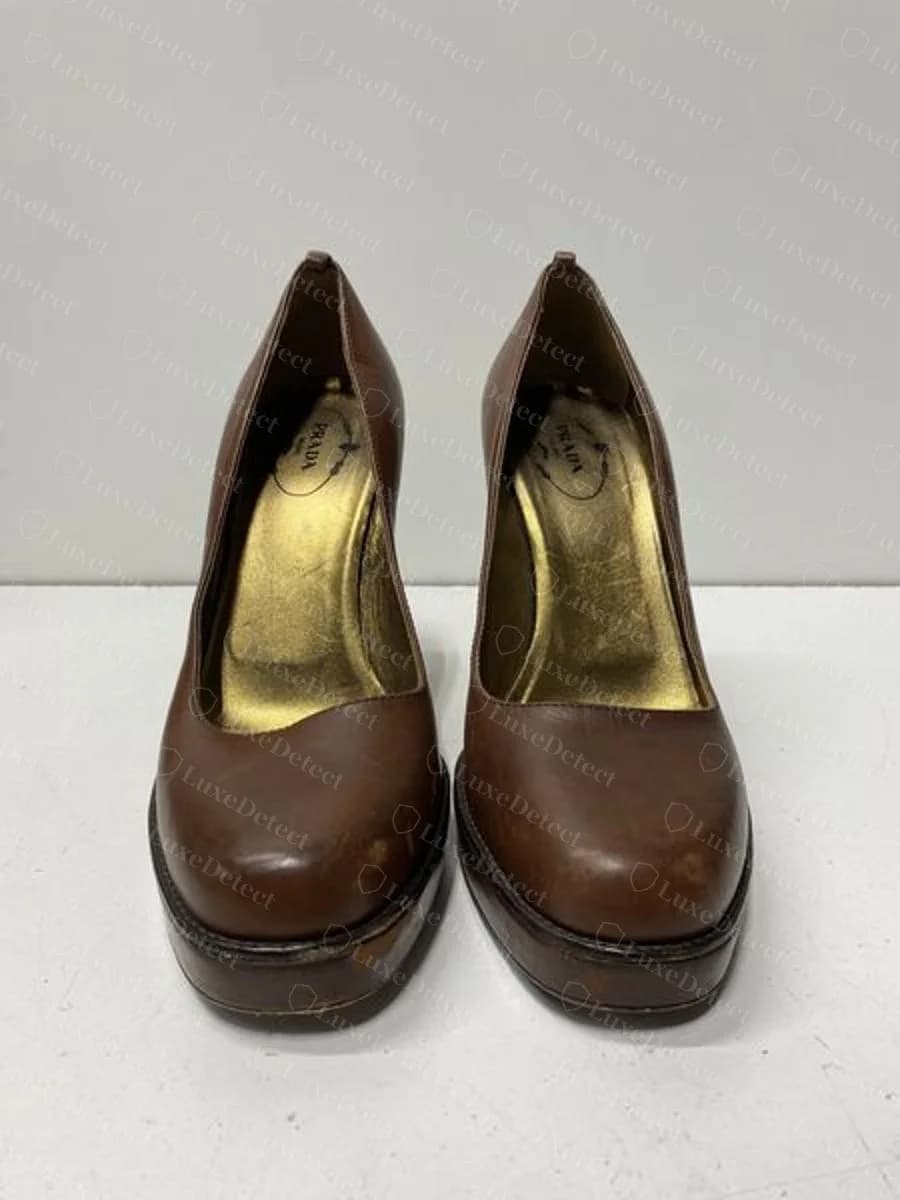
This is the checkpoint we went in expecting to be strong, and our own sampling talked us out of it. Genuine insoles in our sample showed at least four different formats: a gold-foil "PRADA" stamp with no additional text on a silver espadrille wedge; an oval-outlined "PRADA" stamped in dark ink on gold-tone leather, on a decades-old pair of pumps; a red enamel rectangular tab reading "PRADA" (Prada Sport branding) on a men's dress shoe and a sneaker; and a silver-foil "PRADA" print on a current-collection sneaker's textile insole. None of our genuine examples showed the fuller "PRADA MILANO DAL 1913" plus crest treatment that some counterfeit-comparison writeups assume is the baseline, and format and finish vary enough across genuine examples on their own, without any of them needing to be illegible, that legibility alone tells you nothing.
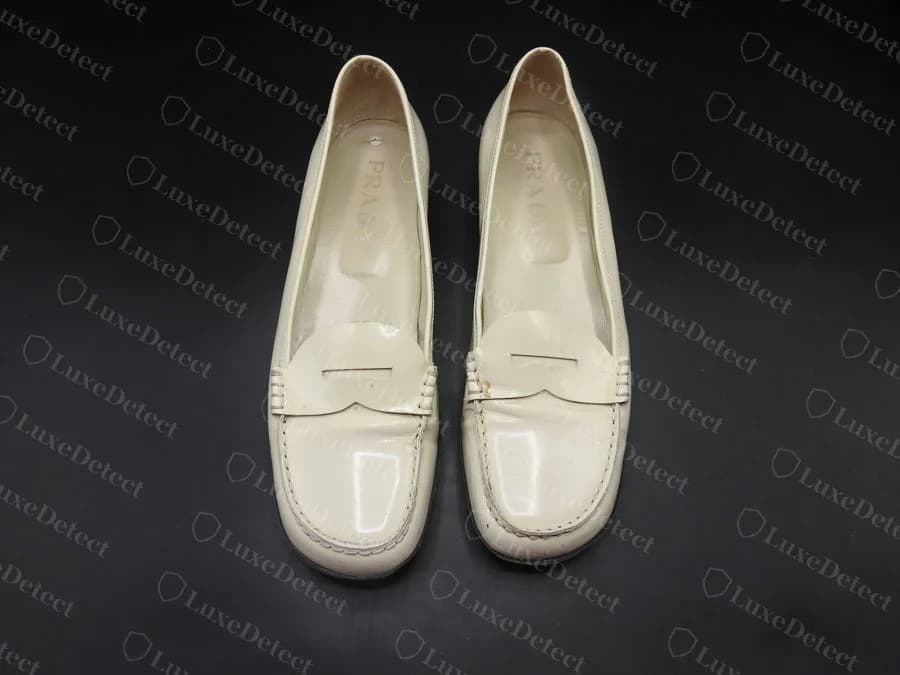
Counterfeit insoles in our sample were, if anything, just as clean: a crisp gold-foil "PRADA" stamp on a counterfeit loafer, and a legible silver-foil print on a counterfeit platform sneaker, both close matches in format and finish to genuine examples of the same style.
| Element | Authentic | Counterfeit |
|---|---|---|
| Insole text | "PRADA" alone, "PRADA / MILANO", or a red-tab "PRADA" print; format varies legitimately by line, era, and printing method (foil, ink, enamel) | Same range of formats and finish quality observed in our sample |
| Legibility | Can vary with wear and printing method on an older, real shoe | Can be crisp and correctly formatted on a well-made copy |
Worth knowing
A partial or worn insole stamp does not prove a shoe is fake, and a crisp, complete one does not prove it's genuine. We found both on confirmed-authentic shoes and both on confirmed counterfeits in our own sample. Use insole text only to catch an obviously wrong brand name or spelling; it isn't a standalone verdict either way, and needs more supporting evidence from other checks before you rely on it.
Size Stamp: Check Consistency, Not Format
Genuine Prada shoes in our sample used at least five distinct size-marking formats: a woven fabric tag reading "PS 0906 9" on a technical sneaker's tongue; a gold-foil "38" stamped below "Made in Italy" on a wedge sandal; an alphanumeric leather stamp reading "2E 2663 11" inside a dress shoe; a similar "4E 2663 11" stamp inside a related dress shoe; and a molded "37" on a current-collection sneaker sole. Counterfeit examples showed an equally wide range, including a leather strap stamped "7281-45" and a fabric tag reading "1E661 40" on the heel counter rather than the tongue. Critically, the exact fabric-tag format we found on a genuine sneaker ("PS 0906 9") is functionally identical in style to formats seen on counterfeits elsewhere in the archive, so the format itself carries no diagnostic weight.
| Element | Authentic | Counterfeit |
|---|---|---|
| Size format | Varies legitimately: fabric tag, gold foil, embossed leather, molded sole | Same range of formats copied convincingly |
| What matters | Size marking is legible, properly placed, and consistent with any other size reference on the same shoe (box label, strap tag) | A size that contradicts itself between the insole, sole, and any accompanying tag or box is the actual concern |
Red flag
A shoe showing two different, contradictory size markings on the same physical pair, for example a "39" embossed on one sole panel and a "38" printed on the fabric tag, with no reasonable explanation (this does happen on genuine factory seconds, but it's rare) is worth walking away from regardless of how convincing everything else looks. Internal contradiction is harder for a counterfeiter to accidentally get right than copying a single stamp is.
Triangle Logo Plaque: An Open Question, Not a Confirmed Tell
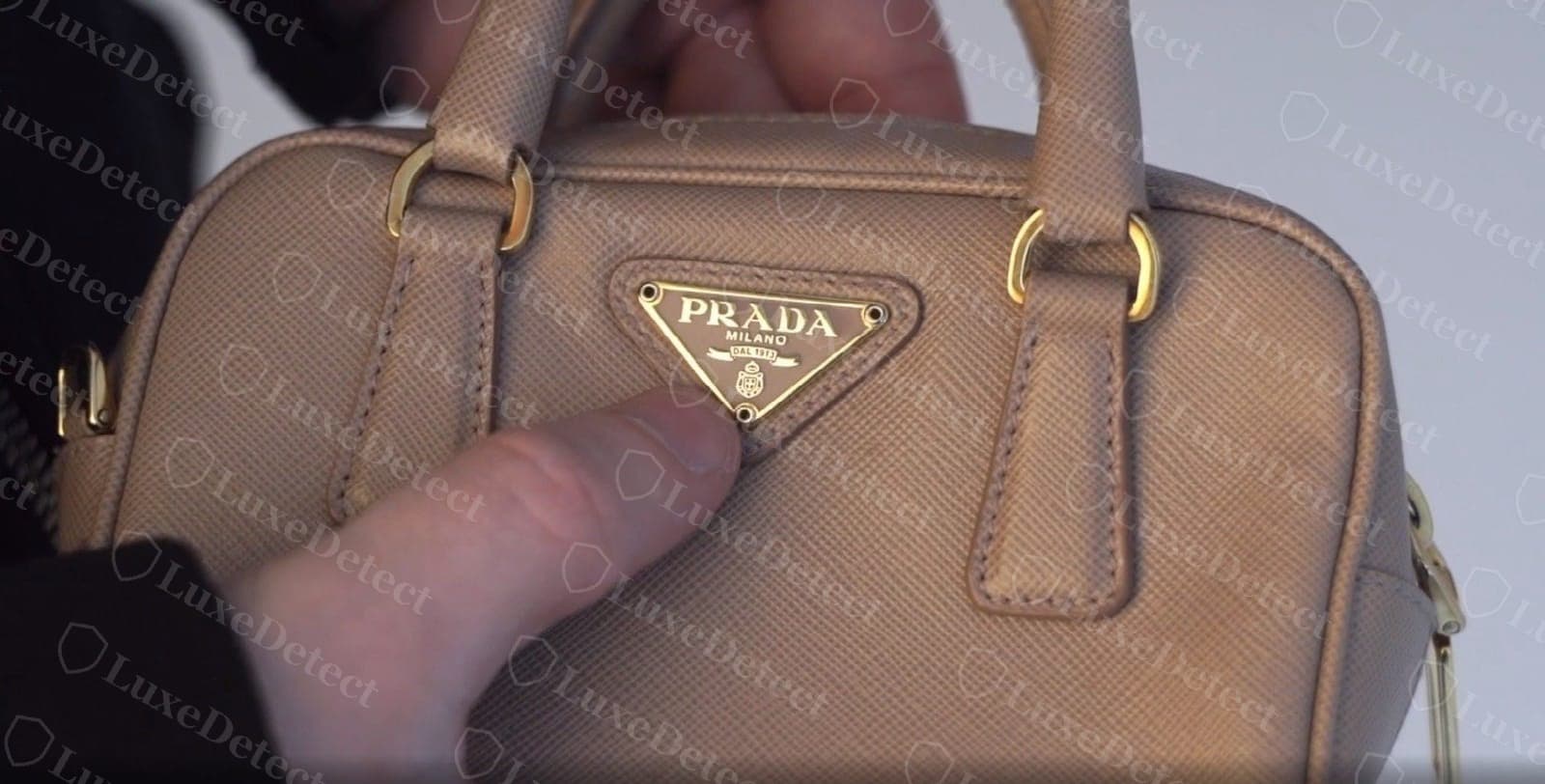
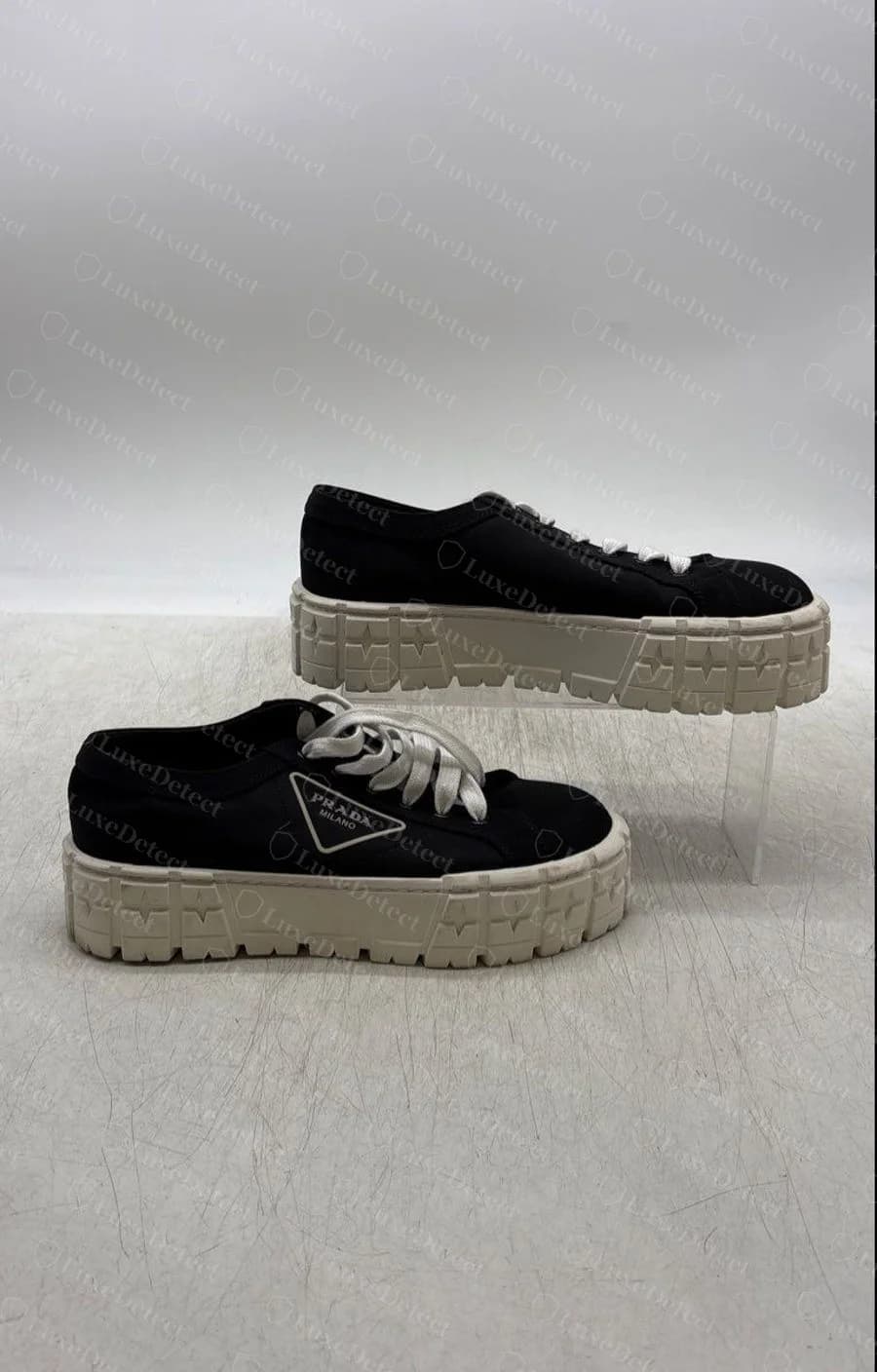
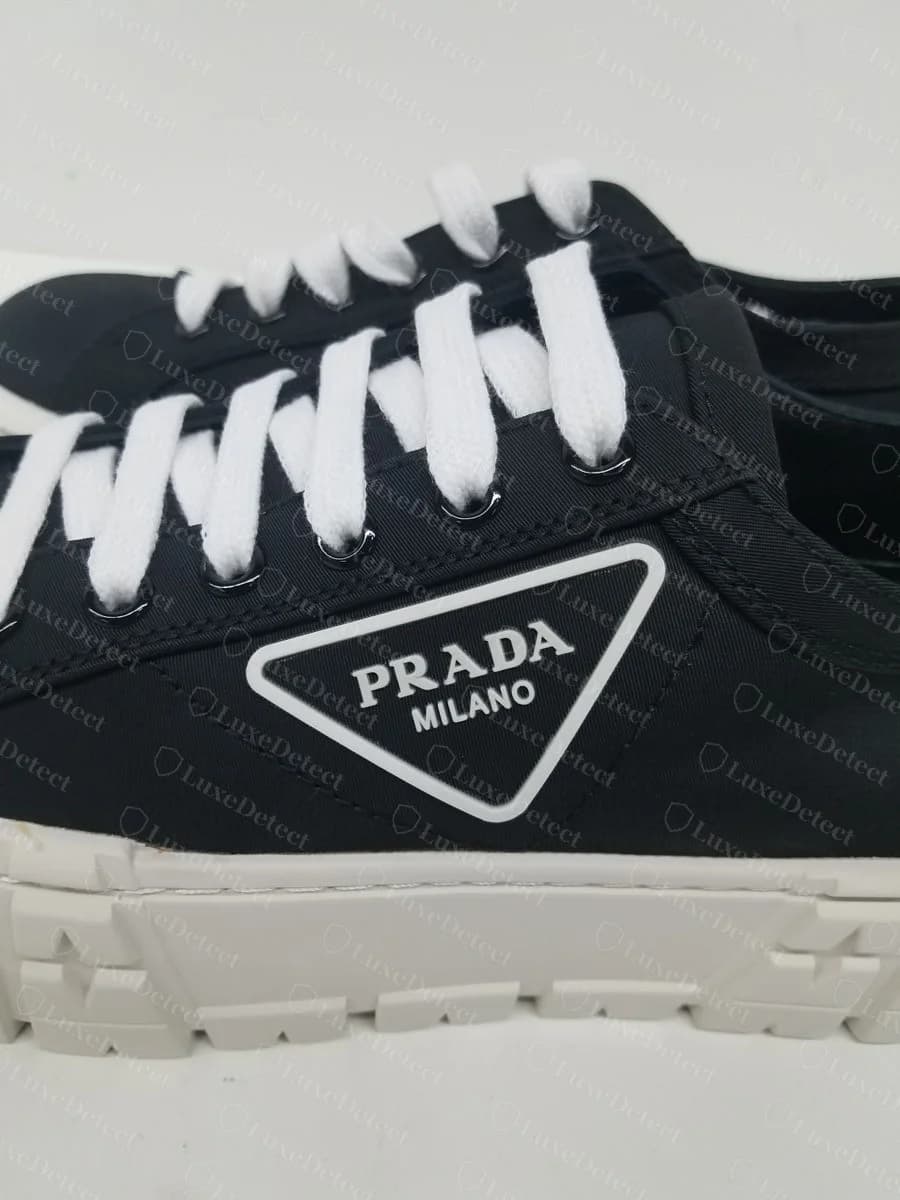
Current-collection Prada footwear increasingly uses a triangle logo plaque, either a printed/molded rubber version on canvas sneakers or a riveted metal version on heels and sandals, rather than stamped text. We looked specifically for a repeatable quality tell here, since it's a natural place to expect one, and did not find one we could verify. Two counterfeit sneakers in our sample showed triangle plaques with straight edges, correctly proportioned lettering, and clean registration between the printed outline and the fill, visually indistinguishable from genuine references at normal photo resolution. We were not able to source a genuine, same-era plaque example in our own sample to compare rivet spacing or enamel edge quality directly against, so we're not scoring this as a reliable checkpoint yet.
Worth knowing
If the plaque is riveted (metal, not printed/molded), check that the rivets are evenly spaced and fully seated with no visible gap or wobble, and that the enamel fill doesn't bleed past the outline. This is a reasonable general jewelry-hardware check, but we don't yet have enough verified counterfeit examples of exactly this hardware to say how often a fake gets it wrong. Treat it as supporting evidence, not a standalone pass or fail.
General Finishing and Construction Quality
Stray threads, uneven stitching, glue overspill at a sole's edge, and fraying at stress points like a velcro strap or a heel counter seam are all worth noting, but none of them held up as a strong standalone signal in our sample. A shoe's finishing quality is easy to fake convincingly at the price point counterfeiters are now operating at, and genuine wear on a used, honestly-sold shoe can look similar to a manufacturing shortcut. Use construction quality to add weight to a decision you're already leaning toward based on the checks above, not to make the decision by itself.
What the Box and Dust Bag Do and Do Not Prove
Packaging is context, not evidence. A correct-looking Prada box or dust bag tells you a seller has access to genuine (or convincingly reproduced) packaging; it does not tell you the shoes inside are the ones that box was made for. We found only a single box photo across our full sample, which is too little to build any pattern from either way. If a listing includes packaging, use it to cross-reference the size and style code printed on the box label against what's actually stamped inside the shoe, not as a standalone signal of authenticity.
Quick Authentication Checklist
- Confirm the outsole carries either Prada branding or a legitimate third-party maker's mark (e.g. Vibram on technical lines); a completely blank, unbranded sole is the concern, not the absence of "PRADA" specifically.
- Read the insole text for an obviously wrong brand name or misspelling only; don't judge authenticity by how complete or worn the stamp looks.
- Check that every size marking on the shoe (insole, sole, strap tag, box) agrees with the others.
- If there's a riveted metal triangle plaque, look for even rivet spacing and clean enamel edges as supporting evidence, not a standalone test.
- Note stitching and finishing quality as a tie-breaker, not a first check.
Two or more failures, or one contradictory size marking on its own, means walk away. A single weak finishing detail or an unfamiliar insole format alone is not enough to reject a pair.
When to Get a Professional Opinion
Prada's footwear counterfeits have reached a point where sole branding, insole stamping, and even riveted logo hardware can all look correct in listing photos, and our own sampling found genuine variation wide enough that a casual buyer applying a single fixed rule (like "the insole must say MILANO DAL 1913") will end up rejecting real shoes and passing fake ones with equal frequency. If a pair is a meaningful purchase and you can't physically handle it before paying, get a second opinion. LuxeDetect authenticates Prada shoes from $15 with a verdict and Certificate of Authenticity within 24 hours; send clear photos of the full outsole, the insole, any size stamps or tags, and the toe and heel construction from several angles.
FAQ
Is there one Prada shoe model that gets counterfeited the most?
No. Unlike brands with a single dominant counterfeit target, Prada footwear counterfeits are spread across heels, loafers, sneakers, boots, and sandals with no silhouette carrying independent volume. Named sub-lines like the America's Cup sneaker or Monolith loafer do get copied, but each is a small fraction of a much larger, generically labelled pool.
Does a missing "PRADA" stamp on the sole mean the shoes are fake?
Not necessarily. Some genuine Prada technical and hiking-adjacent lines use third-party soles, such as Vibram, that carry that maker's own branding instead of Prada's. Check for any legible maker's mark at all; a completely blank, unbranded sole is the actual concern, not the absence of "PRADA" specifically.
Does the insole need to say "PRADA MILANO DAL 1913" with a crest to be authentic?
No. Genuine Prada shoes in our own sample showed insole text ranging from a plain "PRADA" stamp to a red-tab "PRADA" Prada Sport print, with no crest or founding date on any of them. A shorter or worn insole stamp does not indicate a fake on its own.
Why do different Prada shoes have different size-stamp formats?
Prada has used at least five different size-marking formats across eras and product lines: fabric tags, gold-foil stamps, embossed leather codes, and molded sole numbers. The format itself varies legitimately; what matters is whether the size shown is consistent with any other size reference on the same shoe.
Can I trust the box or dust bag that came with the shoes?
Only as a cross-reference, not as proof. A correct-looking box confirms a seller has access to genuine or convincing packaging; it doesn't confirm the shoes inside match it. Check the size and style code on the box against what's actually stamped inside the shoe.
What about the triangle logo plaque on newer Prada sneakers and sandals?
We were not able to verify a reliable quality tell for the triangle logo plaque in our sampling; well-made counterfeits reproduced it convincingly. If it's a riveted metal version, check for even rivet spacing and clean enamel edges as one piece of supporting evidence, not a deciding factor.
Is "Made in Vietnam" a red flag on a Prada shoe?
Not universally. We confirmed a genuine Prada Sport-adjacent sneaker manufactured in Vietnam. Most mainline Prada footwear is marked "Made in Italy," but a small number of technical and sport lines are legitimately produced elsewhere. Don't reject a shoe on country of manufacture alone without checking what's plausible for that specific style.