Luxury Handbag Authentication Specialist
French luxury house specialist. Covers Chanel, Celine, and Saint Laurent construction and date coding.
Published October 2026 · Contact
What a Genuine Saint Laurent Sac de Jour Looks Like
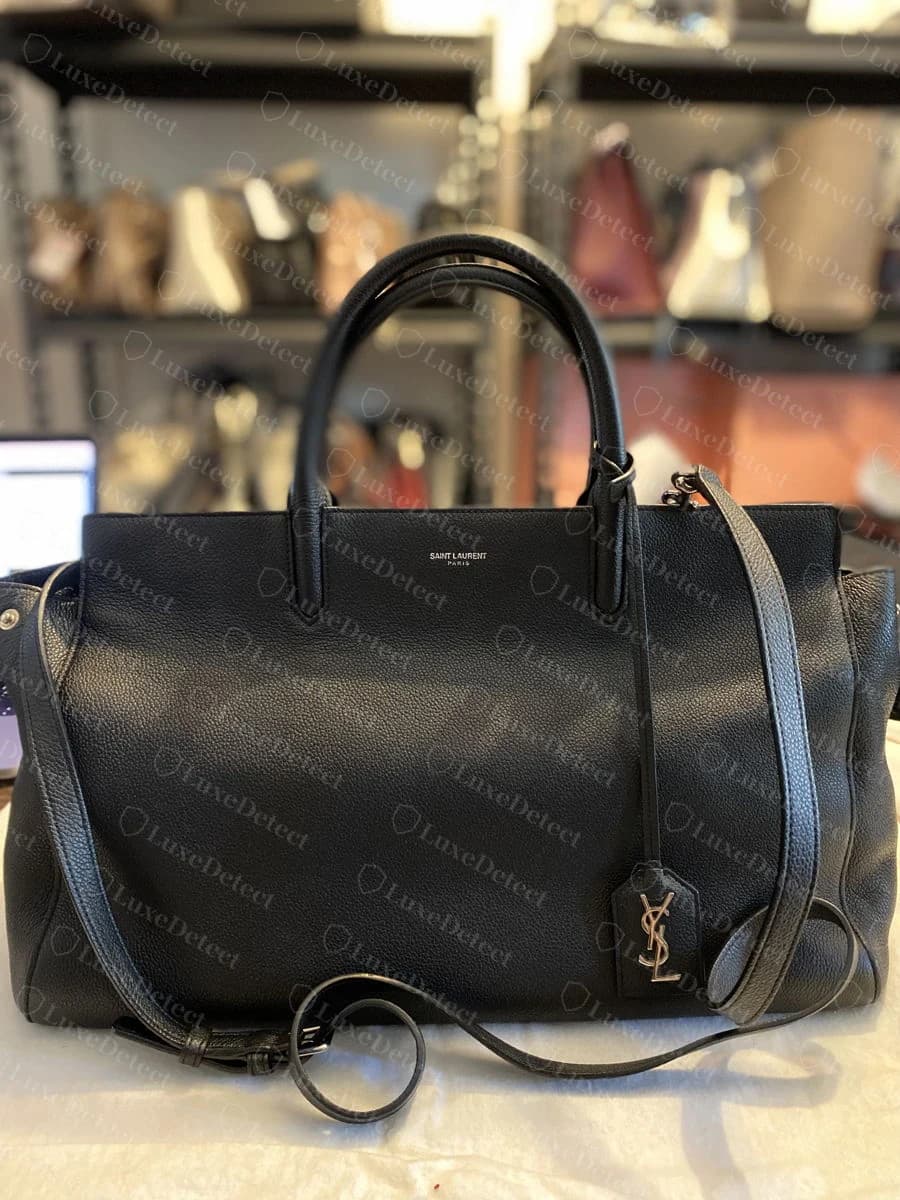
The Sac de Jour is Saint Laurent's structured top-handle tote: a flat front with two belt tabs, two rolled handles, accordion sides and a padlock hanging from a leather strap. It has been made in several sizes and leathers since the early 2010s, and it is one of the Saint Laurent bags people most often send us to check.
What makes it different from the Loulou or the Kate is how little branding it carries. There is no metal logo on the front. Apart from a small SAINT LAURENT PARIS stamp, everything that identifies the bag is in a few small parts: the padlock and keys, the strap clasps, the snaps and a stamped code tab inside. So the useful question is not "is the logo right?" but "do these small parts look like the ones on genuine bags, and do they agree with each other?"
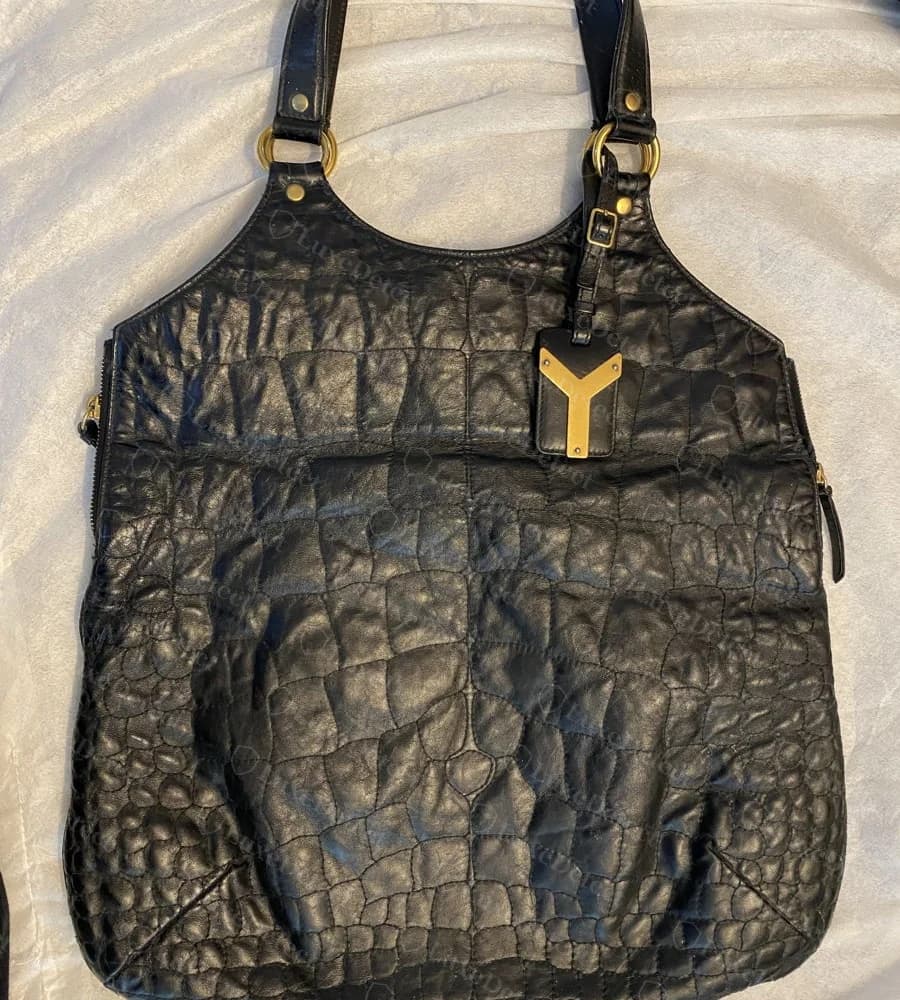
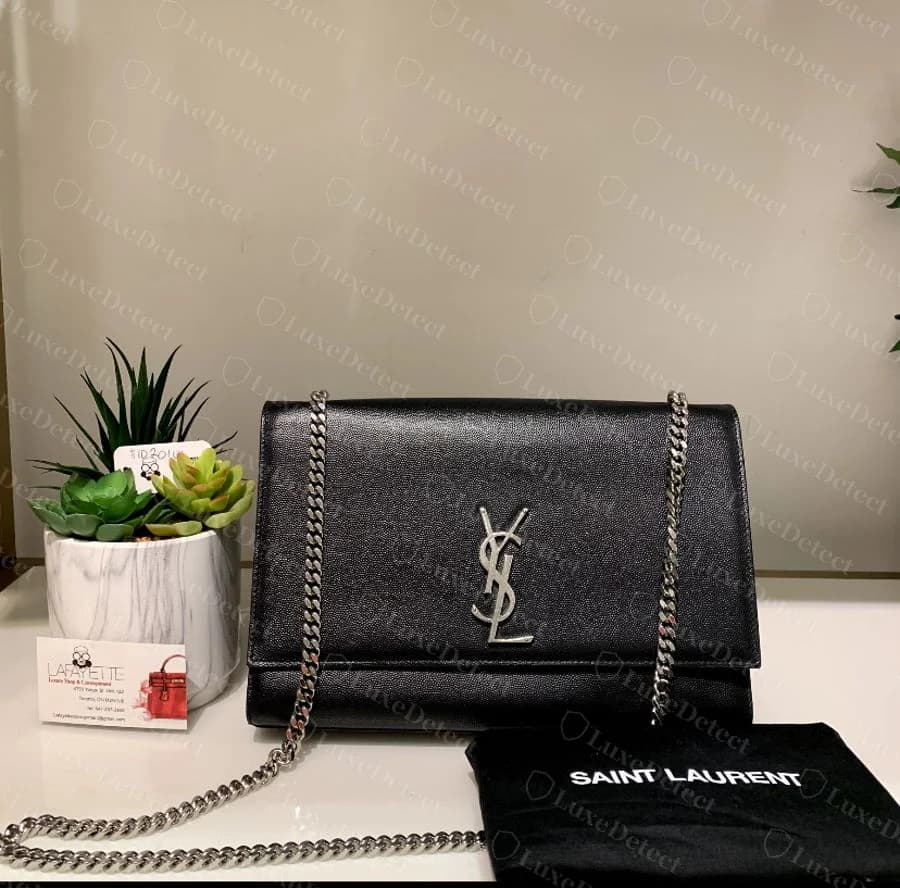
This guide is built around one genuine black grained-leather Sac de Jour with silver hardware, photographed in detail, and checked against several more genuine Sac de Jours from our archive in other sizes, colours and leathers, including smooth, grained and crocodile-embossed versions with silver or gold hardware.
Worth knowing
This is a genuine reference guide. Every bag pictured passed authentication. We have not yet seen enough confirmed counterfeit Sac de Jours to build a fair real-versus-fake comparison, so there are no red-flag checks below. If that changes, this guide will be upgraded. Until then, use it to learn what genuine looks like, not as a test that can clear or fail a bag.
Sizes, Leathers and Versions
Before comparing anything, work out which Sac de Jour you have, because details change between versions.
- Sizes: from smallest to largest, Nano, Baby, Small, and larger sizes above that. The smaller sizes come with a detachable shoulder strap. Our black reference bag is likely the Baby, judging by its proportions, but we could not confirm the size from the photos alone.
- Classic and zip-top versions: the classic Sac de Jour is open at the top, with snaps in the sides. Softer zip-top versions (listed by sellers as Supple, Souple or Thin) close with a zip and carry a stamped zip pull.
- Leathers: grained calfskin is the most common. Smooth leather and crocodile-embossed leather also appear on genuine bags.
- Hardware: silver or gold. On every genuine bag we compared, the padlock, keys, clasps and snaps matched each other, and the foil of the SAINT LAURENT PARIS stamps matched the hardware colour.
- Made in Italy: every genuine Sac de Jour whose code we could read was marked Made in Italy beneath it.
The Shape: Belt Tabs, Handles and Sides
From the front and back, a genuine Sac de Jour is a flat, upright rectangle that flares slightly at the bottom where the accordion sides open out. Each face has two horizontal belt tabs near the top corners, fixed with a metal stud, and two rolled handles whose flat leather bases are stitched down the face.
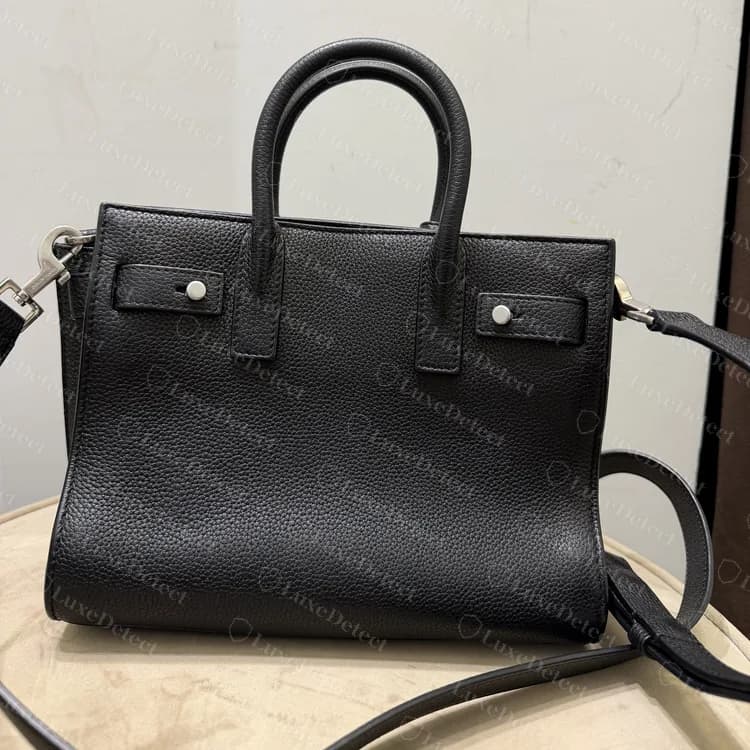
The leather strap that holds the padlock is knotted around the base of one handle. The sides fold in like an accordion and are held by a snap at the top on the inside.
The number of studs on each belt tab is one of the details that varies. Most genuine bags we compared had one stud per tab, but some had two. Compare against the same version and year, not just any Sac de Jour.
The SAINT LAURENT PARIS Stamps
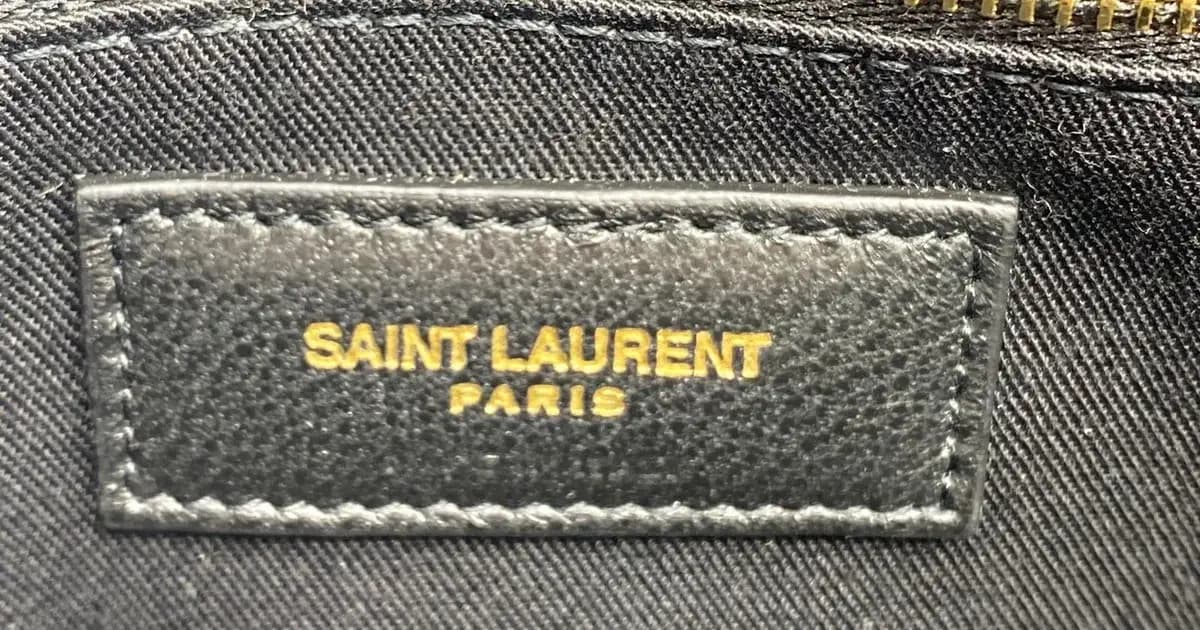
Genuine Sac de Jours carry SAINT LAURENT PARIS on the front, centred below the top edge between the handles, and again on the leather inside. The stamp is foil pressed into the leather: SAINT LAURENT on one line in capitals, PARIS below it in smaller, widely spaced capitals.
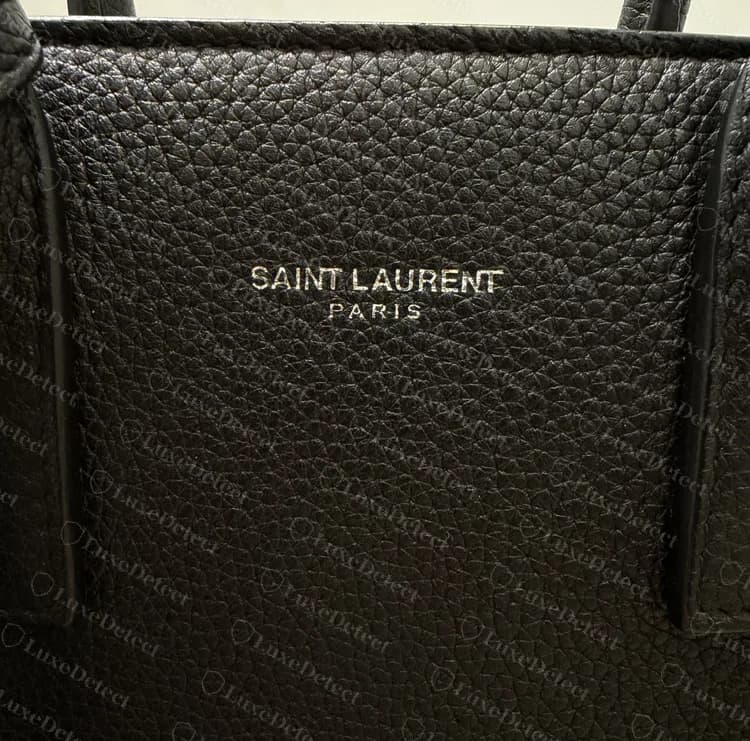
On grained leather the foil follows the grain, so the letters can look slightly broken where they cross a deep pore. That is normal. What stayed consistent across the genuine bags we compared was the layout: the two lines centred on each other, the even letter spacing, and a foil colour that matches the hardware (silver on silver-hardware bags, gold on gold-hardware bags).
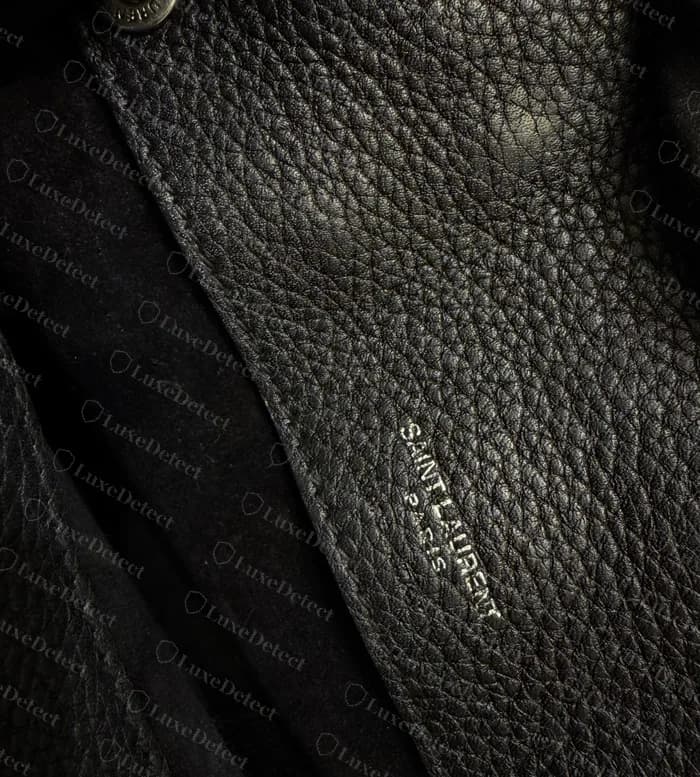
Inside, the stamp sits on the leather wall above the lining. On several genuine bags a MADE IN ITALY line was pressed beneath it; on others, including our black bag, the interior stamp showed only the name. Some bags carry it on a separate leather patch instead. Treat all of these as normal variation.
The Padlock, Keys and Name Tag
Every classic Sac de Jour comes with a padlock and keys. On genuine bags the padlock is a solid, squared block with SAINT LAURENT PARIS stamped low on one face, in the same two-line layout as the front stamp. It hangs from a small leather cover (a clochette) closed with a snap, on the leather strap knotted around the handle.
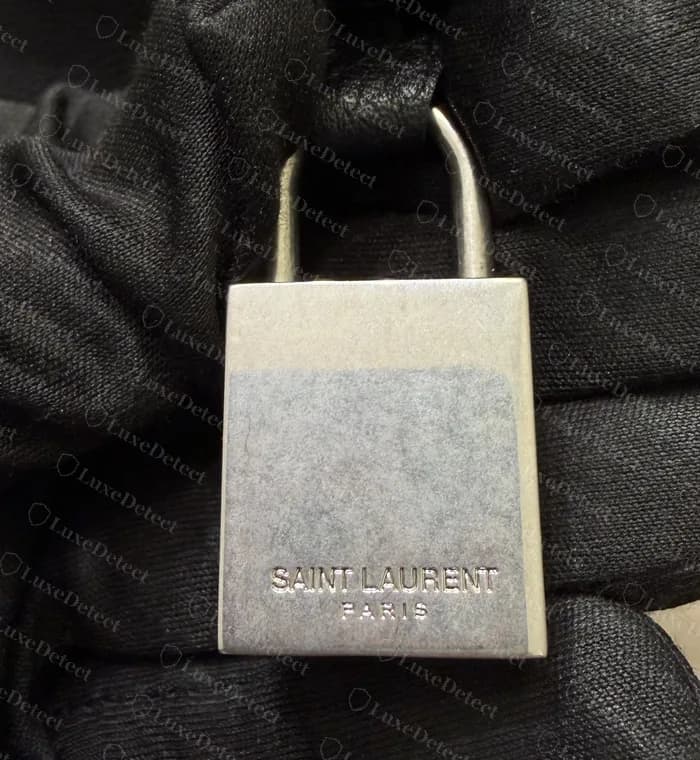
The finish varies. Our black bag has a brushed, slightly aged silver lock; other genuine bags had polished silver or gold locks to match their hardware. On the genuine bags where the keys were photographed, they were stamped SAINT LAURENT on the bow and carried on a small leather strip closed with a snap.
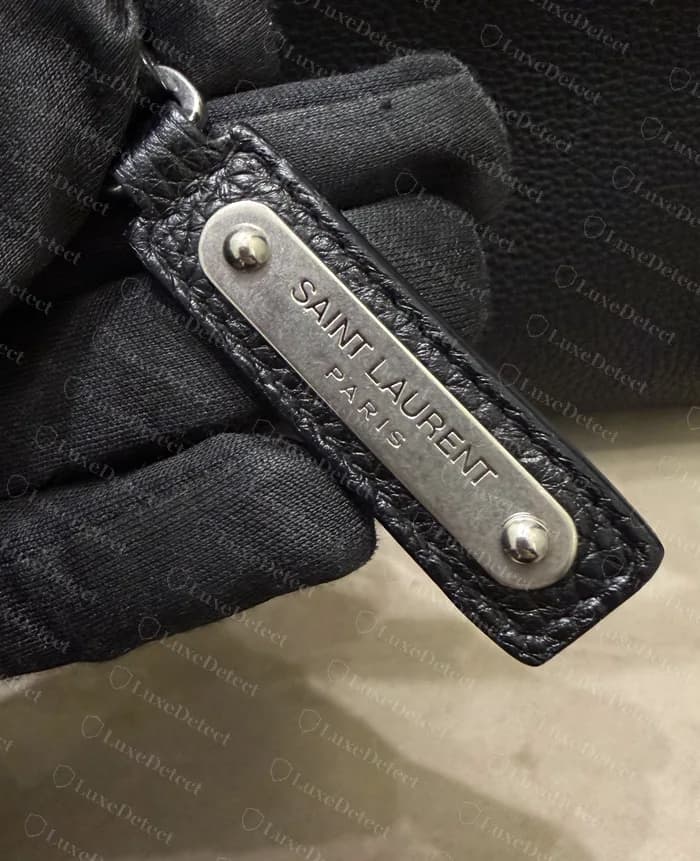
Our black bag, and several other genuine bags, also carry a hanging leather tag with a metal plate riveted to it, stamped SAINT LAURENT PARIS in the same layout as the other stamps. Other genuine bags do not have one. Whether the tag is there or not tells you nothing on its own; if it is there, its plate and rivets should match the rest of the hardware.
The Code Tab Inside
Inside a genuine Sac de Jour there is a code pressed into the leather, usually on a small leather tab, with MADE IN ITALY on the line below. On every genuine bag where we could read it, the code followed the same pattern: a short letter prefix, a six-digit style number, a raised dot, and a four-digit block. The style number changes with size and version; the letters and the last block change from bag to bag.
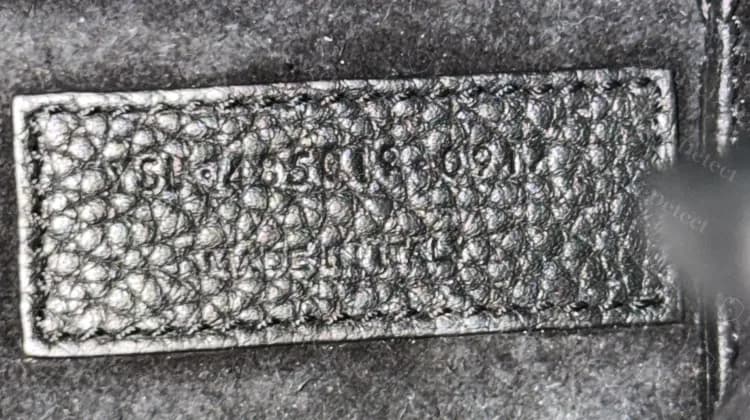
On our black bag the code is pressed into grained leather, so the characters sit between the pebbles and some are hard to read in a photo. That is common on grained leather. Photograph the tab straight on in good light, and if a character is unclear, do not guess it.
Where the tab sits is not the same on every bag. On ours it is a patch stitched onto the black suede lining. On several other genuine bags it is a tab at the top of the interior zip pocket, against a woven fabric lining; on an older smooth-leather navy bag the code was stamped straight into the inner side wall. The lining itself varies too: suede, woven fabric and smooth leather all appear on genuine Sac de Jours.
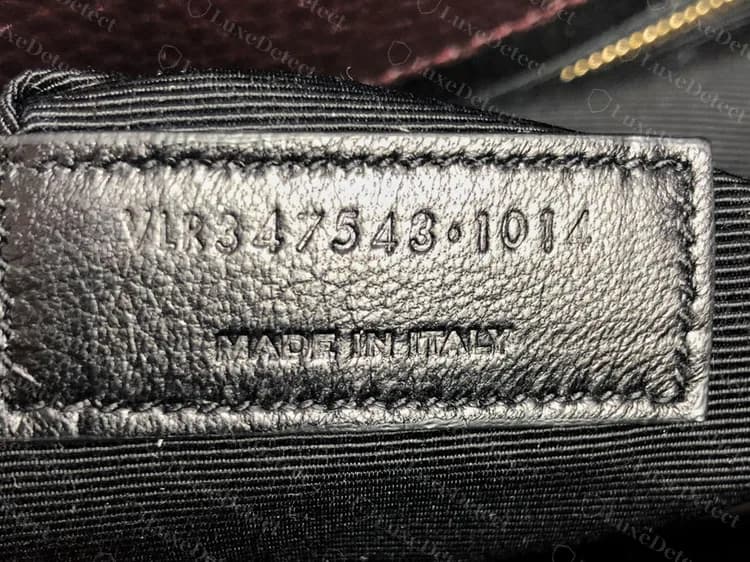
If you want to check the format, our Saint Laurent serial number checker reads it, and the serial number guide explains the eras. A code in the right format is easy to copy, so it is a starting point, not a verdict.
A code that checks out doesn't prove the item is real. Counterfeiters copy genuine codes.
Our authenticators check the stamps, hardware and construction of your Saint Laurent against verified references, from $25. You get a verdict within 24 hours, and a Certificate of Authenticity if the item passes.
Authenticate My Saint Laurent →Strap Clasps, Snaps and Feet
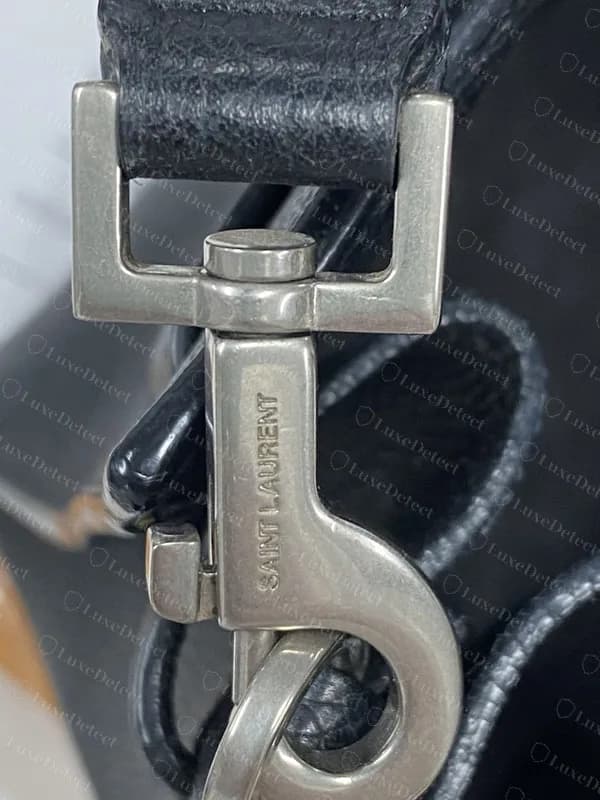
The detachable shoulder strap clips on with two swivel snap hooks. On genuine bags each hook is engraved SAINT LAURENT along the body, and on some bags PARIS appears on the opposite side.
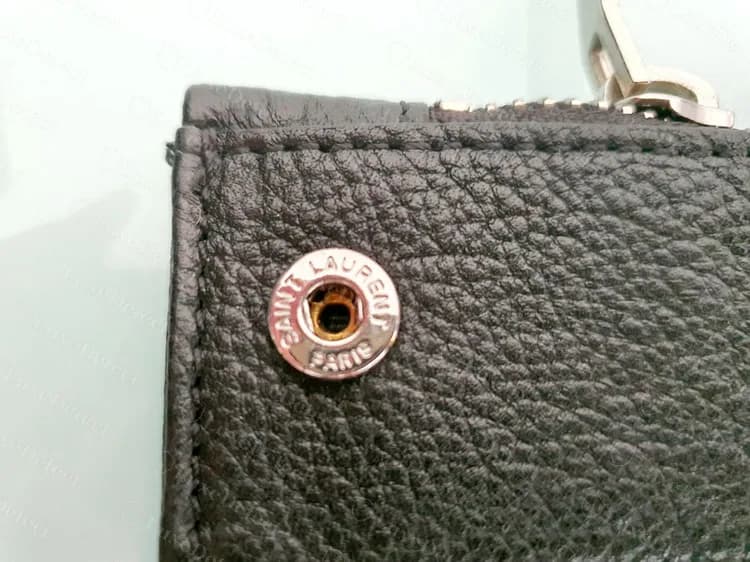
The snaps that hold the sides, and the snap on the padlock cover, are stamped SAINT LAURENT around the rim with PARIS below, in small even lettering around the centre post.
Underneath, the classic bags we photographed stand on five metal feet: one at each corner and one in the centre.
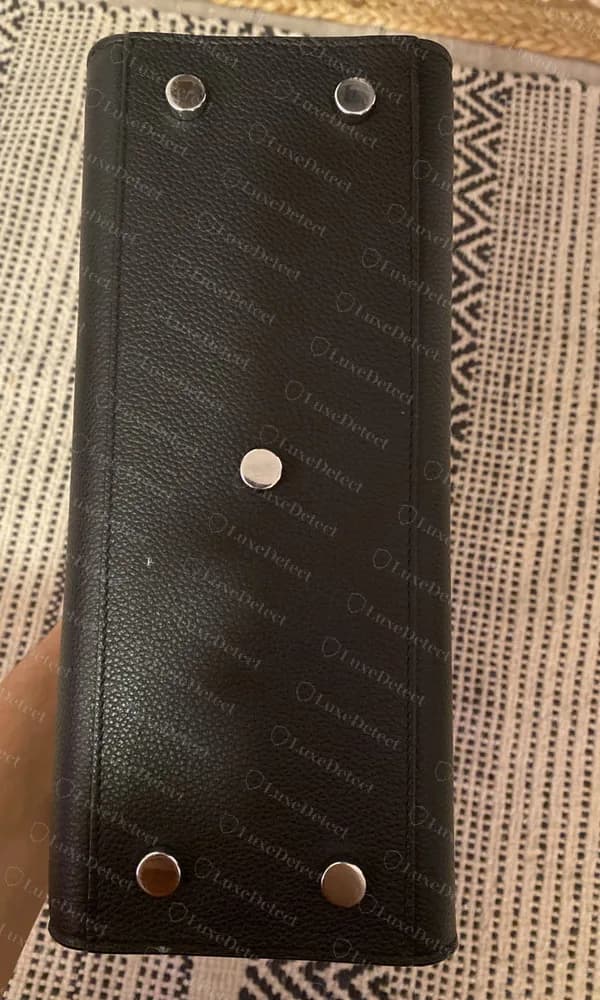
Worth knowing
These parts are easy to copy. Clasps, snaps, feet and a padlock tell you what genuine construction looks like; they do not prove that a bag is genuine.
What Photos Cannot Prove
This guide can show you what a genuine Sac de Jour looks like. It cannot clear yours. Stamps, padlocks, clasps and codes can all be copied, and a bag that matches every photo above can still be a good counterfeit. Do not decide from one detail, from a code that has the right format, or from a padlock that looks right.
What carries more weight is how the whole bag agrees with itself: hardware colour that matches everywhere, a stamp layout and code tab that suit the version, and leather, edges and stitching that look like the rest of the genuine bags. Some of that a photo shows only partly.
When to Get a Professional Opinion
If you are buying a Sac de Jour and the price matters, a second opinion costs far less than a mistake. LuxeDetect's handbag authentication starts at $25 for a 24-hour turnaround and includes a Certificate of Authenticity. Start an authentication with clear photos of the front, back and sides, the front and interior stamps, the code tab, the padlock and keys, the strap clasps and the base.
FAQ
How can I tell if my Saint Laurent Sac de Jour is real?
Compare the small parts with the genuine examples above: the SAINT LAURENT PARIS stamps, the padlock, keys and name tag, the strap clasps and snaps, and the code tab inside. They should look like these and match each other in colour and style. None of them is proof on its own, so for a bag you are about to pay for, get it authenticated.
Where is the serial number on a Saint Laurent Sac de Jour?
Inside the bag, on a small leather tab with MADE IN ITALY below the code. Depending on the version it is a patch stitched to the lining, a tab by the zip pocket, or stamped into the inner wall. See our Saint Laurent serial number guide for how the format changed over the years.
Is the inside of a Sac de Jour lined in suede?
Often, but not always. Suede, woven fabric and smooth leather linings all appear on genuine Sac de Jours, depending on the version and year. A lining that differs from someone else's bag is not a reason for doubt by itself.
Should the padlock say Saint Laurent Paris?
Yes. On genuine bags the padlock is stamped SAINT LAURENT over PARIS low on one face. The finish can be brushed silver, polished silver or gold to match the hardware.
Is my Sac de Jour a Nano or a Baby?
The Nano is the smallest and the Baby the next size up; both usually come with a detachable strap. The most reliable way to tell is to measure the width across the base and compare it with the size listed by Saint Laurent or the original retailer for that season. The style number on the code tab also differs between sizes.
Does a Sac de Jour have to say Made in Italy?
Every genuine Sac de Jour whose code we could read was marked Made in Italy beneath it. The words alone prove nothing, because they are easy to copy.
Do you have a list of fake Sac de Jour tells?
Not yet. We have seen too few confirmed counterfeit Sac de Jours to publish a list we would stand behind, so this guide shows genuine bags only.