Luxury Handbag Authentication Specialist
French luxury house specialist. Covers Chanel, Celine, and Saint Laurent construction and date coding.
Published October 2026 · Contact
Why Saint Laurent Wallets Are Checked From the Inside
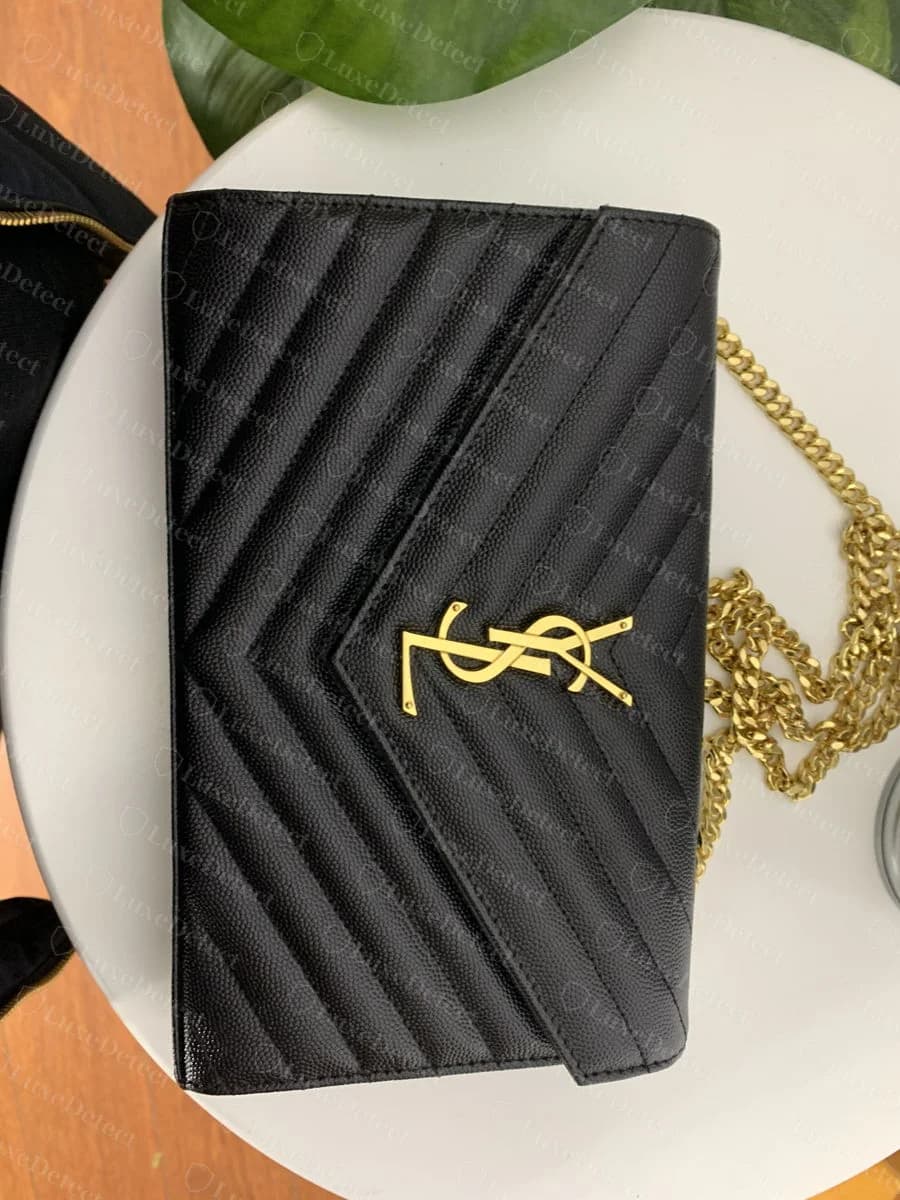
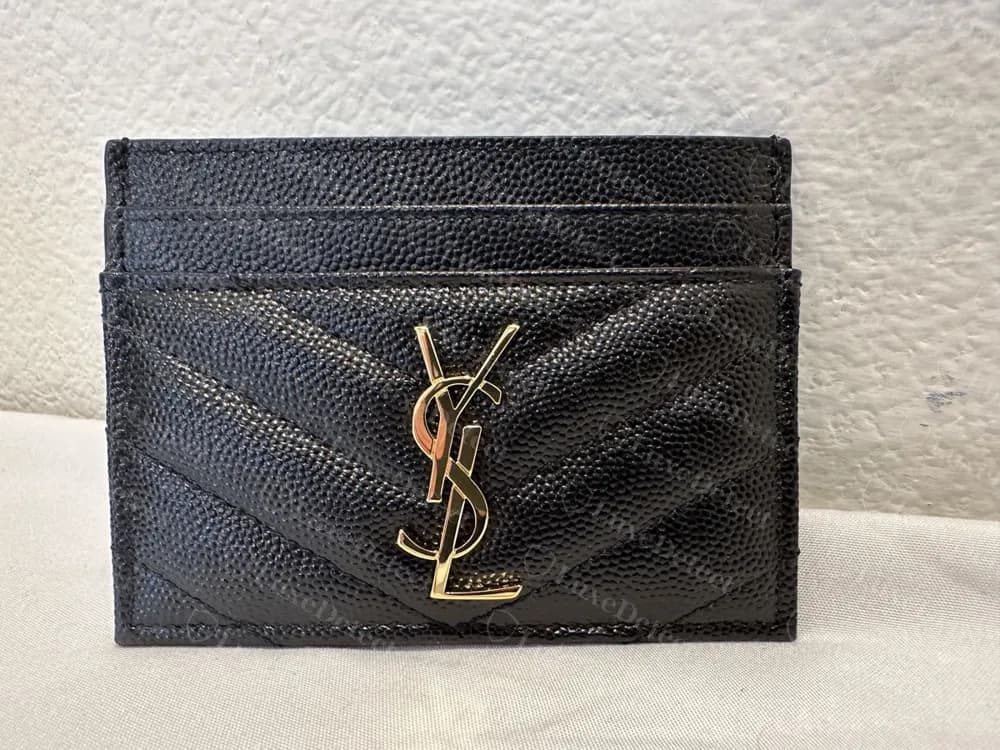
The Cassandre wallets and card holders, the slim card case, the compact zip wallet, the flap and the long continental, are the cheapest way into Saint Laurent, and that makes them one of the most counterfeited things the house sells. Almost every fake gets the outside right at photo size. The gold or silver Cassandre "YSL" sits where it should, the chevron quilting runs the right way, and the grain looks like caviar leather.
What separates the fakes is the part a factory has to make by hand and a seller rarely photographs: the interior. Across the Cassandre fakes we reviewed, three inside details kept coming up, and each was absent from the genuine examples we compared them with: a stamped code that is the wrong kind of code, a woven textile lining where Saint Laurent uses leather, and a Made in Italy line printed with too much weight. None of them needs a tool. All of them need an open, well-lit photo of the inside, which is why a listing that only shows the front is a listing to be cautious of.
This guide is about wallets and card holders. The chain-strap Wallet on Chain is a bag and has its own page, our Saint Laurent WOC guide. For bags with the same logo see the Loulou, Kate and Envelope guides.
What to check, ranked by reliability
| Checkpoint | Reliability | What it tells you |
|---|---|---|
| 1. The Interior Stamp: Code Format | ★★★★★ | The long retail article code stamped where a letter-prefixed production code belongs points to a number copied from a tag. |
| 2. The Lining: Leather or Woven Fabric | ★★★★★ | A woven textile lining in a card holder is a strong counterfeit pattern; genuine card holders are leather-lined. |
| 3. The Made in Italy Line | ★★★★★ | Genuine pieces press this line in quietly; a bold foiled line supports other findings but does not decide alone. |
| 4. The Cassandre Logo and Snap | ★★★★★ | Most fakes cast the logo cleanly, so a good logo proves nothing; use it only as a tiebreaker. |
| Model Reference Before You Start | ★★★★★ | Confirms which piece and era you are judging; will not catch a well-made fake. |
| What the Box, Tag and Dust Bag Do and Do Not Prove | ★★★★★ | Packaging is context only, useful for cross-referencing the style number, never as evidence. |
Worth knowing
Our fake sample is weighted toward the slim card holder, the most-copied piece. Zip wallets and long wallets are covered where we saw a pattern; where we did not, the guide says so instead of stretching a card-holder finding over them.
Use our free Saint Laurent Serial Number Checker to decode the serial on your YSL leather tag and check the format.
Check My Serial →Model Reference Before You Start
- Card holder (card case): a flat leather sleeve with one or two card slots on the front and a main slot behind. No zip, no snap. This is the piece most of the evidence below comes from.
- Compact and flap wallets: a small bifold or tri-fold with a snap closing the flap, often a coin pocket with a zip. The snap carries Saint Laurent lettering.
- Zip-around wallets: a full zip around the body, a pull stamped with the house name, card slots down both sides.
- Long wallets: a continental with a flap or a zip, the Cassandre logo on the front.
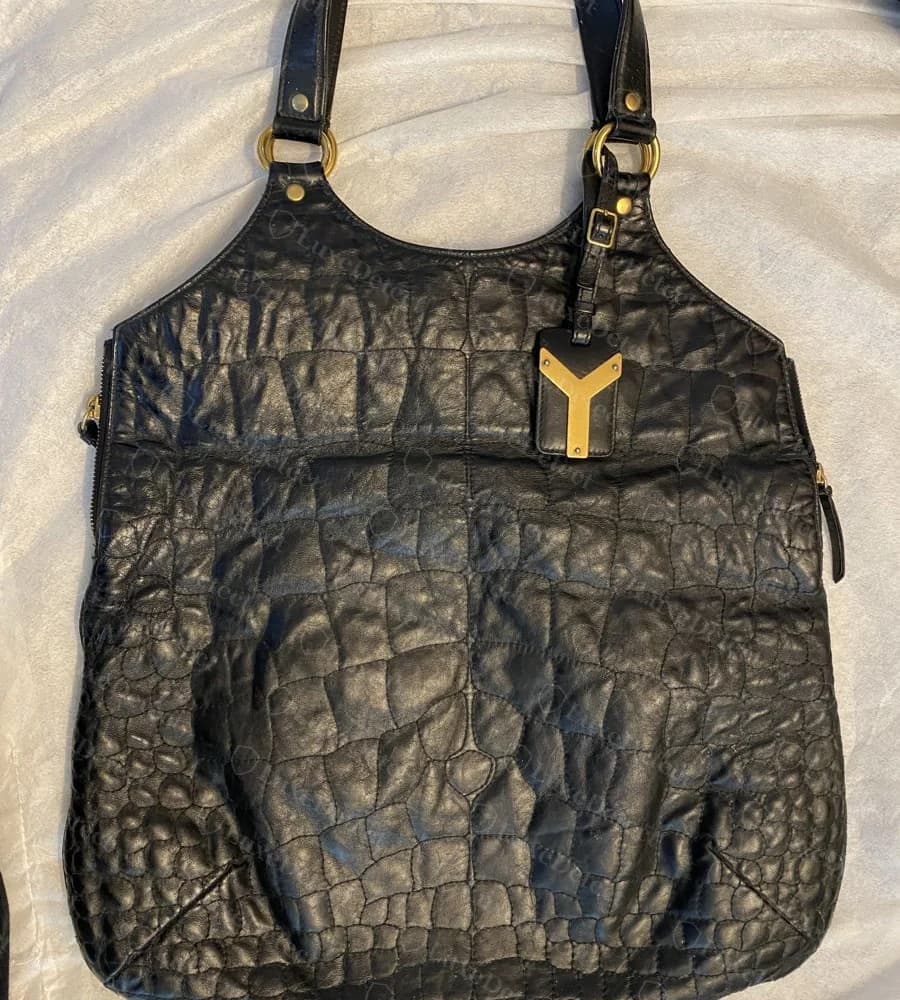
- Finishes: grain de poudre (the pebbled "caviar" texture), smooth matelassé, patent, crocodile-embossed and quilted lambskin. Hardware comes in gold, silver and tonal black. Each finish handles the stamp and the lining slightly differently, so compare like with like.
- Era: this guide covers the Saint Laurent Paris era, with the label reading "Saint Laurent Paris". Older wallets marked "Yves Saint Laurent" have a different logo, different interior stamping and different linings, and are not judged by anything here. Our serial number guide explains how the two eras differ.
- Genuine pieces are made in Italy.
The Interior Stamp: Code Format
Every modern Saint Laurent small leather good carries a code heat-stamped into the leather inside a slot, usually in a lower, shadowed corner where the leather turns. It is pressed into the surface, not printed on it, and it follows a pattern.
On genuine card holders in a range of colours and finishes, the stamp read as a short run of letters, then the six-digit style number, then a separator and a short trailing block. In the examples we compared, the Cassandre card holder style number was the same on every genuine piece, and what changed from piece to piece was the letter prefix and the trailing block. The trailing block often looks like a month and year, but treat that as a pattern to recognise, not a date you can rely on.
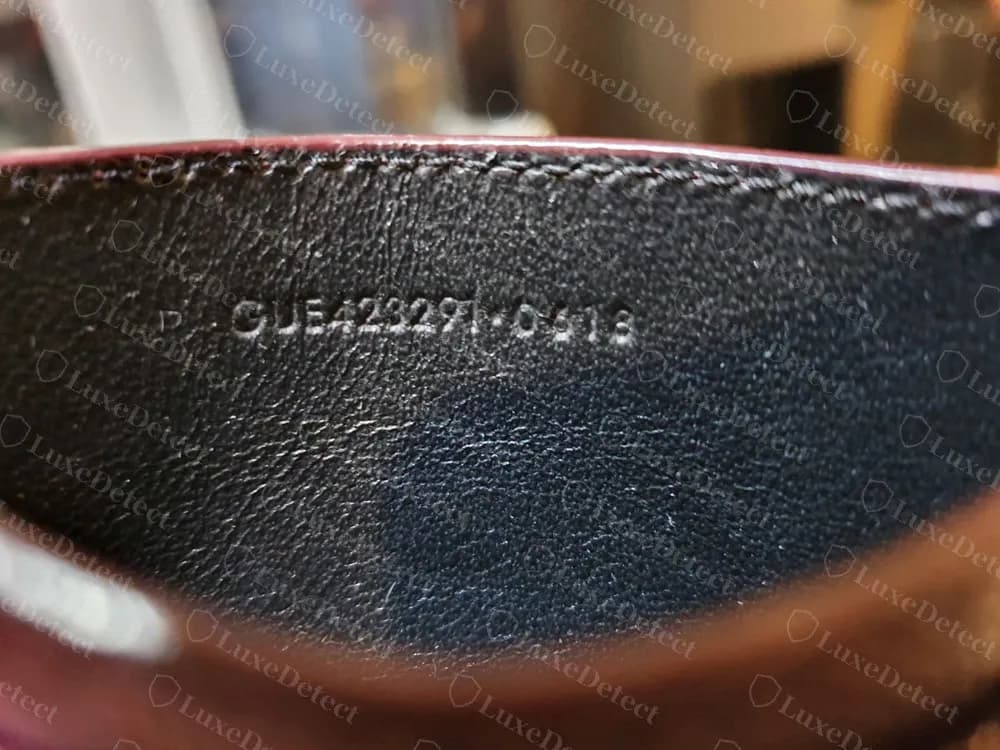
Several counterfeit card holders showed the opposite. The stamp was the long retail article code, the style number followed by a colour and material block and a final group of digits (here ending BOW01 1000), with no letter prefix and no separate trailing block. That is the code printed on the box label and the hang tag, not the code a genuine piece carries inside. A forger who copies the number off a retail tag gets a number that is correct for the model and wrong in kind.
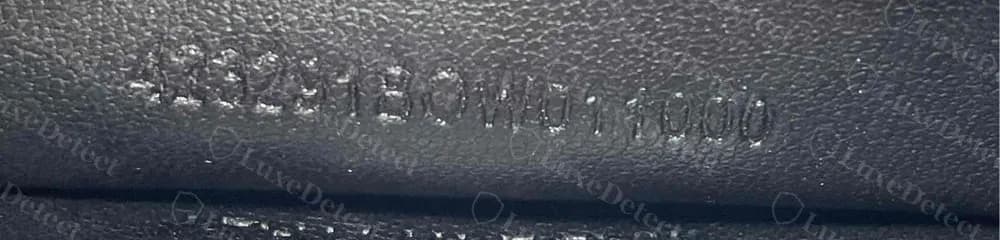
| Element | Authentic | Counterfeit |
|---|---|---|
| What the code looks like | Letter prefix, six-digit style number, separator, short trailing block | The long retail article code (style number plus colour block ending in 1000), with no prefix |
| Where it sits | Pressed into the leather inside a slot | Pressed in a similar place, often heavier and more uneven |
| Depth | Even and clean, characters sit below the surface | Rough or shallow, digits that look hand-struck |
Red flag
A code that is the full retail article code, with no letter prefix and no trailing block, is a strong sign the stamp was copied from a hang tag. It showed up on more than one counterfeit and not on the genuine examples we compared, but a good fake can carry a correct-looking stamp, so a correct format does not clear the piece.
For a quick format check, use our Saint Laurent serial number checker, and read the serial number guide for the three format eras.
The Lining: Leather or Woven Fabric
Open the card slot and look at what lines it. Genuine Saint Laurent card holders in our comparison are lined in leather, a smooth, slightly matte skin in a dark tone that matches or complements the exterior. You can see the faint grain of the hide and the cut edge of the lining at the slot opening.
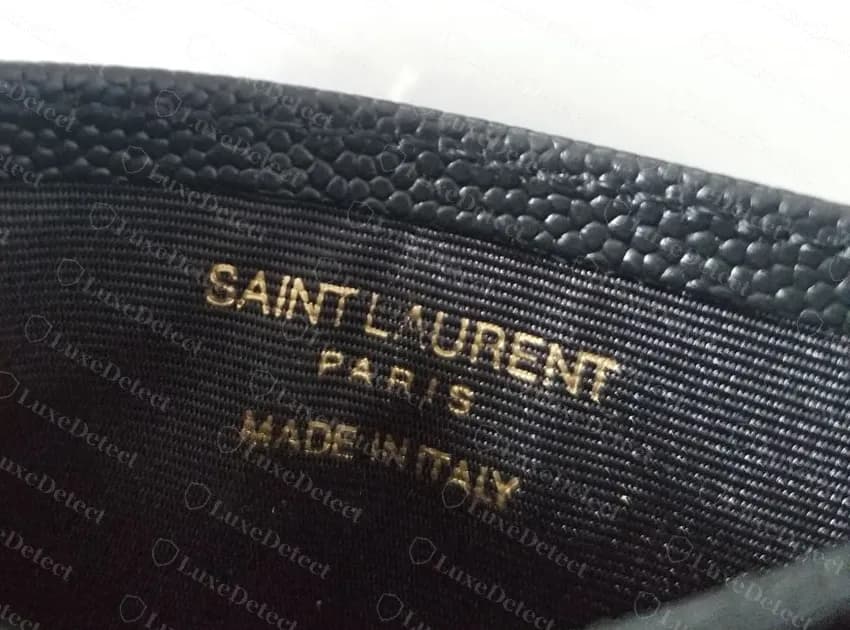
Several counterfeit card holders were lined in a woven textile instead, a ribbed or twill fabric, sometimes in a bright contrast colour such as burgundy. The weave is easy to see in a photo of the opened slot, and it reads as fabric immediately: a visible diagonal or ribbed thread pattern, no hide grain.
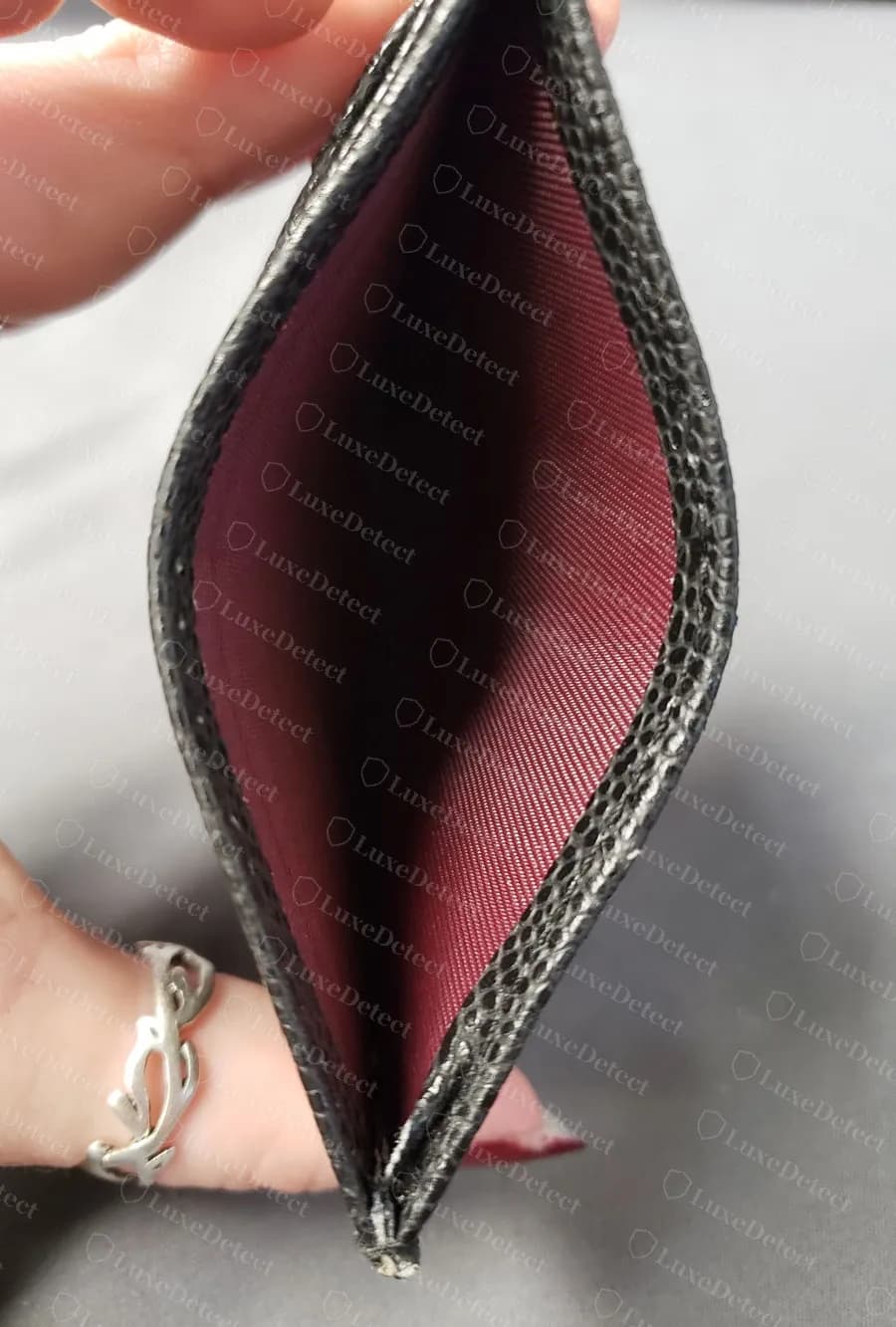
| Element | Authentic | Counterfeit |
|---|---|---|
| Card holder lining | Leather, smooth with faint hide grain | Woven textile with a ribbed or twill weave |
| Colour | Tone matched to the exterior | Often a contrast colour such as burgundy |
| Slot edges | Neatly turned leather | Fabric edges, sometimes fraying |
Red flag
A woven fabric lining in a card holder is a strong tell. We found it on several fakes and on none of the genuine card holders we compared. It applies to card holders; wallets with several compartments and zip pockets can legitimately use fabric in places, so do not apply this rule to a zip wallet's coin pocket.
The Made in Italy Line
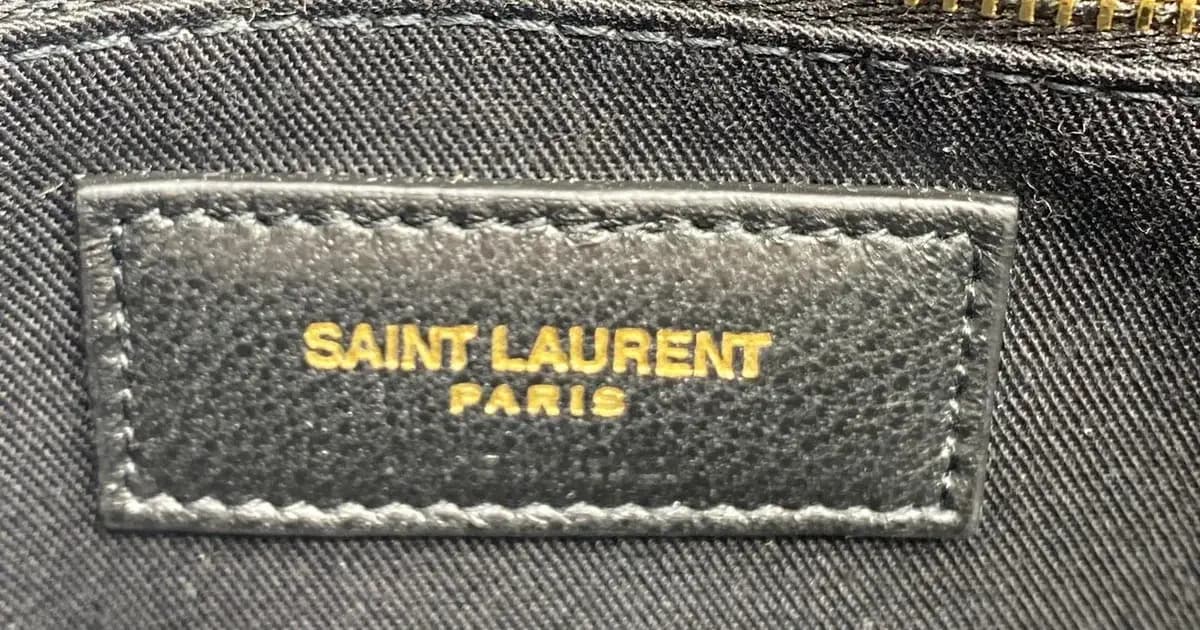
The interior carries the house name and city in gold foil, and below it a Made in Italy line. On genuine pieces the two are applied differently. SAINT LAURENT PARIS is hot-foiled in gold. MADE IN ITALY underneath is quiet: blind-pressed into the leather, tone on tone, low in contrast and slightly irregular at the edges the way a pressed stamp is.
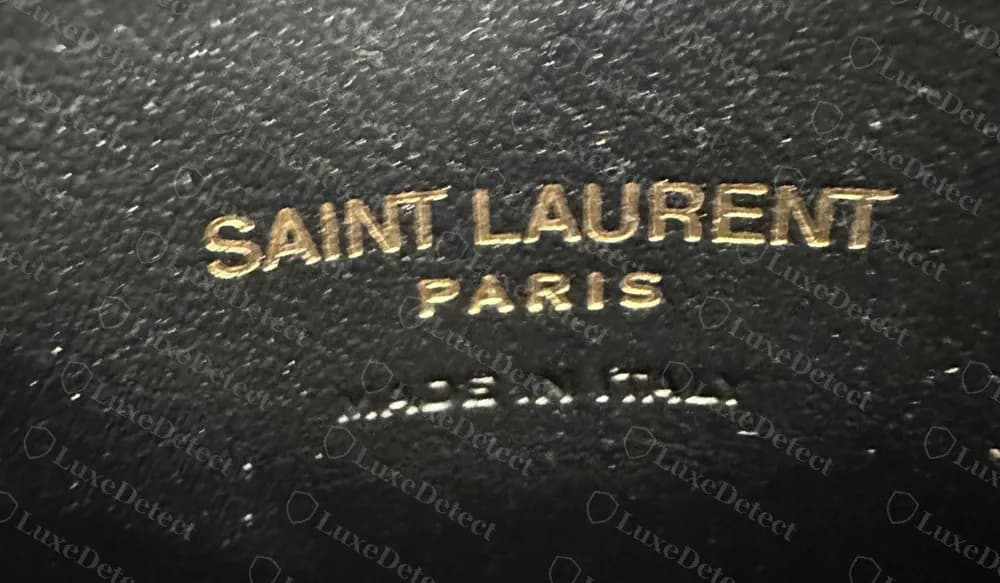
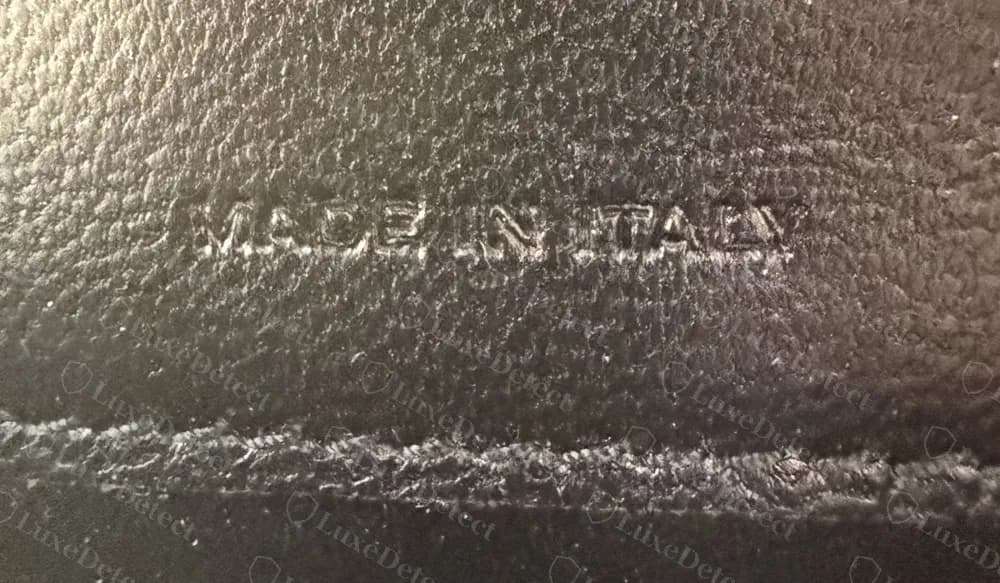
On several counterfeits the Made in Italy line was bold, foiled in the same bright gold as the brand name. It sits on the surface as a clearly readable line of the same weight as the logo above it.
| Element | Authentic | Counterfeit |
|---|---|---|
| SAINT LAURENT PARIS | Gold foil, crisp | Gold foil, often thicker or blurred |
| MADE IN ITALY | Blind-pressed, tone on tone, subdued | Bold gold foil or dark ink at the same weight as the name |
| Overall impression | Two levels of emphasis | One uniform level |
Worth knowing
This is a supporting check, not a verdict. Lighting changes how a blind stamp photographs, and a worn piece can look faint for other reasons. Use it together with the code and the lining, not instead of them.
The Cassandre Logo and Snap
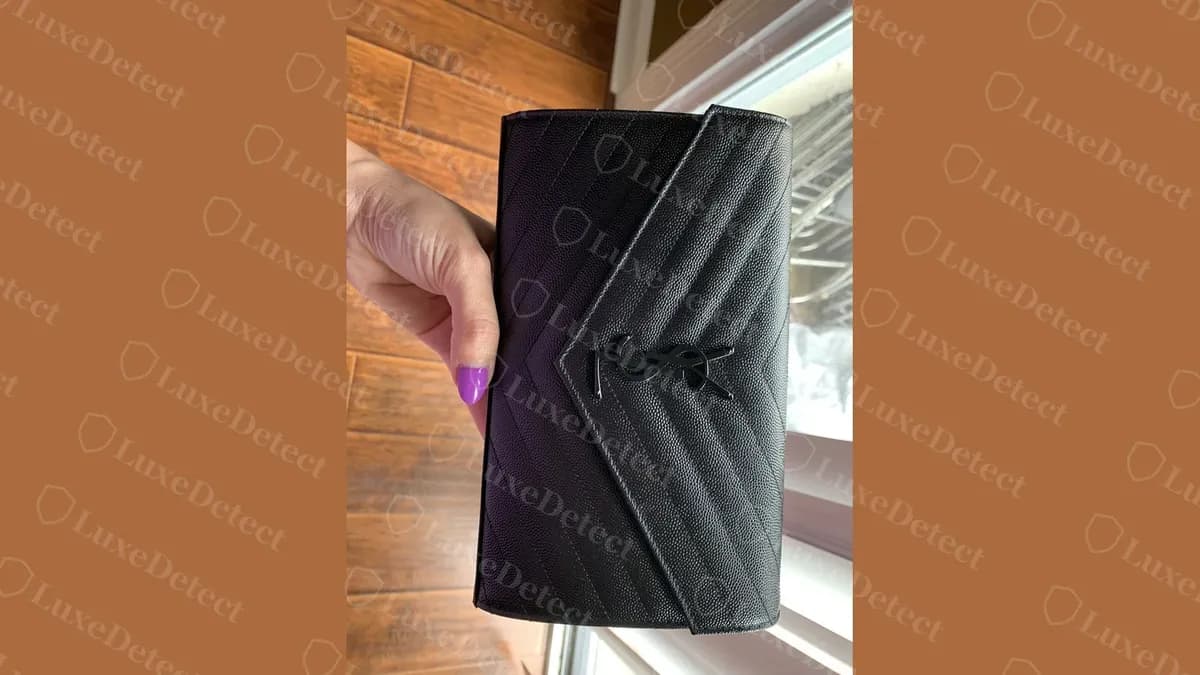
The Cassandre logo is the first thing a buyer checks, which is why forgers work hardest on it. On a genuine piece it is solid cast metal with clean, sharp letterforms, sitting on the quilted chevron panel and following it. The finish, gold, silver or black, matches the zip and snap.
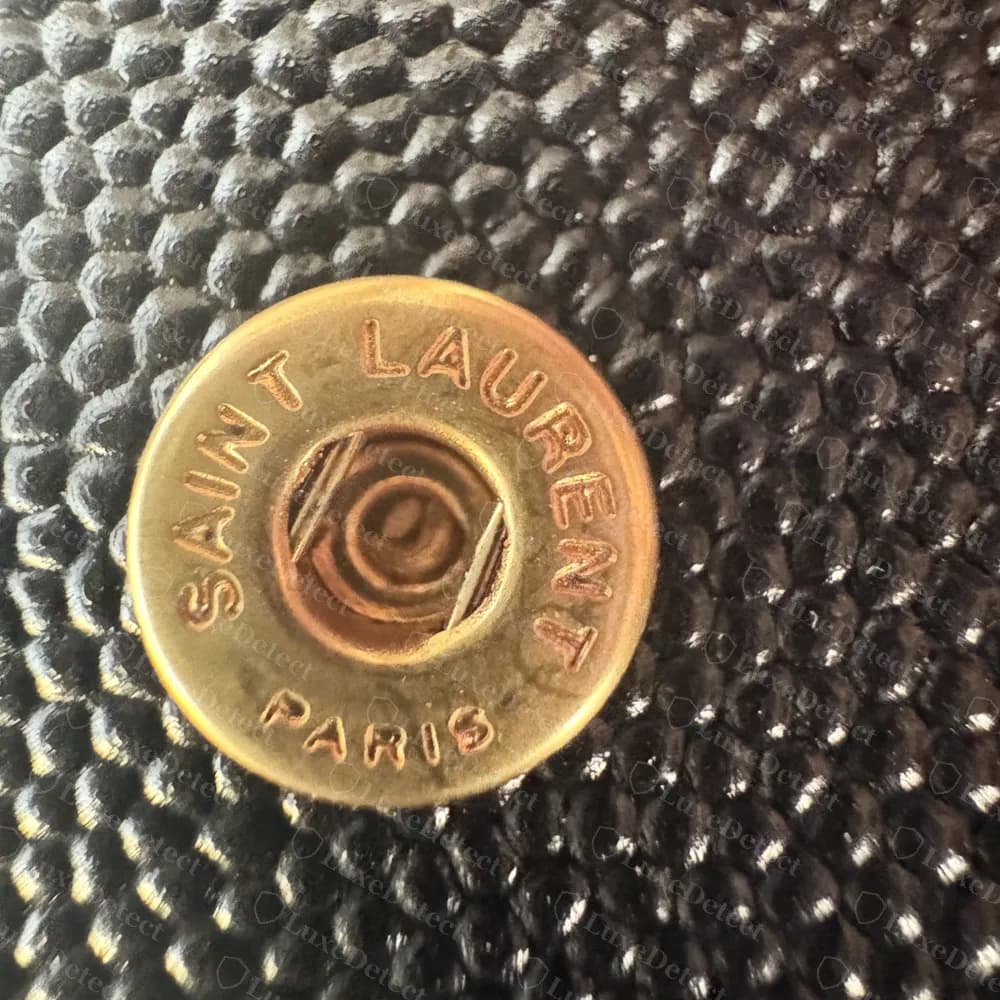
The snap on compact and flap wallets is stamped SAINT LAURENT around the rim, with PARIS beneath, around a spring centre. On a genuine example the lettering is evenly spaced and fully formed.
Worth knowing
The logo is the weakest check here. Most of the fakes we compared reproduced the Cassandre shape well enough that a crisp logo told us nothing, and several had correct snap lettering as well. We saw garbled snap lettering only occasionally, and a correct snap does not clear a piece. Treat a distorted logo or a mis-lettered snap as an extra reason to look harder, never as a reason for confidence.
For the same logo on bags, the Envelope guide and the Loulou guide show how the metalwork is checked on larger pieces.
What the Box, Tag and Dust Bag Do and Do Not Prove
A black Saint Laurent box, a dust bag and a hang tag are useful for one thing: cross-referencing. The style number on the tag should match the style number in the stamp inside the card holder, and a tag that shows a retail article code is a reminder of what that code looks like and why it should not be stamped into the lining. In our comparison, a full set of packaging did not prevent a counterfeit; packaging is context, not evidence.
Quick Authentication Checklist
- Open the card slot and photograph the stamp. Is it a letter prefix, six-digit style number, separator and trailing block, or the long retail article code?
- Check the lining. Leather in a card holder; woven fabric is a strong warning.
- Read the Made in Italy line. Subdued and blind-pressed, or bold and foiled?
- Check the logo and the snap lettering, but give them little weight.
- Make sure you are comparing against the right finish and the right era.
A card holder that fails check 1 or check 2 should not be bought on the strength of its logo. Failing two or more means walk away.
When to Get a Professional Opinion
If the seller will not photograph the inside, or the piece is a zip wallet or long wallet where the card-holder rules do not apply cleanly, a professional check is worth the small cost. LuxeDetect's wallet authentication starts at $15 for a 24-hour turnaround, with faster tiers available, and includes a written Certificate of Authenticity.
FAQ
How can I tell if my Saint Laurent card holder is real?
Open the main slot and look at the inside, not the logo. A genuine Cassandre card holder is lined in leather, carries a letter-prefixed code pressed into the lining, and has a subdued, blind-pressed Made in Italy line under gold-foil lettering. A woven fabric lining or a bold, foiled Made in Italy line are strong reasons to doubt it.
Where is the serial number on a Saint Laurent wallet?
It is pressed into the leather inside, usually in a lower corner of a card slot or under a flap. On a card holder, look inside the main slot. It is not on the outside and is not printed. See our Saint Laurent serial number guide for the format eras.
Does a correct serial number mean my wallet is real?
No. The code shows the format is plausible, not that the piece is genuine. A well-made counterfeit can carry a correctly formatted stamp, so check the lining and the interior text as well. Our serial number checker tests the format only.
Are Saint Laurent card holders lined in leather or fabric?
The genuine Cassandre card holders we compared were leather-lined. A ribbed or twill fabric lining in a card holder was a counterfeit pattern. Larger wallets use fabric in some pockets, so apply this to card holders.
Is "Made in Italy" correct on a Saint Laurent wallet?
Yes, genuine pieces are made in Italy. What matters is how it is applied: a quiet, blind-pressed line beneath the gold-foil brand name. The words alone prove nothing.
Is the Saint Laurent wallet on chain covered here?
No. The chain wallet is a bag and has its own guide: Saint Laurent WOC authentication.
Can I authenticate a Saint Laurent wallet from photos?
Yes, if the photos include the open slot with the stamp, the lining, the foil lettering and the snap or zip pull. A listing with only front-facing photos cannot be authenticated.