Luxury Leather Goods Specialist
Luxury leather goods specialist. Works on Italian house construction, hardware, and interior stamping.
Published September 2026 · Contact
What Makes UGG Distinctive
UGG isn't one boot. It's a house that has produced dozens of silhouettes over more than four decades, twin-faced sheepskin tall and short boots, moccasin-style slippers, sneakers, sandals, and rain boots, in a huge range of colorways and materials. No single line, not even the famous Classic boot, accounts for more than a small fraction of what shows up in resale. What holds the brand together across all of that variety is a shared set of branding surfaces: a sole tread stamp, a heel patch, and an interior fabric size tag, all using the same house formats regardless of which silhouette they're stitched onto.
That consistency is the angle for this guide. Rather than chase one dominant model, we pulled a wide, hand-checked sample of confirmed genuine UGG orders from LuxeDetect's own authentication archive, spanning boots, slippers, and rain boots, and documented what those three branding surfaces, plus the sheepskin and stitching around them, actually look like on the genuine article. We also reviewed a comparable sample of confirmed counterfeit UGG listings. What we found is that current counterfeits reproduce the sole stamp, the heel patch, and the interior tag closely enough, across a wide range of silhouettes and quality tiers, that we were not able to isolate one specific construction flaw that held up as a repeatable, verifiable tell without also second-guessing genuine examples in our own sample. Rather than manufacture a red flag we can't stand behind, this guide documents genuine construction in detail so you have a real reference to check an item against.
Worth knowing
This guide is built from a verified sample of authentic UGG photos pulled from real completed authentication orders, cross-checked against a comparable sample of confirmed counterfeits. We were not able to identify a repeatable, verifiable construction flaw specific enough to publish as a red flag across this much silhouette variety. The most promising lead for a future upgrade is narrower than "UGG" as a whole: a same-silhouette comparison scoped to just the Classic boot line, which we flag at the end of this guide. When that comparison is done, this guide will be upgraded to the full checkpoint pattern.
Which UGG Are You Looking At?
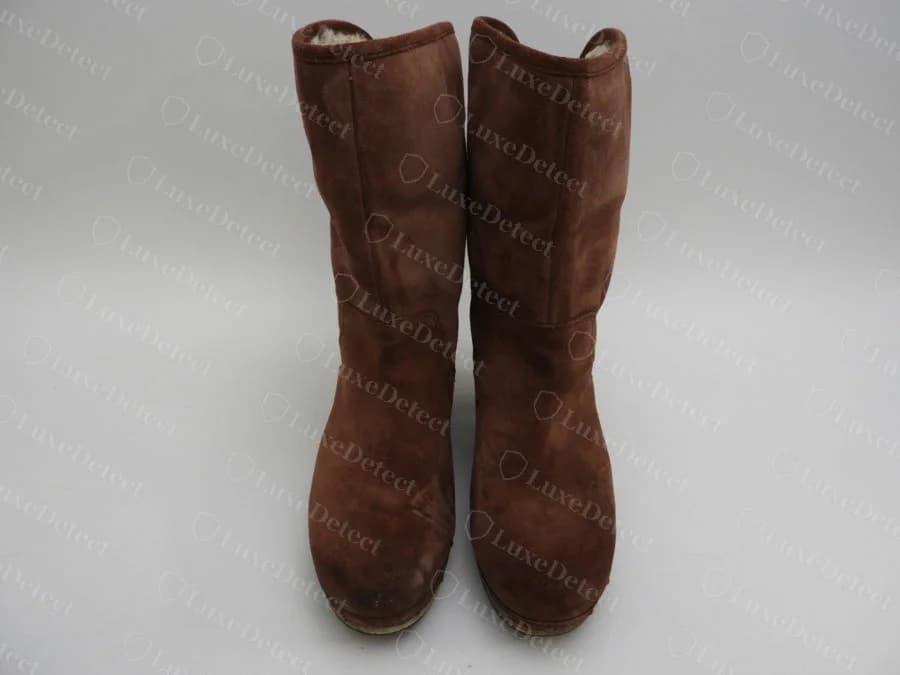
- Classic boot — the tall or short twin-faced sheepskin boot UGG is best known for, in suede or leather uppers with a molded rubber outsole.
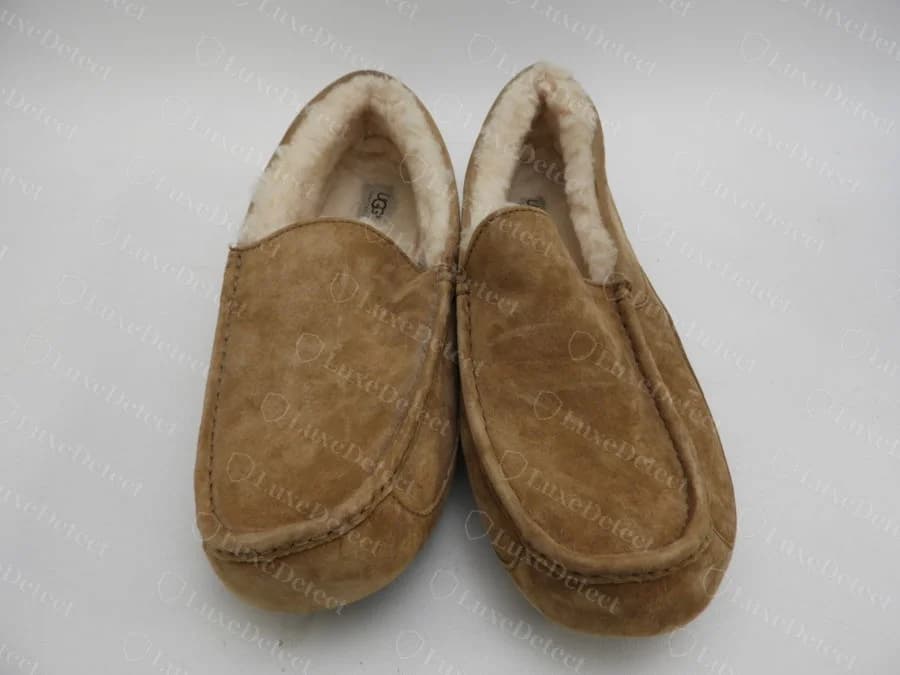
- Slippers and moccasins — indoor styles like the Ascot and Tasman, with a suede or leather upper, sheepskin lining, and a lighter flexible sole.
- Sneakers, sandals, and clogs — UGG has expanded well beyond boots; these share the same branding system but on different constructions (canvas or leather uppers, molded soles, sometimes no visible heel patch at all on an open-back style).
- Rain boots — a fully rubber/PVC construction, no sheepskin, but still carrying the same sole stamp and interior tag conventions in a different material.
- Listings frequently drop the model name entirely, appearing as a plain "Shoes - UGG" with a bare style number (e.g. "UGG 5825," "UGG S/N 3204") rather than a line name. This is a genuine feature of how UGG's own product numbering works, not just seller shorthand; we confirmed the same numeric-code format on interior tags across our sample.
- Genuine production we reviewed included both "Made In China" and "MANUFACTURED IN U.S.A." markings on different pairs. Country of manufacture is not a reliable tell on its own for this brand; see the dedicated note below.
The Sole: Tread Pattern, Wordmark, and Sunburst Emblem
Every genuine sole we reviewed carried some form of "UGG" branding molded directly into the rubber, but the exact treatment varies by era and line. We documented at least three distinct formats in our own sample: a rosette-style sunburst emblem with "UGG" lettered across the center, set into a herringbone tread pattern on a Classic-style boot; a repeating small monogram pattern (interlocking "UGG" letters) tiled across the whole sole surface with a small oval "UGG" wordmark near the arch; and a plain molded "UGG" wordmark with "MANUFACTURED IN U.S.A." beneath it on a rain boot's rubber sole, no sunburst at all.
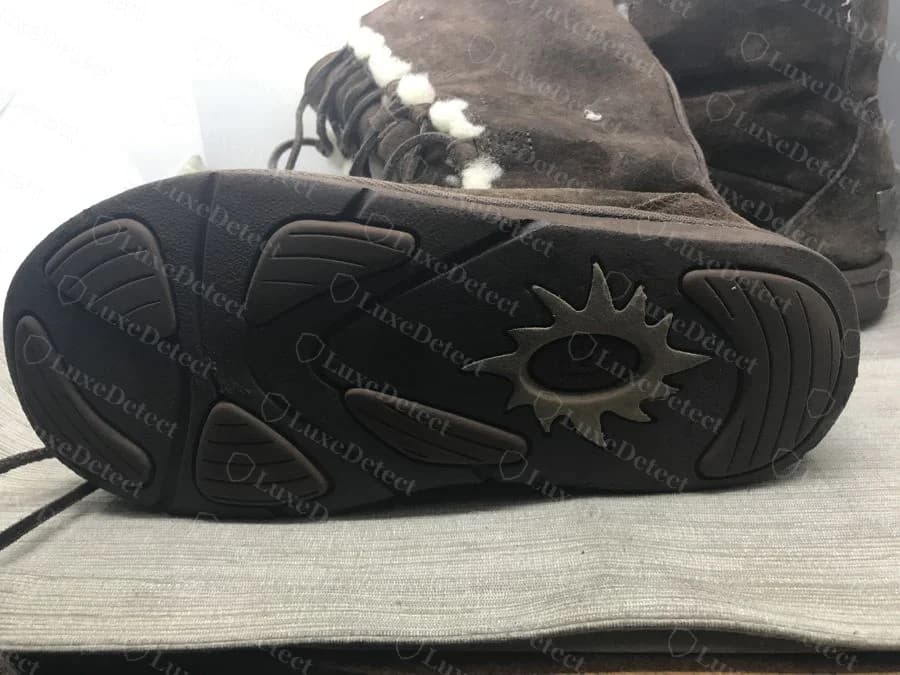
This variation is legitimate, not a warning sign by itself; the outsole format tracks the shoe's construction era and line, not authenticity. What we could not verify is a specific difference in stamp depth, tread pattern, or wordmark shape that separated our genuine sample from the counterfeit soles we reviewed; the fakes in our sample used comparably legible sunburst and wordmark stamps.
Worth knowing
Do not treat sole format alone (sunburst versus plain wordmark versus repeating monogram) as a tell. All three appeared on confirmed-genuine pairs in our sample, tied to the specific silhouette and era rather than to authenticity.
The Heel Patch: Metal Plaque or Suede Embossing
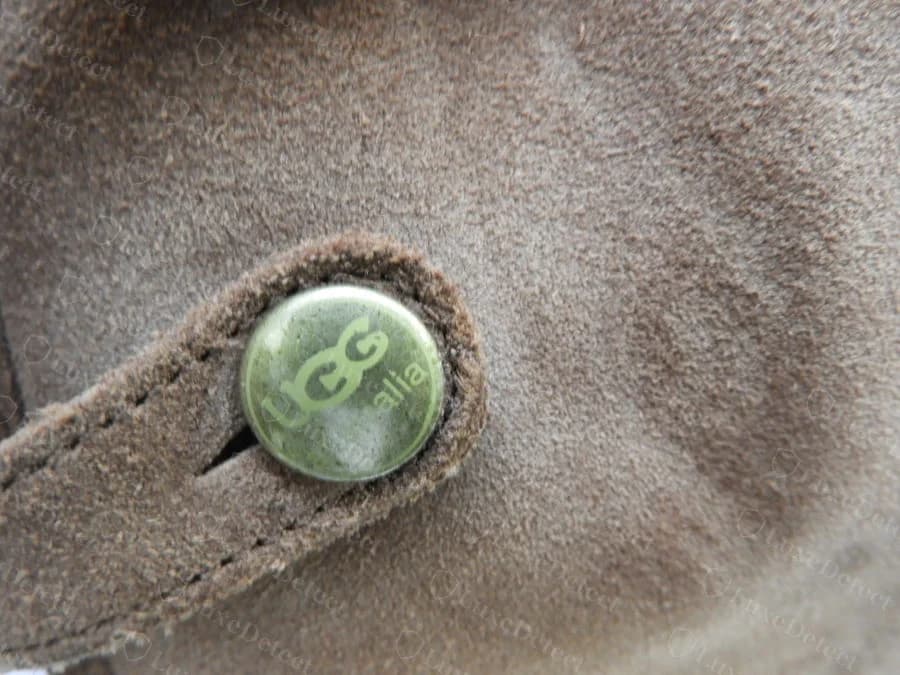
UGG marks the exterior heel of most boot and slipper styles with a second, separate branding surface from the sole. We documented two distinct formats on confirmed-genuine pairs: a riveted metal plaque, brass or antique-silver toned, stamped "UGG" with a small ® mark and "australia" beneath it in smaller lettering, set into a leather or suede patch stitched to the boot's heel; and a suede-on-suede embossing, "UGG" debossed directly into the heel suede itself with "australia" beneath, no separate metal piece at all, closed off top and bottom by a stitched seam.
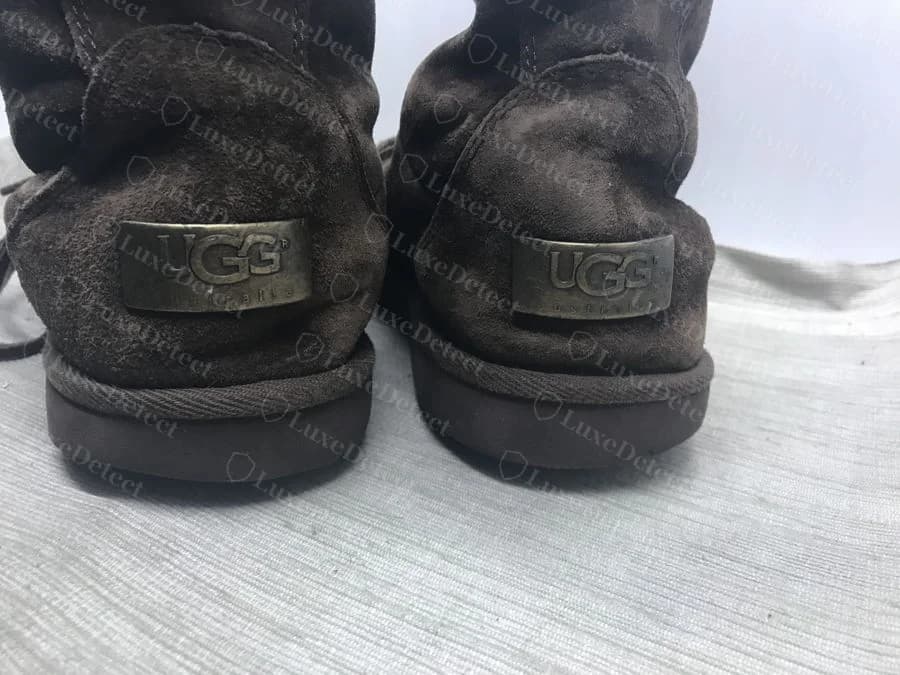
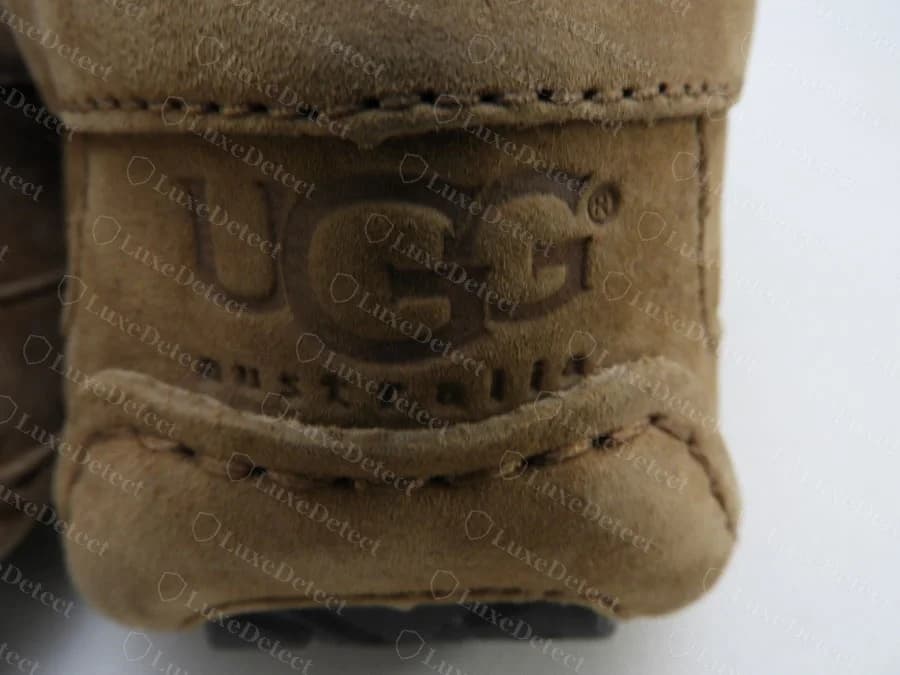
Which format a genuine pair uses depends on the silhouette rather than the era alone; we saw the metal-plaque version on a tall boot and the debossed-suede version on a slipper in the same sample. Some open-heel styles (certain sandals and clogs) carry no separate heel patch at all, relying on the sole stamp and interior tag instead.
Worth knowing
Heel patch construction varies by silhouette, so a slipper without a metal plaque is not automatically suspicious, and a boot without suede embossing is not automatically suspicious either. Match the format you'd expect for that specific silhouette before treating an absence as unusual, and even then, our sample did not turn up a verified quality difference between the genuine and counterfeit versions of either format.
The Interior Fabric Tag: S/N, Sizing, and Country of Manufacture
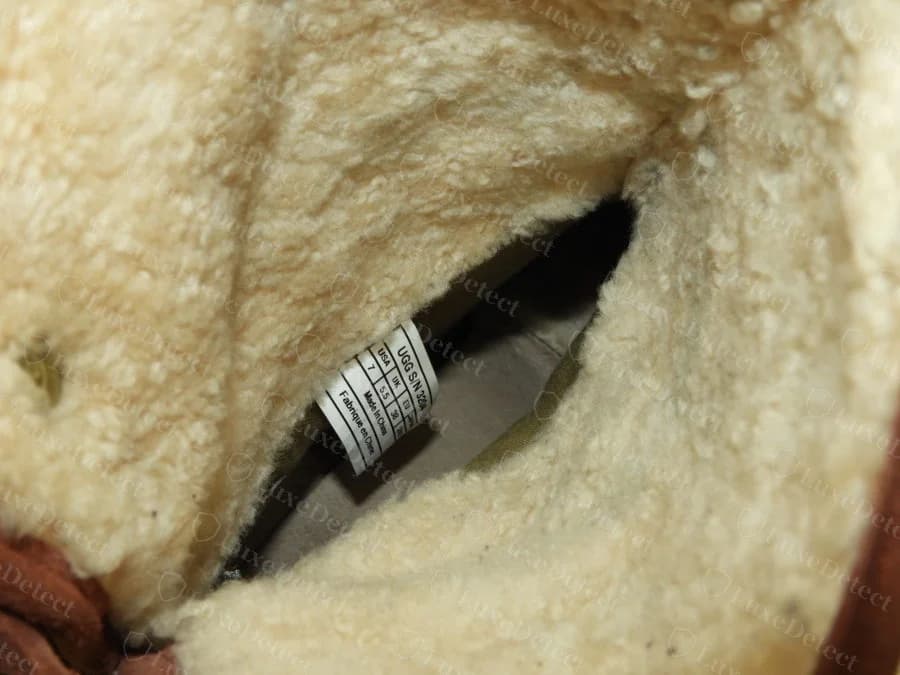
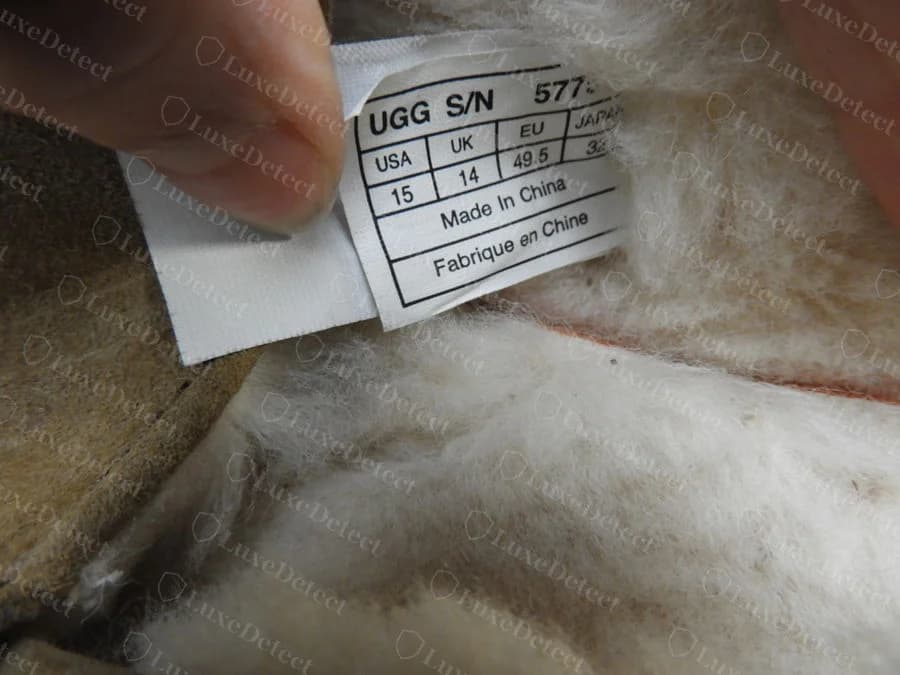
Nearly every genuine pair we reviewed carried a small woven or printed fabric tag stitched into the interior sheepskin lining, reading "UGG S/N [a 4-to-5-digit number]" at the top, followed by a size-conversion table (USA, UK, EU, and Japan sizes), and a country-of-manufacture line. We saw "Made In China" paired with "Fabrique en Chine" on a slipper and a tall boot in our sample, and a separate rain boot's rubber sole stamped "MANUFACTURED IN U.S.A." instead of a fabric tag claim. Some slippers additionally carry a second, smaller suede tag reading just "UGG australia" stitched near the fabric size tag.
Worth knowing
"Made in China" on its own is not a valid red flag for UGG. Genuine UGG production legitimately includes China-made pieces, alongside other countries of manufacture depending on the style and era (we confirmed a genuine U.S.A.-made rubber rain boot in our own sample). Do not treat country of manufacture, by itself, as evidence either way; it confirms nothing about authenticity on its own.
Sheepskin and Wool Quality
Genuine twin-faced sheepskin, the material used on Classic boots and most slipper styles, shows a dense, even wool pile on the interior with the leather (suede) side facing out. Across our sample, the wool was consistently soft and full at the collar and along the interior lining, with no obvious bald patches, matting, or synthetic sheen that would suggest a substitute fleece. The suede exterior showed a consistent nap and color depth across each panel; on well-worn pairs, we saw natural fading and light staining at stress points (toe, heel, and ankle crease) rather than surface printing or an artificially uniform tone.
We were not able to verify a specific wool-density or nap-consistency difference between our genuine sample and the counterfeit listings we reviewed from photos alone; wool quality is difficult to judge reliably without handling the item, and photos of confirmed fakes in our sample also showed plausible-looking sheepskin.
Stitching and Construction
Genuine construction we reviewed showed even, consistent stitch length along the collar binding, heel seam, and sole-to-upper bond, with no visible adhesive squeeze-out at the seam line and no loose or skipped stitches at stress points. On the sheepskin-cuff styles, the raw suede edge at the collar is typically left with a soft, slightly irregular natural edge rather than a die-cut, perfectly uniform line, since it follows the pelt's own shape.
Like the other checks above, finishing quality did not hold up as a standalone signal in our sample; well-made counterfeits reproduced clean, even stitching convincingly, and honest wear on a genuine used pair can look uneven in a way that has nothing to do with authenticity.
Full Silhouette Reference
General Red Flags Across UGG's Market
UGG's twin-faced sheepskin boots are among the most counterfeited footwear silhouettes industry-wide, and authentication services report that replica quality has improved significantly across the full price range of fakes now in circulation, not just at the high end. Commonly reported issues on lower-effort counterfeits, described generally and not based on a specific photographed example in our sample, include: sheepskin that feels thin or synthetic in hand, a sole tread that wears unevenly or separates from the upper prematurely, and interior tag printing that's noticeably lighter or more pixelated than the surrounding fabric weave. Treat these as things to be alert to in hand, not as confirmed tells for any specific model based on this guide's photo sample.
What the Box Does and Does Not Prove
Packaging is context, not evidence. A correct-looking UGG box tells you a seller has access to genuine or convincingly reproduced packaging; it does not tell you the boots inside are the ones that box was made for. If a listing includes a box, use it to cross-reference the style number and size printed on the box label against the S/N and size table on the interior fabric tag, not as a standalone signal of authenticity.
When to Get a Professional Opinion
Photos alone will often not resolve a close call on UGG footwear. Current counterfeits reproduce the sunburst sole stamp, the metal and suede heel patch formats, and the interior S/N tag closely enough that a confident verdict from listing photos is frequently not possible, and that includes photos we reviewed for this guide. If your comparison against the details above doesn't give you a clean pass, in-hand sheepskin density, sole flex, and stitching feel are the next line of evidence, and a specialist opinion is worth the cost before you commit to a purchase at this price point. Photo-based shoe authentication starts at $15 with a 24-hour turnaround, and every order includes a written Certificate of Authenticity you can use for resale, insurance, or a marketplace dispute.
What's Next for This Guide
The most promising lead we found for a future checkpoint upgrade is narrower than UGG as a whole: a same-silhouette comparison scoped to just the Classic boot line, where both the genuine and counterfeit sides have enough volume in our archive to support a tight sole, tag, and stitching comparison rather than a house-wide claim. That comparison is planned as a follow-up, not part of this guide.
FAQ
What is the UGG sunburst emblem?
It's a rosette-style stamp molded into the rubber outsole of many UGG boots, with "UGG" lettered across the center. It's one of several genuine sole-stamp formats UGG has used; a plain wordmark or a repeating monogram tread pattern also appear on confirmed-genuine pairs, depending on the silhouette and era.
Does "Made in China" mean a UGG is fake?
No. Genuine UGG production legitimately includes China-made pieces. We confirmed "Made In China" on multiple authenticated pairs in our own sample, alongside a genuine U.S.A.-made rain boot. Country of manufacture on its own does not indicate authenticity either way.
What does the UGG interior tag say?
A genuine interior fabric tag typically reads "UGG S/N" followed by a 4-to-5-digit number, a USA/UK/EU/Japan size-conversion table, and a country-of-manufacture line (we confirmed "Made In China" with the French equivalent "Fabrique en Chine" on genuine pairs). Some slippers also carry a second small suede tag reading "UGG australia."
Is the metal heel plaque or the suede-embossed heel patch more authentic?
Neither is more authentic than the other; both are genuine UGG formats. Which one appears depends on the silhouette: we documented the metal plaque on a tall boot and the suede-embossed version on a slipper, both from confirmed-genuine orders.
Why doesn't this guide have a real-vs-fake comparison table?
We reviewed a wide sample of confirmed genuine and confirmed counterfeit UGG listings and could not identify a construction flaw that held up as a reliable, repeatable tell across multiple fakes without also flagging genuine examples. Publishing an unverified "tell" would do more harm than good, so this guide documents genuine construction in detail instead.
Is there a specific UGG model this guide focuses on?
No. UGG's branding system (sole stamp, heel patch, interior tag) is shared across silhouettes rather than concentrated in one dominant model, so this guide covers boots, slippers, and rain boots together. A narrower, same-silhouette Classic boot comparison is planned as a future follow-up.
How much does UGG authentication cost?
Photo-based shoe authentication starts at $15 with a 24-hour turnaround. Given how closely current counterfeits reproduce the details covered in this guide, a professional opinion is worth it on any pair you can't confidently clear yourself.