Luxury Handbag Authentication Specialist
Luxury leather goods specialist. Works on Italian house construction, hardware, and interior stamping.
Published November 2026 · Contact
Why Fossil Bags Are Checked by Era and Line
Fossil is better known for watches, but it has sold leather and canvas handbags for decades, and the secondhand market for them is large. That market is the reason this guide exists: people search for "fake Fossil" when a bag turns up at a thrift store, a resale app or a relative's closet and they want to know whether it is the real thing.
This guide covers Fossil handbags and shoulder bags. It does not cover Fossil watches, which have a different set of marks (case back, reference numbers, dial printing) and need their own guide.
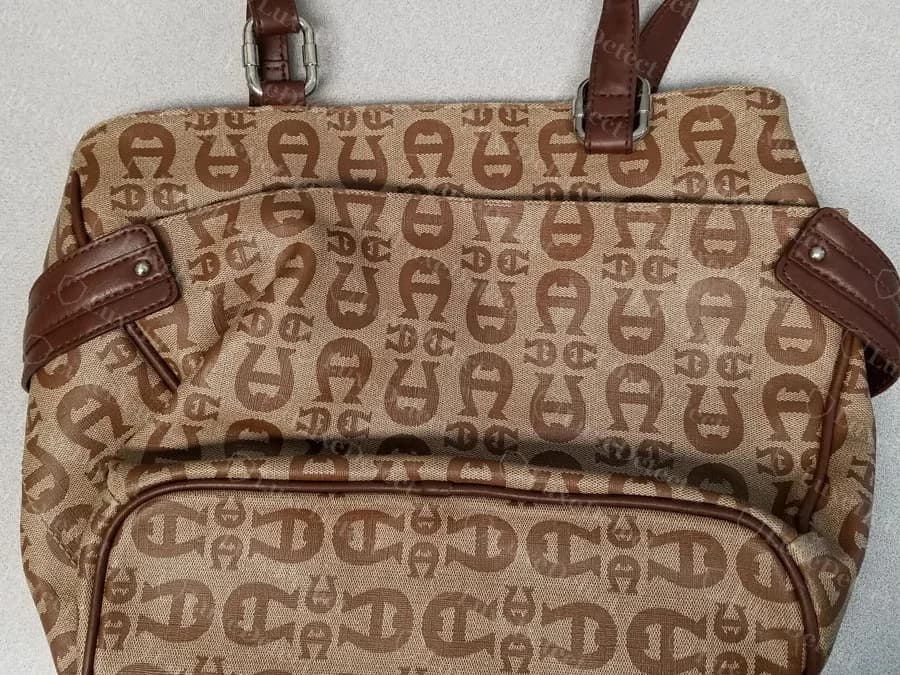
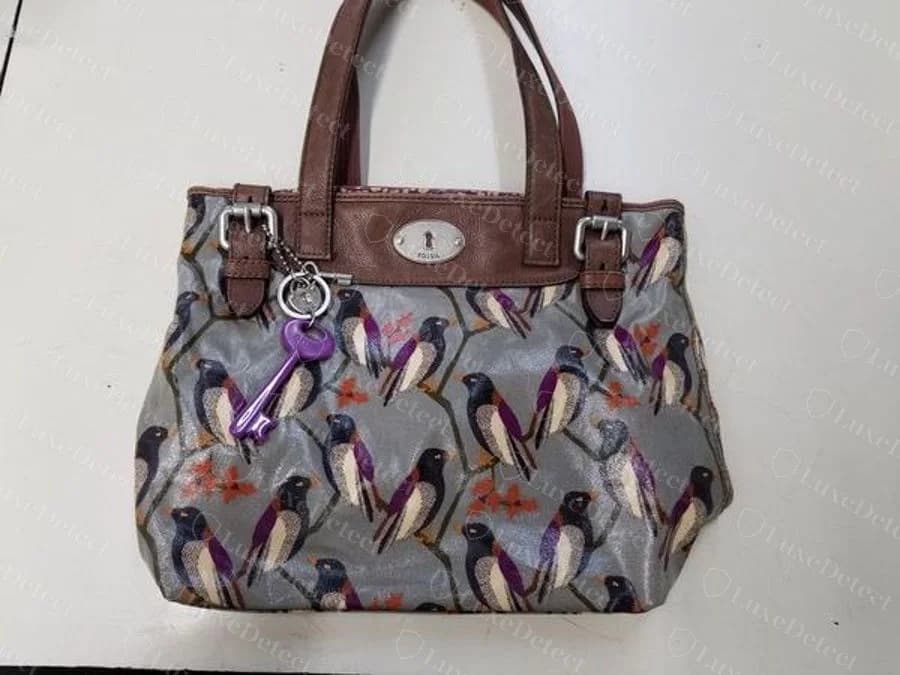
The first thing to know is that "a Fossil bag" is not one design. Over the years the brand has used a keyhole-and-key motif, a stitched leather interior tag reading "Long Live Vintage", an embossed oval reading "Authentic Fossil", a woven black label, a "Key-Per" interior label on a printed-fabric line, and stamped zip pulls. A genuine bag from one line will not carry the marks of another, so the useful question is not "does it have a Fossil logo" but "do the marks on this bag fit one line, and do they match a verified bag of that line".
Worth knowing
This is an authentic-reference guide. It is built from verified genuine Fossil bags, so it shows what each mark looks like on a genuine bag. It does not list fake tells, because the examples we looked at do not support one. The section on counterfeits below explains why. When we have enough verified examples of both sides, we will upgrade it to a full real-vs-fake comparison.
The Keyhole Plate
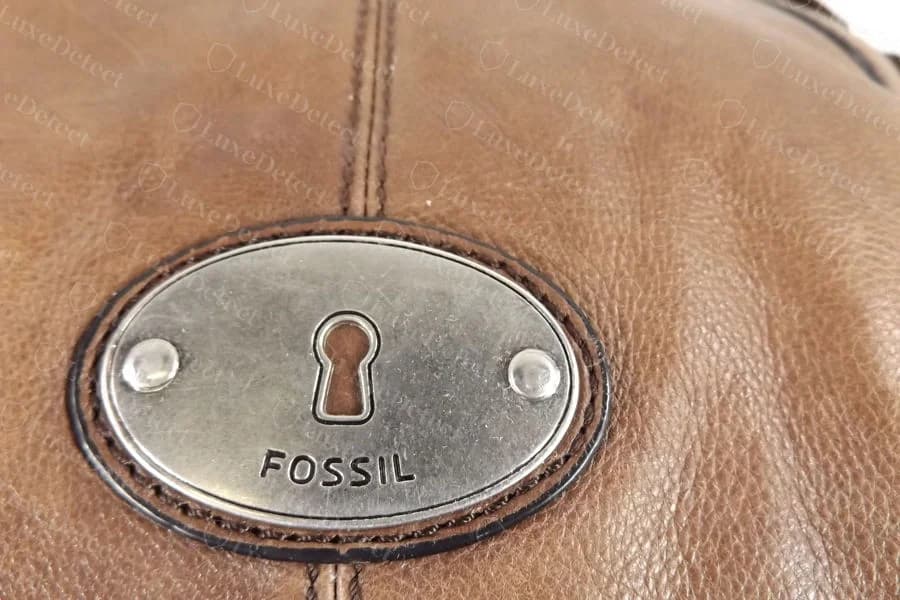
The keyhole plate is the best-known exterior mark on older Fossil leather bags: a metal oval or rounded plate with a keyhole cut-out and "FOSSIL" beneath it, usually riveted or stitched onto the front of the bag. Plate shape, finish and mounting vary by line. Some are a wide silver oval with two rivets, others a smaller brass-toned oval set in a stitched leather surround.
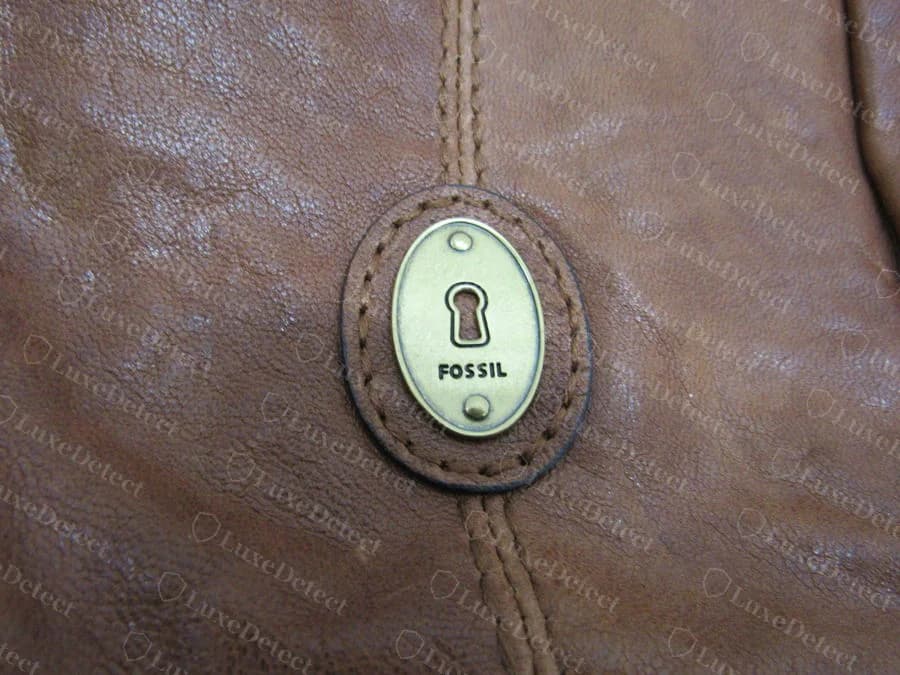
What to look at: the keyhole is cleanly cut and the lettering below it is crisp, the plate sits flat in its surround, and the stitching around the surround is even. The wide silver plate with two rivets (shown below on a bag in our archive with a fake outcome) is a style Fossil also made, so its shape alone is not a warning sign.
The Interior Leather Tag
Inside many Fossil bags a leather patch is stitched to the lining. On one widely sold line it reads "FOSSIL" over a dotted rule, then "Long Live Vintage" in script and the year 1954. Fossil was founded in 1984, so the 1954 is a vintage-style design date, not a production date; do not read it as the age of the bag.
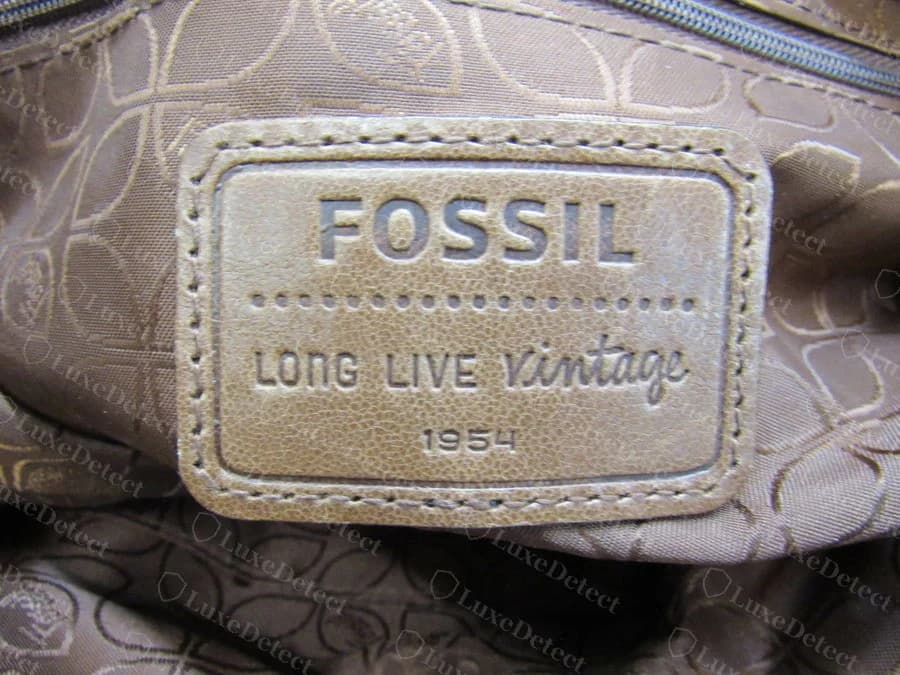
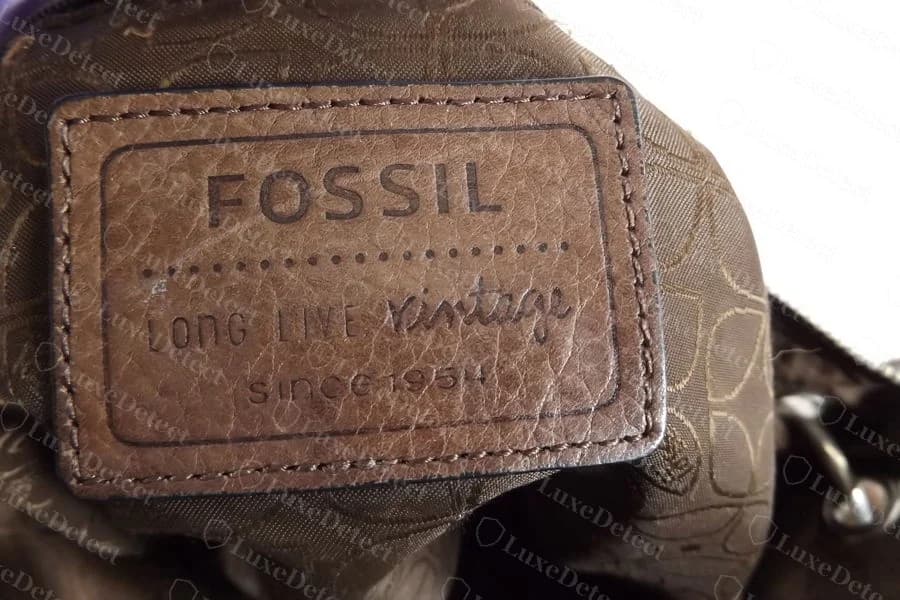
Check that the patch is stitched on with even thread, that the lettering is pressed into the leather rather than printed on top, and that the lining pattern around it is a Fossil pattern of the same line. Layouts differ between collections: another bag in our archive carries the same patch with "since 1954" rather than "1954", so compare against a genuine bag from the same line rather than against one picture.
The "Authentic Fossil" Oval and Woven Labels
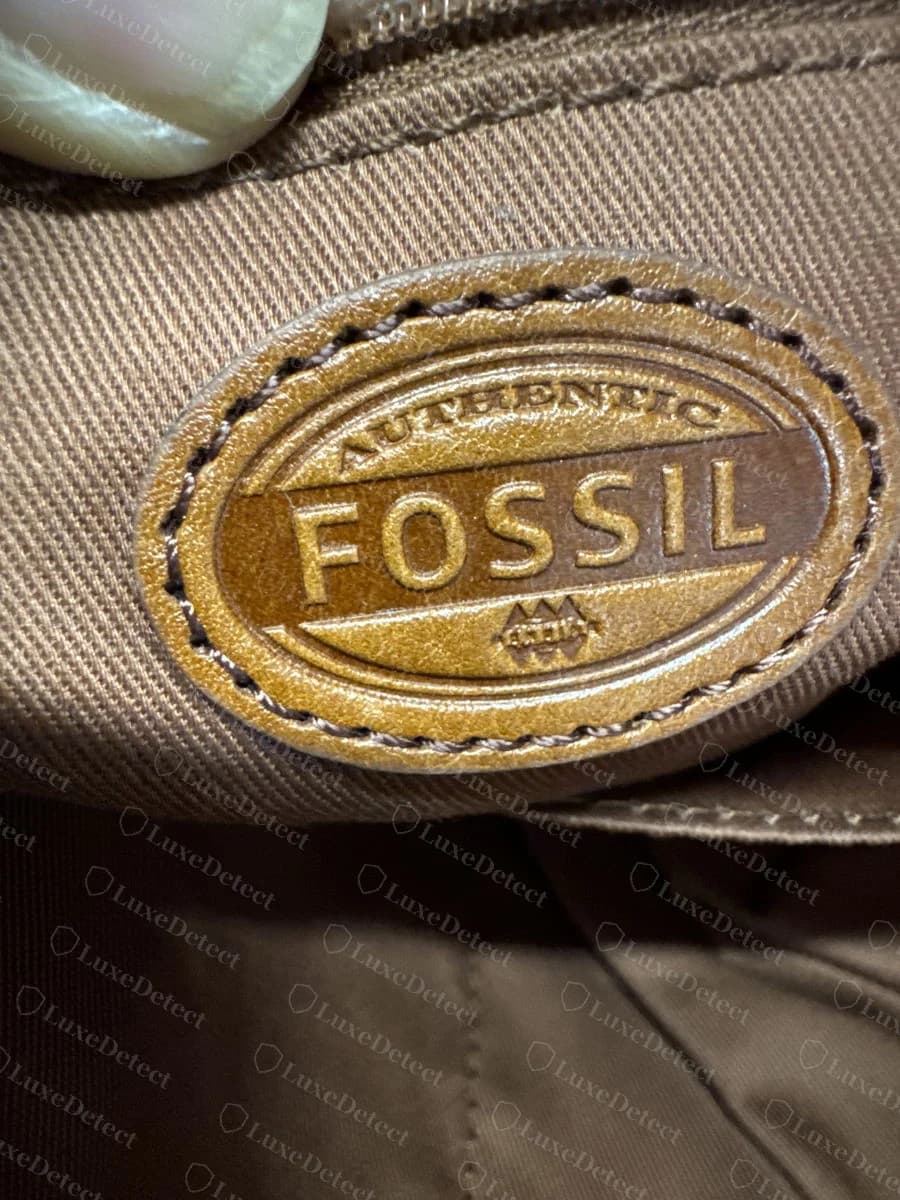
Another family of interior marks is the "AUTHENTIC FOSSIL" oval, found as an embossed leather or fabric oval inside the bag and also on a black woven care label that lists "cow hide leather" in several languages.
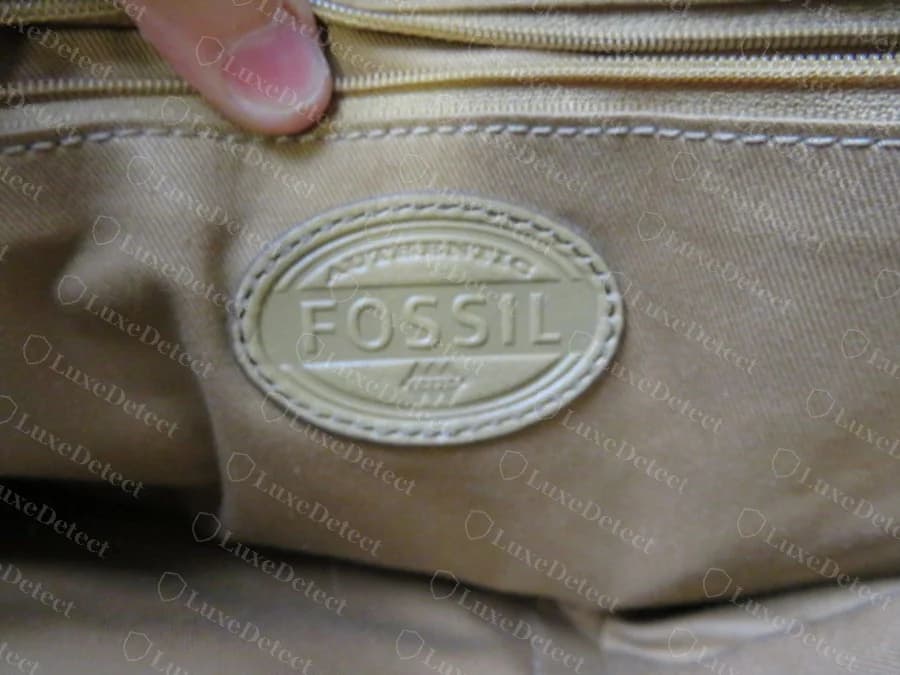
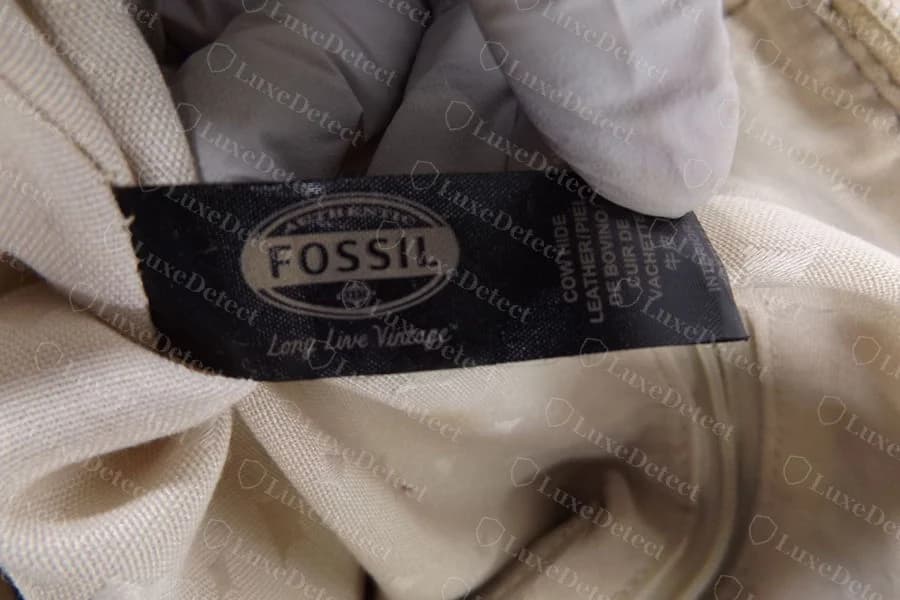
A genuine oval is evenly embossed and stitched, with crisp lettering and the small emblem under the name. The same oval appears in a bag from our archive with a fake outcome, which matters for the next section.
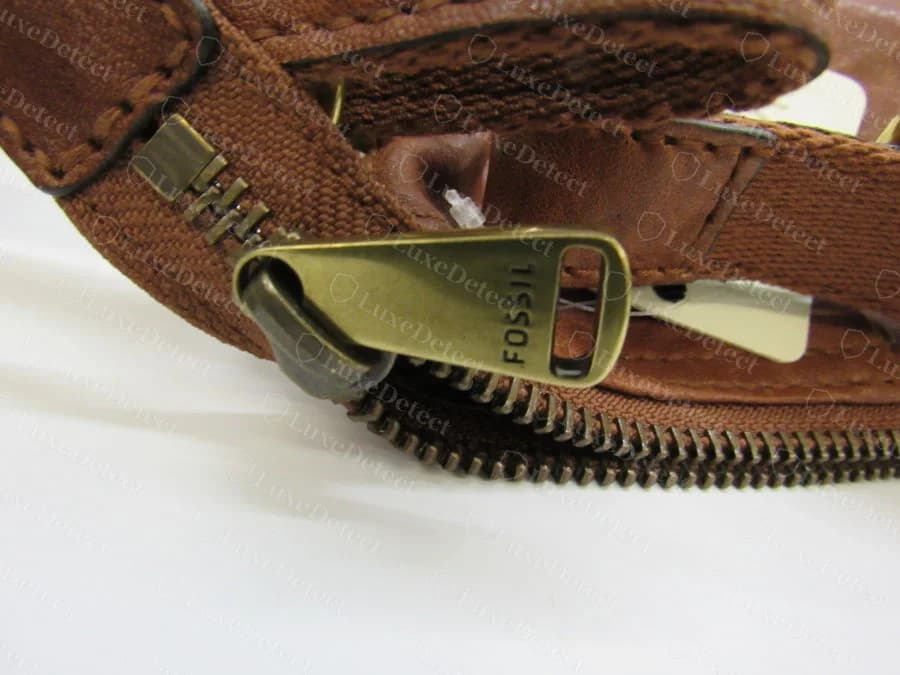
Zip Pulls, "Key-Per" Labels and Hardware
Fossil often stamps its name on the zip pull, and the pull and the tape around it are worth a look on any bag.
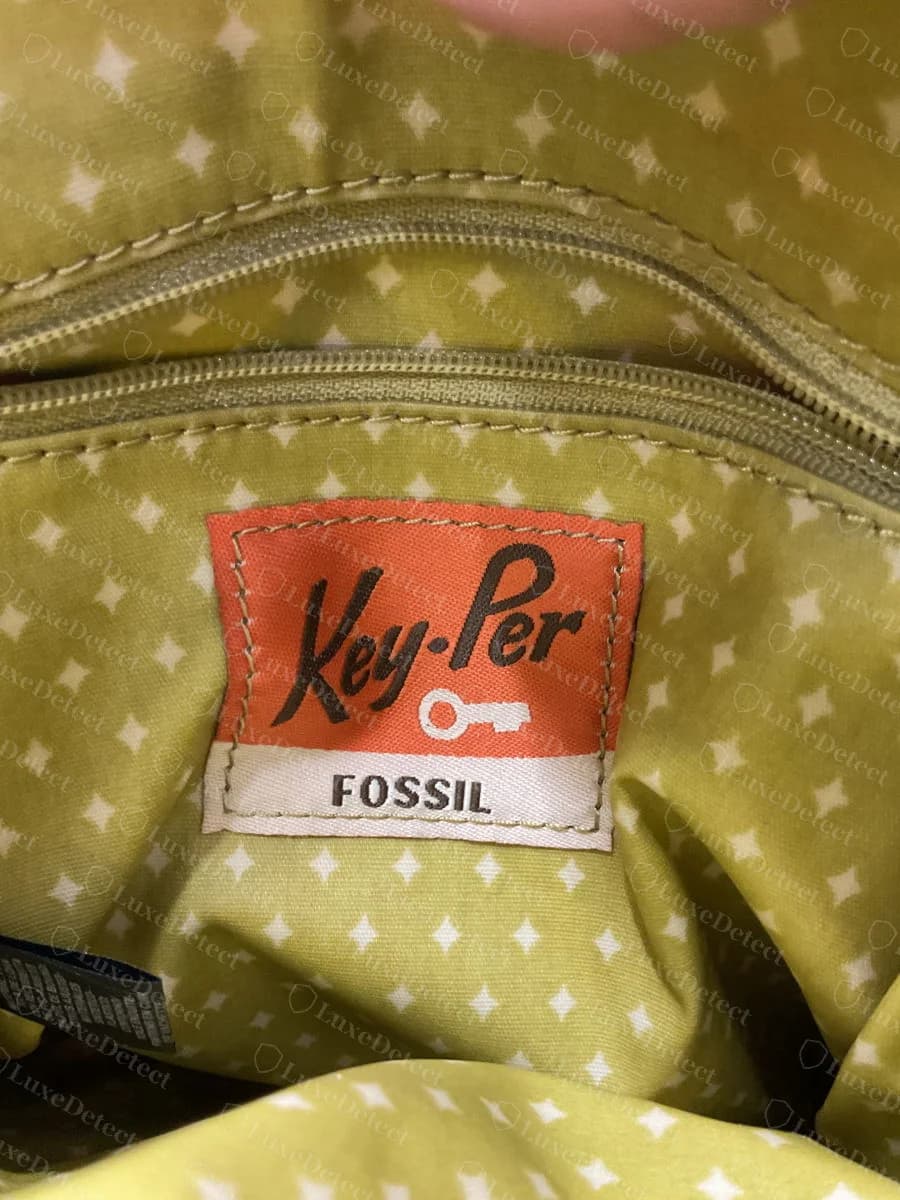
On the printed-fabric and coated-canvas line, the lining often carries an orange "Key-Per" label with a key emblem above a "FOSSIL" strip. It belongs to that line, so it should not appear on a plain leather tote.
What the Counterfeits in Our Archive Show
We looked at the bags in our archive that were recorded with a fake outcome. The honest finding is that, on the bags we compared, the visible marks are the same ones genuine bags carry: the keyhole plate, the "Long Live Vintage" patch and the "Authentic Fossil" oval all appear on items with a fake outcome, and a care card appeared with one of them.
Two conclusions follow. First, none of these marks, on its own, separates real from fake. Second, the outcome label on an order does not tell you why the item was rejected; a verdict can rest on several things together (the construction, the materials, how the marks fit each other and the model), so we do not turn any single mark above into a red flag.
Not every item recorded with a fake outcome is a handbag, so this guide makes no claim about how common fakes are or what share of bags is fake.
What a Matching Mark Does and Does Not Prove
A matching mark is a reason to keep looking, not a verdict. Counterfeiters copy logos, patches, plates and labels, and on a brand whose genuine marks vary this much by line, a copy only has to resemble one of them. What decides a bag is how the marks, materials and construction fit together against a verified genuine bag of the same line.
- A logo that looks right proves little. Check that it belongs to the line: a Key-Per label on a plain leather tote, or a tag layout you cannot find on any genuine bag of that style, is worth a second look.
- Interior and exterior should agree. Plate style, lining pattern and hardware finish should all fit one era and line.
- Weight, smell and feel are checks done with the bag in hand: the lining is cut and stitched cleanly and the edges are finished.
- Paperwork and cards can be copied or moved between bags, so treat them as context.
- "Made in" labels alone mean nothing: genuine Fossil bags carry a Made in China label on many lines.
For comparable guides to other mid-market bag brands, see our Coach Legacy guide, the Michael Kors bag guide and the Kate Spade guide.
When to Get a Professional Opinion
For a low-value bag, comparing against genuine photos of the same line may be enough. If you are paying a real price, or the bag looks right but a line, label or hardware piece does not fit, a professional review against verified bags of the same model is the safer route.
A code that checks out doesn't prove the item is real. Counterfeiters copy genuine codes.
Our authenticators check the stamps, hardware and construction of your Fossil against verified references, from $25. You get a verdict within 24 hours, and a Certificate of Authenticity if the item passes.
Authenticate My Fossil →FAQ
Is this guide for Fossil watches or bags?
Handbags and shoulder bags. Fossil watches are a separate topic with their own marks, and this guide does not cover them.
Does a keyhole logo mean a Fossil bag is real?
No. The keyhole plate is a genuine Fossil mark, but a copy can carry one too, and the plate style varies by line. Check that the plate, interior tag and hardware belong together and match a verified bag of the same line.
Is the 1954 on a Fossil tag the date the bag was made?
No. Fossil was founded in 1984. The 1954 on its vintage-style tags is a design date, not a production date.
Can you authenticate a Fossil bag from photos alone?
Yes. What decides it is how the plate, tags, lining, zips and construction fit together against verified bags of the same line. Send clear photos of the whole bag, the exterior plate, every interior label and the hardware. On an expensive bag, a professional review is the safer route.
Does a certificate of authenticity card prove a Fossil bag is real?
No. Cards can be copied or moved from one bag to another, so treat a card as context rather than evidence.
Is "Made in China" a sign of a fake Fossil bag?
No. Genuine Fossil bags carry Made in China labels on many lines, so the country alone tells you nothing either way.
Sources
Photos are from LuxeDetect's own order records, and the genuine marks described here were checked on genuine bags in them. The founding year of 1984 is public company information.