Handbag Authentication Specialist
Handbag authentication specialist. Has reviewed submissions across Hermès, Chanel, Louis Vuitton, and Dior since 2019.
Published September 2026 · Contact
Why the Legacy Line Needs Its Own Guide
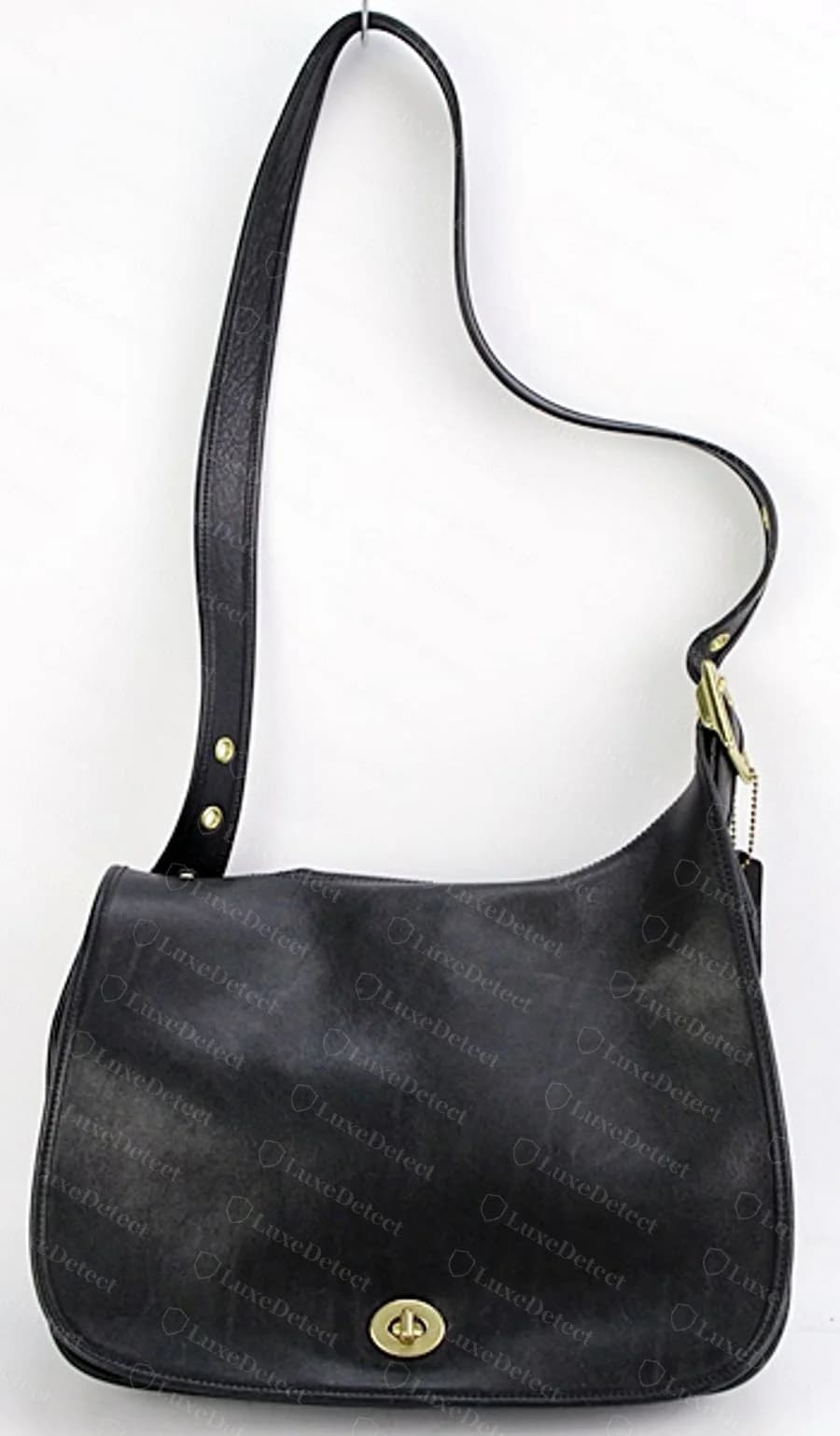
Coach's Legacy line covers the brand's pre-2013 "old guard" era: solid brass or nickel hardware, glove-tanned cowhide, and the classic rectangular "COACH" creed patch stitched or embossed into the lining. It spans decades of production and dozens of styles, from the bucket-shaped Duffle (style 9085/9090/9997) to the Janice shoulder bag, the Patricia crossbody, the Willis, and the Studio flap, all sharing the same core construction language. Our own general Coach authentication guide covers style-number decoding and the two Coach eras at a brand level; this guide goes deeper on Legacy specifically, because it's both the most counterfeited Coach line we see and the one with the clearest, most repeatable construction tells.
Counterfeiters targeting Legacy bags get the silhouette and the exterior leather right more often than not; vintage Coach shapes are simple enough to pattern from a photo. Where they consistently fall short is the interior: the small embossed paragraph inside the creed patch, and the finish on the cast hardware, are both harder to fake convincingly than the bag's outline.
What to check, ranked by reliability
| Checkpoint | Reliability | What it tells you |
|---|---|---|
| 1. The Interior Creed Patch: Embossing Depth and Legibility | ★★★★★ | A sharp COACH wordmark paired with a blurred, illegible paragraph beneath it is the strongest and most repeatable tell found across the sample — but not universal, so confirm with at least one more checkpoint. |
| 2. Hardware Finish: Casting Quality and Tarnish | ★★★★★ | Soft casting edges and premature tarnish spotting are common on fakes but not universal; several counterfeits had genuinely clean hardware. |
| 4. The Hangtag | ★★★★★ | A weaker differentiator than the interior creed patch; use as a tie-breaker, not a primary check. |
| 3. Leather, Stitching, and Overall Construction | ★★★★★ | Both pools mostly cleared this bar; a well-made counterfeit can be difficult to fault on exterior construction alone. |
| Model Reference Before You Start | ★★★★★ | Rules out a mislabelled or generic "vintage Coach" listing; will not catch a good fake of the correct model. |
| What the Box and Dust Bag Do and Do Not Prove | ★★★★★ | Packaging is context only — most Legacy bags trade hands with no original packaging at all. |
Use our free Coach Creed Checker to read the production month, year and style number from your bag's creed patch.
Decode My Creed →Model Reference Before You Start
- Duffle (styles 9085, 9090, 9997, and variants): the bucket-shaped shoulder bag with a drawstring-free zip top, Legacy's most recognizable silhouette.
- Janice (9966, 9718): a structured shoulder bag with a front zip pocket.
- Patricia (9951 and variants): a flap-front crossbody.
- Willis: a smaller crossbody/shoulder bag, sits in the same construction family.
- Studio Flap: a flap-closure crossbody, often smaller than the Patricia.
- Legacy bags were produced primarily in the United States. The interior creed patch should read either "MADE IN NEW YORK CITY, U.S.A." (older stock, serials without a letter prefix, e.g. `578-5511`) or the later "HANDCRAFTED IN THE UNITED STATES OF...NATURAL GLOVE-TANNED COWHIDE" wording paired with a letter-prefix serial (e.g. `H8P-9055`, `D2J-9085`). Either wording is normal; what matters is whether the embossing itself is legible, not which era it's from.
- Listings mislabel Legacy bags constantly, especially the Duffle and Janice, which get sold under generic "vintage Coach shoulder bag" titles. Confirm the silhouette and the creed patch together, not the listing title alone.
The Interior Creed Patch: Embossing Depth and Legibility
Every Legacy bag has a rectangular leather creed patch inside, embossed with the "COACH" wordmark in a bordered box, a paragraph about the bag's construction, and the style/serial number below it. On authentic bags we reviewed, that paragraph stays individually legible letter-by-letter even under close macro photography, across colorways and both wording eras. On a meaningful share of the fakes we sampled, the paragraph text was noticeably shallower and mushier than the "COACH" wordmark above it: the box border and wordmark stayed crisp while the small print blurred into an indistinct grey field.
This wasn't universal across every fake we looked at; a few had reasonably clean patches. But it was the single most repeatable difference we found between the two pools, and it's a detail that's expensive for a counterfeiter to fix, since it requires a well-cut die and firm, even pressure on natural leather that will vary slightly bag to bag anyway.
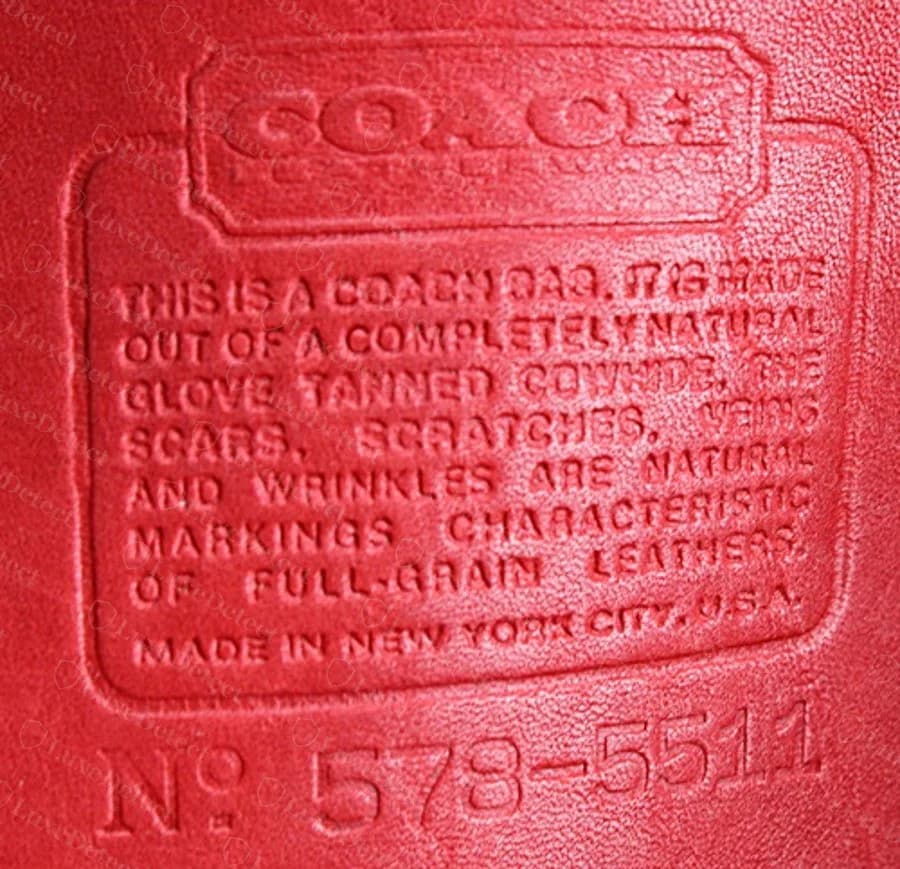
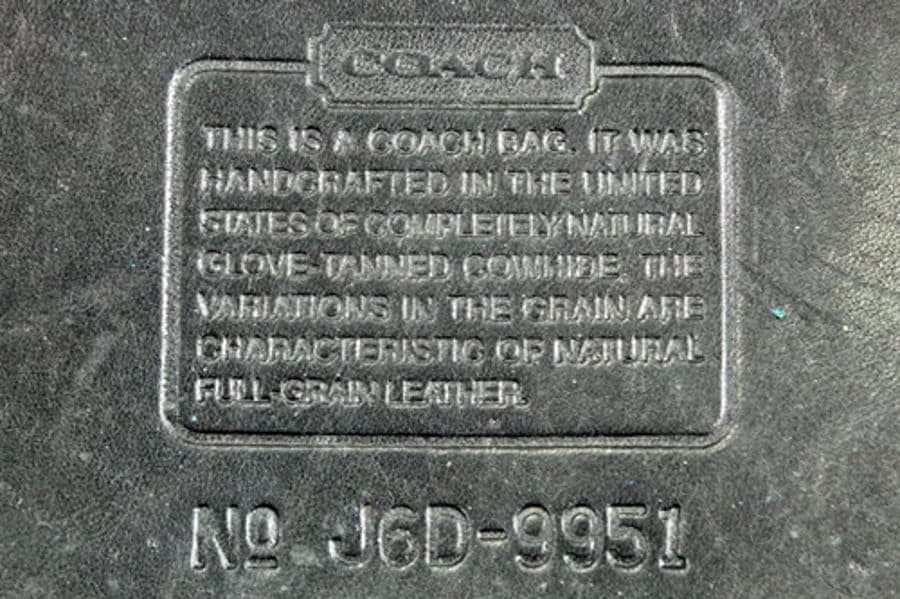
| Element | Authentic | Counterfeit |
|---|---|---|
| COACH wordmark in the box | Sharp, uniform depth | Usually sharp too, not a reliable difference alone |
| Paragraph text below it | Individually legible letters | Often shallow, letters blur together |
| Serial number | Cleanly separated digits/letters | Can be legible or crowded, inconsistent |
| Patch leather | Same grain and color family as the exterior | Sometimes a visibly different, flatter leather |
Red flag
If the "COACH" wordmark and box border are crisp but the paragraph of small text underneath is blurred into an indistinct grey field with individual letters hard to make out, treat that as a strong signal on its own. We didn't see this on every fake, but we never saw it on a confirmed authentic bag either.
Worth knowing
A worn, scuffed, or rubbed-smooth patch on an otherwise well-used vintage bag isn't automatically a red flag, honest decades-old wear can soften an embossing too. The tell is a patch that looks shallow and mushy while the leather around it is otherwise in good condition, or where the wordmark stays sharp but the paragraph doesn't.
Hardware Finish: Casting Quality and Tarnish
Legacy hardware is solid brass or nickel: turn locks, D-rings, swivel hooks, and buckle frames. On the authentic bags we reviewed, this hardware consistently showed sharp, clean casting lines and a bright, even finish, even on decades-old bags. On several (not all) of the fakes we sampled, the hardware showed soft, slightly rounded edges where the casting mold itself was less precise, along with premature greenish tarnish spotting on brass-plated pieces, wear that shouldn't appear this early or this unevenly on genuine solid brass.
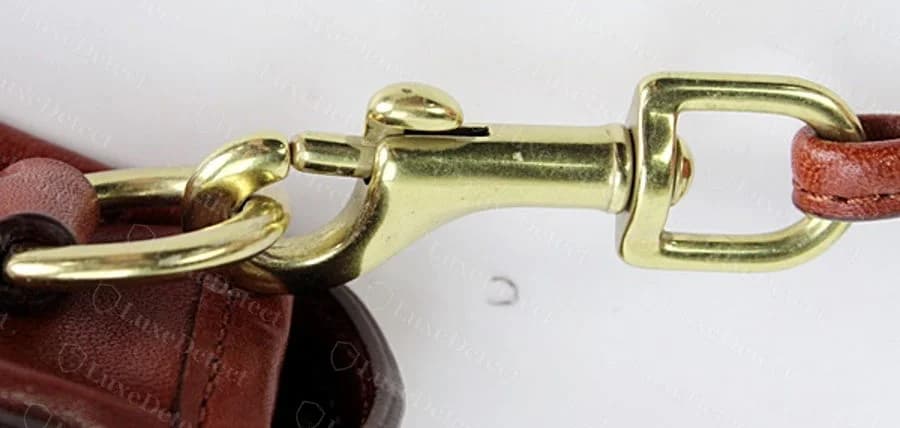
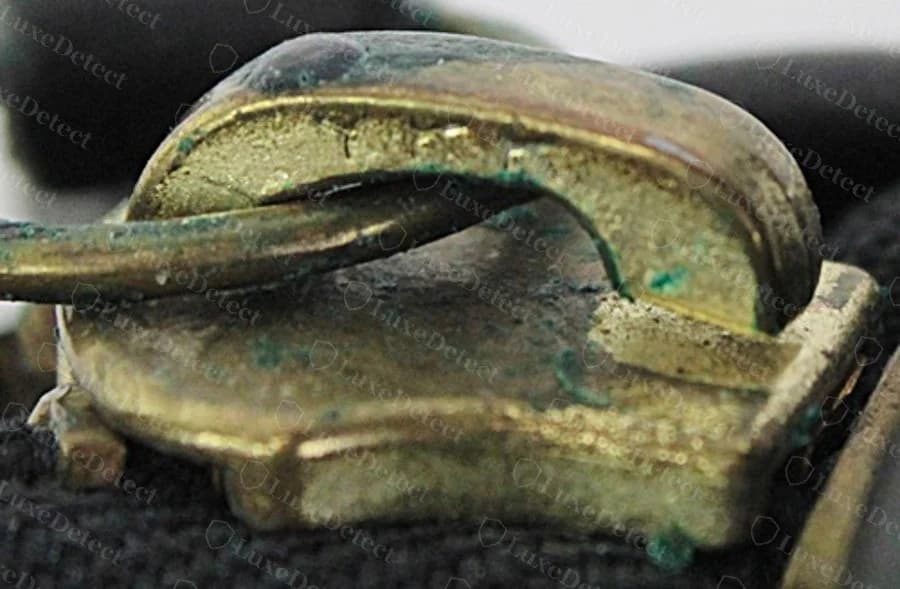
| Element | Authentic | Counterfeit |
|---|---|---|
| Casting edges | Sharp, well-defined | Sometimes soft or slightly rounded |
| Finish | Bright, even brass or nickel | Sometimes dull with uneven tarnish spotting |
| "YKK" zipper pull stamp | Present on many bags | Also present on many fakes, not a useful tell either way |
| "SOLID BRASS" hardware stamp | Occasionally present | Also occasionally present, real hardware suppliers' stamps don't distinguish authenticity |
Worth knowing
We want to be precise here: several of the fakes we sampled had hardware that was genuinely hard to fault, sharp castings with a clean finish. Hardware quality is a real but not decisive-alone signal, useful as supporting evidence alongside the creed patch, not a standalone verdict.
Leather, Stitching, and Overall Construction
Legacy leather is glove-tanned cowhide, generally a fuller, slightly firmer hand than the more casual leathers used on later Coach lines. Stitching runs in tight, even rows, usually in a matching or subtly contrasting thread, with no loose threads or visible glue squeeze-out at the seams. In our sample, both authentic and fake bags mostly cleared this bar; a well-made counterfeit's exterior stitching can be genuinely difficult to fault from photos alone, which is part of why the interior creed patch matters more.
- Seams should be straight and evenly spaced, without wandering stitch lines.
- Edge paint (the colored coating sealing raw leather edges) should be smooth and unbroken, without heavy chipping on a bag that otherwise looks lightly used.
- The base of a Duffle or bucket-shaped bag should sit flat when the bag is set down; a poorly constructed base is a soft supporting signal, not decisive on its own.
Worth knowing
Exterior construction quality is the weakest of the checks in this guide precisely because counterfeiters have gotten good at it. Don't let clean exterior stitching alone override a soft creed patch.
The Hangtag
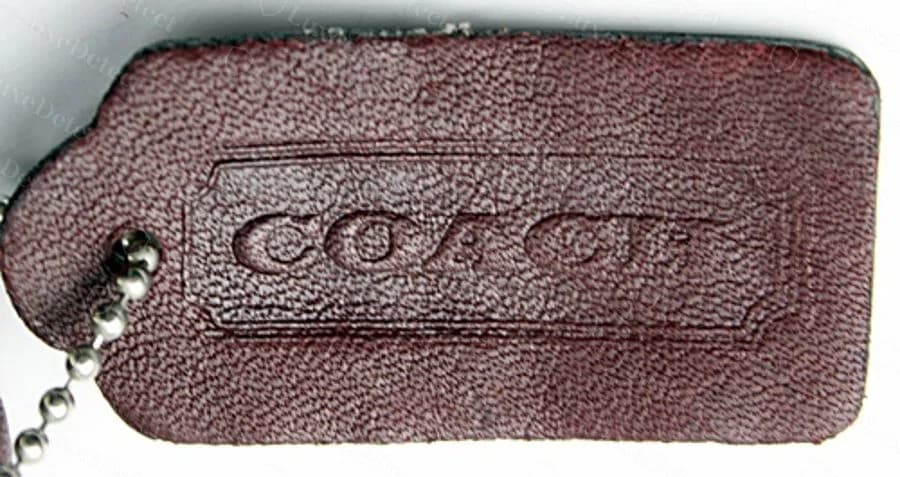
Most Legacy bags carry a separate leather hangtag on a metal ball chain, embossed with just the "COACH" wordmark in the same bordered box style as the creed patch, no paragraph text. We looked closely at this across both pools and found it a weaker differentiator than the interior creed patch: most fakes we sampled had a reasonably legible hangtag wordmark, sometimes just a shade softer than an authentic example side by side, but not something you could call decisive from a single photo.
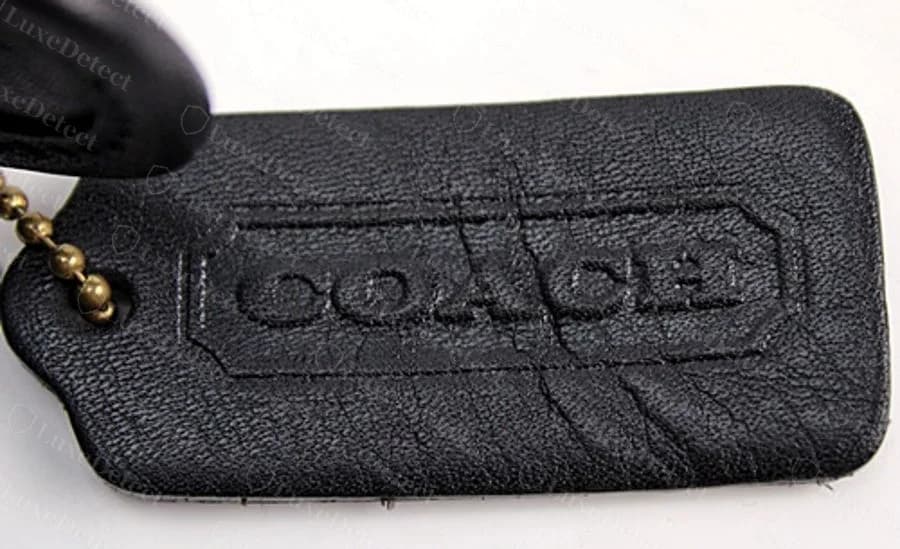
Worth knowing
Use the hangtag as a tie-breaker, not a primary check. If it looks off on its own, that's worth noting; if it looks fine, don't let it override a soft interior creed patch.
What the Box and Dust Bag Do and Do Not Prove
Vintage Legacy bags rarely come with original retail packaging at all, decades of resale turnover means most trade hands bag-only. A dust bag or box, when present, is context: it can support a listing's story, but a genuine-looking dust bag proves nothing about the bag inside it, and its absence proves nothing about authenticity either. Treat packaging as a detail to cross-reference against the bag, never as evidence on its own.
Quick Authentication Checklist
- Confirm the silhouette against the Legacy model reference above, don't rely on a generic "vintage Coach" listing title.
- Examine the interior creed patch closely: is the paragraph text individually legible, or does it blur into a soft grey field while the COACH wordmark stays sharp?
- Check the hardware for casting sharpness, finish evenness, and premature tarnish spotting.
- Look over the stitching and edge paint for wandering seams or heavy unexplained chipping.
- Check the hangtag wordmark as a tie-breaker, not a primary signal.
A mushy, blurred creed-patch paragraph next to a crisp wordmark and border is, on its own, enough to walk away from a listing. Any other single check failing alone is a reason to look closer, not necessarily a reason to reject outright, combine it with at least one more checkpoint before concluding.
When to Get a Professional Opinion
Photos in a listing can hide exactly the detail that matters most here: creed-patch legibility only shows up in a close, well-lit macro shot, which many sellers don't provide. If you can't get (or can't evaluate) a clear photo of the interior patch, or if the bag clears every check here but something still feels off, a professional review is worth the cost relative to what a Legacy bag typically sells for. LuxeDetect's handbag authentication starts at $25 for a 24-hour turnaround (faster tiers available), with a Certificate of Authenticity issued on a pass.
FAQ
Where is the serial number on a Coach Legacy bag?
Inside the bag, embossed below the creed patch paragraph (the block of text starting "THIS IS A COACH BAG" or "HANDCRAFTED IN THE UNITED STATES"). Older bags use a plain number format like `578-5511`; bags from the mid-1990s onward use a letter-prefix format like `H8P-9055` or `D2J-9085`, where the letter encodes the production month and the number after it the year.
What's the difference between a Coach Legacy Duffle and a Janice?
The Duffle (styles 9085, 9090, 9997) is a bucket-shaped shoulder bag with a rounded base and simple zip closure. The Janice (9966, 9718) is more structured, with a flatter base and a front zip pocket. Both are part of the Legacy construction family and share the same creed patch and hardware standards.
Is a soft or blurry creed patch always a sign of a fake?
Not always, but it's the strongest single tell we found. Decades of genuine wear can soften an embossing too, so weigh it against the bag's overall condition: a patch that's shallow and mushy while the surrounding leather is otherwise clean and well-kept is a red flag, while a patch that's worn evenly along with the rest of a heavily-used bag is more likely just age.
Does a Legacy bag need its original box or dust bag to be authenticated?
No. Most Legacy bags on the resale market today never come with original packaging, since they're decades old and have changed hands multiple times. Authentication rests on the bag's own construction: the creed patch, hardware, and stitching, not on packaging.
Are Coach Legacy bags a common target for counterfeiters?
Yes. The Legacy line's simple, recognizable silhouettes and strong secondhand demand make it one of the more heavily counterfeited parts of Coach's catalog, alongside signature canvas pieces from later eras.
What does "glove-tanned cowhide" mean on the Legacy creed patch?
It's Coach's own description of the tanning process used on Legacy-era leather, referenced directly in the creed patch text. It's not a third-party certification and can't be verified independently from the wording alone; it's the accompanying embossing quality, not the phrase itself, that carries authentication value.