Handbag Authentication Specialist
Handbag authentication specialist. Has reviewed submissions across Hermès, Chanel, Louis Vuitton, and Dior since 2019.
Published October 2026 · Contact
Why Dooney & Bourke Fakes Fail Inside the Bag
Dooney & Bourke sells two very different kinds of bag under one name. The Signature line is a woven DB jacquard or coated canvas trimmed in leather, and it is what most people mean by "a Dooney". The vintage All-Weather Leather (AWL) line, with its pebbled leather, embossed duck patch and brass duck fob, is the older classic that collectors hunt for. Counterfeiters work on both, but they fail in different places.
On Signature bags the outside is usually fine. The print, the leather trim and the red-bordered woven label are all copied well. What gives the bag away is the inside: a lining printed with small DB logos, a registration tab with nothing on it, or a plaque that reads "D&B". On vintage AWL bags the opposite is true. The best fakes copy the duck patch, the brass fob, the tag and even a correctly formatted serial, and no single mark separates them from a genuine bag. That line is judged on how the marks, leather and construction fit together against verified pairs.
This guide covers both. It is built from genuine and counterfeit Dooney & Bourke handbags from LuxeDetect orders, and claims that come only from those orders are worded "on the pairs we examined". Brand facts such as tag eras come from collector references and are named as such.
What to check, ranked by reliability
| Checkpoint | Reliability | What it tells you |
|---|---|---|
| 1. The Lining: Printed DB Logos | ★★★★★ | A thin lining printed with small single-colour DB logos at random angles is decisive on a Signature bag; genuine linings are plain twill or basketweave, and genuine DB inside is the same woven jacquard as the outside. |
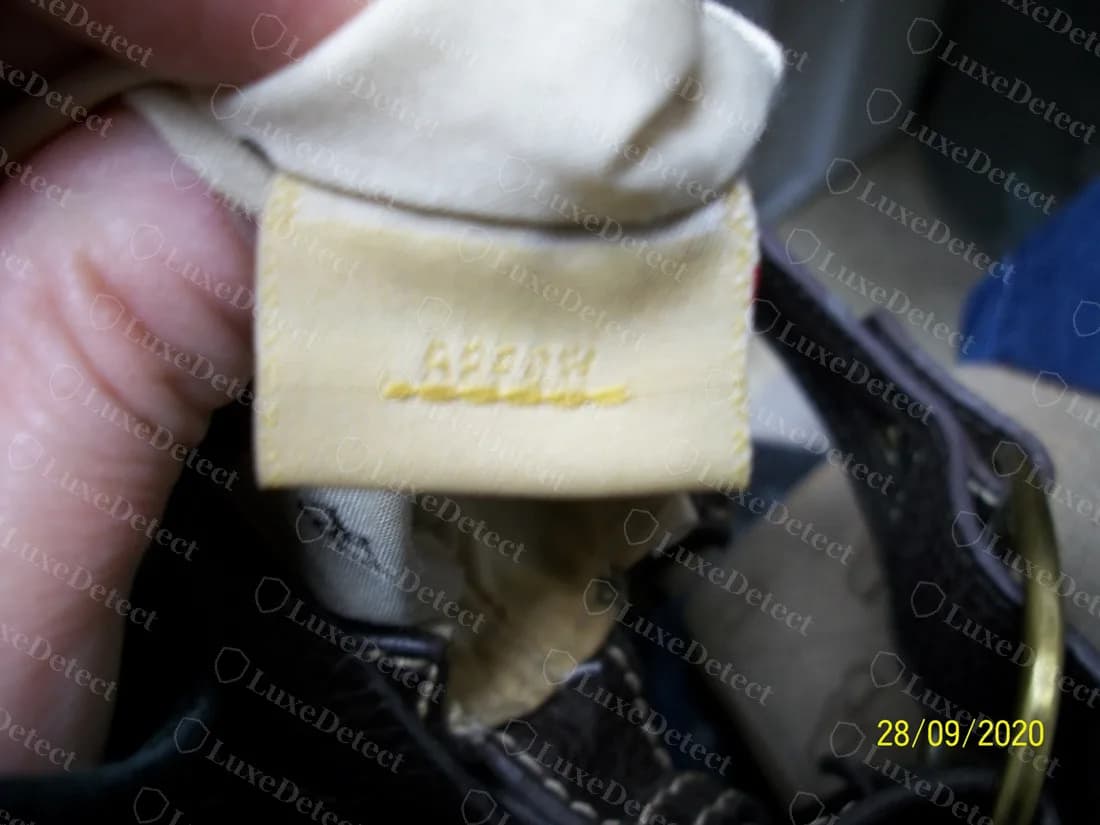
| 2. The Registration Tab | ★★★★★ | A blank tab, or a short code embroidered in yellow thread instead of a printed number, is a strong sign of a fake; a worn genuine tab can fade and a fake can print a plausible number. |
| 3. DB, Never D&B | ★★★★★ | A "D&B" monogram with an ampersand on a plaque or patch did not appear on any genuine bag we examined, but few fakes carry one, so its absence clears nothing. |
| 4. The Red, White and Blue Tag and Serial (All-Weather Leather) | ★★★★★ | Expected on genuine vintage All-Weather Leather, but fakes copy both the tag and a correctly formatted serial, so a good tag and serial prove little. |
| 5. The Duck Patch and Brass Duck Fob | ★★★★★ | Fakes reproduce the embossed duck patch and the brass fob closely, so treat them as context rather than a decision. |
Two Lines, Two Playbooks
Work out which line you are holding first, because the checks that matter are different.
- Signature canvas and monogram bags (the woven DB print, coated canvas, jacquard and similar fabrics, trimmed in leather). Go to the lining and the registration tab first. These are the checks that catch most fakes.
- Vintage All-Weather Leather (pebbled leather in colours such as green, navy, British tan and black, with an embossed duck patch and a solid brass duck fob). Use the tag and serial for context, then read the duck patch, the fob, the leather, the stitching and the hardware together. Section 4 and section 5 explain what a genuine one shows and which close-ups to send.
Florentine leather bags are a third family. We did not see enough counterfeits of that line to say anything about its fakes, so this guide does not cover them.
The Lining: Printed DB Logos
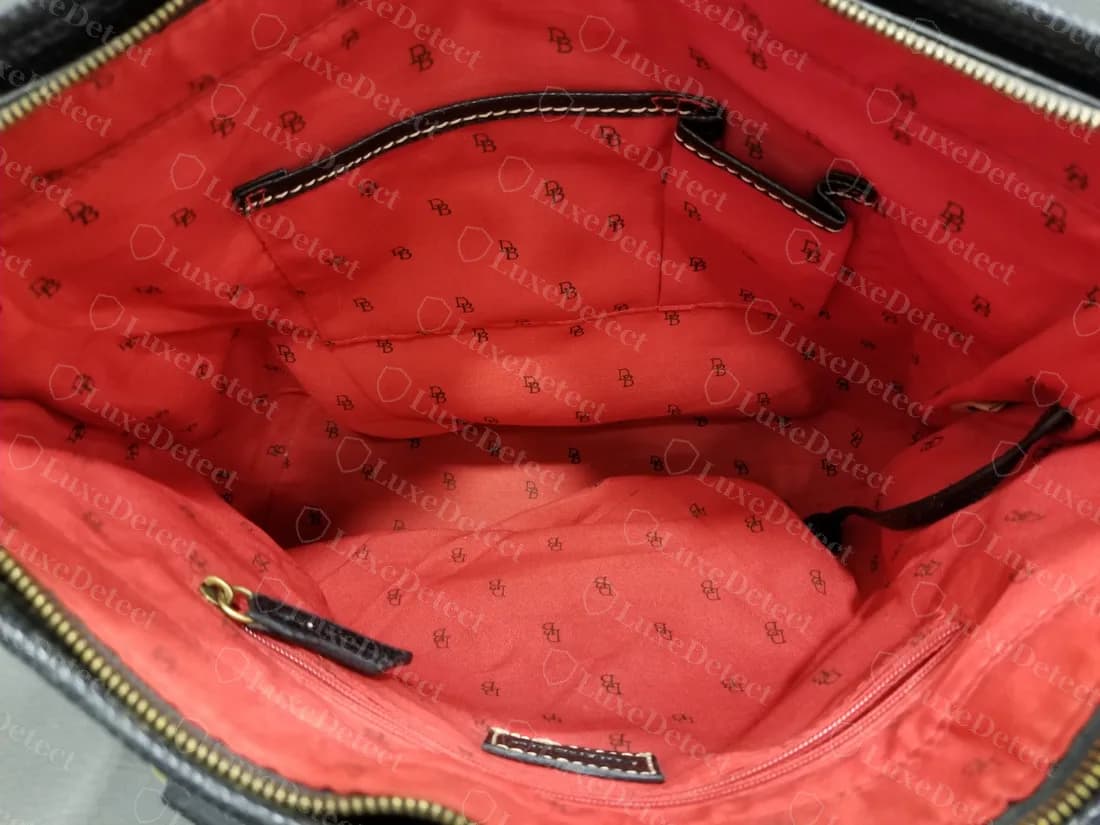
Open the bag and look at the lining. On the Signature fakes we examined, the lining is a thin, smooth fabric in red, cream or black, printed with small single-colour DB logos scattered at random angles. It sits under a woven jacquard outside. Almost every fake whose lining we could see had it, and none of the genuine bags we examined did.
The genuine linings we examined were plain: a twill or basketweave in red, pink, blue or grey, with no logo printed on it.
| Element | Genuine | Fake |
|---|---|---|
| Lining fabric | Plain twill or basketweave, in red, pink, blue or grey | Thin smooth fabric in red, cream or black |
| Logo on the lining | None printed on the lining | Small single-colour DB logos scattered at random angles |
| Pockets | Same plain lining, or the same dense woven jacquard as the outside | Same printed DB fabric as the body lining |
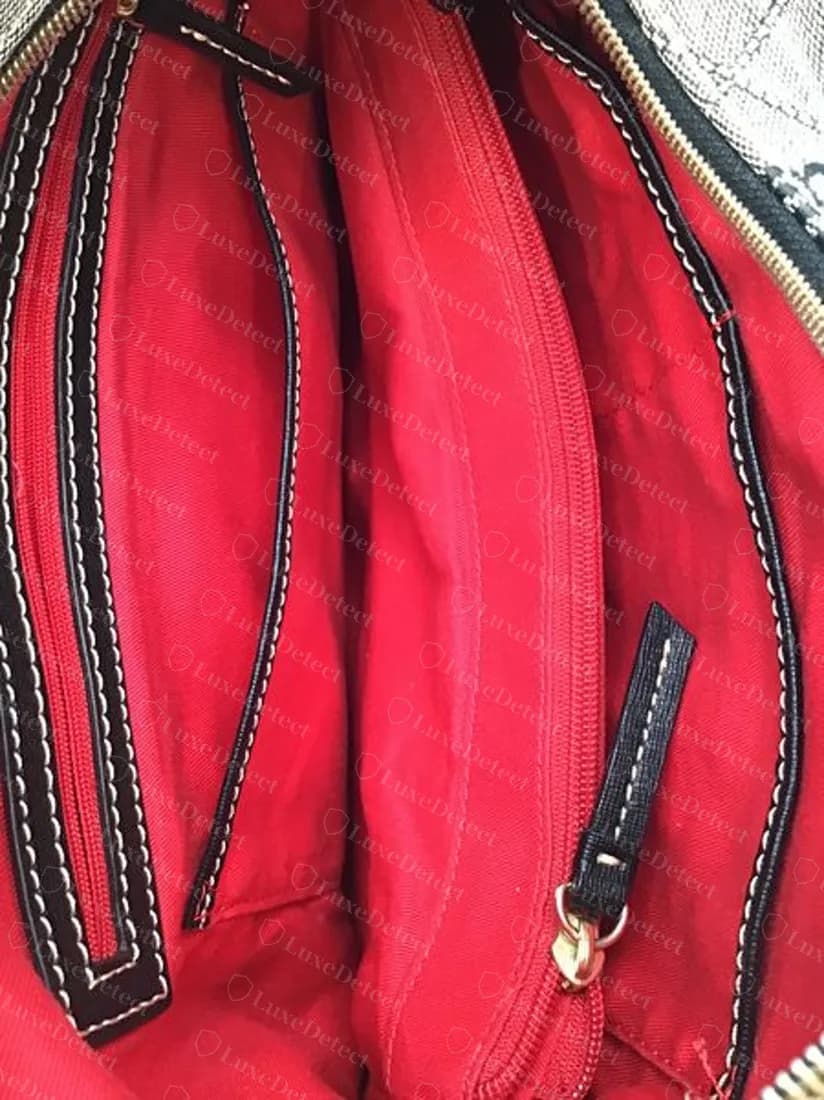
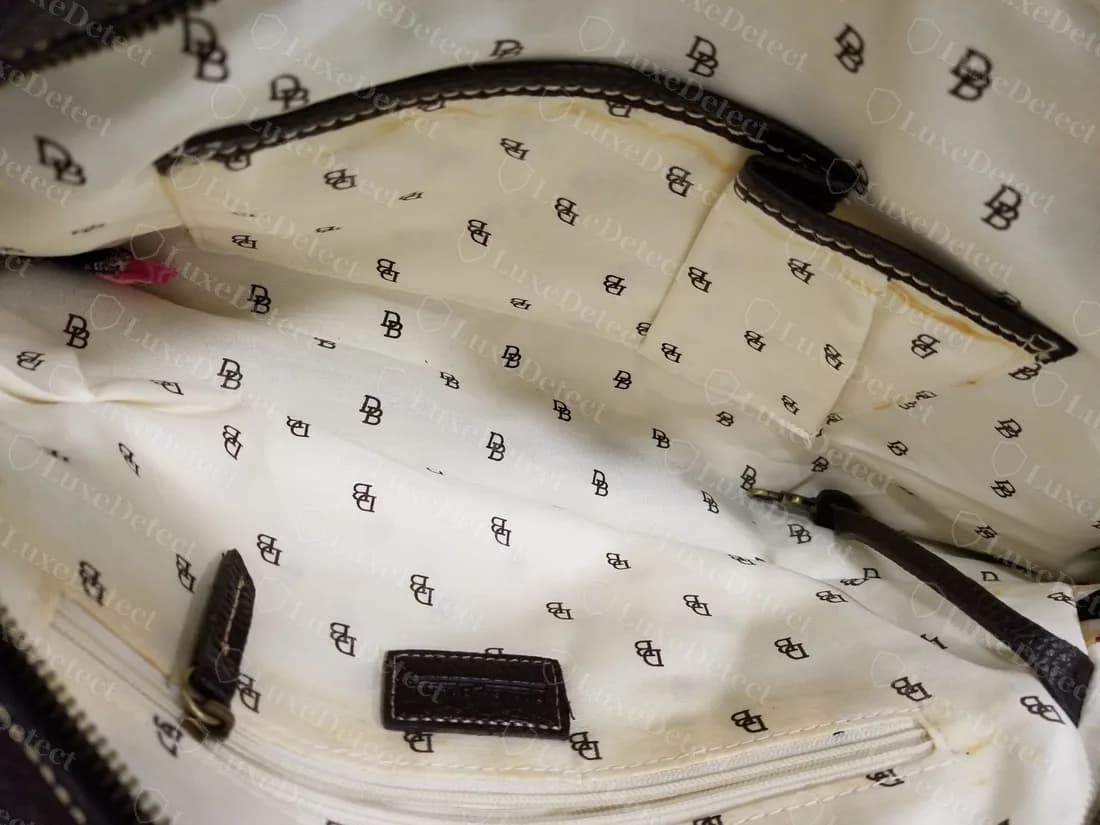
Red flag
A separate lining printed with small single-colour DB logos scattered at random angles. On the pairs we examined this appeared on fakes and never on a genuine bag, so it is the first thing to check on a Signature bag.
Be strict about what the check is. DB does appear inside some genuine bags, in two ways. Genuine pockets are sometimes made of the same dense woven jacquard as the outside, so the DB is woven in and matches the exterior. And a genuine unlined coated-canvas multicolour bag shows its outside print on the inside, in the same scale and colours. What we did not see on a genuine bag is a thin printed lining with scattered DB logos in one colour. If the DB inside is woven, large and the same as the outside, it is the genuine pattern. If it is small, single-colour, printed and tossed at all angles, it is not.
Worth knowing
We have not sampled every collection. Licensed and collaboration lines and the newest releases are the places a genuine exception could hide, so compare against a verified bag of the same collection if the lining is the only thing that looks wrong.
The Registration Tab
Genuine bags carry a small woven registration tab sewn into an interior seam. In the genuine bags we examined it is a satin-look tab with a lighter inner panel, and the number is printed on that panel in black or blue ink. Two formats appeared: a letter followed by seven digits (K10500054 is one we saw), and a letter, a digit, a space and six digits (A6 662696 is one we saw, on a vintage bag).
The tab itself is not the tell, because fakes use the same satin-look tab with a lighter panel. The tell is what is on the panel. Many Signature fakes had a blank tab, and others carried a short code embroidered in yellow thread rather than printed in ink.
| Element | Genuine | Fake |
|---|---|---|
| Tab construction | Woven satin-look tab with a lighter inner panel | Same look, so the tab alone proves nothing |
| What is on the panel | A number printed in black or blue ink | Blank, or a short code embroidered in yellow thread |
| Number format | A letter and seven digits, or a letter, a digit, a space and six digits | No number, or a short irregular code |
| Number method | Printed on the surface of the panel | Stitched into the panel, when there is any number at all |
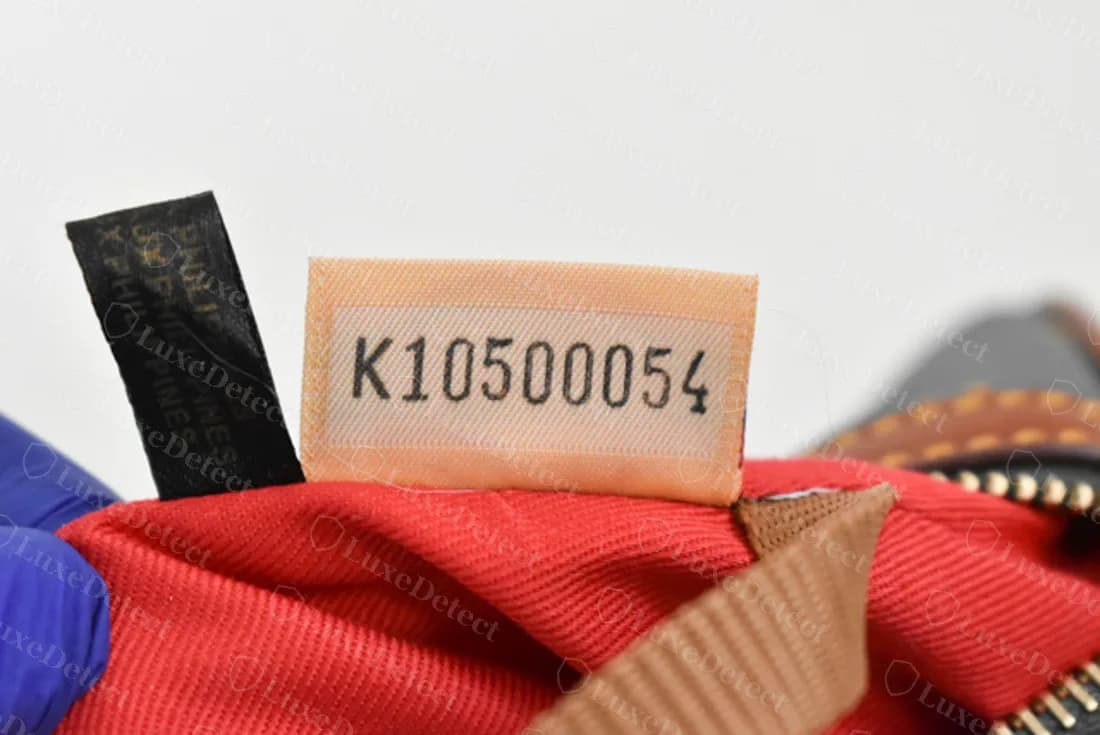
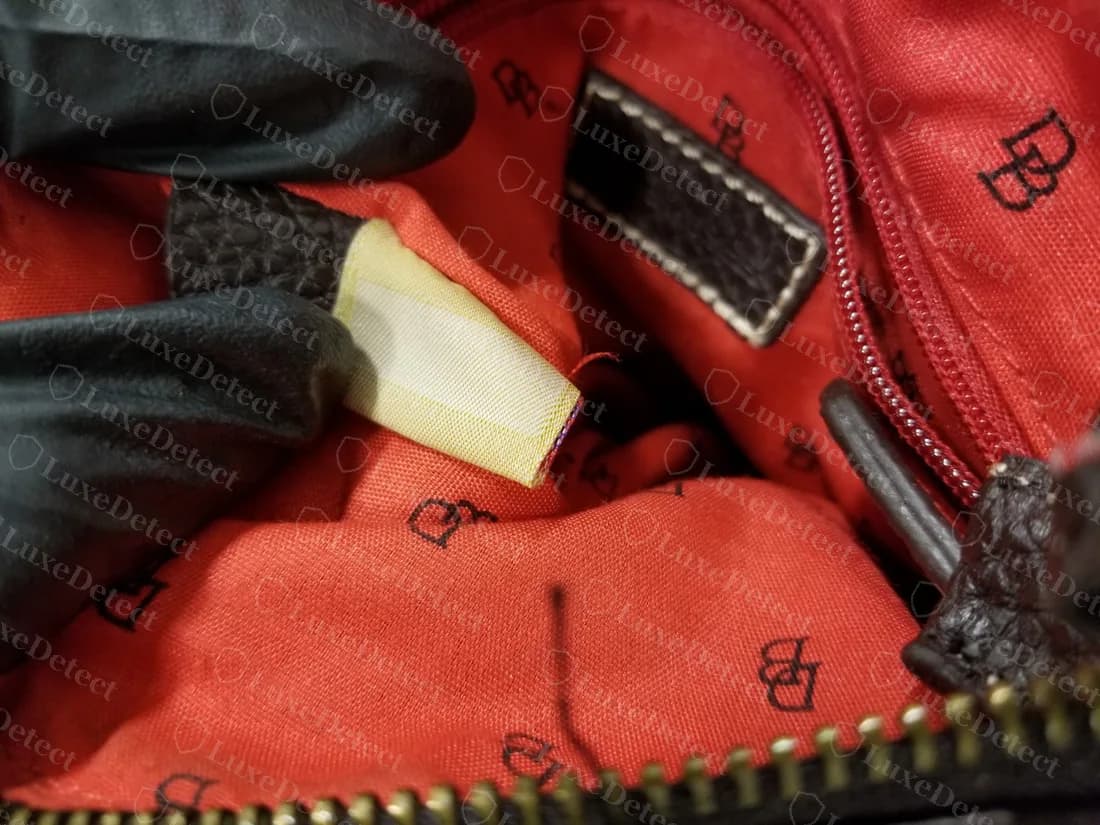
Red flag
A registration tab that is blank, or that carries a code embroidered in yellow thread. A printed number on a lighter panel is what genuine tabs show, and we did not see a blank or embroidered tab on a genuine bag we examined.
This is a four-star check rather than five for two reasons. A worn genuine tab can fade, so an unreadable number on an old bag is a reason to look harder, not a verdict. And a fake can carry a plausible printed number, which is why a correct format never clears a bag on its own. Section 4 returns to that.
DB, Never D&B
Dooney & Bourke's short mark is "DB", two letters, no ampersand. On the pairs we examined, a "D&B" monogram with an ampersand between the letters, set on a plaque or patch, appeared on fakes and not on any genuine bag. The genuine marks we saw were the square "DOONEY & BOURKE 1975" plate, the round DB fob, the duck, and "DB" without an ampersand.
| Element | Genuine | Fake |
|---|---|---|
| Short monogram | "DB", no ampersand between the letters | "D&B" with an ampersand |
| Plaque shape | Square plate reading DOONEY & BOURKE 1975, or a round fob | Striped oval brass plaque with a large "D&B" above script lettering |
| Script lettering | Clean, evenly spaced capitals on the plate | Misshapen script with uneven spacing |
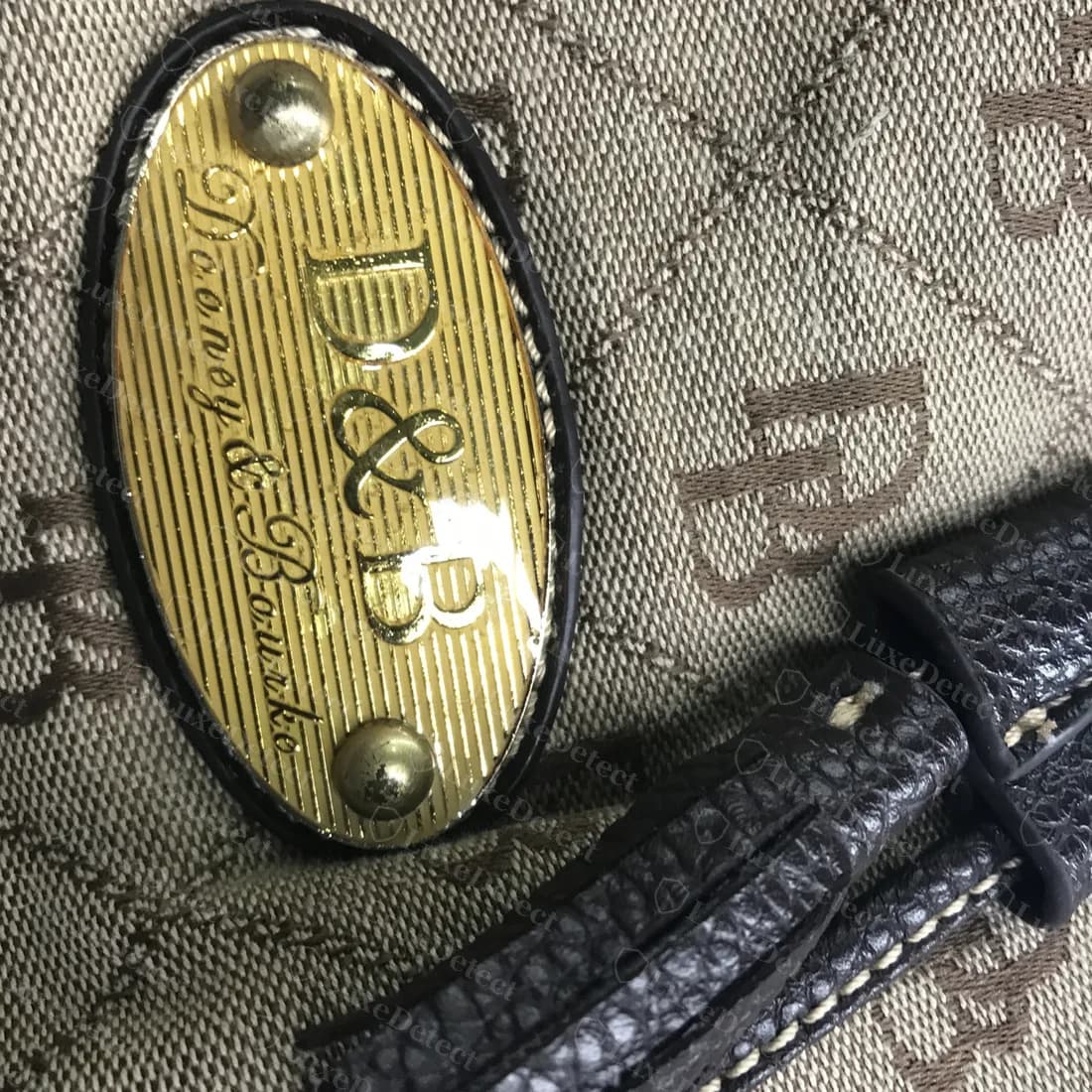
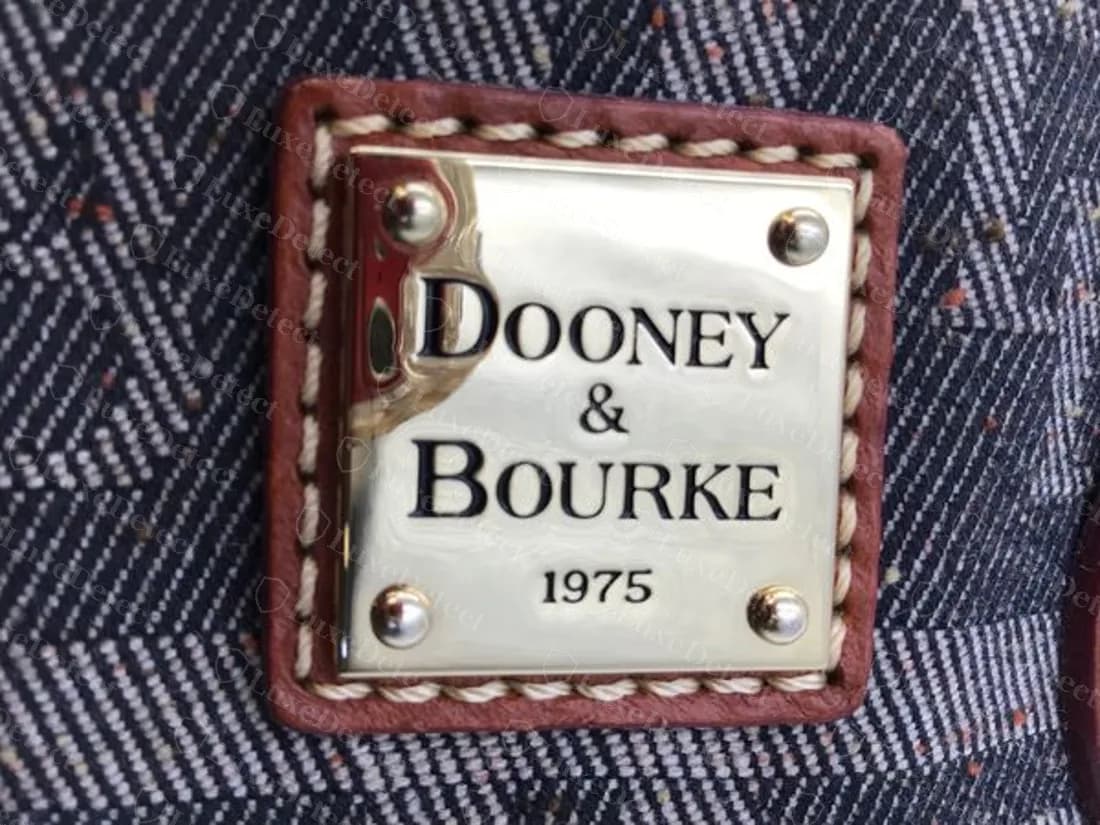
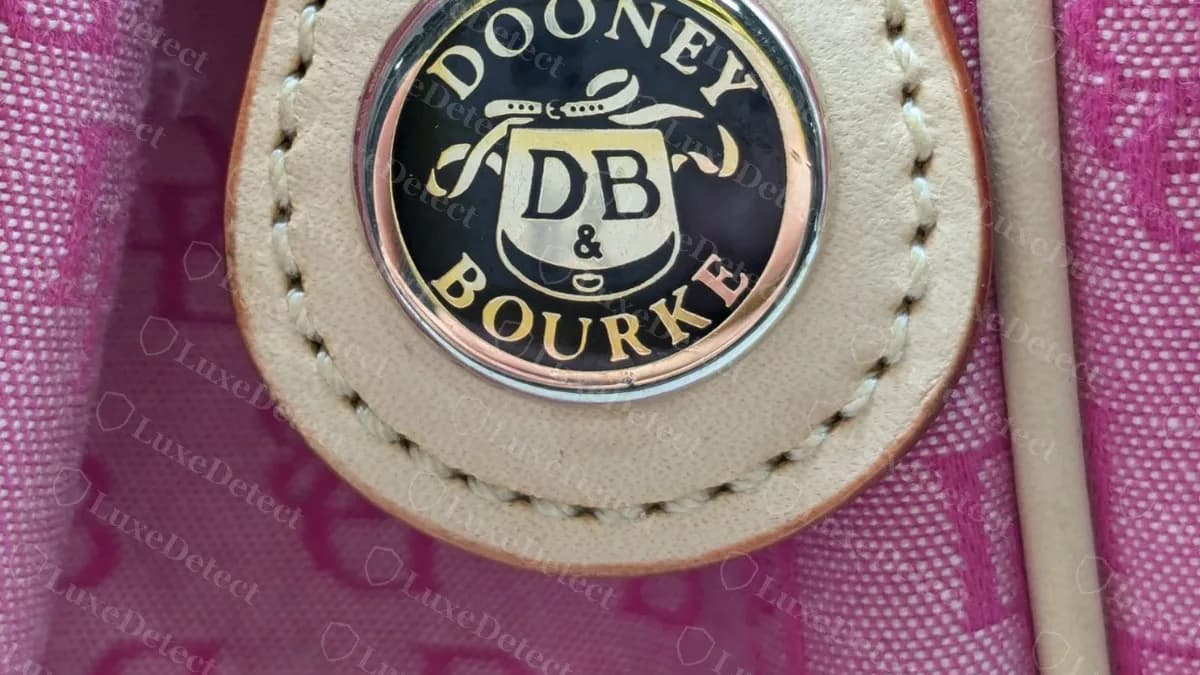
The round genuine fob spells out DOONEY and BOURKE around the rim and shows a DB monogram inside. That is the full name written out, not a "D&B" monogram.
Red flag
A "D&B" monogram with an ampersand on a plaque or patch. We did not see this on a genuine bag, so treat it as a strong sign of a fake.
It is a thin check. Few of the fakes we examined carried a "D&B" mark, so its absence tells you nothing, and we found no outside source that states the rule, which is why it is worded "on the pairs we examined". If you find genuine D&B hardware on a verified bag, the check loses its force.
The Red, White and Blue Tag and Serial (All-Weather Leather)
On vintage AWL bags, collectors look for a woven tag with a red border and blue lettering reading "DOONEY & BOURKE, INC." and "Made in U.S.A.", and a separate registration tag with the serial. These are expected on a genuine vintage bag. The serial in the format we saw is a letter, a digit, a space and six digits.
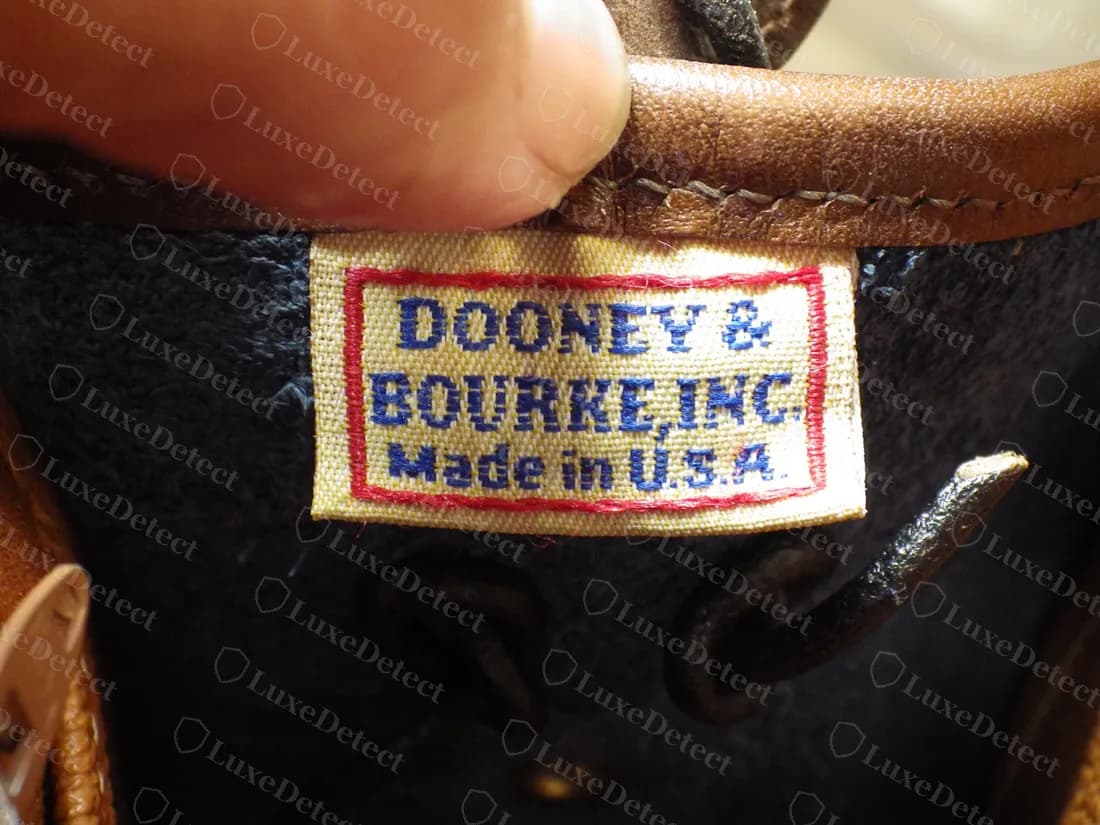
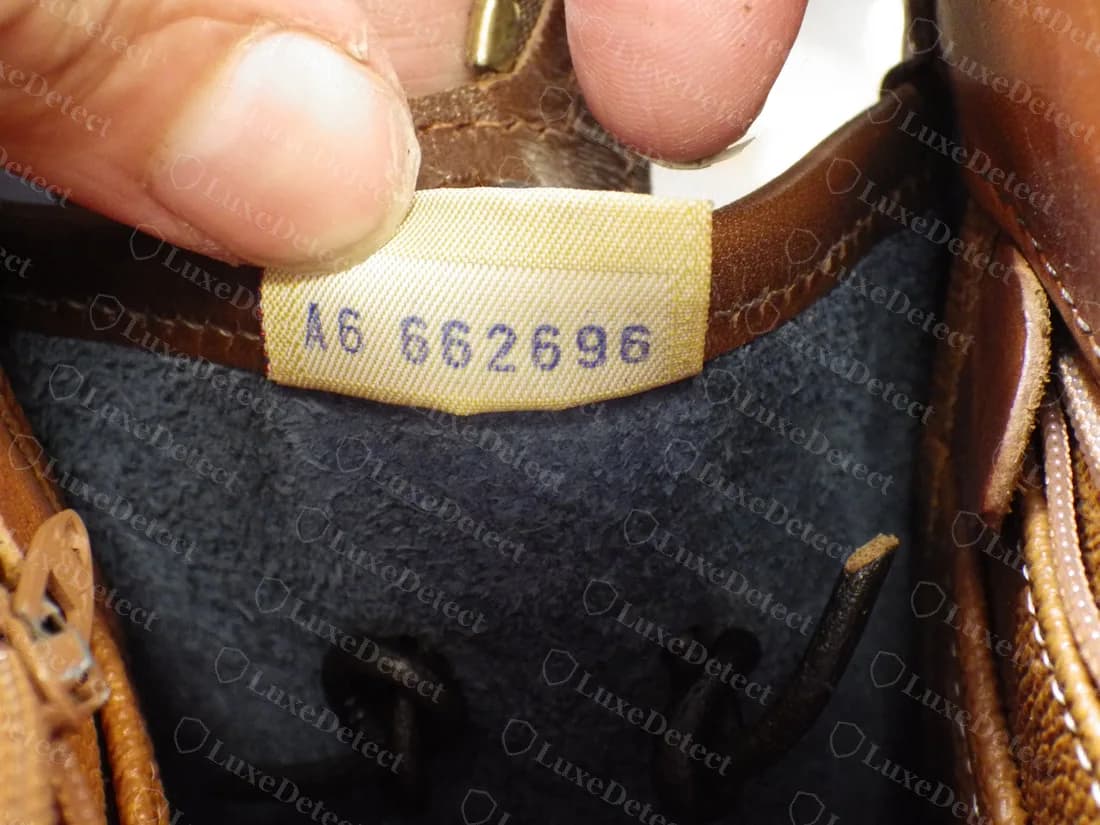
The problem is that fakes copy both. Among the AWL fakes we examined were bags that carried a convincing red, white and blue tag, a stitched duck patch and a serial in exactly the right format. The tag and serial are worth checking, but they are context. A bag that passes them has not passed authentication, and a bag that fails them is not automatically fake, because tags tear out and eras differ (see the era section below).
Worth knowing
"Made in China", "Made in Korea" and "Made in Mexico" on a white tag are common on AWL fakes, but origin is never a tell by itself. Genuine later Dooney & Bourke bags carry tags reading "Assembled in Mexico", "China" and other countries. Read the tag against the era of the bag and the rest of the construction, never the country alone.
The Duck Patch and Brass Duck Fob
The embossed duck patch on vintage AWL bags is an oval of leather stitched onto the bag, with DOONEY & BOURKE and ALL-WEATHER LEATHER around the duck. The fob is a solid brass oval hanging from the strap or handle, with the same wording and a duck in relief.
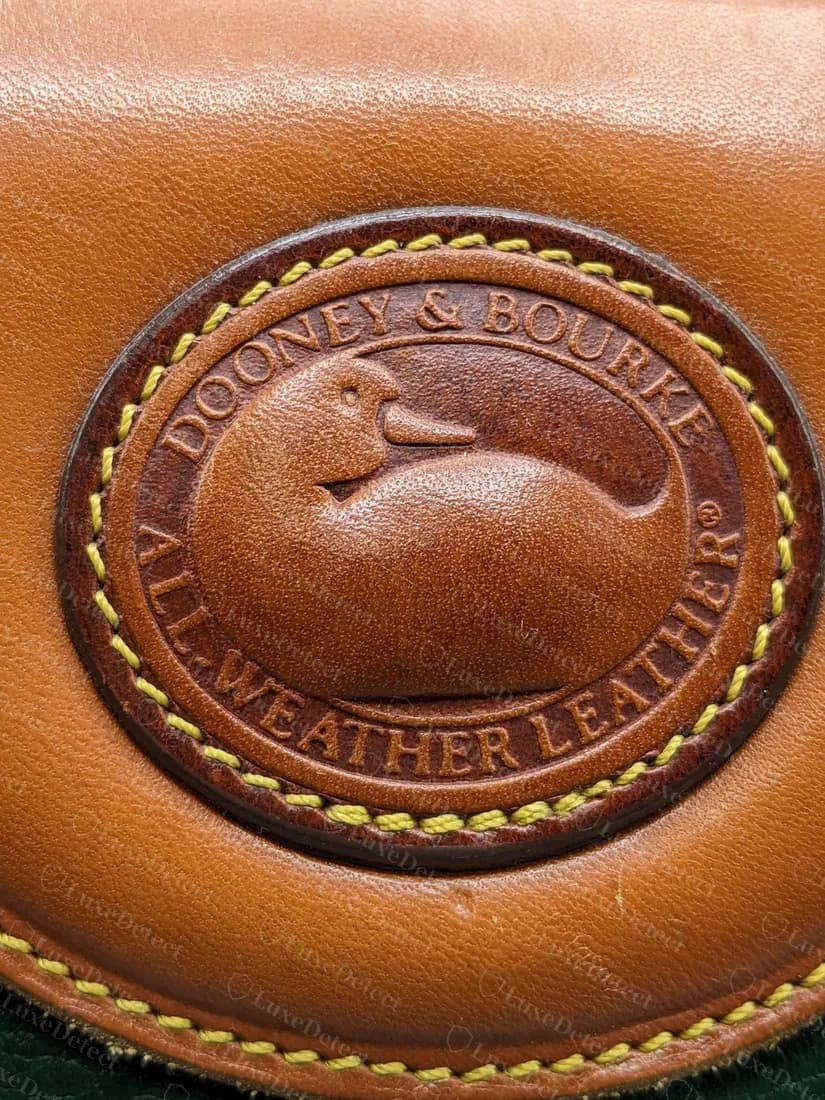
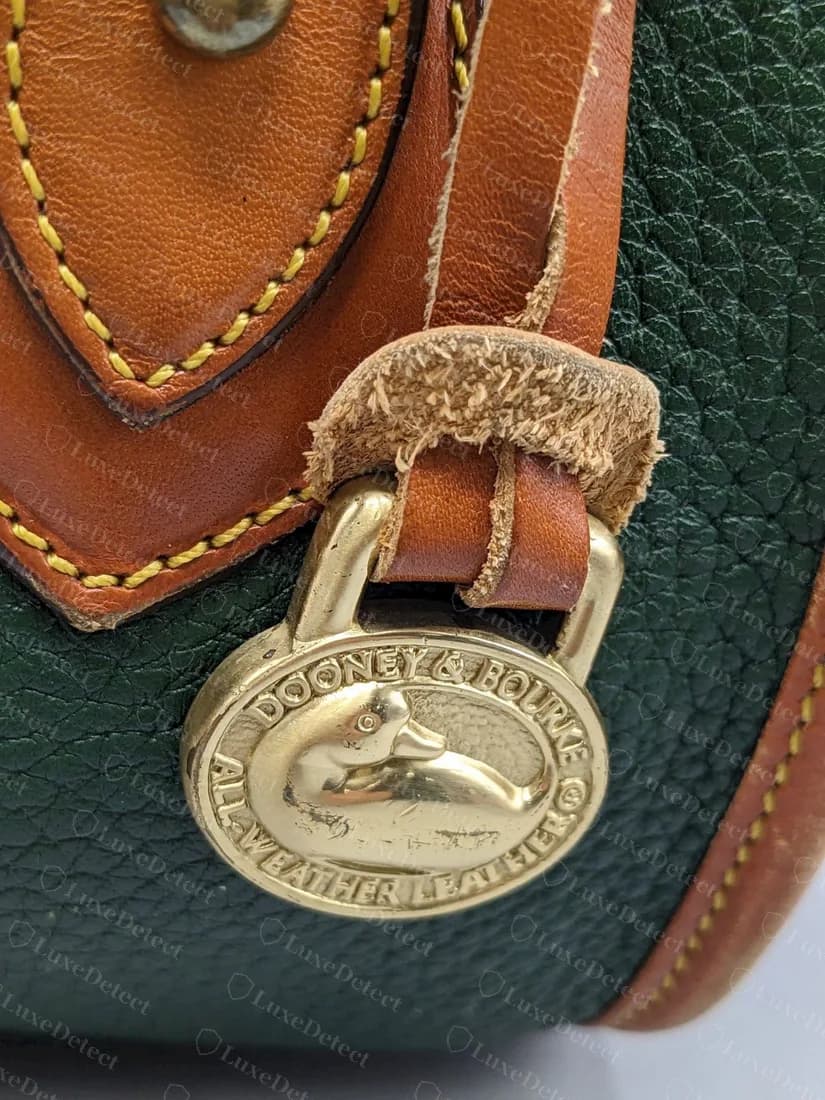
We rate this one star because fakes reproduce both closely. The AWL fakes we examined carried a stitched duck patch with legible text and a brass fob. Differences in the texture of the duck or the shape of the fob exist, but they are too subjective to rate on their own and they change between eras of genuine bags too.
Worth knowing
A good duck patch and a brass fob do not clear a bag. Collectors also check that the duck seal is both glued and sewn, that the hardware is solid brass, and that rivets are stamped "Dooney & Bourke", according to the collector reference we used. These are useful details to compare on a verified bag of the same era, not decisions.
What Fakes Copy (and What Is Not a Tell)
Knowing what fakes get right saves time. These are copied well, so a correct one proves little.
- On Signature bags: the red-bordered woven "DOONEY & BOURKE, INC." label (the comma is on genuine labels too), the teardrop duck fob in any enamel colour, the heart charm and the embossed interior leather patches.
- On vintage AWL bags: the embossed duck oval with legible text, the brass duck fob, the red, white and blue "Made in U.S.A." tag and a correctly formatted serial.
- Not a tell: the country on a white tag. Genuine later bags are assembled in Mexico, China and elsewhere.
Dooney & Bourke is far from the only American heritage house whose fakes copy the visible branding, and the same lesson applies to the Coach authentication guide and the Kate Spade authentication guide: look for the places a copier has no reason to pay attention to, such as linings, tabs and the way marks fit together.
Dooney & Bourke Tag and Serial Eras
Collector references (Horsekeeping's vintage Dooney guide is the one we used) describe a sequence of tags. We could not confirm every date independently, so read this as a guide to what you might find, not a verdict rule.
- No tag, about 1981 to 1982: the earliest bags are described as carrying no tag.
- Green "MADE in USA" tag, about 1983 to 1984.
- Red, white and blue tag, mid to late 1980s: "DOONEY & BOURKE, INC." and "Made in U.S.A.", with the registration number on the back.
- 1990s overseas production: bags made abroad omit "Made in U.S.A." and add an "Assembled in ..." tag.
The serial format on vintage bags is a letter, a digit, a space and six digits. One reference says the first letter codes the country of manufacture, but we could not verify a published key, so do not read a country or a year out of the letters. The Signature bags we examined use a letter and seven digits on the woven registration tab.
A missing tag is not proof of a fake. Very early bags may never have had one, and tags tear out. The collector reference does treat a fully ripped-out tag as a warning sign on a bag that should have one, since it removes the evidence, so look harder at everything else.
Worth knowing
Neither the tag nor the serial gives a reliable year on its own. A code that matches the format shows only that the code looks like a Dooney code. For a fuller explanation of why, see [does a serial number prove a bag is authentic](/blog/does-a-serial-number-prove-a-bag-is-authentic).
Photos to Send for an Authentication
Yes, a Dooney & Bourke can be authenticated from photos. What decides the verdict is how the marks, materials and construction fit together against verified pairs, so the most useful photos show each of those marks clearly and in good light.
For a Signature bag, send:
- The whole interior, with the lining visible, and a close-up of the lining fabric.
- The registration tab, flat, front and back, with the number readable.
- Any plaque, patch or fob, straight on.
- The woven "DOONEY & BOURKE, INC." label if the bag has one.
- The hardware and zipper pulls up close.
For a vintage All-Weather Leather bag, send:
- The red, white and blue tag and the registration tag, each flat and readable.
- The duck patch and the brass fob, straight on and from the side.
- The rivets, the zipper pull and the stitching at the handle joins.
- The leather grain and the edges, in daylight.
- The interior, including the colour and texture of the lining.
When to Get a Professional Opinion
On an expensive vintage AWL bag, where the best fakes copy the visible marks, a professional review against verified pairs is the safer route. LuxeDetect's handbag authentication starts at $25 for a 24-hour turnaround, with faster options available, and includes a written verdict. You can start an authentication with the photos above.
FAQ
Does Dooney & Bourke ever use a DB-print lining?
Not in the way fakes do, on the bags we examined. DB appears inside some genuine bags as the same dense woven jacquard as the outside (on pockets, for example) or as the outside print on an unlined coated-canvas bag. A separate thin lining printed with small single-colour DB logos scattered at random angles appeared only on fakes. We have not sampled every collection, so compare against a verified bag of the same line.
Where is the serial number on a Dooney & Bourke bag?
On the genuine bags we examined it is on a small woven registration tab sewn into an interior seam. On the vintage All-Weather Leather bag we looked at closely, it was on a separate small registration tag inside the bag, apart from the red, white and blue "Made in U.S.A." tag. A blank tab, or one with a short code embroidered in yellow thread, was a sign of a fake.
What does a Dooney & Bourke serial number look like?
Two formats appeared on genuine bags: a letter followed by seven digits (for example K10500054), and a letter, a digit, a space and six digits (for example A6 662696). The number is printed in black or blue ink on a lighter panel of the tab. We could not verify a published key, so we do not read a country or year from the letters.
My vintage Dooney has no tag. Is it fake?
Not necessarily. Collector references describe the earliest bags (about 1981 to 1982) as having no tag, and tags tear out of older bags. A missing tag is not proof either way, but it removes a piece of evidence, so check the duck patch, the fob, the leather, the hardware and the stitching against a verified bag of the same era, or have it reviewed.
Is "Made in China" on a Dooney & Bourke fake?
No, not by itself. White "MADE IN CHINA", "KOREA" or "MEXICO" tags are common on All-Weather Leather fakes, but genuine later Dooney & Bourke bags carry "Assembled in Mexico" and "China" tags too. The country tells you little. Judge the tag against the bag's era and the rest of its construction.
How do I authenticate a vintage All-Weather Leather Dooney?
Check the red, white and blue tag and the registration serial for context, then read the duck patch, the solid brass fob, the leather grain, the stitching and the hardware together against a verified bag of the same era. The best fakes copy each of those marks, so the verdict comes from how they fit together, not from one tag. A professional review of close-ups is the safer route on a valuable bag.
Can a fake Dooney have a real-looking duck fob and tag?
Yes. Fakes copy the teardrop duck fob in any enamel colour, the embossed duck patch with legible text, the brass duck fob and the red, white and blue "Made in U.S.A." tag. A good-looking fob or tag does not clear a bag. The checks that caught fakes were inside: the lining, the registration tab and a "D&B" plaque.
Does a serial number prove a Dooney is real?
No. A serial in the correct format proves only that the code looks right. We saw vintage All-Weather Leather fakes with correctly formatted serials, and Signature fakes with either no number or a plausible printed one. Use the serial as one clue among several, and read the lining, the tab and the marks too.