Luxury Accessories Authentication Expert
Luxury accessories authenticator. Covers small leather goods, belts, and eyewear.
Last updated September 2026 · Published March 2026 · Contact
Coach Authentication: The Complete Framework
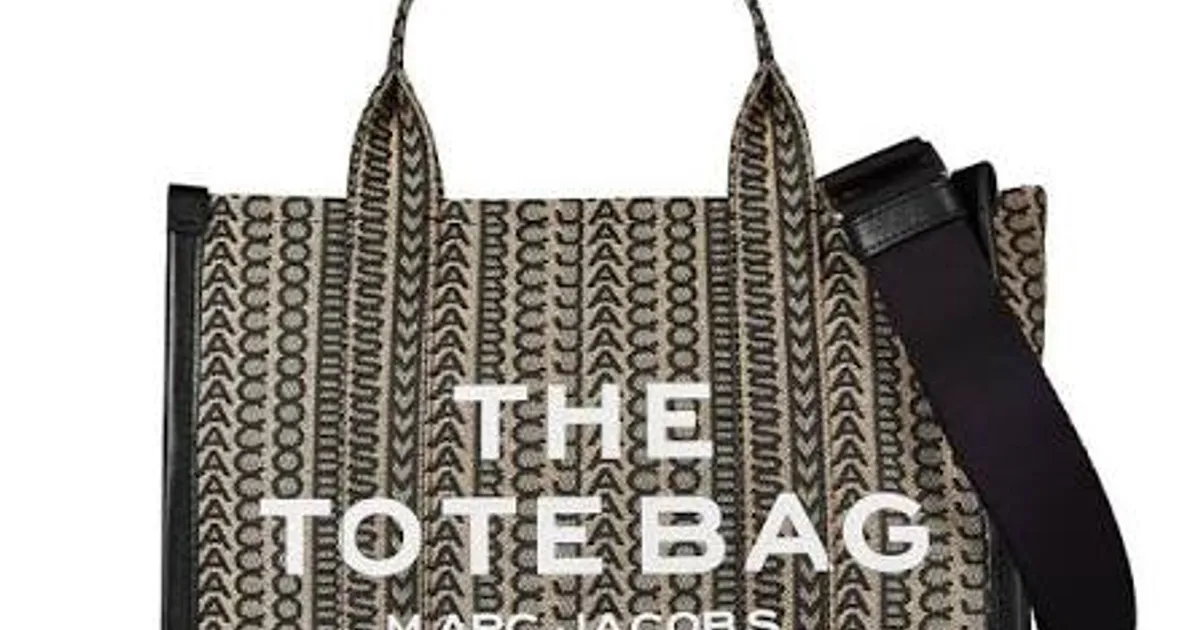
Coach was founded in 1941 in a Manhattan loft and grew into one of the most recognized American luxury brands. The brand has gone through several distinct design eras (traditional, modernized, and the current era under Stuart Vevers), and authentication approaches differ significantly between them. Marc Jacobs occupies a similar contemporary-American-accessible-luxury space; see our Marc Jacobs Tote bag guide for how that brand's authentication markers compare.
Understanding the era is the first authentication step. A vintage Coach from 1998 has different markers than a contemporary Coach from 2022. Fakes from both eras circulate on secondary markets.
What to check, ranked by reliability
| Checkpoint | Reliability | What it tells you |
|---|---|---|
| Understanding Coach Style Numbers | ★★★★★ | A style number that resolves to no real Coach product in any catalog or documented sale is a fake code — checkable from a single photo. |
| Signature Canvas | ★★★★★ | Pattern misalignment at a seam is a near-certain fake indicator; compare the seam with a verified pair. |
| Leather Quality: The Most Reliable Marker | ★★★★★ | Deep, through-thickness dye and a natural pebble texture are hard to fake cheaply; the press-and-feel test is a check done with the item in hand. |
| Hardware | ★★★★★ | A hollow, high-pitched tap sound is a strong tell; the sound check is done with the item in hand. |
| Logo and Branding: Era-Specific Details | ★★★★★ | Wrong-era logo format is checkable from a photo, but needs the era first identified from other context. |
| Stitching and Construction | ★★★★★ | Raw, unfinished leather edges are a clear tell, though a minor detail that is easy to overlook unless you look closely at the seam. |
Use our free Coach Creed Checker to read the production month, year and style number from your bag's creed patch.
Decode My Creed →The Two Coach Eras: What Changed in 2013
Pre-2013: Traditional Coach
The "old guard" Coach era. Characterized by:
- Premium, heavyweight leather (particularly pebble leather and smooth leather)
- Hardware in solid brass or heavy nickel with coach insignia
- Rectangular logo "creed" with "COACH" above a carriage, "EST. 1941" below
- The signature C monogram canvas (camel/khaki or brown with chocolate Cs)
- Generally more structured bag shapes
2013–Present: Stuart Vevers Era
The redesigned Coach aesthetic. Characterized by:
- Retro-forward design with more fashion-forward shapes
- Minimalist crest replacing the rectangular frame logo
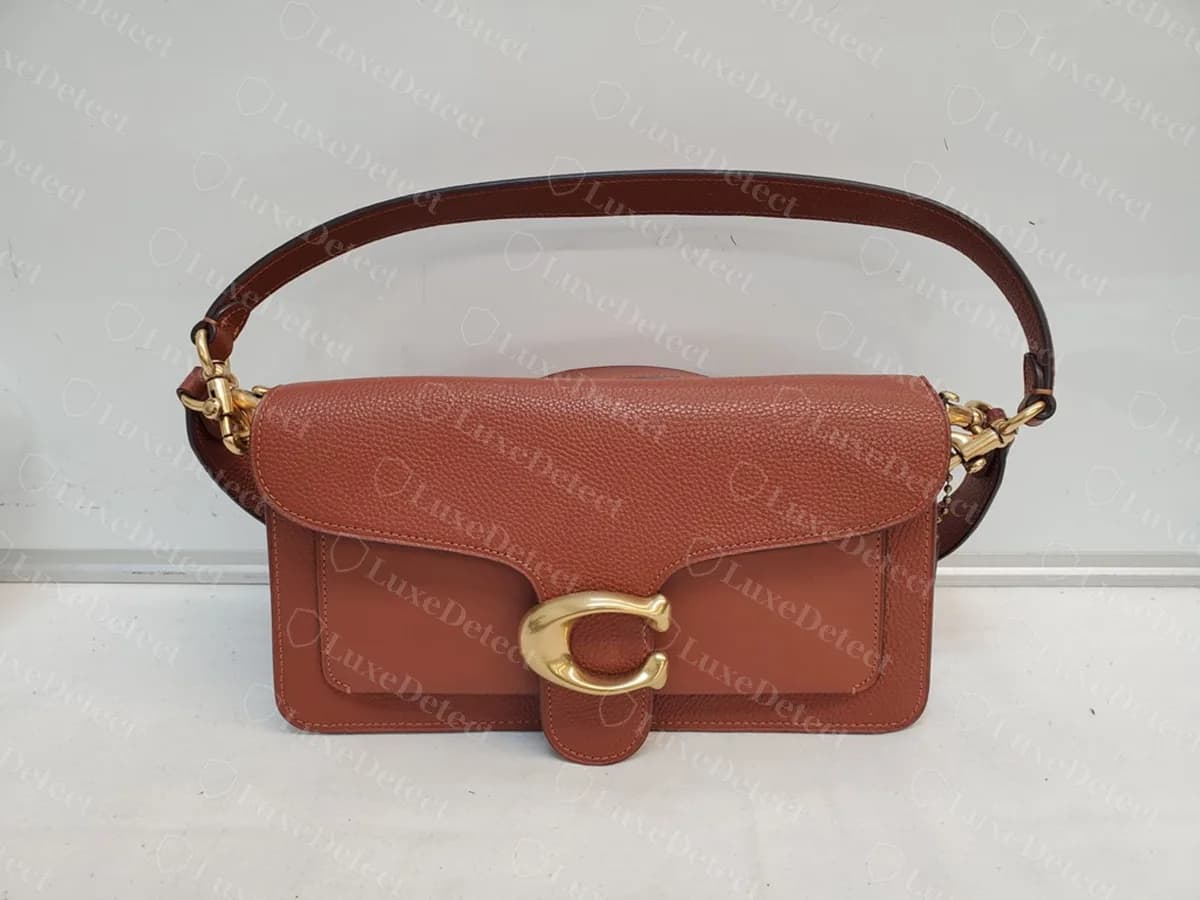
- New hero styles: Tabby, Rogue, Studio
- Continued pebble leather alongside new canvas and leather options
- More varied hardware finishes
When authenticating, confirm which era you're dealing with — the logo format and hardware style changed significantly.
Understanding Coach Style Numbers
This is Coach's primary production identification system. In 1994, Coach abandoned unique serial numbers and switched to a creed code that encodes the production month, year, factory and style number. Our Coach serial number checker decodes both the older lettered code and the modern one.
Where to Find the Style Number
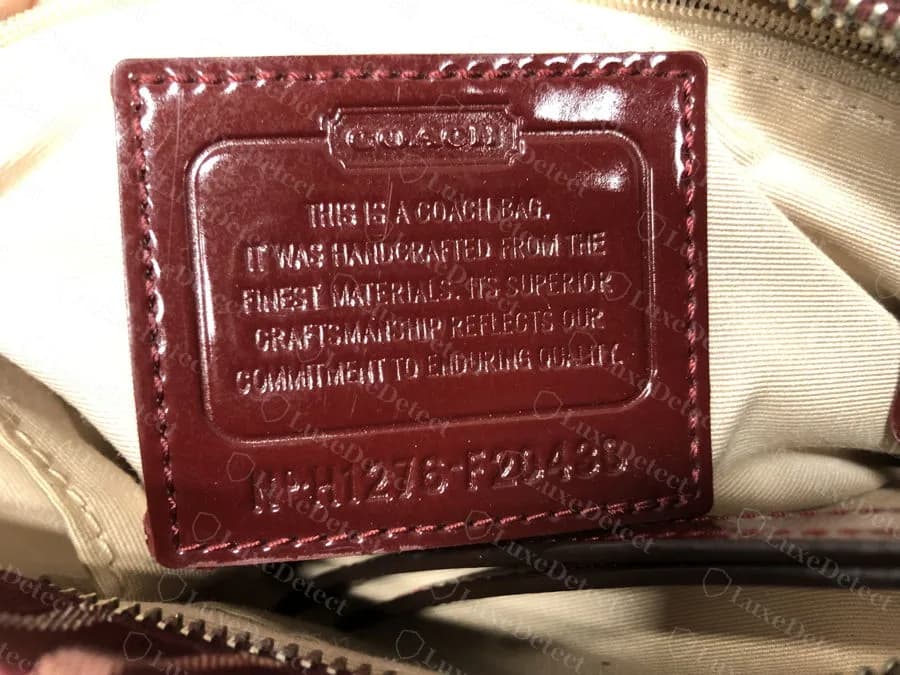
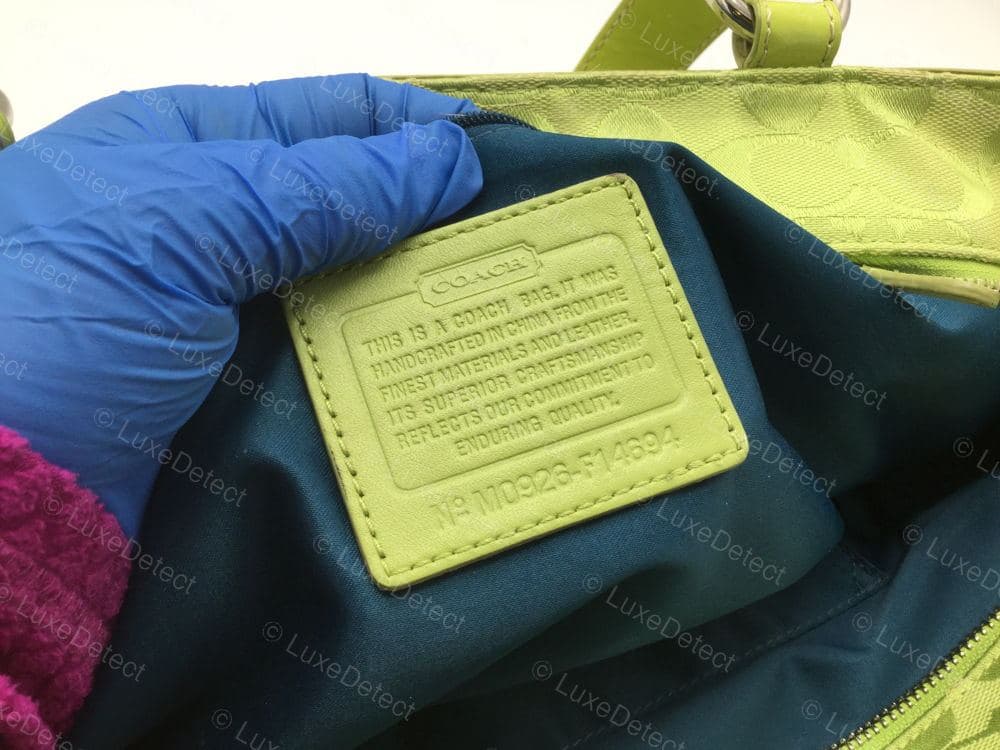
Creed patch (most bags): A leather tag attached inside the bag, embossed with the style number and production date code.
White tag (from about 2014): Some bags reportedly carry the code on a small white fabric tag in a pocket or seam instead of, or as well as, the leather creed. On wallets and wristlets we have read these tags dated 2014 to at least 2021.
Small accessories: Very small accessories may have no number — this is normal.
Decoding the Format
Older format (1994 to about 2006) example: K8P-9870
- First letter = production month (A = January, B = February, C = March ... J = September, K = October, L = November, M = December; I is skipped)
- Number after the letter = year (8 = 1998; the lettered code ended about 2006, so a 7, 8 or 9 means the late 1990s)
- Letter after the number = factory/production designation (not publicly decoded by Coach)
- Remaining numbers = model number
K8P-9870 → October 1998, Model 9870
Modern format (about 2006 on) example: B1980-38124
- First letter = month (B = February), with the same letters as the older format
- Next two digits = year (19 = 2019)
- Next two digits = factory code (80 here; Coach does not publish what these mean)
- Remaining characters after the dash = style number
B1980-38124 → February 2019, factory 80, Rogue 31 (style 38124)
The modern code is a batch code, not a serial number: genuine bags of the same style made in the same month and factory share it exactly.
Factory Outlet indicator: A style number beginning with "F" indicates a Factory Outlet (discounted) item. These are authentic Coach bags but produced specifically for outlet stores and are typically considered lower value than boutique pieces. Sellers sometimes omit or obscure this designation. The F prefix marks outlet pieces made about 2006 to 2021. Since about 2020, outlet and boutique pieces both use C-numbers (such as C0772), so a missing F does not prove a boutique piece.
Cross-Referencing the Model Number
The model number portion of the style code can be searched to verify the bag exists as a genuine Coach product. Search "Coach style [number]" or "Coach model [number]" — the bag should appear in Coach's own catalog or in documented secondhand sales. If no reference to that model number exists anywhere, it's either an extremely obscure item or a fake code.
Worth knowing
A shallow, uneven, or illegible creed tag is worth a closer look, but low-resolution seller photos can make even a genuine embossed tag hard to read — don't treat illegibility alone as proof of a fake without requesting a sharper photo first.
Logo and Branding: Era-Specific Details
Pre-2013 Logo
The rectangular creed reads "COACH" in block letters above a carriage-and-horse illustration, with "EST. 1941" below. The font is consistent and proportional. Fake versions frequently have letter spacing that's too tight or too wide, or the carriage illustration is simplified or distorted.
Post-2013 Minimalist Crest
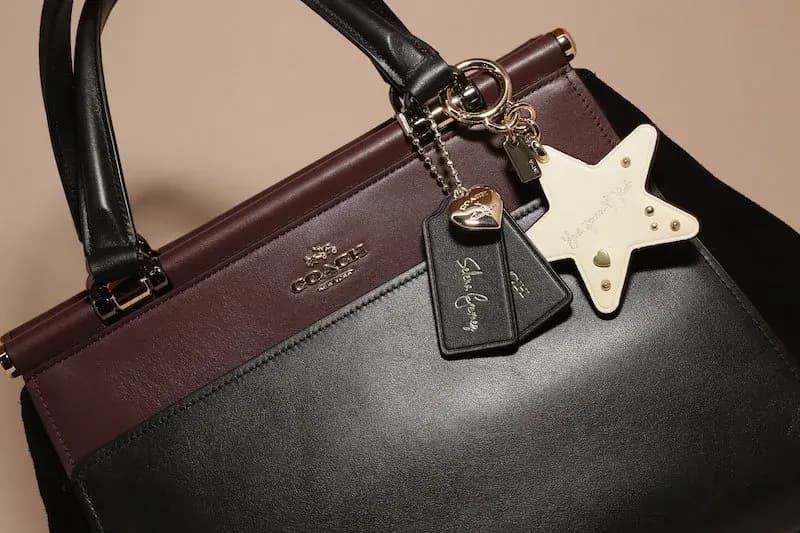
The crest is a simplified version of the carriage graphic, used more like a badge than a text logo. The font for "COACH" in the newer era is bolder and more modern. Proportions and alignment should be precise.
What fakes get wrong on logos: Inconsistent letter spacing, wrong font weight for the era, carriage illustration that's poorly detailed, or using the wrong era logo on the wrong era bag (a common error that's easy to catch once you know the timeline).
Worth knowing
This guide doesn't yet have a side-by-side photo of the carriage-and-horse creed specifically — the genuine creed photo above shows Coach's block-text style, a real and common variant, but not the illustrated carriage version this section describes. Cross-reference against official Coach product photos for the exact era before treating logo format as decisive on its own.
Leather Quality: The Most Reliable Marker
Pebble Leather (Pre-2013 and ongoing in Vevers era)
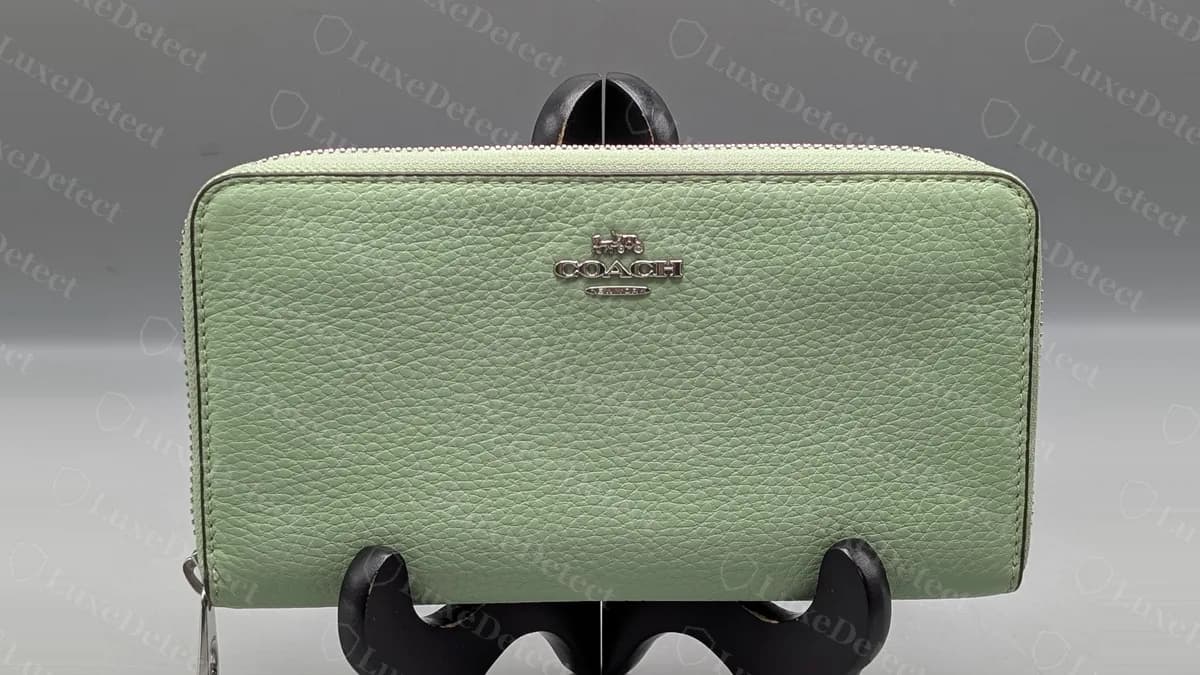
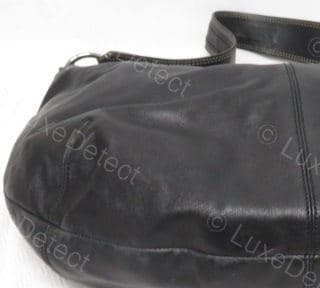
Coach's iconic pebble leather has a distinctive texture — small, consistent bumps across the entire surface. Press the leather: it should feel soft and yield gently. Run your finger across the surface: the pebble texture should feel uniform and natural, not stamped uniformly like a machine pattern.
Confirms authentic
Leather that shows this kind of fine, irregular natural grain (not a uniform stamped pattern) alongside tight, even stitching is consistent with genuine Coach construction — a positive signal worth weighing alongside the creed tag and canvas checks.
Color: Coach's pebble leather is deeply dyed — the color goes through the leather, not just on the surface. Where the leather is cut or stressed at edges, the color should be consistent throughout, not showing a lighter or different-colored interior.
Signature Canvas
The Coach signature canvas uses the interlocking "C" pattern. Authentication points:
- Color combinations: The C pattern comes in specific color combinations for each era. Verify the color combination is one that Coach actually produced.
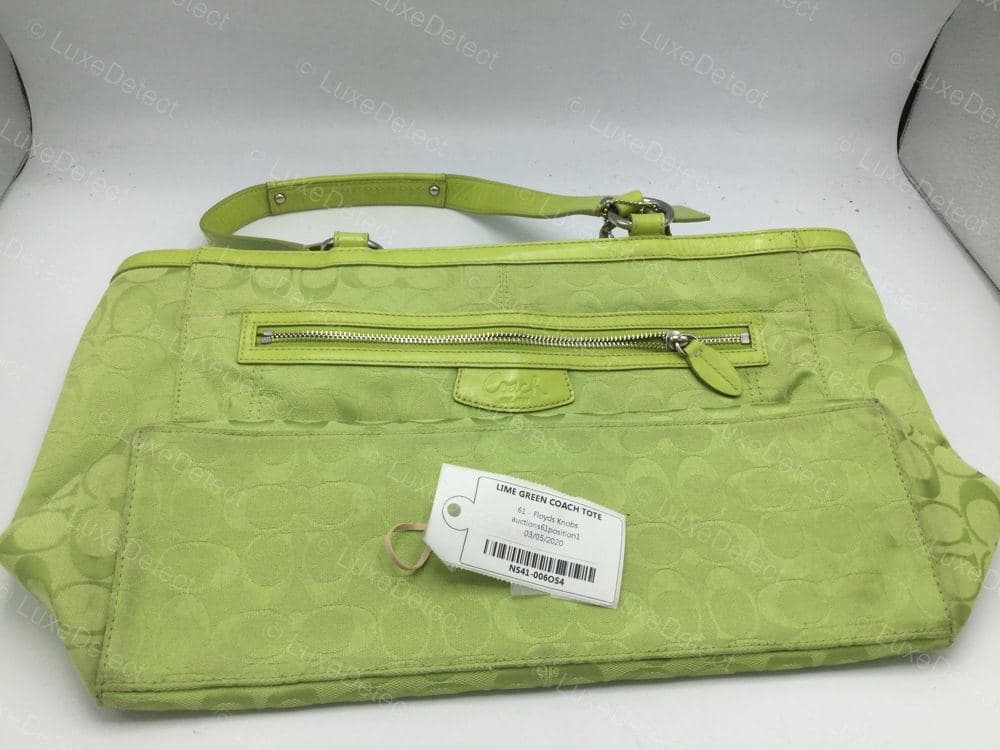
- Pattern alignment at seams: Where the canvas joins at pockets, handles, or base seams, the C pattern should continue seamlessly. Pattern misalignment at seams is a near-certain fake indicator.
- Canvas texture: The canvas should have a slight sheen and a firm texture, not canvas that feels like cheap fabric.
| Element | Authentic | Counterfeit |
|---|---|---|
| Color combination | Matches a documented Coach production era | Combination Coach never actually produced |
| Pattern at seams | C pattern continues seamlessly across pocket, handle, and base seams | Visible misalignment at seams |
| Canvas texture | Slight sheen, firm hand-feel | Feels like cheap, flat fabric |
Hardware
Material
Authentic Coach uses brass or nickel hardware, solid and weighty. Tap a piece of hardware with a fingernail: solid metal produces a low, solid sound. Fake hollow hardware produces a higher-pitched, lighter sound. The same tap test applies well to Mulberry's postman's-lock hardware; see our Mulberry Bayswater guide for that brand's specifics.
Zippers
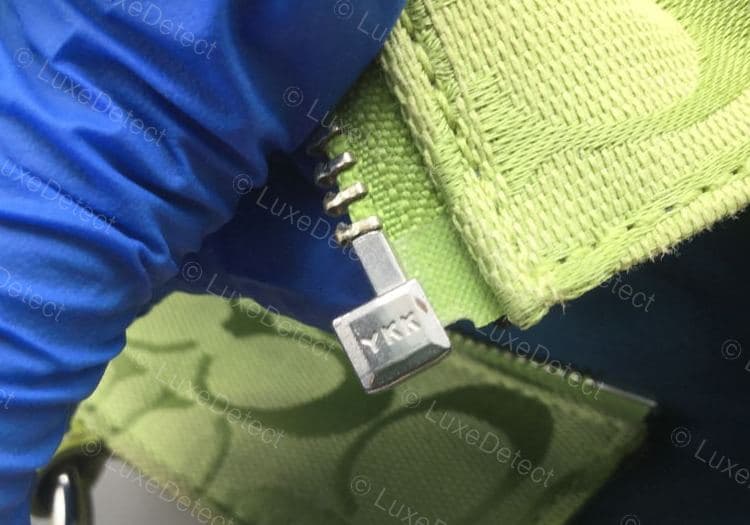
Coach uses branded YKK or Ideal zippers. The zipper pull typically carries the Coach logo or a simple metal pull consistent with the bag's hardware finish. A zipper that binds, sticks, or has visible quality issues is inconsistent with authentic Coach.
Worth knowing
Not every Coach zipper is visibly branded in every photo angle — a missing YKK/Ideal mark in one shot isn't conclusive on its own. Ask for a straight-on close-up of the pull if this is the only open question.
Plastic films: Protective film left on hardware is not a reliable test by itself. We have not established it as a tell for genuine or fake, so do not decide on it.
Stitching and Construction
Coach's stitching is consistent and tight — particularly on leather styles. Thread color matches the leather for standard styles.
Count stitches per centimeter on any straight seam: approximately 4–6 per cm for most Coach leather bags. Even stitching with no loose threads at seam ends.
Seam finishing: Where leather seams are exposed (handle edges, piping edges), they should be painted or otherwise finished — no raw leather edges visible. Visible raw leather edges indicate cheap manufacturing inconsistent with authentic Coach.
Full Authentication Checklist
- Era identified — pre-2013 or post-2013, logo format matches
- Style number present and format-correct for the claimed production period
- Model number cross-referenced with a real Coach product
- "F" prefix absent (or disclosed if Factory Outlet piece)
- Leather — soft pebble texture, color-consistent through thickness
- Signature canvas — pattern aligned at all seams
- Hardware — solid sound when tapped, correct Coach zipper
- Protective film on hardware: not a reliable test by itself
- Stitching — even, thread color-matched, no loose ends
- Seams — finished edges, no raw leather
FAQ
How can I tell if a Coach bag is from a Factory Outlet?
Look for an "F" at the start of the style number on the creed tag. Factory Outlet bags are authentic Coach bags but were produced for outlet pricing — they sometimes have slight design simplifications or are made from slightly different materials than the boutique version. The "F" designation is sometimes omitted by sellers trying to represent an outlet piece as a full-price item. Outlet bags are authentic but typically less valuable.
Does Coach still use the carriage-and-horse logo?
The classic Coach carriage logo was simplified starting in 2013 when Stuart Vevers joined as creative director. The carriage graphic still appears but in a more minimalist crest form. Both the old and new logo are authentic for their respective eras. Using the pre-2013 logo format on a bag that should have the post-2013 logo (or vice versa) indicates either a vintage bag or a fake.
What is the most commonly faked Coach model?
The Tabby (introduced in 2019) has become the most counterfeited contemporary Coach model due to its popularity and distinctive silhouette. The signature canvas styles are also heavily faked because the canvas pattern is easier to replicate than high-quality leather. For older styles, the pre-2013 pebble leather bags from the early 2000s are frequently counterfeited on vintage marketplaces.
Is Coach made in the USA?
Historically, Coach produced in the USA. Current Coach production is primarily overseas — the creed patch accurately identifies the country of manufacture, which may be Vietnam, China, Philippines, or other locations. These are all authentic Coach production countries for current pieces. Pre-2000 bags were predominantly made in the USA; if a bag is claimed to be from the 1990s and isn't marked "Made in USA," that warrants investigation.
Can I authenticate a Coach bag from photos?
Yes. The logo format, signature canvas pattern alignment, and leather texture are visible in good-quality photos. The weight and tap sound of the hardware are checks done with the item in hand, so compare the hardware with a verified pair. The style number is a particularly useful check because it can be verified against Coach's catalog: a fake style number that doesn't correspond to any real Coach product is immediately identifiable from a photo. Prada's re-issued styles rely on a similar catalog cross-reference; our Prada Re-Edition 2005 guide covers that model's own numbering system.