Senior Handbag Authenticator
Last updated August 2026 · Published June 2026 · Contact
Why the Serial Number Matters — and Why It's Not Enough
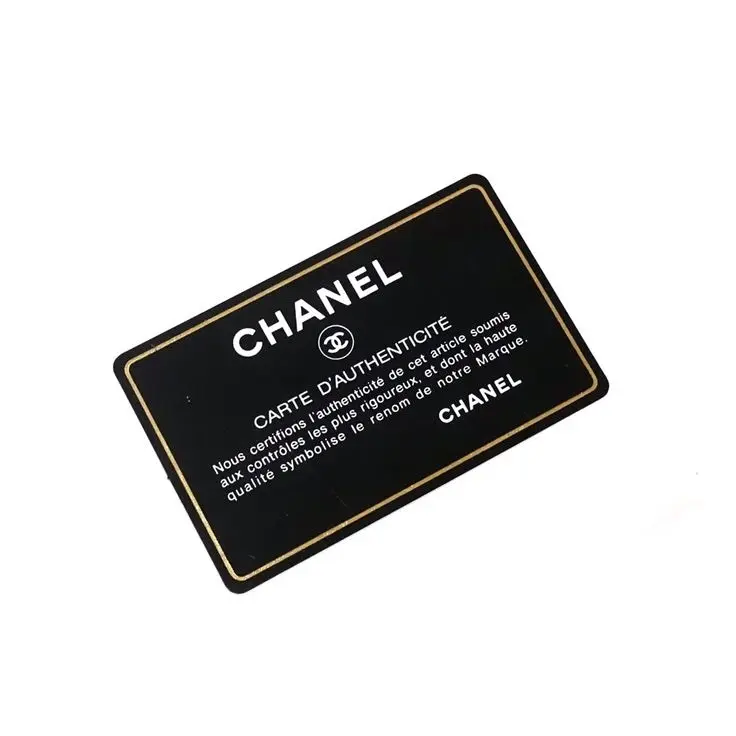
Every authentic Chanel handbag made from the mid-1980s onward carries a serial number. It appears in two places: embossed on a black authenticity card (introduced alongside the sticker) and printed on a white rectangular sticker sewn or affixed inside the bag's interior lining, usually tucked inside a pocket.
The serial number tells you when a bag was made. It does not, by itself, tell you whether the bag is genuine. High-quality counterfeits include accurate serial stickers and matching authenticity cards — sometimes copied from documented authentic bags. Always evaluate the serial number as one signal among many, alongside stitching, hardware, leather, and quilting quality.
What the serial number can do is serve as a tripwire: if the number doesn't match its stated era, or if the sticker itself looks wrong for its period, something is wrong. This guide gives you the tools to run that check for every series from 1986 to the present.
Where to Find the Serial Number
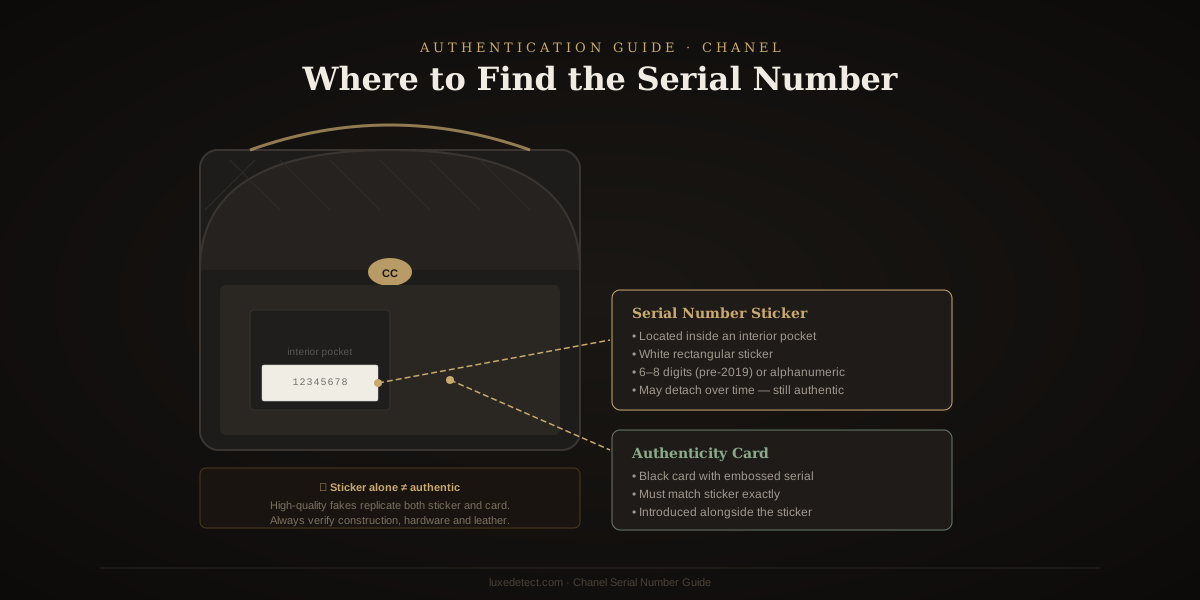
The sticker is always located inside the bag, usually in a flat interior pocket. On classic flap bags and Gabrielle bags it appears on the inside-left wall of the main compartment. On totes it may be in a zippered side pocket.
The matching black authenticity card (introduced with the sticker system) carries the same number, embossed — not printed. Both the card and sticker should show identical digits. If they differ, the bag has mismatched components, which is an immediate red flag.
A few practical notes:
- On vintage bags, the sticker may have detached over time. A missing sticker does not make a bag fake.
- The card is frequently lost. Absence of the card on a vintage piece is normal.
- The sticker should never be removed or repositioned — genuine stickers have security features (described below) designed to make removal visually destructive.
Use our free Chanel Serial Number Checker to instantly decode your bag's production era and see exactly what the sticker should look like.
Check My Serial Number →The Two Sticker Eras
Chanel's serial sticker evolved significantly over time. There are two distinct visual eras separated by approximately the year 2000.
Era 1: Opaque Film Sticker (1986–1999)
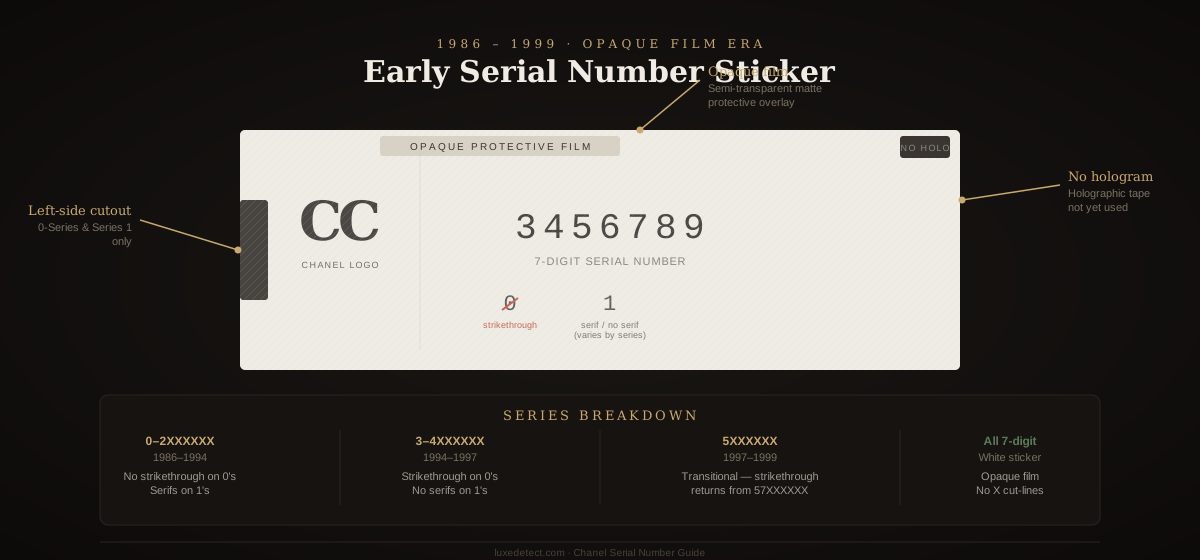
From the introduction of serial numbers around 1986 through the late 1990s, Chanel used a white rectangular sticker covered with a semi-opaque protective film. The sticker featured:
- The Chanel double-C interlocking logo printed in black
- A 7-digit serial number printed in black ink
- A semi-opaque matte film overlay (slightly clouding the surface)
- A left-sided cutout notch on the earliest stickers (0-Series and Series 1, 1986–1991)
- No holographic or clear tape — this is the defining difference from the later era
The film overlay gives these stickers a slightly frosted, matte appearance. When you tilt them under light, there is no iridescence or rainbow shimmer — that feature came later.
The very earliest stickers (0-Series, 1986–1988) were also slightly larger than later ones and included a left-edge indentation. From Series 2 onward the cutout disappears and the sticker shrinks to its standard size.
Era 2: Holographic Clear Tape Sticker (2000–2019)
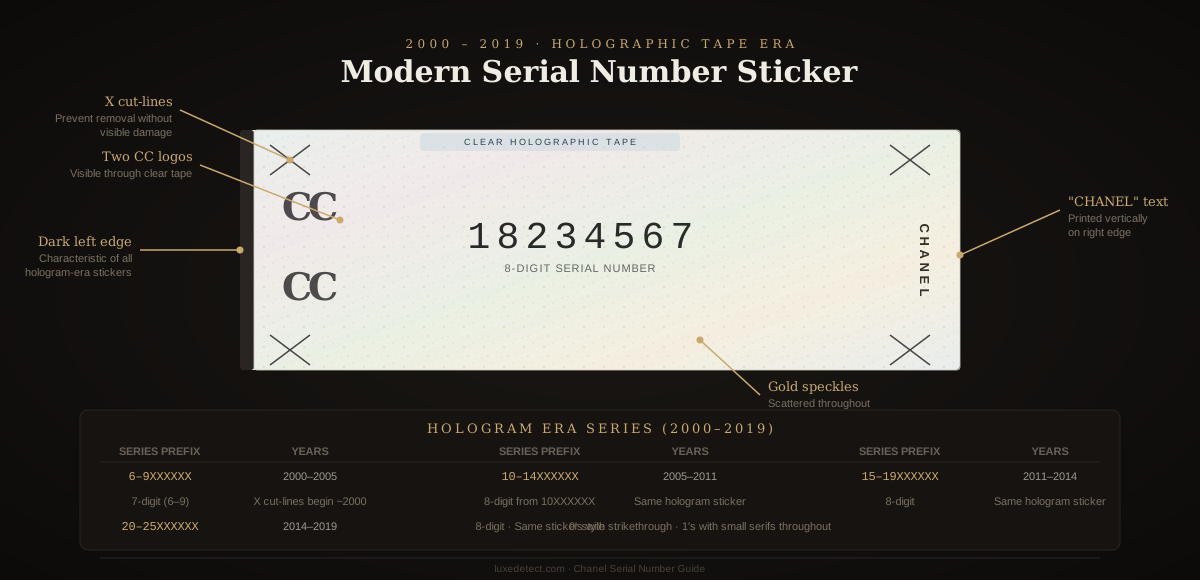
From approximately Series 6 (2000–2002) onward, Chanel switched to a significantly more secure sticker design featuring a clear tape with holographic security features. This version:
- Has a white base sticker with the serial number printed in black
- Is covered by clear holographic tape bearing two interlocking-CC logos
- Features "X" cut-lines in the tape (scissor-cut X patterns at each corner that cause the tape to tear if you attempt removal, leaving visible damage)
- Shows "CHANEL" printed vertically in small text on the right edge of the sticker
- Has a dark vertical line on the left edge
- Displays gold metallic speckles scattered across the sticker surface
- Shows a faint iridescent shimmer when tilted under light (from the holographic tape)
The X cut-lines are the most important anti-tamper feature. On a genuine sticker, attempting to peel the clear tape away causes it to tear into quarters at each pre-cut X, leaving permanent damage. Any hologram-era sticker that has been cleanly removed and repositioned is a forgery — or at minimum a genuine sticker transplanted from another bag.
From Series 10 (2005) onward the serial number extended from 7 to 8 digits, while the sticker appearance remained otherwise identical.
Number Printing Style by Series
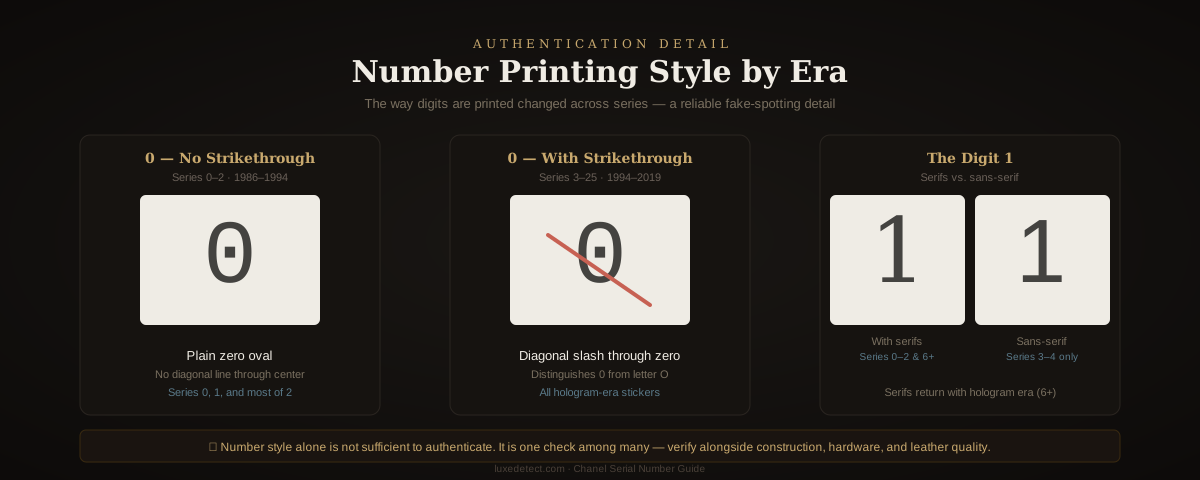
The way individual digits were printed changed across series. This is a subtle but reliable cross-check:
| Series | Years | 0's (zero) | 1's (one) |
|---|---|---|---|
| 0–Series 2 | 1986–1994 | No strikethrough | Serifs (feet) |
| Series 3–4 | 1994–1997 | With strikethrough | No serifs |
| Series 5 (early) | 1997 | No strikethrough | No serifs |
| Series 5 (late, 57XXXXXX+) | 1998–1999 | With strikethrough | Serifs return |
| Series 6–25 | 2000–2019 | With strikethrough | Small serifs (feet) |
The strikethrough zero (a diagonal slash through the zero) was introduced to prevent confusion between the digit 0 and the letter O. If you see a strikethrough-zero on a sticker that is supposed to be from 1991 or earlier, the sticker is either misdated or a later reproduction.
Series-by-Series Reference Table
This table covers every numeric series from the beginning of the sticker system to the switch to alphanumeric codes.
| Series | Serial Prefix | Years | Sticker Type |
|---|---|---|---|
| Early 0-Series | 1XXXXX – 2XXXXX (6-digit) | 1986–1988 | Opaque film, larger sticker, left cutout |
| 0-Series | 0XXXXXX | 1986–1988 | Opaque film, 7-digit, left cutout |
| Series 1 | 1XXXXXX | 1989–1991 | Opaque film, 7-digit, left cutout |
| Series 2 | 2XXXXXX | 1991–1994 | Opaque film, 7-digit, no cutout |
| Series 3 | 3XXXXXX | 1994–1996 | Opaque film, 7-digit |
| Series 4 | 4XXXXXX | 1996–1997 | Opaque film, 7-digit |
| Series 5 | 5XXXXXX | 1997–1999 | Transitional, hologram from 57XXXXXX |
| Series 6 | 6XXXXXX | 2000–2002 | Holographic tape, X cut-lines, 7-digit |
| Series 7 | 7XXXXXX | 2002–2003 | Holographic tape, X cut-lines, 7-digit |
| Series 8 | 8XXXXXX | 2003–2004 | Holographic tape, X cut-lines, 7-digit |
| Series 9 | 9XXXXXX | 2004–2005 | Holographic tape, X cut-lines, 7-digit |
| Series 10 | 10XXXXXX | 2005–2006 | Holographic tape, X cut-lines, 8-digit |
| Series 11 | 11XXXXXX | 2006–2008 | Holographic tape, X cut-lines, 8-digit |
| Series 12 | 12XXXXXX | 2008–2009 | Holographic tape, X cut-lines, 8-digit |
| Series 13 | 13XXXXXX | 2009–2010 | Holographic tape, X cut-lines, 8-digit |
| Series 14 | 14XXXXXX | 2010–2011 | Holographic tape, X cut-lines, 8-digit |
| Series 15 | 15XXXXXX | 2011 | Holographic tape, X cut-lines, 8-digit |
| Series 16 | 16XXXXXX | 2012 | Holographic tape, X cut-lines, 8-digit |
| Series 17 | 17XXXXXX | 2012–2013 | Holographic tape, X cut-lines, 8-digit |
| Series 18 | 18XXXXXX | 2013–2014 | Holographic tape, X cut-lines, 8-digit |
| Series 19 | 19XXXXXX | 2014 | Holographic tape, X cut-lines, 8-digit |
| Series 20 | 20XXXXXX | 2014–2015 | Holographic tape, X cut-lines, 8-digit |
| Series 21 | 21XXXXXX | 2015–2016 | Holographic tape, X cut-lines, 8-digit |
| Series 22 | 22XXXXXX | 2016–2017 | Holographic tape, X cut-lines, 8-digit |
| Series 23 | 23XXXXXX | 2016–2017 | Holographic tape, X cut-lines, 8-digit |
| Series 24 | 24XXXXXX | 2017–2018 | Holographic tape, X cut-lines, 8-digit |
| Series 25 | 25XXXXXX | 2018–2019 | Holographic tape, X cut-lines, 8-digit |
| Post-2019 | Alphanumeric (random) | 2019–present | No sticker (discontinued ~2021) |
The Post-2019 Alphanumeric Format
Around 2019, Chanel began transitioning from sequential numeric serials to a randomised alphanumeric code (mixing letters and numbers, such as "AX3YC82P"). The new codes:
- Cannot be decoded to a production year — they are random and unsequenced
- Are verifiable only by Chanel boutiques via their internal database
- Were accompanied by a shift away from the interior sticker system entirely — from approximately 2021, Chanel began phasing out stickers in favour of embedded microchips (RFID) in some product lines
- Bags from this period without a sticker are not automatically inauthentic
If your bag has an alphanumeric code that isn't clearly formatted as one of the older numeric series above, use our Chanel Serial Number Checker to confirm the format.
What to Verify Alongside the Serial Number
A serial number that matches its stated era is a necessary — but not sufficient — condition for authenticity. Here is what to examine alongside it:
Sticker appearance: Does the sticker look right for its series? A hologram-era sticker on a bag claiming to be from 1994 is impossible. An opaque-film sticker on a bag with a 12XXXXXX number is wrong. Each era has a distinct visual signature.
Sticker condition: Genuine stickers age in predictable ways — yellowing, slight adhesive creep at edges. A pristine sticker on a 30-year-old bag warrants caution.
Card matching: The number on the card must match the sticker exactly, digit for digit. Mismatched components indicate a bag that has been re-stuffed with components from different authentic bags (common in the "Frankenbag" fraud).
Construction: Chanel bags are hand-stitched with a specific stitch count per inch (typically 10–11 stitches per inch on woven tweed, 8–9 on leather). Quilting alignment should be perfect at the edges and seams. Hardware engravings must be crisp, deep, and correctly spaced.
Leather: Lambskin dimples should be uniform and fine. Caviar should be clearly pebbled. Patent leather should reflect cleanly. Any blurring, inconsistency, or chemical odour is a red flag.
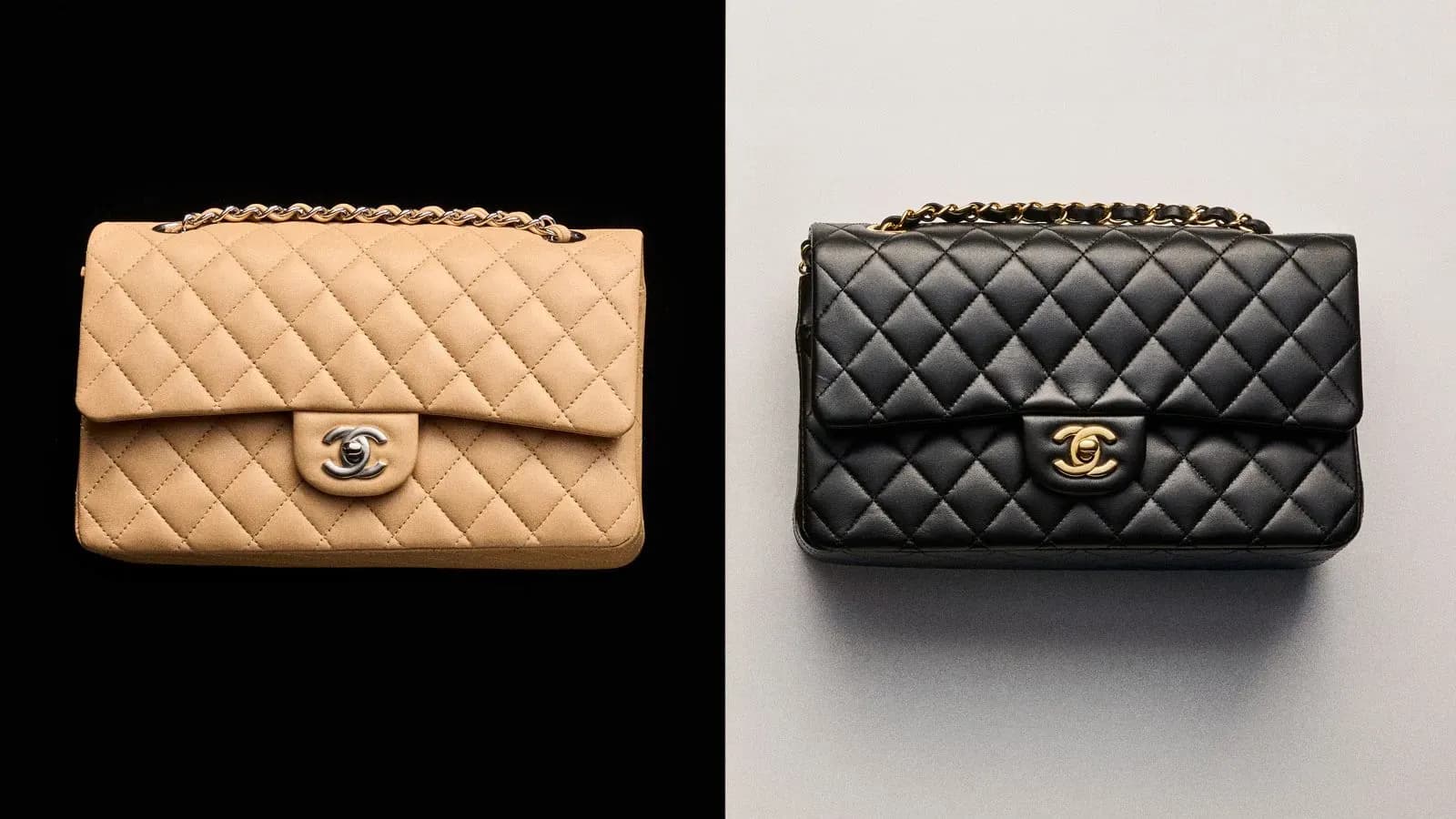
The CC clasp: On a classic flap, the interlocking-C turnstile clasp should rotate smoothly with a satisfying click. The letters must be perfectly aligned and symmetrical, with precise depth. Poor casting or misaligned C's are a common counterfeit tell.
Common Fake Serial Sticker Red Flags
These are the specific sticker-level tells experienced authenticators check first:
- Printed hologram — Counterfeit stickers often print the holographic appearance rather than using real holographic tape. Hold the sticker at an angle under a single light source: a genuine hologram shifts colour as the viewing angle changes. A printed fake does not.
- Clean corners — If an older (2000+) sticker has no X cut damage at the corners, it may have been removed from another bag and re-applied. Genuine stickers cannot be cleanly removed.
- No CHANEL text on right edge — The vertical "CHANEL" text on hologram-era stickers is small and easy to miss but should be present. Its absence on a post-2000 sticker is suspicious.
- Missing gold speckles — The gold metallic specks throughout the hologram-era sticker surface are part of the tape manufacturing process. Fakes typically omit these or add them as crude printed dots.
- Wrong number format for the claimed era — An 8-digit number starting with 06 is impossible (Series 6 is 7-digit). An 8-digit number starting with 03 doesn't exist. Cross-referencing the sticker number against the table above takes five seconds and catches this class of fraud every time.
The Bottom Line
Serial numbers and stickers are the entry point to Chanel authentication — not the conclusion. They tell you the era, give you a cross-check against the stated age, and provide a set of physical security features you can verify. But they don't tell you whether the bag is genuine, because skilled counterfeiters know how to replicate them.
For a definitive verdict, professional authentication evaluates construction, leather, hardware, stitching, and provenance together. Use the serial number as your first checkpoint. Then get eyes on the bag itself.