Sneaker Authentication Expert
Sneaker and streetwear authenticator. Covers Nike, Jordan, Yeezy, and limited collaboration releases.
Published October 2026 · Contact
What Makes Y-3 Sneakers Distinctive
Y-3 is the line made by the Japanese designer Yohji Yamamoto together with adidas. The name pairs the "Y" of Yohji with the "3" of adidas's three stripes. Sources differ on whether it launched in 2002 or 2003, so we won't give you a single year. The sneakers are the part of the line most people meet first: sculpted, mostly black and white, and sold under model names such as Kaiwa, Qasa, Hicho, Super Takusan, Noci, Rhisu and Hokori. If you also collect the designer's own clothing, our Yohji Yamamoto authentication guide covers that side of the house.
That range is the first thing to understand about checking a pair. A Y-3 sneaker can look like a Stan Smith, a Superstar, a boost-soled runner or a strapped high-top. There is no one silhouette to compare against, and the markings differ from model to model.
Counterfeiters go after anything with a recognisable logo and a resale premium, and Y-3 has both. Across the whole market, the usual weak points on fake sneakers are the materials, the stitching and the midsole finish. We are not claiming any of those as a Y-3 tell here, because we have not verified one.
Worth knowing
This guide is built from genuine Y-3 pairs that passed LuxeDetect authentication. We have very few confirmed counterfeit Y-3 shoes, and the ones we looked at carried correct-looking insole prints, tags and size labels. So we cannot point to a mark that fakes get wrong, and this guide doesn't pretend to. Use it to learn what genuine pairs look like, then treat a match as one reassuring sign, not a verdict.
The Insole Print
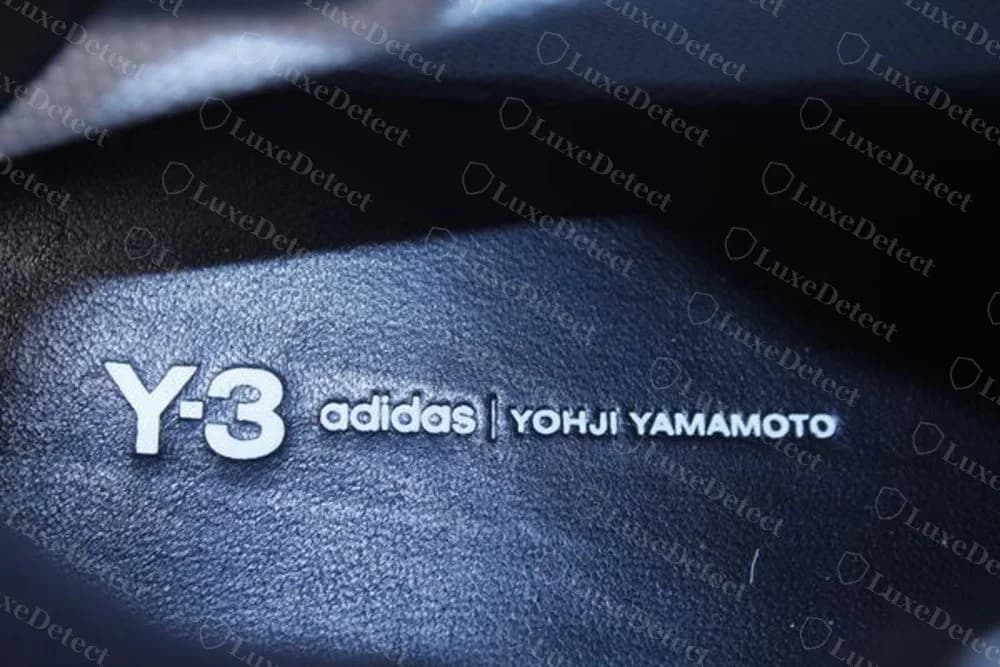
On the genuine pairs we reviewed, the insole carries the Y-3 logo followed by "adidas | YOHJI YAMAMOTO". The photo above shows it printed in white on a Kaiwa. On other models it is debossed or blind-stamped into leather instead: we saw that on a Qasa and a Noci. So the finish changes with the model and the year, and a pair whose print is stamped rather than inked is not wrong for that reason.
What to look at is whether the layout is the same on your pair: logo, "adidas", a divider, then the designer's name in capitals. This is easy to print, and the fake pairs we looked at had it right. It tells you what the genuine layout is, not whether a pair is genuine. A worn or peeled print is normal on a pair that has been walked in.
The Tongue Tag and the German Slogan
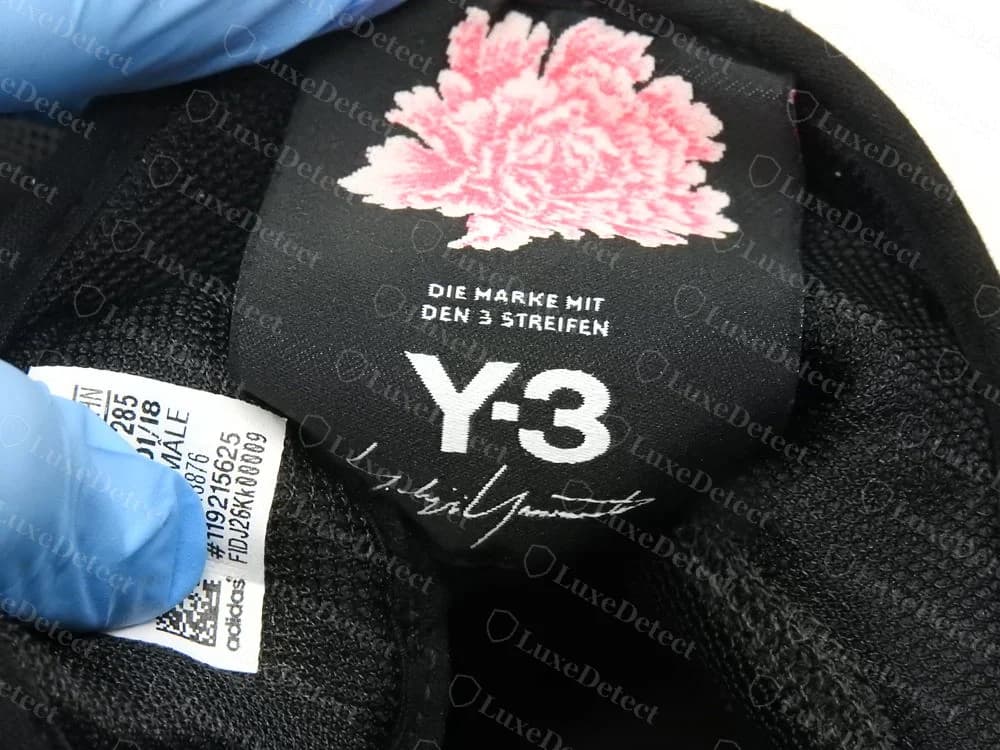
Several genuine pairs carry a tongue tag reading "DIE MARKE MIT DEN 3 STREIFEN", which is German for "the brand with the 3 stripes" and is adidas's long-running slogan. We saw it on a Harden BYW (above, with a flower print) and on an Adizero runner, where it sits under a drawn circle above the Y-3 logo and a stitched signature. The same words run along the outsole of the Harden pair in English, "THE BRAND WITH THE 3 STRIPES".
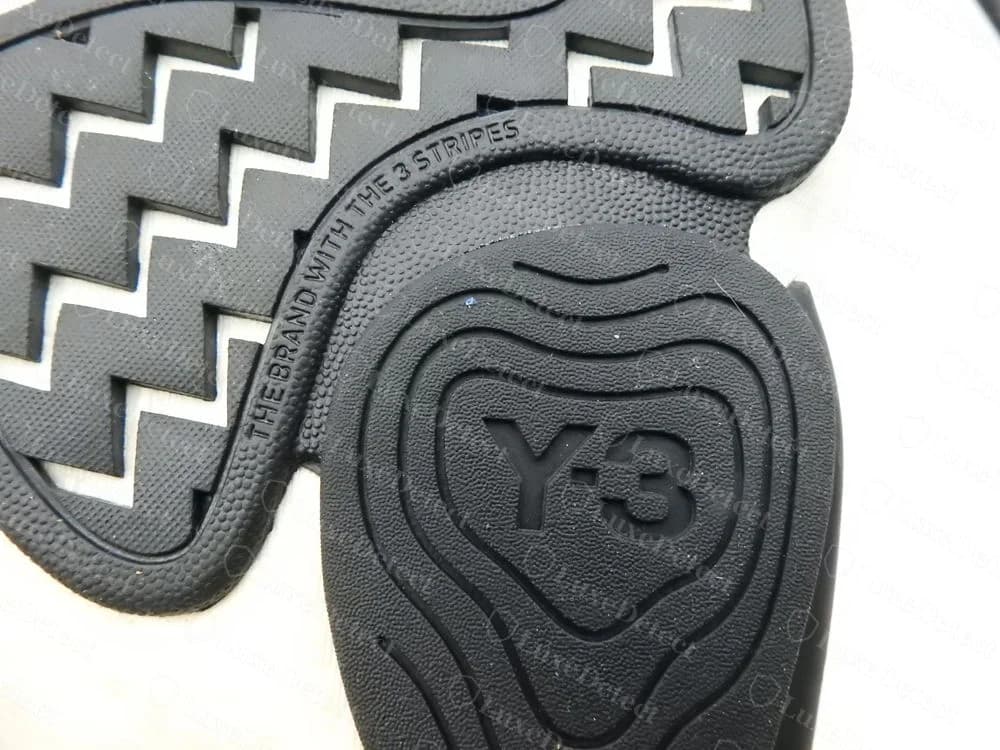
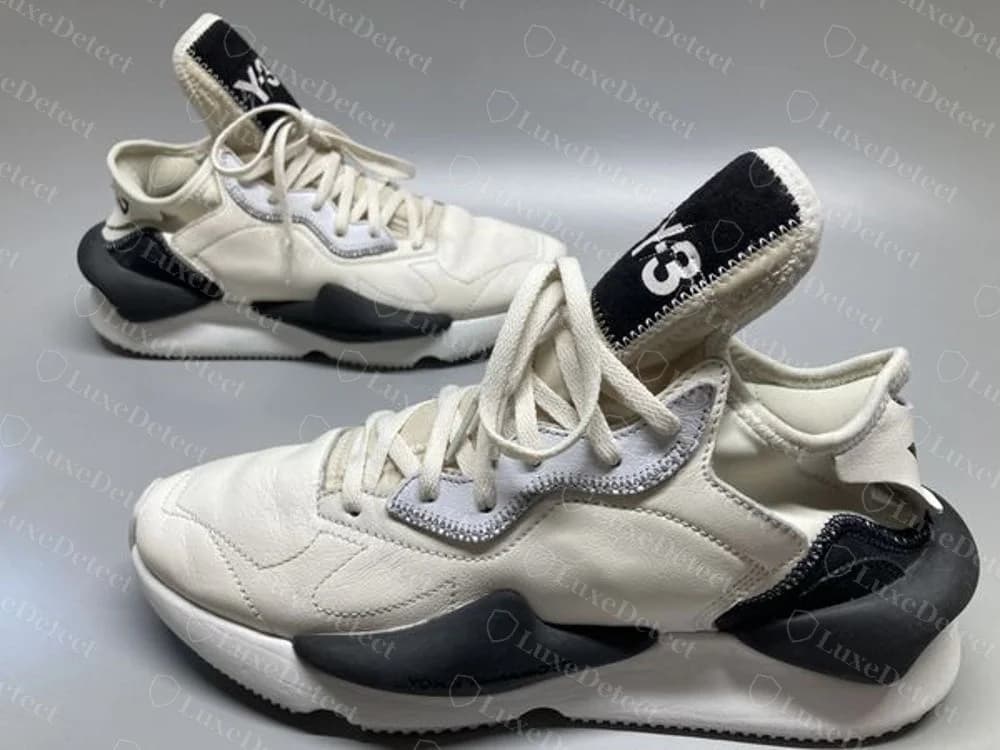
Not every model has a tag like this. The Kaiwa has Y-3 lettering on the tongue and a stamped "YOHJI YAMAMOTO" on the midsole, the Hicho has a Y-3 on the side next to the heel, and the Qasa has a Y-3 heel tab. Check the tongue and outsole of your own model against photos of that same model rather than against another one.
The Size Label
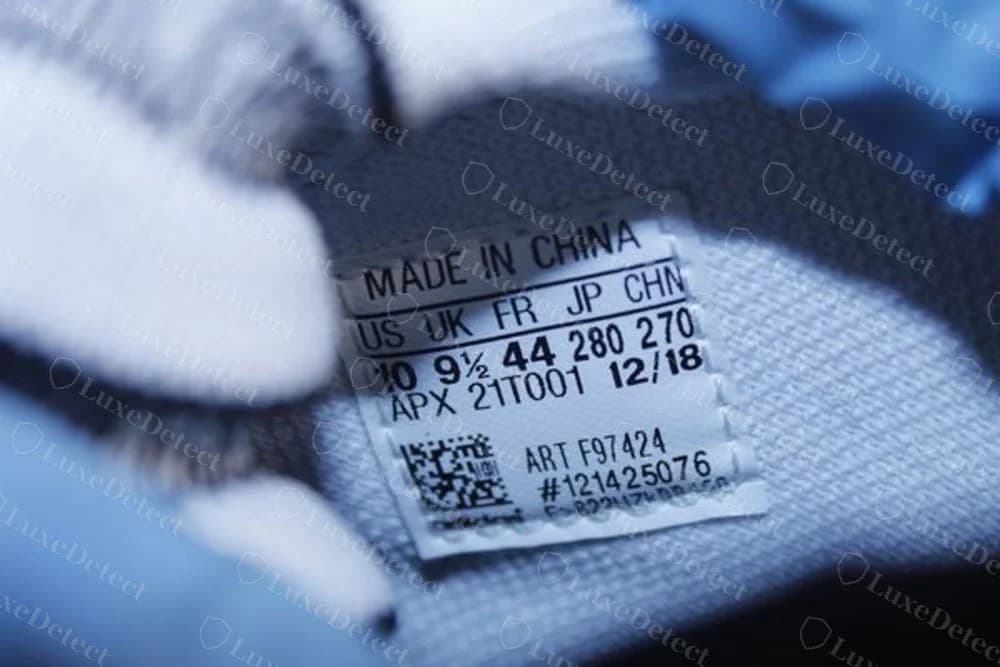
Inside the shoe, genuine pairs we reviewed carry a white adidas-style size label: a "Made in China" header, a size row in US, UK, FR, JP and CHN, a line that begins with a short code, a month and year, an "ART" article number and a "#" number, plus a barcode. The code and date line reads differently from era to era in our records:
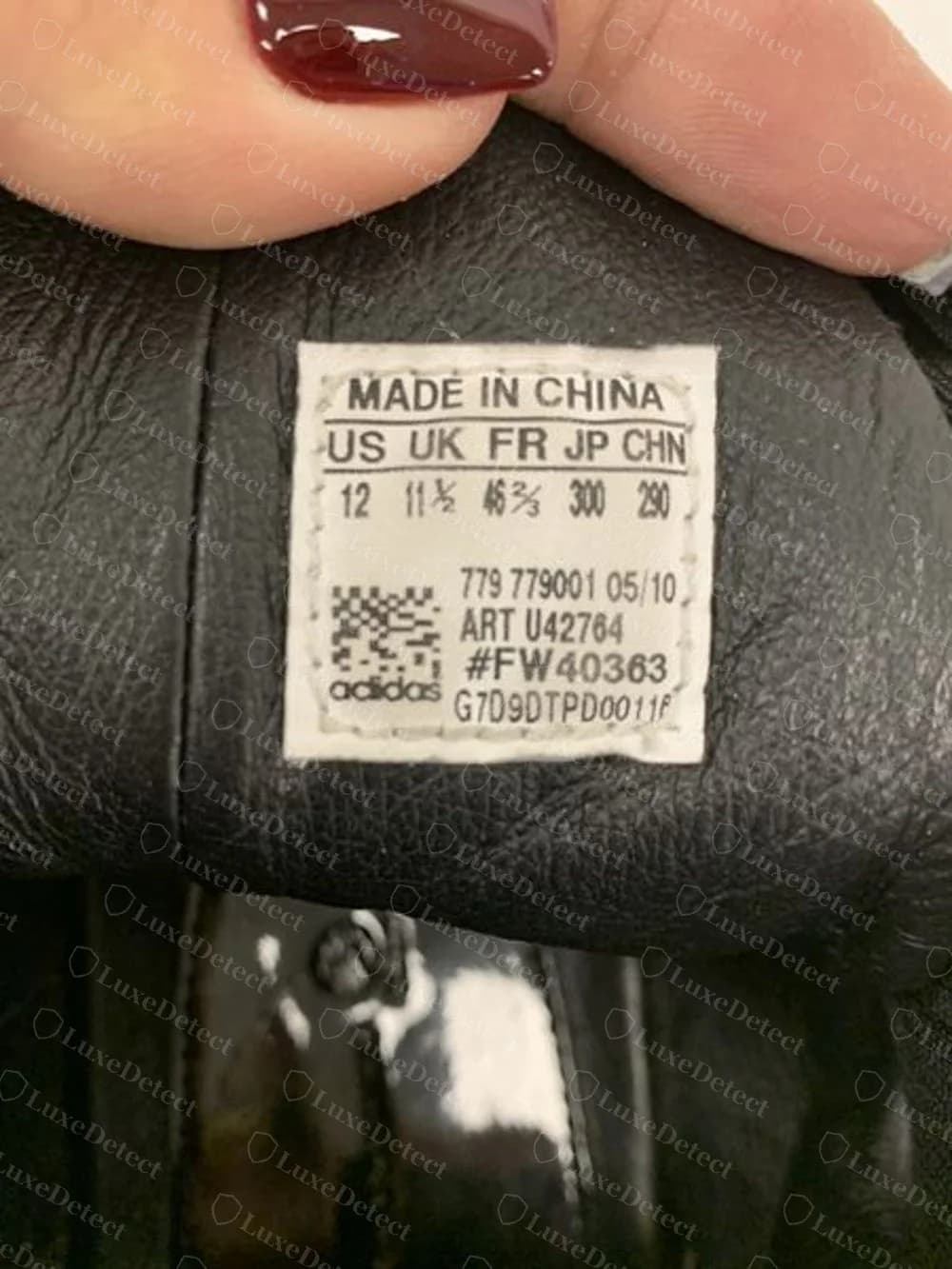
- A leather sneaker with an orange Y-3 logo carried "779 779001 05/10" with a "#FW" number.
- A Kaiwa carried "APX 21T001 12/18" and an article number beginning F9.
- A Stan Smith Zip and a Noci High carried "23Y 23Y001" with dates reading 03/17 and 04/17, and "#FW" numbers.
- A Hicho carried "APX 21T001 04/20".
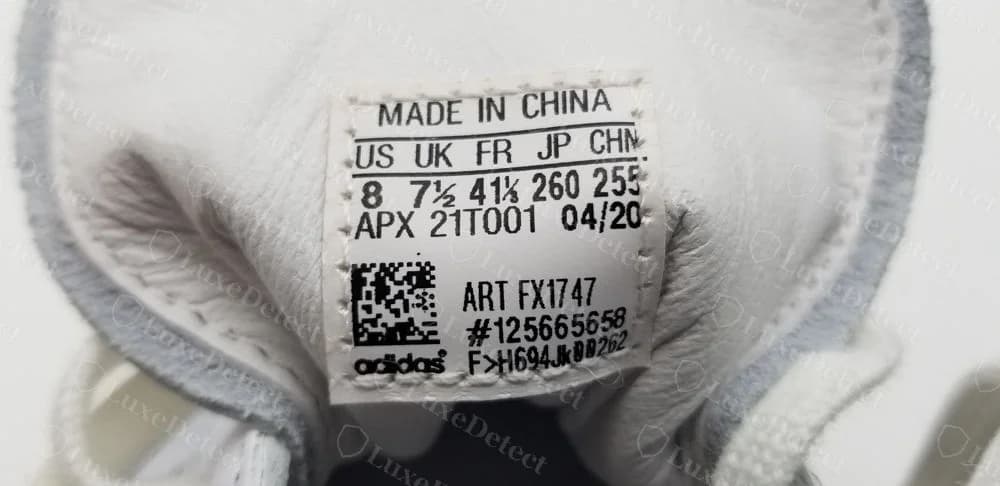
So "APX 21T001" and "23Y 23Y001" both turn up on genuine pairs, and the number after the date changes too. We read the date part as a month and a year, but adidas doesn't publish what the codes mean, so we won't give you a decoder. Three things are fair to check: that the sizes in the row agree with each other, that the label is stitched in cleanly, and that the article number is one a search for your model returns. We can't say a particular code is the "right" one, and a good fake can print a correct-looking label, so a clean label is where a check starts, not where it ends.
Worth knowing
Some pairs have the label cut out or worn away, and resale photos often skip it. A missing or unreadable label is a reason to look at other details, not proof in either direction.
Heel Branding and Construction
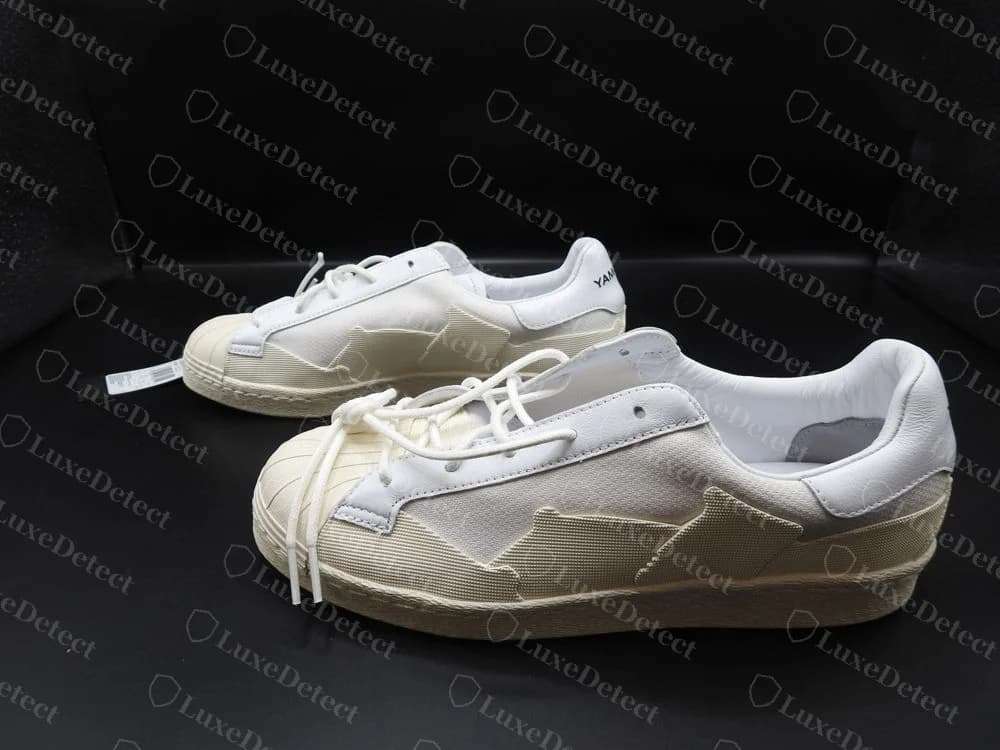
Heel branding varies a lot. The Super Takusan above has "YOHJI YAMAMOTO" on a white heel tab and an embossed Y-3 on the tongue. The Rhisu has a Y-3 on a white leather heel patch, the Qasa has it on a moulded heel counter, and the Stan Smith Zip has it raised on the heel and on the zip pull.
Outsoles follow the same rule. The Kaiwa and Qasa carry a Y-3 mark on a rubber pad under the midfoot, the Adizero runner has a Y-3 pod set into its Boost sole, and the Hicho has a plain cream platform sole. We can't turn any of that into a rule, because a convincing fake can copy it.
The Box and Dust Bag
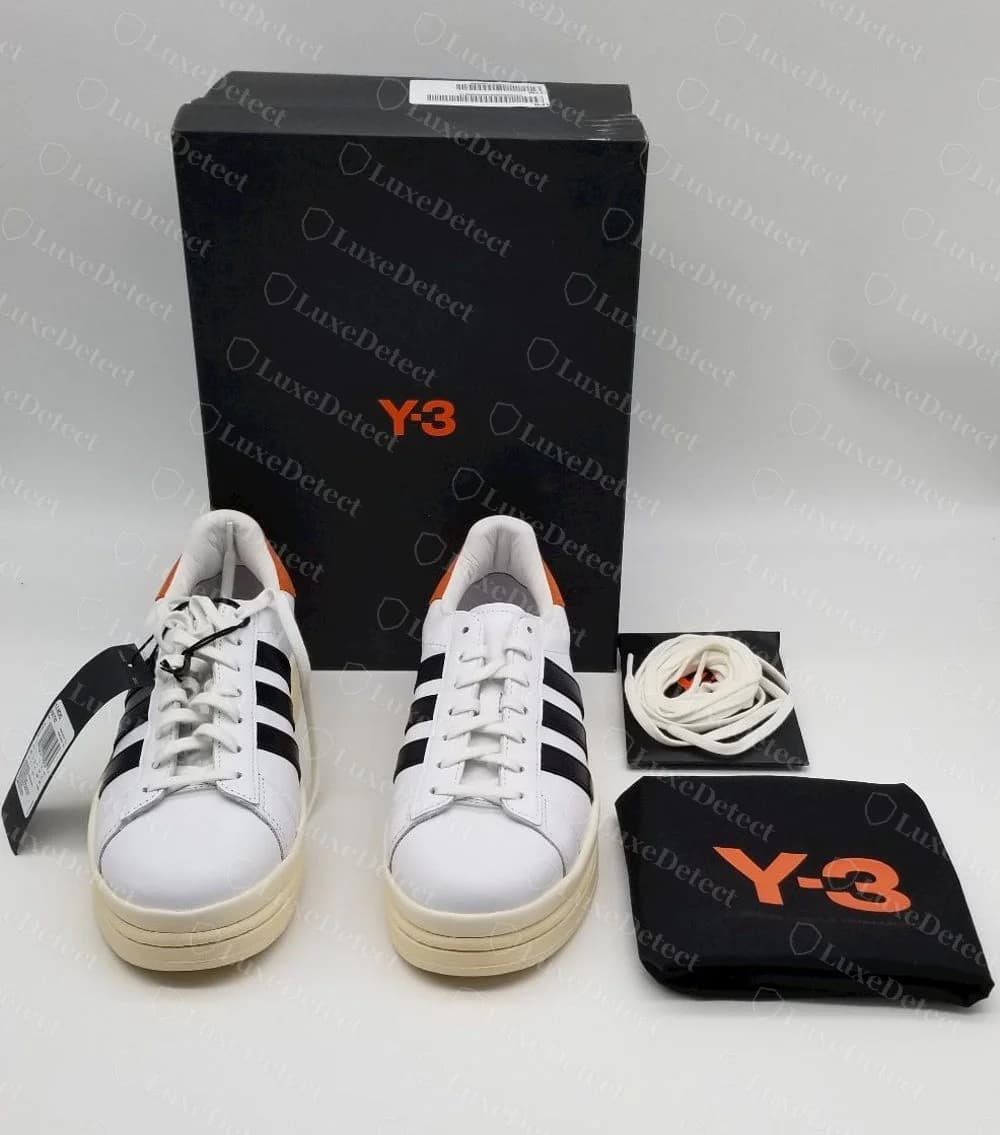
A new pair in our records came in a black box with an orange Y-3 logo on the lid, a black fabric dust bag with the same logo, and a spare set of laces. The pair carried a hang tag too. Used pairs often arrive without any of this, and the box is the easiest part to move from one pair to another, so treat it as context. It's pleasant to see and it proves nothing.
What Does Not Prove a Pair Is Real
Because the few fake pairs we saw looked right on the points above, here is what we would not rely on by itself:
- A correct insole print, tongue tag or Y-3 logo.
- A size label with a plausible code, date and article number.
- "Made in China" on the label. Genuine pairs in our records say it too, so it is not a warning sign.
- A box, dust bag and tags.
- A seller's photos of a model you recognise.
Each of these is worth a look, and a mismatch is worth a question. None of them separates a good fake from the real thing in photos.
When to Get a Professional Opinion
Y-3 covers many shapes, materials and decades, and the markings change with all three, so a general checklist only gets you so far. If you are buying a pair second-hand, or you own one and want to be sure, submit photos for a professional authentication. An authenticator compares the insole, the tongue, the label, the sole and the construction against genuine pairs of the same model, and you get a Certificate of Authenticity if the pair passes. For adidas shoes with a long fake history, our guides to the Adidas Samba and the Yeezy 350 V2 show how the same brand's other lines compare.
LuxeDetect's sneaker authentication starts at $9 for a 24-hour turnaround.
A code that checks out doesn't prove the item is real. Counterfeiters copy genuine codes.
Our authenticators check the labels, stitching, sole and box of your Y-3 against verified references, from $15. You get a verdict within 24 hours, and a Certificate of Authenticity if the item passes.
Authenticate My Y-3 →FAQ
How can I tell if my Y-3 sneakers are real?
Compare the insole print, the tongue and heel branding, the outsole and the size label with photos of the same model. On genuine pairs we saw "Y-3 adidas | YOHJI YAMAMOTO" on the insole and a white size label inside. A match is a good sign but not a verdict, because the fake pairs we looked at had these details right, so a pair you are paying real money for deserves a professional check.
Does "Made in China" on my Y-3 mean they are fake?
No. The genuine pairs we reviewed carry a "Made in China" size label. The country is not a tell on its own.
What does "DIE MARKE MIT DEN 3 STREIFEN" on the tongue mean?
It is German for "the brand with the 3 stripes", an adidas slogan. We saw it on the tongue tags of some genuine Y-3 pairs, such as the Harden BYW and the Adizero runner, and in English along a genuine outsole. Not every model has it, and a fake can print it, so it doesn't prove a pair is real.
What does the code on a Y-3 size label mean?
The label shows a short code such as "APX 21T001" or "23Y 23Y001", a month and year such as 12/18, an article number after "ART" and a "#" number. adidas doesn't publish what these mean, so we can't decode them. They vary by era, and they are copied on counterfeits, so a plausible label is not proof.
Where is the Y-3 logo on a genuine pair?
It depends on the model. We saw it on the tongue, the heel tab, the side, a zip pull and the outsole, and on the insole next to "adidas | YOHJI YAMAMOTO". Check the model you have rather than a different Y-3 shoe.
Do genuine Y-3 sneakers come with a box and dust bag?
A new pair in our records came in a black box with an orange Y-3 logo and a black dust bag. Used pairs often lose them, and a box can be swapped between pairs, so neither its presence nor its absence settles anything.
Why does this guide not have a real-vs-fake table?
We have very few confirmed counterfeit Y-3 shoes, and the ones we looked at matched the genuine markings. Publishing a comparison would mean inventing a tell. We'd rather show you what genuine looks like and say plainly that these marks are copied.