Fashion Authentication Specialist
Streetwear authentication specialist. Focuses on print quality, tagging, and seasonal production codes.
Published September 2026 · Contact
What Gets Faked, and What Doesn't
Yohji Yamamoto runs several lines: the mainline Yohji Yamamoto and Yohji Yamamoto POUR HOMME (avant-garde black tailoring, heavy fabrics, oversized cuts), Y's (a more wearable diffusion line), and Y-3 (the adidas collaboration — sneakers, technical outerwear, sweats). Counterfeiting concentrates almost entirely on Y-3 sneakers and logo pieces, because those have mass recognition and a hype resale market, much like what drives buyers to authenticate Rick Owens sneakers. Mainline Yohji is faked far less — the buyer is a knowledgeable one, the garments are hard to copy, and the pieces are often archival and one-off — but replicas of popular mainline coats and the more graphic pieces do appear.
Authentication depends on the line. For mainline it is fabric, cut, construction, and the label set. For Y-3 it is the same sneaker and streetwear checks you would run on adidas plus the Yohji branding. This guide covers both.
What to check, ranked by reliability
| Checkpoint | Reliability | What it tells you |
|---|---|---|
| The Labels | ★★★★★ | A printed mainline neck label, a fuzzy logo, or a care label with spelling errors or impossible symbols settles it. |
| Fabric Weight, Hand, and Drape | ★★★★★ | A thin, limp, grey-reading "black" mainline fabric with a faint sheen is not Yohji cloth. |
| Y-3: Sneaker and Streetwear Checks | ★★★★★ | A Y-3 adidas article number that does not resolve, or an incorrectly formatted co-branded label stack, is a strong tell. |
| Construction and Cut | ★★★★★ | Fused or absent tailoring canvas, raw seam allowances, and a cut that does not hang right expose the fake. |
| Hardware, Zips, and Trims | ★★★★★ | A catching zip with a crude pull and lightweight hollow trims support a verdict. |
| Provenance and Seller | ★★★★★ | A "Yohji outlet" site or unlimited hyped Y-3 stock is a warning; archival mainline comes from reputable dealers. |
Fabric Weight, Hand, and Drape
Mainline Yohji is defined by its cloth. The house uses heavy, dense wools and gabardines, dry crisp cottons, and specific technical blends, cut oversized so the garment drapes with weight rather than clinging.
On a genuine mainline piece the fabric has a substantial hand — a jacket or coat feels heavier than it looks, the cloth holds a fold and swings when you move, and the surface is matte with a dry, slightly stiff character, the same fabric-weight test that decides it when you authenticate Issey Miyake pleated pieces. Black pieces are a deep, even, true black (Yohji's black is famously consistent), not a washed-out grey-black or a shiny black. Seams and hems hang straight because the cloth has body.
Fakes use a lighter, thinner fabric — often a poly-heavy blend — that hangs limp, has a faint sheen, feels slippery or papery, and photographs as black but reads grey or greenish in person. The garment loses the intended drape; it clings or collapses instead of swinging.
| Element | Authentic | Counterfeit |
|---|---|---|
| Hand | Heavy, dense, dry, slightly stiff, holds a fold | Thin, slippery or papery, limp |
| Black | Deep, even, true black, matte | Washed grey-black or greenish, faint sheen |
| Drape | Swings with weight, hangs straight | Clings or collapses |
Red flag
A "Yohji" black garment that is light and limp with a faint sheen and reads grey in person. Mainline Yohji cloth has weight and a deep matte black; a thin shiny fabric is not it.
The Labels
Yohji's labels are line-specific and a primary tell.
Mainline Yohji Yamamoto / POUR HOMME: a woven main label with "Yohji Yamamoto" in the house script/logo, sewn into the neck, typically black with red or white lettering (colour varies by line and era). The weave is dense and the lettering sharp. Below it sits a size tab and a separate content/care label with fibre percentages, care symbols, the country of manufacture (Japan for most mainline, some later production elsewhere), and a product number in a specific alphanumeric format (a letter-and-digit style code that encodes the season and garment). Vintage pieces use earlier label designs — a label style inconsistent with the claimed era is a red flag.
Y's: its own logo label ("Y's" with the apostrophe), distinct from mainline.
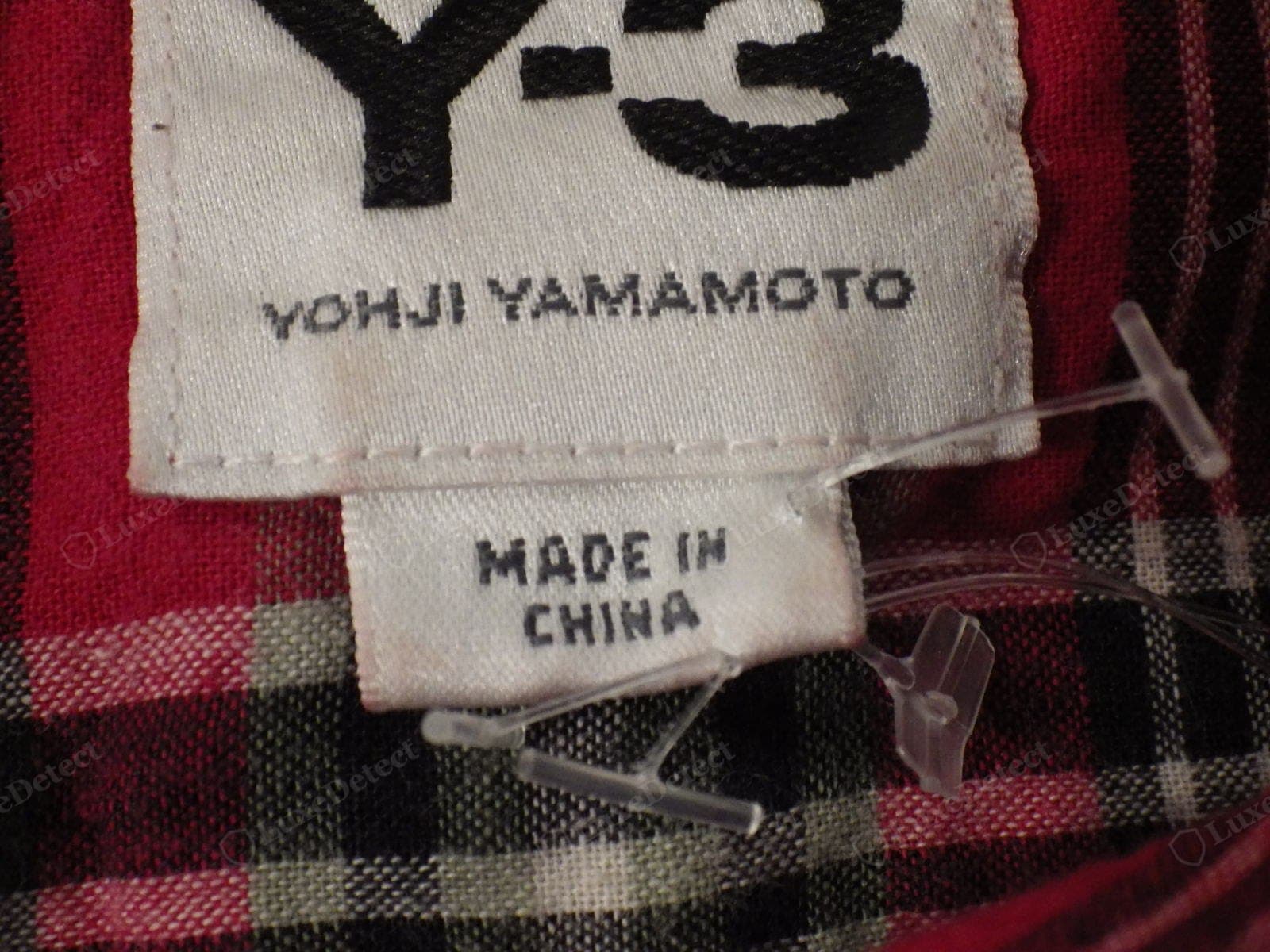
Y-3: carries both the Y-3 logo (the Y with the "-3") and adidas branding and labelling — a standard adidas neck label / care label set with the Y-3 co-brand, an adidas article number, and often a "Yohji Yamamoto" line somewhere on the label stack.
Fakes show a printed or loosely woven main label with a wrong or fuzzy logo, a care label with spelling errors or impossible care symbols, a missing or malformed product number, an origin the line does not use, or (on Y-3) an adidas label set that does not match adidas's real formatting or an article number that does not resolve.
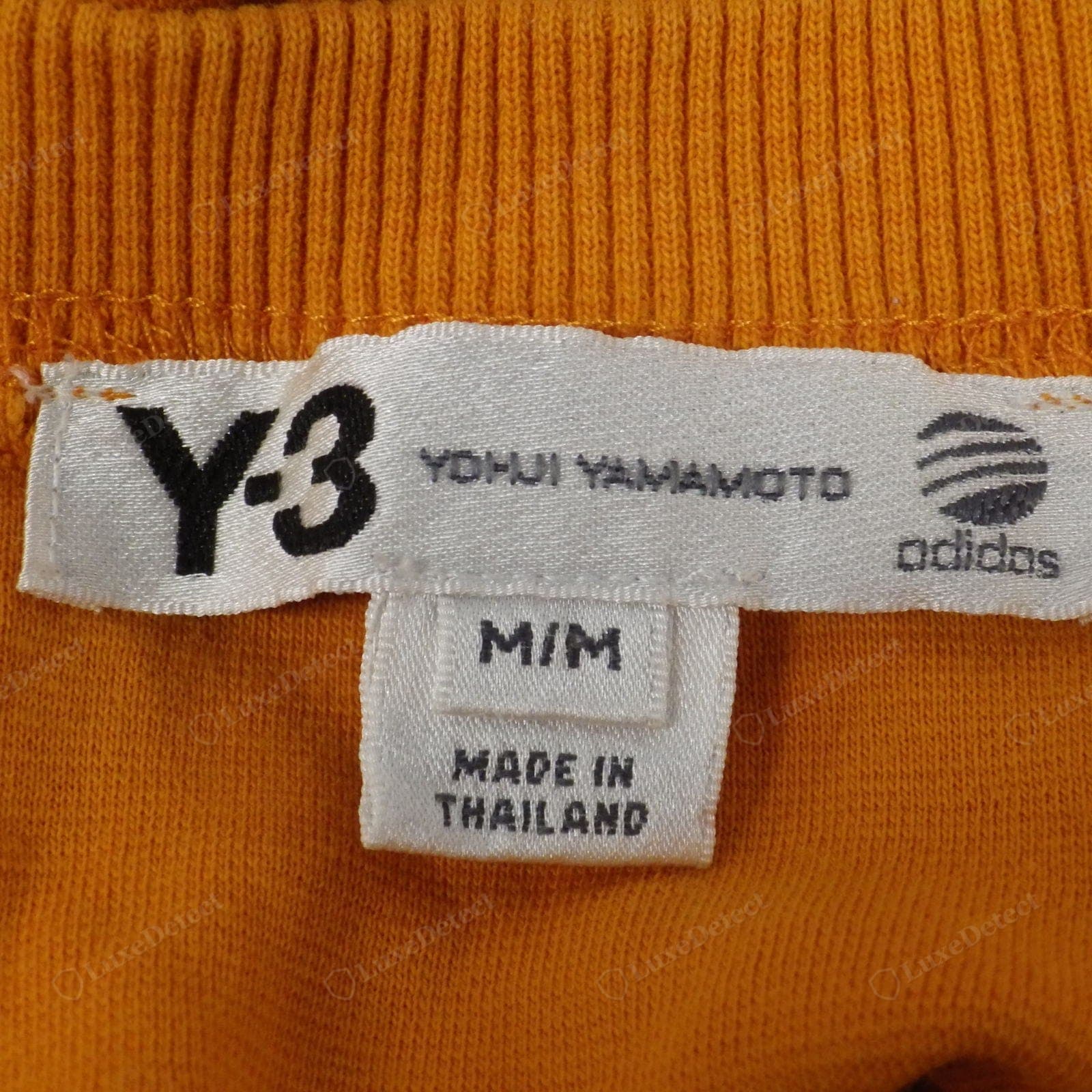
| Element | Authentic | Counterfeit |
|---|---|---|
| Main label | Densely woven, sharp house logo for the line | Printed or crude weave, fuzzy logo |
| Care label | Correct fibres, care symbols, origin, valid product number | Spelling errors, impossible symbols, malformed number |
| Line consistency | Label set matches the line (mainline / Y's / Y-3) | Mixed or wrong label set for the piece |
| Origin | Japan for most mainline; adidas origins for Y-3 | An origin the line does not use |
Red flag
A mainline "Yohji Yamamoto" piece with a printed neck label, a fuzzy logo, or a care label that misspells a word or shows an impossible care symbol. Genuine mainline labels are cleanly woven with correct care information.
Construction and Cut
Mainline Yohji construction is high-level and deliberate. The cut is oversized and often asymmetric by design, but the making is precise.
Check: seams are clean and finished (bound, felled, or serged neatly depending on the piece), stitch length is consistent, and there are no loose threads or puckering. Details that fakes rarely get right: the way lapels roll and sit, the precise drop of a dropped shoulder, the placement and finish of Yohji's signature large patch pockets and hidden plackets, the button choice (often matte horn-look or specific metal, cleanly attached with a thread shank), and the internal construction of a tailored piece (a genuine Yohji jacket has proper canvas and a clean lining). Hems are even and the garment hangs true.
Fakes show wandering or skipped stitching, raw or overlocked seam allowances where a genuine piece is bound, a lining that bunches, buttons that are the wrong material or loosely sewn, and a cut that approximates the oversized shape but gets the proportions or the balance wrong so the garment does not hang right.
| Element | Authentic | Counterfeit |
|---|---|---|
| Seams | Clean, finished, consistent stitch length | Wandering or skipped stitching, raw allowances |
| Tailoring internals | Proper canvas, clean lining, even hems | Fused or absent canvas, bunched lining, uneven hems |
| Buttons | Correct material, thread-shank sewn tight | Wrong material, loose |
| Cut balance | Oversized but hangs true | Proportions or balance off, does not hang right |
Y-3: Sneaker and Streetwear Checks
For Y-3 pieces, run the checks you would on adidas, plus the Yohji layer.
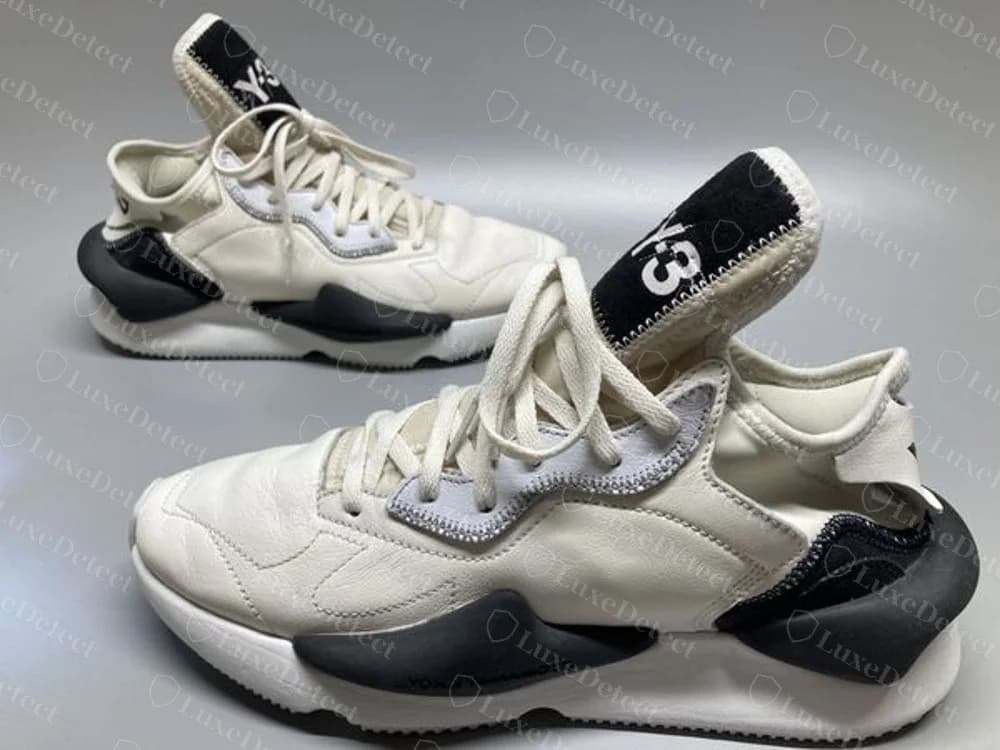
Sneakers: the sole unit and midsole foam quality, the stitching and glue lines, the tongue and heel labels, the adidas article number on the box label and the shoe label (it should match and resolve to that Y-3 model), the Y-3 branding execution (the Y-3 logo crisp, correctly proportioned, in the right place), and the boost or midsole tech behaving correctly. The box is an adidas/Y-3 co-branded box with a correctly formatted label.
Apparel: the print or embroidery quality of the Y-3 logo and the signature large "Y-3" back or chest graphics, the fabric weight (Y-3 sweats and technical pieces have a specific substantial hand), the zip pulls and hardware (often YKK or a branded equivalent, cleanly stamped), and the adidas + Y-3 label stack.
Fakes show a soft or airy midsole, sloppy glue lines, a fuzzy or mis-proportioned Y-3 logo, an article number that does not resolve, thin apparel fabric, and a label set that does not match adidas's real formatting.
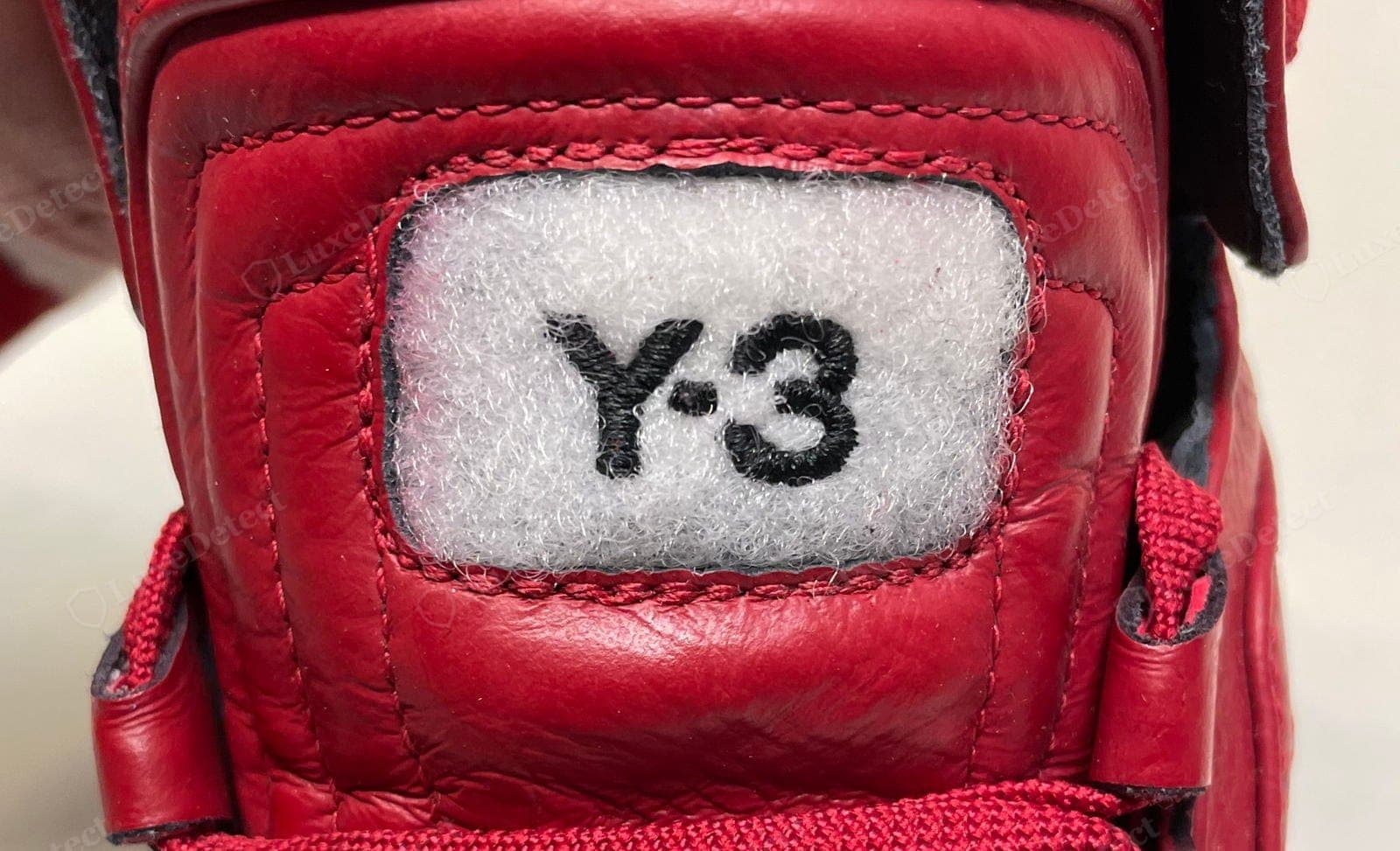
| Element | Authentic Y-3 | Counterfeit |
|---|---|---|
| Sneaker sole | Correct foam density, clean glue and stitch lines | Airy or soft, sloppy glue |
| Article number | Matches box and shoe, resolves to the Y-3 model | Mismatched, or does not resolve |
| Y-3 logo | Crisp, correctly proportioned, right placement | Fuzzy, mis-proportioned, wrong place |
| Label stack | Correct adidas + Y-3 co-branded set | Wrong formatting, missing co-brand |
Worth knowing
Y-3 authentication leans on the adidas side as much as the Yohji side. An article number that does not resolve, or an adidas label set that is formatted wrongly, is a strong tell.
Hardware, Zips, and Trims
Across the lines, Yohji uses considered hardware.
Zips on mainline outerwear are often a recognised maker (YKK, Riri, or a Japanese maker) running smoothly, with pulls that may be custom or cleanly branded. Snaps, buckles, and D-rings are solid with an even finish. Any metal branding (a stamped logo on a zip pull or a plate) is crisply cut. Drawcords, tapes, and internal trims are neat and consistent with the garment's quality.
Fakes show a cheap zip that catches, an unbranded or crudely branded pull, lightweight hollow hardware, uneven plating, and internal trims that are a step below the rest of the garment.
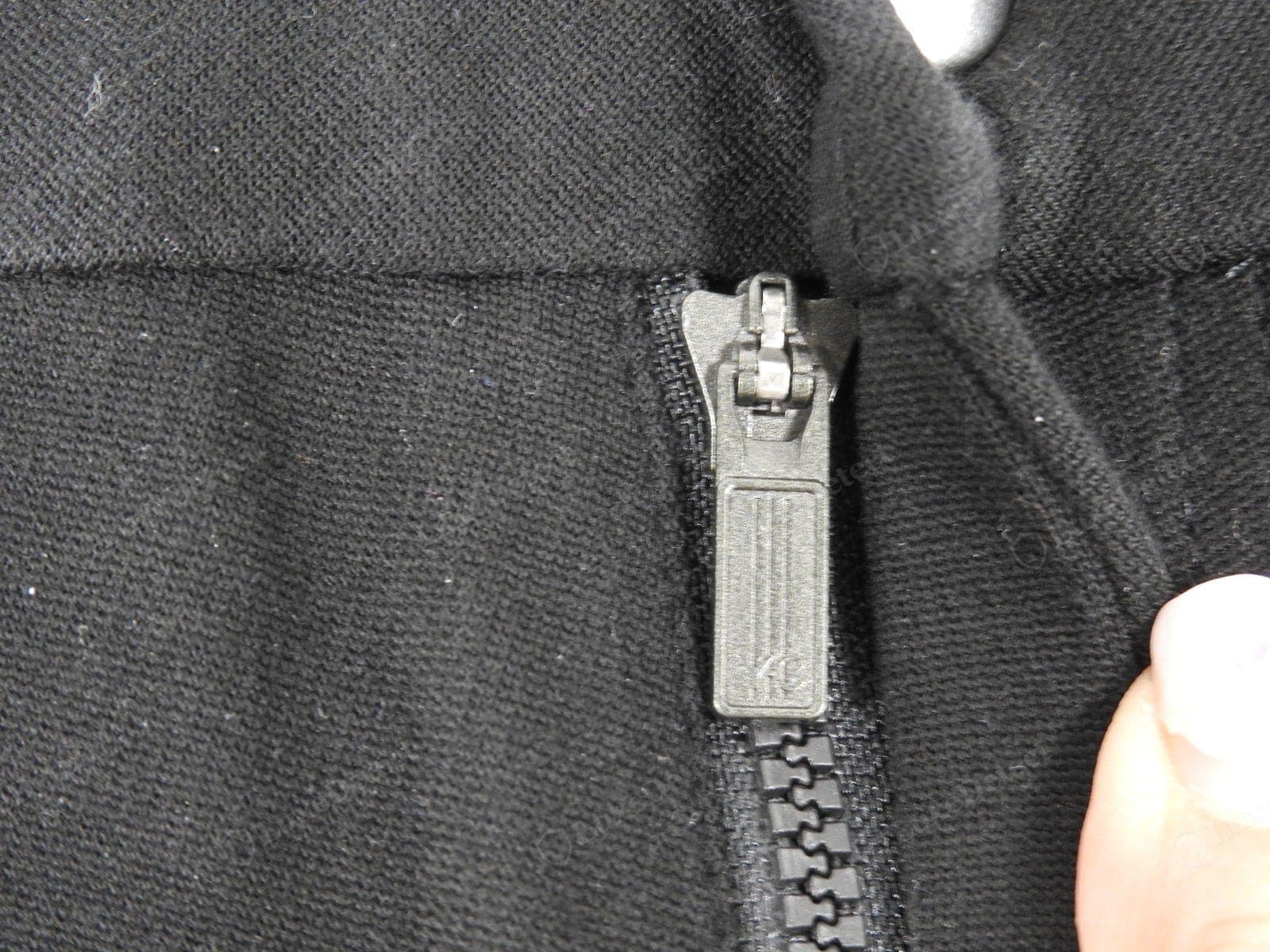
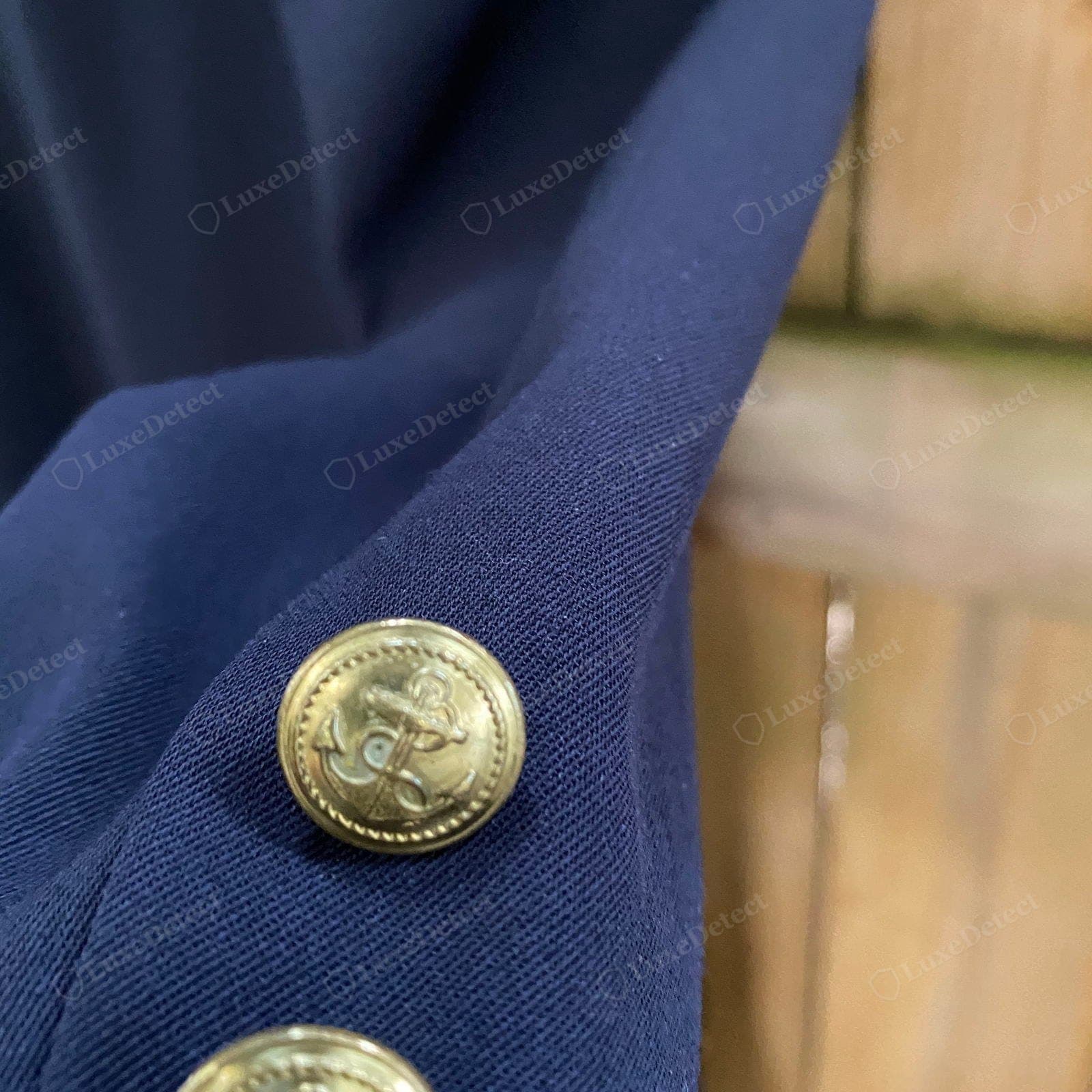
| Element | Authentic | Counterfeit |
|---|---|---|
| Zips | Recognised maker, smooth, clean pulls | Catching, unbranded or crude pull |
| Metal trims | Solid, even finish, crisp branding | Lightweight, uneven plating, soft branding |
| Internal trims | Neat, consistent with the garment quality | A step below the rest of the piece |
Provenance and Seller
Mainline Yohji sells through its own boutiques, a set of stockists (Dover Street Market, high-end multi-brand retailers), and its own site in some regions. Y-3 sells through adidas, Y-3 stores, and stockists. There is a large, knowledgeable secondary market, especially for archival mainline pieces.
Genuine secondary pieces come from individuals and reputable archive/resale dealers, often with detail photos of the labels and construction. A seller with unlimited stock of a hyped Y-3 release, a "Yohji outlet" site, or heavily discounted "new" mainline pieces is a warning sign, the same provenance caution that applies when you authenticate Isabel Marant. Yohji does not issue authenticity cards.
| Element | Authentic | Counterfeit |
|---|---|---|
| Channel | Boutique, stockist, or a reputable archive/resale dealer | "Outlet" site, unlimited hyped stock, heavy discounts on "new" |
| Paperwork | None expected; a stockist receipt at most | A "certificate of authenticity" |
Quick Authentication Checklist
- Feel the cloth (mainline) — heavy, dense, dry, deep matte black, drape with weight
- Read the label set — line-correct woven main label, care label with valid product number and correct origin (Japan for most mainline)
- Check construction — finished seams, proper tailoring internals, even hems, correct buttons
- For Y-3 — resolve the adidas article number, check the sole/foam quality, the Y-3 logo execution, the co-branded label stack
- Check hardware — recognised zips, solid trims, crisp metal branding
- Consider the seller — no "Yohji outlet"; archival pieces come from reputable dealers
Two or more failures means walk away. A thin, limp, grey-reading "black" mainline fabric, or a printed/misspelled label, is on its own sufficient.
When to Get a Professional Opinion
Mainline Yohji fakes are relatively rare and usually fail on the cloth and the label at a glance, but a knowledgeable faker can get a graphic piece close. Y-3 fakes are common and some are good — the harder cases need the adidas-side checks (article number, sole construction) done properly. If it is an archival mainline piece with a high price, or a hyped Y-3 release from a marketplace seller, get a second opinion before the money moves.
LuxeDetect authenticates Yohji Yamamoto and Y-3 from $15 with a verdict and Certificate of Authenticity within 24 hours. Send photos of the full label stack, the fabric close-up, the construction (seams, hems, internals), and — for Y-3 — the box label and the sole.
FAQ
What does Yohji Yamamoto fake most often — the mainline or Y-3?
Y-3, by a wide margin. The adidas collaboration has mass recognition and a hype resale market, so Y-3 sneakers and logo pieces are the main counterfeit targets. Mainline Yohji Yamamoto and POUR HOMME are faked far less because the buyer is knowledgeable and the garments are hard to copy, though replicas of popular coats and graphic pieces do appear.
Where is Yohji Yamamoto made?
Most mainline Yohji Yamamoto is made in Japan, and the care label says so. Some later production is elsewhere. Y-3 follows adidas manufacturing and origins. A mainline piece with an origin the line does not use, or a label style inconsistent with the claimed era, is a red flag.
How do I check a Y-3 item is real?
Run adidas-side checks plus the Yohji layer: resolve the adidas article number (it should match between the box label and the shoe/garment label and correspond to that Y-3 model), check the sole and midsole foam density and the glue and stitch lines, confirm the Y-3 logo is crisp and correctly placed, and verify the co-branded adidas + Y-3 label stack matches adidas's real formatting.
Does Yohji Yamamoto have a product number on the label?
Yes — mainline care labels carry an alphanumeric product/style code that encodes the season and garment. It should be present, correctly formatted for the era, and legible. A missing or malformed code, alongside a fuzzy logo or care-label spelling errors, is a fake tell.
Is Yohji's black really that consistent?
Yes — the house is known for a deep, even, true black across its cloth, and it holds up in person and in different light. A "Yohji" black garment that reads washed-out grey or greenish, or that has a faint sheen, is usually a thin poly-heavy fake fabric rather than genuine Yohji cloth.
Does Yohji Yamamoto come with an authenticity card?
No. Yohji Yamamoto does not issue authenticity cards or certificates. Genuine secondary-market pieces come from boutiques, stockists, or reputable archive/resale dealers, usually with detailed label and construction photos, and a stockist receipt at most.