Fine Jewelry Authentication Specialist
Fine jewelry authentication specialist. Focuses on hallmarks, stone setting, and metal finishing.
Published November 2026 · Contact
What Makes Vintage Dior Costume Jewelry Distinctive
Most of the genuine Dior jewelry that passes through our order archive is not modern. It is the gold-tone costume jewelry Dior licensed from the 1950s onward: clip-on earrings set with crystals, enamel and faux pearls, sculptural brooches, snake and herringbone chain necklaces, and pendants. Much of it was made in Germany under licence, and it is signed rather than serialised, so authenticating it is about reading the signature and the construction around it.
This guide covers that vintage line. Modern Dior jewelry has its own guide: the interlocking CD clasp pieces and J'Adior are covered in our Dior CD clasp jewelry guide.
Worth knowing
This guide is built from verified genuine vintage Dior pieces. Counterfeit vintage Dior exists and reaches us regularly, and the fakes we see copy the signature closely, including the "Chr.Dior ©" bar, patent numbers on clip backs and "Made in Germany" display cards. None of the differences we compared held up consistently enough to publish as a rule, so this guide shows you what genuine looks like rather than naming a single tell.
The "Chr.Dior ©" Signature
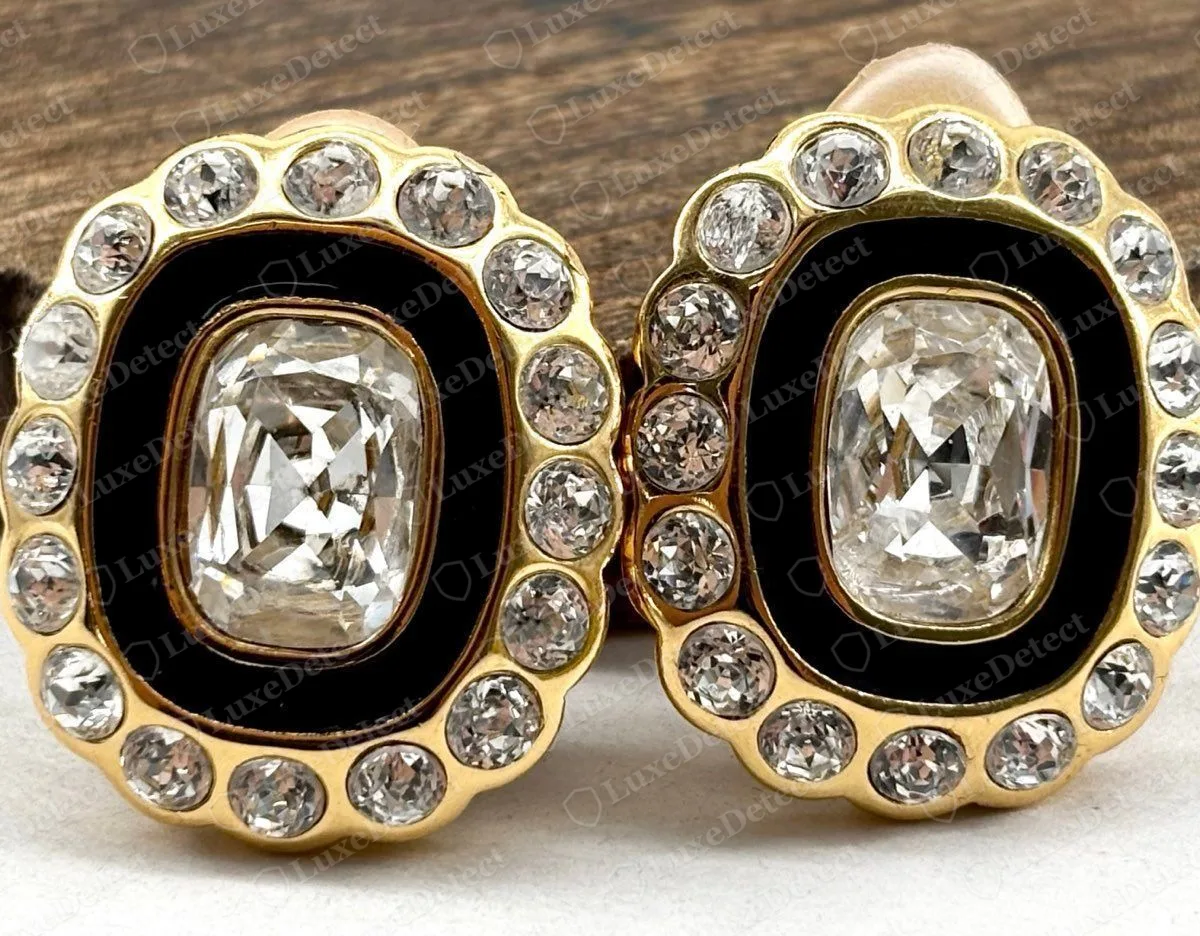
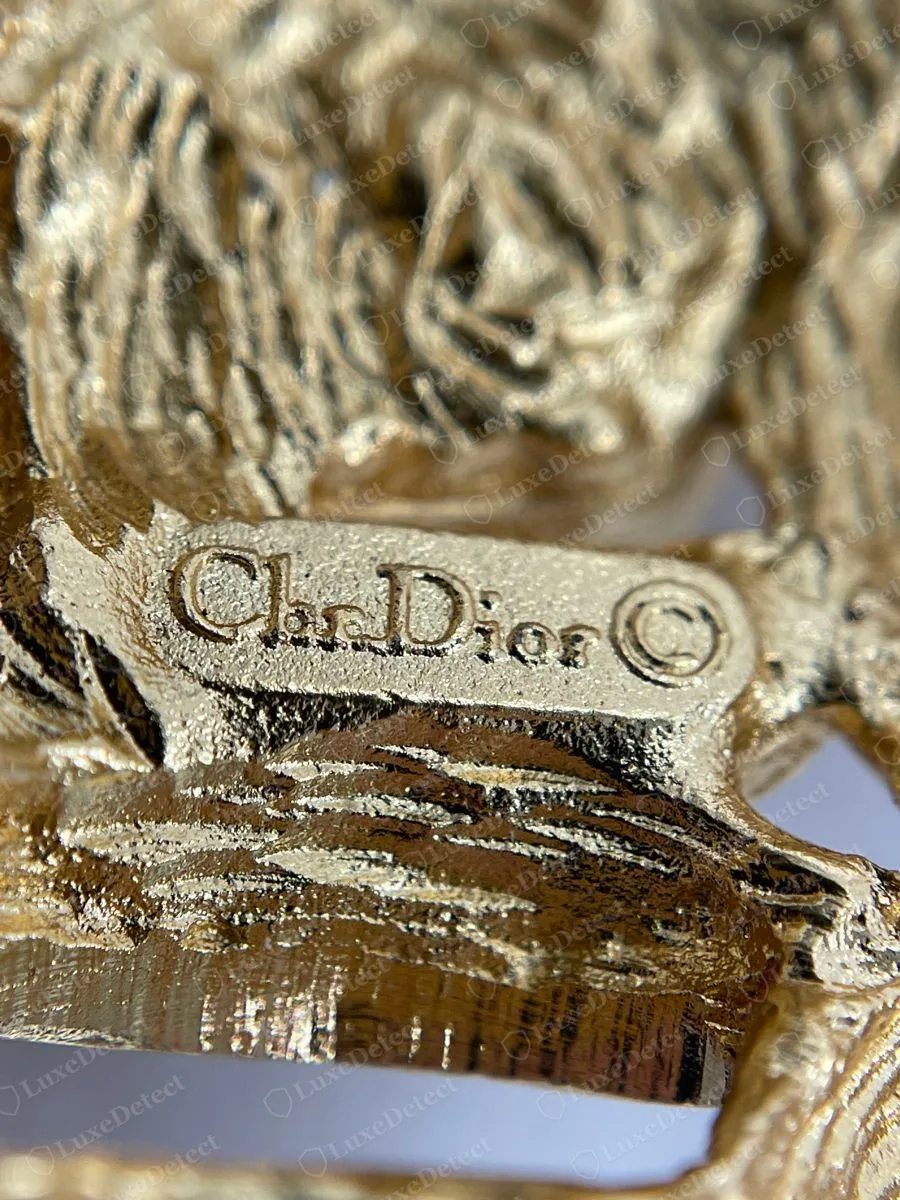
The signature you will see most often is "Chr.Dior" followed by a circled C (©), struck into a small raised bar or directly into the metal. On clip-on earrings it sits on the hinged clip paddle; on brooches it is on a small applied plaque on the back; on necklaces it is on the clasp.
On genuine pieces the lettering is a narrow serif with a clear full stop between "Chr" and "Dior", even letter depth, and a © that is a proper circle with a C inside. The strike is clean even when the plating around it is worn.
The Germany Mark
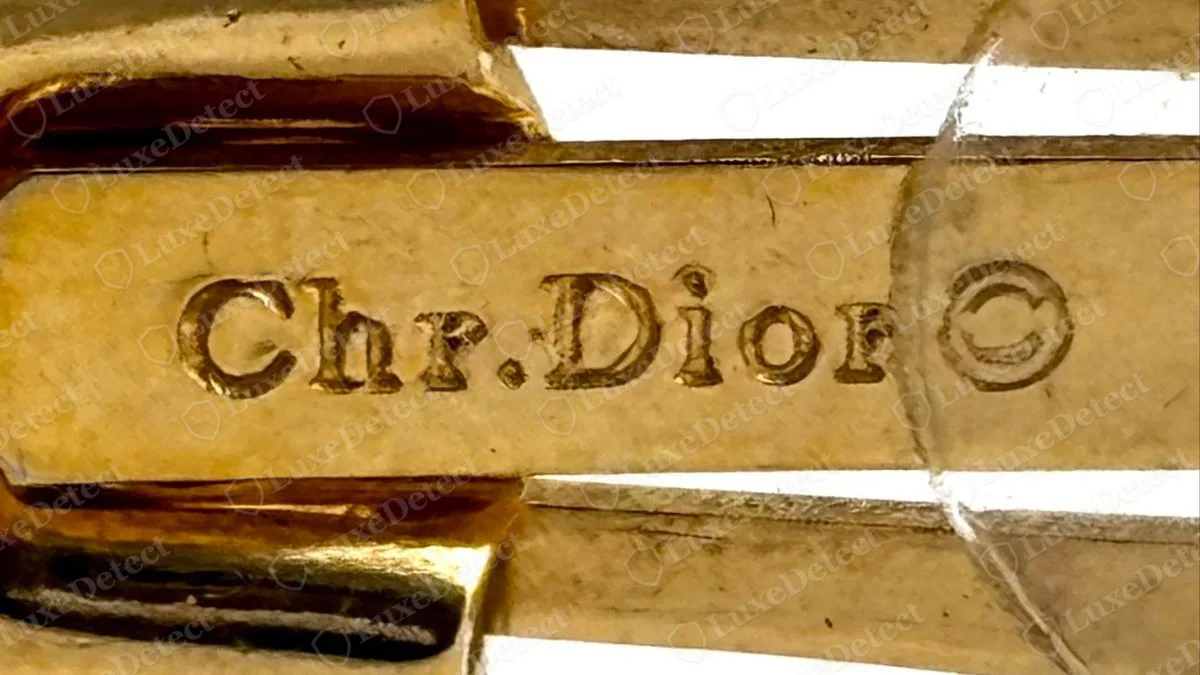
Many pieces add "GERMANY" after the signature, reading "Chr.Dior © GERMANY" in one line. Dior's licensed costume jewelry was largely produced in Germany (the long partnership with the Pforzheim jewellers Henkel & Grosse is well documented), so the mark is expected on a large share of genuine pieces. Its absence is not a warning sign: plenty of genuine pieces carry only "Chr.Dior ©".
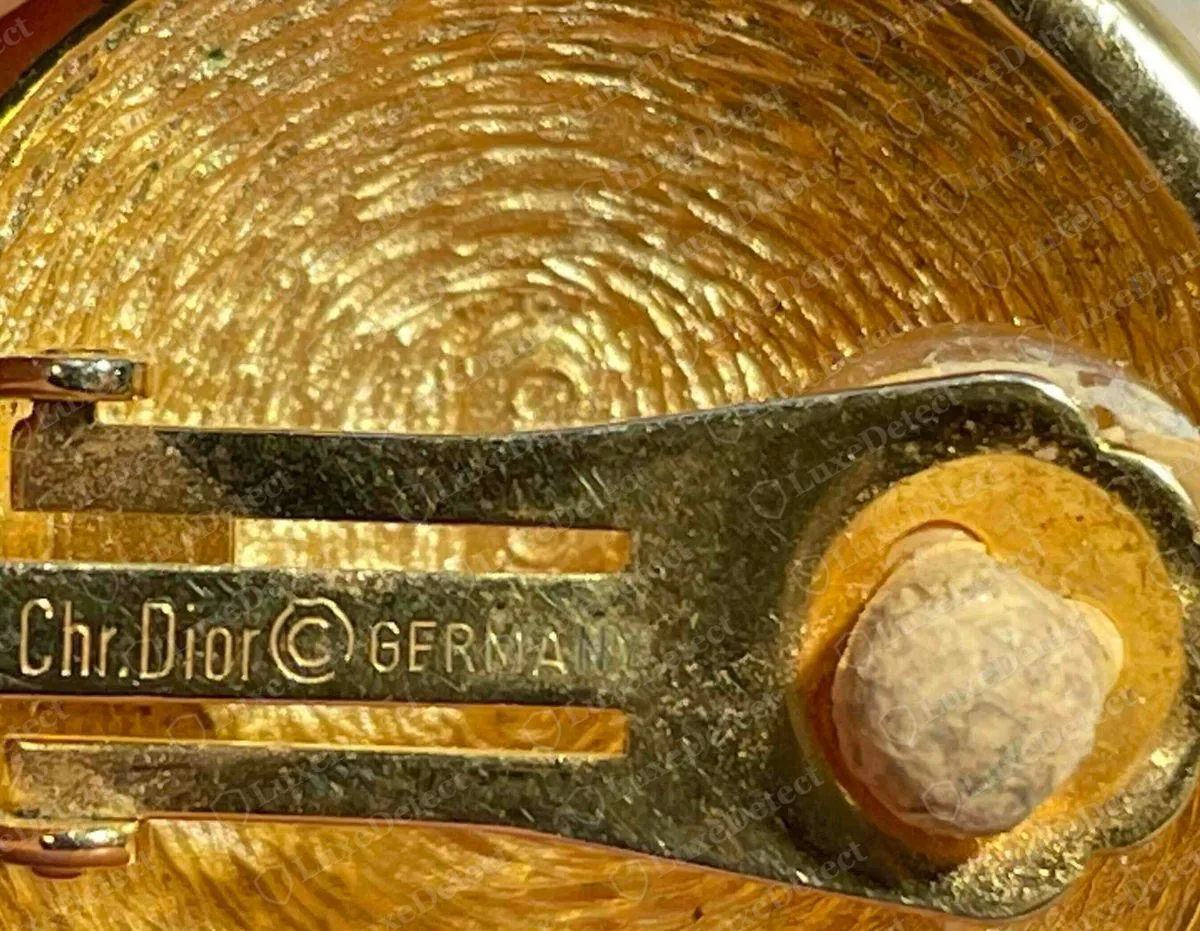
Some clip mechanisms also carry a patent number on the paddle. We have seen it on genuine pieces and on fakes alike, so it tells you about the clip design, not about who made the earring.
The Oval "Christian Dior" Cartouche
Older pieces are often signed with "Christian Dior" written out in full on two lines inside a raised oval cartouche, rather than the abbreviated "Chr.Dior". You will find it on the back of earrings and brooches, sometimes in silver-tone metal.
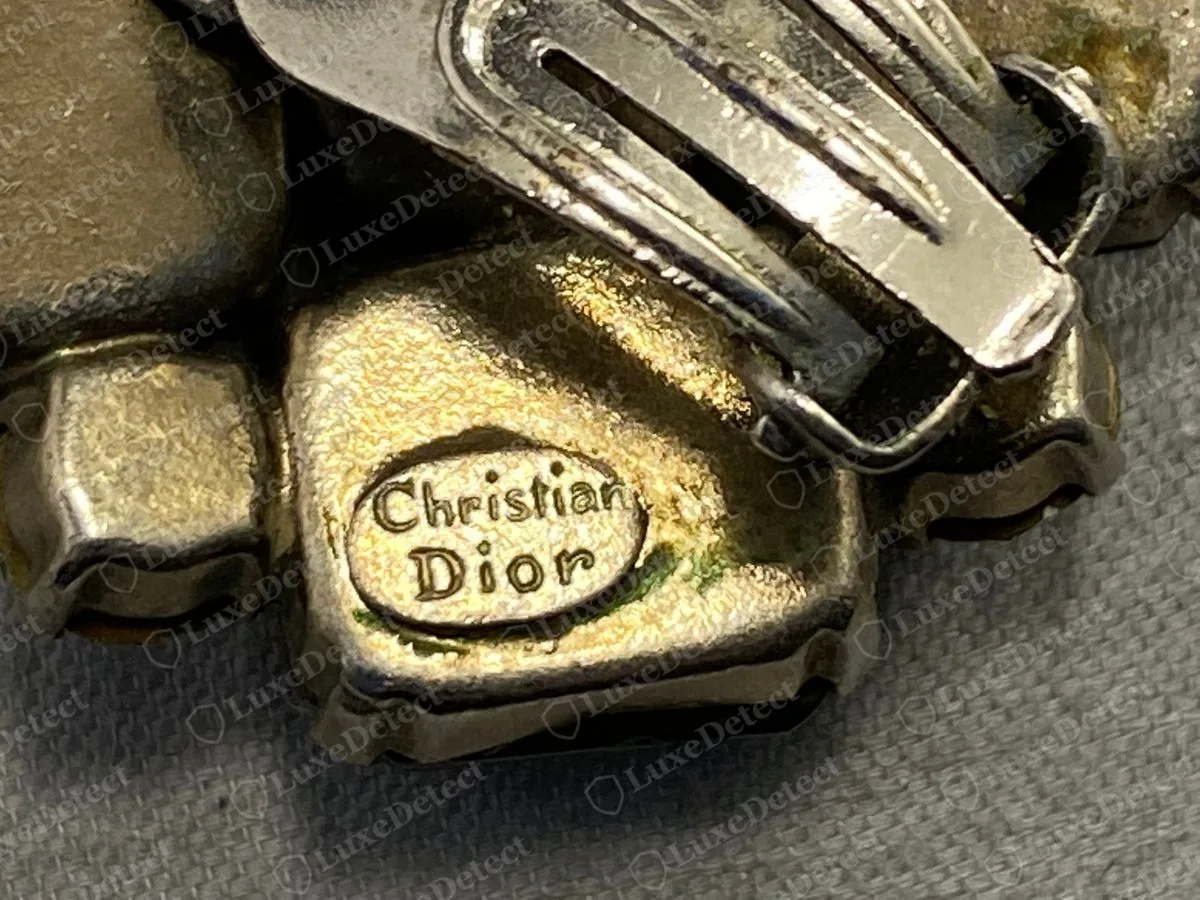
A full-name cartouche on a piece whose style, settings and clip look decades newer is worth a second look; so is the reverse. The signature style should fit the piece.
Signatures on Post Earrings, Pendants and Necklaces
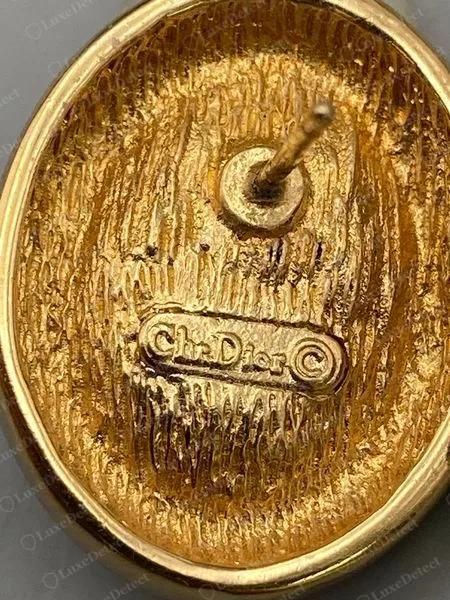
Not every vintage Dior earring is a clip. Post (pierced) earrings carry the signature in a small oval cartouche on the back of the earring, beside the post. Pendants are signed on the back of the setting, and chain necklaces on the clasp or on small plaques beside it, often on both sides of the fastening.
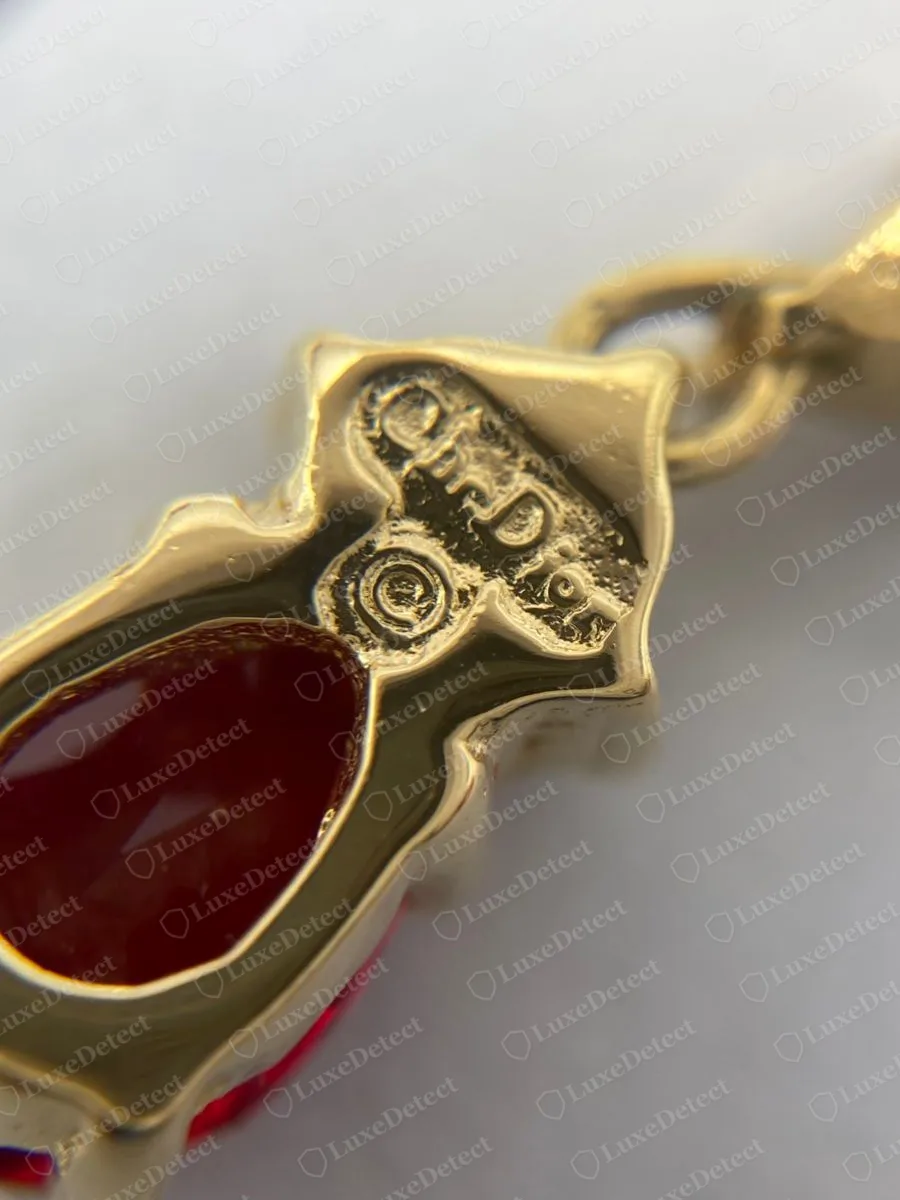
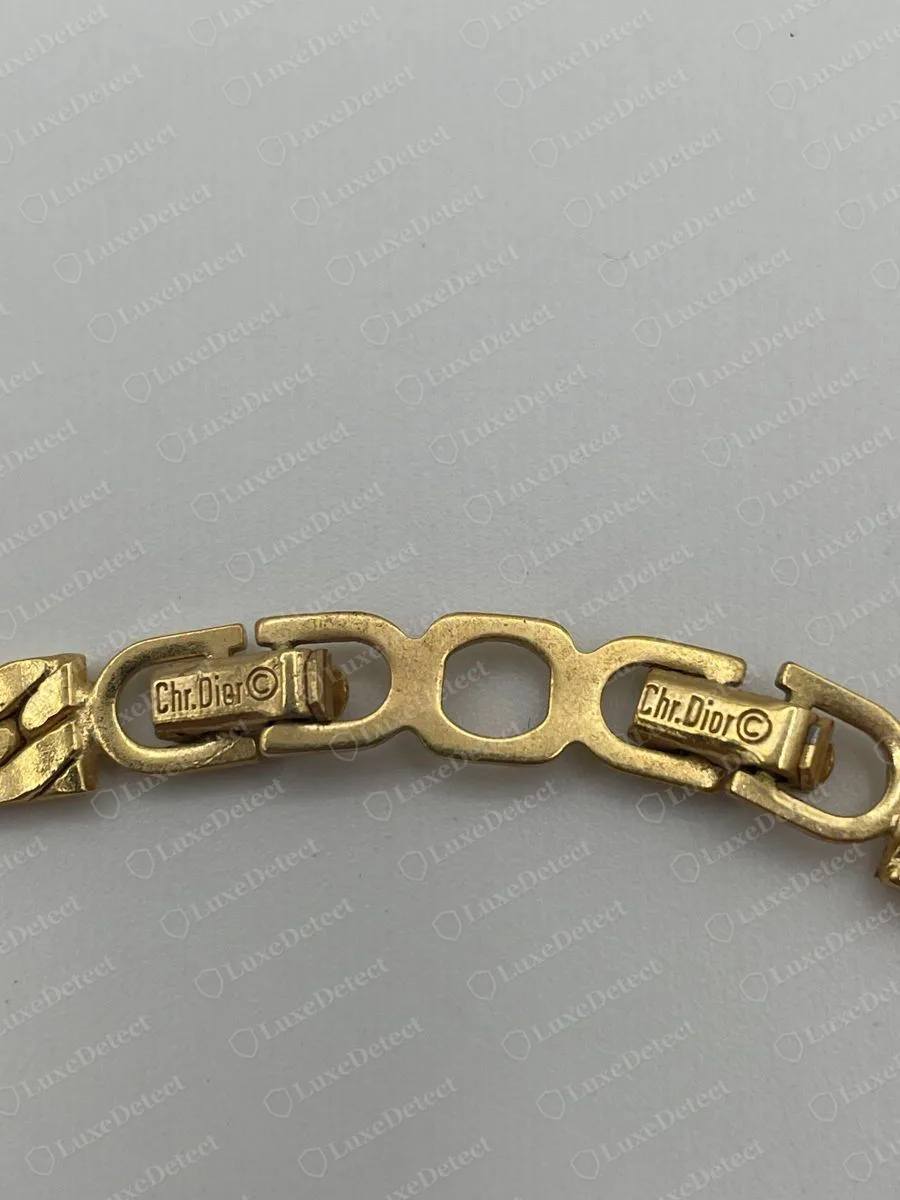
Construction: What Genuine Pieces Have in Common
- Plating and texture. The gold-tone backs are usually textured (brushed, swirled or hammered) rather than left flat, and the plating is even. Wear shows on high points first.
- Stone setting. Crystals sit in individual cups or prongs and are aligned; enamel is filled level with its frame. Glued-in stones exist on genuine costume pieces too, but the glue should not be visible from the front.
- Clips. The hinged clip opens and closes with a firm spring and sits flush. Replaced clips (or clips converted to posts) happen on genuine vintage pieces; a replacement clip without the signature is a repair, not automatically a fake, but it removes one way to check the piece.
- Display cards. Vintage pieces sometimes come on a "Christian Dior" or "Made in Germany" card. Cards are easy to reproduce and the fakes we see use them, so treat them as context only.
What a Matching Mark Does and Does Not Prove
A crisp "Chr.Dior ©" or "Christian Dior" signature is what a genuine piece has, but counterfeiters copy it, and a signature on its own proves nothing. What is harder to fake is the whole piece fitting together: a signature style that matches the age of the design, a clean strike, consistent plating and texture, careful stone setting and a clip mechanism of the right type. Weight and the feel of the clip spring are checks you can only make with the piece in hand.
Vintage Dior handbags have their own guide, our vintage Dior bags guide, if you are buying jewelry and bags from the same era.
When to Get a Professional Opinion
Vintage costume jewelry is mostly sold privately, on resale marketplaces and through estate sales, often without any paperwork. If the price reflects a Dior signature, have the piece checked before you pay.
A code that checks out doesn't prove the item is real. Counterfeiters copy genuine codes.
Our authenticators check the hallmarks, engravings, clasp and settings of your Dior against verified references, from $30. You get a verdict within 24 hours, and a Certificate of Authenticity if the item passes.
Authenticate My Dior →LuxeDetect authenticates Dior jewelry from $30, with a verdict and a Certificate of Authenticity within 24 hours. Send the front of the piece, a sharp close-up of every signature, the clip or clasp mechanism, and the back of the setting.
FAQ
How do I know if my vintage Christian Dior earrings are real?
Find the signature first: "Chr.Dior ©" on the clip paddle or back, sometimes followed by "GERMANY", or "Christian Dior" in an oval cartouche on older pieces. Then check that the strike is clean, the signature style suits the age of the design, and the plating, stone setting and clip are consistent with it. Because the signature is copied, have a valuable piece checked against verified examples.
What does "Chr.Dior © Germany" mean on jewelry?
It is the signature used on Dior's licensed costume jewelry, with "GERMANY" marking where the piece was made. Much of Dior's vintage costume jewelry was produced in Germany under licence, so the mark is expected on many genuine pieces, but fakes carry it too.
Is vintage Dior jewelry real gold?
Vintage Dior costume jewelry is gold-tone plated base metal, set with crystals, enamel and faux pearls. It is designed and signed by Dior but is not solid gold, so an X-ray or acid test reading of plated metal is normal for a genuine piece.
Does a "Made in Germany" card mean my Dior earrings are authentic?
No. Display cards are easy to reproduce, and counterfeit vintage Dior earrings are often sold on them. Judge the piece itself.
Can vintage Dior jewelry be authenticated from photos?
Yes. What decides it is the signature, the construction around it and how the two fit together, compared against verified genuine pieces. Sharp close-ups of every signature and of the clip or clasp are the most useful photos.
Is a vintage Dior earring with a replaced clip fake?
Not necessarily. Clips break and get replaced, and some clip-ons are converted to posts. A replacement clip has no signature, so the piece has to be judged from any other signature and from its construction.
Sources
Photos are from LuxeDetect's own order records and show vintage Dior pieces that passed authentication. Dior's licensing of costume jewelry and its production in Germany, including the partnership with Henkel & Grosse of Pforzheim, are documented in published histories of the house and of the Grossé firm.