Luxury Handbag Authentication Specialist
Luxury leather goods specialist. Works on Italian house construction, hardware, and interior stamping.
Published November 2026 · Contact
Why a Tumi Is Hard to Judge From One Detail
Tumi makes some of the most copied marks in travel goods: a logo that is cast, engraved or embossed on almost every part of the bag, a metal tracer plate inside, and a heavy woven nylon that people recognise at a glance. Tumi was founded in 1975, a date the brand prints on its own interior patch, and it built its name on tough, plain business luggage and backpacks, so most of what you will meet in the second-hand market is a work bag that has been carried for years. Wear is normal here. A scuffed leather tab or a faded zip tape says very little about authenticity.
The angle of this guide is simple. On Tumi, the marks are easy to find and easy to copy, and in the Tumi bags we have looked at, the details people usually call "tells" turn up on genuine and on questioned bags alike. So this guide does not hand you a one-line trick. It shows what the genuine marks look like on real examples, then says plainly what a matching mark does and does not prove.
Worth knowing
This is an authentic-reference guide. The genuine photos come from verified Tumi orders, mostly backpacks. We have not found a consistent, repeatable counterfeit tell on Tumi that holds up across bags, so there is no checkpoint table and no red-flag list here. Where a detail below is general brand information rather than something our photos show, it says so.
What Tumi Puts on a Genuine Bag
Across the genuine backpacks we looked at, the same small set of marks keeps appearing. Not every model has all of them, and the style changes by line (Alpha, Alpha Bravo, Voyageur and others), so always compare with the same line.
- A tracer plate inside, with the TUMI logo, an "if found, please call" line, a barcode with a long number and a short alphanumeric code.
- An engraved metal zipper pull with the TUMI name cut into it.
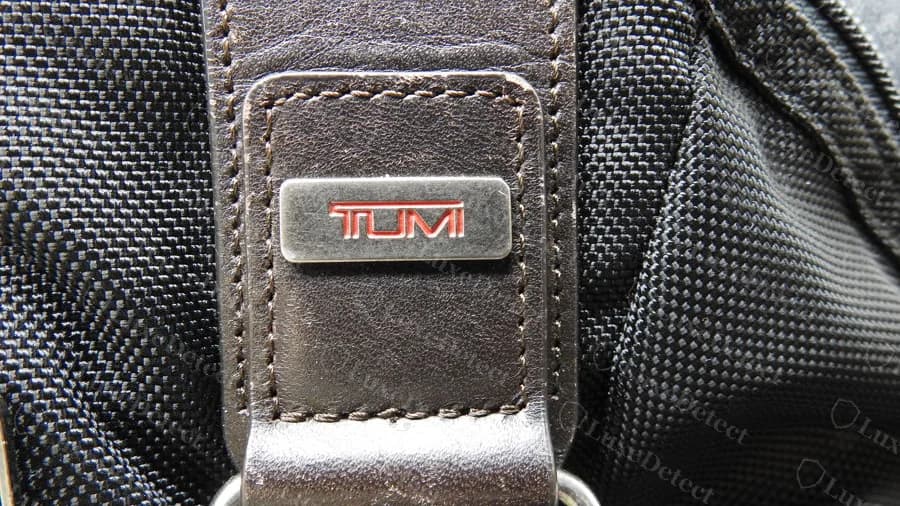
- A TUMI logo plate or bar on the outside, fixed to a leather tab or stitched into the front.
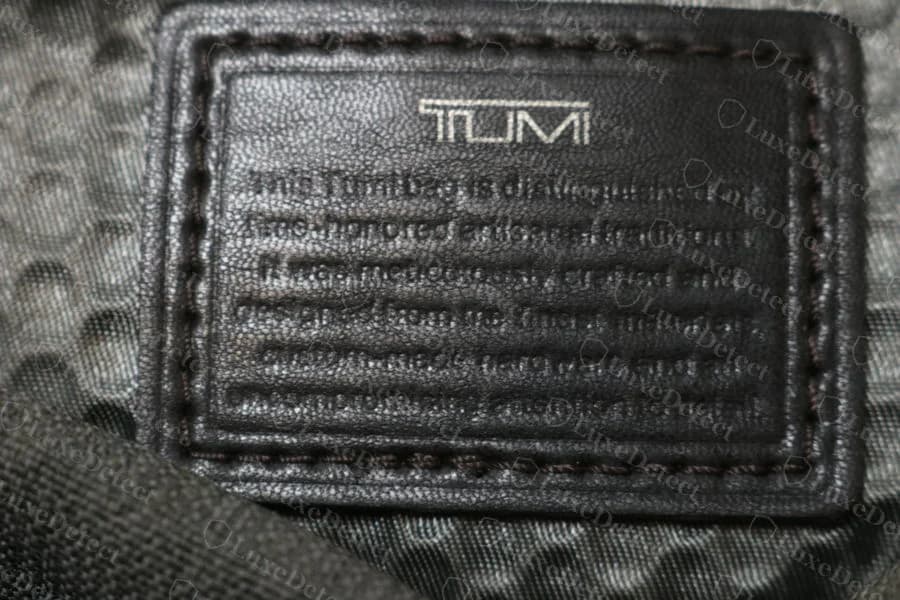
- An interior leather patch with a short brand statement and the TUMI logo.
- A woven "Made in" label in the lining seam.
- Ballistic-style nylon or soft leather with a lining that is often textured.
The Tracer Plate
The tracer plate is the first thing people look for, and it is a good place to start. On the genuine Alpha Bravo backpack below, the plate sits inside the main compartment: a black plate with four rivets, the red TUMI logo at the top, the line "If found, please call U.S.A." with a phone number, then a barcode, the long tracer number under it and a short code on a white label.
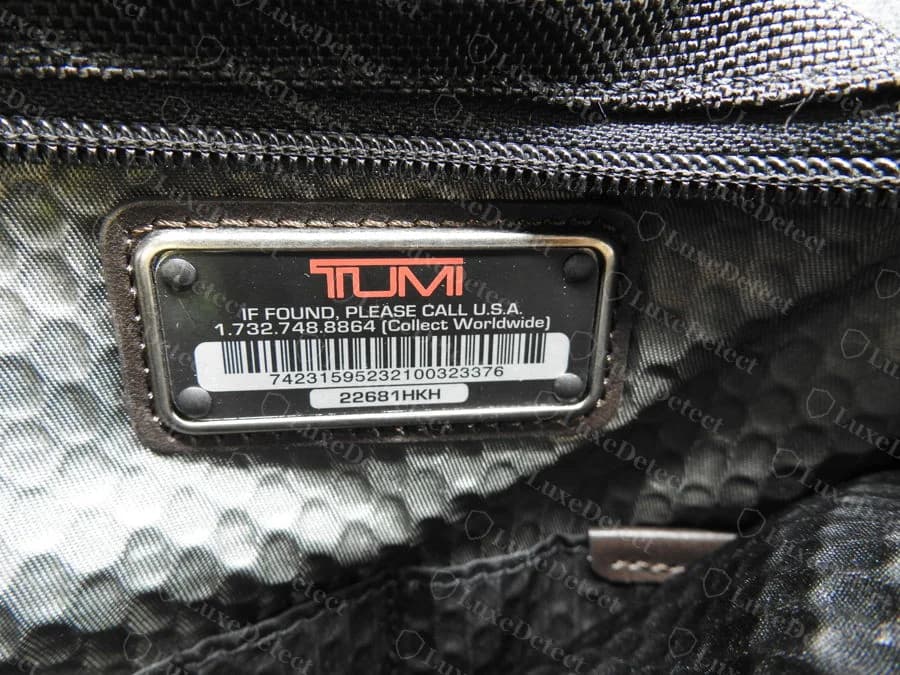
The plate belongs to Tumi's Tracer program, in which an owner registers the number so a lost bag can be traced back to them (this is general brand information, not something a photo shows). The layout changes between generations. The plate above is the older layout; genuine bags from later lines carry a plate that adds a QR code and a different phone number. Do not reject a plate because it does not match another bag you have seen. Match it with a genuine bag from the same line and period.
Worth knowing
A plate that looks right proves little on its own. The plate can be copied, and a questioned bag in our records carries a plate that looks the same as a genuine one (see below). Use the plate to identify the line and period, and check that the rest of the bag agrees with it.
Engraved Zipper Pulls and Logo Plates
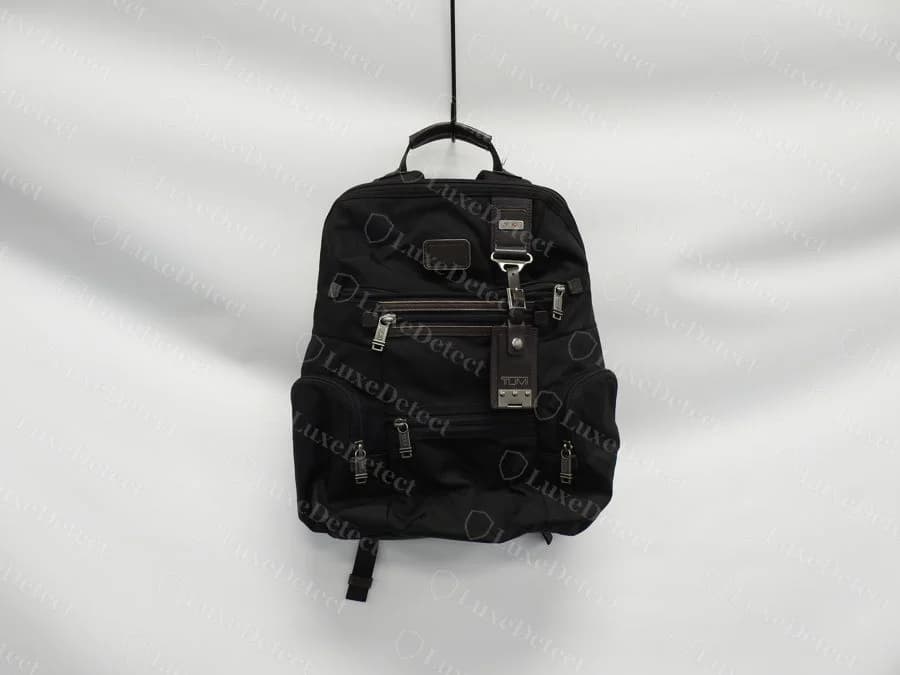
Tumi puts its name on the hardware. On a genuine Alpha Bravo the zip pull is a flat metal slide with TUMI cut into it and a small leather tag on the ring. The outside logo is a small metal bar with the name in red, riveted into a stitched leather tab.
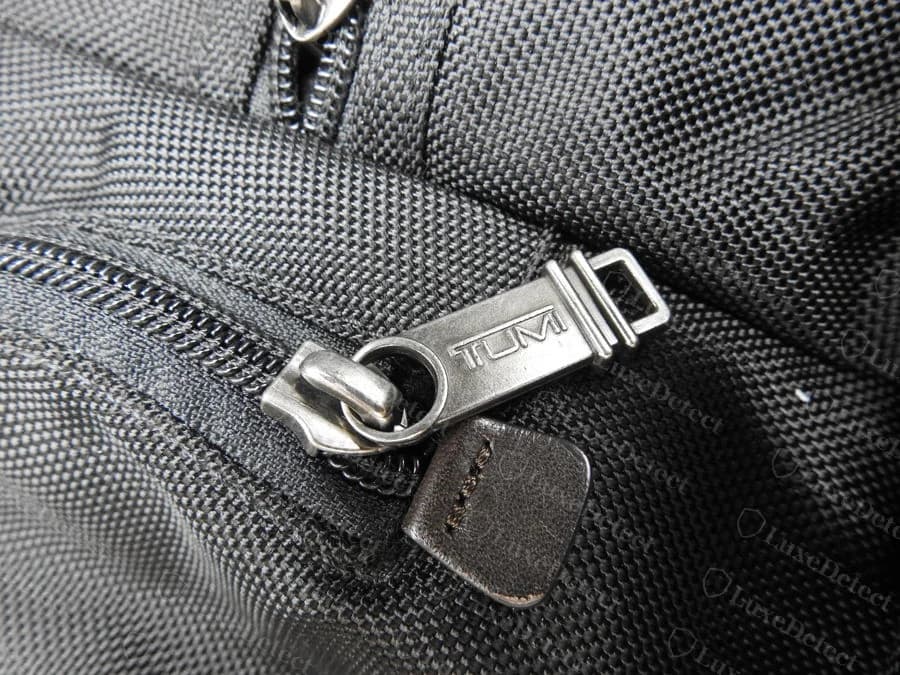
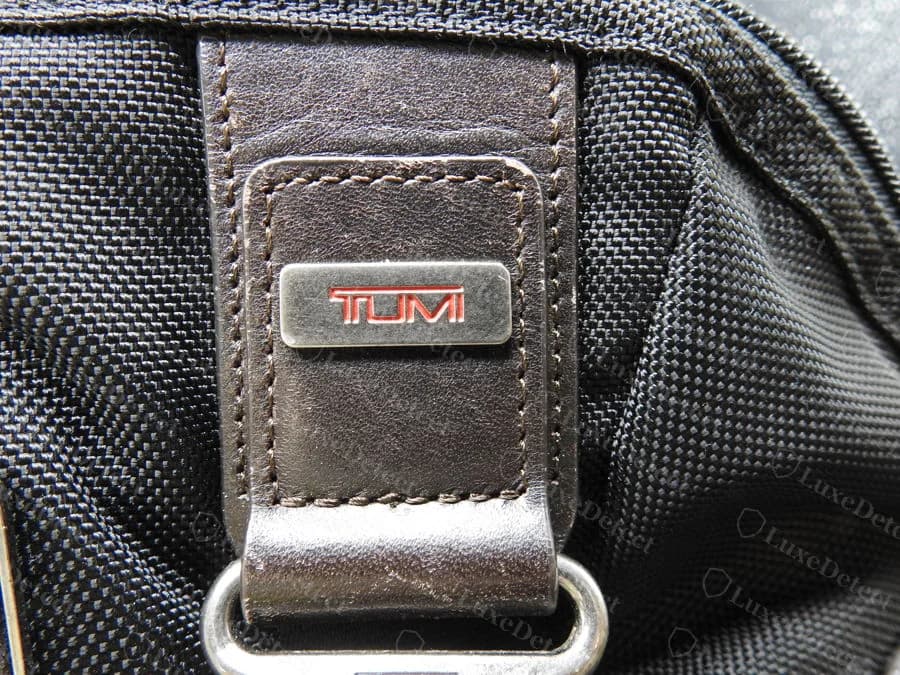
What to look at: the lettering is crisp and evenly cut, in the same wide, squared TUMI letterforms seen across the bag; the leather tab is stitched with even, tight thread; and the weave of the nylon behind the plate is a clean, regular basket pattern. Gold-tone hardware appears on Voyageur-style backpacks, so the finish alone does not tell you the line. Compare finish and logo style with the same line.
The Interior Heritage Patch
Inside many Tumi bags is a leather patch, stitched down at the edge, with the TUMI logo above a short paragraph of embossed text. On the Alpha Bravo below it is brown leather with contrast stitching on a honeycomb-textured lining; on the black leather Voyageur it is black with gold lettering.
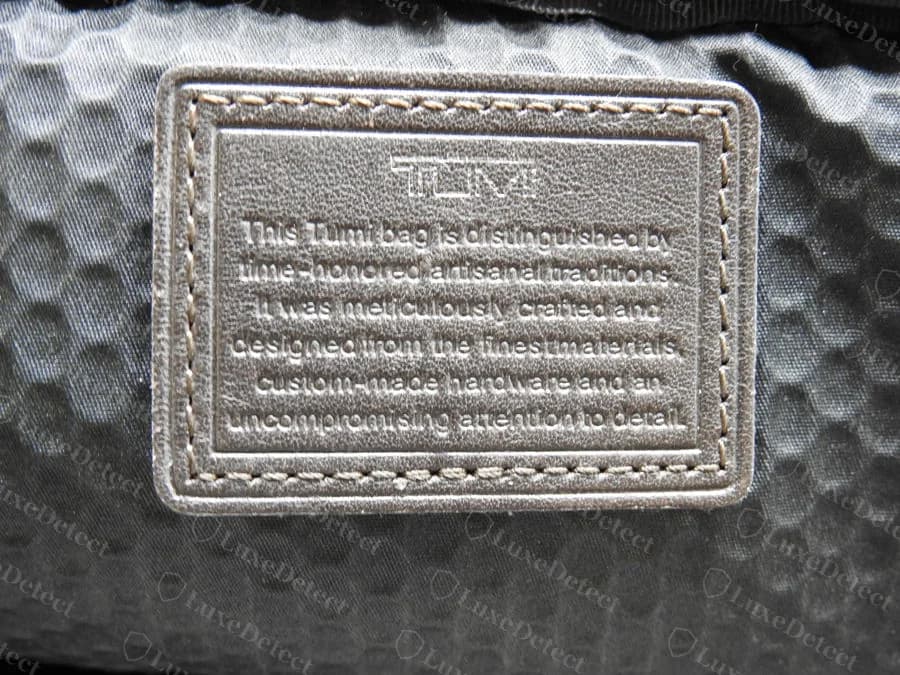
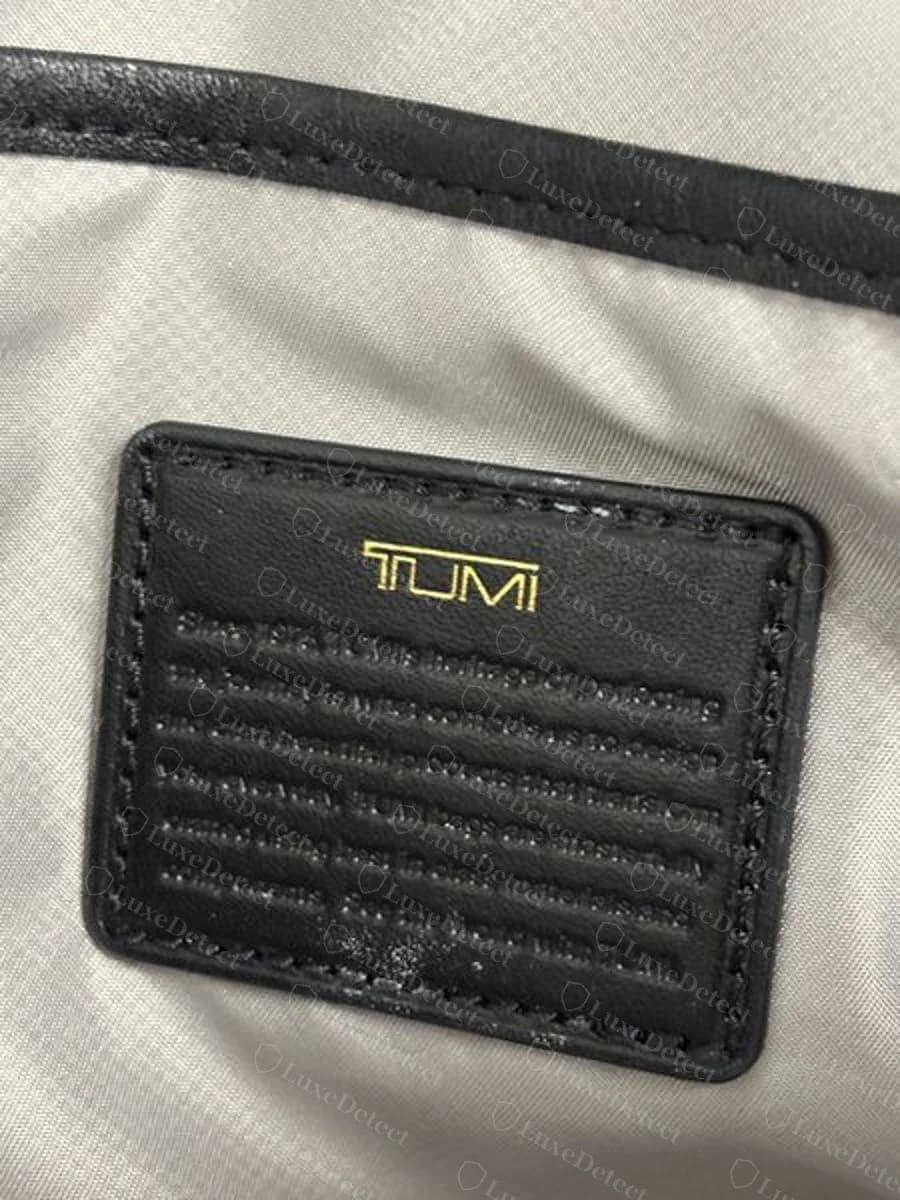
The wording of the patch has changed over time. Some bags carry a paragraph about time-honoured artisanal traditions; others carry a newer statement that begins with the year 1975. Both appear on bags in our records, so the text on its own does not settle anything. What you can check is whether the embossing is deep and even, whether the stitching follows the edge cleanly and whether the patch is the style used on that line.
Made-In Labels
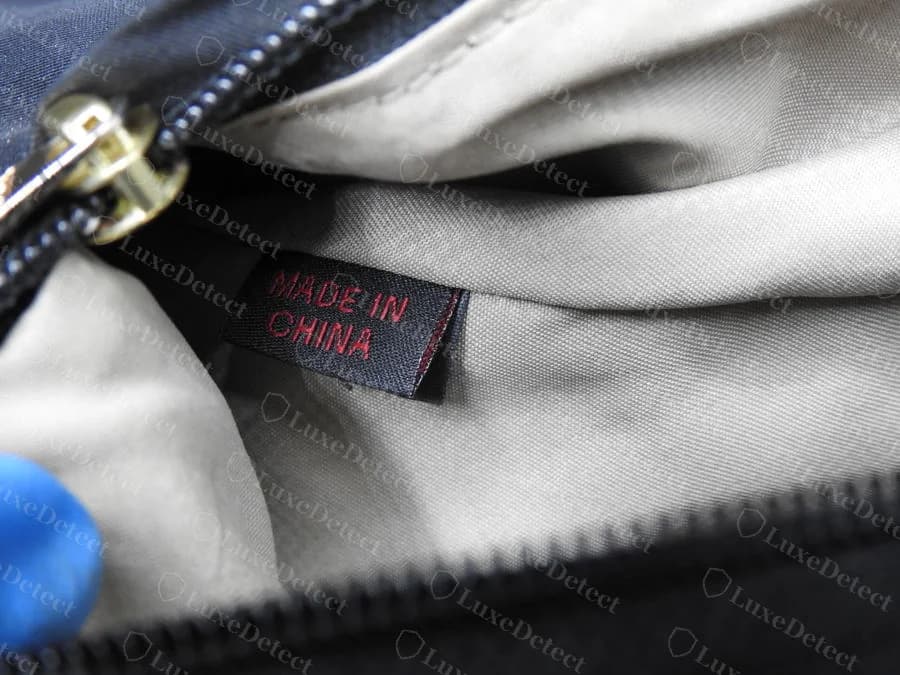
Tumi bags are made in more than one country, and the woven label in the lining says which. The two genuine examples below show a label reading China and one reading Cambodia.

Worth knowing
"Made in China", "Made in Cambodia" or any other country on a Tumi label is not a sign of a fake, and a country you did not expect is not either. The label shows where that bag was assembled, not whether it is genuine.
What the Questioned Bags in Our Records Show
Some Tumi backpacks in our records were given a fake outcome. We looked at them next to genuine ones, and the honest finding is that the marks above are present and look the same.
The example below is the clearest we have. A genuine black Alpha Bravo backpack and a grey, leather-trimmed backpack from a similar Alpha Bravo-style family with a fake outcome both have the metal logo plate on the front, the engraved zip pulls and the leather interior patch, and the questioned bag's tracer plate has the same layout as the genuine one.
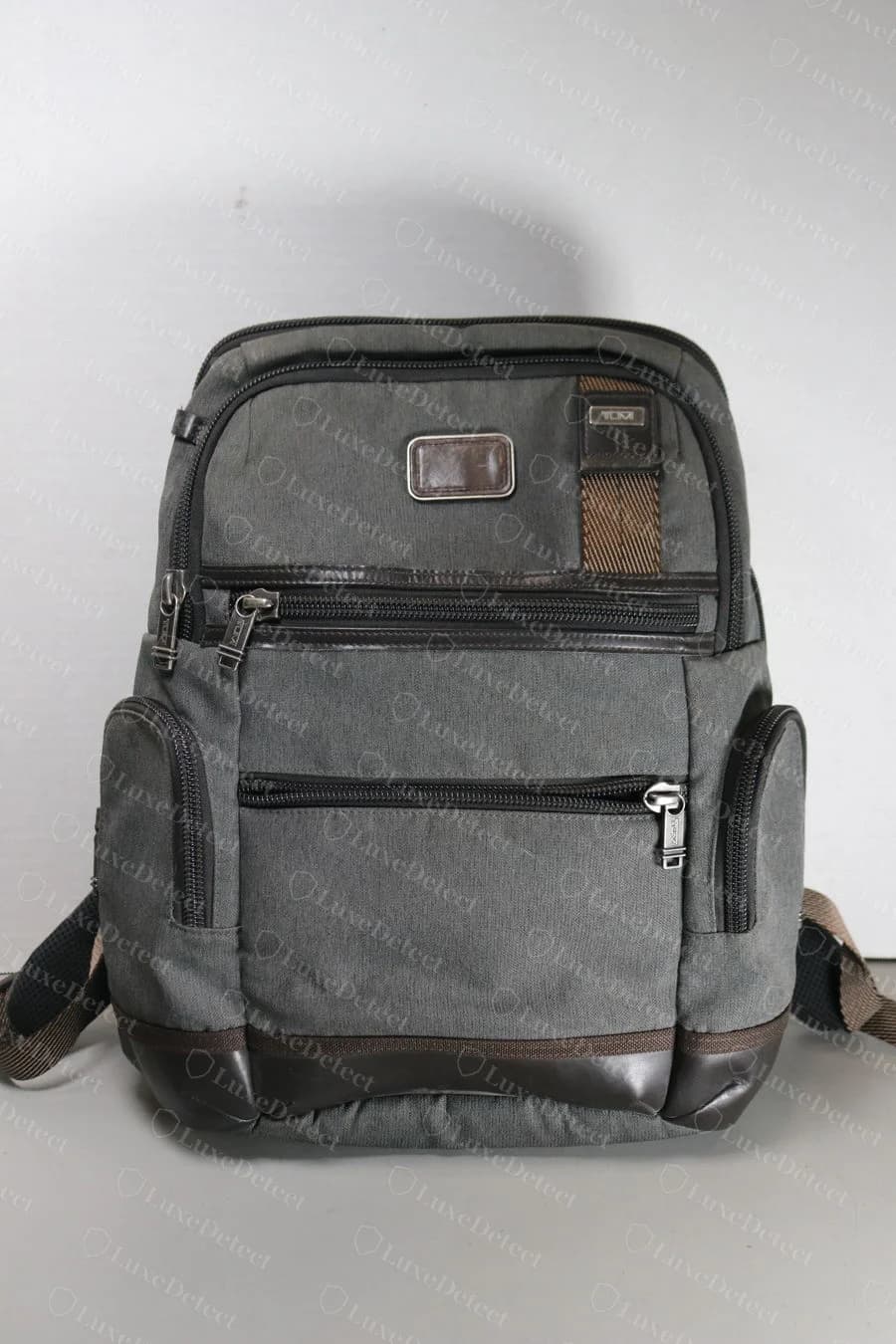
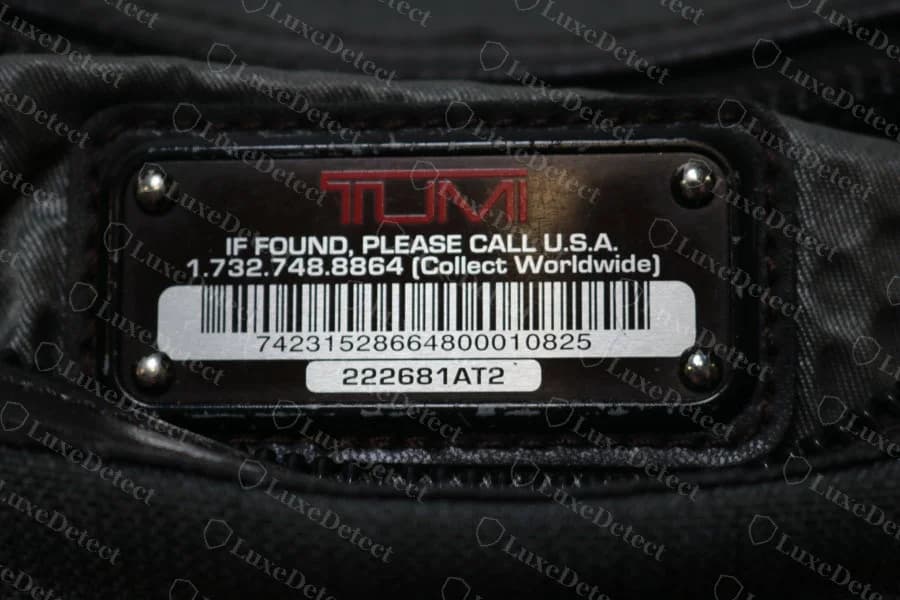
The outcome on an order does not tell us which detail decided it, because an outcome can also reflect the valuation of the item. So we do not turn any of these details into a red flag. What the example does show is how little a matching mark is worth on its own.
What a Matching Mark Does and Does Not Prove
- A tracer plate, engraved pull, logo bar or heritage patch that looks right does not make a bag genuine. Fakes copy marks like these, and on Tumi they are the first things anyone would copy.
- A mark that looks wrong is only a flag when you can show it is wrong for that line and period. Plate layouts, patch wording and hardware finish all vary between genuine Tumi lines.
- The things that are harder to copy are in the whole bag: the density and regularity of the nylon weave, the cut and stitch of the leather trim, the shape and padding of the straps and back panel, the lining, and whether every part belongs to the same line. Weight and feel are checks you do with the bag in hand.
- A tracer number is only useful if the rest agrees. If a seller offers the number, treat it as context, not as a verdict.
Quick Checklist
- Identify the line (Alpha, Alpha Bravo, Voyageur or other) from the front plate and lining.
- Find a verified bag of the same line and period to compare with.
- Check the tracer plate layout against that bag, not against a different line.
- Check that the zip pulls are engraved, evenly cut and the same style throughout.
- Check the logo bar or plate, the leather tab and its stitching.
- Read the interior patch and the woven label, but do not treat the country or the wording as a verdict.
- Judge the nylon weave, trim and straps as a whole, and note anything that does not belong to the line.
When to Get a Professional Opinion
If you are paying real money, or the bag has any detail that does not fit the line, a specialist who has seen many genuine Tumi bags of that line is the safer route, because the call rests on how the marks, materials and construction fit together.
A code that checks out doesn't prove the item is real. Counterfeiters copy genuine codes.
Our authenticators check the labels, stitching and fabric of your Tumi against verified references, from $15. You get a verdict within 24 hours, and a Certificate of Authenticity if the item passes.
Authenticate My Tumi →For related checks on travel bags, see our guides to the Louis Vuitton Keepall, the Goyard Saint Louis tote and the Coach bag.
FAQ
How can I tell if my Tumi backpack is real?
Start by identifying the line, then compare the tracer plate, the engraved zipper pulls, the logo plate, the interior patch and the nylon weave with a verified bag of the same line. No single mark settles it, because these marks are copied. A bag that matches on all of them and is built like the genuine one is a good sign; one that differs on the construction is not.
Where is the serial number on a Tumi bag?
Most Tumi bags carry a tracer plate inside, often in the main compartment or under a flap. It has a barcode with a long number and a short alphanumeric code. Older and newer plates are laid out differently.
Is a Tumi tracer number proof that the bag is genuine?
No. A plate can be copied, and a questioned bag in our records carries one that looks the same as a genuine plate. Use it to identify the line and period, and look at the rest of the bag.
Is Made in China a sign of a fake Tumi?
No. Genuine Tumi bags carry labels for more than one country, including China and Cambodia in our examples. Origin on its own is never a tell.
Does the Tumi logo have to be engraved on the zipper pull?
On the Alpha and Alpha Bravo bags we looked at, the pull carries the engraved name. Other lines use different hardware, so compare with the same line before judging.
Can I authenticate a Tumi bag from photos alone?
Yes. What decides it is how the marks, materials and construction fit together, compared with verified bags of the same line. Send clear photos of the whole bag, the zip pulls, the logo plate, the tracer plate and the interior patch. For an expensive bag, a specialist review is the safer route.
Can wear or a scuffed leather tab mean a Tumi is fake?
No. Tumi bags are work bags and wear is normal. Judge the marks and the construction, not how worn the bag is.