Sneaker Authentication Expert
Sneaker and streetwear authenticator. Covers Nike, Jordan, Yeezy, and limited collaboration releases.
Published October 2026 · Contact
How to Check if Puma Shoes Are Original
To check if Puma shoes are original, start with where the pair was sold, then find the style code on the shoe label and tag, then match the model name, colourway and code against the product page on puma.com, then look at the logo, the stitching and the sole. No single mark settles it, because fake Puma shoes copy marks, including the label. A pair that matches proves nothing on its own; a pair that clearly differs from the brand's own product photos is a strong reason to stop.
Puma sells a very large range, from the Suede to the RS-X and football boots, and it re-releases and collaborates often. So there is no single "Puma look" to memorise. What works is a repeatable routine: seller first, code second, comparison with the official page third.
Worth knowing
This guide rests on public sources, not on our own verdict records. We do not have a set of confirmed counterfeit Puma shoes to compare against, so we are not publishing a tell we could not confirm, and we are not describing a fixed label layout, a font or a stitch count. The sources are listed at the end.
What Puma Is
Puma was founded in 1948 by Rudolf Dassler, after he split from the shoe business he had run with his brother Adolf (Adi) Dassler, whose company became Adidas. It is based in Herzogenaurach, Germany, and its shoes and clothing carry the leaping puma logo and the Formstrip, which was introduced in 1958 (Wikipedia). Puma's own annual reports say the company takes action against counterfeits, which it describes as often of inferior quality and not meeting its quality standards, working with customs, police and other authorities.
Step 1: Where Was the Pair Sold
Fake Puma shoes are sold through marketplaces, social media shops and websites that copy the look of the brand's own site. A pair of a popular or sold-out model at a price far below what puma.com or an authorised retailer charges, from a seller you cannot trace, is the main warning sign. Ask for the order confirmation or receipt from where the seller bought them, and for sharp photos of the box label, the shoe label and the sole.
Step 2: The Puma Shoe Label and Tag
Most people searching "puma shoe label" or "puma shoe tag" want to know what the numbers mean. This is what we could confirm.
- The style code. On puma.com, each product page shows a style number made of six digits and a two-digit colour code, for example "Style: 374915_12" on the Suede Classic page we opened. The six digits are the model and the last two are the colour code, as the page shows them. The label inside the shoe and on the box is where you read the same code on your pair. We did not find a page from Puma saying how the code is printed on the label (hyphen or underscore), so we do not give a fixed layout.
- Match it to the model. Search the style code, or open the model on puma.com or a retailer's page, and check that the name, colours and materials shown for that code are your shoe. A code that returns a different model or a different colourway is a mismatch. A code that returns the right model proves only that whoever made the label copied a real code.
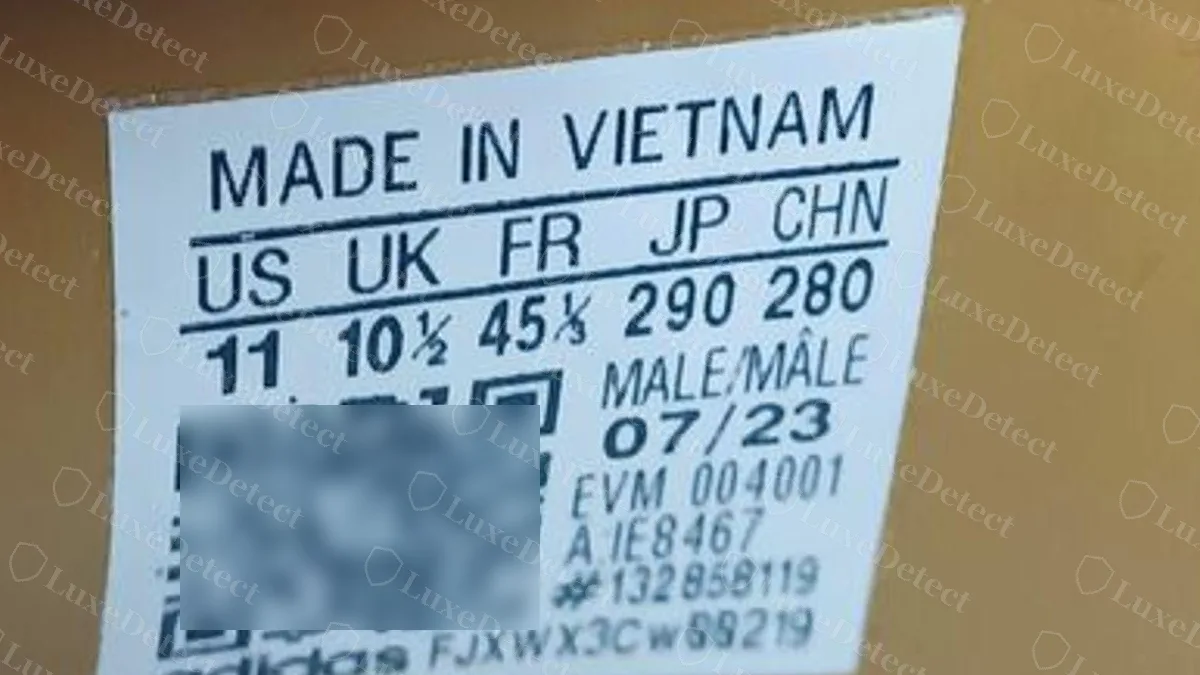
- The size and country lines. The label lists size and place of manufacture. Puma, like most sportswear brands, makes shoes in several countries, so the country printed is not a tell. We are not describing a fixed size table.
Worth knowing
A missing or unreadable label is a reason to ask the seller for a clear photo, not proof of a fake. A label that is cleanly printed and matches the model is only a mark, and marks are copied.
Step 3: Compare the Pair With the Official Photos
Open the exact model and colour on puma.com and compare, with the pair in your hands or in sharp photos:
- The shape and the proportions. Toe box, heel height, collar and tongue should look like the official photos of the same release. Fakes are often copied from an older or different version.
- The logo and the Formstrip. Check the puma and the strip against the official images for placement and finish. Do not rely on a memorised "correct" logo, because Puma has changed models and finishes over the years.
- The stitching and the glue. Look for loose threads, uneven stitching and visible glue at the sole edge. These show poor finishing, not a fake on their own, since genuine pairs can have flaws too.
- The sole and insole. Compare the sole pattern and the insole print with the official photos of that model.
- The box. A box is context, not evidence. Check that the box label shows the same model, colour and style code as the shoe label.
Where to Buy to Avoid Fake Puma Shoes
The safest source is puma.com or a store the brand names as an official retailer. Resale platforms and off-price stores can carry genuine pairs, but you cannot assume it. If the pair is a limited release, a collaboration or cost real money, get an opinion before you pay.
What a Matching Mark Does and Does Not Prove
Everything above is public, and anyone can copy it. A logo, a label and a style code are marks, and fakes copy marks. A pair that matches this guide is not proven genuine, and one that differs is not proven fake, because Puma releases many models and we could not confirm one fixed label for all of them. What decides it is how the label, the materials, the construction and the seller fit together, compared with the brand's own pictures or a verified pair of the same model. Weight, feel and smell are further points to compare against a verified shoes.
When to Get a Professional Opinion
If you are buying Puma shoes on a resale marketplace, or you are unsure about a pair you already own, get a second opinion before you pay. LuxeDetect authenticates shoes with a 24-hour turnaround, a verdict from a specialist and a Certificate of Authenticity. Send clear photos of the whole shoe from each side, the top, the sole, the insole, the tongue label and the box label with the style code.
A code that checks out doesn't prove the item is real. Counterfeiters copy genuine codes.
Our authenticators check the labels, stitching, sole and box of your Puma against verified references, from $9. You get a verdict within 24 hours, and a Certificate of Authenticity if the item passes.
Authenticate My Puma →If you are comparing how we read labels and stitching on other sneakers, see our Adidas Samba guide and our Nike Dunk guide, or the general sneaker authentication guide. If you bought through a marketplace, our eBay authentication review explains what that platform does and does not check.
FAQ
How to check if Puma shoes are original?
Check where you bought them, then read the style code on the shoe label and box and match it to the model and colour on puma.com. Then compare the logo, stitching and sole with the official photos. No single mark settles it, because fakes copy marks.
How to know original Puma shoes from fake ones?
Compare the pair with the official product photos of the same model and colour, and check that the label code matches that model. Be most careful about the seller and the price. A match proves nothing on its own, and a clear mismatch is a red flag.
What does the Puma shoe label or tag tell you?
It shows the model's style code, the size and the place of manufacture. On puma.com the style number is six digits plus a two-digit colour code. The code lets you look up the model, but a fake can print a real code, so use it to find a mismatch, not to prove a pair is real.
Is "Made in Vietnam" or "Made in China" on a Puma shoe a sign of a fake?
No. Puma makes shoes in several countries, so the country on the label is never a tell.
What are the signs of fake Puma shoes?
A price far below the official price, a seller you cannot trace, a label whose code points to a different model or colour, and shapes or colours that do not appear on puma.com for that model. Poor stitching and visible glue are warning signs but not proof.
Can I authenticate Puma shoes from photos alone?
Yes. What decides it is how the label, the materials and the construction fit together, compared with the brand's own pictures or a verified pair of the same model. Send clear photos of every side, the sole, the insole and the labels. For a pair that cost real money, a specialist review is the safer route.
Who owns Puma and when was it founded?
Puma was founded in 1948 by Rudolf Dassler in Herzogenaurach, Germany.
Sources
Brand and company pages: a puma.com product page (the Suede Classic XXI page, for the style number format) and PUMA's annual reports (risk and opportunity report) for its stance on counterfeits. Reference: Wikipedia's article on Puma for the founding, headquarters and Formstrip. We did not find an authenticity page on puma.com, and the third-party guides we searched were low-quality, so we did not use their tells.