Why Montblanc Glasses Are Judged From the Temples
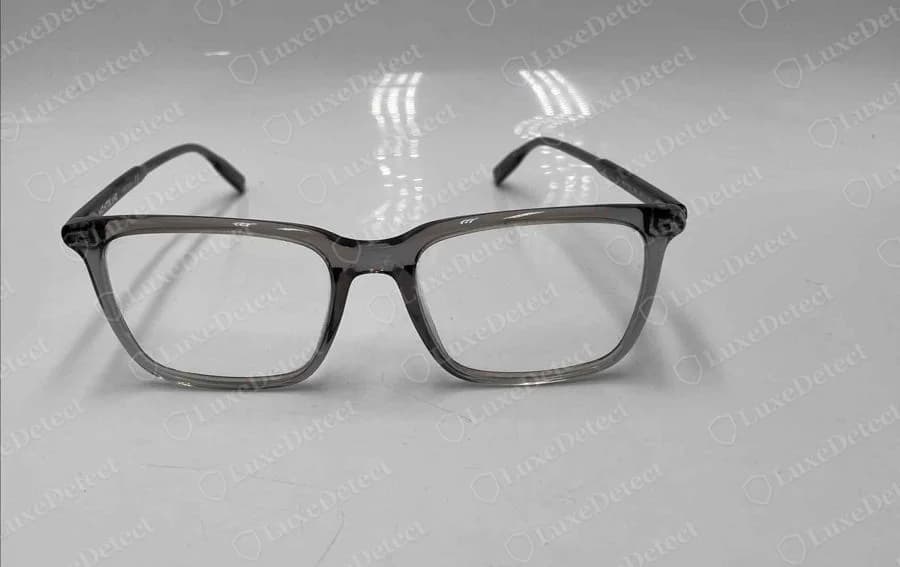
Montblanc is best known for pens, but its eyewear, belts and leather goods carry the same white star emblem and the same name, and all of them get copied. The glasses are the clearest place to start, because a pair of frames carries its identity on two small surfaces: the outside of one temple and the inside of the other. A star is set into the temple near the hinge, the name is printed or raised on the outer face, and a model code and size line sit on the inner face.
Fakes copy marks like these, so a mark that looks right proves nothing on its own. What this guide gives you is a record of what genuine Montblanc pieces in our authentication records show, so you know what you are comparing against. Treat it as a map, not a pass mark.
Worth knowing
This guide is built from verified genuine Montblanc examples, mostly glasses, with a short look at one fountain pen and one belt. We do not yet have a set of confirmed counterfeit Montblanc pieces that differ visibly and repeatably from genuine ones, so we are not publishing red flags or a real-vs-fake comparison. When a verified difference turns up, this guide will be upgraded. We also did not find an authentication guide published by Montblanc itself, so nothing here is the brand's official system.
What Genuine Montblanc Glasses Show
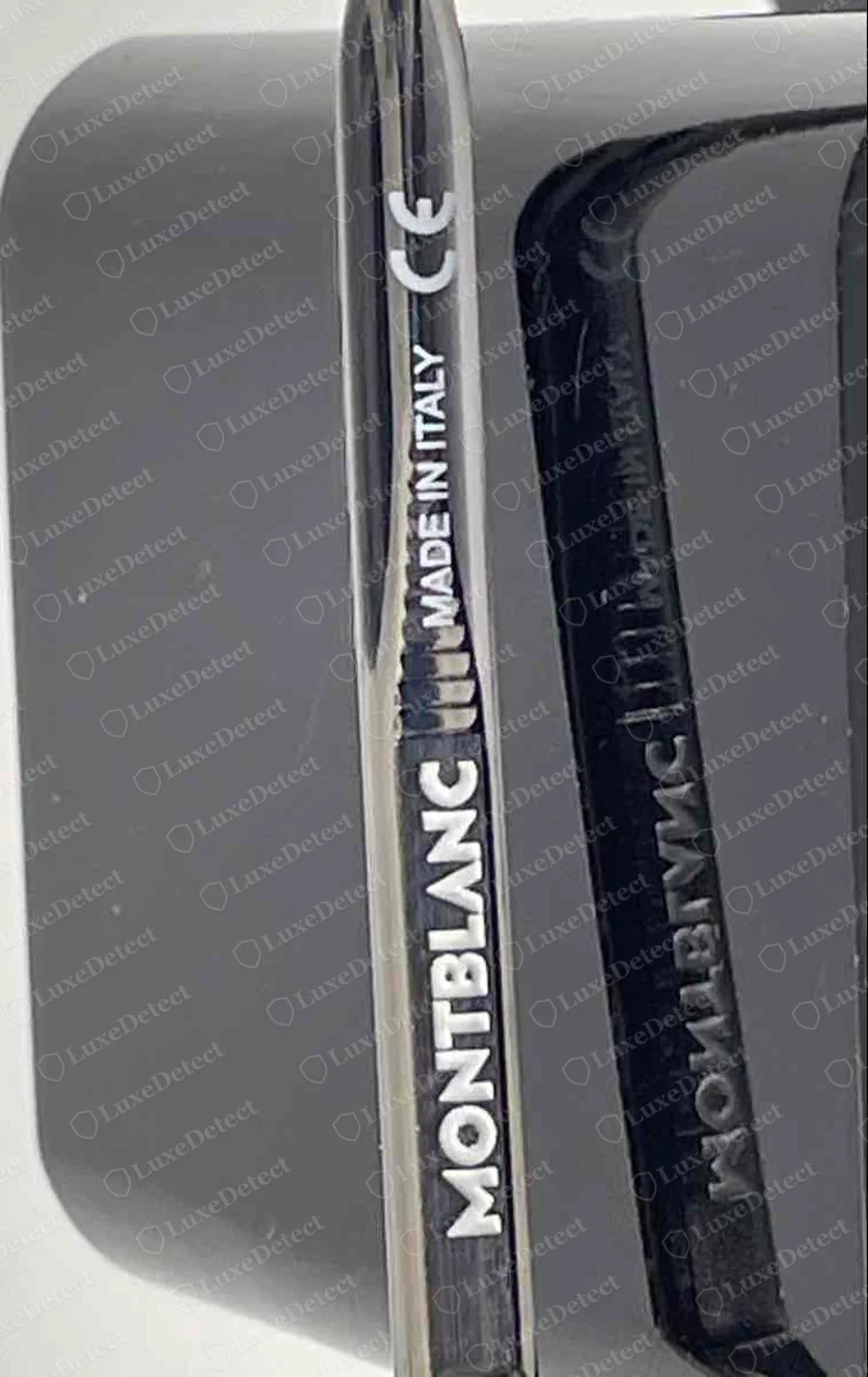
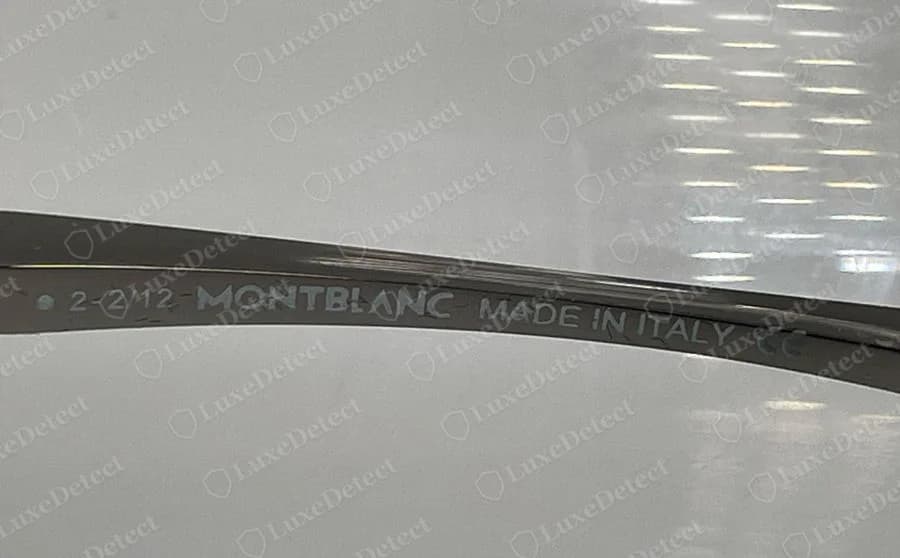
On the genuine frames in our records, the outer face of the temple carries the name as one word, "MONTBLANC", in capitals. On the pair below it is printed in white on a dark metal temple, next to "MADE IN ITALY" and a CE mark. Other genuine pairs show the name in raised metal letters on a black temple instead, so the technique varies by model.
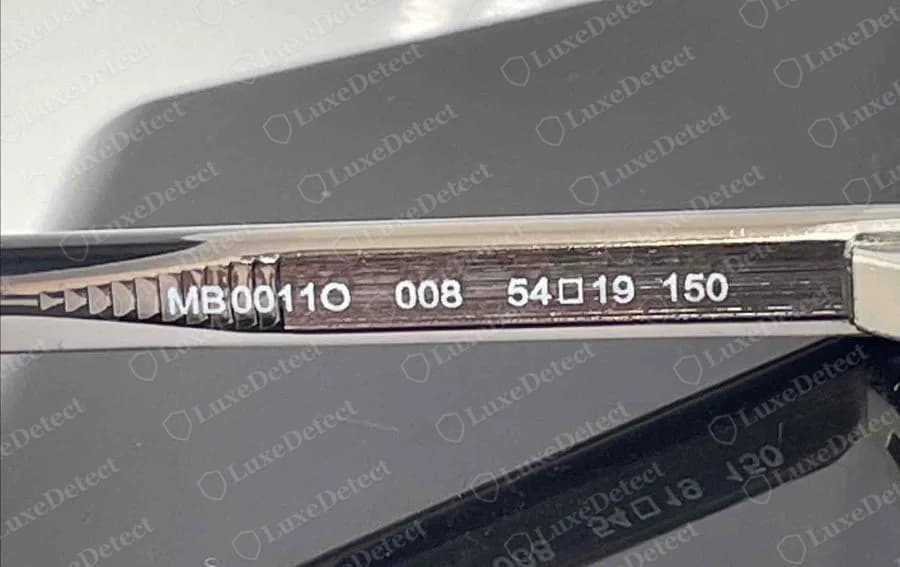
The inner face of the temple carries the model line. On the grey frames in our records it reads "MB0011O 008 54□19 150": a model code beginning MB, a colour code, and then the size. On eyewear generally the size gives the lens width, the bridge width and the temple length in millimetres. Another genuine pair reads "MB0072O 003 57□18-145", with the same layout and a hyphen before the temple length, so punctuation in the size line differs from pair to pair.
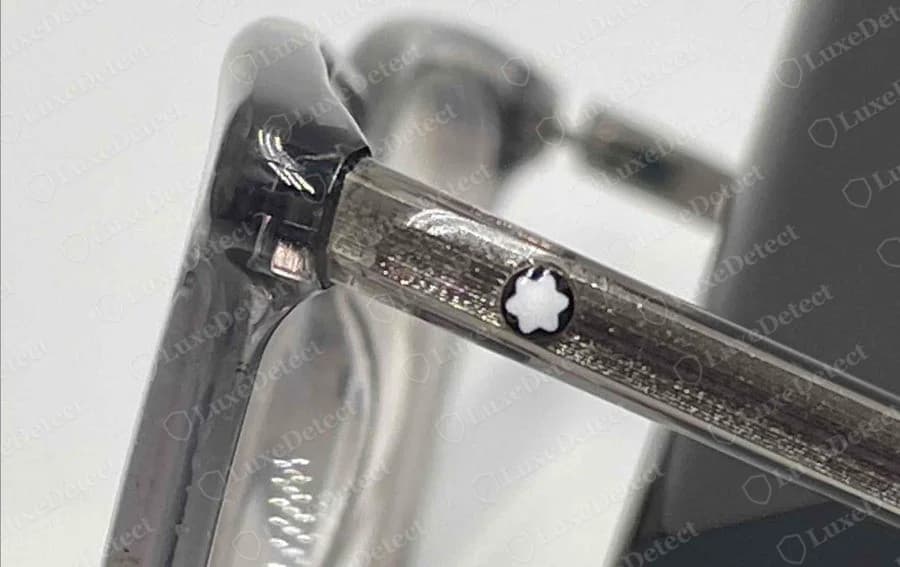
The star emblem is a small black-and-white inlay set into the outer temple near the hinge, and on metal frames it also appears on the nose pads.
Read these together. The name, the origin line, the CE mark, the star and the model line should all be present, crisply made and consistent with one another. A frame that matches the layout can still be a copy, because a printed layout is the easiest thing to reproduce.
Older Frames Look Different
Montblanc has not always put the same print in the same place. An older genuine pair in our records has the name and "MADE IN ITALY" printed along the temple, with the model line "MB 349 008 56□15 140": an MB prefix, a number without leading zeros, then the colour and size. Trade press reports that Marcolin made Montblanc glasses under licence from 2001, and that the licence moved to Kering Eyewear with a first collection in 2019, so differences in layout between eras are expected.
So a model line that does not look like the ones above is not a reason to condemn a pair, and one that does look like them is not a reason to trust it. Work out which era the frame belongs to first, then compare it with a verified pair from the same era and model.
The Wordmark Is Not Always One Word
The one-word "MONTBLANC" is how the name appears on the temples in our records. On other genuine items the same brand writes it stacked on two lines with the star beside it: on the lid of the glasses case, on the inside of a belt buckle and on a pen box. So a stacked "MONT BLANC" is not suspicious on a case, a buckle or a box, and we do not treat one wordmark layout as a rule for every product. Judge the layout against the product it sits on.
A Genuine Meisterstück Fountain Pen
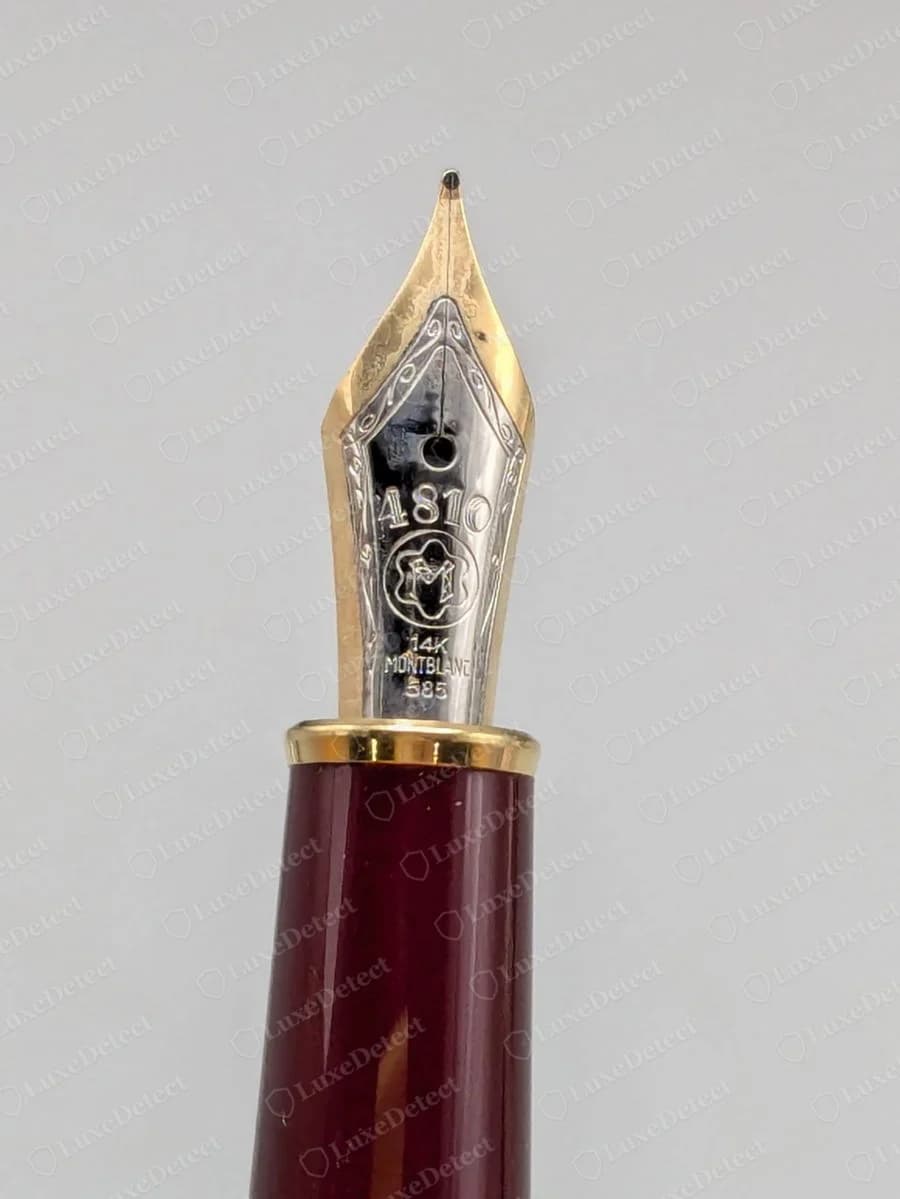
The pen in our records is a burgundy Meisterstück with gold-coloured trim. Its nib is engraved with "4810" above a circled star-shaped emblem, then "14K", "MONTBLANC" and "585".
The cap carries a gold band engraved "GERMANY" and a number, below a white snow-cap shape on the top of the cap. Collectors report that serial numbers on the band began in the early 1990s and that the format has changed since, and Montblanc's own customer-service terms exclude products whose serial number has been removed or is not legible. We would not date a pen from the number or treat any one format as the right one. Pens are copied closely, so compare the nib, the band engraving and the cap against a verified pen of the same model, and check weight and finish in hand.
A Genuine Montblanc Belt
The belt in our records is a brown leather belt with a polished metal buckle. The underside of the buckle is stamped with the stacked "MONT BLANC" and star, and "MADE IN ITALY" on the part that holds the strap. The inside of the leather strap is debossed with the same stacked wordmark and star.
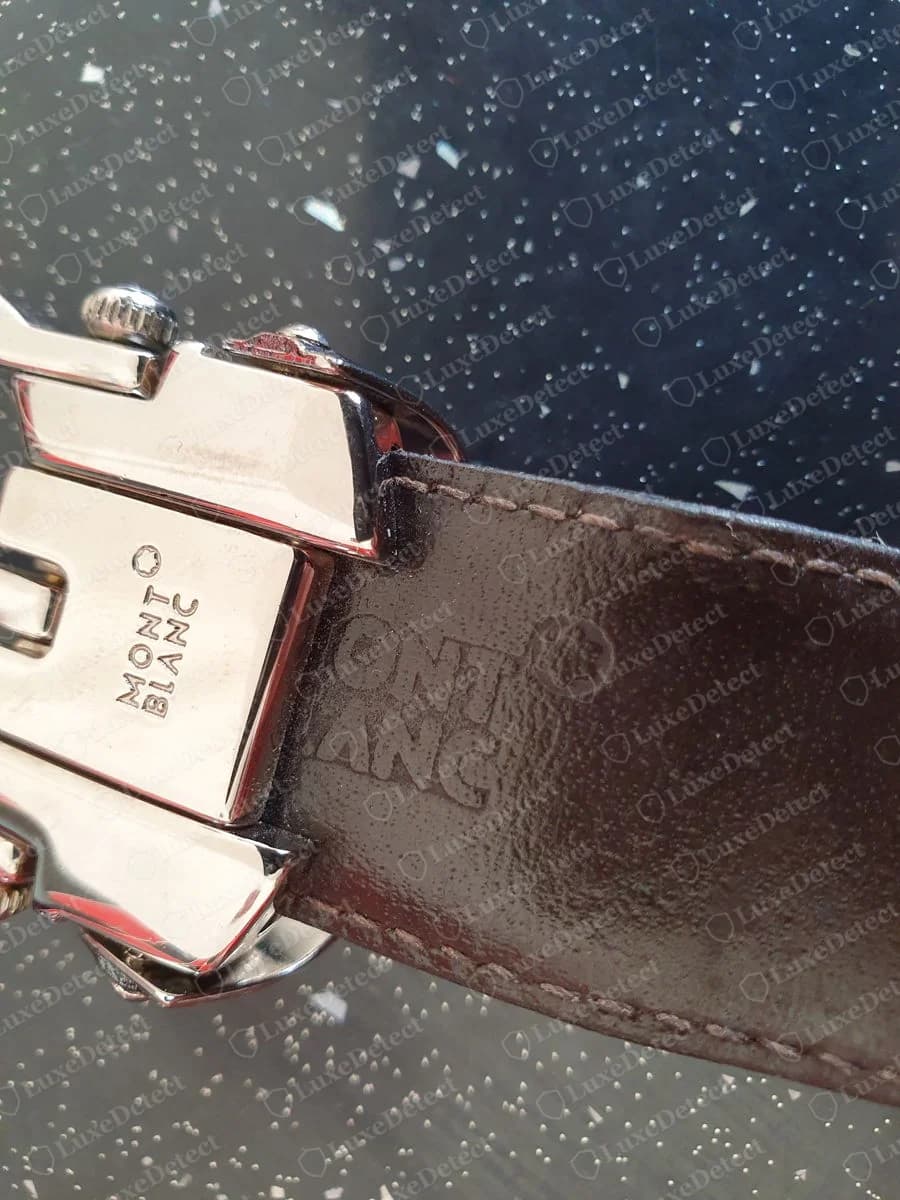
Origin on this belt is a plain fact of this belt and not a test: we do not use "Made in" lines to judge a Montblanc piece. We have not covered other buckles, bags, briefcases, wallets or watches in this guide.
What a Matching Mark Does and Does Not Prove
A temple print, a star, a model code, a nib engraving and a buckle stamp can each be copied. Matching every detail above does not prove a piece is genuine, and a missing or different detail does not prove it is fake, because genuine Montblanc layouts differ by model, product and year. Weight, hinge feel, lens quality and the finish of the plating are checks made with the item in hand. For comparison, our Persol sunglasses guide and Tom Ford eyewear guide cover how other brands mark their temples.
When to Get a Professional Opinion
If you are buying Montblanc glasses, a pen or a belt at a price that matters, or the listing shows only the front of the frame, get a second opinion before you pay. LuxeDetect authenticates glasses and accessories from $15 with a 24-hour turnaround, a verdict from a specialist and a Certificate of Authenticity. Send clear photos of the front, both temples with every line of print, the hinges and nose pads, and for pens the nib, the cap band and the clip. Montblanc's customer-service pages also describe a paid authenticity check through its boutiques and service centres.
A code that checks out doesn't prove the item is real. Counterfeiters copy genuine codes.
Our authenticators check the temple markings, lens etching and hinges of your Montblanc against verified references, from $15. You get a verdict within 24 hours, and a Certificate of Authenticity if the item passes.
Authenticate My Montblanc →FAQ
How can I tell if my Montblanc glasses are real?
Look at the temples together: the one-word MONTBLANC on the outside, the origin and CE line, the star emblem near the hinge, and the model line on the inside. Genuine pairs in our records show all of these, but fakes copy marks, so a match is only a starting point. Compare the pair with a verified one of the same model, or have it checked.
Can I authenticate Montblanc from photos?
Yes. What decides it is how the marks, materials and construction fit together against verified pairs: both temples with every line of print, the star, the hinges and the nose pads. A professional review is the safer route on an expensive item.
What does the MB code on the inside of the temple mean?
On the genuine pairs in our records the line gives a model code starting MB, a colour code and the size. We have not confirmed how Montblanc assigns the numbers, so we do not use the code to date a pair, and the layout differs between older and newer frames.
Does "Made in Italy" on Montblanc glasses mean they are real?
No. It appears on genuine pairs in our records, and a copy can print the same words. We do not treat an origin line as proof either way.
Is a stacked MONT BLANC logo a sign of a fake?
Not by itself. In our records the stacked wordmark appears on genuine cases, buckles and boxes, while the temples of the glasses carry the name as one word. Judge the layout against the product it is on.
Can I tell a real Montblanc pen from the serial number?
Not on its own. The serial and the band engraving are marks that can be copied, and their format has changed over the years. Compare the nib, the band and the finish against a verified pen of the same model.