Handbag Authentication Specialist
Handbag authentication specialist. Has reviewed submissions across Hermès, Chanel, Louis Vuitton, and Dior since 2019.
Published October 2026 · Contact
Why Le Pliage Is Hard to Judge From Photos
Le Pliage is the folding nylon tote Longchamp introduced in 1993, and it is one of the most copied bags in the world. It is also one of the most repeated: the same flap, snap, zip pull and woven interior tag appear on every size and colour. Counterfeiters have had decades to study those few details, and in the Le Pliage orders we have reviewed, fakes reproduce all of them. The interior tag wording and layout, the engraved zip-pull ring, the snap face and the blind-embossed horse on the flap all show up on counterfeits, often well made.
That changes how a guide like this should work. We will not give you a list of "tells" that does not hold up, because you would end up rejecting a genuine bag or trusting a fake. Instead, this guide shows what genuine Le Pliage hardware and labelling look like, so you know what you are checking against, and says plainly where a photo check stops being useful.
Worth knowing
This is a genuine-reference guide. It documents real Longchamp construction from authenticated bags. It does not claim that any single detail below separates real from fake, because for this bag, nothing photographable does by itself.
What Genuine Le Pliage Looks Like
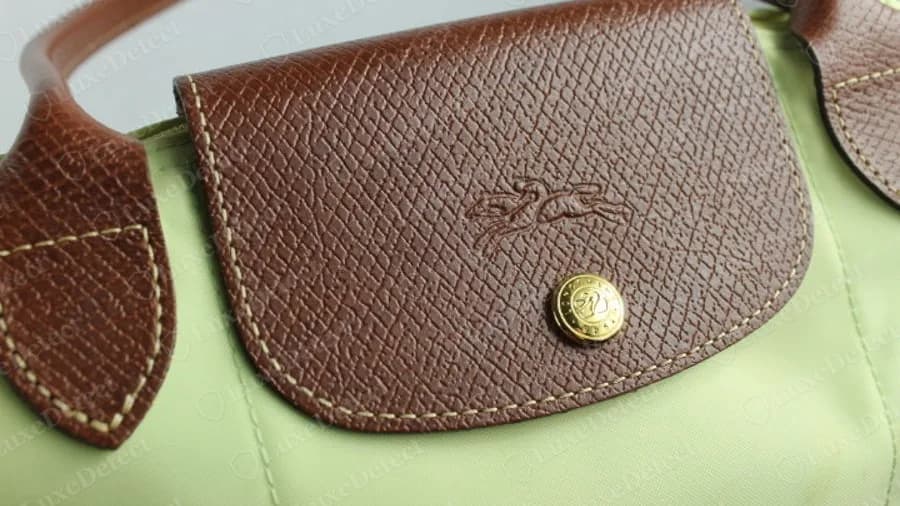
The classic Le Pliage ("Original") has a nylon body, a leather flap that folds over the front, leather-bound zip edges and handles, and a small gold or silver snap. The leather has a fine cross-hatch grain, and a horse and jockey is blind-embossed (pressed in, not printed) above the snap. Colours, sizes and handle lengths vary a lot, from the small tote to the travel bag, and Longchamp has produced the bag in many seasonal colours since launch.
The rest of this guide goes through the parts you can check yourself, one at a time.
The Interior Woven Tag
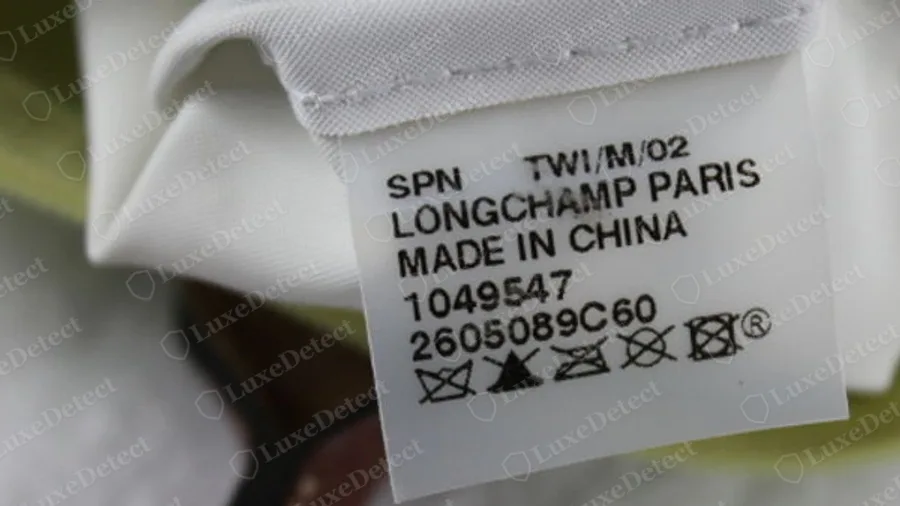
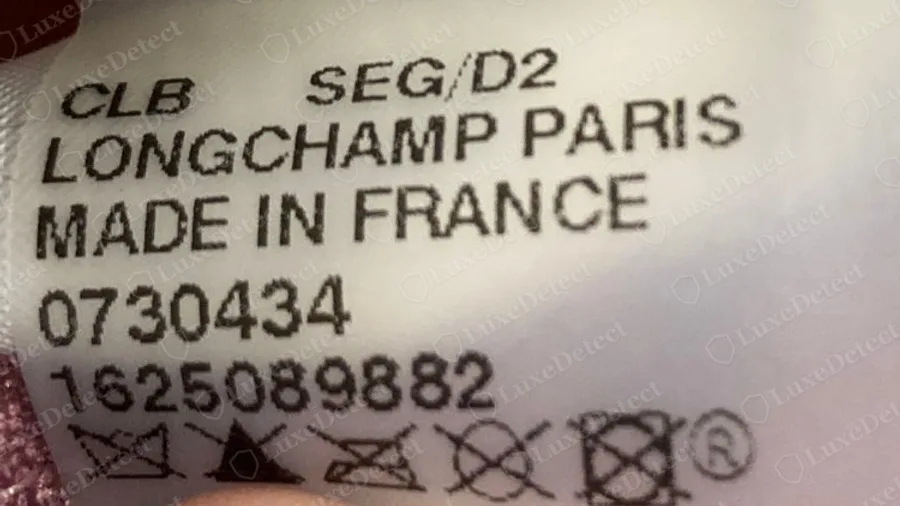
Inside the bag, a white woven tag is sewn into a seam. On the classic Original it reads, top to bottom: a three-letter code with a model code, "LONGCHAMP PARIS", "MADE IN" and a country, a seven-digit product number, a longer ten-digit line, and five wash symbols with an (R). The text is upper case and left aligned on the tags in the photos here.
Two things catch buyers out. First, Longchamp is not made in one place. Genuine bags carry France, China, Tunisia and Romania on their tags depending on the year and the line, so a country on its own tells you nothing. Second, the tag is among the most copied parts of the bag: the counterfeits we have seen reproduce the layout, the wash symbols and the number lines. Layout variants exist on genuine bags too, including a mixed-case "Made in" first line on some older labels. Do not reject a bag because its tag is not identical to the one in a photo you found online.
Worth knowing
The two number lines on the tag are not a serial number you can look up. We know of no public rule for decoding them, and some batch lines repeat across genuine and counterfeit bags. Treat the tag as something to record and compare, not as proof.
The Zip Pull
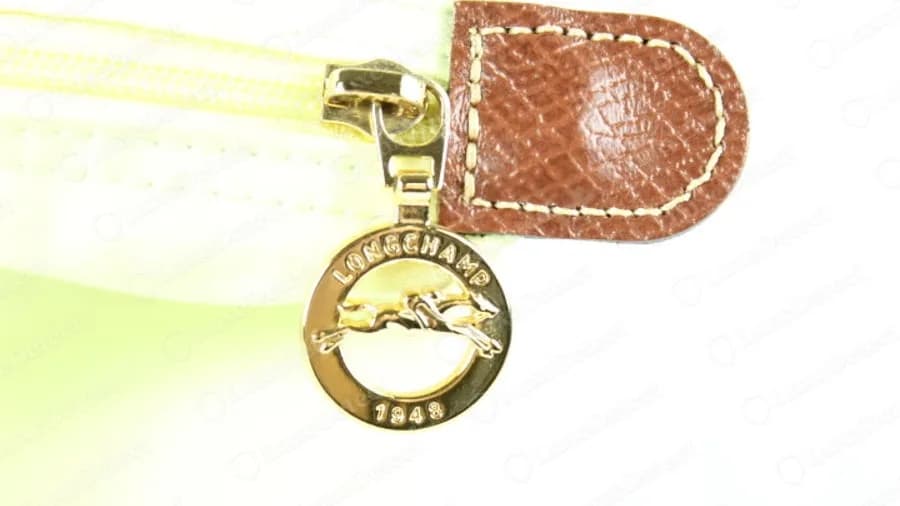
The signature zip pull is an engraved ring with the horse and jockey in the middle, "LONGCHAMP" curved across the top and "1948" along the bottom. It comes in gold, silver and dark metal finishes depending on the bag. Finish and wear vary a lot, and a bag that has been carried for years will have a scratched or dulled ring.
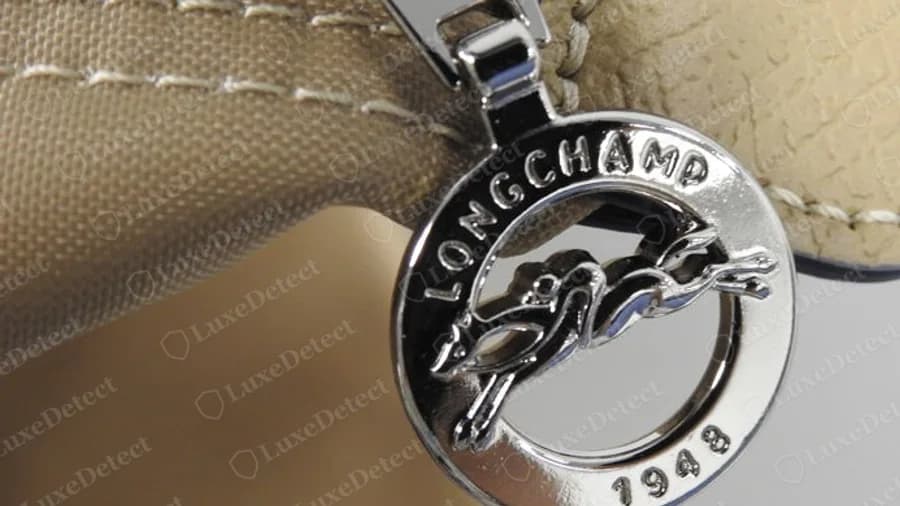
Zip sliders also vary on genuine bags. Some carry a VISLON or YKK mark, and the brand has used different suppliers over the years, so the slider brand is not a test. Counterfeit zip pulls copy the ring closely, which is why we do not treat a "good looking" ring as evidence.
The Snap and the Horse Emboss
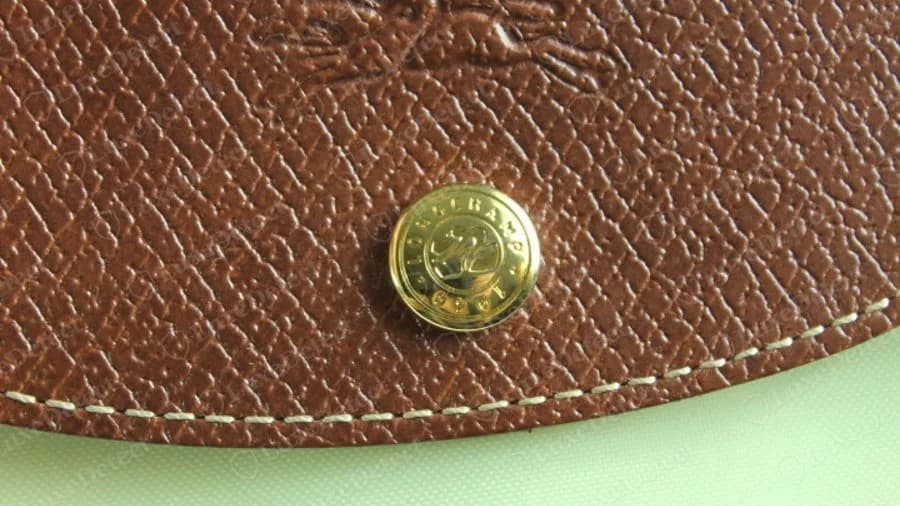
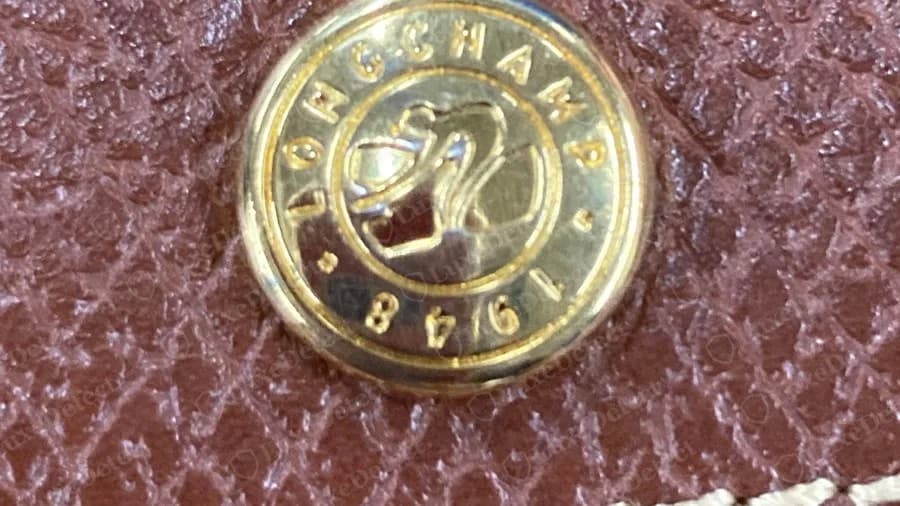
The snap on the flap is round and carries a horse motif inside a ring of lettering. Close up, the lettering reads "LONGCHAMP" and "1948" around the edge.
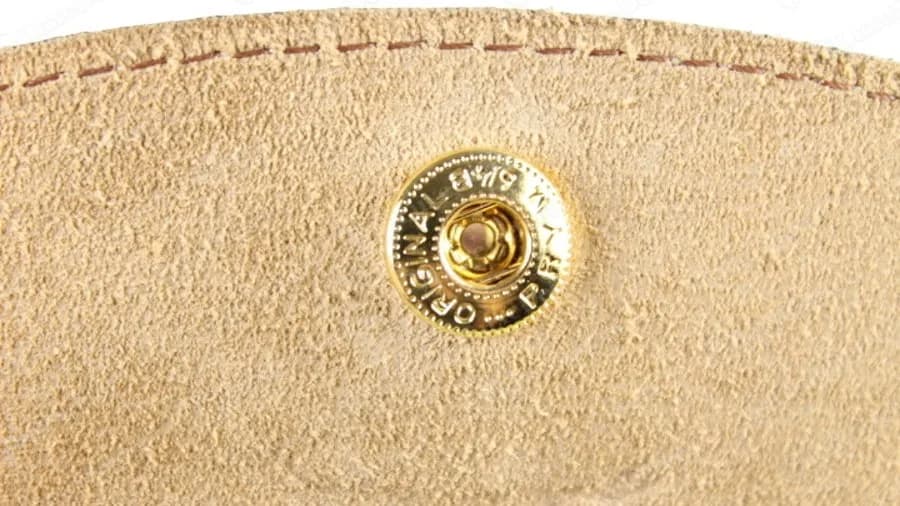
On the underside of the flap, the snap is stamped on suede. On many classic bags it reads "ORIGINAL PRYM" (Prym is a well-known snap maker), but other genuine bags show ring lettering from Longchamp instead, so do not insist on one wording.
The blind-embossed horse above the snap should be crisp rather than blurry, but leather grain and emboss depth vary with the leather batch and with wear. A shallow or deep emboss is not a reliable test, because genuine and counterfeit examples overlap.
The Leather-Bound Edge
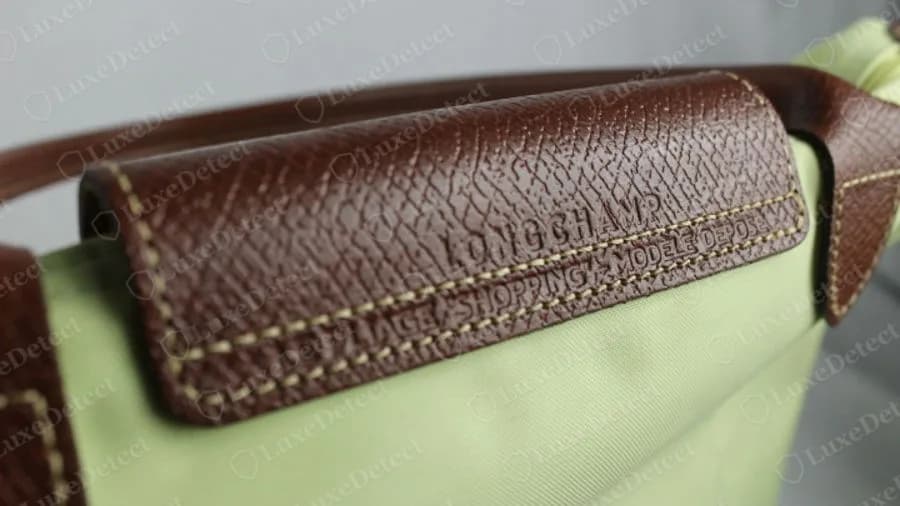
The leather-bound edges and handle covers on classic bags carry a stamped "LONGCHAMP" and a second stamped line. The wording of that second line has changed over the years, so a bag from one decade will not match a photo from another. The stitching is even and cream coloured on the genuine bags here, but stitch colour and spacing are another detail that good fakes imitate.
Lines That Look Different on Purpose
Longchamp makes many Le Pliage and non-Le Pliage lines, and they do not share one set of details. Do not apply the classic Original description to everything.
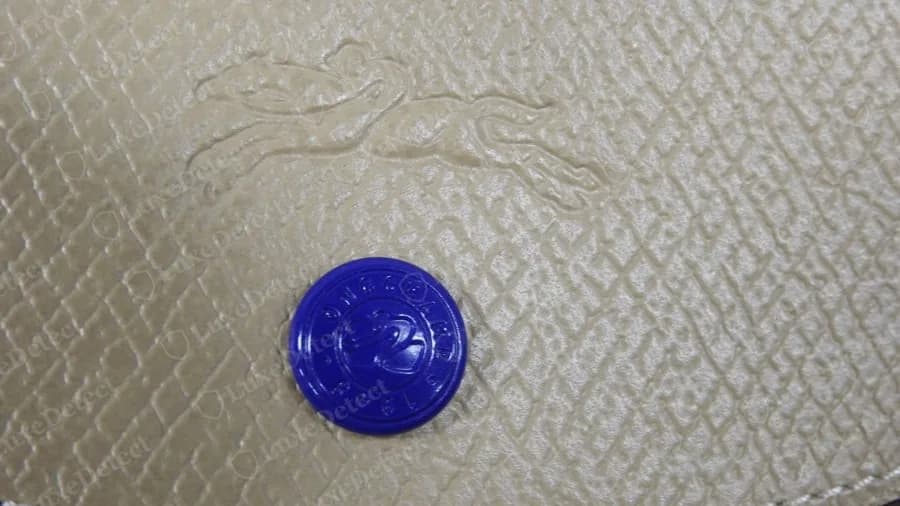
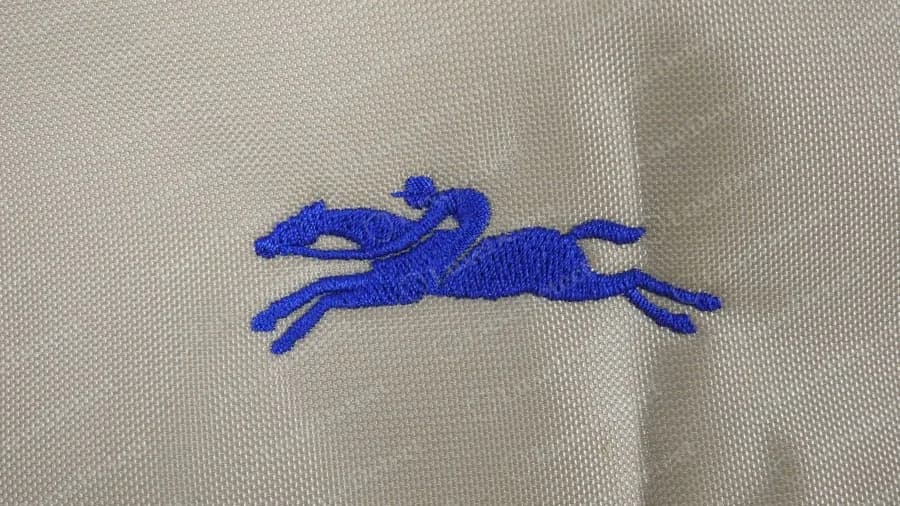
Some versions carry a coloured snap and an embroidered horse instead of the plain gold snap. Others use black saffiano-style leather, printed fabric linings, shoulder straps, or a longer tag that adds extra number groups.
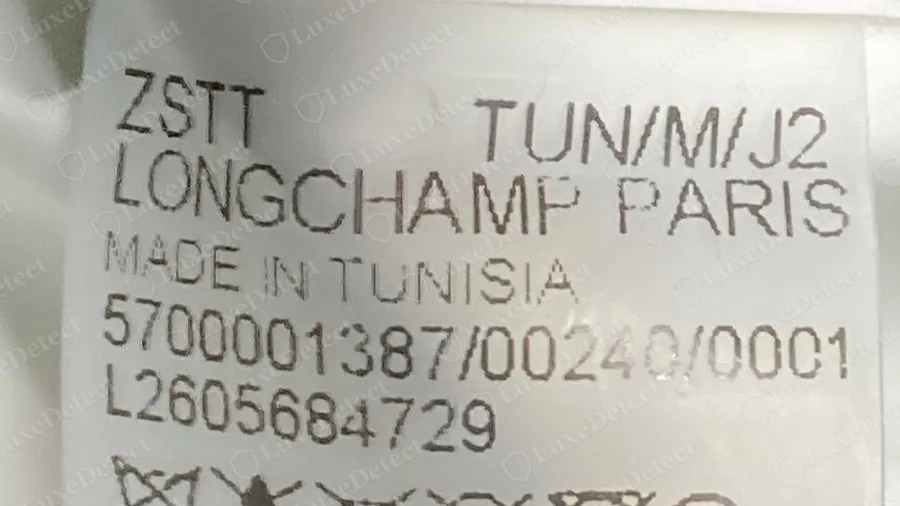
This tag, from a different line made in Tunisia, is longer than the classic one: the product line has extra groups and a separate code beneath it. That is normal for that line. Older Longchamp leather bags, which are not Le Pliage at all, use yet another system.
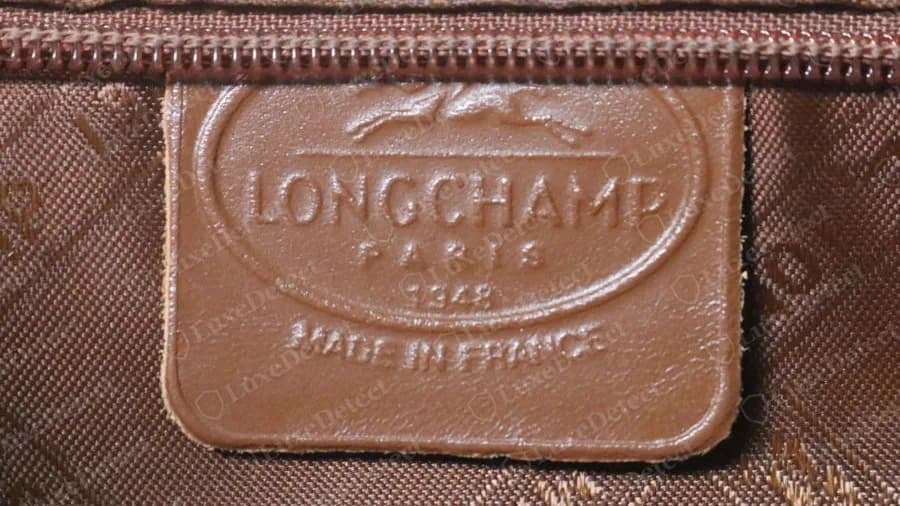
An oval stamped leather label like this one belongs to an older leather line. If a seller shows you a Le Pliage with that label, the two do not belong together, but the same label on an older leather Longchamp is normal.
What Photos Cannot Tell You
Everything above is real, and every item can be copied. A convincing counterfeit can show a correct tag layout, a correct zip-pull ring, a correct snap and a clean horse emboss in the same photo set. We have not found a photographable detail that is present on counterfeits and absent from comparable genuine bags, which is why this guide does not offer a checklist to "pass".
There are also things we do not claim:
- Country of origin is not a verdict. Genuine bags are made in several countries.
- A tag number cannot be looked up to confirm authenticity.
- A zipper brand is not a test. Genuine bags carry different sliders.
- A good snap or zip pull does not prove the bag is real. Counterfeiters copy those first.
Less visible things matter more than the hardware: the weight and feel of the nylon, the cut and finish of the leather, how the bag folds, how the stitching ends, and how the pieces age. A professional compares those against many known genuine bags, which is why in-hand and photo-based expert review catches what a buyer's checklist misses.
When to Get a Professional Opinion
If you are about to buy a Le Pliage from a resale listing, or you have one and are unsure, the most useful thing you can do is get it compared against verified genuine examples by someone who sees many of these bags. A LuxeDetect specialist reviews photos of the tag, hardware, leather and construction and gives a written verdict. You can order a Longchamp authentication here.
A code that checks out doesn't prove the item is real. Counterfeiters copy genuine codes.
Our authenticators check the stamps, hardware and construction of your Longchamp against verified references, from $25. You get a verdict within 24 hours, and a Certificate of Authenticity if the item passes.
Authenticate My Longchamp →FAQ
How can I tell if my Longchamp Le Pliage is real?
No single photo detail settles it, because counterfeits copy the interior tag, zip pull, snap and horse emboss. Compare your bag with the genuine reference photos above, check that its parts match the line it claims to be, and for a purchase decision, have it compared against verified genuine bags by an expert.
Is a Le Pliage made in China fake?
No. Genuine Longchamp bags are made in several countries, including France, China, Tunisia and Romania, depending on the year and the line. The country on the tag is not a test for authenticity.
Where is the serial number on a Longchamp Le Pliage?
There is no unique serial number. The white woven tag inside carries a code, "LONGCHAMP PARIS", the country of manufacture, a seven-digit product number and a longer line of digits. They identify the product and the production batch, and we know of no public way to decode them.
Does the snap have to say ORIGINAL PRYM?
No. Many classic Original bags show "ORIGINAL PRYM" stamped on the underside of the snap, but other genuine bags show Longchamp lettering instead, and counterfeits also copy the Prym stamp. Do not use the snap wording as a test on its own.
Do all genuine Le Pliage bags have the same tag?
No. Layout and wording vary by year and by line, including a mixed-case "Made in" line on some older labels and longer tags on other lines. A tag that differs from one you saw online is not automatically a problem.
Is the zip pull a reliable way to spot a fake?
Not on its own. The engraved ring with the horse, "LONGCHAMP" and "1948" is copied closely, and genuine zip pulls vary with finish and wear. It is worth checking, but a correct-looking pull does not make a bag genuine.
Can I authenticate a Le Pliage from photos?
Photos are useful, but they have limits for this bag. An expert looks at the tag, hardware, leather, stitching and overall construction together and compares them with known genuine examples, which a single photo or checklist cannot replace.