Hermès Authentication Specialist
French luxury house specialist. Covers Chanel, Celine, and Saint Laurent construction and date coding.
Last updated October 2026 · Published September 2026 · Contact
Why the Herbag Is a Different Authentication Problem
Most Hermès authentication advice is written for the Birkin and Kelly — all-leather bags where the tells live in the saddle stitching, the hardware and the blind stamp. The Herbag is built differently, and applying Birkin logic to it produces wrong conclusions in both directions.
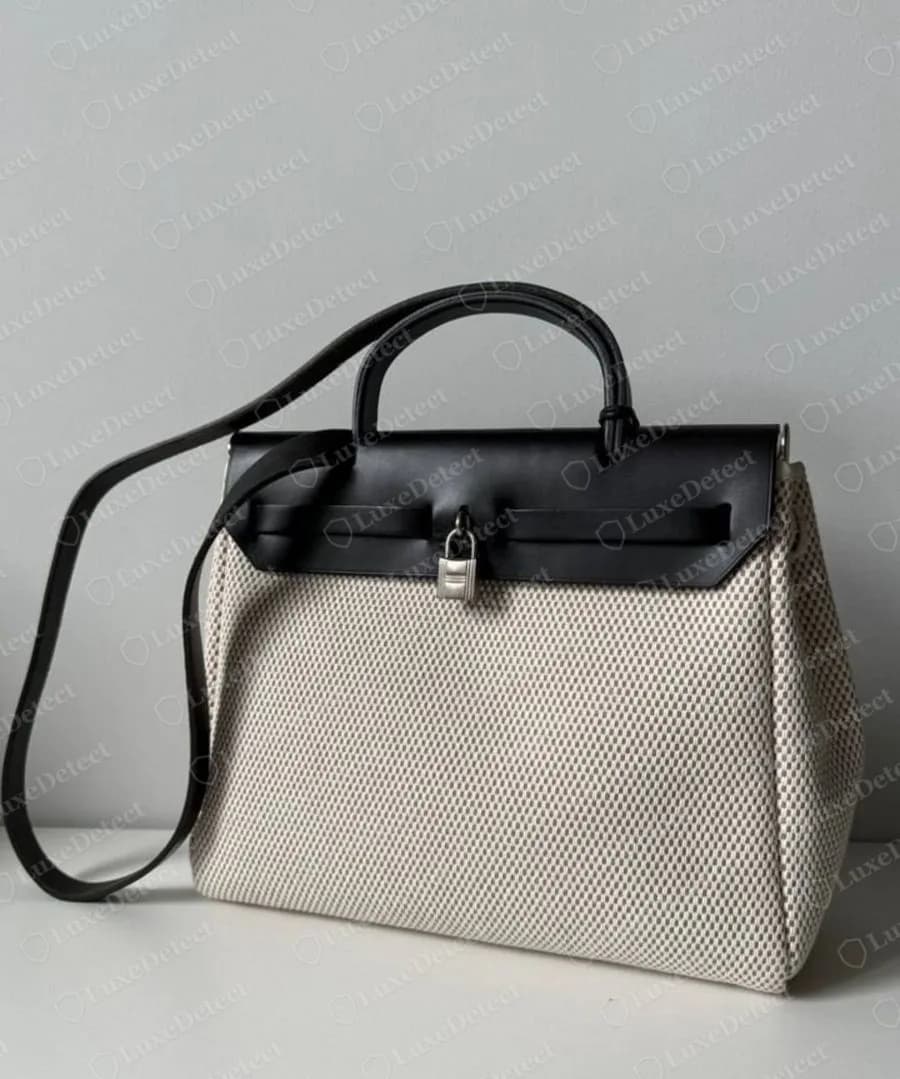
The Herbag Zip, reintroduced in 2009 as a descendant of the 1970s Haut à Courroies-derived design, is a two-part bag: a toile canvas body with leather trim, mounted on a removable frame, with an interchangeable flap. That construction means two material systems have to be right — the canvas *and* the leather — plus the mechanism that joins them.
For counterfeiters this is a harder brief than a Birkin: more surfaces have to be matched, and none of them can be judged in isolation. Some counterfeits we have reviewed match a genuine bag on several visible details at once, including the stamp format, the zip stops and the padlock.
For you, the useful consequence is that no single Herbag check settles it. Read the stamp, the hardware, the leather and the canvas together, and treat a bag that looks right everywhere as unproven, not authentic.
What to check, ranked by reliability
| Checkpoint | Reliability | What it tells you |
|---|---|---|
| Hardware and the Frame Mechanism | ★★★★★ | Play or rattle in a seated closure is outside Hermès tolerances. |
| The Vache Hunter Leather Trim | ★★★★★ | Embossed repeating grain and uniform patina both expose treated leather. |
| The Blind Stamp and Interior Markings | ★★★★★ | Catches generation and era contradictions, but plausible stamps are copied. |
| The Toile Canvas — Weave and Pattern | ★★★★★ | Pattern is woven into the yarns; a check is normal. Compare against the same colourway. |
| Model Reference Before You Start | ★★★★★ | Establishes which generation you are judging — needed before the stamp check. |
| What the Box and Receipt Do and Do Not Prove | ★★★★★ | Packaging and receipts are cross-reference material, never evidence. |
Model Reference Before You Start
Confirm which Herbag you are actually looking at. The line has variants that listings conflate, and the differences matter for what the checks should find.
- Herbag Zip 31 — the most common size, roughly 31cm wide. Zip closure under the flap.
- Herbag Zip 39 — the larger size, roughly 39cm. Same construction.
- Herbag Zip Cabas — tote-shaped variant, taller proportions.
- Herbag PM / MM (pre-2009) — the older generation, different frame and closure. Genuine but structurally distinct from the Zip.
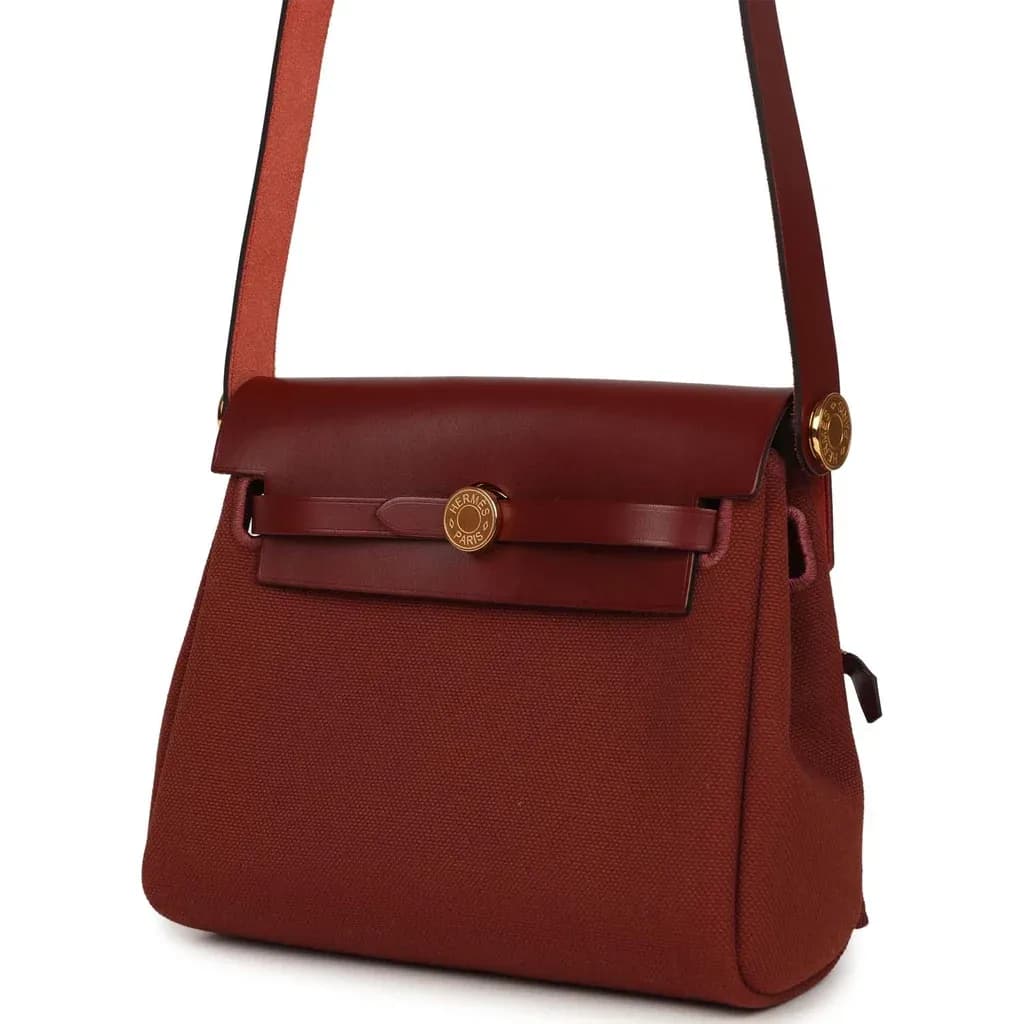
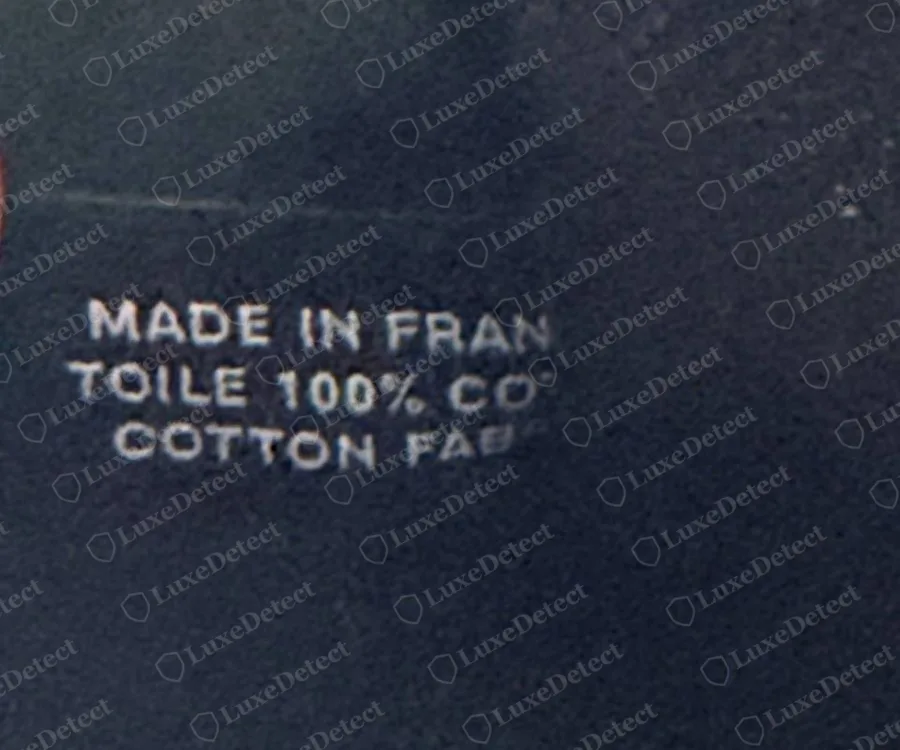
The current Herbag Zip uses toile H canvas, a woven cotton canvas (the print inside a genuine Zip reads TOILE 100% COTON), combined with Vache Hunter leather trim, which is an untreated calfskin that patinas heavily over time.
That leather choice matters for authentication. Natural Vache Hunter starts pale and darkens to a rich honey with use. A bag presented as vintage with trim that is still uniformly pale, or a bag presented as new with trim already deeply darkened, is internally inconsistent. The trim also comes in dyed colours such as black, where this patina reasoning does not apply.
Worth knowing
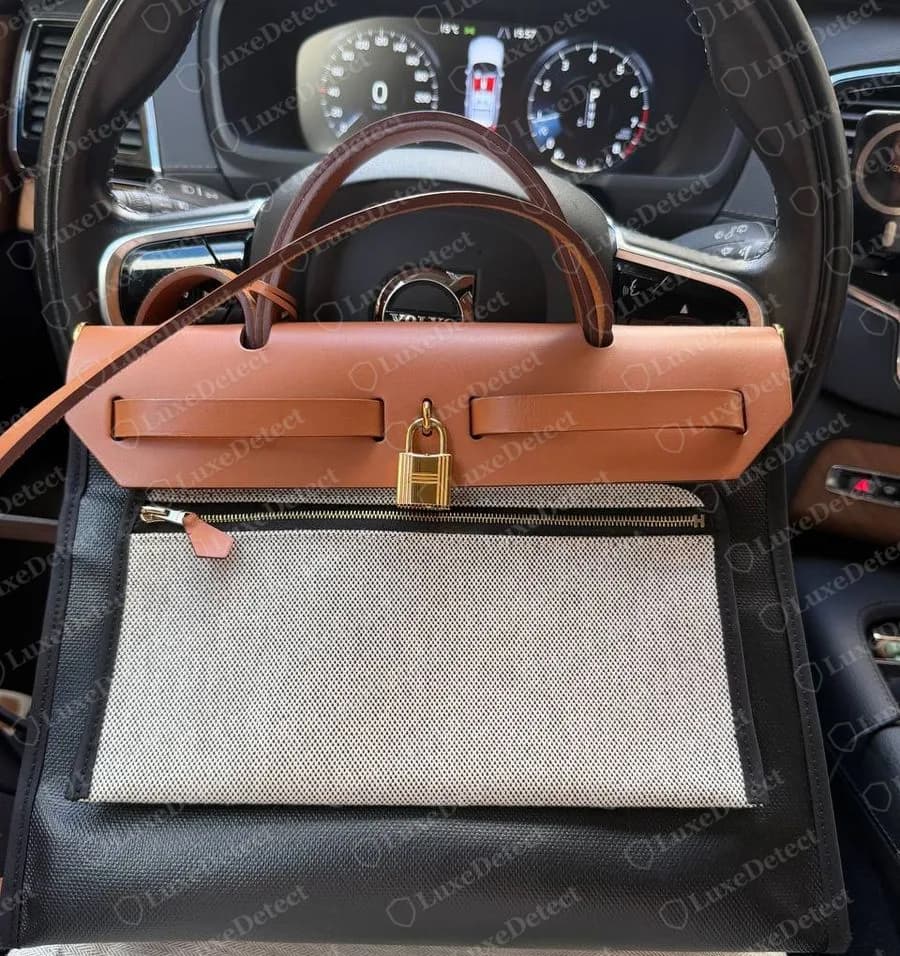
The photos in this guide come from a small set of genuine Herbags we authenticated, including a 2024 Herbag Zip and an older-generation Herbag from 2001. They show where things sit and what a genuine example looks like. They are not a survey of every colour, size or year.
The Toile Canvas — Weave and Pattern
The canvas is the first thing most people look at, so it helps to know exactly what a genuine one looks like. It is also the check where it is easiest to talk yourself into a wrong conclusion.
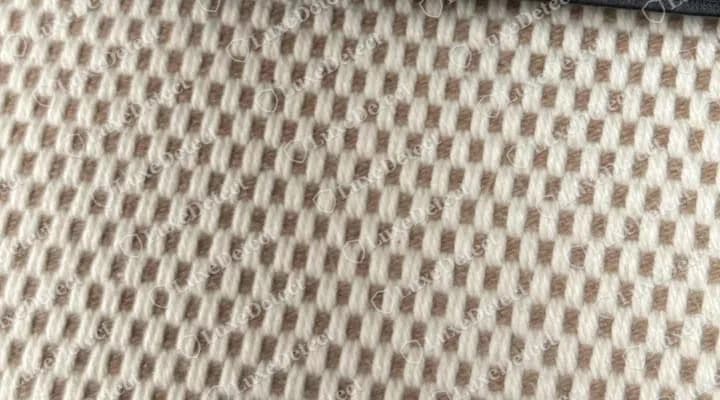
Genuine Herbag canvas is a woven cotton toile. On the genuine bags we photographed, the colour comes from the yarns themselves. A cream-and-taupe or cream-and-black yarn pair interlocks into a small, regular two-tone check, and the solid colourways (black, navy, red, grey) show the same fine woven texture. You can pick out individual yarns passing over and under each other, including at the edge of a pocket and beside the zip tape.
A check or dot pattern is not a warning sign. It is how genuine canvas looks. The colour and scale of the pattern vary with colourway and production year, so compare a bag against a documented genuine example of the *same* colourway and era, not against a general idea of what toile should look like.
What to look at:
- Yarn level: the pattern is built from visible yarns, not laid on a flat surface. Angle the canvas to the light.
- Regularity: the check or texture is even across the body, the pocket and the zip area.
- Consistency: body canvas, pocket canvas and the printed cotton label inside tell the same story about colourway and year.
| What genuine canvas shows | What to question |
|---|---|
| Pattern formed by interlacing yarns | A pattern that looks flat, glossy or sits on top of the fibres |
| Small, even check or fine texture | A check scale or colour that differs from a genuine example of the same colourway |
| Firm, even weave around the zip tape and pocket edges | Loose, uneven or distorted weave in the same places |
| Interior label reads TOILE 100% COTON | A canvas label that contradicts the bag's materials |
Worth knowing
We have not documented a canvas failure on a counterfeit Herbag that we can point to with confidence, so this section tells you what genuine looks like and cannot, on its own, prove a bag fake. A canvas that differs from a genuine example of its colourway is a reason to look harder at the rest of the bag, not a verdict.
The Vache Hunter Leather Trim
The leather trim is the second material system, and it fails differently from the canvas.
Vache Hunter is untreated calfskin. It has a visible natural grain with genuine irregularity — pores and slight variation across the surface, because it is a real hide with minimal finishing. Counterfeits typically use a coated or corrected leather with an embossed grain that repeats at a regular interval. Look across a wide area of trim: if you can find the same grain pattern twice, it is embossed.
Colour and patina: new Vache Hunter is a pale, slightly pinkish tan. It darkens unevenly with handling — edges and high-contact areas go first. Uniform darkening across every surface suggests dye rather than age.
Edge finishing: the cut edges of the leather trim are burnished and sealed, not painted thickly. Hermès edge treatment on Vache Hunter is restrained — you should see the leather's own layers at the edge, finished smooth, not a thick opaque coating.
| Element | Authentic | Counterfeit |
|---|---|---|
| Grain | Natural, irregular, non-repeating | Embossed pattern that repeats across the hide |
| New colour | Pale pinkish tan | Already mid-brown, or an even artificial tan |
| Patina pattern | Uneven, edges and contact points darken first | Uniform across all surfaces |
| Edge finish | Burnished and sealed, layers visible | Thick opaque paint, or raw and fibrous |
| Stitching | Even tension, thread tone matched to leather | Contrast thread, or visible tension changes |
Hardware and the Frame Mechanism
The Herbag's frame and closure are its most mechanically complex element, and this is where a fake that survived the material checks usually fails.
The clou de selle closure (the stud-and-strap fastening) should operate with a definite, damped action. It seats positively with no play and no rattle. Cheap hardware feels loose, or requires force, or wobbles once closed.
Weight: Hermès hardware is solid, typically palladium- or gold-plated brass. It has real heft. A closure that feels light for its size is a strong signal.
Plating: even in tone across every component, with no thin patches at high-wear points on a bag described as lightly used. Plating that has worn through to a different-coloured base metal on a supposedly new bag is a direct contradiction.
The removable flap and frame: on a genuine Herbag, the flap detaches and reattaches smoothly and seats flush. Misalignment, gaps, or a flap that requires forcing indicates poor tolerances.
| Element | Authentic | Counterfeit |
|---|---|---|
| Closure action | Positive, damped, no play once seated | Loose and rattling, or stiff and forced |
| Hardware weight | Substantial, solid plated brass | Light, feels hollow |
| Plating tone | Even across every component | Varies between pieces, or thin at edges |
| Engraving | Crisp HERMÈS marking, even depth | Shallow, uneven, or wrong letterforms |
| Flap seating | Detaches and reseats flush | Gaps, misalignment, needs forcing |
| Cadena and key | HERMÈS and a lock number on the cadena, the same number on the key | Number missing, or key and cadena numbers differ |
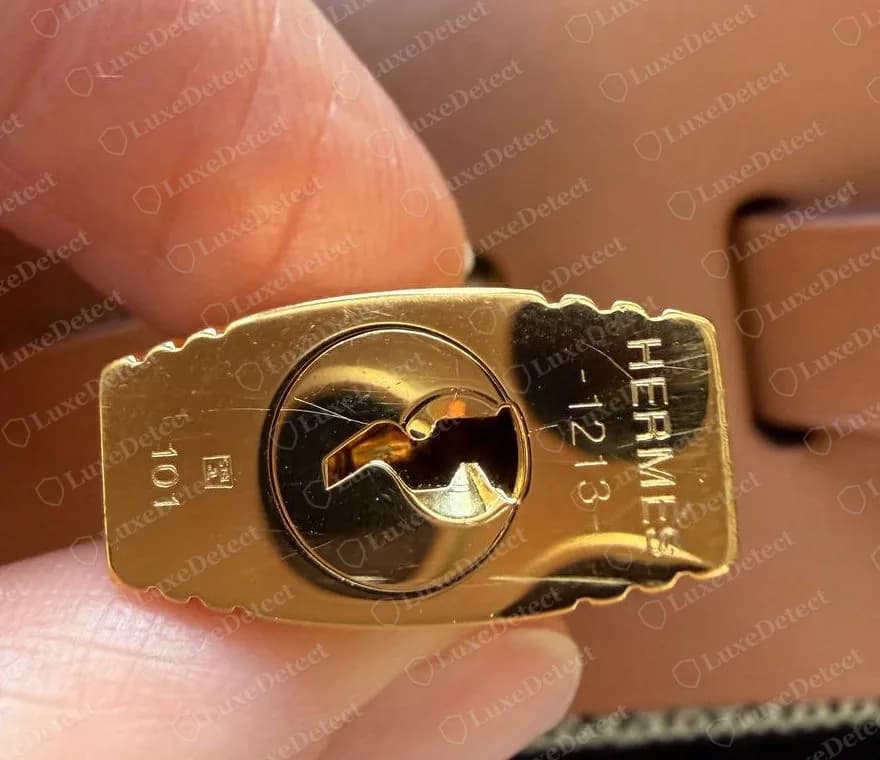
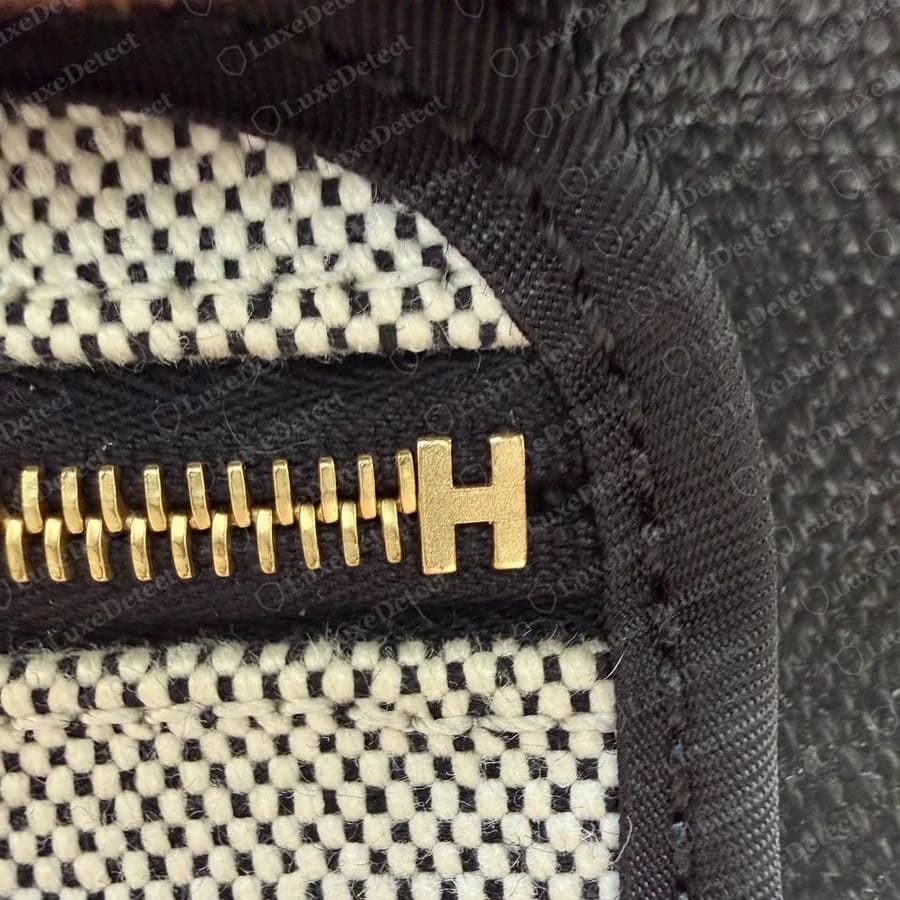
The zip (Herbag Zip only): on the genuine Zip we photographed, both the main zip and the zip on the removable pouch end in a metal stop shaped like an H, and the main zip has a leather pull stamped HERMÈS.
Red flag
Hardware that rattles when the bag is gently shaken with the closure fastened. Hermès tolerances typically leave no play in a seated closure, so audible movement is decisive regardless of how the bag looks.
The Blind Stamp and Interior Markings
The Herbag carries a blind stamp like every Hermès bag, but its evidential value here is lower than on a Birkin — and understanding why keeps you from over-weighting it.
On the genuine Herbags we photographed, the date stamp sits on the underside of the leather flap, on the suede-like reverse of the leather, not on a panel inside the canvas body. On the older-generation bag it is pressed next to the opening where the clou de selle post comes through; on the 2024 Zip it runs along the flap's edge. It follows the house-wide system:
- Letter in a square □ — 1997 to 2014
- Plain letter, no enclosure — 2015 onward
The Herbag Zip was reintroduced in 2009, so a genuine Herbag Zip carries either a squared letter (2009–2014) or a plain letter (2015 onward). A circled letter belongs to 1971–1996 and cannot appear on a Herbag Zip.
Note the asymmetry with the older pre-2009 Herbag PM/MM generation, which *can* legitimately carry earlier stamp formats. Establish which generation you are evaluating before judging the stamp.
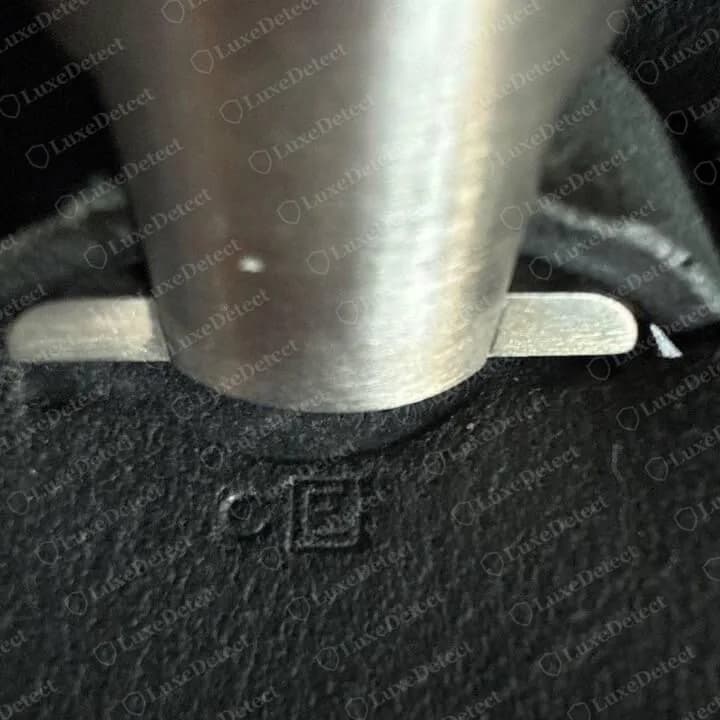
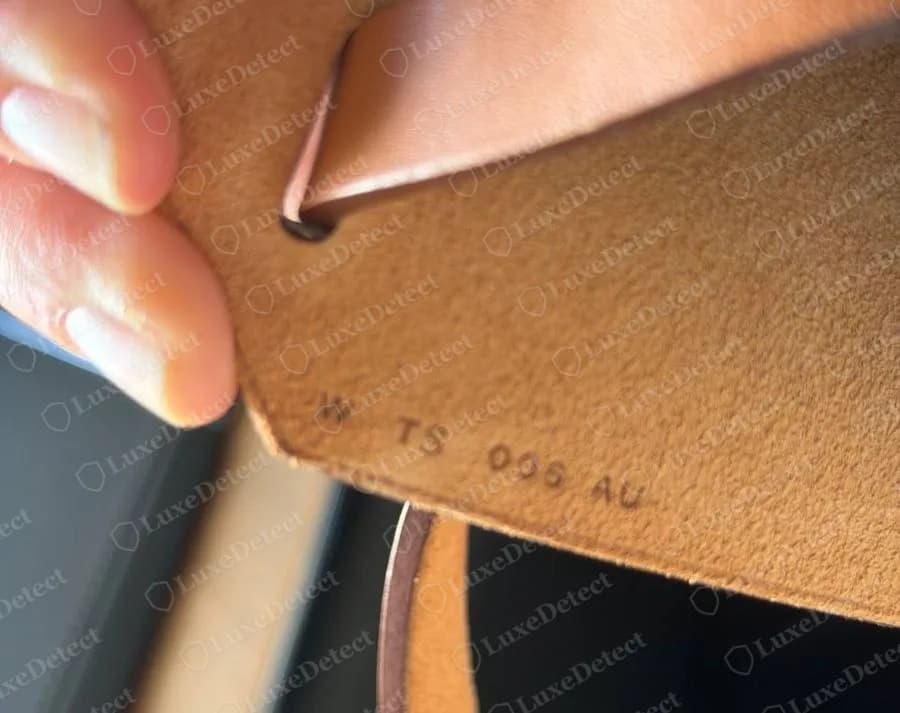
Stamp quality: pressed into the leather with even depth across every character. The characters are small. A large, bold, or deeply gouged stamp is wrong. Do not expect a lone letter: the 2001 bag has a second mark beside the squared letter, and the 2024 Zip has the year letter followed by further characters.
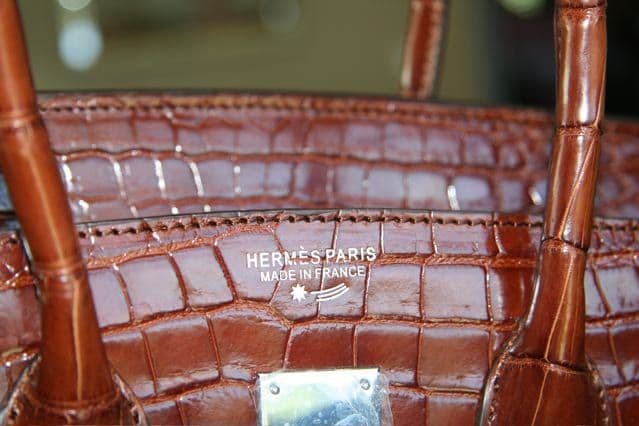
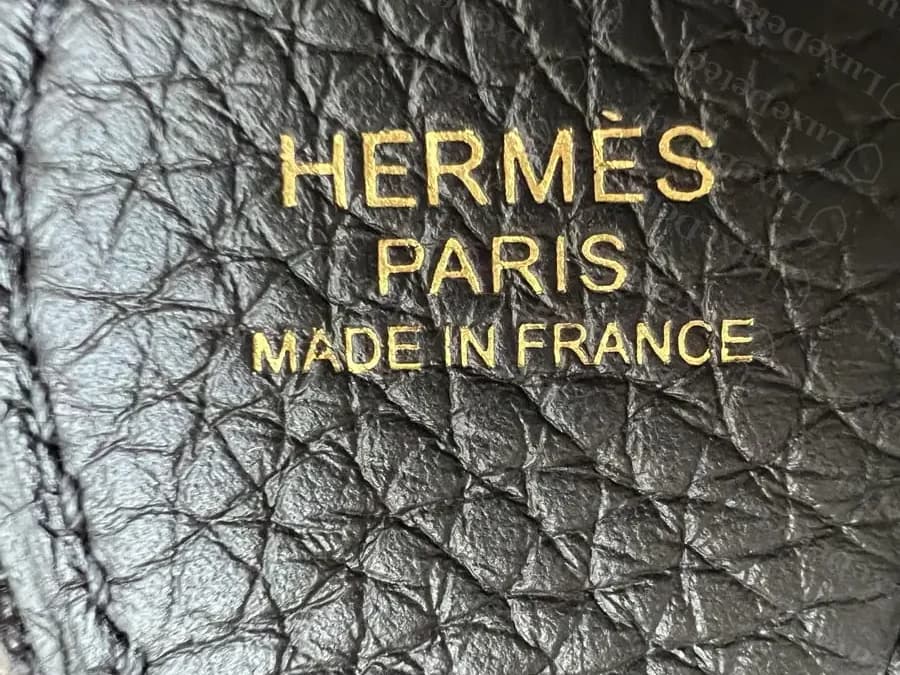
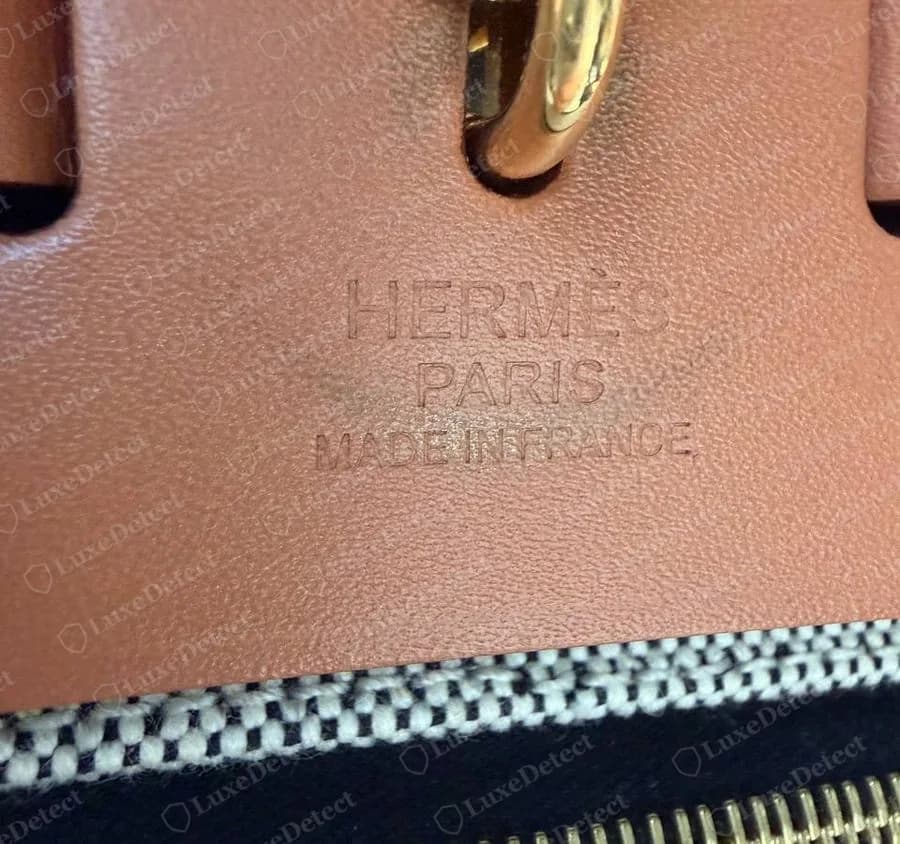
HERMÈS PARIS MADE IN FRANCE: on the genuine bags this is heat-stamped on the outside of the flap, centred below the strap and closure, in three lines. Check the È accent is present and correctly angled, and that letter spacing is even.
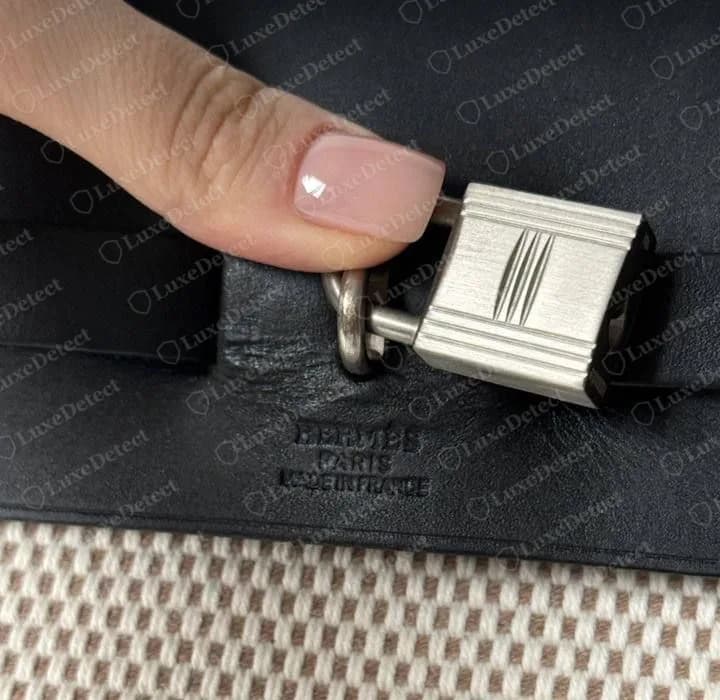
| Element | Authentic | Counterfeit |
|---|---|---|
| Stamp shape | Square (2009–2014) or plain (2015+) | Circle, or an era mismatched to the generation |
| Impression | Even depth, cleanly pressed | Gouged, or faint on some characters |
| Letter size | Small and restrained | Oversized or bold |
| È accent on PARIS line | Present, correctly angled | Missing, straight, or disproportionate |
| Stamp location | Underside of the leather flap | Only on a tag or panel inside the canvas body |
| HERMÈS PARIS stamp | Outside of the flap, three even lines | Missing from the flap front, or cramped spacing |
Worth knowing
The blind stamp gives you a production year, not a verdict. Counterfeiters copy plausible stamps routinely. Its value is catching contradictions — a stamp era that conflicts with the model generation, or with the state of the leather patina.
What the Box and Receipt Do and Do Not Prove
Orange box, brown ribbon, dust bag, care booklet. All counterfeited, all sold separately on secondary markets. Packaging is context, never evidence.
Where it helps is cross-referencing. The box label carries the model, colour and size. If the label describes a Herbag Zip 31 and the bag measures 39cm, that is a real contradiction. If a receipt names a boutique and a date, that date should be consistent with the blind stamp era and the patina state.
A seller who supplies extensive packaging but resists photographing the canvas weave or the interior stamp is telling you where the problem is.
Quick Authentication Checklist
- Canvas pattern is woven into the yarns and matches a genuine example of the same colourway
- Canvas is firm and even, including around the zip tape and pocket edges
- Leather grain is natural and non-repeating, not embossed
- Patina is uneven — edges darker than protected surfaces
- Closure seats positively with no rattle or play
- Hardware is heavy for its size, plating even across components
- Blind stamp is squared or plain, matching the generation
- Stamp era, patina state and any receipt date agree with each other
Hardware that rattles when closed is a serious problem on its own. A canvas that differs from a genuine example is a reason to check everything else more carefully. Two or more failures anywhere means walk away, and a bag that passes everything is still only as certain as your photos.
When to Get a Professional Opinion
The Herbag occupies an unusual position. It is one of the more accessible Hermès bags at retail, which keeps counterfeit margins attractive, but its two-material construction means a convincing fake takes real effort. Some counterfeits we have reviewed are convincing in photographs.
That is exactly where a photograph-based judgment is risky. This guide helps you catch inconsistencies in the stamp, the hardware and the leather. The finer points, such as the feel of the closure and the exact stamp format for a given year, are things a listing photograph does not carry.
Our specialists authenticate Hermès bags from photographs — from $40 including the Hermès house surcharge — and return a Certificate of Authenticity you can use in a dispute or resale.
Related guides
- Hermès date codes and blind stamps explained
- Hermès Birkin authentication
- Authenticating a Hermès Constance belt
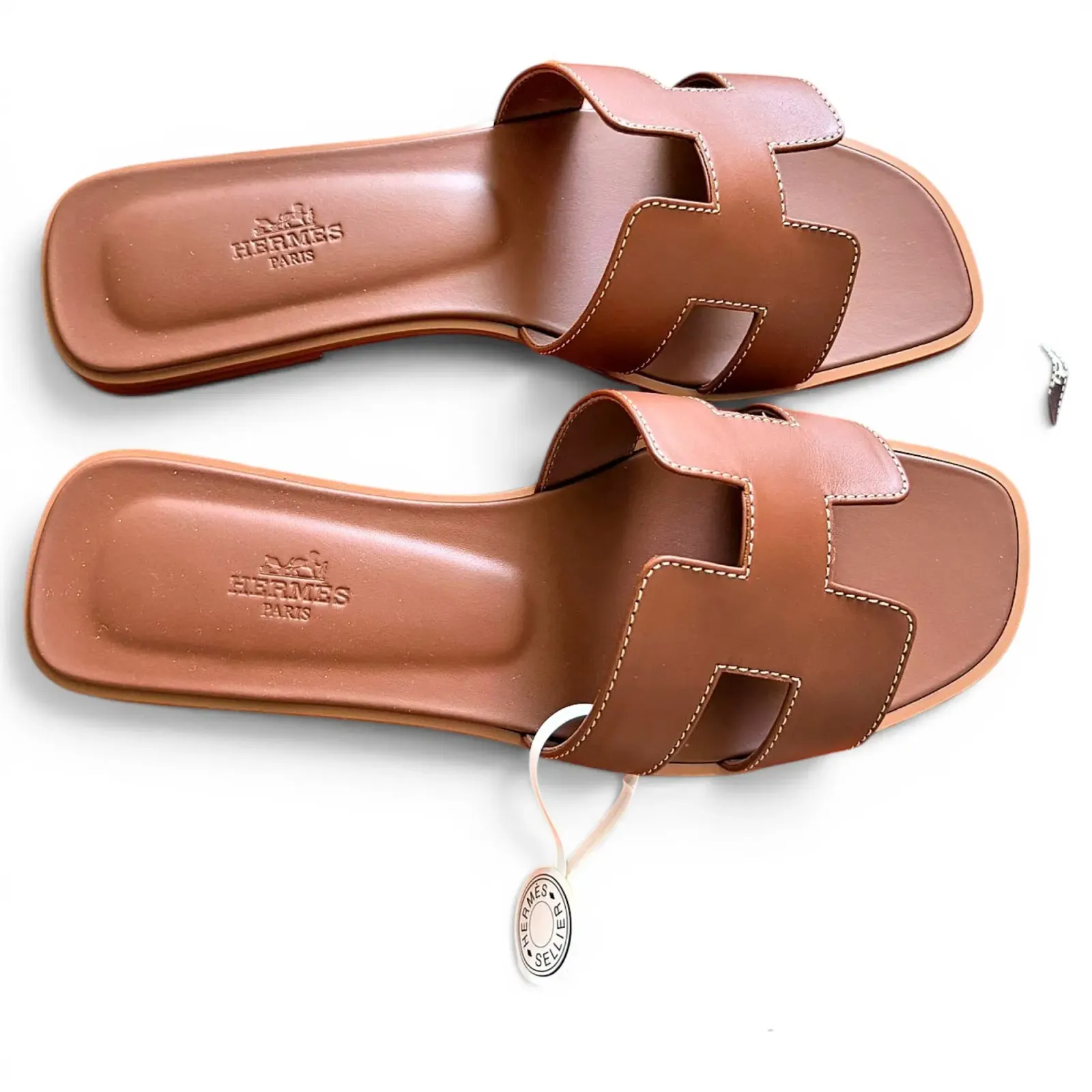
- Hermès Oran sandal authentication
FAQ
Where is the blind stamp on a Hermès Herbag?
On the underside of the leather flap, on the rough reverse of the leather. On the genuine Herbags we have photographed, including an older-generation bag from 2001 and a 2024 Herbag Zip, it sits there in both generations: beside the clou de selle post on the older bag and along the flap's edge on the Zip. Ask the seller to lift the flap and photograph its underside. The HERMÈS PARIS MADE IN FRANCE stamp is a separate mark, on the outside of the flap.
Can a Herbag have a circled blind stamp?
Not a Herbag Zip. The circle system ran from 1971 to 1996 and the Herbag Zip was reintroduced in 2009, so a circled letter on a Zip is chronologically impossible. The older pre-2009 Herbag PM and MM generation is a different case and can legitimately carry earlier formats — establish which generation you have first.
What is the canvas on a Hermès Herbag made of?
Toile H, a tightly woven cotton canvas (the print inside a genuine Herbag Zip reads TOILE 100% COTON) with the pattern formed by the yarns themselves: a small two-tone check on the bags we photographed, or a solid colour with the same fine woven texture. The trim is Vache Hunter, an untreated calfskin that starts pale and darkens with use.
Why is my Herbag's leather trim so pale?
Vache Hunter is untreated and begins as a pale pinkish tan, darkening to honey with handling and light exposure. Pale trim on a newer bag is entirely normal. What is not normal is a bag described as well-used with trim still uniformly pale, or even dark colour across every surface including protected areas, which suggests dye rather than genuine patina.
Is the Herbag easier or harder to fake than a Birkin?
We would not rank them. The Herbag's two-material build gives a counterfeiter more surfaces to match, but some counterfeits we have reviewed match genuine bags closely on the stamp format, zip stops and padlock. Treat a clean-looking Herbag as unproven, and judge the stamp, hardware, leather and canvas together.
How much does it cost to authenticate a Hermès Herbag?
Hermès handbag authentication starts at $40 for 24-hour turnaround, which includes the Hermès house surcharge applied across the brand. Faster turnarounds are available. The service is photo-based, and you receive a Certificate of Authenticity stating the verdict either way.
Does the original receipt prove my Herbag is authentic?
No. Receipts are forged and are also genuinely paired with the wrong bag when a real receipt is sold alongside a counterfeit. A receipt's value is cross-referencing — its date should be consistent with the blind stamp era and with how far the leather has patinated. Inconsistency between those is informative; the receipt alone is not.