Hermès Authentication Specialist
Handbag authentication specialist. Has reviewed submissions across Hermès, Chanel, Louis Vuitton, and Dior since 2019.
Published September 2026 · Contact
What Makes an Exotic Constance Different to Authenticate
Most exotic-skin authentication advice is written around the Birkin and the Kelly, and for good reason: they are the most valuable exotic bags Hermès makes. But the Constance is built differently. There is no turn-lock plate to read, no padlock, no clochette and no key. The whole closure is a single metal H that sits on the front of the flap, and that H is the first thing a buyer looks at and the first thing a counterfeiter spends money on.
That changes where you should look. On a Constance, the hardware checks move to the H clasp and the leather tab it locks onto, the heat stamp moves to the front panel under the flap, and the long strap becomes a large, easy-to-inspect expanse of exotic skin. This guide covers those Constance-specific points. For the species checks themselves (alligator navel scars, Porosus pores, ostrich quill follicles) and what CITES paperwork does and does not prove, see our exotic-skin Birkin and Kelly guide, which applies to any exotic Hermès bag and which we won't repeat here.
Worth knowing
This guide is built from verified authentic examples: 57 exotic-skin Constance bags authenticated through LuxeDetect (28 alligator, 13 lizard, 8 ostrich, 4 Niloticus crocodile and 4 mixed-material pieces), six of which we reviewed photo by photo for the details below. We have only two photographed counterfeit exotic Constance bags, which is not enough to build a real-vs-fake comparison, so this guide describes what genuine looks like rather than ranking counterfeit tells. It will be upgraded when we have more confirmed fakes.
Use our free Hermès Date Stamp Decoder to identify the production year of any Birkin, Kelly, or Constance — circle, square, or modern alphanumeric format.
Decode My Date Stamp →Model Reference Before You Start
- Constance 18 (also listed as Constance 1-18 or Mini): the most common size in our exotic set by a wide margin.
- Constance 24 (Constance 1-24): the larger shoulder size, same closure.
- Micro Constance and Constance Elan: rarer variants that appear in the archive in small numbers; the checks below apply to the closure, but we have too few examples to describe their interiors.
- Constance To Go, Long To Go and Slim wallets: these share the split-H clasp but not the construction. They have a zipped interior, card slots and a thin detachable strap with a metal pin fastening, so this guide doesn't cover them. We reviewed 18 exotic Constance wallet records separately and they need their own reference.
- Porosus crocodile: exists in the Constance line, but the Porosus records in our archive are older single-photo orders, so we can't show you a Porosus Constance in detail. Use the species checks in the Birkin and Kelly guide for that skin.
The H Clasp: A Split Closure, Not a Single Piece
The Constance H is not one solid piece of metal. With the flap lifted, two H-shaped uprights stay fixed to the front panel of the bag. The centre bar that completes the H sits at the end of a T-shaped leather tab extending from the flap. Close the flap and the bar drops between the uprights to form the full H you see from the front.
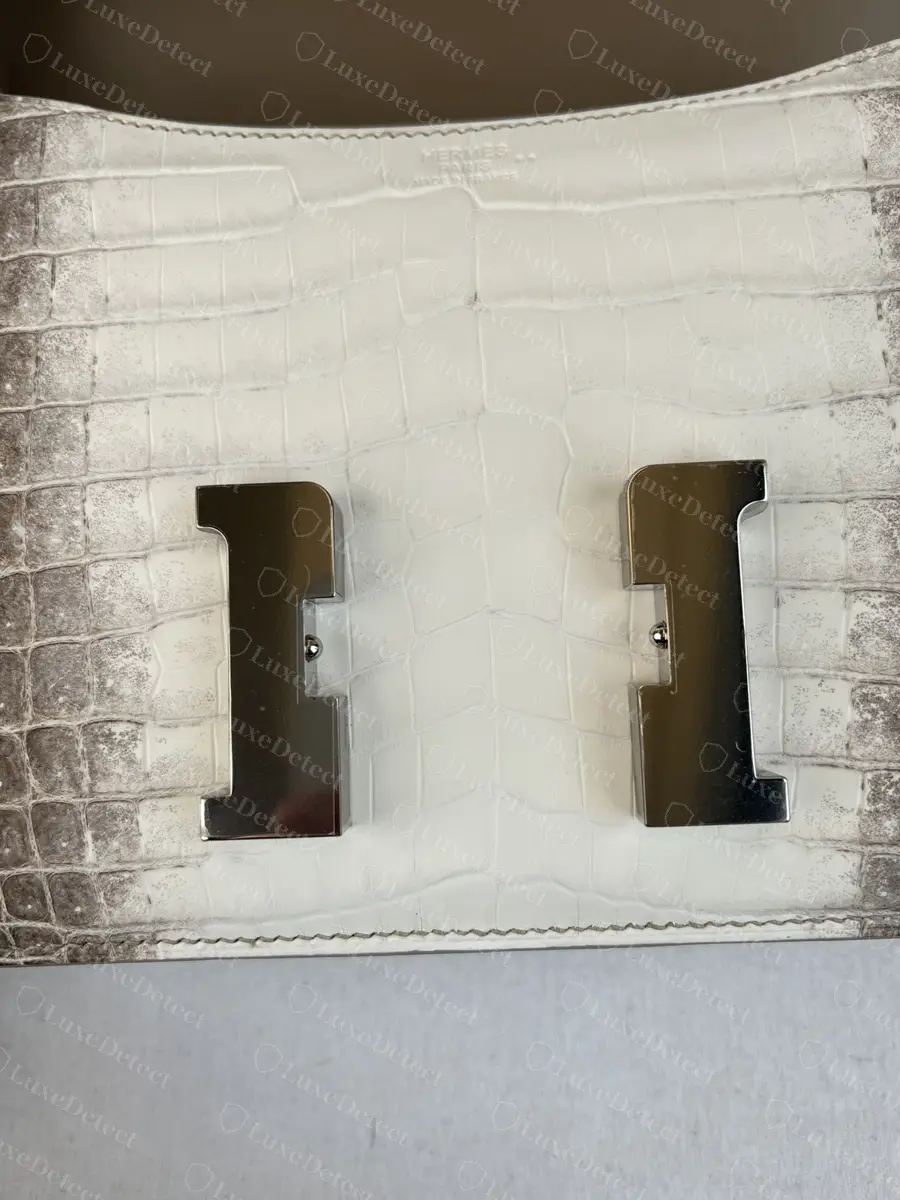
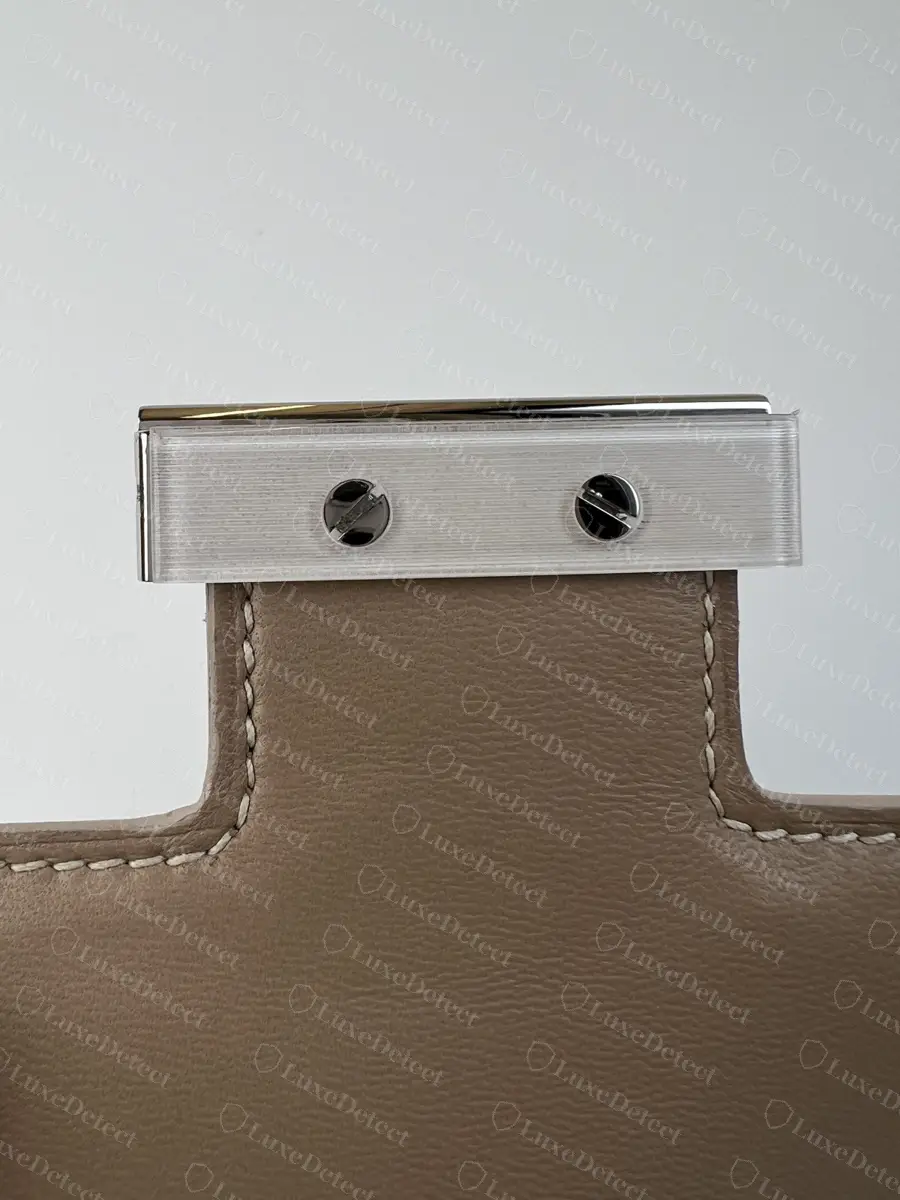
On all six bags we reviewed in full, the inner face of that centre-bar piece was a brushed (not polished) metal plate fixed with two slotted screws, set squarely on the T-shaped leather tab with the stitching running evenly around the tab's shoulders. The screws matched the hardware colour.
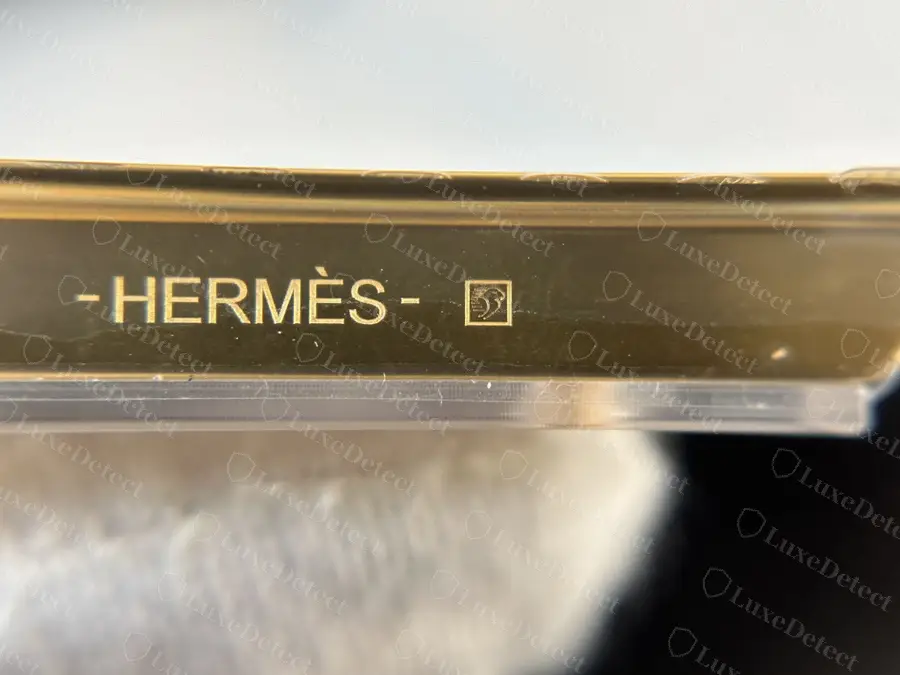
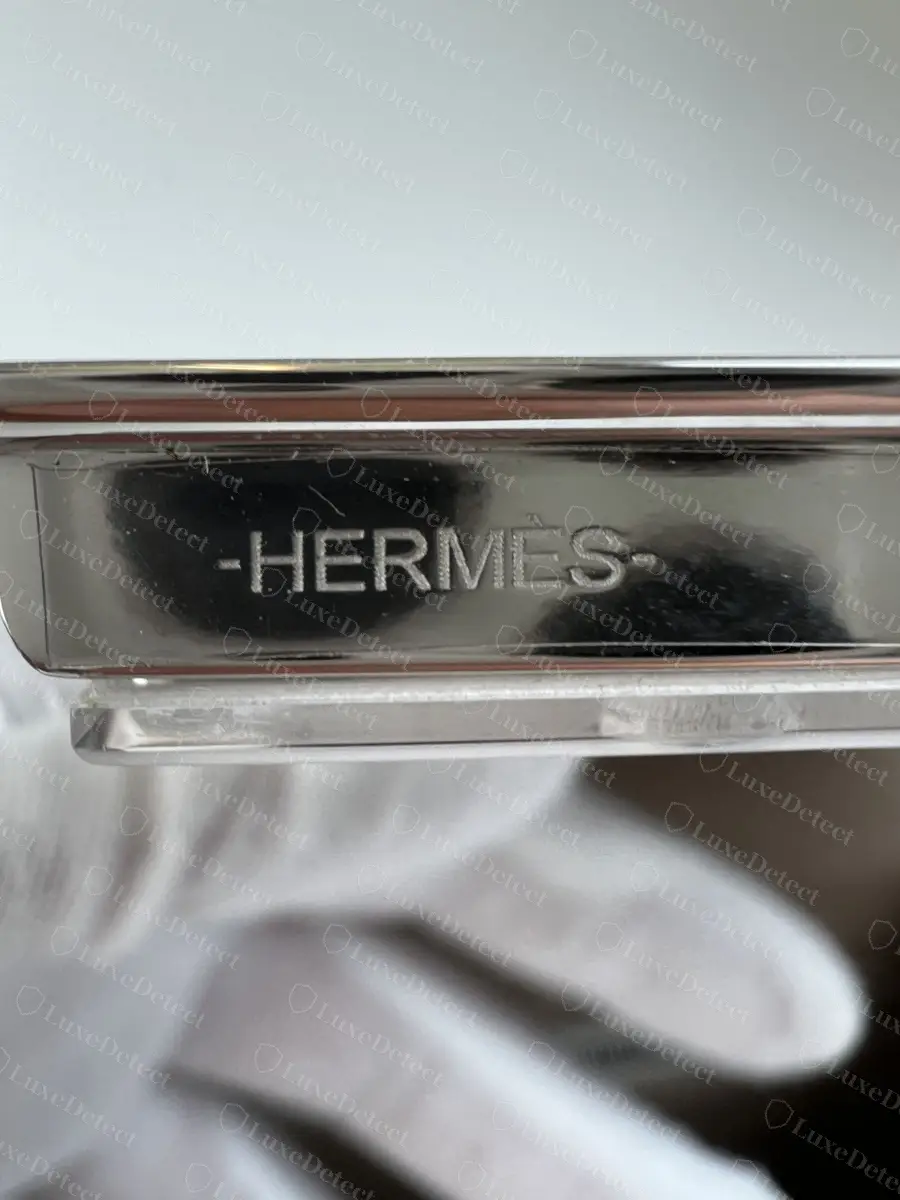
The top edge of the H carries an engraved -HERMÈS- with a dash on each side. On the three gold-hardware bags we examined, a small square hallmark followed the engraving. On the three palladium-hardware bags, the photos showed the engraving without it.
Worth knowing
Clasp engraving is worth checking but not worth trusting on its own. The better of our two counterfeit Constance bags had a clean -HERMÈS- engraving with a square mark beside it. Engraving tells you a counterfeiter was careful, not that the bag is genuine. The same point applies to the Constance belt, which uses a different H; our [Constance belt guide](/blog/authenticate-hermes-constance-belt-guide) covers that buckle, and its checks don't transfer to the bag.
The Heat Stamp: Where It Sits and What It Shows
On every exotic Constance bag we reviewed, the HERMÈS / PARIS / MADE IN FRANCE stamp was on the exotic leather of the front panel, just below the stitched top edge and above the H uprights. It is hidden when the flap is closed, so you have to lift the flap to find it. It is not on the strap and not on the lining.
Two things varied, and it helps to know that both are normal:
- Foil colour. Five of the six stamps were foil-stamped in the hardware colour (gold with gold hardware, silver with palladium). The Himalaya Niloticus bag with palladium hardware had a blind stamp: pressed into the leather with no foil.
- Where the species symbol sits. On the black alligator bag the square alligator symbol sat on its own line under MADE IN FRANCE. On the gold matte alligator bag it sat to the right of HERMÈS. The Niloticus bag carried two dots to the right of HERMÈS. The two lizard bags carried their mark to the right of HERMÈS too: a single dash on one, two stacked bars on the other. The ostrich bag had no symbol, which is expected for ostrich. We had no Porosus Constance with usable photos, but a caret (^) is the widely cited Porosus mark (see our special stamps guide).
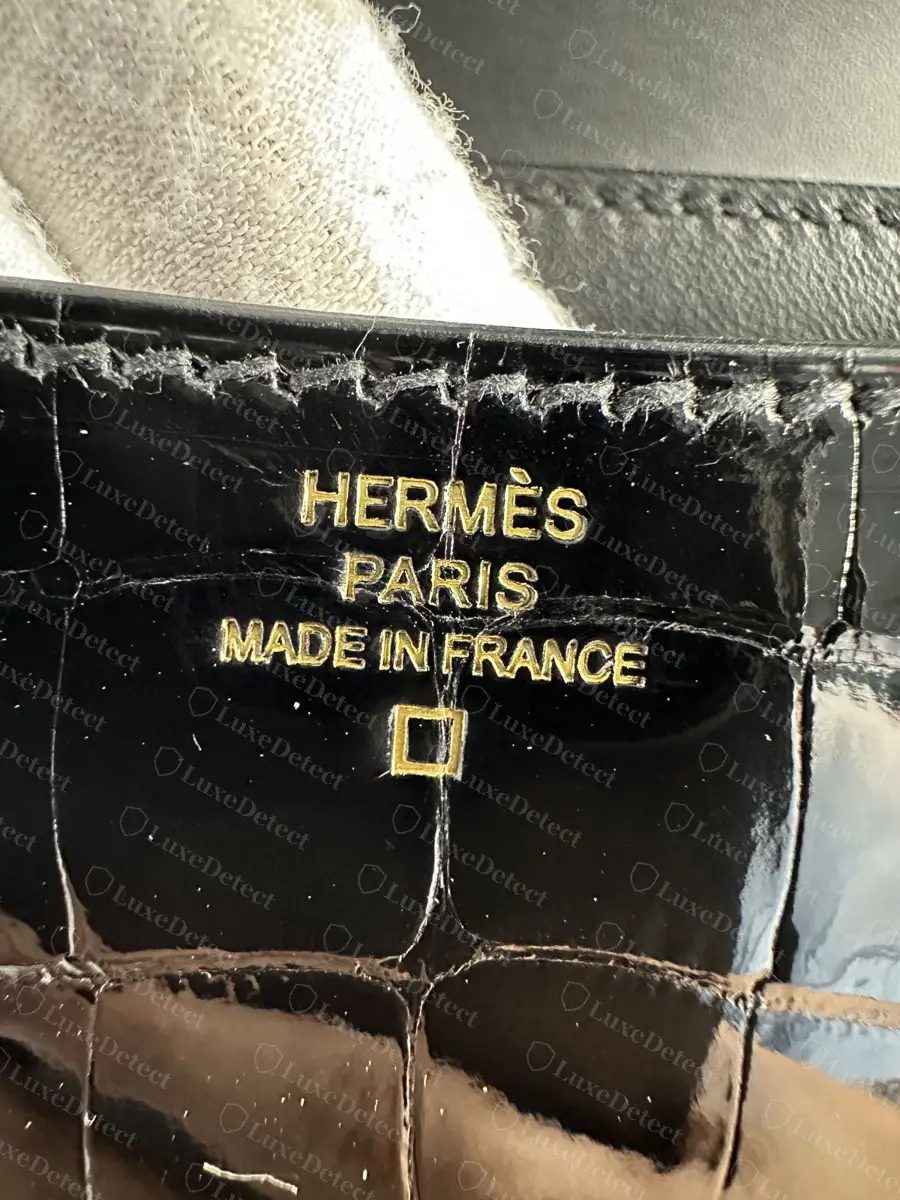
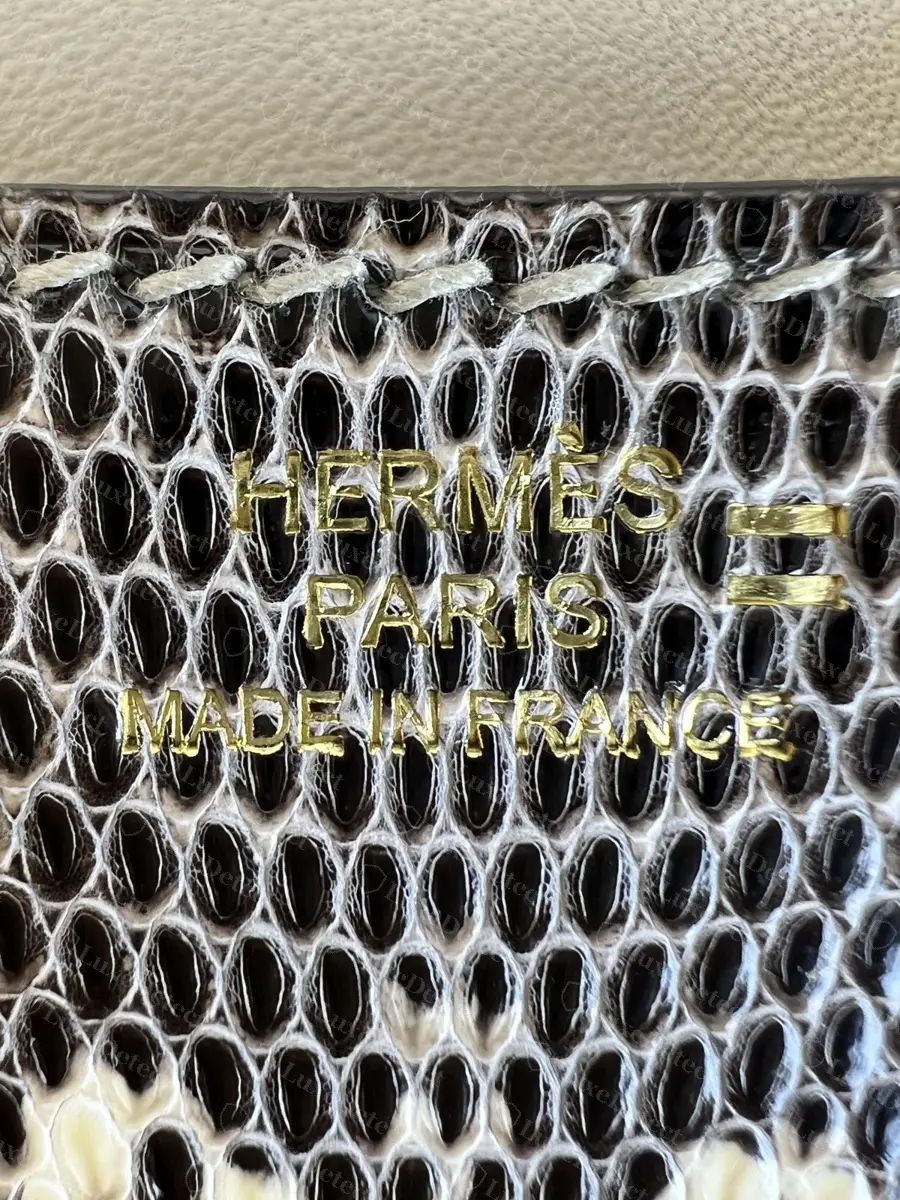
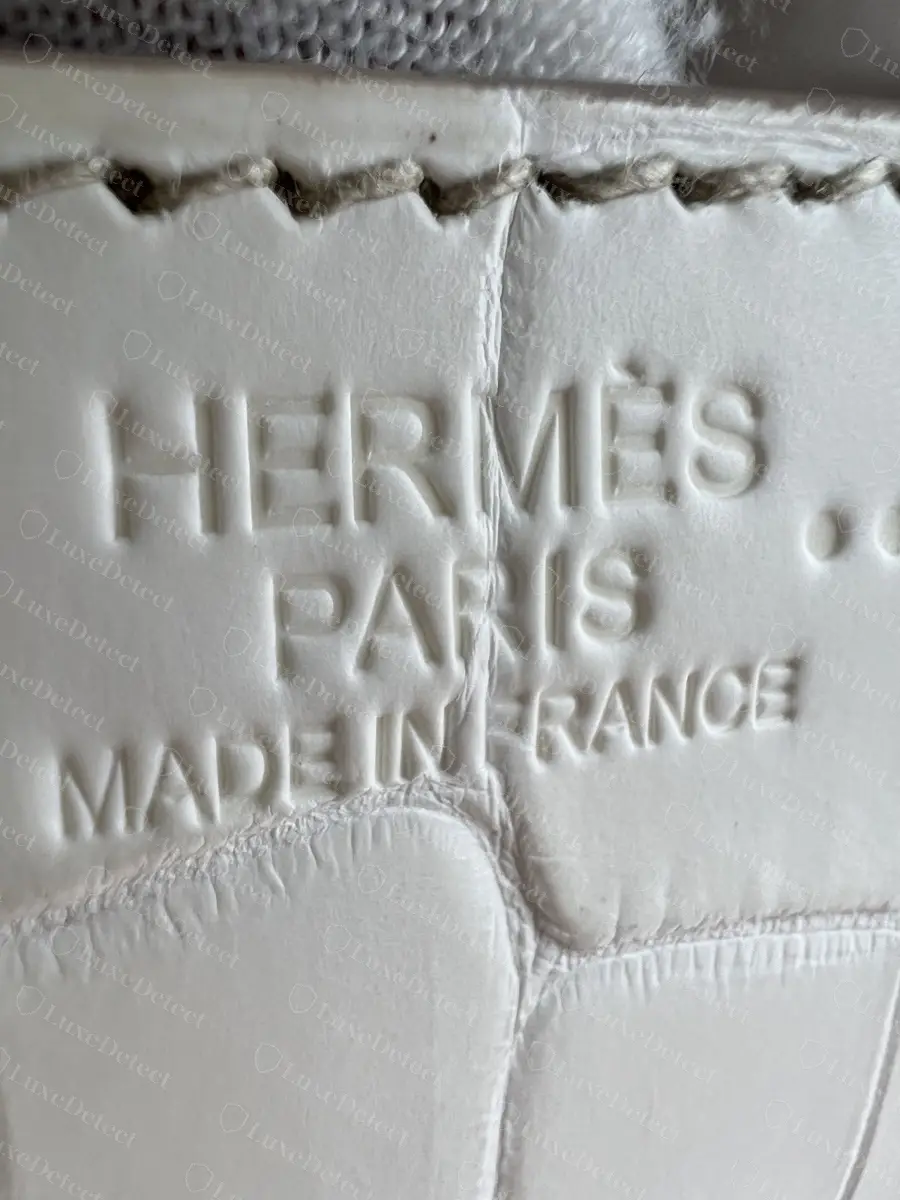
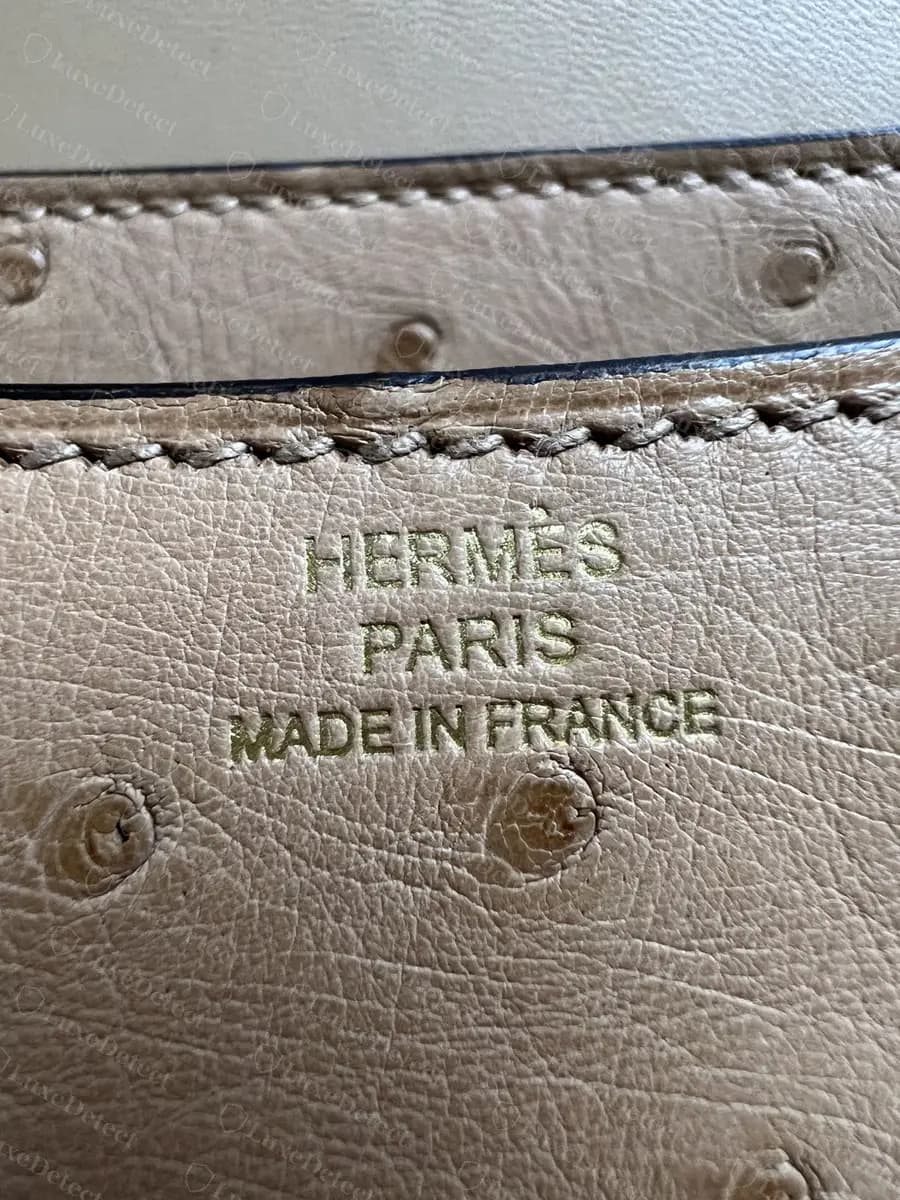
The symbol is the useful part. It tells you which skin the bag is claimed to be, and you can then check the leather against that claim using the species descriptions in our Hermès special stamps guide. A crocodile symbol on a skin that reads as embossed calf is a mismatch worth stopping on.
Worth knowing
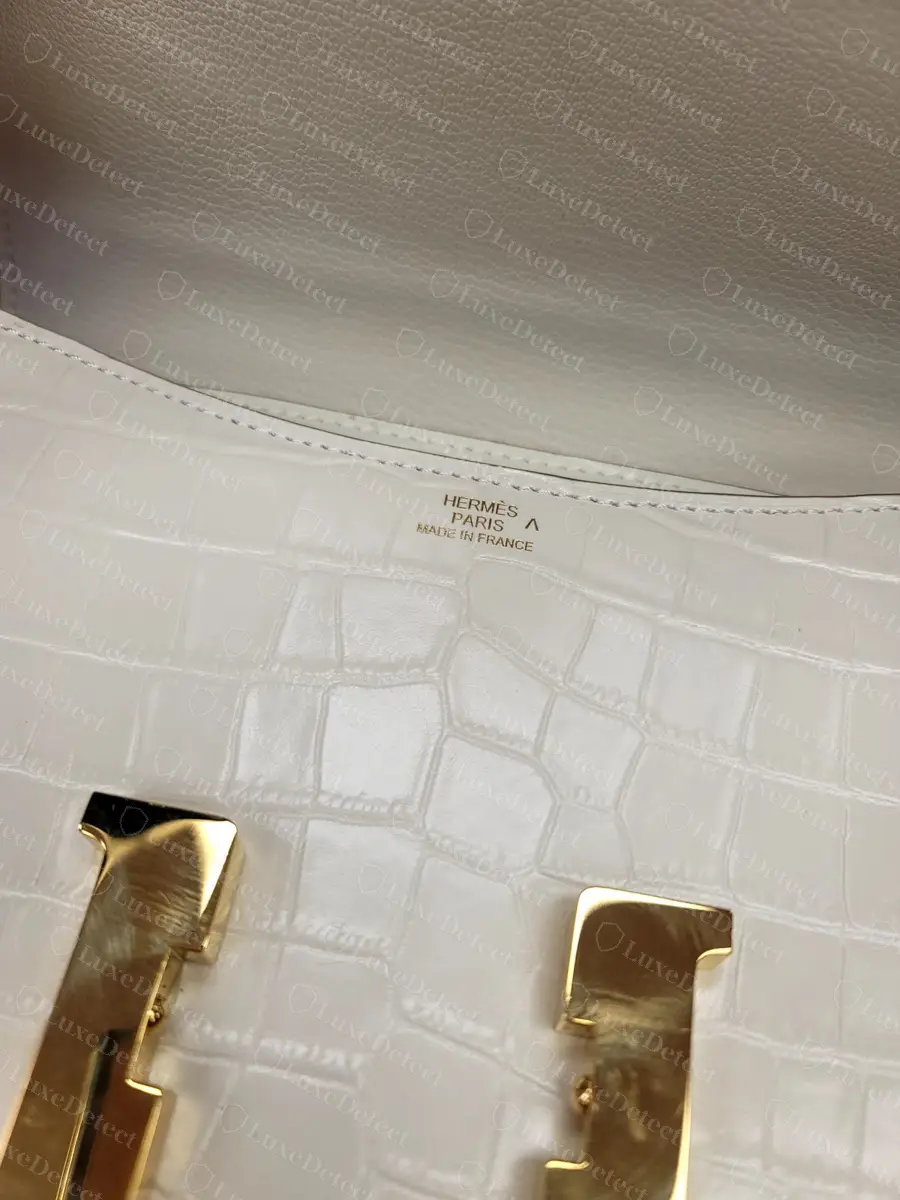
Neither the stamp nor the species mark proves anything by itself being there. The counterfeit Constance below has its stamp in the correct place, in gold foil to match its gold hardware, and it carries a caret (^), the Porosus crocodile mark, which is the expected symbol for the croc-look skin it is presented in. The counterfeiter copied the mark correctly. The useful check is whether the mark matches the leather actually used: a Porosus mark on alligator-pattern scales, or on embossed calf, is a mismatch.
The Interior Code
Five of the six recent bags we reviewed had a second marking inside: an embossed alphanumeric code on the interior leather, with a short two-letter line underneath (for example YP1341 over MZ). On the sixth it was too faint to read in the photos. It is embossed, not foil-stamped, and cleanly spaced.
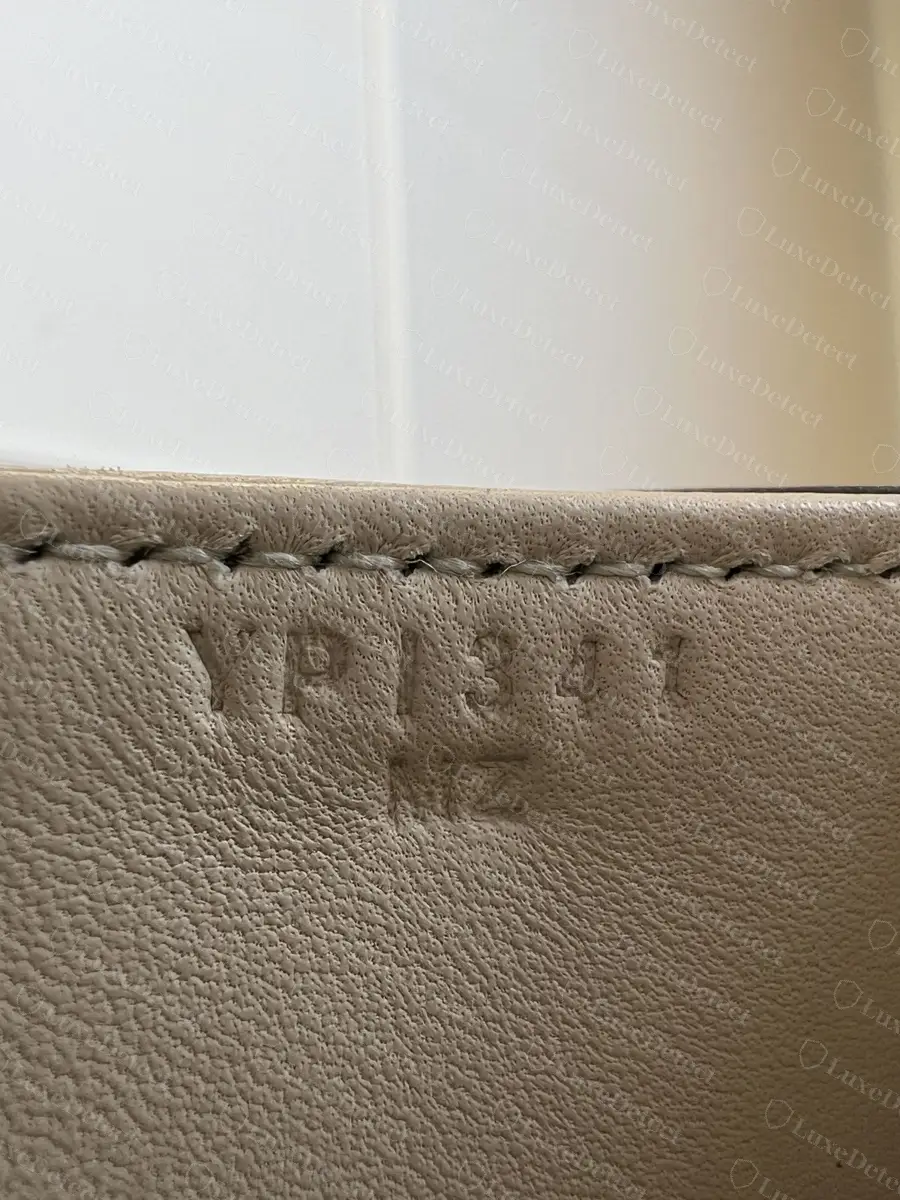
We don't know of a reliable public reference for decoding this code, so we use it as something to photograph and cross-check, not something to decode. If a bag also has a traditional year letter, our Hermès date code decoder will give you the production year. That tells you when the bag was made, not whether it's genuine.
The Strap: The Largest Piece of Exotic Skin You Can Handle
On a Constance, the strap is a long, continuous strip of the same exotic skin as the body. It is the easiest place to inspect the leather closely, because you can hold it flat under good light without opening the bag.
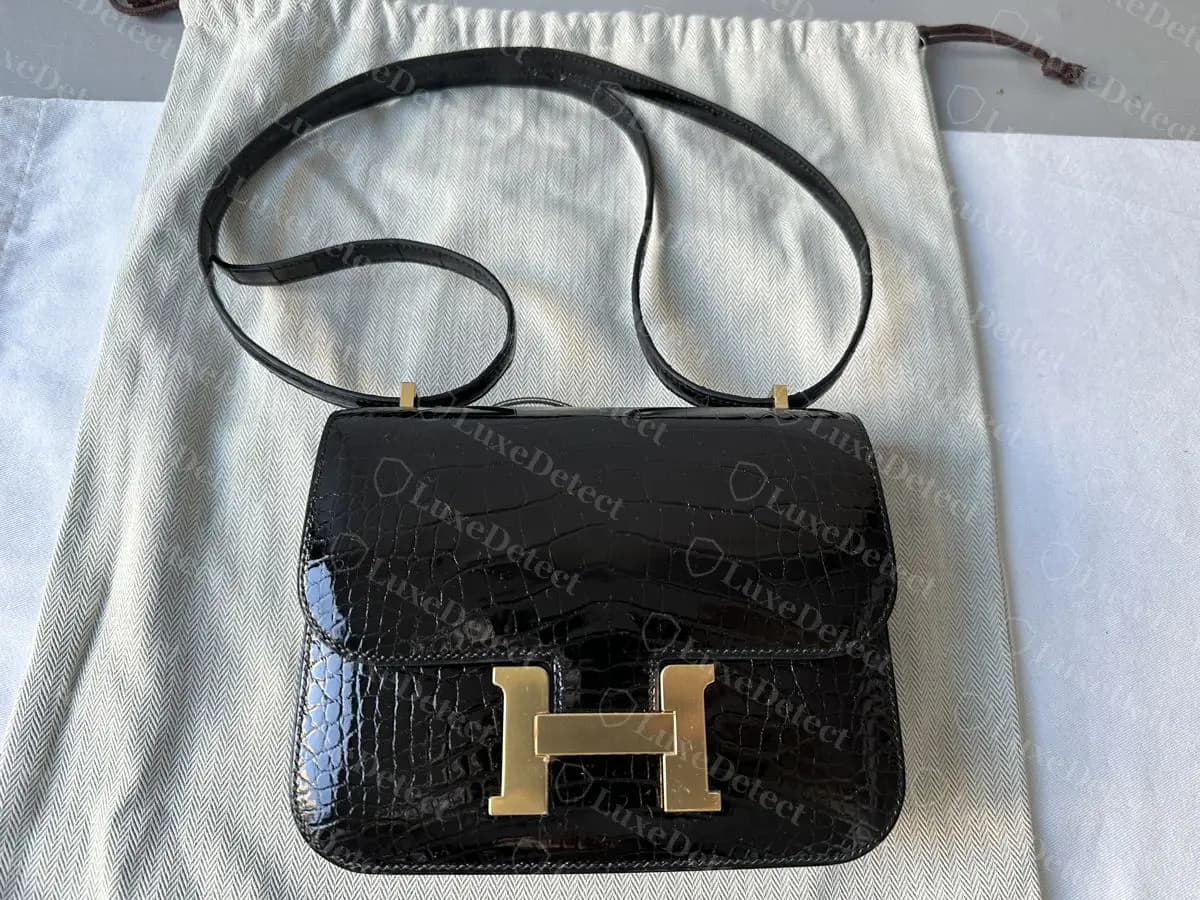
On the genuine straps we reviewed, the scale pattern ran along the length of the strap with rows running straight, and the edge stitching sat evenly at a consistent distance from the edge. Where the strap meets the bag, it passes through a rectangular metal loop on each side. The loops matched the hardware colour and finish.
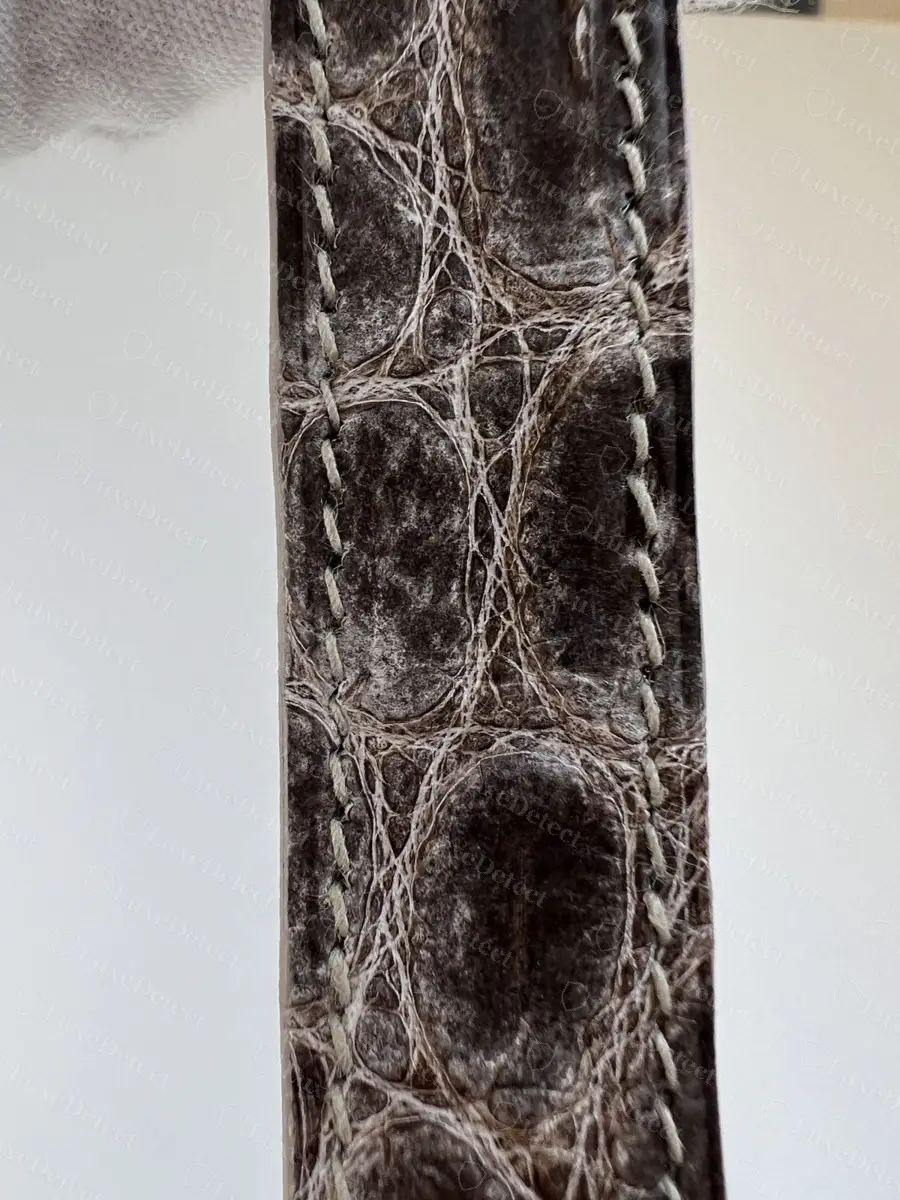
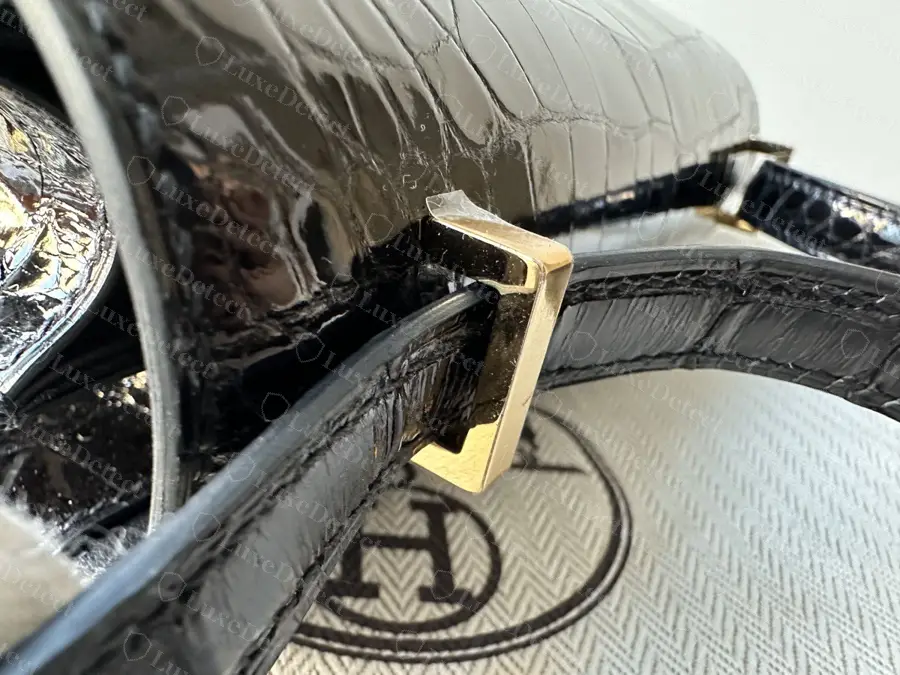
Check that the strap's skin matches the body in species, finish (matte or shiny) and colour. The texture-consistency check described in the Birkin and Kelly guide (checking the leather at more than one point, not just the front) is easiest to apply on a Constance through the strap, because it is the longest single piece of skin on the bag.
The Mirror and Other Contents
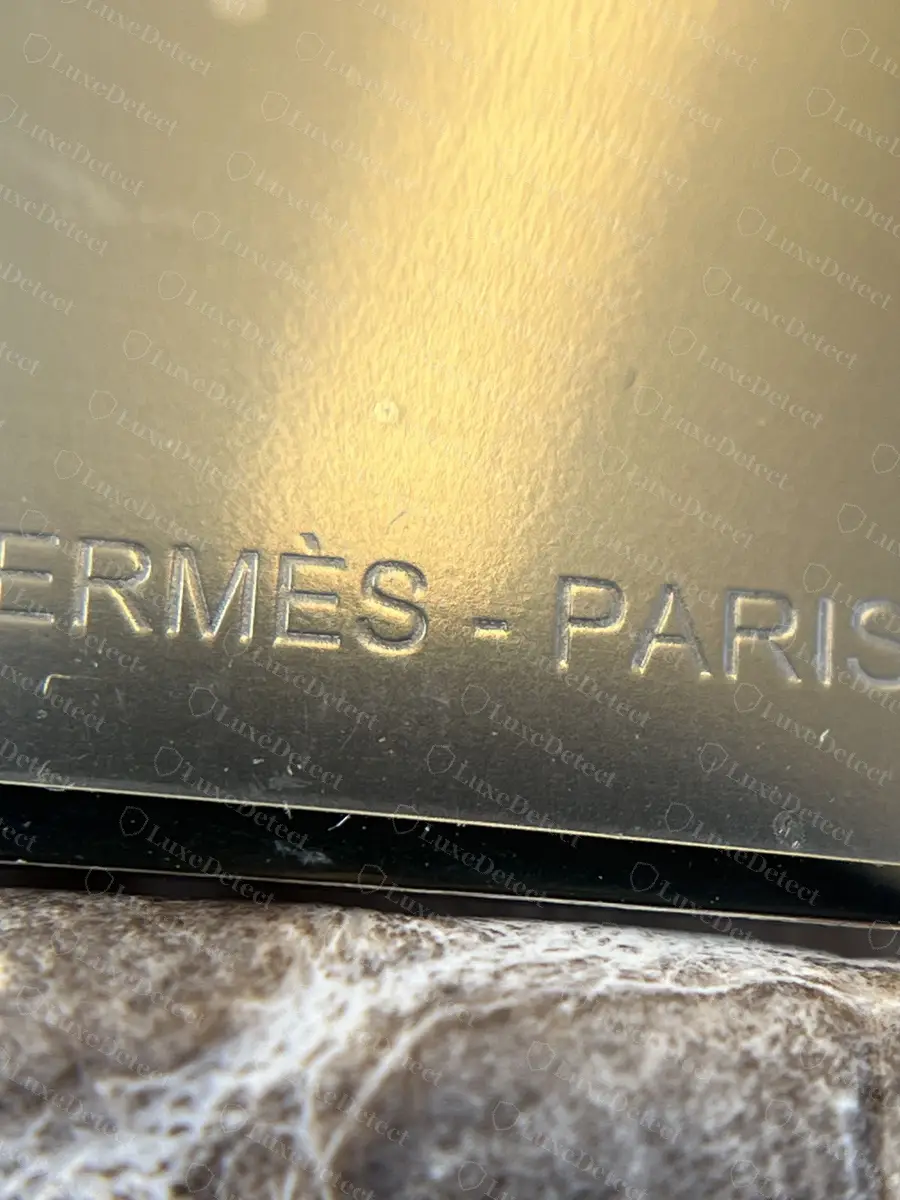
Four of the six full sets we reviewed included a small steel mirror engraved HERMÈS - PARIS, with a pull tab in the same exotic leather as the bag. The tab's skin matched the bag in each case. Like the box and dust bag, the mirror is context rather than evidence: it can be lost, swapped or bought separately. It's still worth checking that its leather tab matches the bag.
Receipts, CITES documents and box labels showed up in several of our genuine sets. What each document proves is covered in the Birkin and Kelly guide. For a Constance, the useful cross-check is that the paperwork names a Constance, the right size and the same skin the stamp symbol claims.
Quick Reference Checklist
- Lift the flap. The two H uprights should stay on the front panel; the centre bar travels with the flap's T-shaped tab.
- Check the inner face of the centre bar: a brushed plate held by two slotted screws, square on the tab, stitching even.
- Read the H's top edge: -HERMÈS- with a dash each side.
- Find the stamp on the exotic leather under the flap's top edge. Note the foil colour and the species symbol.
- Confirm the skin matches the symbol, using the species checks in our exotic Birkin and Kelly guide.
- Look for the embossed interior code and photograph it.
- Check that the strap's skin, finish and colour match the body, and that the side loops match the hardware.
A bag that passes all of this may still be a very good counterfeit. A bag that fails the species check, or where the strap and body don't match, needs a professional look before any money changes hands.
When to Get a Professional Opinion
With only two confirmed counterfeit exotic Constance bags in our archive, we can't tell you which of these details counterfeiters most often get wrong. That's the limit of this guide: it tells you what genuine looks like, not how to rank the warning signs. An exotic Constance can cost tens of thousands of dollars, so a second opinion is worth it. LuxeDetect's Hermès handbag review starts at $40 for a 24-hour turnaround (the $25 handbag rate plus our $15 Hermès fee), with faster options available. Every exotic submission is checked against the species, stamp and construction points in this guide, and a bag that passes gets a Certificate of Authenticity.
FAQ
Where is the stamp on a Hermès Constance?
On the exotic bags we reviewed, the HERMÈS PARIS MADE IN FRANCE stamp is on the front panel under the flap, just below the stitched top edge and above the H clasp uprights. You have to lift the flap to see it. The species symbol (square for alligator, caret for Porosus crocodile, two dots for Niloticus crocodile, a dash or two bars for lizard) sits beside or below the text. Ostrich has no symbol. A symbol being present proves nothing, since counterfeits copy it too; what matters is whether it matches the leather.
Is the Constance H clasp one piece?
No. The Constance H is split. Two uprights are fixed to the front panel, and the centre bar sits at the end of a T-shaped leather tab on the flap, backed by a brushed metal plate with two slotted screws. When you close the flap, they meet to form the full H.
Should the stamp be gold or silver on an exotic Constance?
On most of the genuine exotic Constances we reviewed, the stamp foil matched the hardware: gold with gold hardware, silver with palladium. We also saw a genuine Niloticus crocodile Constance with a blind stamp and no foil, so a blind stamp is not on its own a problem.
Does the H clasp engraving prove a Constance is real?
No. A genuine H carries -HERMÈS- engraved on its top edge. But the better of our two counterfeit Constance bags had a convincing engraving too. Treat engraving as one check among several, and give more weight to the species check and to whether the strap and body skins match.
Are Constance To Go wallets authenticated the same way?
Only partly. They share the split-H clasp, but they have a zipped interior, card slots and a thin detachable strap with a pin fastening. The bag checks in this guide don't carry over to them, so treat a To Go wallet as its own model.
What is the embossed code inside my Constance?
Recent genuine Constances we reviewed had an embossed alphanumeric code on the interior leather, with a two-letter line beneath it. We don't know of a reliable public way to decode it, so photograph it and include it when you ask for a professional opinion rather than trying to decode it yourself.