Hermès Authentication Specialist
Handbag authentication specialist. Has reviewed submissions across Hermès, Chanel, Louis Vuitton, and Dior since 2019.
Last updated September 2026 · Published March 2026 · Contact
The Hidden Language of Hermès Stamps
When you examine a Hermès Birkin or Kelly, you'll find two types of markings near the interior leather square: the blind stamp (a letter indicating production year) and, on exotic leather or special pieces, one or more additional symbols. These symbols — a square, a caret, two dots, or others — are a parallel marking system that identifies the leather's origin or the bag's special status.
Understanding these marks matters for two reasons: they affect value significantly (an exotic-skin Hermès bag can be worth three to ten times more than the same style in standard leather), and getting them wrong is a common error both buyers and fakes make.
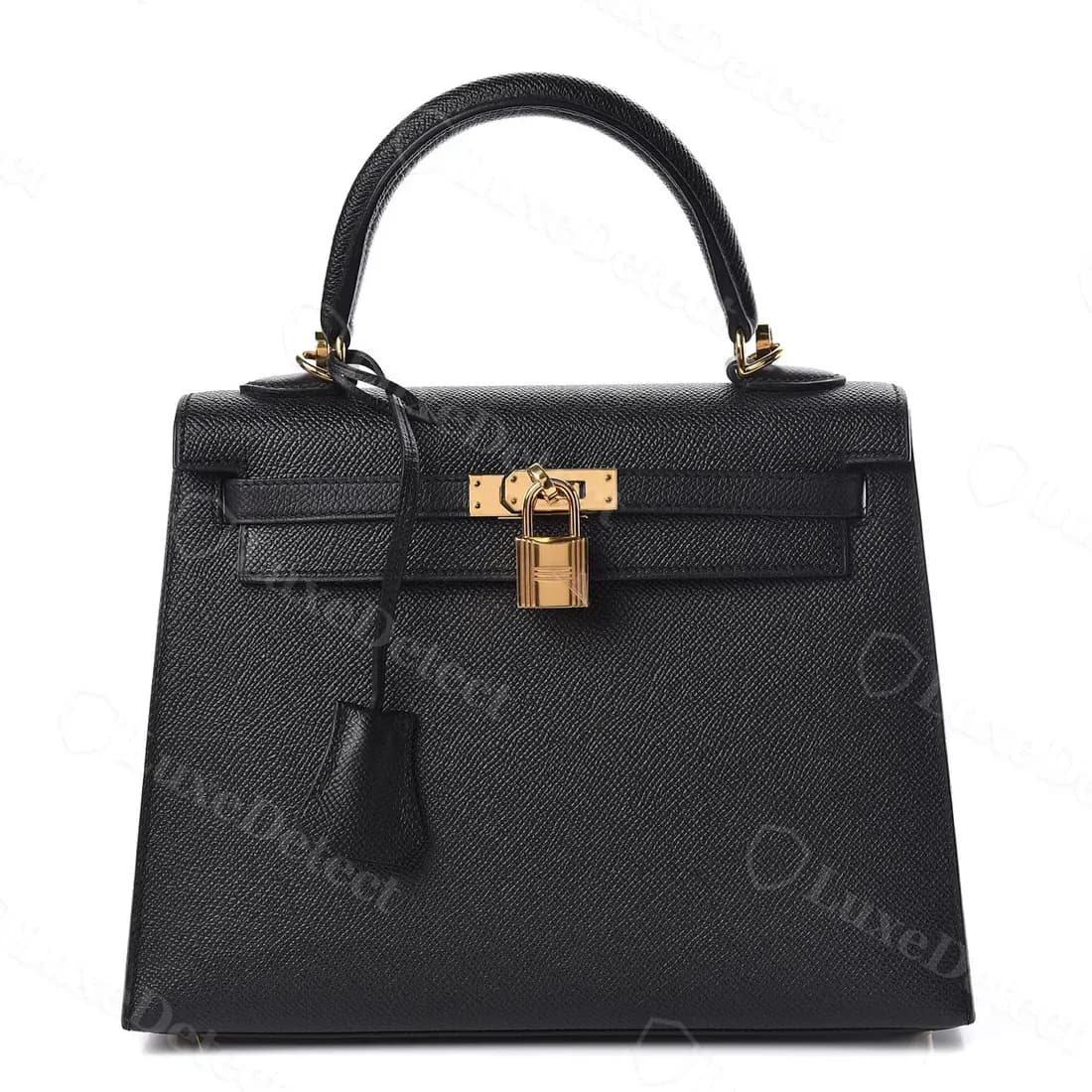
This guide covers stamps specifically. For the Kelly's turn-lock plate, hardware and stitching checks, see our Hermès Kelly authentication guide.
What to check, ranked by reliability
| Checkpoint | Reliability | What it tells you |
|---|---|---|
| How to Verify the Stamps Are Authentic | ★★★★★ | A leather symbol whose physical characteristics contradict the claimed species is fraud, regardless of how correct the stamp shape looks. |
| Square (□) — American Alligator | ★★★★★ | A visible navel scar on the belly scales points to genuine alligator; its absence counts against the leather. |
| Horseshoe (∪) — Special Order (Hermès à la Carte) | ★★★★★ | The stamp alone proves nothing; it must be corroborated against genuinely non-catalog leather, hardware, or stitching specifications. |
| Falling Star (☆) — Made for an Artisan | ★★★★★ | Extremely rare and easily claimed falsely; treat with skepticism until expert-authenticated rather than as a standalone signal. |
Where to Find the Special Stamps
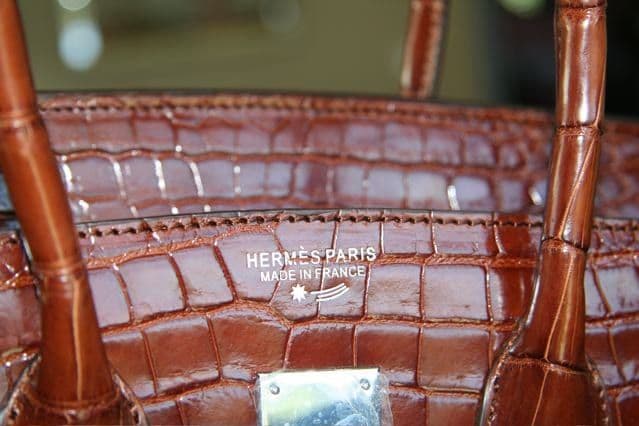
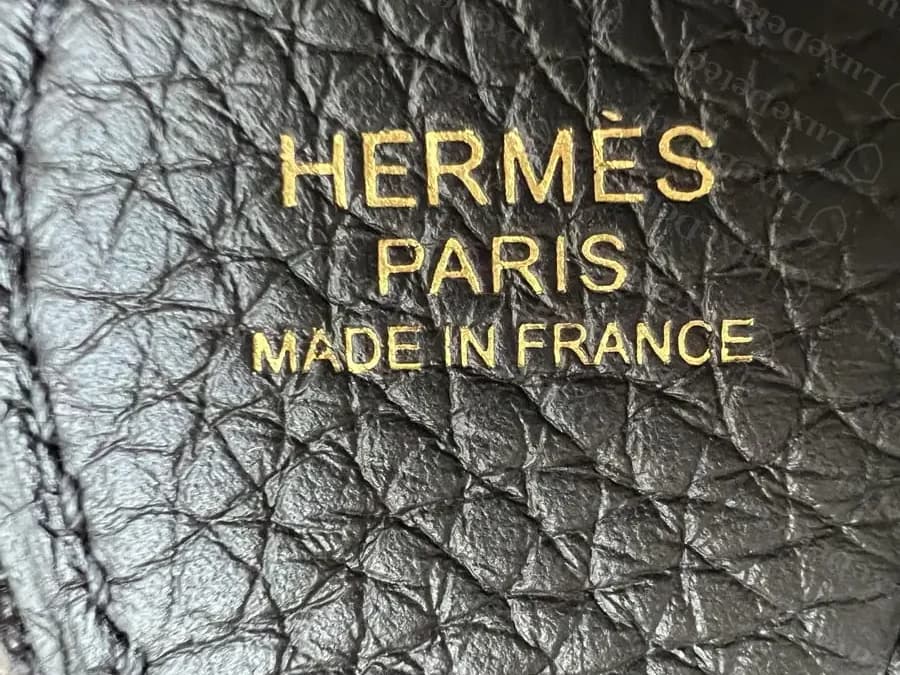
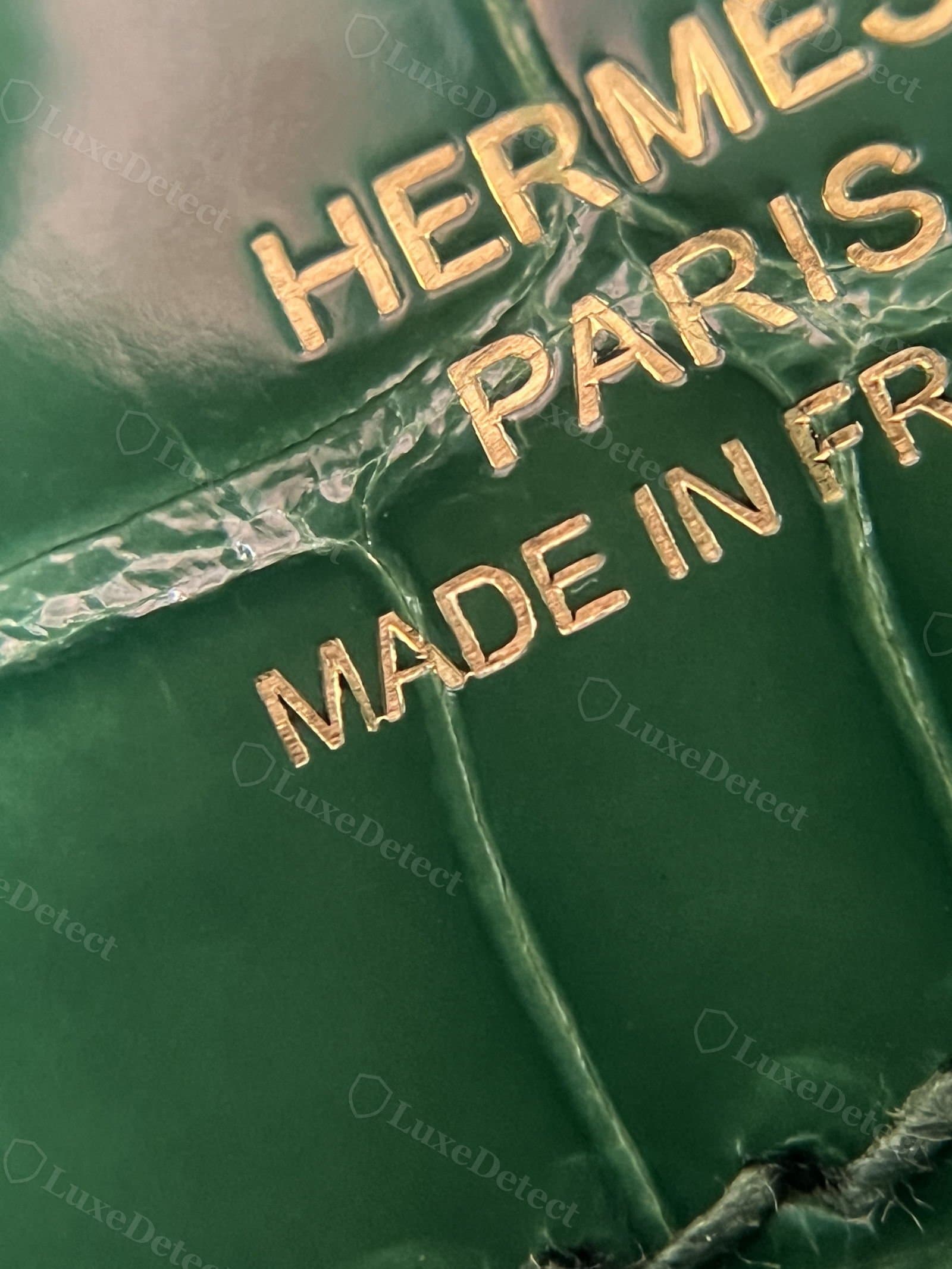
The special symbols appear adjacent to "HERMÈS PARIS MADE IN FRANCE" on the interior leather panel. Look between the production year letter (blind stamp) and the "HERMÈS" text. On pre-2016 bags, this text is typically on the strap under the buckle; on post-2016 bags, it's on the interior left leather panel.
The year letter and the leather symbol are usually stamped together as a unit — you'll see something like "□ N□" meaning alligator leather, produced in 2010 (N in a square).
Use our free Hermès Date Stamp Decoder to identify the production year of any Birkin, Kelly, or Constance — circle, square, or modern alphanumeric format.
Decode Hermès Stamp →Leather Identification Symbols
Square (□) — American Alligator
The square symbol marks Alligator mississippiensis — the American alligator, sourced from farms in the southern United States (Louisiana, Florida). This is one of the most collected Hermès exotic leathers.
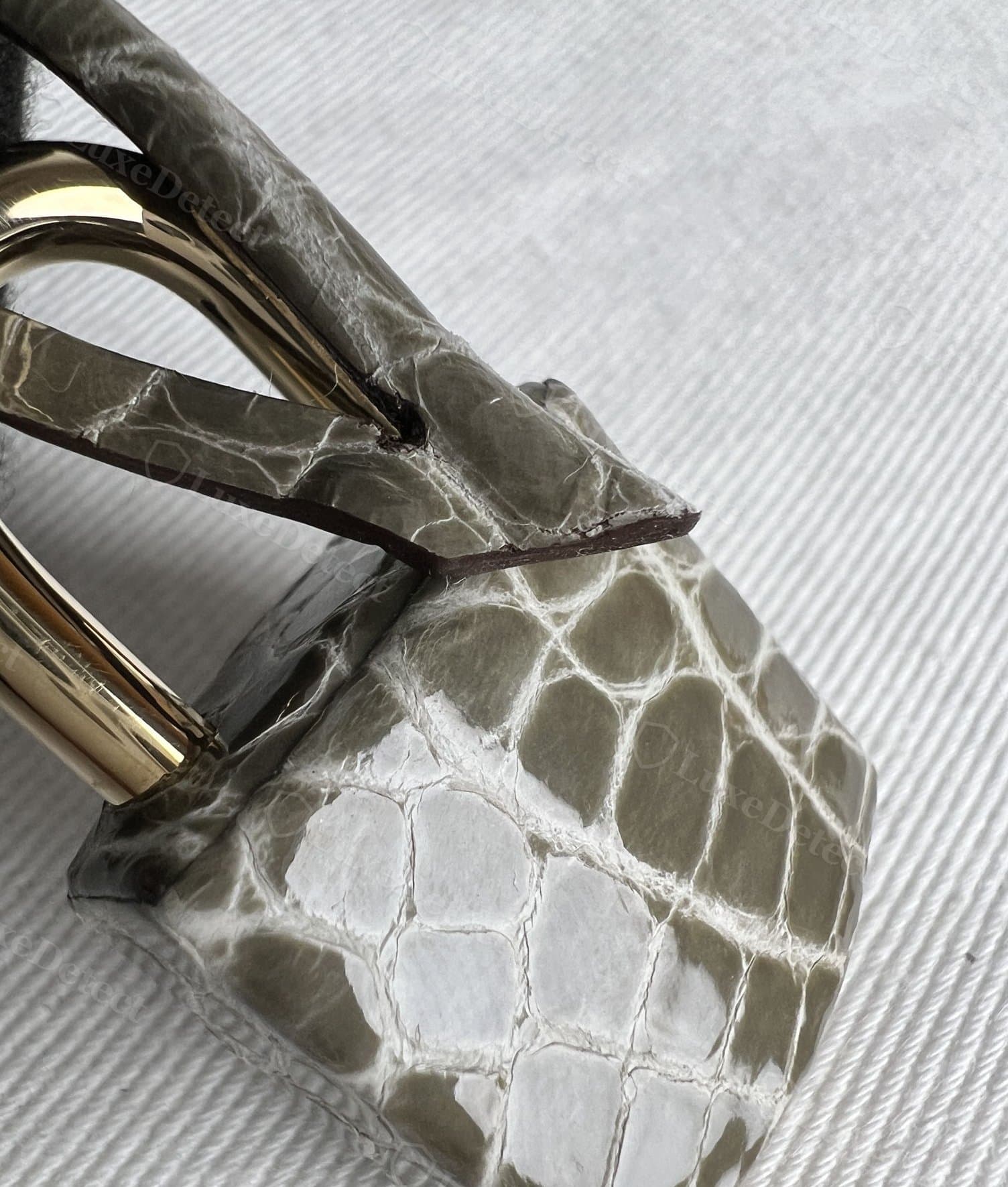
How to confirm the leather: American alligator has a distinctive belly-scale pattern. The scales are relatively large and smooth, with an even, regular grid-like arrangement. A key identification feature on Birkin and Kelly bags is the navel scar — a small circular mark visible on the central underside scales, exactly where the navel was on the living animal. The navel scar is a reliable authentication marker for genuine alligator belly leather; fake exotic leather typically lacks this feature.
The leather is available in both matte (Alligator Mat) and glazed (Alligator Brillant) finishes. Glazed versions have a noticeable high sheen; matte versions have a more textured, natural appearance. Both are authentic — the finish doesn't change the leather type.
Value implications: American alligator Birkins typically sell for 3–6x the price of the same bag in standard leather. A 30cm Togo Birkin at $30,000 might correspond to a 30cm alligator Birkin at $70,000–$120,000 depending on color and condition.
Confirms authentic
A visible navel scar on the central underside scales is a reliable authentication marker for genuine alligator belly leather — fake exotic leather typically lacks this feature.
Worth knowing
Scale grid and pore visibility alone are not decisive on their own — the better counterfeit alligator leather now reproduces a convincing grid pattern. Corroborate against the navel scar, stamp depth consistency, and overall construction rather than judging the scale pattern in isolation.
Caret (^) — Porosus Crocodile
The caret symbol marks Crocodylus porosus — the saltwater crocodile, considered Hermès's most prestigious and expensive leather.
How to confirm the leather: Porosus scales are fine, clearly defined, and notably uniform in size. Each scale has a visible central pore (the point of a hair follicle) — these pores are clearly visible and evenly distributed. The scales have a structured, almost architectural quality. The leather is available in matte or high-gloss Lisse finish.
Rarity: Porosus crocodile bags are produced in very limited quantities. Hermès controls the entire supply chain for Porosus leather and produces only a fraction of the alligator production volume. Authentic Porosus bags are among the most difficult Hermès pieces to acquire at retail and command the highest secondary market premiums.
Two Dots (..) — Niloticus Crocodile
The two-dots symbol marks Crocodylus niloticus — the Nile crocodile from Africa.
How to confirm the leather: Niloticus scales are larger and more rectangular than Porosus. The pores are more prominent and less evenly distributed. The overall texture has more visual variation — it's a more expressive, textured look compared to the refined uniformity of Porosus. Niloticus is produced in both matte and high-gloss versions.
Value relative to other crocodilians: Niloticus Birkins and Kellys command significant premiums over standard leather but typically sell for somewhat less than equivalent Porosus pieces. The larger scale pattern is appreciated by collectors who prefer a more dramatic textural effect.
Dash (–) — Nile Monitor Lizard
The dash marks Varanus niloticus — the Nile monitor lizard, the most common lizard leather used by Hermès.
How to confirm the leather: Monitor lizard leather has a distinctive pattern of small, uniform, slightly rounded scales. The texture is fine and consistent. The leather accepts dye particularly well, which is why Hermès uses it for bags in very bright or saturated colors where the uniformity of the surface enhances color vibrancy.
Monitor lizard leather bags are typically smaller accessories (clutches, miniature bags) rather than full-size Birkins, though exceptions exist.
Equals Sign (=) — Ring Lizard / Asian Water Monitor
The equals sign marks the ring lizard or Asian water monitor — another reptile leather characterized by its distinctive scale pattern.
How to confirm the leather: Ring lizard leather has an unusual visual signature: circular ring-like patterns visible within and around the square scales. This gives the leather a distinctive appearance that's easy to identify once you know what to look for. The scales are small and the ring patterns are subtle but consistent.
This leather is used primarily for smaller accessories and limited-edition pieces. Ring lizard Birkins exist but are uncommon.
Horseshoe (∪) — Special Order (Hermès à la Carte)
This is among the most sought-after stamps in the collector market. The horseshoe symbol indicates a special order (commande spéciale) — a bag produced to a client's personal specifications through Hermès's private client program.
What makes a special order bag different: A horseshoe-stamped bag may feature non-catalog leather colors, contrasting stitching colors that aren't normally available together, unusual hardware specifications, or a combination of elements that don't appear in the standard production line. The bag was literally designed around a specific client's request.
Value and collectibility: Special order bags carry a premium that varies widely based on how desirable the specific specification is. A horseshoe Birkin in an unusual color combination with contrasting stitching can sell for significantly more than an equivalent standard-production bag. Serious Hermès collectors specifically seek horseshoe pieces.
Verification note: The horseshoe stamp can be faked. Verification requires confirming the leather and hardware details are consistent with the stated special order specification — an experienced Hermès authenticator is the most reliable resource for horseshoe bags.
Worth knowing
The horseshoe stamp alone proves nothing by itself — it must be corroborated against non-catalog leather, hardware, or stitching specifications that could plausibly have been ordered together.
Falling Star (☆) — Made for an Artisan
The falling star is the rarest stamp in this guide. It indicates that the bag was made by an Hermès artisan for their own personal use — a privilege Hermès extends to its craftspeople.
Artisan bags are not produced for sale and almost never appear on the open market. When they do, they command extraordinary premiums because of their genuine rarity. If you encounter a bag claimed to have the falling star stamp, treat it with significant skepticism and obtain expert authentication before any transaction.
How to Verify the Stamps Are Authentic
Stamps can be added to a bag fraudulently — either stamping a standard-leather bag with an exotic symbol, or adding symbols to increase perceived value. To verify:
- Confirm the leather matches the claimed symbol: An alligator-stamped bag must actually have alligator characteristics — navel scar, scale pattern, uniformity. Any discrepancy between the symbol and the leather's actual characteristics is fraud.
- Inspect stamp quality: Both the year stamp and the leather symbol should have the same quality of impression — same depth, same crispness. If the year stamp looks different from the leather symbol in quality, they may have been applied separately.
- Check provenance documentation: For high-value exotic bags, Hermès provides documentation. While absence of documentation isn't automatically suspicious on older pieces, presence of consistent, original documentation adds confidence.
Red flag
A leather symbol whose scale pattern, pore visibility, or navel scar doesn't match the claimed exotic species is fraud, regardless of how correct the stamp shape itself looks — the leather, not the symbol, is the ground truth.
Authentication Checklist
- Stamp visible next to "HERMÈS PARIS MADE IN FRANCE"
- Symbol matches the actual leather characteristics (scale pattern, navel scar, etc.)
- Stamp quality consistent with the year stamp quality
- Stamp location correct for the production year (strap pre-2016, interior post-2016)
- Stamp is deep, even, and neat — not blurry or inconsistent
- Provenance documentation present and consistent (for high-value exotic pieces)
FAQ
Can I identify exotic Hermès leather without knowing the symbol?
Yes, to a degree. Each exotic leather has distinctive physical characteristics: - American alligator: smooth belly scales in grid pattern, navel scar present - Porosus: fine uniform scales with visible pores, structured appearance - Niloticus: larger rectangular scales, prominent pores, more textural variation - Monitor lizard: small round uniform scales, particularly vivid color - Ring lizard: small scales with ring-pattern markings Experienced authenticators can identify the leather type from the leather itself — the symbol confirms rather than establishes the identification.
Why would someone fake an exotic leather stamp on a standard-leather bag?
The value differential is enormous. A Togo leather Birkin 30 might sell for $30,000–$40,000; the equivalent in Porosus crocodile might sell for $100,000–$200,000. Adding a caret stamp to a standard leather bag and misrepresenting it as Porosus represents a potentially six-figure fraud. This is not hypothetical — it happens in the market.
Does a horseshoe stamp make a bag more valuable in all cases?
Generally yes, but the magnitude depends on the specific specification. A horseshoe bag in a desirable color combination with attractive contrasting stitching can command a significant premium. A horseshoe bag with an unusual color that has limited collector appeal might not. The stamp indicates authenticity and uniqueness, not that a particular buyer will value the specific combination.
Are all exotic-skin Hermès bags more expensive than standard-leather ones?
Generally yes, with the most significant premiums on Porosus crocodile and American alligator. Monitor lizard and ring lizard pieces also carry premiums but typically on smaller accessories where the size limits the price range. The degree of the premium also depends on color, condition, and size.
How do I know if a "special order" bag is genuinely a Hermès special order?
The horseshoe stamp combined with non-standard specifications (color combinations not in the standard line, contrasting stitching colors, unusual hardware) is the primary indicator. Cross-referencing against Hermès's known production records for that era (available through experienced authenticators and collector communities) can confirm whether the specific combination was ever offered or produced.