Watch Authentication Specialist
Watch authentication specialist covering Swiss manufacture references and bracelet construction.
Published October 2026 · Contact
Two Eras, Two Sets of Marks
Hamilton was founded in 1892 in Lancaster, Pennsylvania. It launched the Hamilton Electric 500 in 1957, ended US manufacture in 1969, and is now a Swiss watchmaker based in Biel/Bienne and part of the Swatch Group. That history matters for authentication because a Hamilton from a seller's estate lot and a Hamilton from a current boutique share almost nothing except the name on the dial.
Our authenticated Hamilton watches fall into two groups. A clear majority are vintage American-era pieces: gold-filled and gold dress watches, Masterpiece and Ocean Date models, Electric and Electronic watches, ladies' watches and pocket watches. A smaller group are modern Swiss-era watches such as the Ventura, Jazzmaster, Khaki and chronographs. Ask which group your watch belongs to before you compare anything, because the case back, the movement and the numbers on it follow different conventions.
Worth knowing
This guide is built from verified genuine Hamilton examples. We don't yet have a set of confirmed counterfeit Hamilton watches that differ visibly from genuine ones, so we are not publishing red flags or a real-vs-fake comparison. When we do, this guide will be upgraded. Until then, use it to learn what genuine dials, crowns and case backs look like, and remember that a match proves nothing on its own: fakes copy marks.
Which Hamilton Do You Have
Our records often name the watch only as "Hamilton", so the model usually has to be read from the watch itself. These clues are the quickest way to place it:
- A display back showing an automatic movement, with "SWISS MADE" and a water-resistance line on the case: a modern Swiss-era watch such as the Ventura shown below.
- A printed number starting with H on the case back or the clasp: seen on modern Swiss-era steel watches and chronographs in our records. We have not confirmed what these numbers encode, so treat one as a reference to look up on Hamilton's own website, not as a date or a pass mark.
- A solid case back with "STAINLESS STEEL" and "WATER RESISTANT" lines, or a gold-filled or karat marking: typical of American-era and later quartz-era pieces.
- A named dial such as Masterpiece or a sticker reading Ocean Date: a model name, not a verdict.
Some watches in our records have been serviced or re-strapped, so a mismatch between the case, the strap and the clasp is not suspect by itself.
The Dial and the Crown Logo
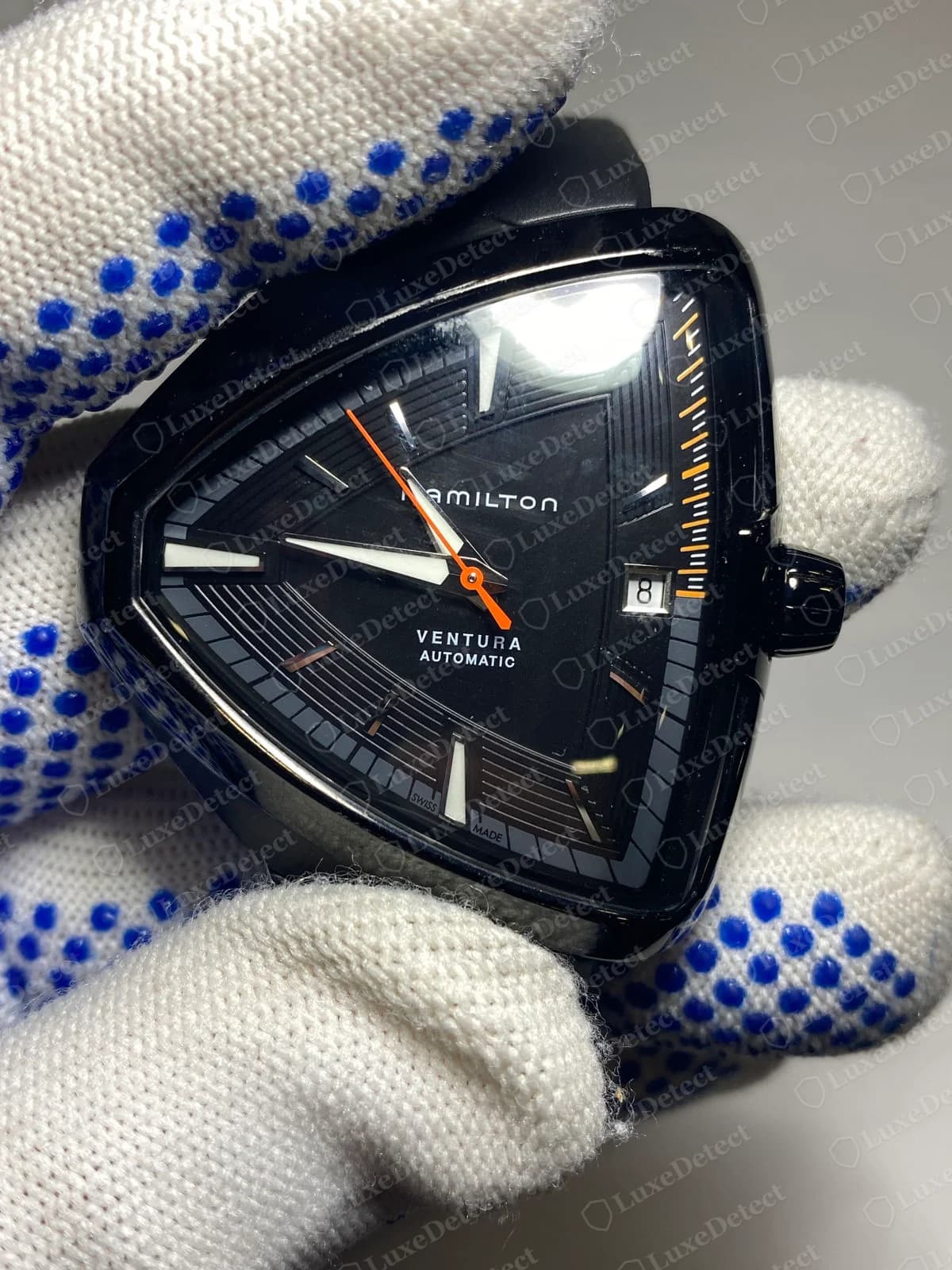
On the black Ventura shown here, the dial reads "HAMILTON" at the top and "VENTURA AUTOMATIC" below the centre, with "SWISS MADE" at the bottom edge, an orange seconds hand and a date window. The lettering is crisp and evenly spaced, and the markers and hands are cleanly finished.
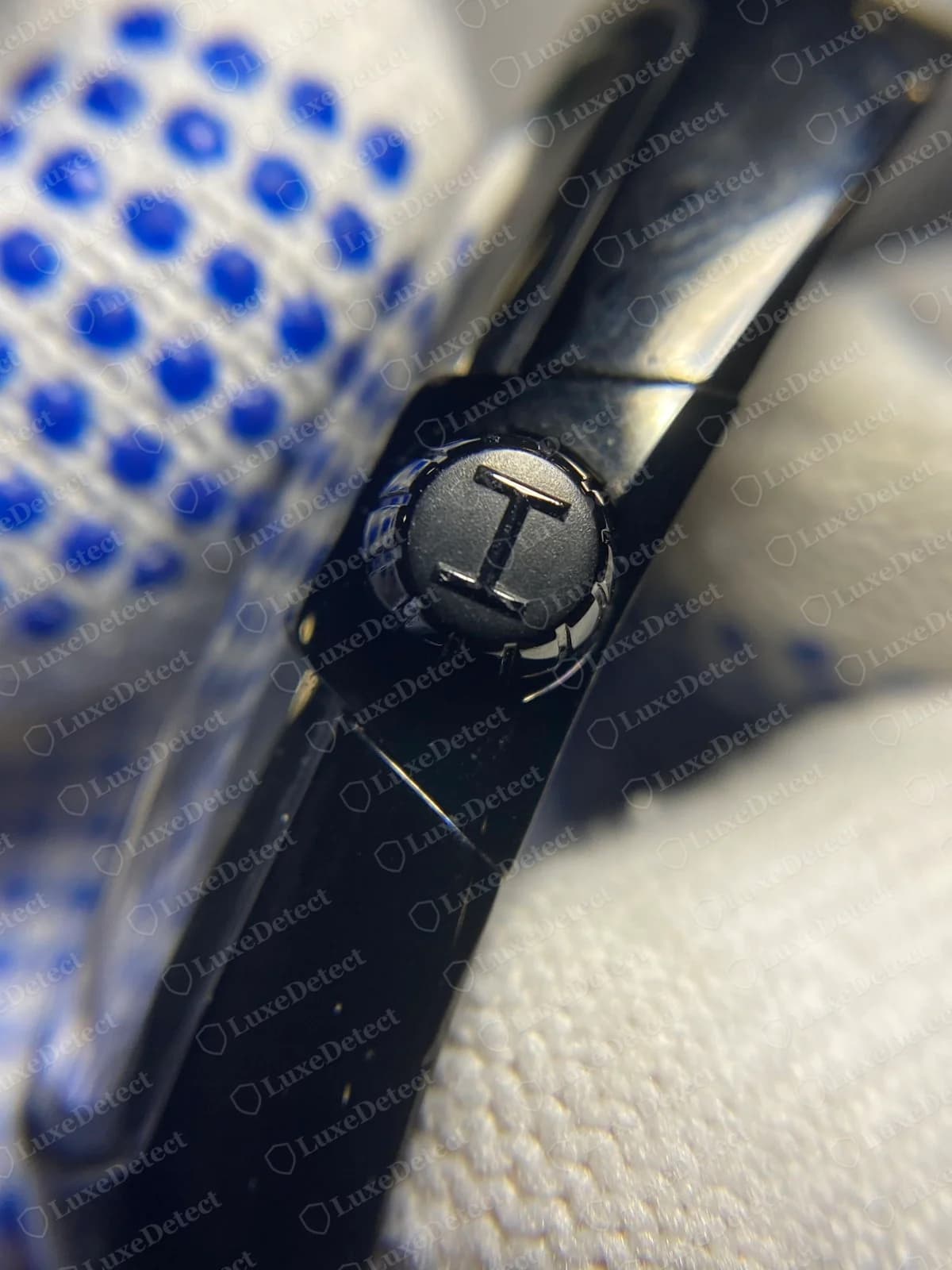
The crown carries a Hamilton "H" logo, as on several watches in our records, modern and vintage. It is worth looking at, but it is also one of the easiest marks to copy. A logo crown tells you very little, and a watch without one is not suspect for that reason alone, since crowns are replaced.
The Case Back and Display Back
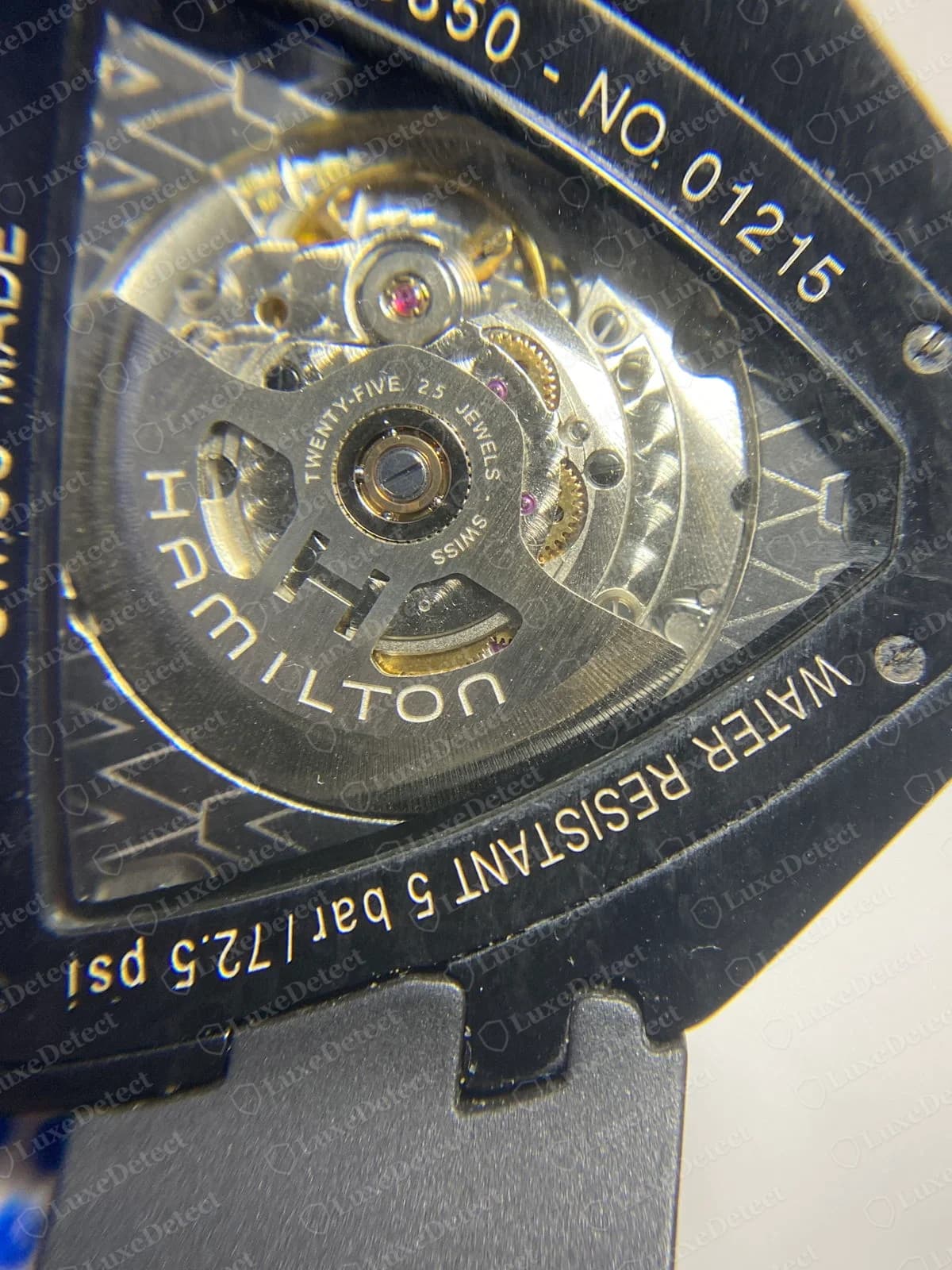
The back of the modern Swiss-era Ventura above is engraved around the rim with a reference beginning H and a short number ("NO." followed by five digits), "SWISS MADE" on one side, and "WATER RESISTANT 5 bar / 72.5 psi" along the bottom. Through the window the rotor is marked "HAMILTON" with the H logo and "TWENTY-FIVE 25 JEWELS", and "SWISS" appears on the movement.
Read the back as a set: the engraving, the movement and the dial should describe the same watch. The numbers on it are what this genuine example shows, not a code we can decode, and the same goes for the H-numbers on the clasps of other modern watches in our records. Hamilton's own website is the place to confirm what a reference belongs to.
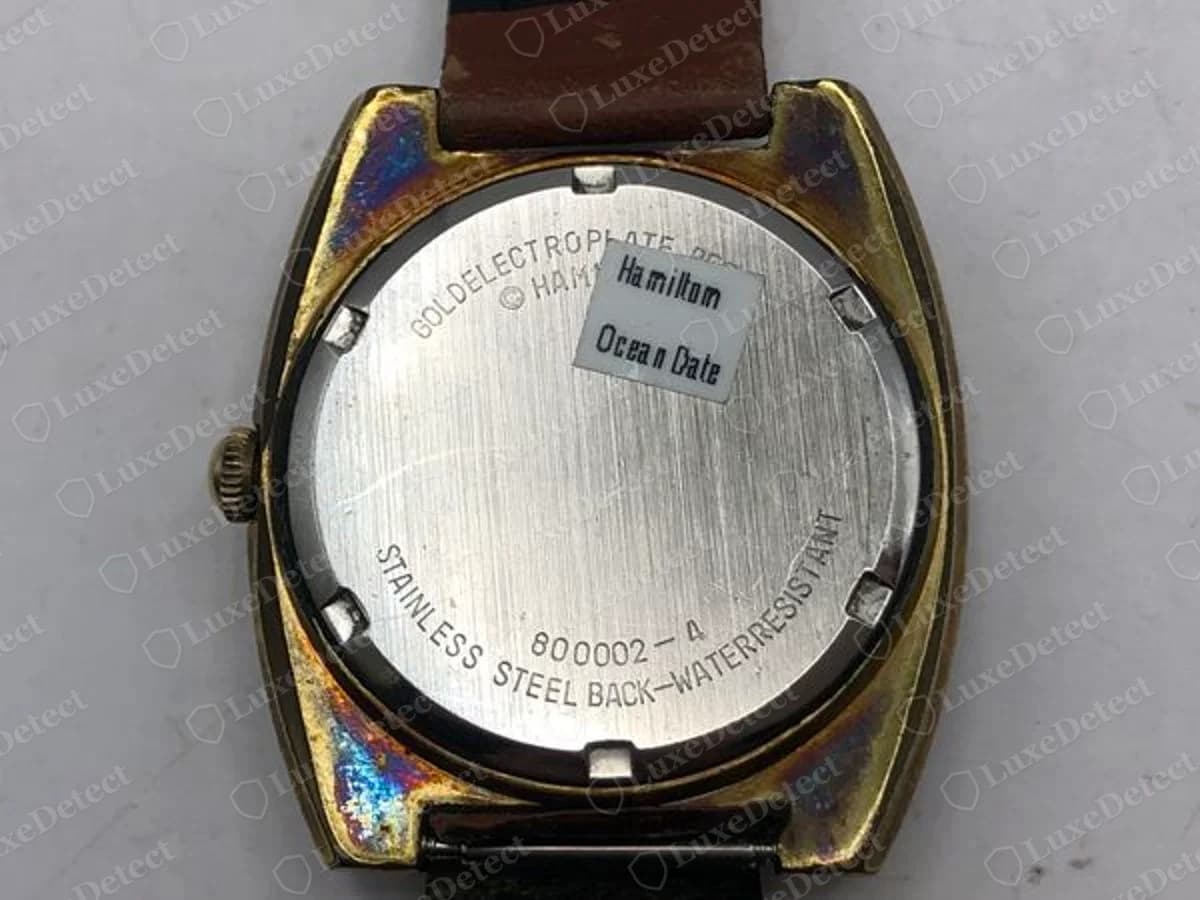
Older backs read very differently. On this vintage Ocean Date the back is brushed steel inside a gold-coloured case, with a line starting "GOLD ELECTROPLATE" and a partly legible copyright mark, "STAINLESS STEEL BACK-WATERRESISTANT" and a number. The small white sticker naming the model is a sticker, not an engraving, and it shows how much the marks on vintage backs vary. Wear, discolouration and gaps in lettering are normal on a watch this age.
Vintage Dials and Case Markings
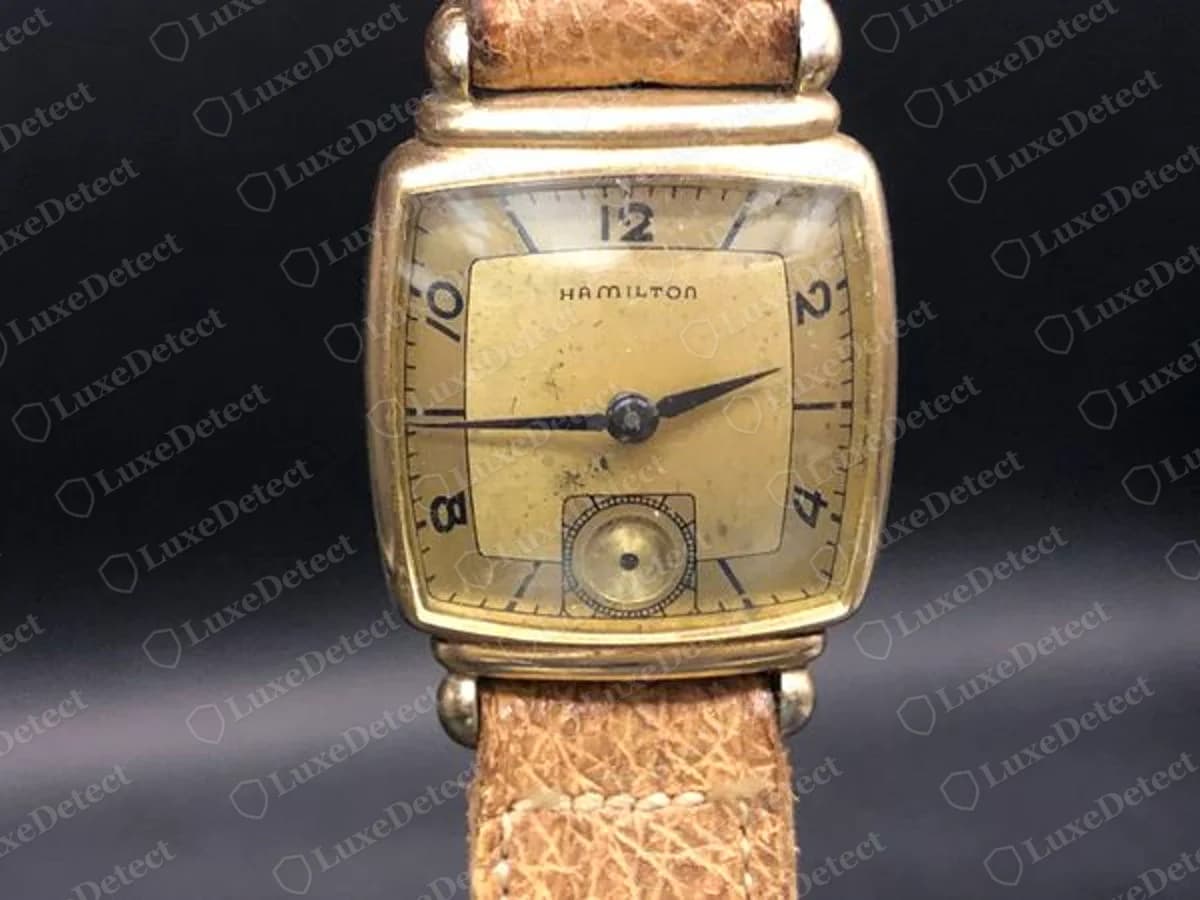
American-era dress watches in our records carry "HAMILTON" in small capitals on the dial, often with a small seconds subdial at six, fancy lugs and a gold-filled or gold case. The dial on the watch above is aged, with spotting and tone that come with its age.
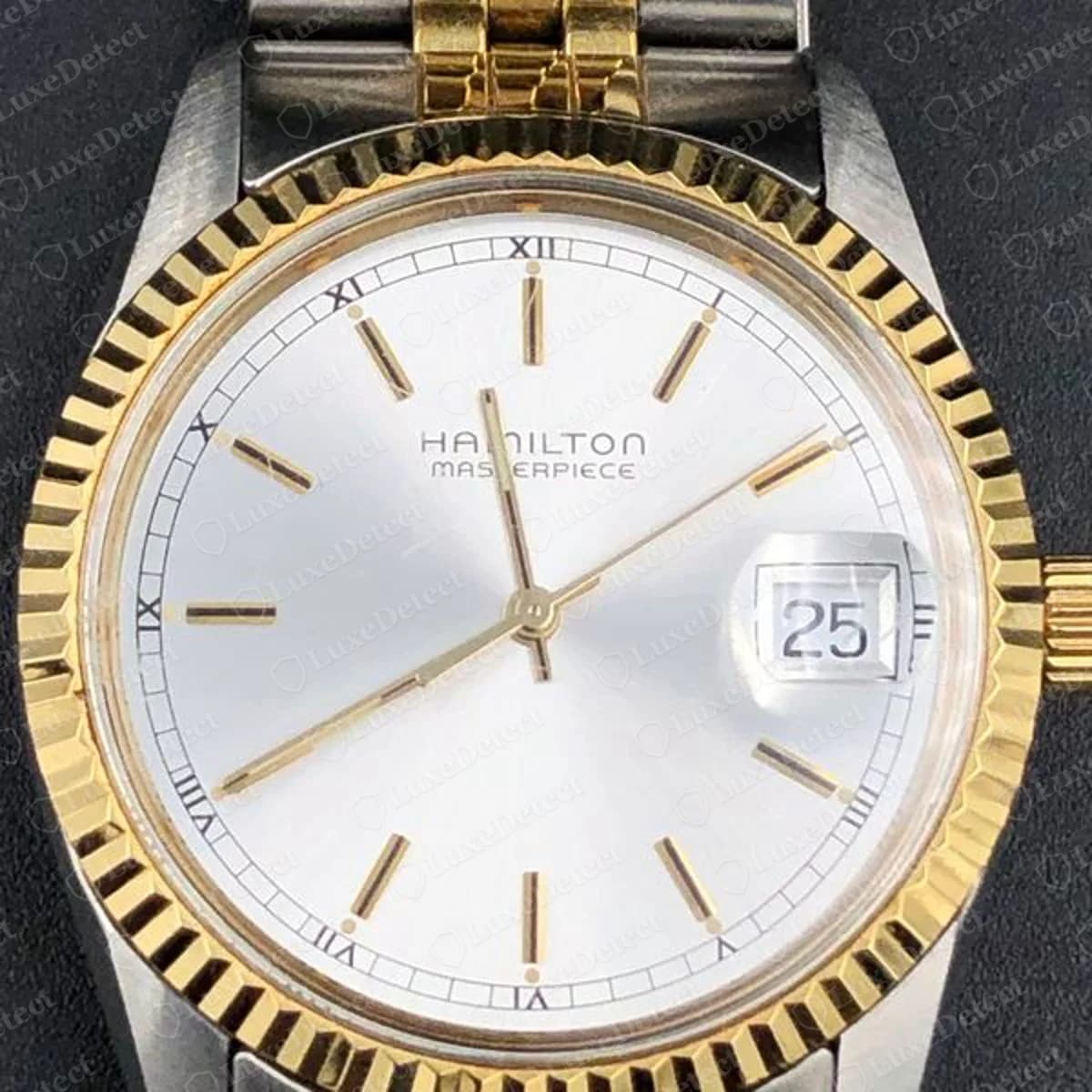
The Masterpiece shown here has the model name printed under the Hamilton name, baton markers, a date window and a fluted two-tone bezel. Several estate-lot watches in our records print a karat or "gold filled" line on the case back, or are engraved with a presentation inscription from a former owner. An engraving tells you a history, not a maker, so it is context and not evidence.
Straps, Clasps and Bands
Straps and clasps are the part of a Hamilton most likely to have been swapped. In our records a modern steel bracelet clasp can be stamped "HAMILTON" with an H-number printed on the link beside it, and leather straps can carry linings such as "Genuine Calfskin 18R" or a maker's name that is not Hamilton's. Vintage watches often wear a replacement band from a third-party maker. A strap or clasp that doesn't read Hamilton is therefore not a sign of a problem, and one that does read Hamilton is not proof, because both are easy to copy.
Gold-Filled and Gold: What a Marking or a Test Shows
Many of our vintage Hamilton records come from jewellery and estate lots, so the photos often include a handheld XRF reading, a scale photo or a hallmark close-up. Those show the metal that was tested and the weight, which is useful for the value of the case. They are our own checking records, not a Hamilton mark, and a gold reading does not tell you the movement and dial are right for that watch. Gold content and authenticity are two separate questions, so check both.
What a Matching Mark Does and Does Not Prove
A dial, a crown logo, a case-back engraving, a reference number and a clasp stamp can each be copied, and the examples in this guide are only what genuine watches in our records show. Fakes copy marks, so a matching mark proves nothing on its own. Weight, case finish, how the crown and bezel feel, and how the movement runs are checks done with the watch in hand. The practical method is to compare the watch against a verified Hamilton of the same reference, and to check that the dial, hands, case back, movement and bracelet belong together as one watch. Matching every detail above does not prove a watch is genuine, and a missing or different detail does not prove it is fake: Hamilton has used too many formats over too many decades for that.
If you are comparing across the Swatch Group, our Tissot watch guide and Rado watch guide are built the same way, and the Omega Seamaster guide covers another Swiss watch family.
When to Get a Professional Opinion
If a Hamilton is priced well, or a listing doesn't show the case back and the movement, get a second opinion before you pay. LuxeDetect authenticates watches from $45 with a 24-hour turnaround, a verdict from a specialist and a Certificate of Authenticity. Send clear photos of the dial, the crown, the case back, the movement if the watch has a display window, the clasp and any engraving, with the whole watch in view as well as close-ups.
A code that checks out doesn't prove the item is real. Counterfeiters copy genuine codes.
Our authenticators check the movement, dial, case and bracelet of your Hamilton against verified references, from $45. You get a verdict within 24 hours, and a Certificate of Authenticity if the item passes.
Authenticate My Hamilton →FAQ
How can I tell if my Hamilton watch is real?
No single detail proves it. Work out whether it is a vintage American-era piece or a modern Swiss-era watch, then check that the dial, crown, case back, movement and bracelet fit together as one watch. Compare it against a verified Hamilton of the same reference, and get it checked if the purchase matters, because fakes copy marks.
Can I authenticate a Hamilton from photos?
Yes. What decides it is how the dial, case back, crown and movement fit together against verified examples of the same model, and whether the parts belong together. Weight and feel are checks you can only do with the watch in hand, and for a purchase or resale where the answer matters, a professional review is the safer route.
What does the H number on a Hamilton case back mean?
We haven't confirmed what these numbers encode, so we don't use one to date a watch or to prove it genuine. Modern steel Hamiltons in our records carry a printed number beginning with H on the case back or the clasp. The reliable way to find out what a given reference belongs to is Hamilton's own website.
Does a Hamilton need a serial number?
We don't rely on one. The modern watches in our records show a reference and a short number on the case back, but we haven't confirmed a serial format or a dating rule for any Hamilton, and numbers can be copied.
My vintage Hamilton has a different strap or clasp. Is it fake?
Not necessarily. Straps, bands and clasps are often replaced, and vintage Hamiltons in our records wear bands from other makers. Judge the dial, case, case back and movement, not the band.
How much does it cost to authenticate a Hamilton watch?
LuxeDetect's watch authentication starts at $45 for a 24-hour turnaround, with faster options available. Every authentication includes a written report and a Certificate of Authenticity.