Fine Jewelry Authentication Specialist
Fine jewelry authentication specialist. Focuses on hallmarks, stone setting, and metal finishing.
Published October 2026 · Contact
Why the Tiffany 1837 Collection Is Hard to Judge From Stamps
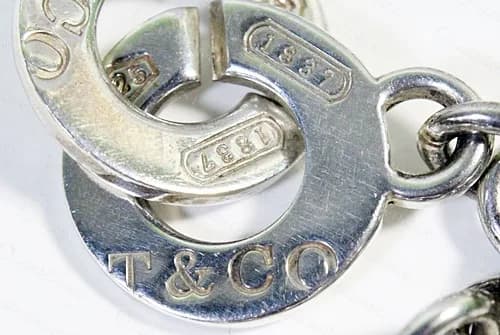
The 1837 collection is named for the year Tiffany was founded, and almost every piece in it is built around the same design idea: a plain concave silver surface carrying three small marks in a row. A hexagonal cartouche holds the metal mark (925 on silver), the middle carries "T&CO", and a rounded cartouche holds "1837". The same row appears on the narrow and wide band rings, the bangles and cuffs, the circle and interlocking-circle pendants, the padlock and the disc link bracelets. That consistency is what makes the line popular, and it is also what makes it easy to copy: there are only a few marks to get right, and they are on the outside of the piece where any photo shows them.
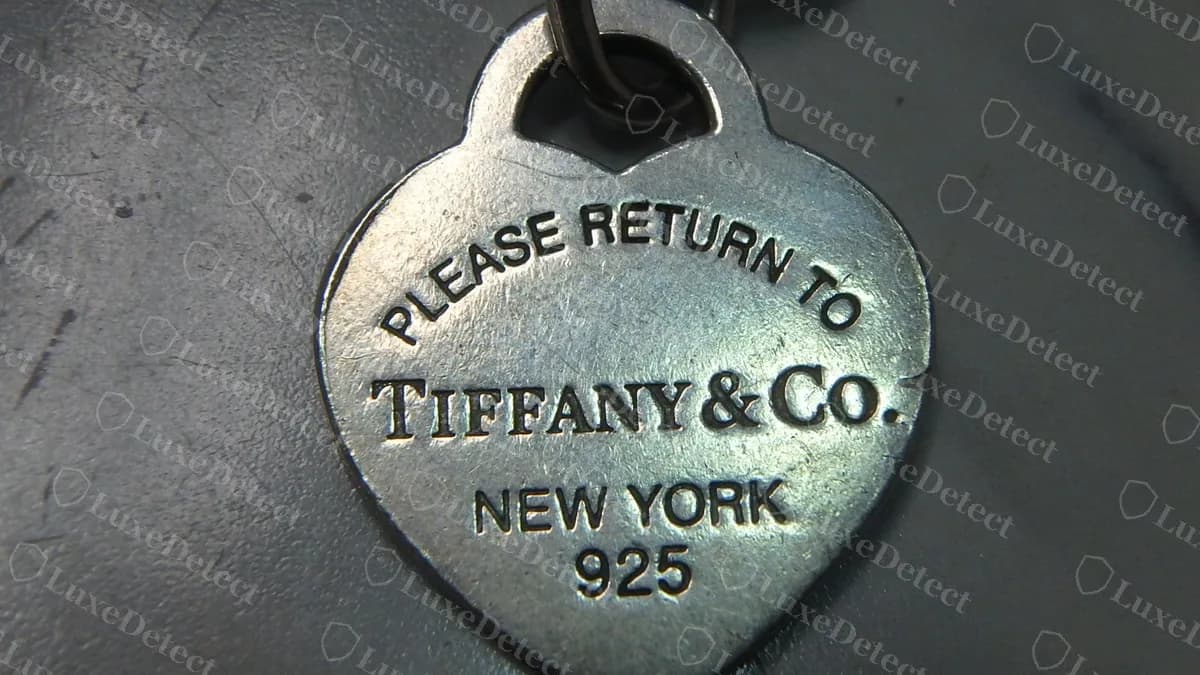
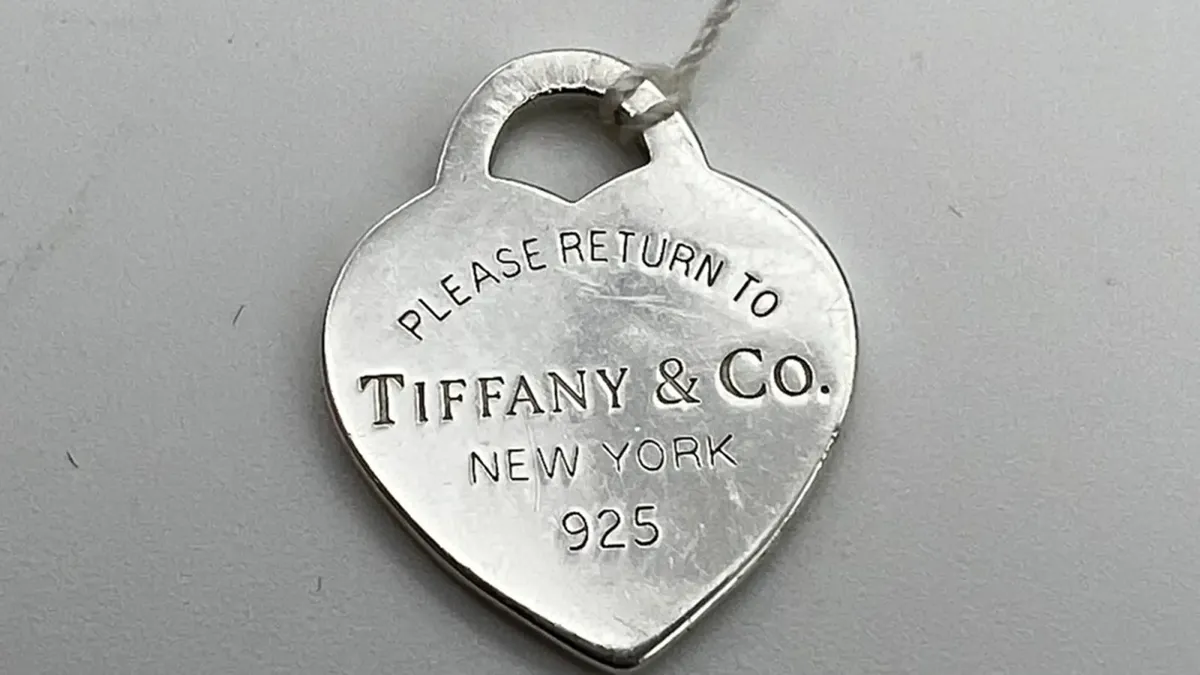
This guide is different from our other Tiffany guides. The general Tiffany jewelry guide covers chain, clasp and the Return to Tiffany tag, the Return to Tiffany guide covers that tag in depth, and the Elsa Peretti guide covers the Peretti line. Here we look only at the 1837 stamp system, because it is where most buyers start and where the usual advice goes wrong.
Worth knowing
This guide is built from genuine 1837 pieces in our own order archive, and we also went through the fake-labelled 1837 orders. We did not find a stamp detail that repeated across independent counterfeits and was absent on genuine pieces, so there is no ranked "fake tells" table and no red-flag verdict here. What follows shows what genuine marks look like so you can compare a specific piece, and it says plainly what the stamps cannot prove.
The Exterior Stamp Row
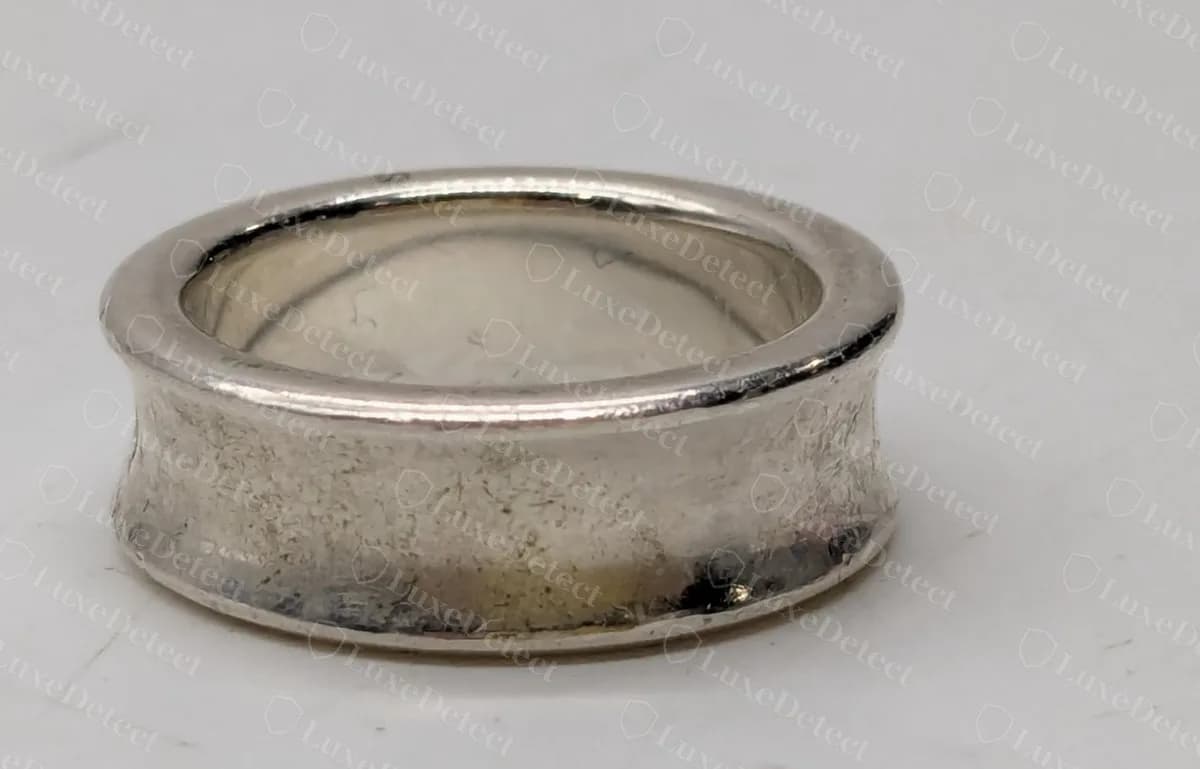
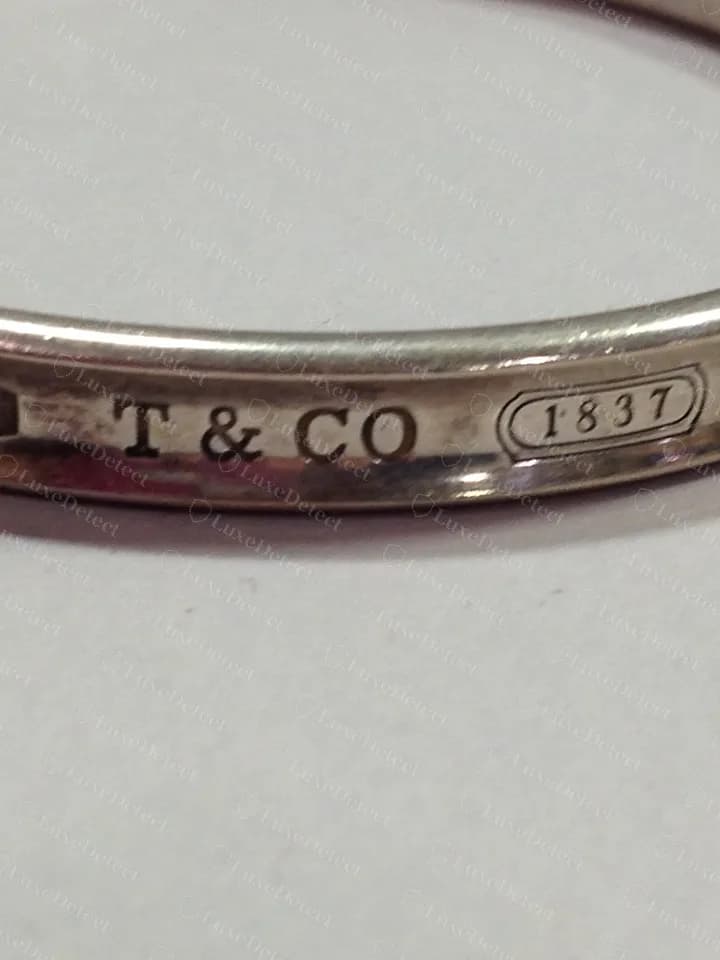
On the genuine band rings, bangles and cuffs we reviewed, the outside carries three marks in a line: a hexagonal cartouche with the metal mark, "T&CO" in a heavy serif face, and a rounded cartouche with "1837".
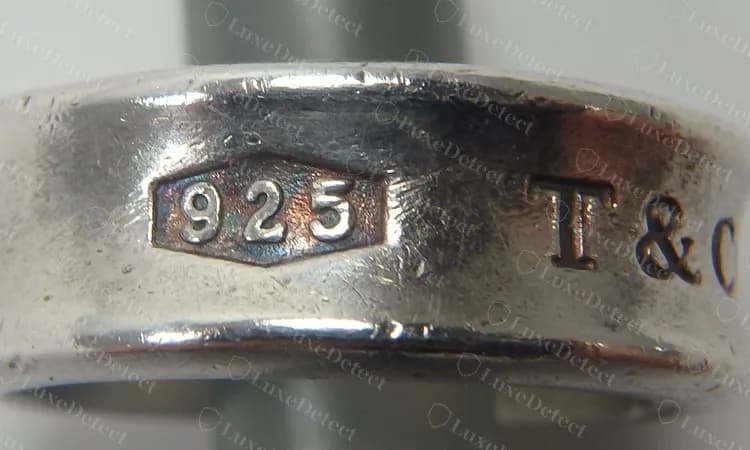
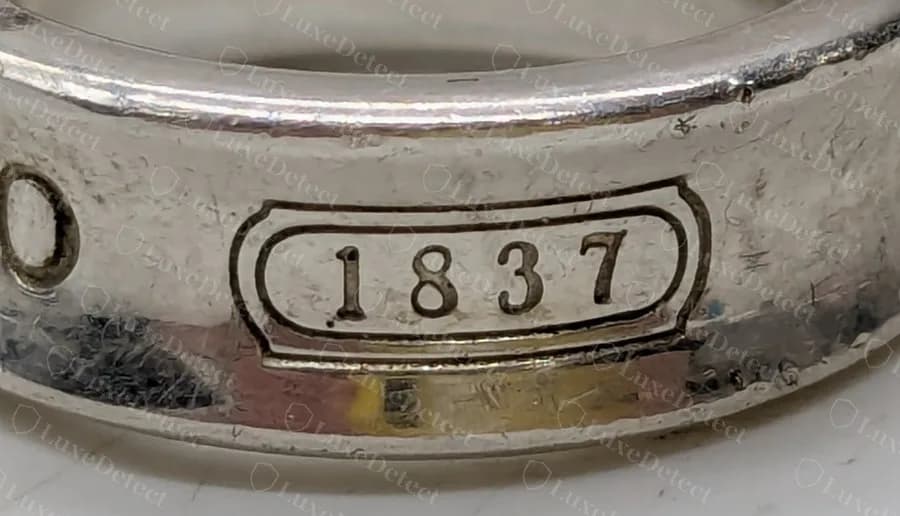
Two points are worth knowing before you judge a photo. First, the genuine "1837" cartouche has a doubled outline, as the photo above shows, so a double border is not a sign of a copy. Second, the corners and proportions of the cartouches vary between genuine pieces and sizes: we saw rounded, clipped and chamfered versions on authenticated rings and bangles, so shape on its own is a weak check.
The Interior Mark
Inside the rings we reviewed, a line of small text runs around the band. On the genuine rings it reads "©1997 TIFFANY & Co. 925", with the copyright sign and year first and the metal mark last.
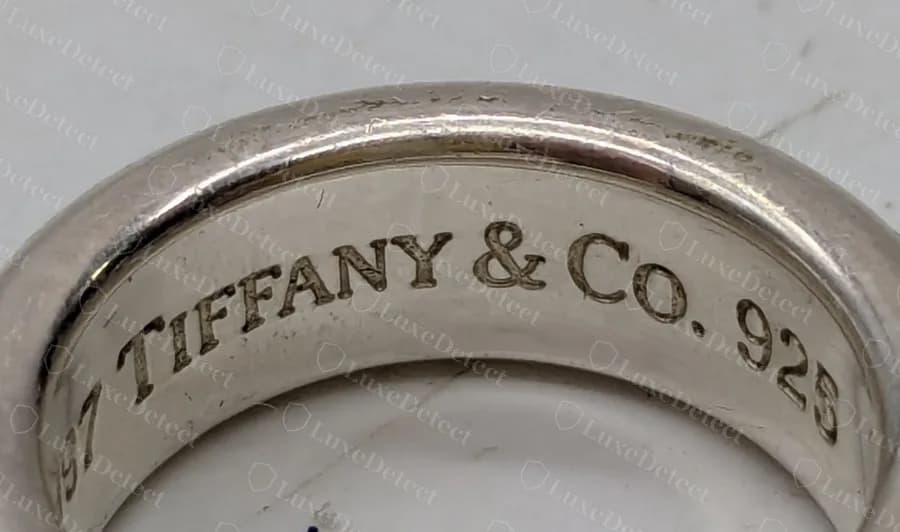
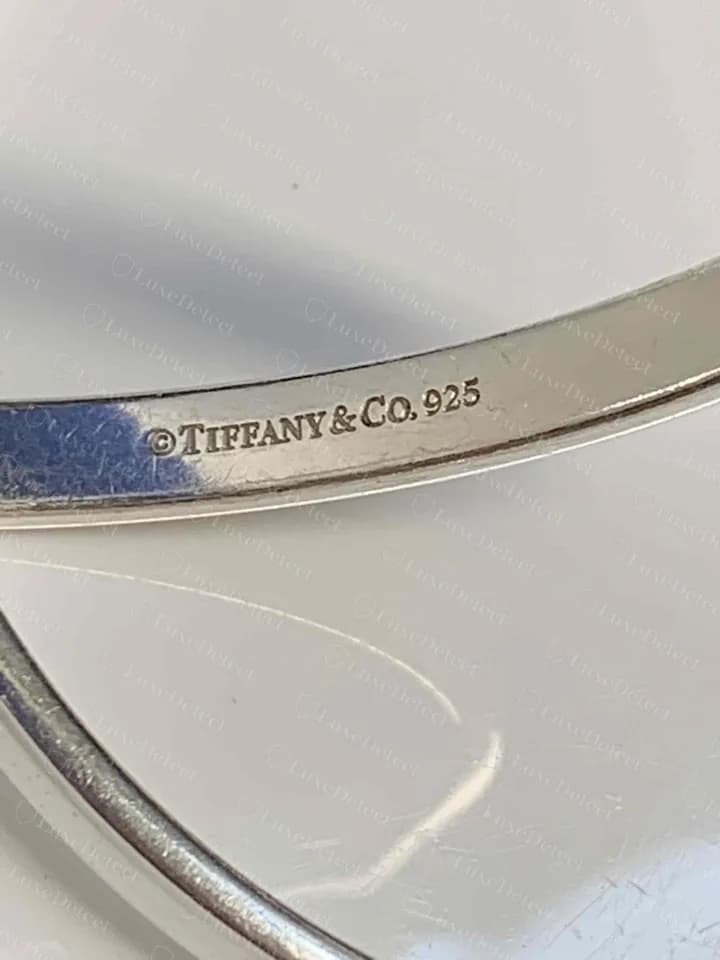
The spacing of this line is not fixed. Some genuine bangles carry a version without a year and with the letters set tight, reading "©TIFFANY&Co. 925".
Worth knowing
Many guides tell you that tight or crowded spacing in the interior mark exposes a fake. We checked that against genuine pieces and it does not hold: authenticated bangles and rings in our archive show both spaced and tight versions. Use the interior mark to check that the wording and metal mark agree with the rest of the piece, not to judge the typeface spacing.
Circle, Interlocking and Disc Pieces
The pendants and link bracelets spread the same three marks around the piece rather than in one row. On the genuine circle pendant the marks sit on the rim and the inside face carries the interior line.
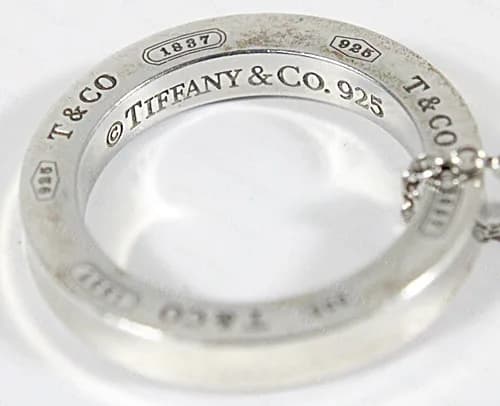
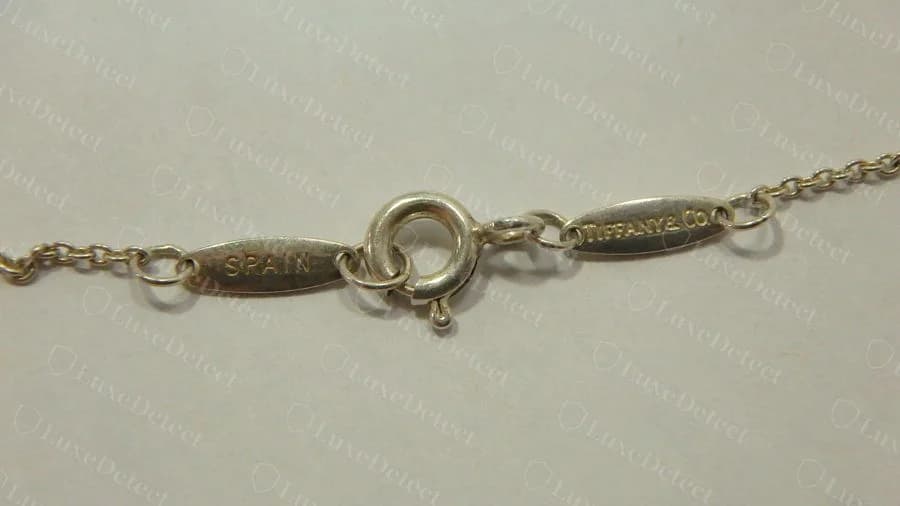
Chain and clasp work on these pendants follows the same rules as other Tiffany necklaces, so check them with the general guide. Tags on genuine chains we reviewed read variously "AG925" or "©TIFFANY&Co.", so one tag style is not a rule.
What We Found on Fake-Labelled 1837 Pieces
We went through a wide sample of fake-labelled 1837 orders: rings, bangles, cuffs, circle and square pendants, a padlock, earrings and bracelets. The honest summary:
- Most reproduced the stamps well. Many carried the hexagonal 925 cartouche, the rounded 1837 cartouche, "T&CO" and an interior line that looks right in a normal photo. On several, the stamp set would pass a casual comparison with the genuine photos above.
- Spacing did not separate them. Tight interior lettering appeared on both fake-labelled and genuine pieces.
Because the best copies get the marks right, a correct stamp set is a reason to keep looking, not a reason to relax. We found no repeatable stamp tell we would stand behind.
What to Rely On, and What Not To
- Rely on: a full match to the stamp row and interior line shown above, consistent crisp strike depth across all marks, a solid dense feel for the size, and clear close photos or in-person inspection from the seller.
- Do not rely on: stamp spacing alone, the double border on the 1837 cartouche (genuine pieces have it), a correct set of marks by themselves, or the box and pouch. Packaging is context, never evidence.
- Malformed lettering or a mismatched metal mark is worth a closer look. The reverse is not true: a clean surface and a correct stamp set do not clear a piece.
When to Get a Professional Opinion
A band ring or bangle in this line can be worth a few hundred dollars on resale, and the marks alone cannot settle it. If the piece matches everything here and the price is significant, a professional check of close photos is the reliable next step. Our authentication service looks at the stamp row, interior mark, strike depth and construction, and returns a verdict with a Certificate of Authenticity.
A code that checks out doesn't prove the item is real. Counterfeiters copy genuine codes.
Our authenticators check the hallmarks, engravings, clasp and settings of your Tiffany & Co. against verified references, from $30. You get a verdict within 24 hours, and a Certificate of Authenticity if the item passes.
Authenticate My Tiffany & Co. →FAQ
How can I tell if a Tiffany 1837 ring is real?
Compare the stamp row (a hexagonal 925 cartouche, "T&CO" and a rounded "1837" cartouche) and the interior line with the genuine photos above, and look at strike depth and surface. No single mark is decisive, because good counterfeits reproduce them, so combine the checks and get a professional opinion if the price is high.
Is a double border around the 1837 stamp a sign of a fake?
No. The genuine 1837 cartouche on the ring photographed above has a second, fainter outline. Cartouche shape also varies between genuine pieces, so do not judge it alone.
Does tight lettering in the "TIFFANY & Co. 925" mark mean fake?
Not by itself. Authenticated bangles and rings in our archive show both spaced and tight versions of the interior line, including a version with no year. Check that the wording and metal mark agree with the rest of the piece.
What does the 925 mean on Tiffany 1837 jewelry?
It is the sterling silver mark: 92.5% silver.
Can a fake 1837 piece have all the right stamps?
Yes. Many fake-labelled pieces we reviewed carried a full, plausible set of marks. Stamps tell you what a piece claims to be, not whether it is genuine, which is why strike depth, surface, weight and construction matter too.
Is the 1837 collection the same as Return to Tiffany?
No. They are separate lines with different tags and engraving. See our Return to Tiffany guide.